

LinkedIn launches sponsored articles
Written on January 19, 2024 at 6:15 pm, by admin
LinkedIn has introduced sponsored articles, providing marketers with an additional tool that may contribute to enhancing brand awareness, increasing engagement, and driving lead generation.
Why we care. As LinkedIn users will not have the hassle or inconvenience of having to leave the platform to read the sponsored content, this could result in higher engagement.
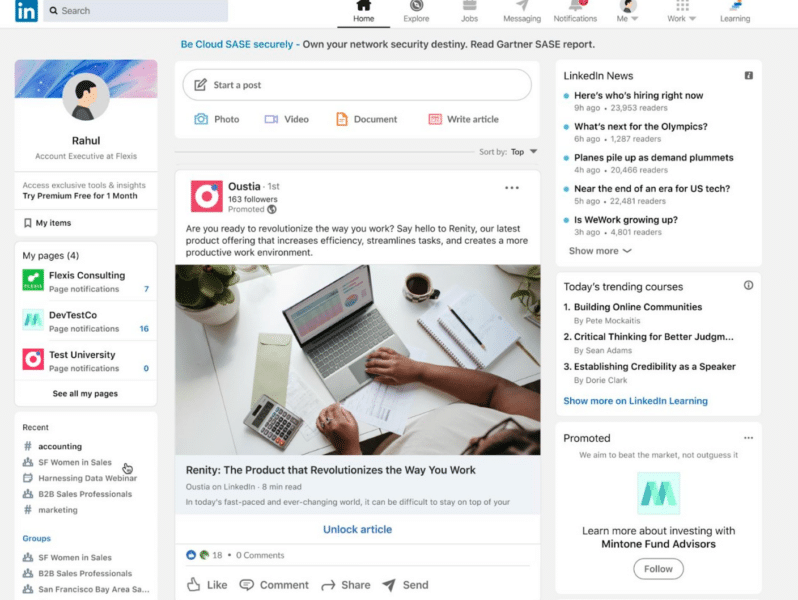
How it works. When a company account publishes an article on LinkedIn, admins now have the option to promote it. This promotion allows the addition of a CTA button, like “Unlock Article,” encouraging users to sign up to access the complete content. While this feature resembles LinkedIn lead generation ads, its direct connection to in-app engagement is advantageous for LinkedIn and potentially beneficial for businesses
Accessibility. Currently, only articles authored by companies are eligible for sponsorship. However, the LinkedIn product team is actively working on developing numerous additional functionalities, which are expected to be rolled out shortly.
Roll out. Sponsored posts has been rolled out to the majority of business accounts already, however, some brands may not have access to this feature just yet.
What LinkedIn is saying. Baptiste Beauvisage, Lead Client Solutions Manager at LinkedIn, stressed the benefits of this new product to advertisers and brands in a statement:
- “You can use the content you already have on your Linkedin page.”
- “Sponsored posts are more viral than a blog article hosted externally.”
- “You can have all the comments from logged-in members on the article directly.”
- “There is a better UX.”
- “You can drive leads without sending users off Linkedin to consult your article.”
Deep dive. Read our article on surging LinkedIn ad prices for more information on why the platform has become so popular amongst advertisers.
Courtesy of Search Engine Land: News & Info About SEO, PPC, SEM, Search Engines & Search Marketing
Category seo news | Tags:
Social Networks : Technorati, Stumble it!, Digg, de.licio.us, Yahoo, reddit, Blogmarks, Google, Magnolia.
Google rolls out new Performance Max guide and updates several others
Written on January 19, 2024 at 6:15 pm, by admin
Google Ads now provides a new “Getting Started” Performance Max guide, assisting advertisers with step-by-step instructions for building more effective campaigns.
Additionally, the platform has updated various other guides to enhance the overall experience of creating, managing, and reporting on PMax campaigns using the Google Ads API, including:
- Asset Requirements.
- PMax reporting guide.
- Campaign-level conversion goals.
- Asset group signals.
- Troubleshooting.
Why we care. The updated documentation gives advertisers extra help and guidance, making it easier for them to understand how to optimize, manage, and report on campaigns more effectively.
Getting Started. The Getting Started new guide offers a checklist of concepts and tasks tailored to each of the three Performance Max campaign types:
- Standard Performance Max campaigns
- Performance Max campaigns for retail
- Performance Max campaigns for travel goals
Asset Requirements. This guide outlines the asset requirements for each AssetGroup within a PMax campaign to achieve optimal campaign performance.
PMax reporting guide. This guide outlines the options for reporting on PMax campaigns organized by objective.
Campaign-level conversion goals. Guidance for setting campaign conversion goals for a PMax campaign.
Asset group signals. This information explains the concept of AssetGroupSignal, a signal used to optimize ad serving at the asset group level in PMax.
Troubleshooting. This guide provides troubleshooting steps for addressing issues with your Performance Max campaign if it is not performing as expected. It covers potential problems related to ads, bidding, targeting, conversion tracking, or campaign settings.
Deep dive. Read Google’s announcement in full for more information.
Courtesy of Search Engine Land: News & Info About SEO, PPC, SEM, Search Engines & Search Marketing
Category seo news | Tags:
Social Networks : Technorati, Stumble it!, Digg, de.licio.us, Yahoo, reddit, Blogmarks, Google, Magnolia.
404 pages: Best practices and examples from 50+ brands
Written on January 19, 2024 at 6:15 pm, by admin
404 page errors can frustrate users and cause them to leave your site.
However, with some foresight, these errors can become an opportunity to provide help and encourage users to explore more of your website.
This article covers best practices for crafting 404 pages, with real examples from over 50 brands. You’ll also find answers to frequently asked questions about 404 error pages.
What is a 404 page?
A 404 page, also known as an error page, is a webpage displayed when a user tries to access a URL that no longer exists.
Status code 404 error meaning
The 404 status code error is an HTTP response signaling the webpage cannot be found on the web server. It tells the browser that the requested webpage is “not found.”
404 page best practices
Creating a useful 404 error page is vital for providing a good user experience when visitors visit your website.
Here are some best design practices for crafting a user-friendly and engaging 404 page.
- Clear error message: Ensure the 404 error message is displayed and clearly states that the requested page cannot be found. Use friendly and simple language to explain the error.
- Engaging visuals: Incorporate visually appealing graphics or illustrations that align with your website’s design and brand. These visuals can help soften the frustration of encountering an error.
- Navigation options: Provide easy-to-find navigation elements that guide users back to your website’s homepage, main content, or relevant sections. Include links or buttons that make it simple for users to continue their journey.
- Search functionality: Include a search bar allowing users to look for the content they originally sought.
- Contact information: Include contact information or a link to your support/help center for users needing assistance with their specific issue.
Following these design practices can turn a frustrating error into a positive user experience and keep visitors engaged with your website, even when they encounter 404 pages.
51 examples of 404 pages
Funny 404 page examples
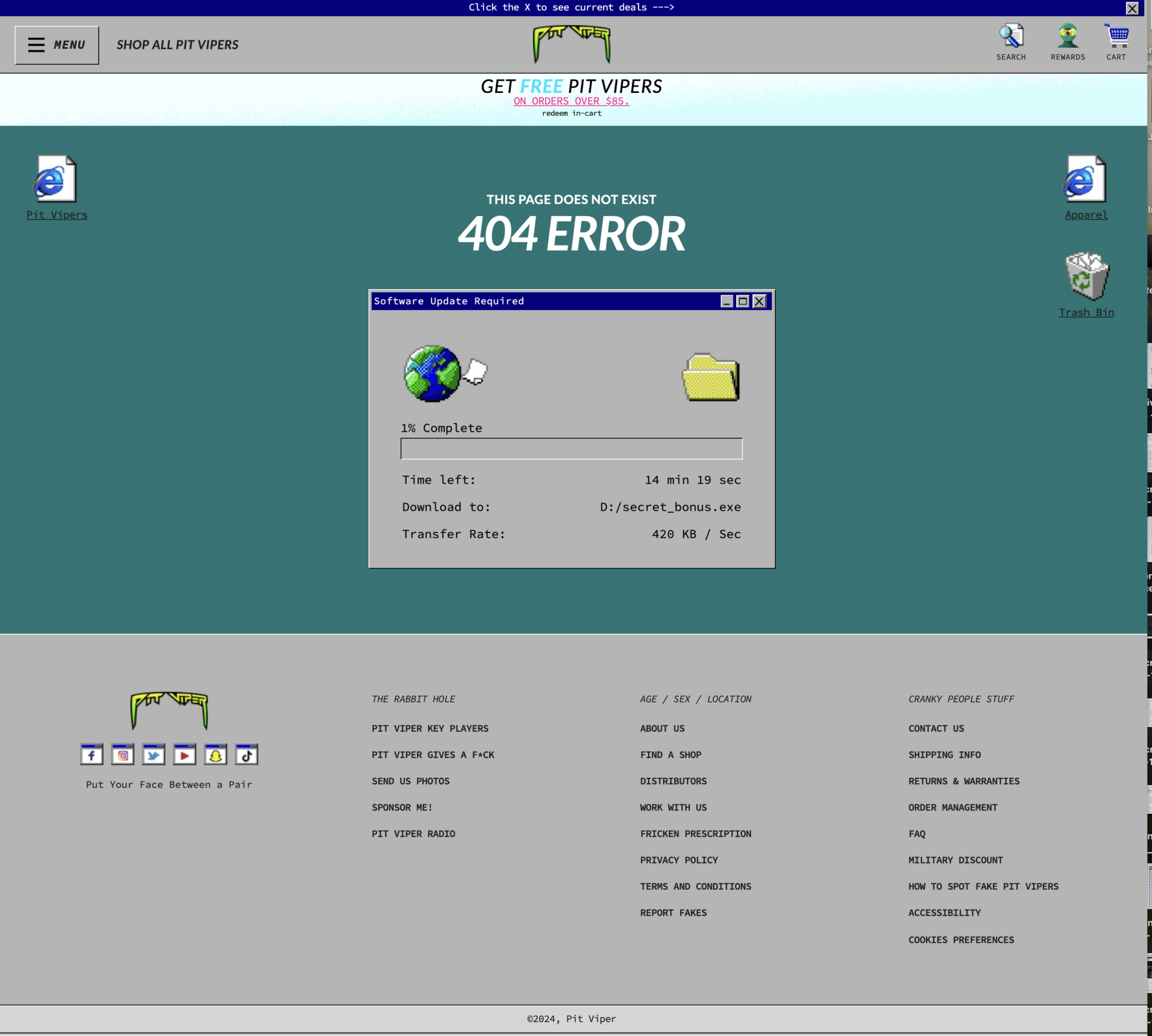
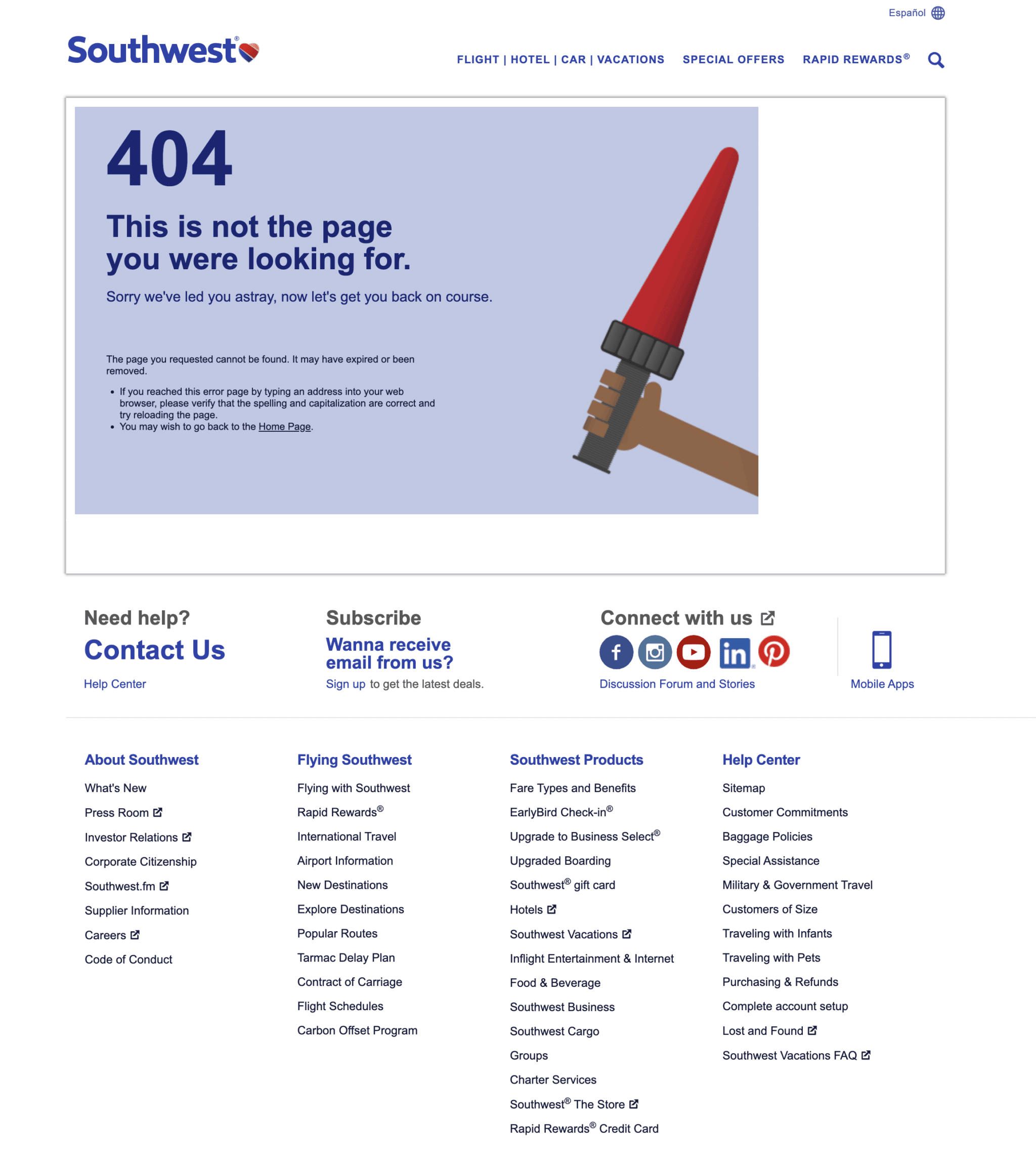
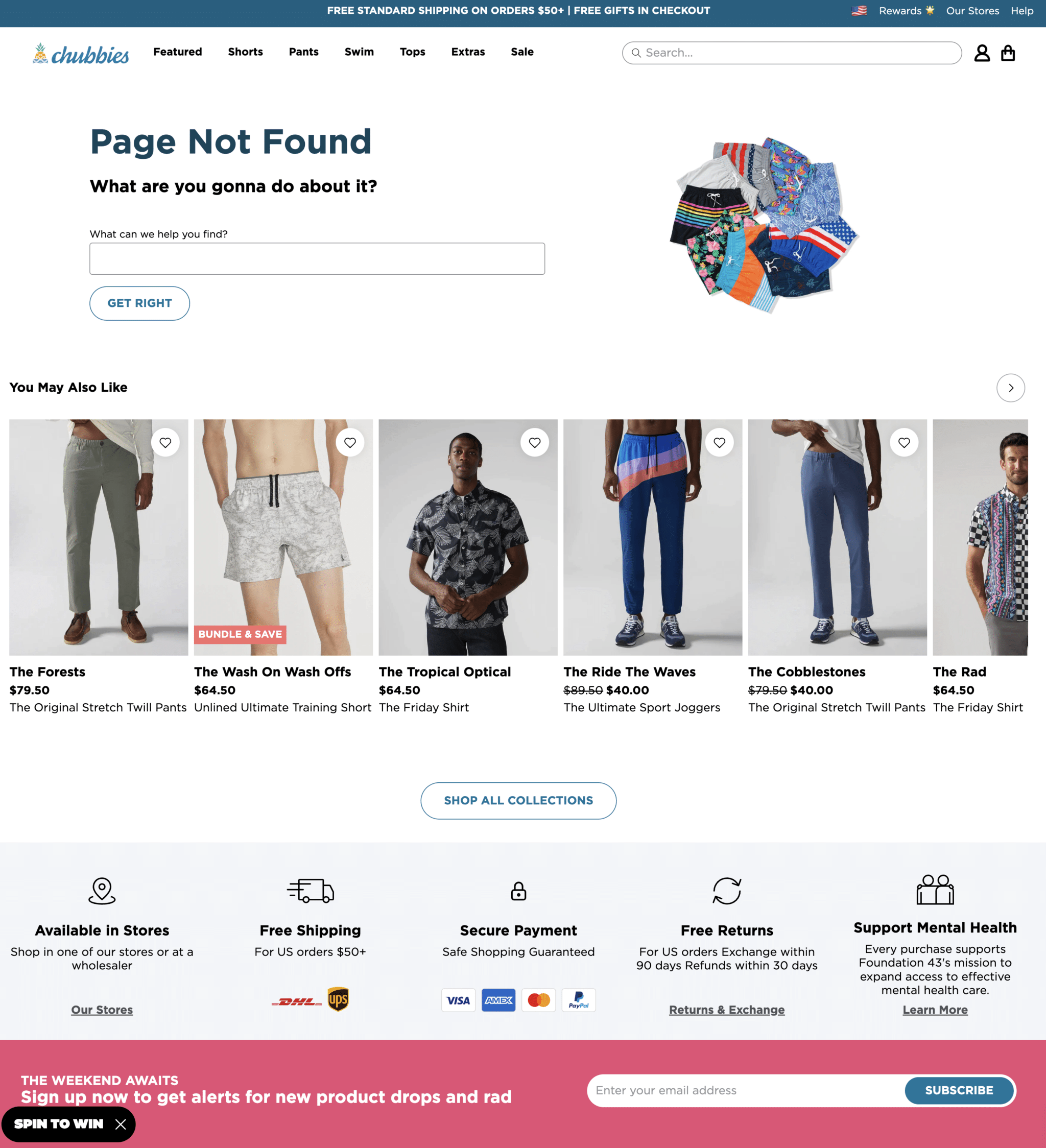
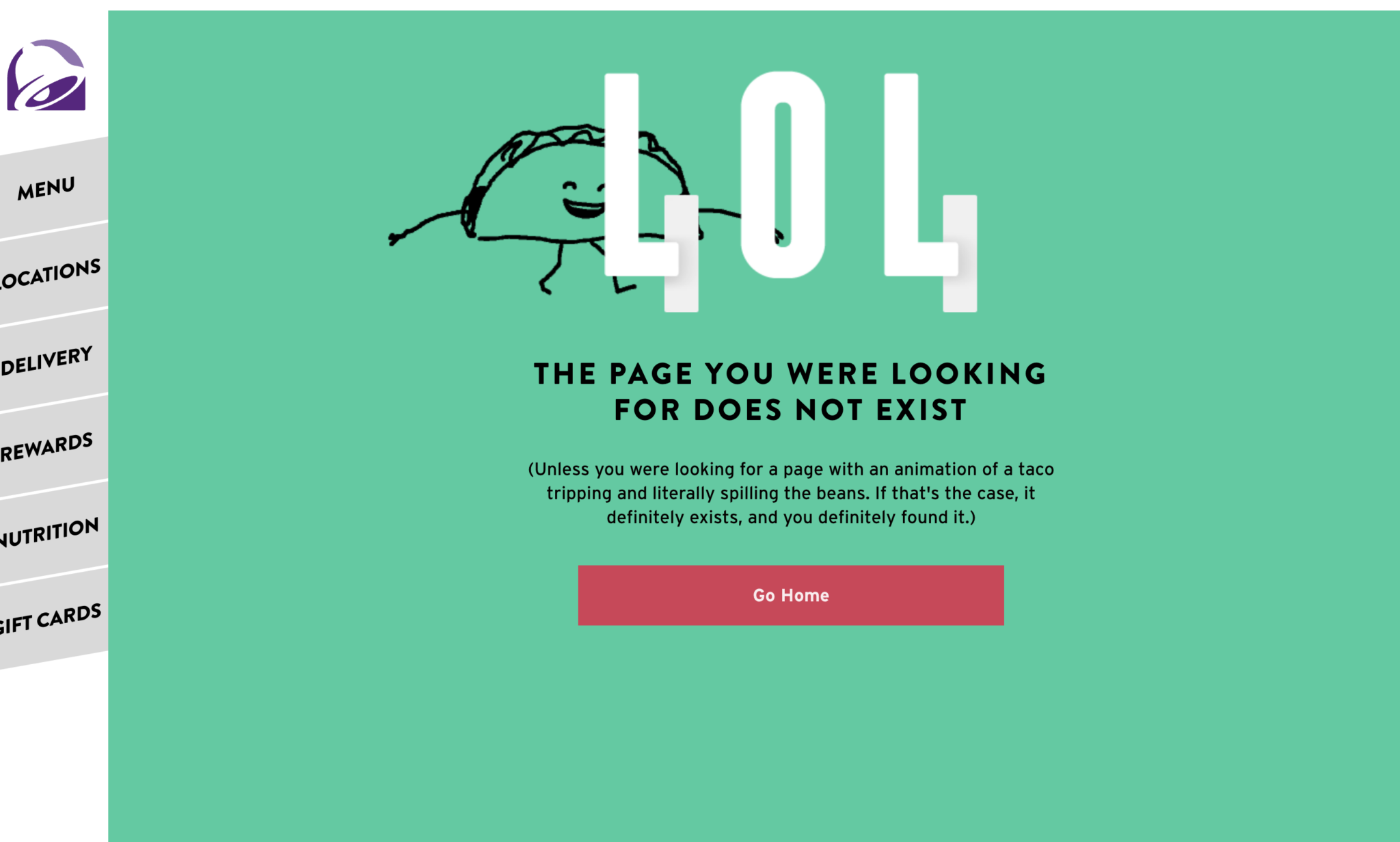
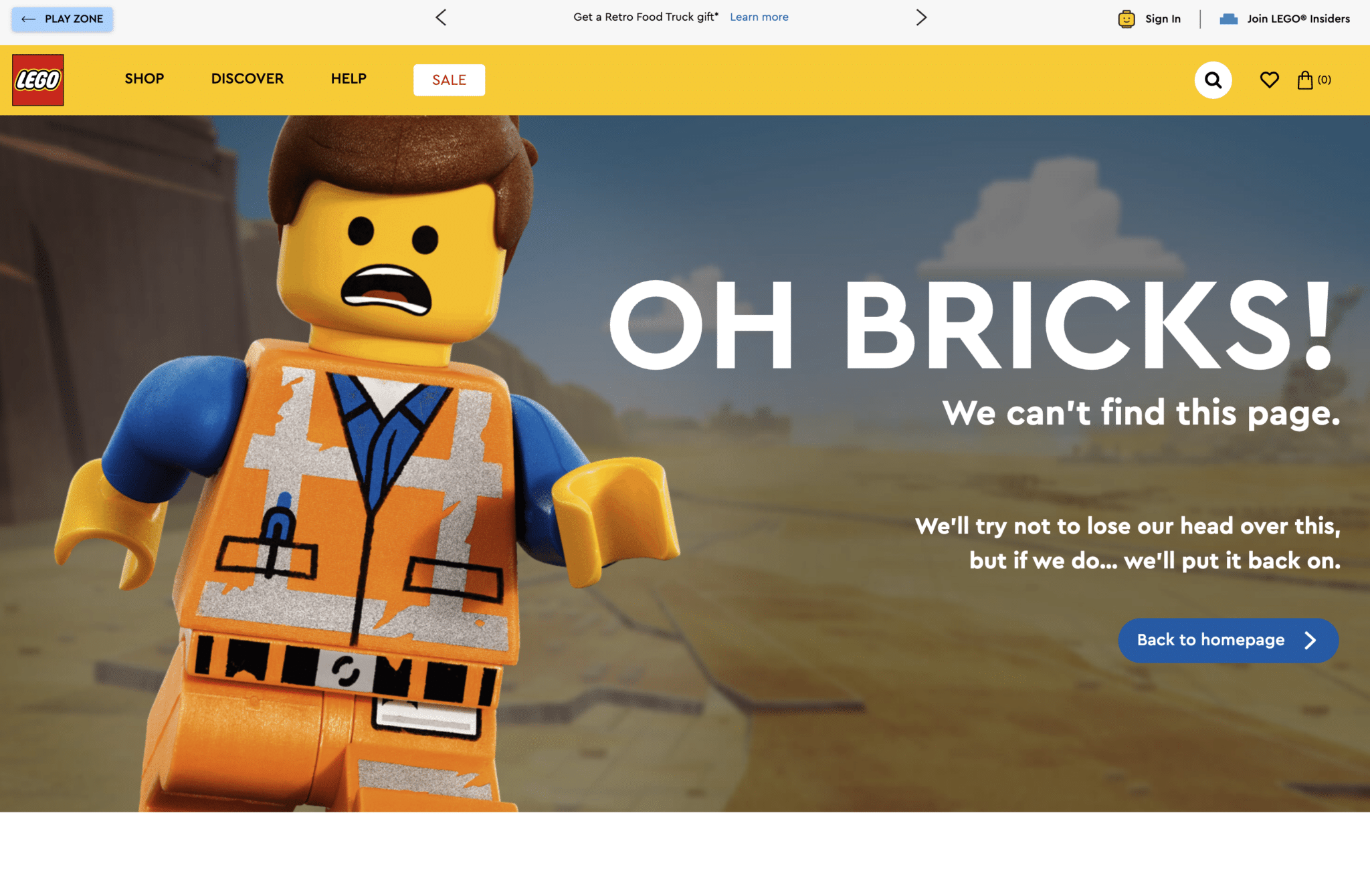
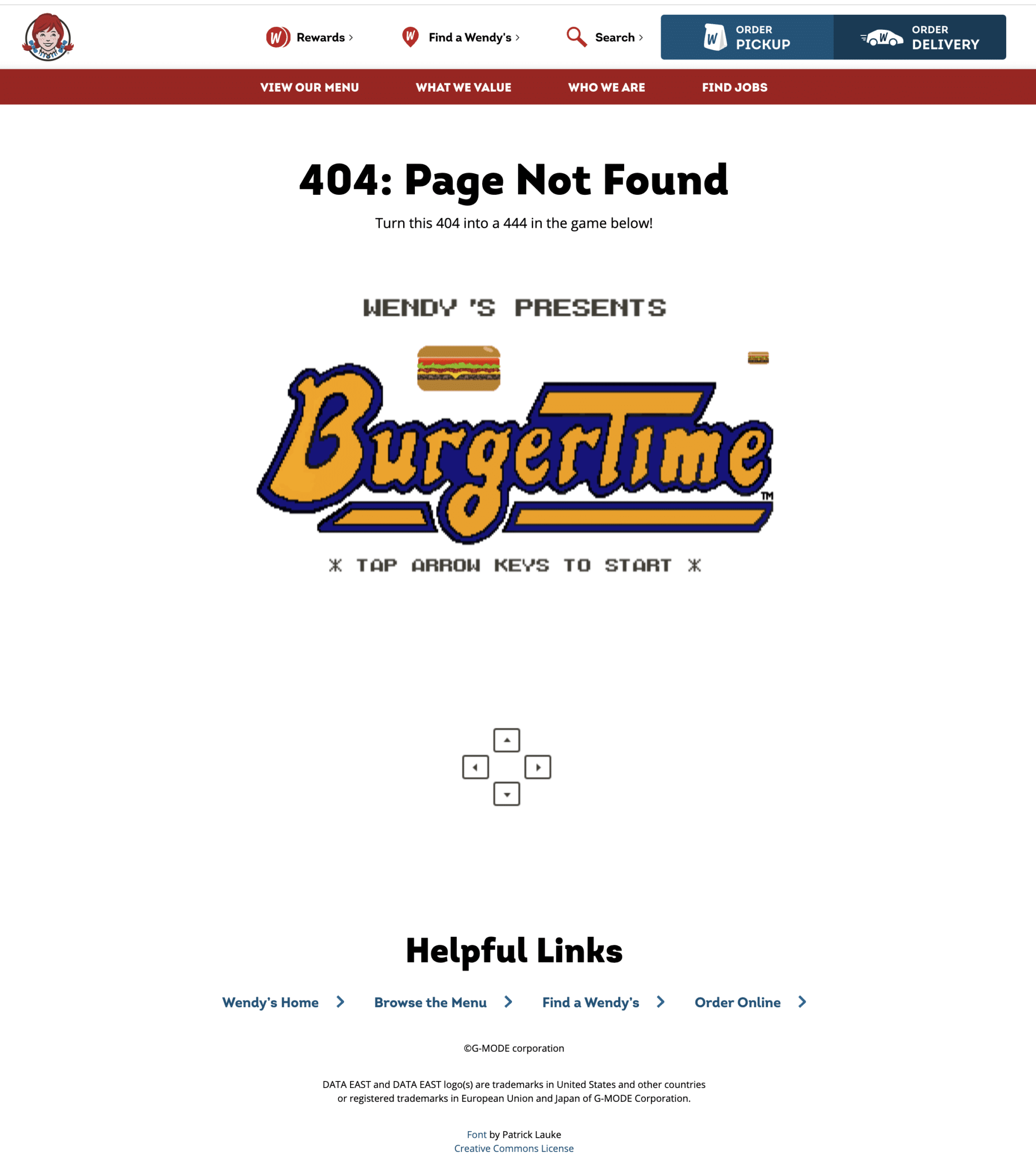
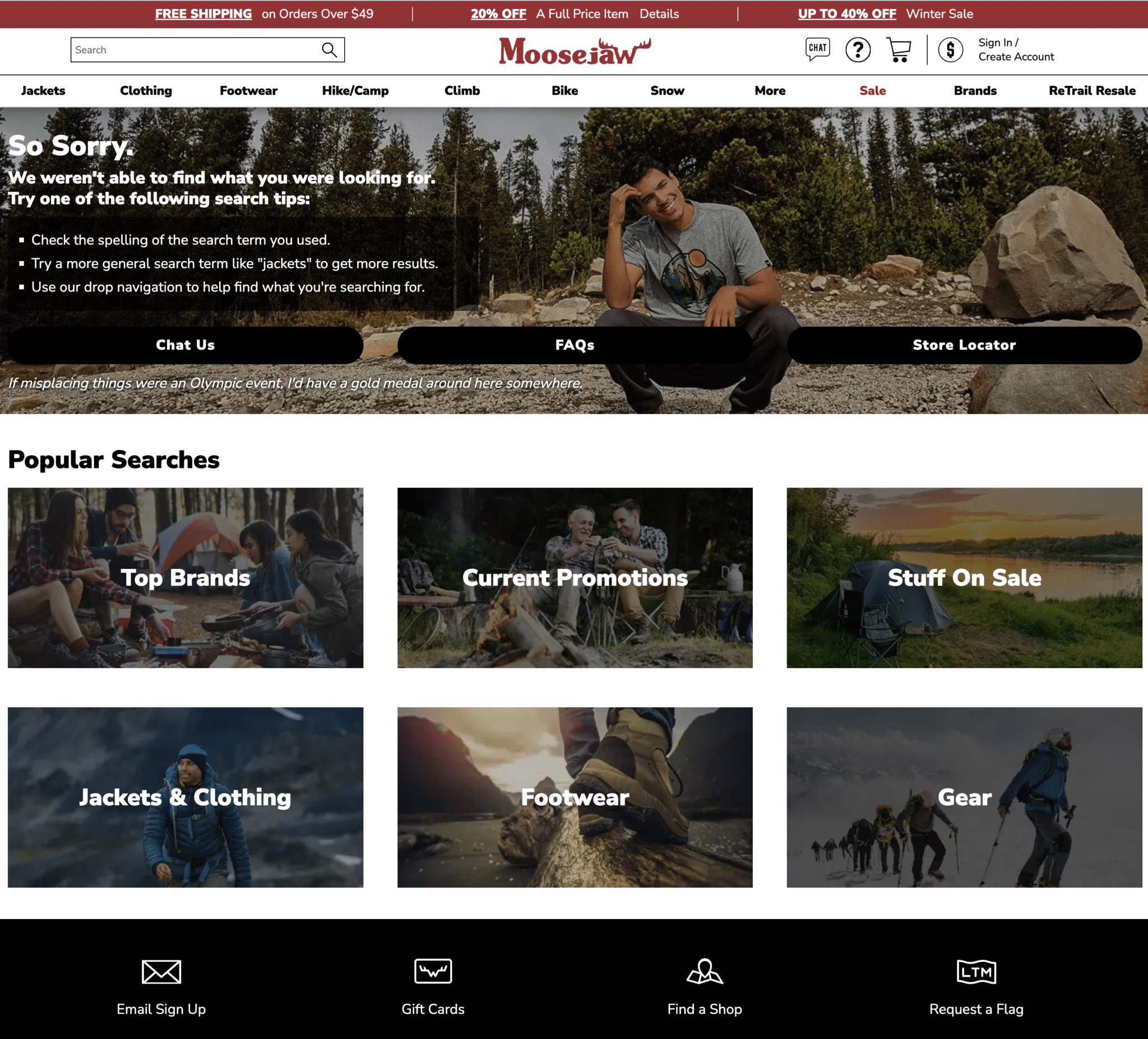
Here are examples of lighthearted, humorous, quirky 404 pages that use witty and clever language to draw users in and keep them on the page.
1. Marvel

2. PitVipers
3. Southwest
4. Chubbies
5. Taco Bell
6. Progressive Insurance

7. RyanAir

8. Lego
9. Wendy’s
10. Moosejaw
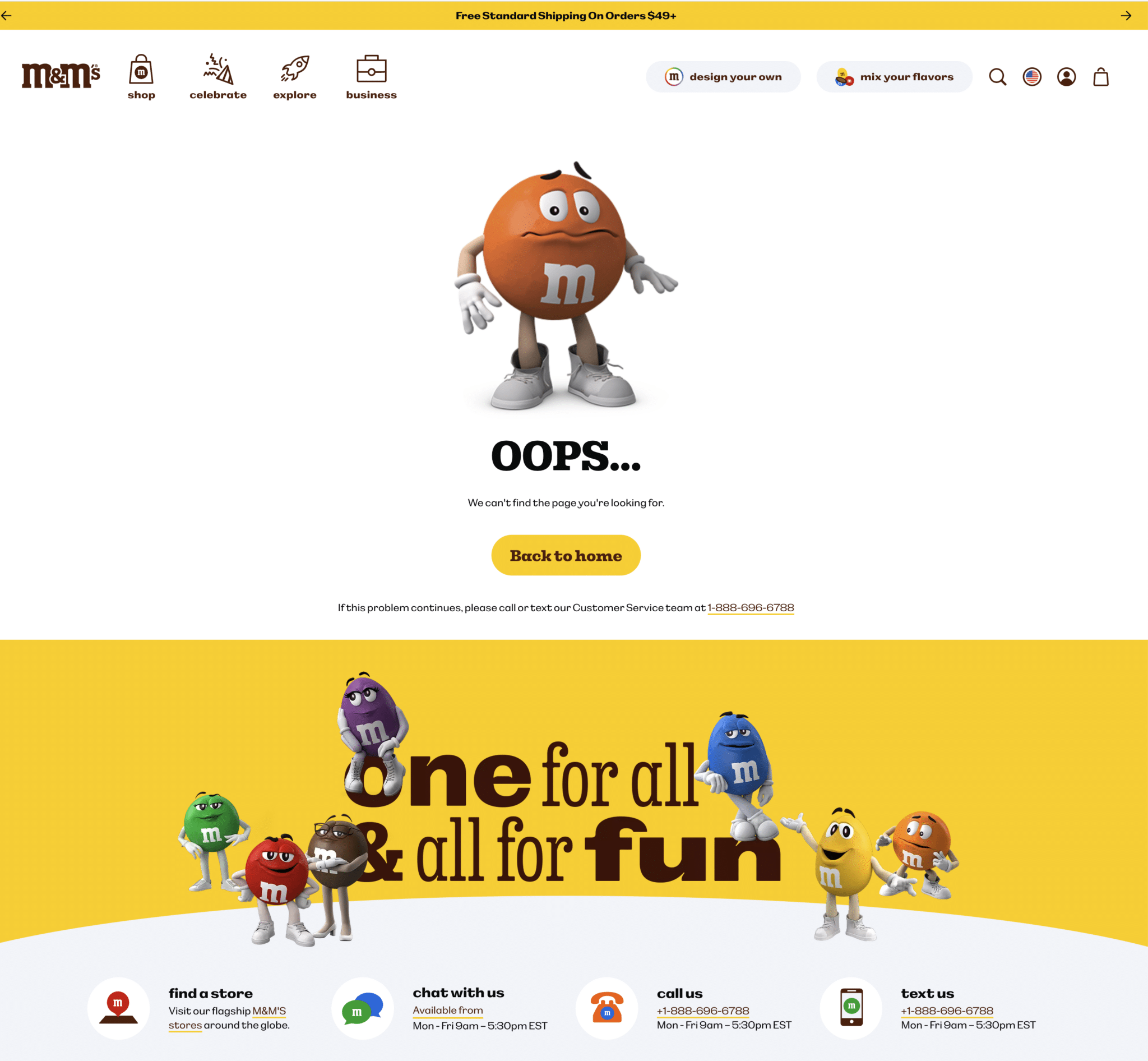
11. M&M’s
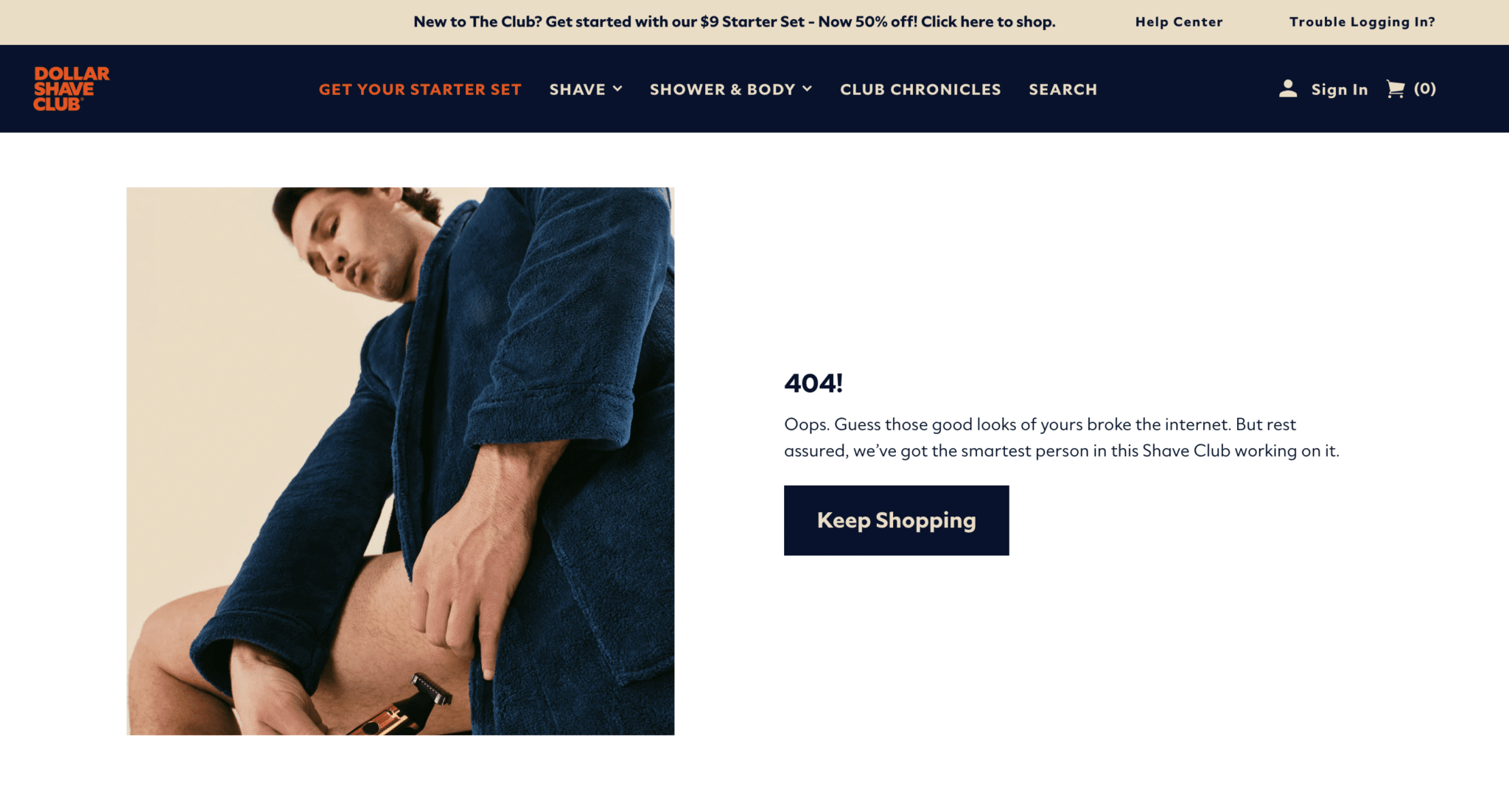
12. Dollar Shave Club
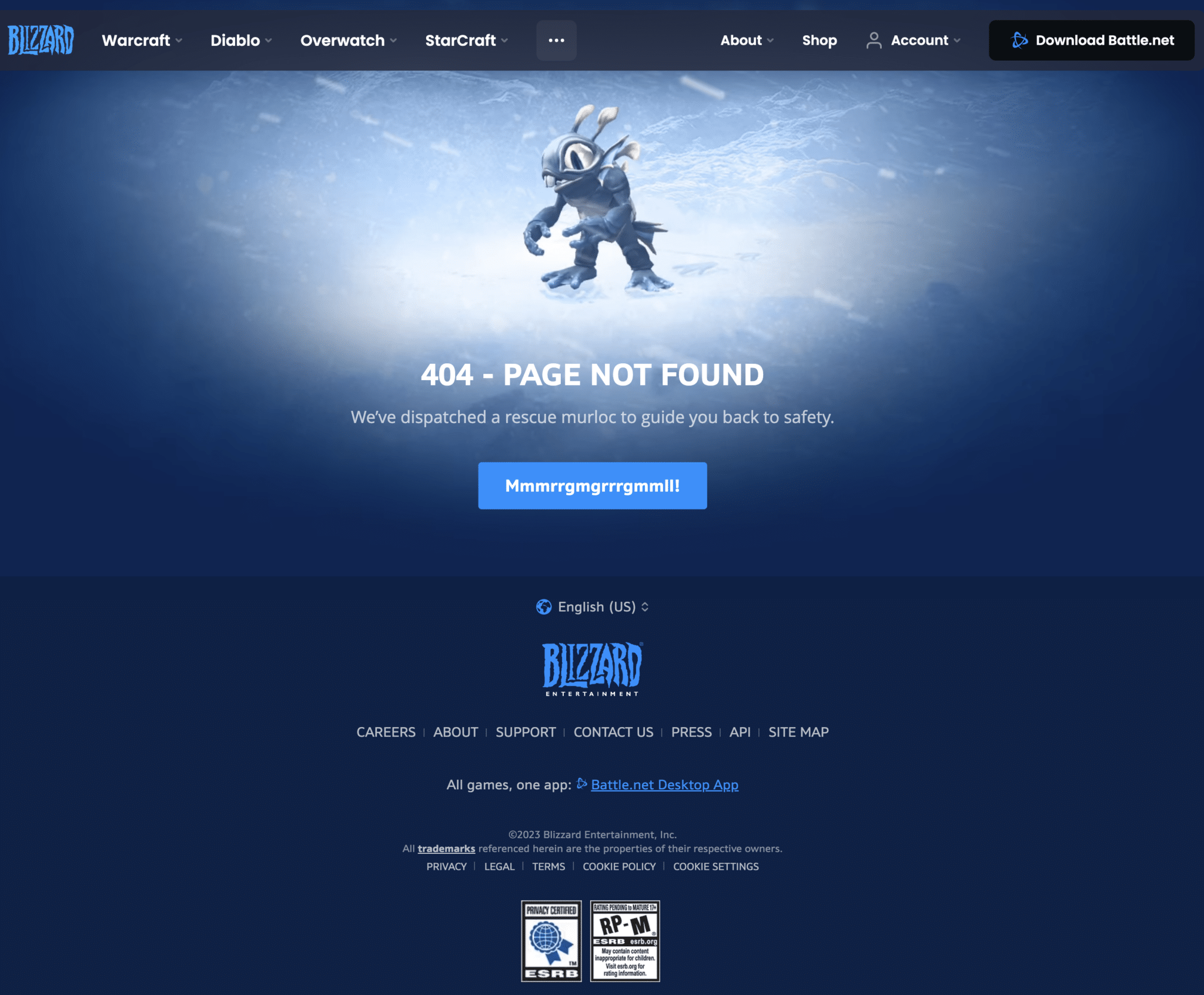
13. Blizzard
Formal 404 page examples
Here are examples of formal 404 pages designed to look more professional and take a respectful tone in the copy.
14. Medium

15. Delta

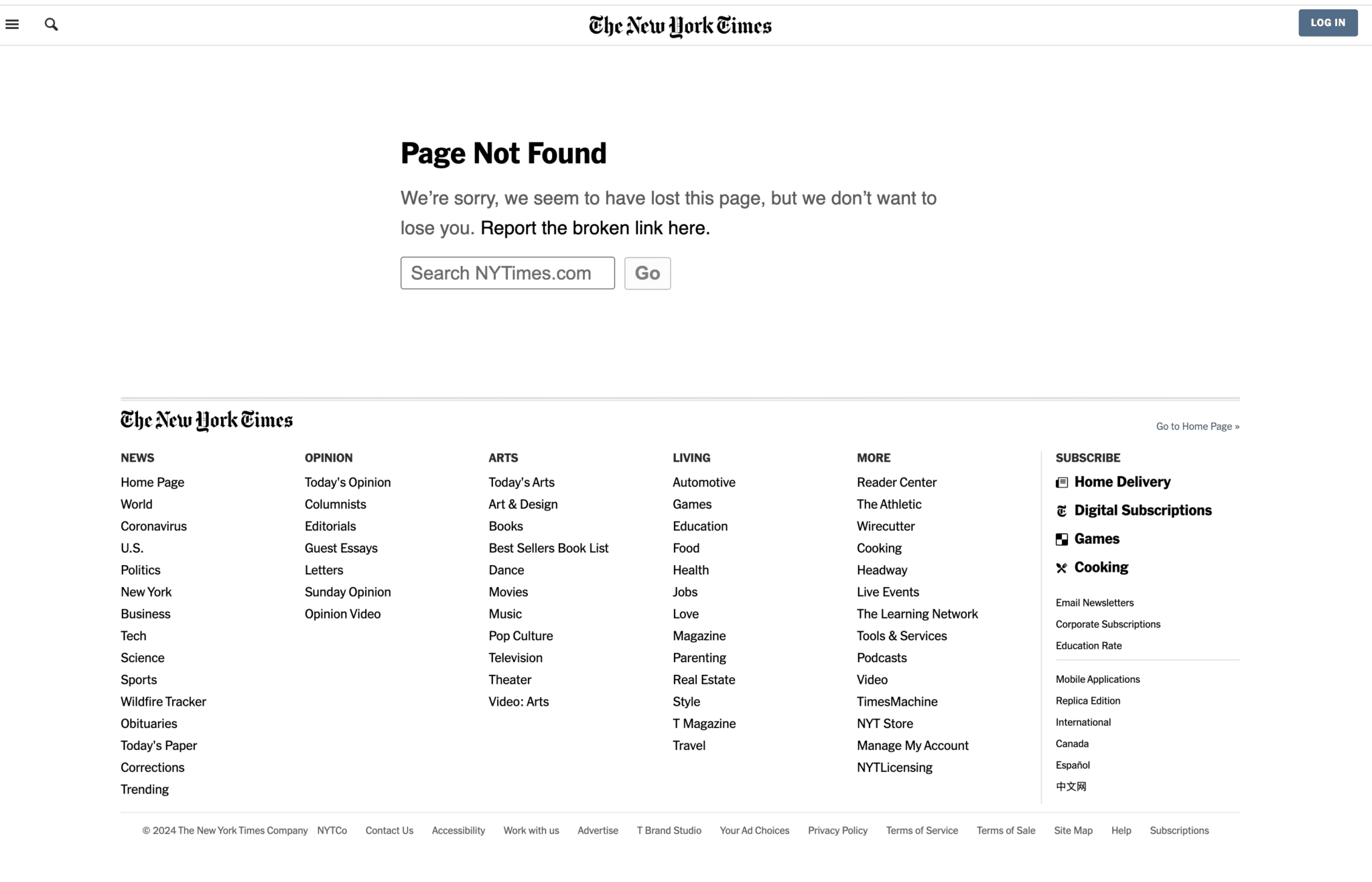
16. The New York Times
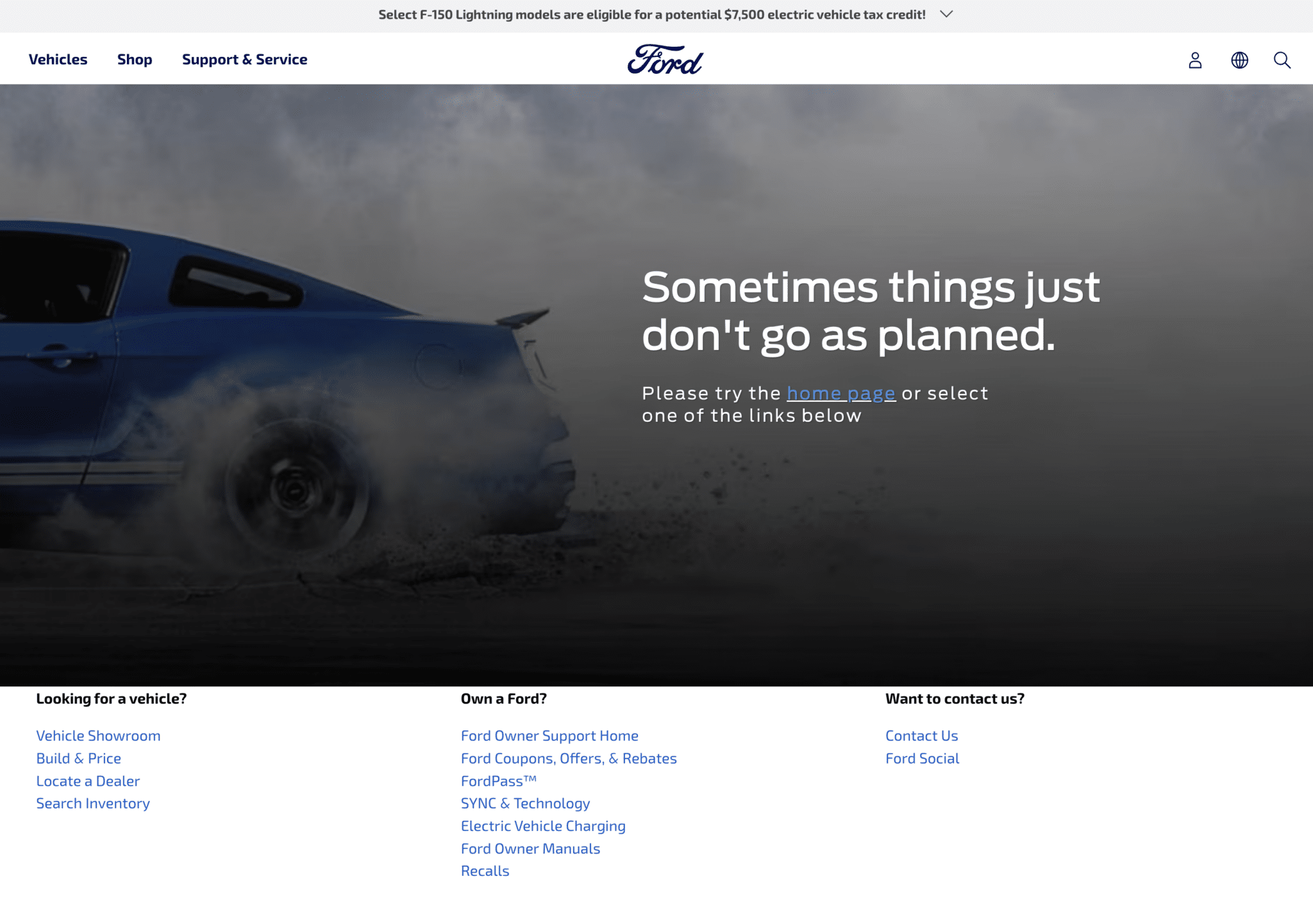
17. Ford
SaaS 404 page examples
Here are examples of SaaS 404 pages that align with users’ specific needs and expectations when visiting a SaaS platform. You’ll notice a clean, minimalistic design with a user-centric focus.
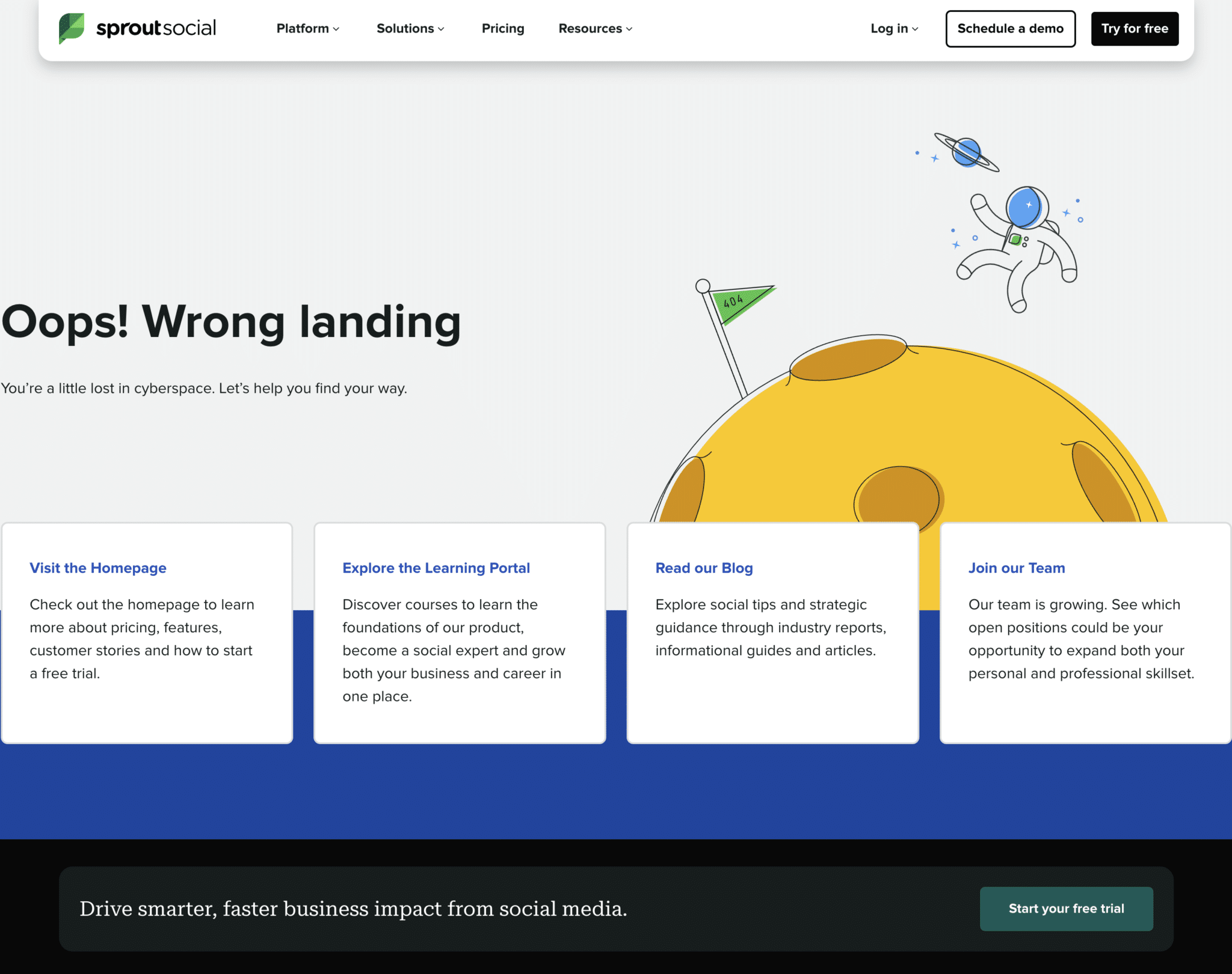
18. Sprout Social
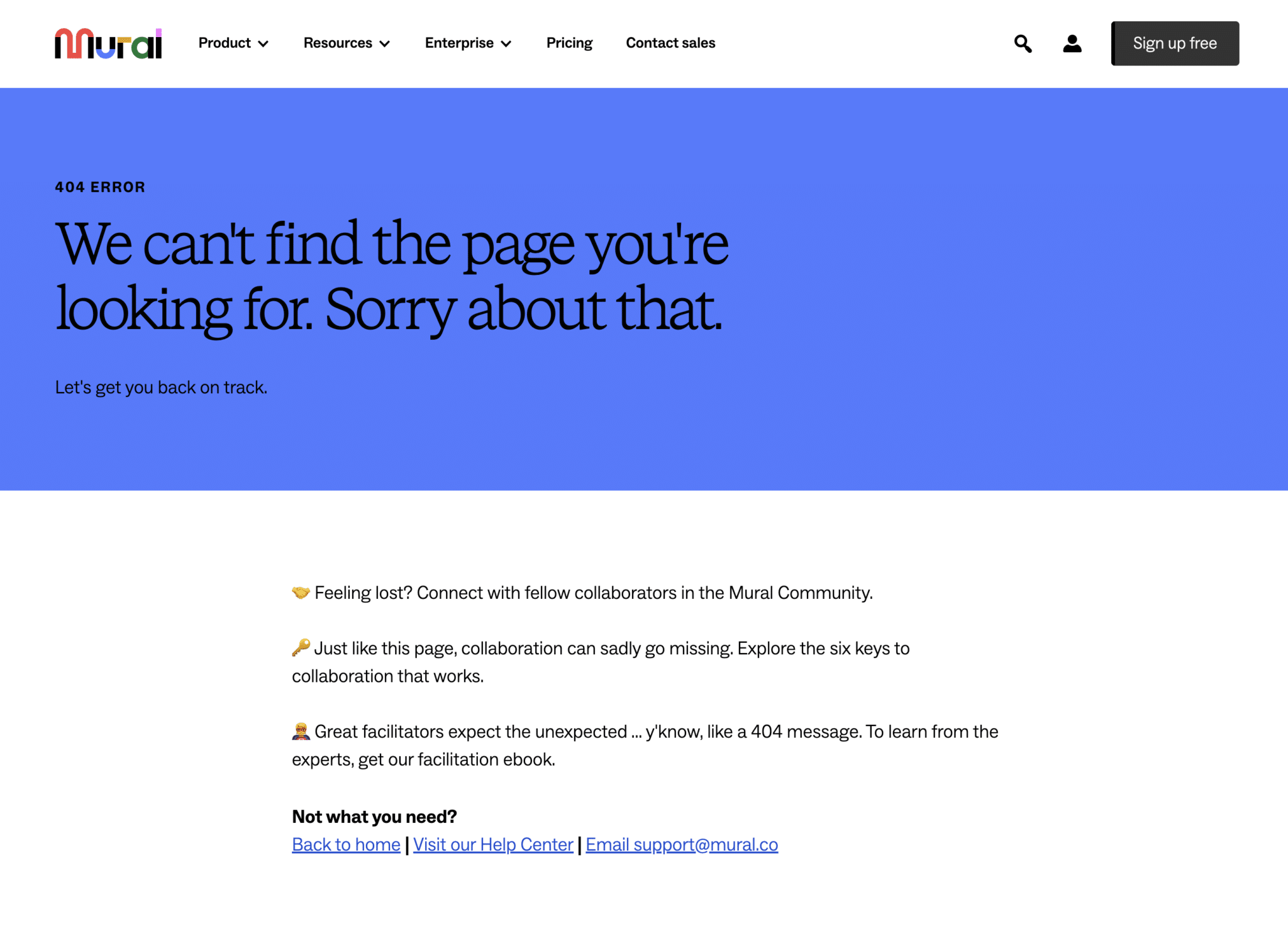
19. Mural
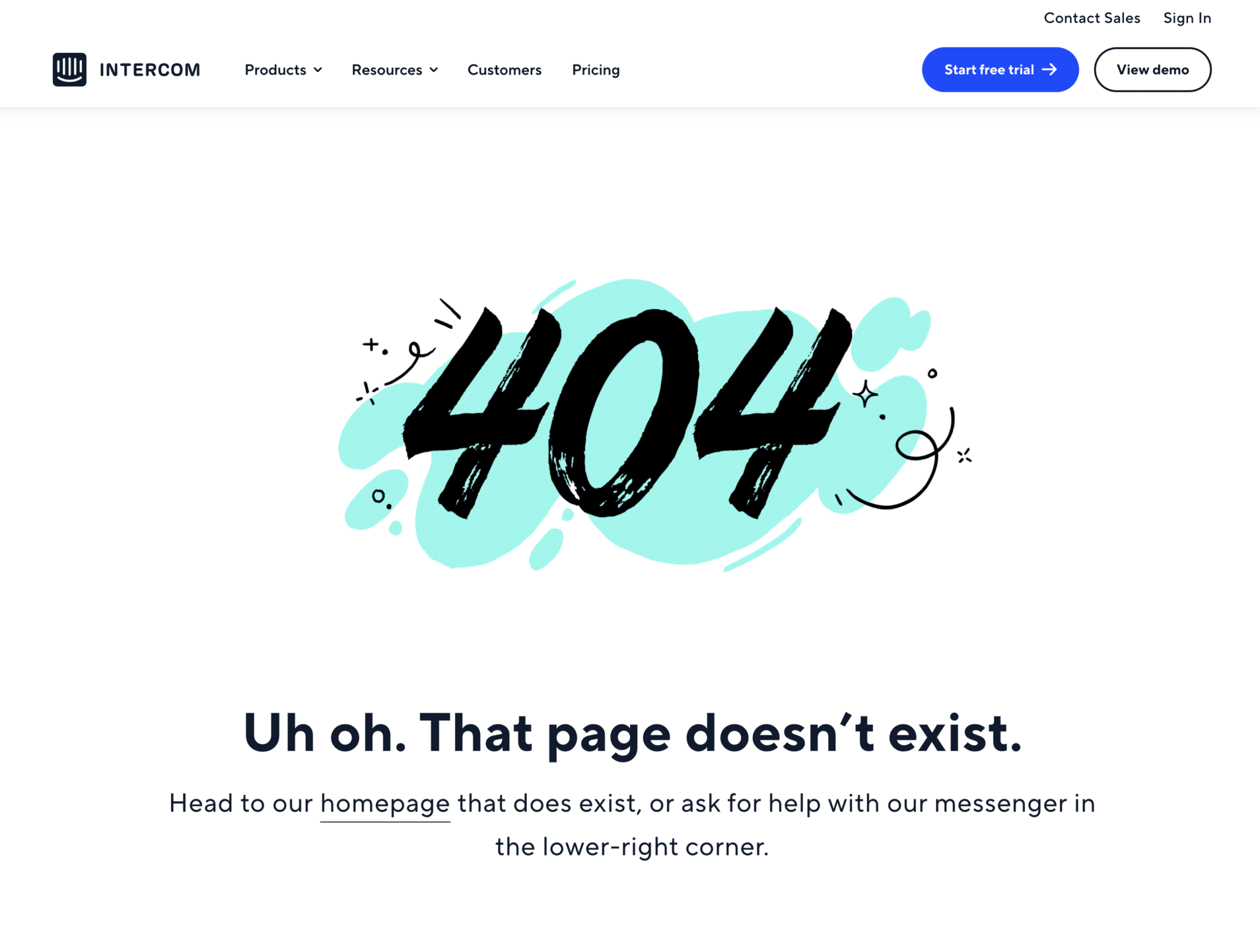
20. Intercom
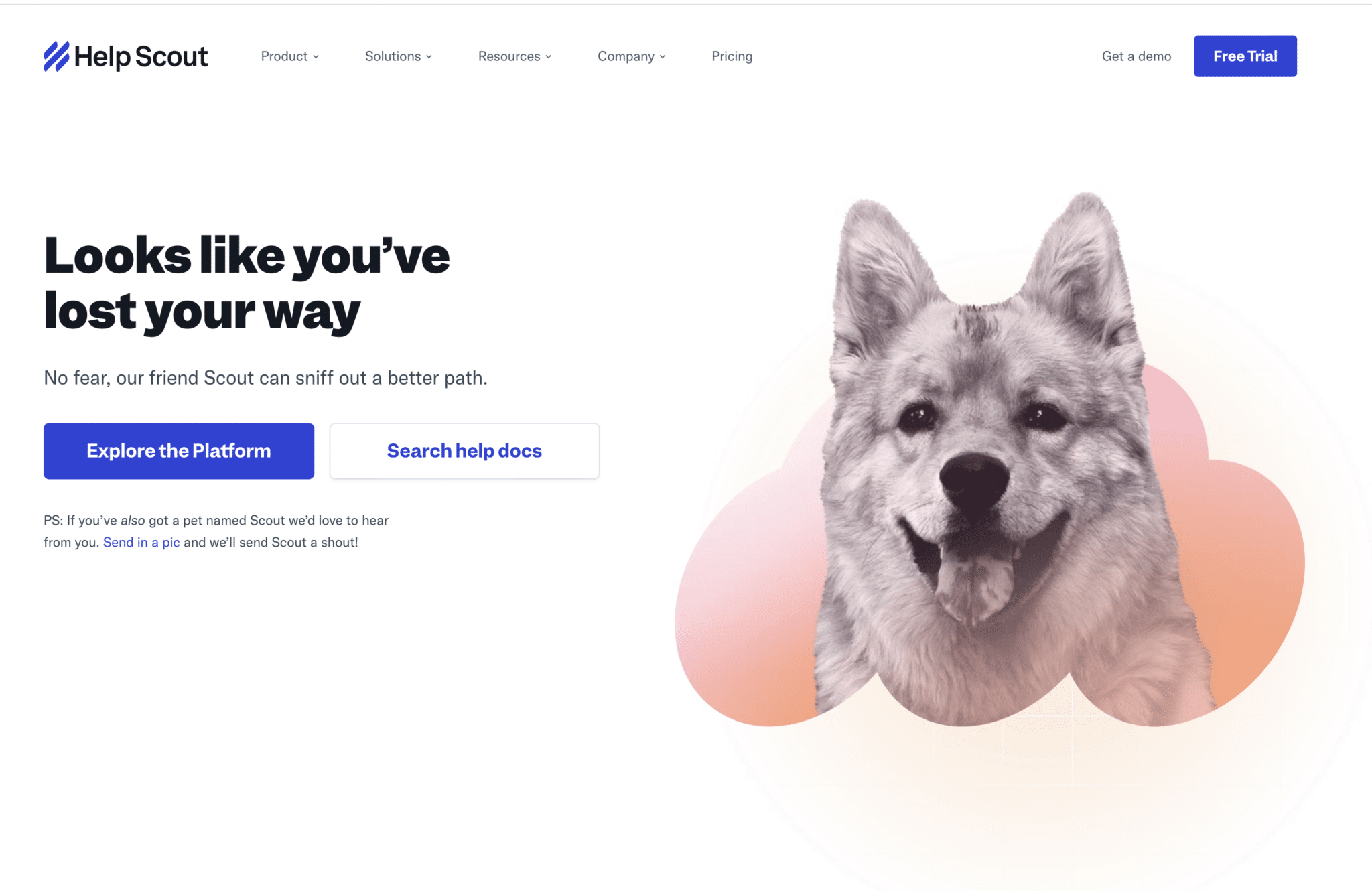
21. Help Scout
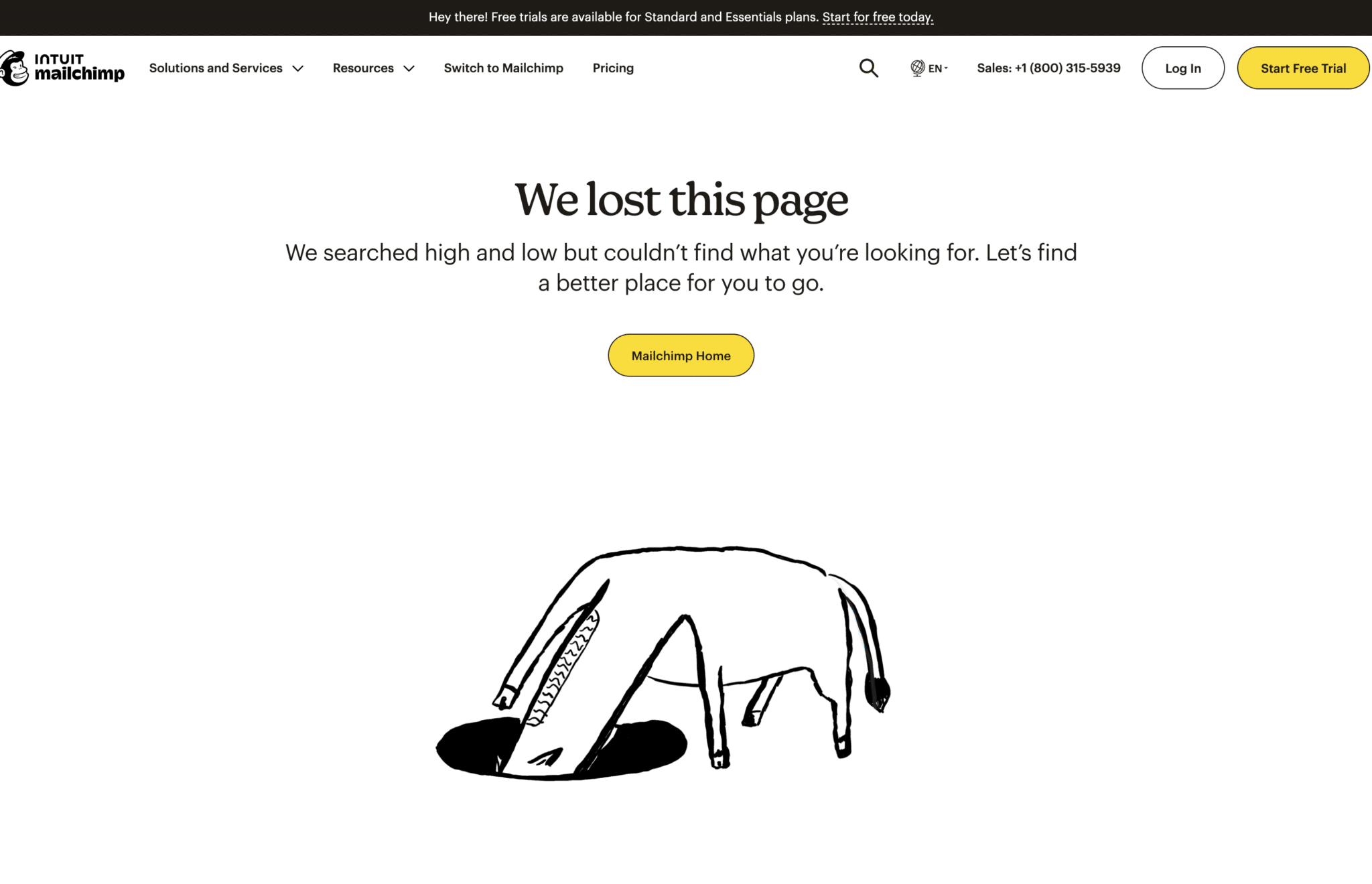
22. Mailchimp
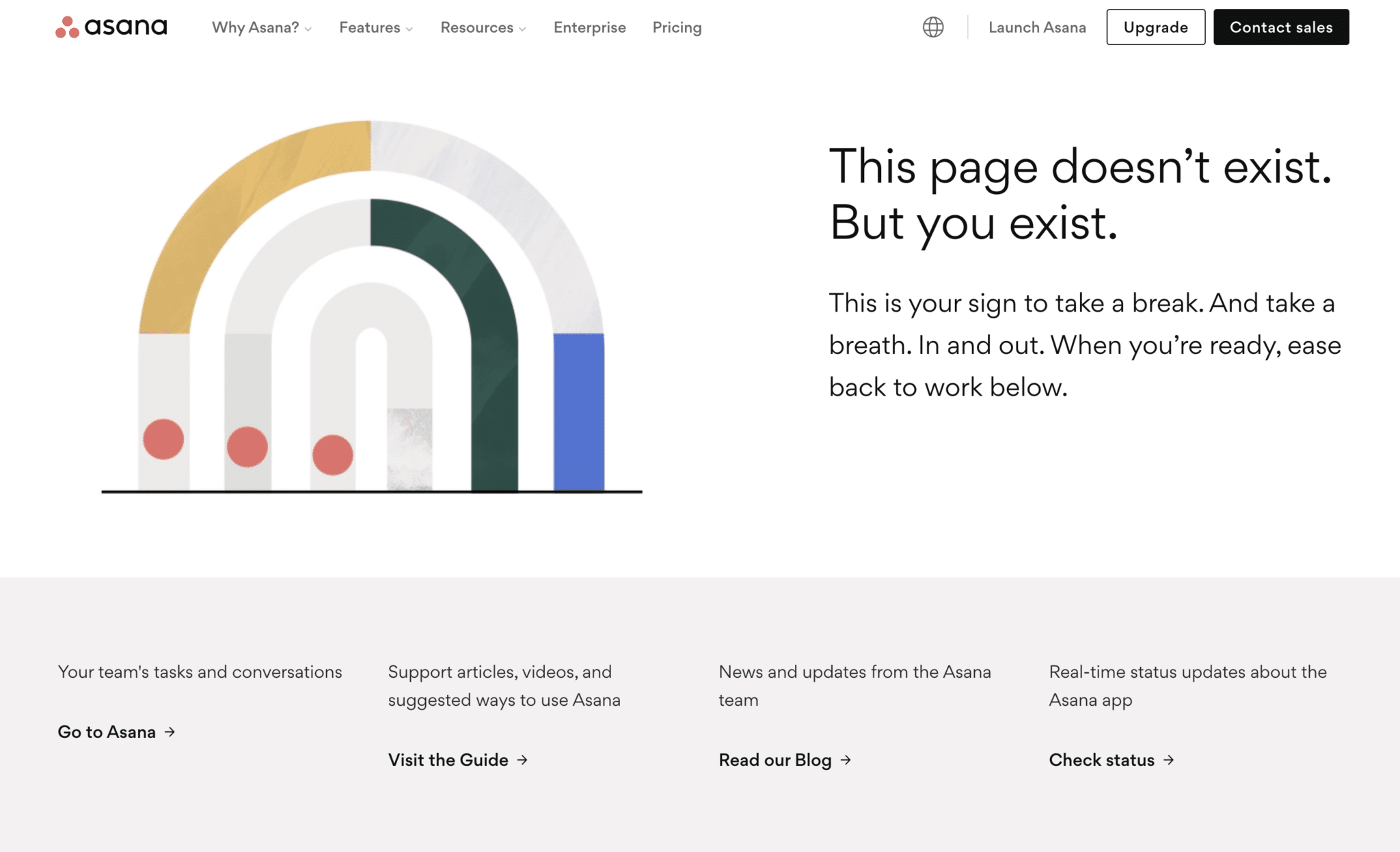
23. Asana
24. Uber

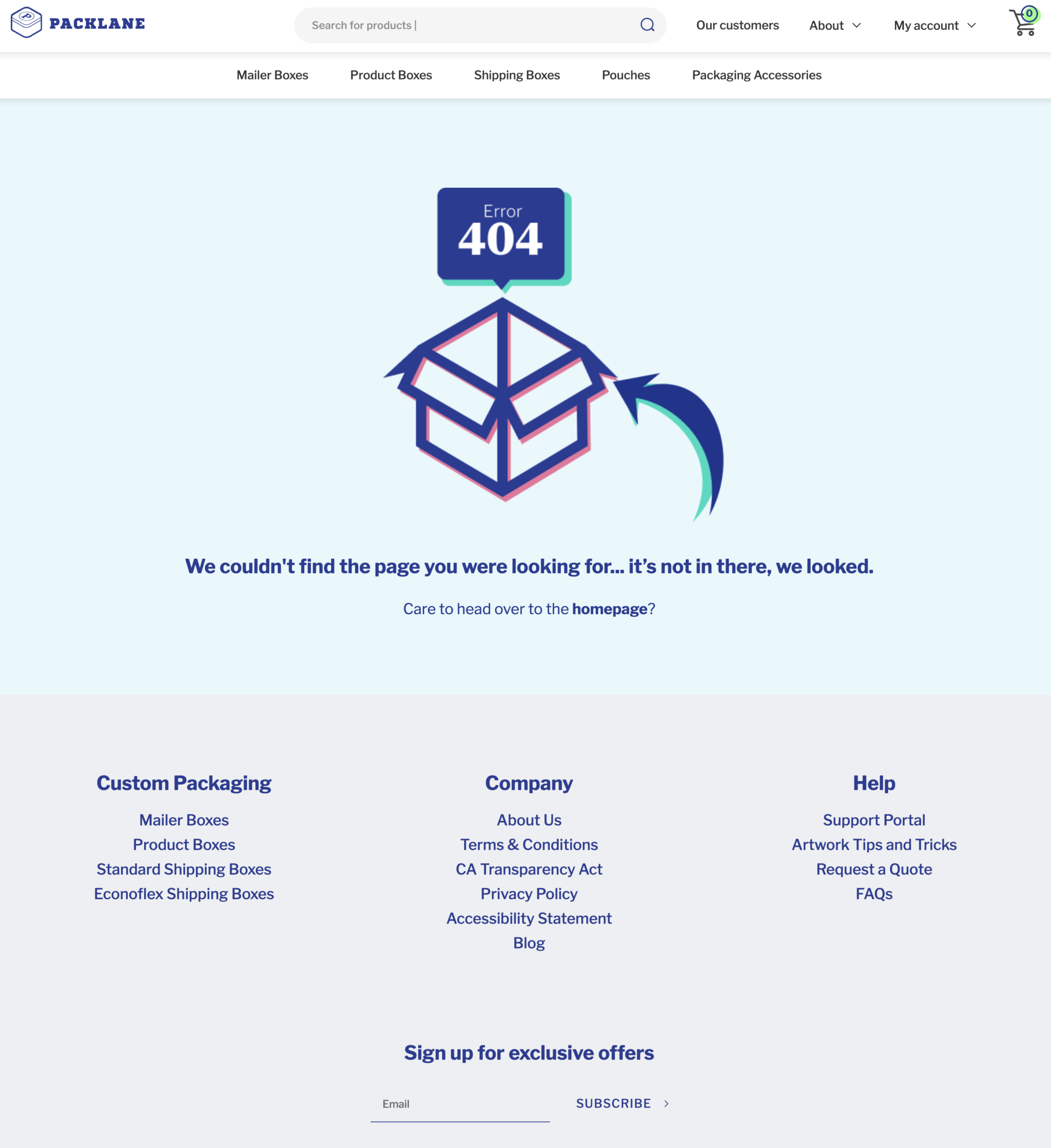
25. Packlane
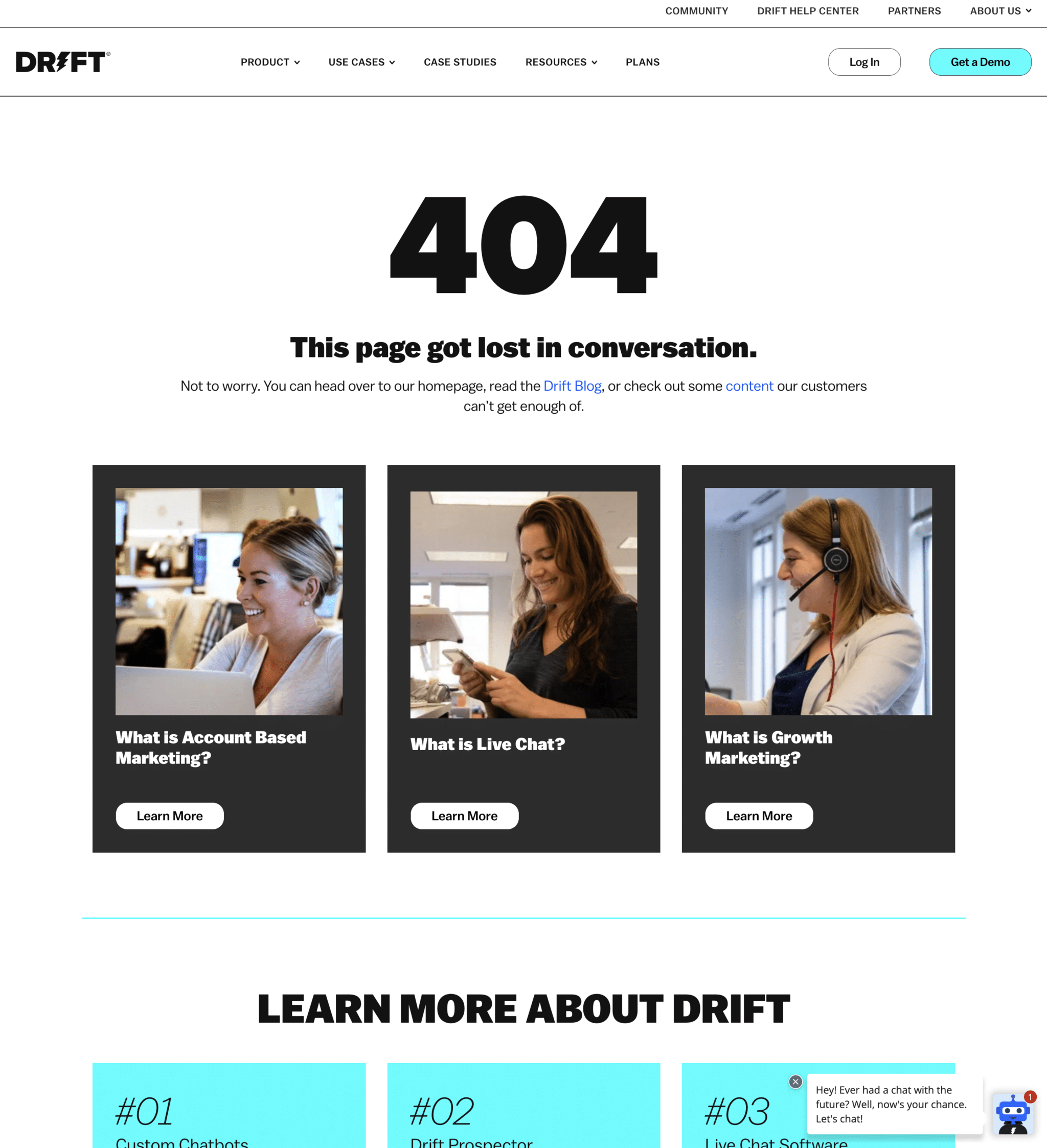
26. Drift
27. Spotify

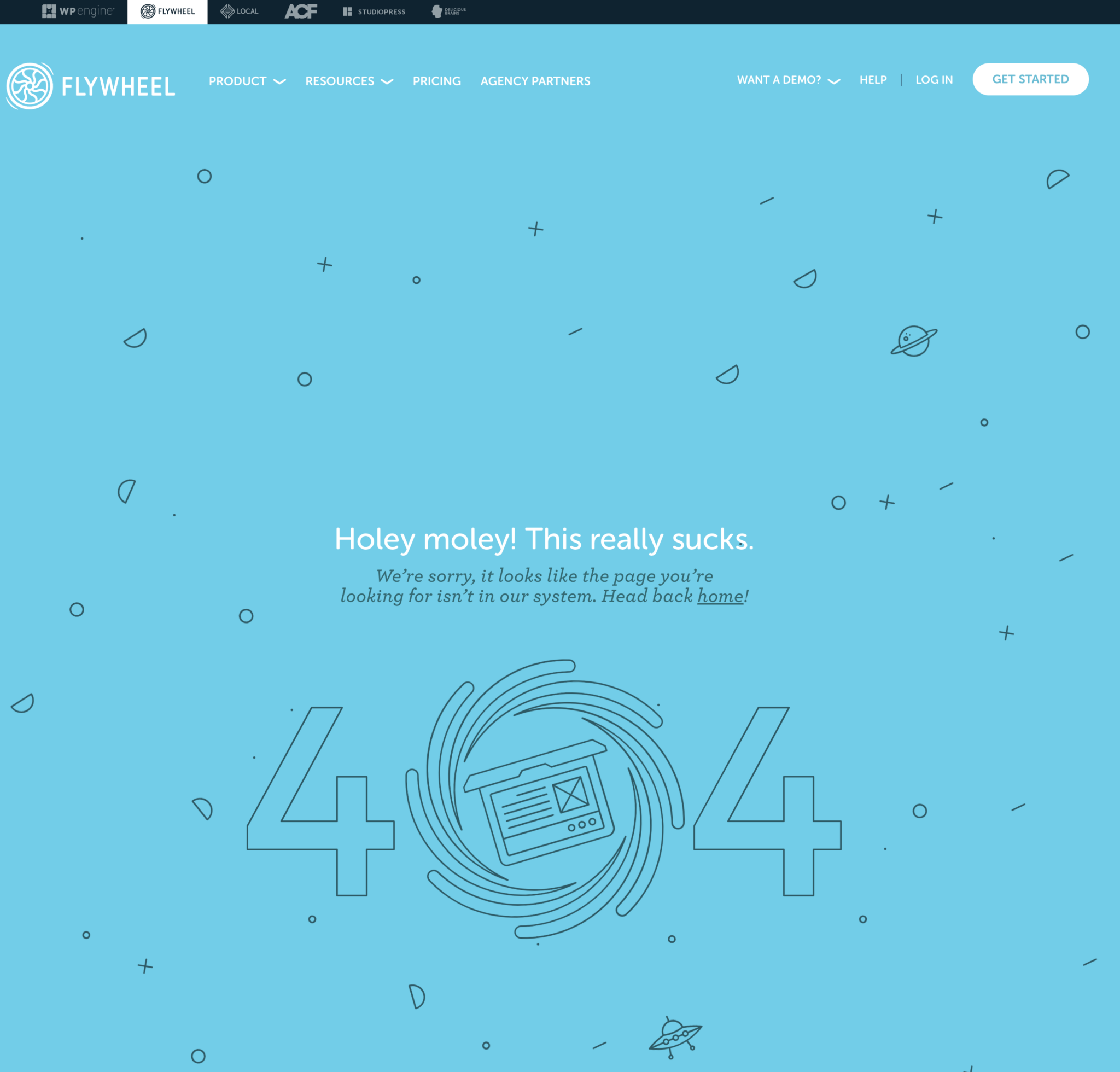
28. Flywheel
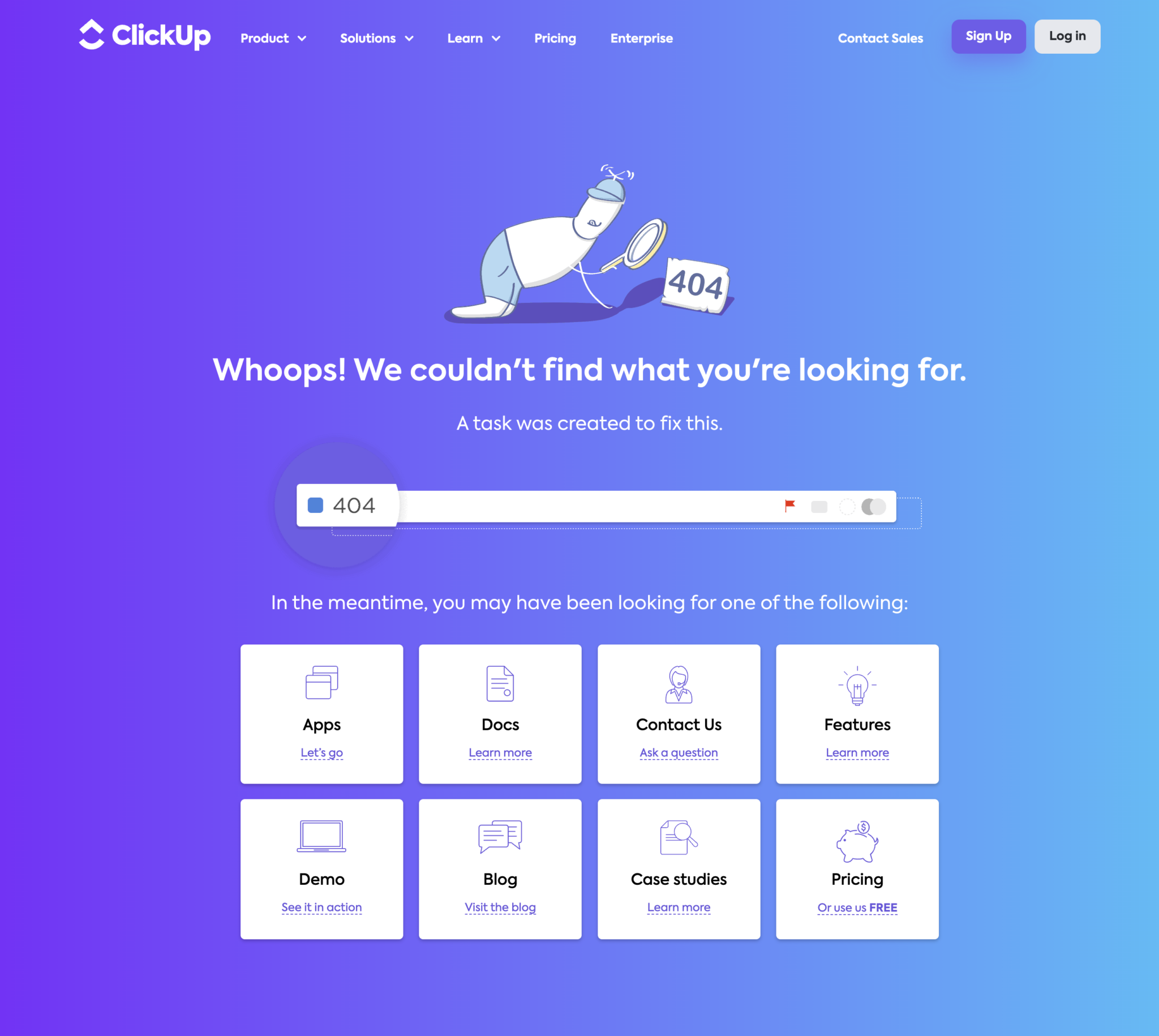
29. ClickUp
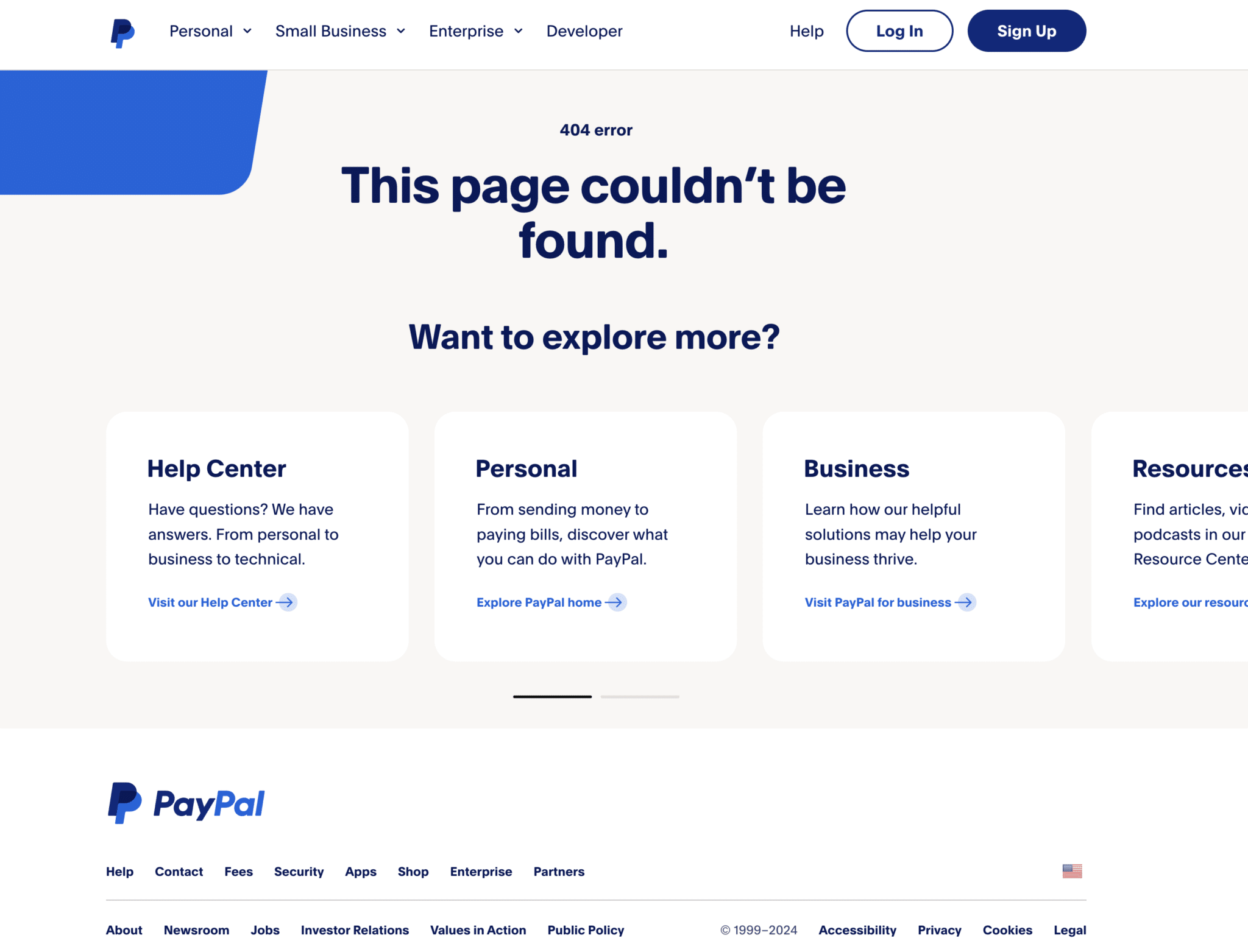
30. PayPal
31. Headspace

32. Zoom

33. Salesforce
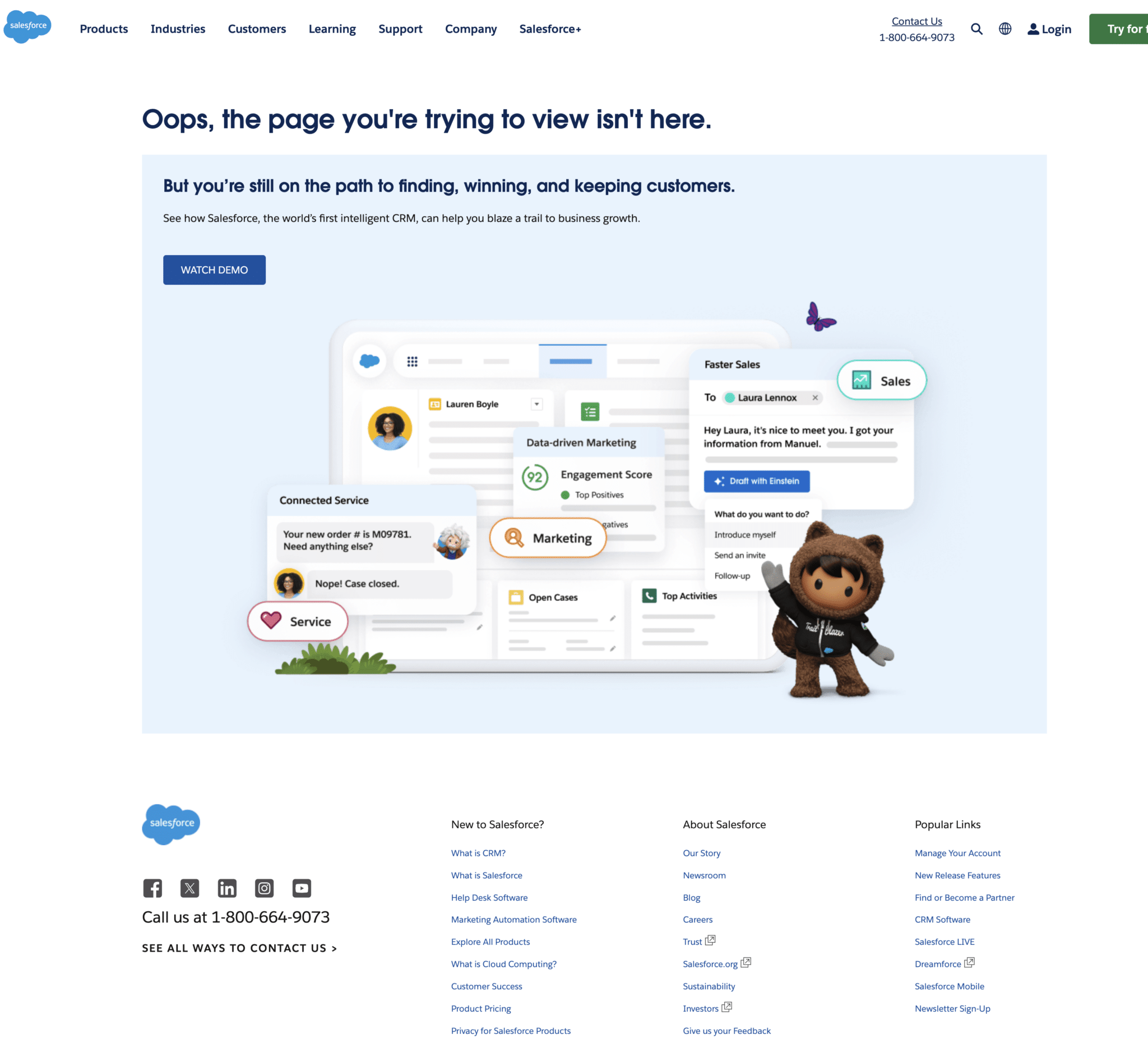
34. Smashing Magazine
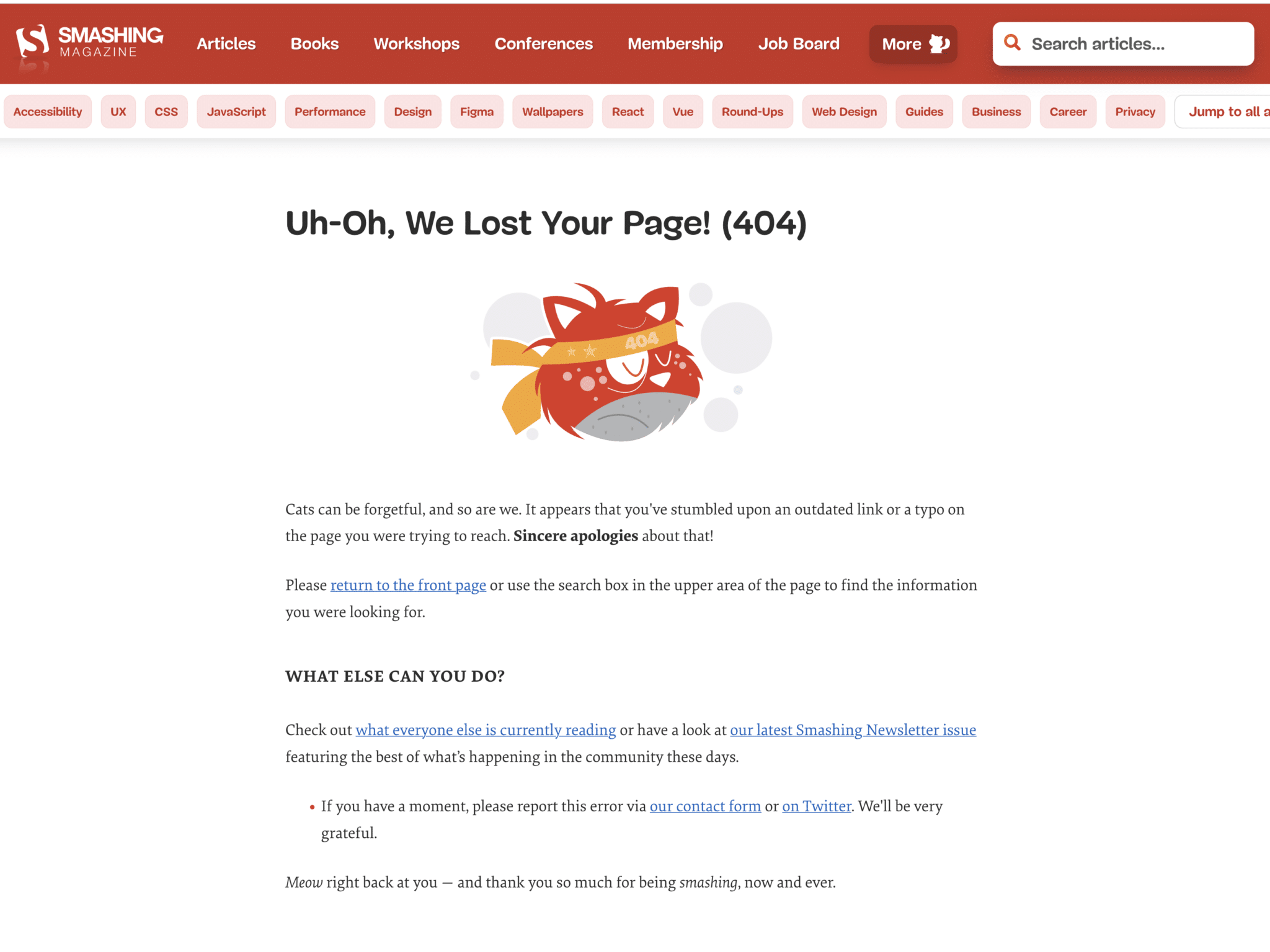
Ecommerce 404 page examples
Here are examples of ecommerce 404 pages that offer search functionality, category navigation, cart preservation, and even customer reviews.
35. Crocs
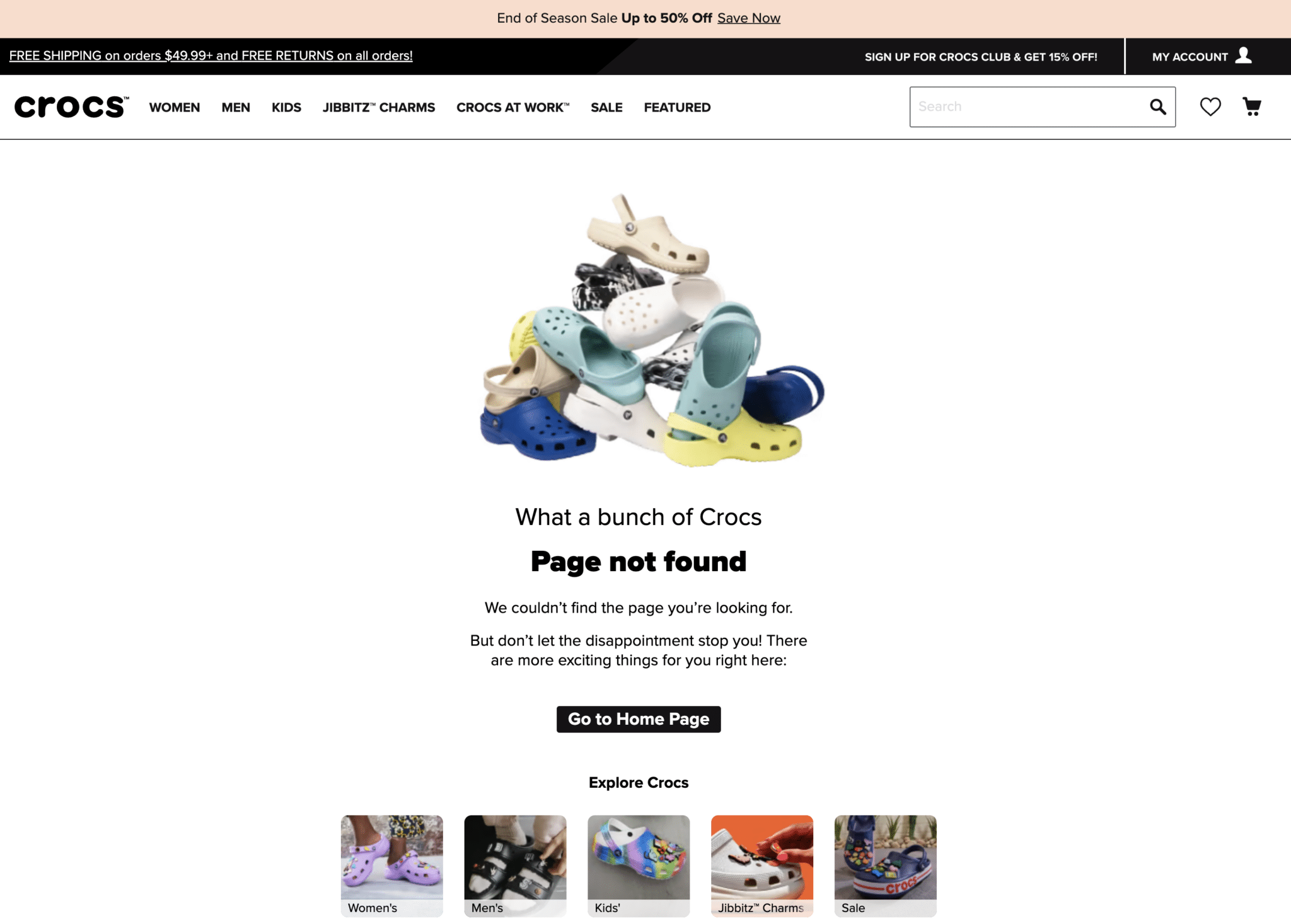
36. Ugg

37. Mrs. Meyers
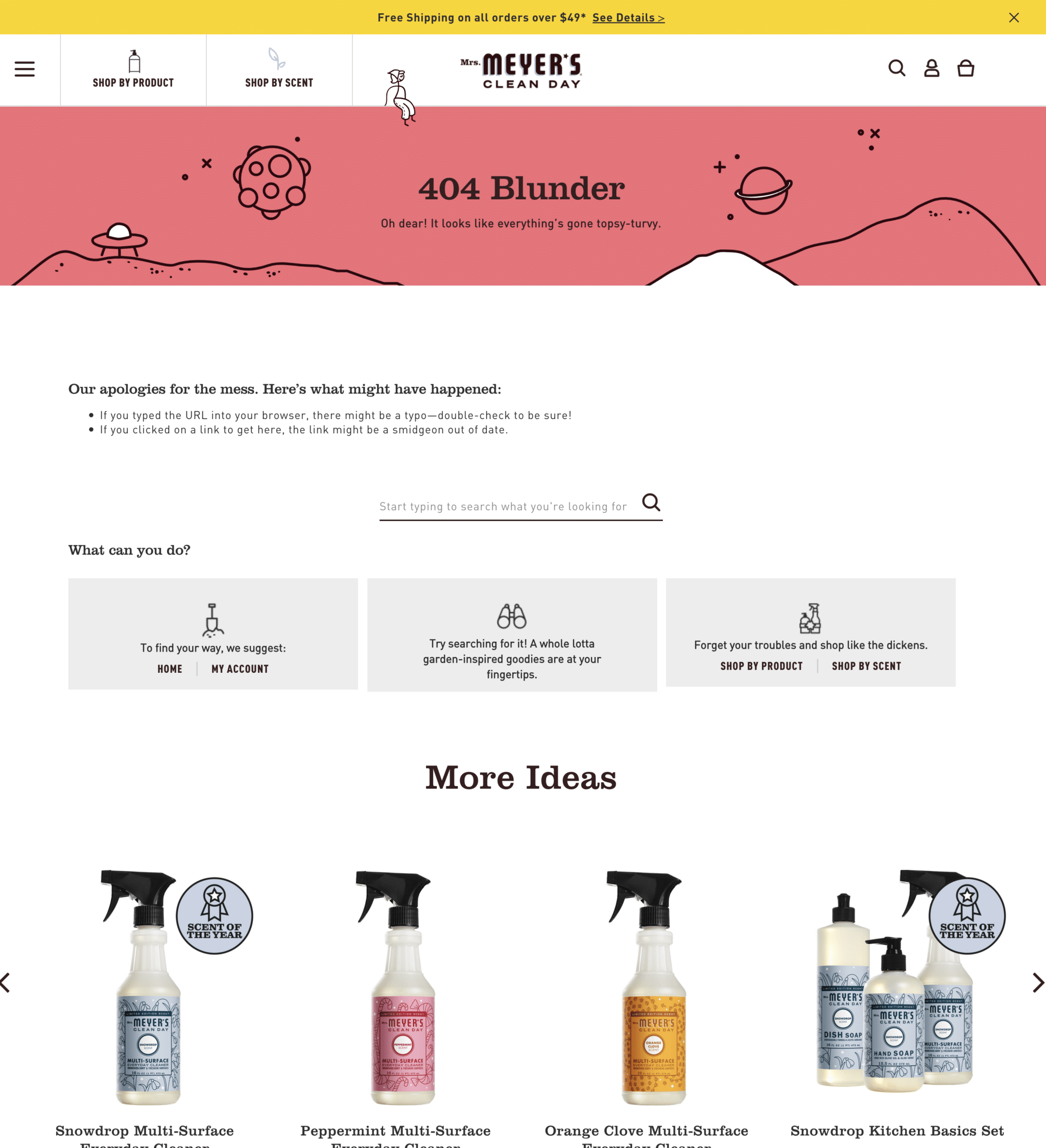
38. Garmin

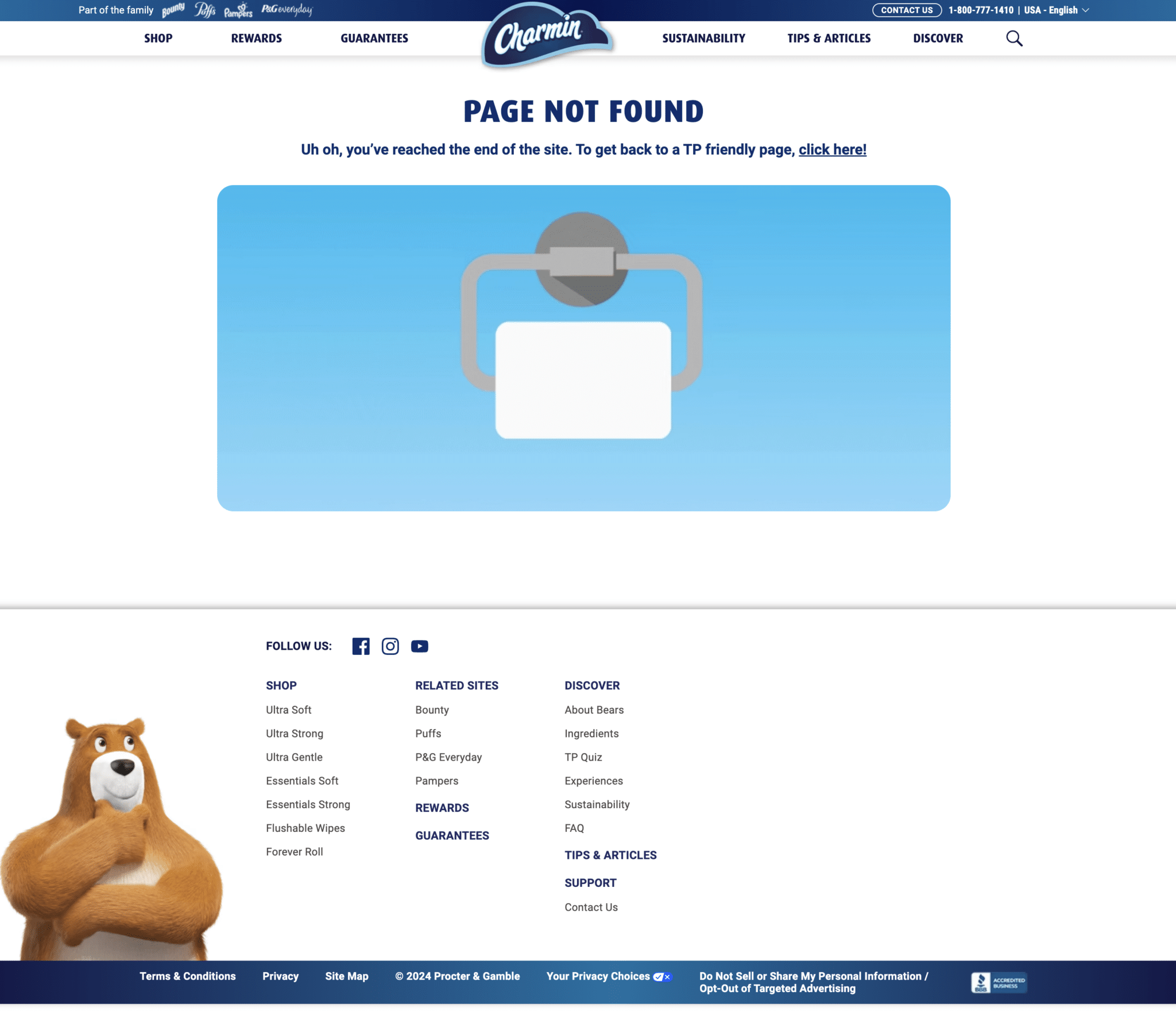
39. Charmin
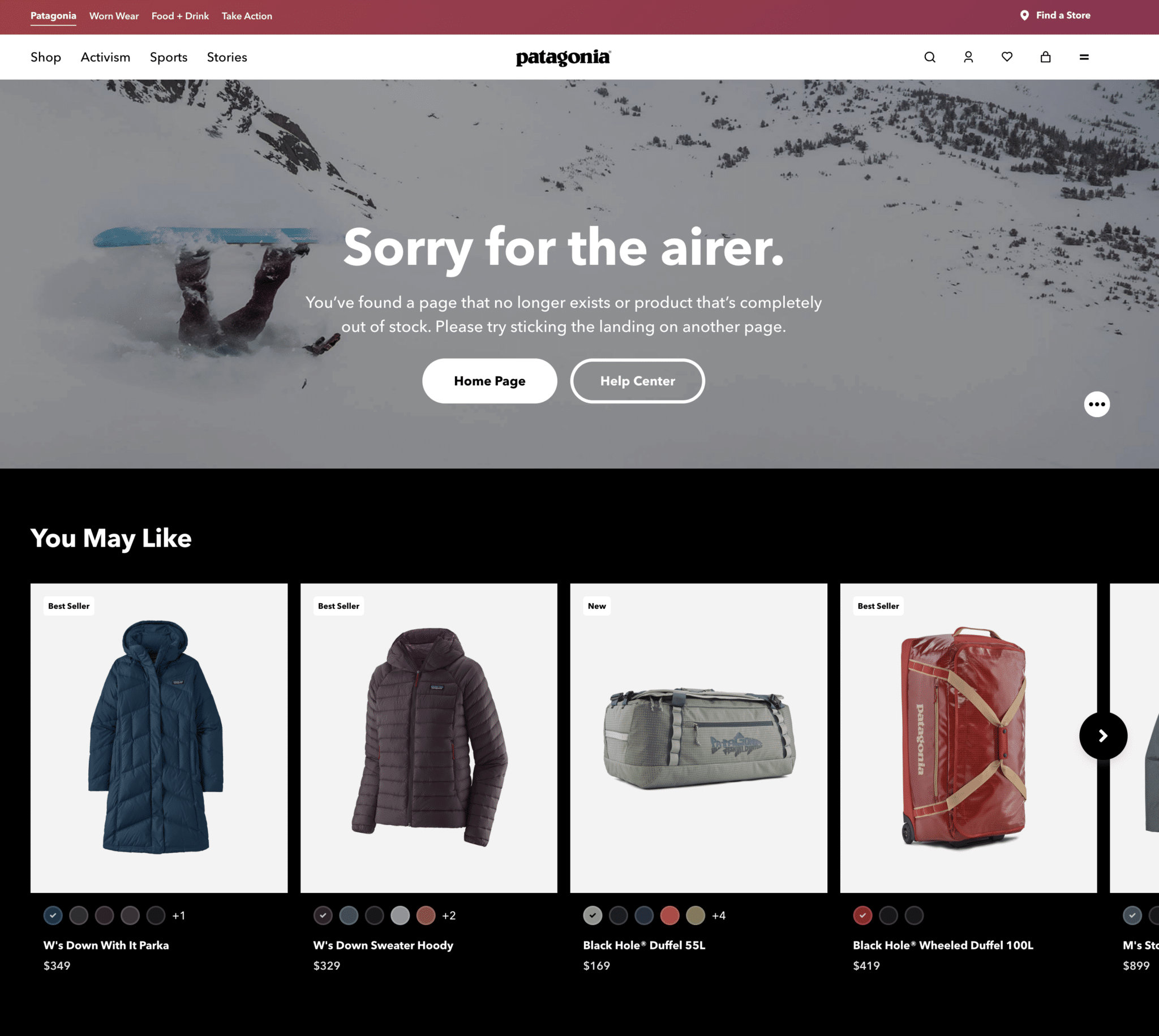
40. Patagonia
41. Yeti

42. Barstool Sports

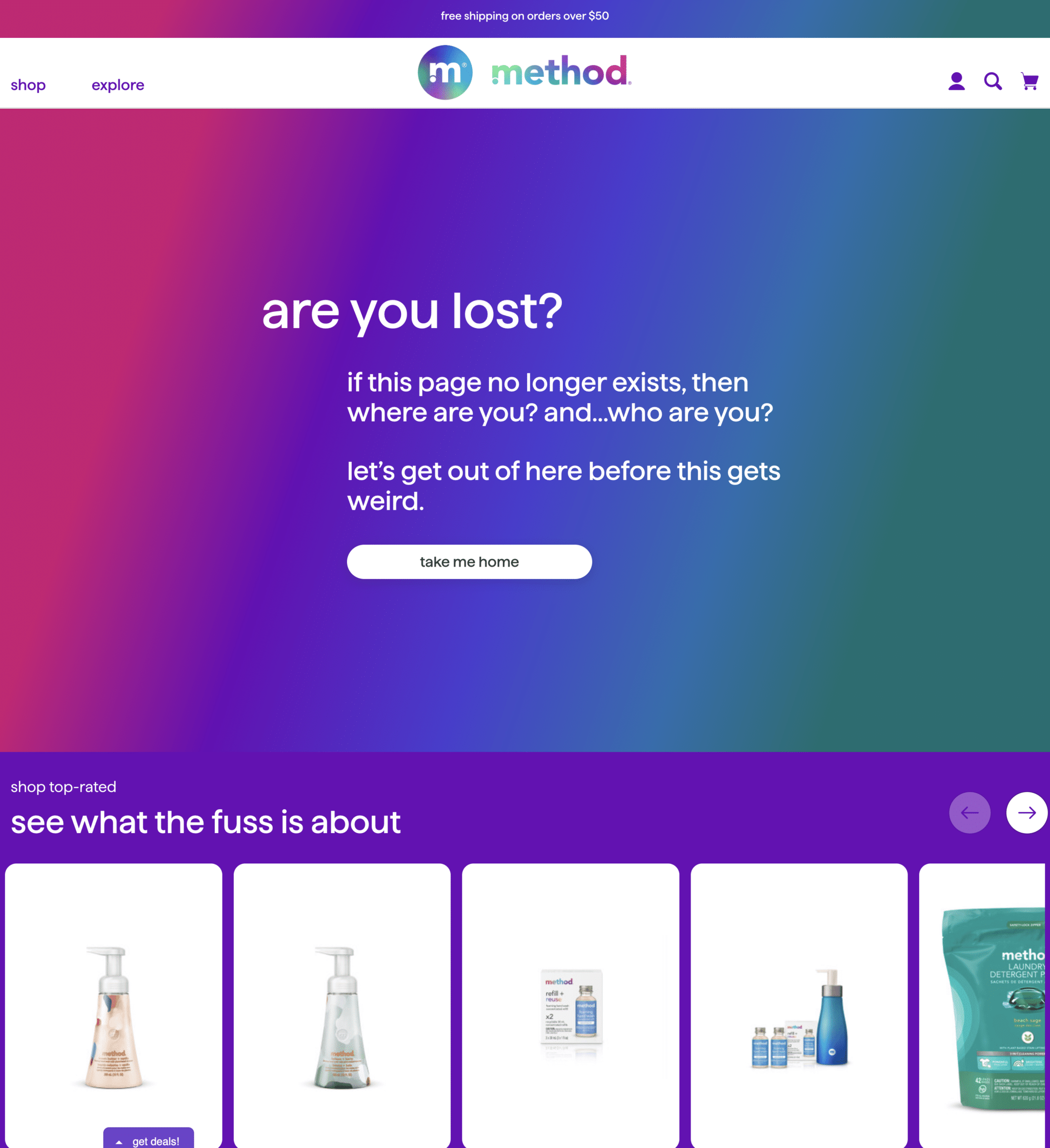
43. Method
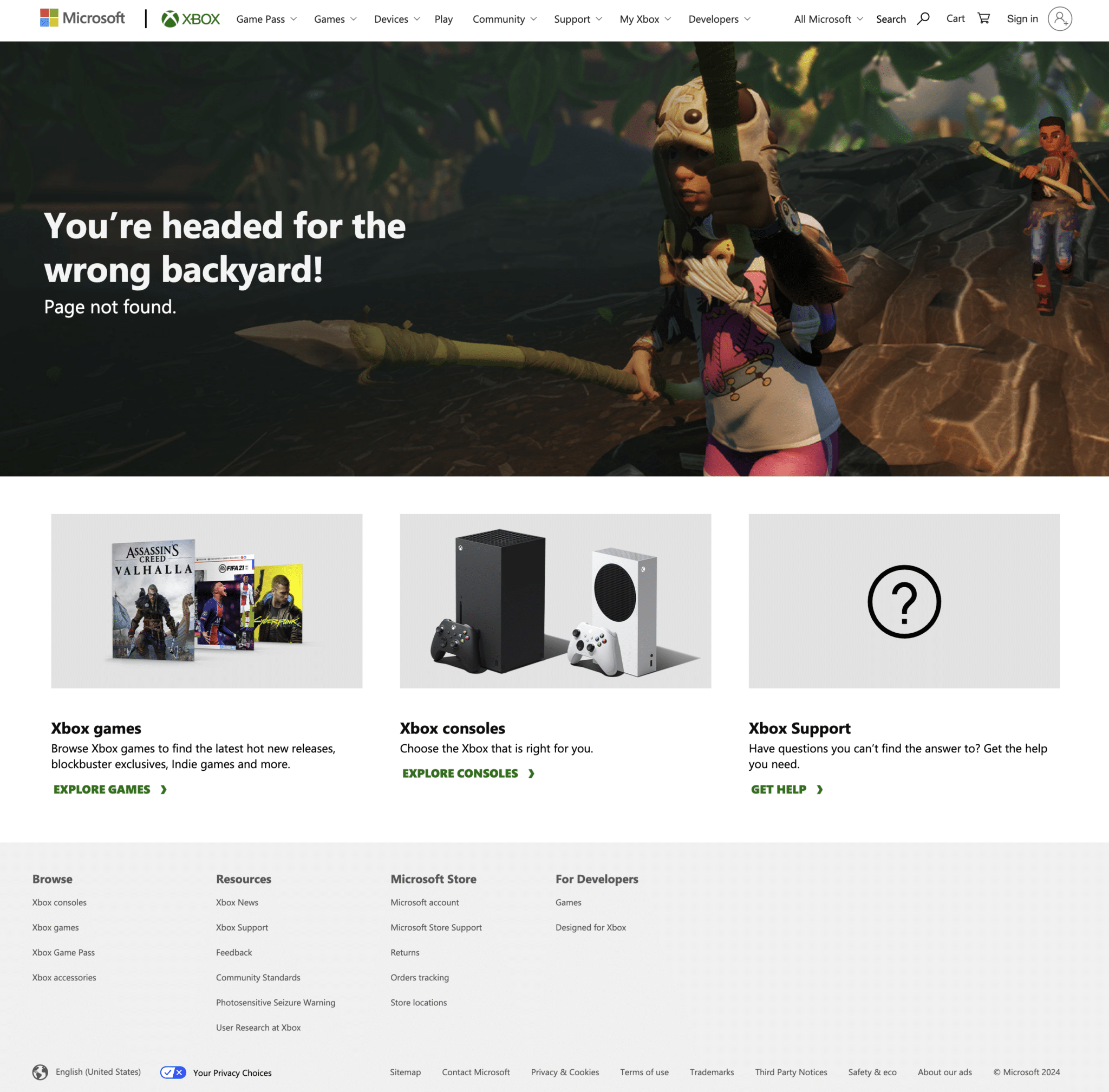
44. Xbox
45. Cards Against Humanity

Bad 404 page examples
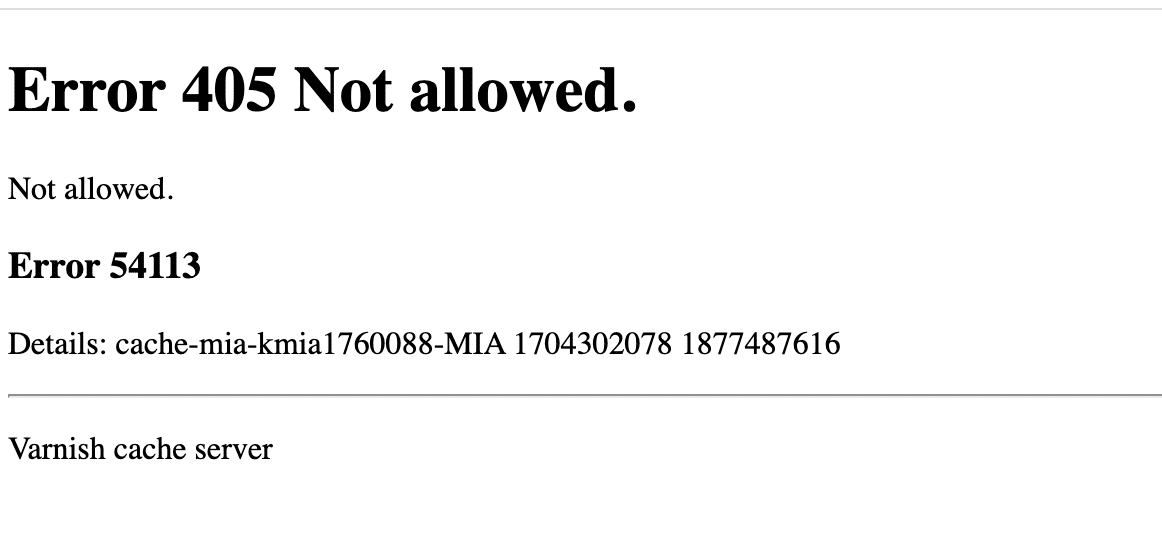
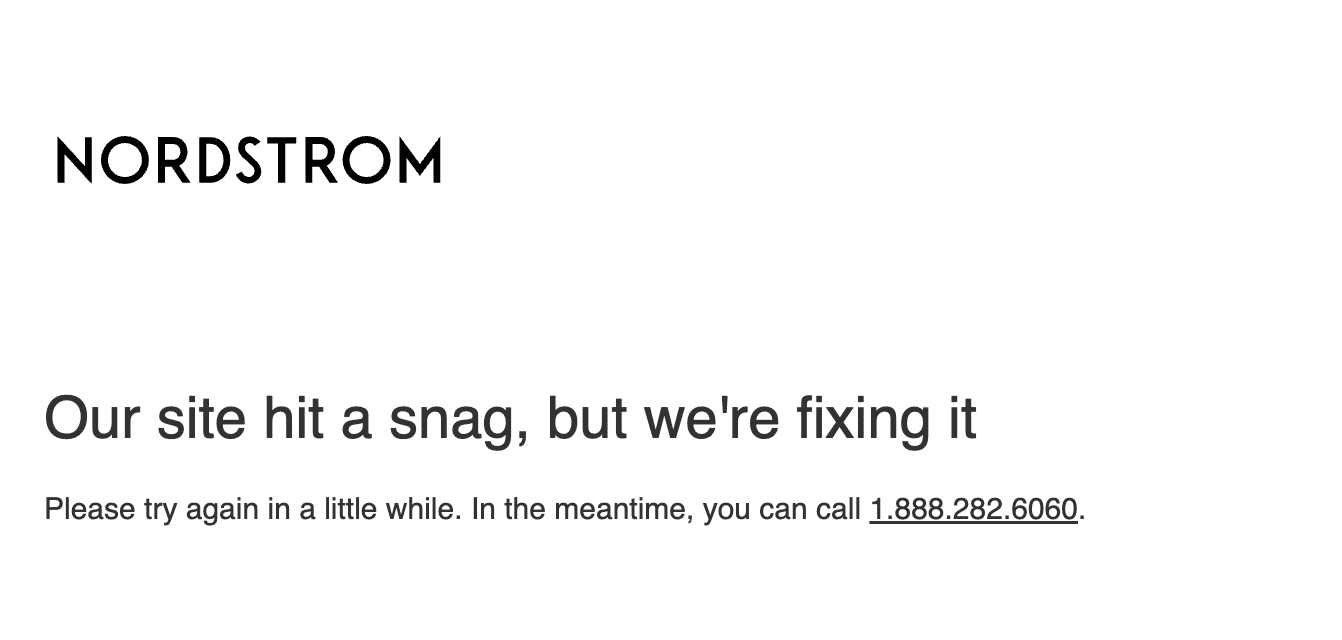
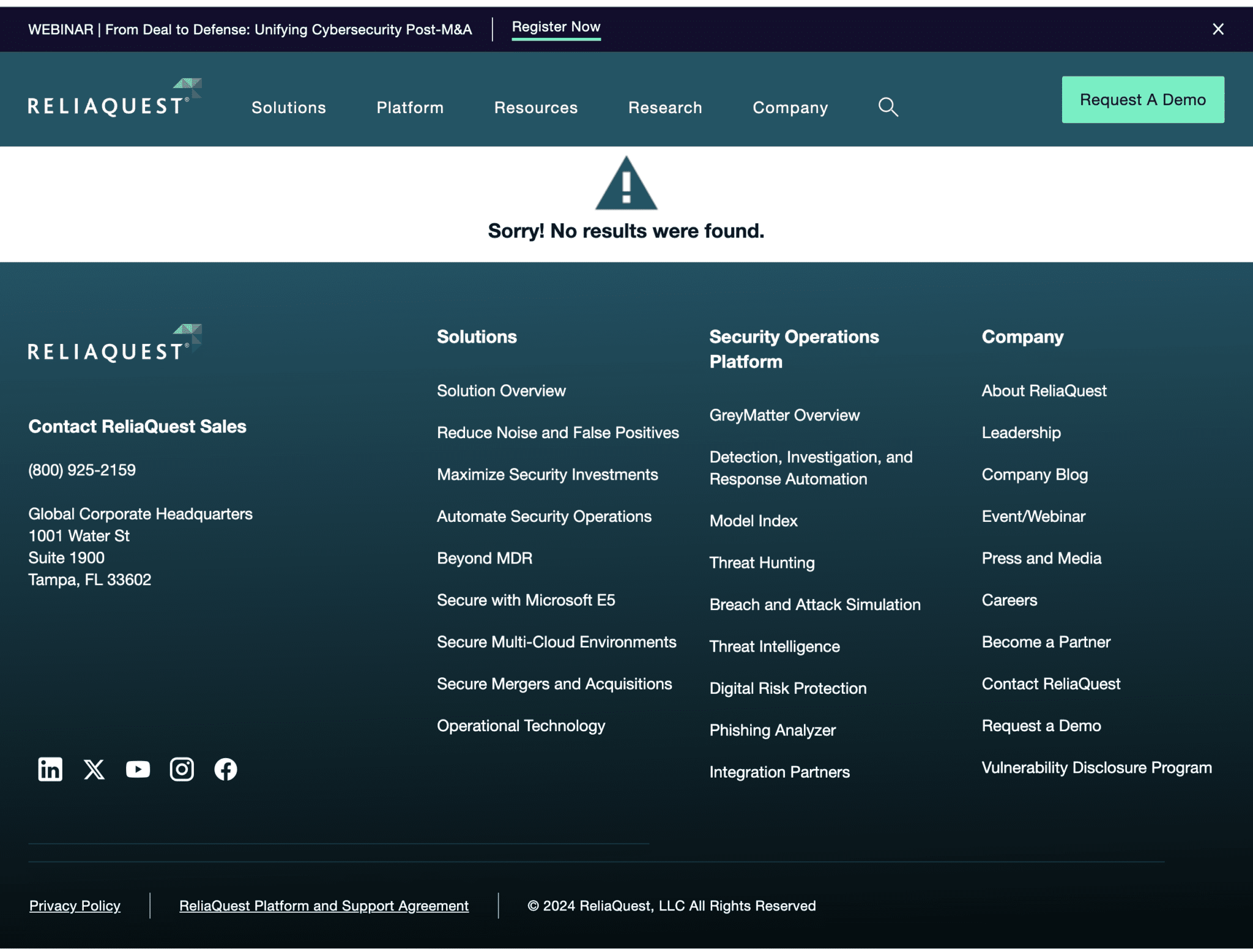
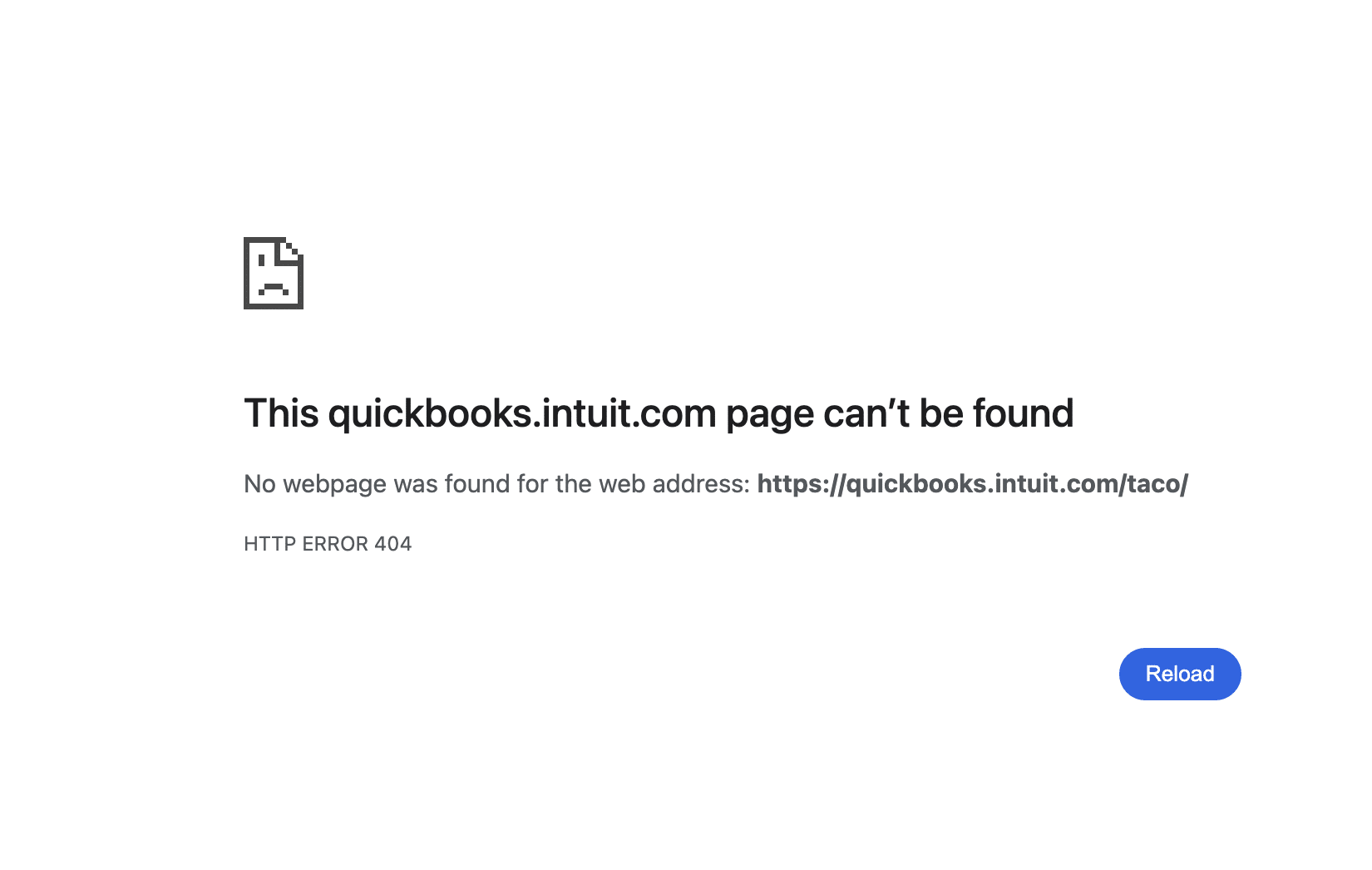
Here are examples of bad 404 pages that result in a lack of clarity, no guidance, and a generic error message.
46. Wired
47. Nordstrom
48. Reliaquest
49. QuickBooks
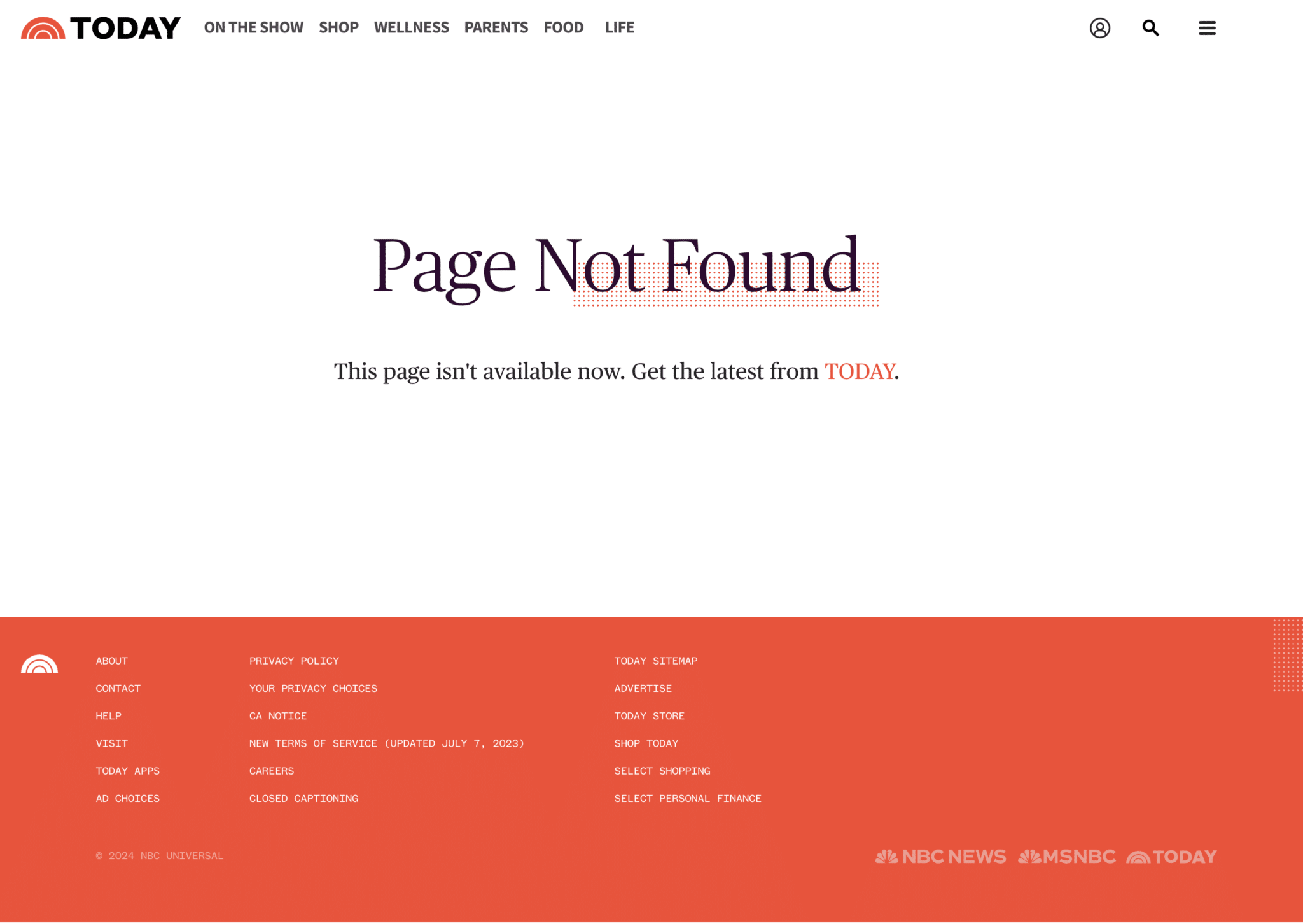
50. Today
51. Target

FAQs about 404 pages
How do I find a 404 page on my website?
There are a few different ways to find a 404 page on your website:
- Type in a non-existent URL. For example, www.yourwebsite.com/taco
- Click on a broken link
- Search for non-existent content in your website’s search functionality
How do I edit a 404 page in WordPress?
Editing your 404 page in WordPress can vary depending on how your WordPress is set up.
You can do this in your page builder or a plugin.
My personal preference is to make changes in the theme customizer under “Appearance.” Then, click on “customize.” You should find your 404 page.
Does Google remove 404 pages?
Google does not remove 404 pages. I actually see quite a lot of 404 pages indexed.
Over time, if Google stumbles across the 404 page repeatedly, it will eventually remove those pages from the index.
If the 404 page is restored, Google will reindex the page.
Building better 404 pages
Well-designed error pages promote a smooth user experience, even when someone lands on a missing page.
By following the tips outlined here, you can create 404 pages that transform confusing dead-ends into convenient gateways for navigation, search functionality, contact information, and more.
Dig deeper: Pro Tip: How to find and fix 404 errors that really matter to win your traffic back
Courtesy of Search Engine Land: News & Info About SEO, PPC, SEM, Search Engines & Search Marketing
Category seo news | Tags:
Social Networks : Technorati, Stumble it!, Digg, de.licio.us, Yahoo, reddit, Blogmarks, Google, Magnolia.
Google issues urgent steps for advertisers running campaigns in the EU
Written on January 18, 2024 at 2:14 pm, by admin
Advertisers who want to show personalized ads to consumers in the European Economic Area (EEA) must take immediate action to prevent campaign performance issues.
Marketers need to send verifiable consent signal(s) to Google as the search engine prepares to step up the enforcement of its EU User Consent Policy (EU UCP).
Why we care. Google cautioned that neglecting these steps promptly could adversely affect campaign performance, impacting both reach and return on investment.
Next steps. If you or your technology partners utilize Google APIs/SDKs to share audience data with Google, you must upgrade to the latest versions of the Google Ads API and Display & Video 360 API.
Meanwhile, app advertisers are advised to update to the latest version of the Google App Conversion Tracking API or SDK. This update enables proper communication of consent signals, ensuring compliance with user choices and facilitating comprehensive measurement and modeling.
For app advertisers working with App Attribution Partners (AAP), you will need to upgrade to the latest AAP SDK/API version and work with your AAP partner to ensure your consent signals are communicated to Google.
Global impact. This news has implications for all advertisers targeting consumers in the EEA, irrespective of whether the advertiser is located within the EEA or not.
Why now. In an evolving privacy landscape, with regulatory changes and things like third party cookie deprecation around the corner, it’s critical that advertisers implement solutions like consent mode to ensure their audience and measurement solutions work effectively.
What is EU UCP? The EU User Consent Policy (EU UCP) introduced by Google is designed to align with European privacy regulations, specifically the ePrivacy Directive (ePD) and the General Data Protection Regulation (GDPR). This policy mandates marketers using Google for advertising to obtain and respect end-users’ consent. Its objective is to ensure compliance with established privacy standards within the online advertising ecosystem.
What Google is saying. A spokesperson said in a statement:
- “This year marks an inflection point for marketing with Chrome’s planned third party cookie deprecation in the second half of 2024, as well as regulatory changes in the landscape.”
- “Consent mode can help you get ready with the right foundation of durable solutions powered by your consented first-party data and Google AI.”
Deep dive. Read Google’s announcement in full for more information.
Courtesy of Search Engine Land: News & Info About SEO, PPC, SEM, Search Engines & Search Marketing
Category seo news | Tags:
Social Networks : Technorati, Stumble it!, Digg, de.licio.us, Yahoo, reddit, Blogmarks, Google, Magnolia.
How will Google’s Search Generative Experience impact PPC marketing?
Written on January 18, 2024 at 2:14 pm, by admin
Google’s Search Generative Experience (SGE) has the potential to revolutionize PPC, presenting both unprecedented opportunities and challenges for marketers.
A roundtable of experts examined how our industry might change at SMX Next.
Brad Geddes, co-founder of Adalysis, spoke with Jyll Saskin Gales, marketing Consultant at Jyll.ca, Greg Kohler, senior digital marketing manager at ServiceMaster Brands, and Aaron Levy, VP of paid search at Tinuiti.
Below is a summary of what they had to say.
What is SGE?
SGE is a big change from how searches usually work.
Before, Google showed 10 blue links for user queries, and clicking on them took users to websites, generating traffic.
With SGE, the process changes — answers to queries are given directly in the search results, removing the need to click on links. This shift could have a significant impact on website traffic. As Geddes explained:
- “Regardless of the search query, you’re going to see answers and prompts where you can continue to click through and refine your query or get more information without ever leaving a search result.”
- “The machine learning can change the search query without users doing anything differently.”
Ads within SGE
Ads appear both above the SGE result and directly below it. However, ad placement could change when the feature is rolled out, according to Geddes:
- “Google cares about stock prices and how often ads are clicked on. So I think we can expect even more integration before SGE is live.”

Uptake of SGE
SGE is expected to impact search and digital marketing, but the group believes widespread adoption won’t happen soon. Because of this, Gales doesn’t expect significant changes to PPC metrics in the near future. She explained:
- “I don’t think adoption of SGE will be as widespread for the foreseeable future as you might think.”
- “Remember when voice search was supposed to be the next big thing? Then it was Google Assistant. [Digital marketers] are all plugged into SGE because we’re marketers, but I don’ foresee the general public adopting it in the same way.”
The issue with SGE
The group agreed that while SGE can answer a wide range of queries, it often gives inaccurate responses, especially in proximity-based searches. This could impact how widely SGE is adopted. Levy explained
- “I don’t think SGE will reach critical mass until it gets to a point when numbers outweigh incorrect answers. Perhaps in the three to five-year range, once everyone gets used to it.”
- “I also don’t think SGE will be the right source for every type of query either. So I don’t know that it will ever be the only experience that we have.”
Impact on CTR
Once SGE is fully implemented, the group believes advertisers will see a substantial impact on click-through rates (CTR). Levy noted that his Google Ads representative has already started guiding him away from focusing on metrics like CTR.
- “It feels like they’re conditioning us to not look at metrics like CTR anymore and just look at things like cost per action (CPA) and return on ad spend (ROAS) instead. The same could be said for cost per click (CPC).”
- “I think all of us have opinions here that CPCs can be too high. But they’re certainly shifting the dialogue away from looking at CPCs and more looking towards pure return.”
- “With that said, I don’t anticipate a huge swing in what I would consider true performance metrics. I don’t see that changing too much. It would throw too much of a wrench and everyone’s advertising plans – and probably Google’s earnings as well.”
PPC and SEO to come together?
While Gales doesn’t anticipate major changes to PPC metrics soon either, she envisions SGE altering how SEO and PPC experts collaborate. As search behaviors and results evolve, PPC and SEO marketers will work more closely together, she said:
- “As marketers, we’re used to being super specialized, but those specialties are merging more and more because it’s all just about providing one intent-rich experience for users.”
- “So we’re going to have to work much more closely with practitioners and other marketing disciplines in the near future.”
The impact on keyword research
Gales explained that many in the industry believe the era of heavily relying on specific keywords is fading. There’s a shift towards a dynamic, feed-based approach, where having a well-optimized website and using conversion tracking are becoming crucial.
This change means Google’s algorithms, drawing information from various sources, play a larger role in targeting and creativity.
The future might involve users finding what they need directly on Google, reducing the emphasis on selecting the perfect keyword and match type. Instead, the focus is on optimizing the website for both Google algorithms and human understanding.

A new approach
After SGE is launched, overall search volume is expected to stay the same. However, search suggestions might change based on trends and user behavior, according to Kohler. He predicts advertisers will be more interested in upper-funnel content, like display and video ads, affecting the economic model and increasing ads in those areas.
Kohler doesn’t see Google controlling user searches but expects a shift in guiding users toward final questions. This is likely to influence econometrics but not necessarily search volume.
How does this affect how you write the ads?
The challenge for Google with SGE is to smoothly integrate ads in a natural and conversational way, avoiding a salesy tone. The current method, where call-to-action phrases are condensed, could sound awkward in the middle of a conversation.
Unlike Bing’s pop-up ad style, Google’s approach demands a change in how we write ads. Levy elaborated:
- “What we are going to have to do is make sure that each individual piece of an ad, each asset, or extension will stand alone and won’t be missing anything.”
- “I’m curious to see if Google is going to try to start rewriting ads, and what that will wind up doing in sensitive industries.”
Competitor research and SGE
The group agreed that considering what competitors are saying is valuable, but it’s essential to take it with a grain of salt. The challenge is to determine if they are being unique or merely following Google’s RSA suggestions.
In a competitive landscape, where many use similar phrases, standing will become more crucial than ever. As Kohler explained:
- “If you’re a plumber bidding against other plumbers, and every single one of them says ‘Milwaukee’s best plumber’, you’ll have to think about how to position yourself to stand out.”
- “Always look at what your competitors are saying, but also, what are they showing up for.”
Time to develop new skills
Gales advised PPC marketers to broaden their skillsets in anticipation of SGE’s rollout. She emphasized that the days of exclusively focusing on keyword research, fine targeting, and attribution are over.
Now is the opportune moment to start honing skills in video creation, copywriting and comprehensive marketing strategies that go beyond traditional ad platforms. Gales added:
- “If you’re a search marketer and you’ve never tried to create a video before, if you’ve never worked on your copywriting skills, you’ve never put together a marketing strategy beyond just what happens in Bing Ads or Google Ads, now is the time to learn.”
- “Start developing those skills because these things are converging and being just good enough won’t be good enough anymore in an SGE world.”
- “You will have to be the best, or you will not last.”
The message is clear: in the world of SGE, being average isn’t sufficient.
It’s crucial to excel and be the best, emphasizing the need for a diverse skill set to succeed in this changing marketing environment.
Courtesy of Search Engine Land: News & Info About SEO, PPC, SEM, Search Engines & Search Marketing
Category seo news | Tags:
Social Networks : Technorati, Stumble it!, Digg, de.licio.us, Yahoo, reddit, Blogmarks, Google, Magnolia.
Every Facebook user is monitored by thousands of brands for targeted ads
Written on January 18, 2024 at 2:14 pm, by admin
Facebook’s extensive monitoring of its users’ online activities has been exposed in a new study.
The research conducted by Consumer Reports indicates that, on average, an astonishing 2,230 companies actively share data about each user with the social networking app.
In some instance, users had their data shared with Facebook by as many as 7,000 companies.
Why we care. As concerns over data privacy continue to grow, these statistics have the potential to create trust issues that could significantly impact your brand’s reputation. Moreover, in markets like the European Union, where data privacy regulations are becoming more stringent, these numbers may also give rise to legal and ethical concerns.
Issues. Although Meta offers transparency tools, Consumer Reports identified issues with them. The study highlighted problems, including the unclear identity of many data providers based on the names disclosed to users. Additionally, the report noted that companies providing services to advertisers are often able to disregard user opt-out requests.
How the study worked. Consumer Reports joined forces with The Markup to recruit 709 volunteers willing to share their Facebook data archives. Participants downloaded a three-year data archive from their Facebook settings and submitted it. This allowed the organizations to analyze “server-to-server” tracking, uncovering how many companies were sharing user data with Facebook by transferring personal data from their servers to Meta’s servers.
US statistics. The study acknowledges that its findings may not be representative of the U.S. population as a whole because the data comes from a self-selected group of users. Additionally, the results were not demographically adjusted. Consumer Reports also pointed out that participants were probably more privacy-conscious, technically inclined, and likely members of Consumer Reports, indicating a potential bias in the sample.
What Facebook is saying. Meta spokesperson Emil Vazquez told The Markup:
- “We offer a number of transparency tools to help people understand the information that businesses choose to share with us, and manage how it’s used.”
What is Consumer Reports? Consumer Reports is an independent, nonprofit organization that works with consumers to uncover truth, transparency, and fairness in the marketplace.
What is The Markup? The Markup is a non-profit newsroom that investigates and challenges technology to benefit the public.
Deep dive. Read the Consumer Reports study in full for more information.
Courtesy of Search Engine Land: News & Info About SEO, PPC, SEM, Search Engines & Search Marketing
Category seo news | Tags:
Social Networks : Technorati, Stumble it!, Digg, de.licio.us, Yahoo, reddit, Blogmarks, Google, Magnolia.
SEO predictions: 5 things we can expect to see in 2024
Written on January 18, 2024 at 2:14 pm, by admin
Ever reminisce about the days when sprinkling a few keywords on a page was like hitting the SEO jackpot in the search results?
In 2024, the world of SEO is the exact opposite of easy.
However, for those of us who love to solve SEO puzzles, it’s an exciting time when we’re faced with new challenges and massive opportunities.
This year, it’s all about diving deep into the techy side of SEO, getting cozy with AI tools for content and figuring out how to manage rising costs without breaking the bank.
Let’s look at five vital SEO business insights in 2024 to help you get a bird’s eye view of what to expect.
1. SEO continues to get bigger and harder
For those of us who have been in SEO since the ‘90s, we remember the simple days of ranking webpages.
Each year, SEO becomes more complex and harder to win.
Just look at all the changes that happened in SEO in 2023 alone – not the least of which was Google’s Search Generative Experience, which can put SEO on its head again.
Plus, the ranking algorithm continues to evolve yearly to uncover the most relevant webpages as Google refines its technology.
Bottom line: There is no “easy button” in SEO. You can expect to work a little harder to compete in 2024 than last year.
2. Technical SEO grows in importance
A highly competitive search environment means every little bit counts. The more you refine your website for users, the better you can compete.
Without technical SEO, creating the optimal user experience is impossible.
Therefore, there will be an increased dependency on technical SEO for success.
If you are still only relying on surface-level on-page SEO tactics (keywords, meta information, etc.) and ignoring the technical back-end of your site, you will not have much of a chance.
And even if you are moderately doing technical SEO, the skill level you need to win at technical SEO is increasing.
Take things like Google’s “page experience” initiative and all the minutiae that went with that.
3. AI will change your content strategy
AI tools are changing the future of content creation – just how it will change the future of SEO remains to be seen.
We are in massive experimentation mode with AI content creation tools.
After many months of seeing how AI content can help (or hinder) businesses, one thing is clear: Do it right and you can create quality content and increase your profits. Do it wrong and you’ll churn out nothing more than spam.
Google says you’ll violate their spam policies with the wrong AI content:
“When it comes to automatically generated content, our guidance has been consistent for years. Using automation – including AI – to generate content with the primary purpose of manipulating ranking in search results is a violation of our spam policies.”
But, if the AI content is user-centered, it’s perfectly well and good to use AI tools to assist your content creation efforts:
“This said, it’s important to recognize that not all use of automation, including AI generation, is spam. Automation has long been used to generate helpful content, such as sports scores, weather forecasts, and transcripts. AI has the ability to power new levels of expression and creativity, and to serve as a critical tool to help people create great content for the web.”
So, how do you strike the right balance when using AI-generated content?
Today, the gold standard is the right AI tools paired with expert human content analysis and editing.
For more, read “AI content creation: A beginner’s guide.”
4. Prices are going up
It’s no secret that the cost of everything is going up.
Most are facing increasing business costs in 2024, according to Kiplinger, including interest rates, inflation, energy costs, transportation, insurance, travel, building expenses, and technology.
The cost to attract and retain the best digital marketing talent will also be an issue for some.
Kiplinger predicts some industries may restrict pay raises in the coming year, and some will implement modest pay hikes of up to 4.2% for employees.
You can do the math on how much it might cost to retain experienced search marketers by seeing this Search Engine Land search industry salary survey.
If you want to retain people with 10+ years of experience (for my agency, that is the minimum amount of experience we allow for client-facing staff), you will need to offer an attractive salary and benefits package.
The cost of doing business will also impact many service-based SEO firms, so the cost of hiring SEO firms is likely to rise.
5. Hiring the best will matter
With rising costs, many businesses are in a predicament with their SEO. Fortunately for bigger players, they can invest in the best SEO services.
Companies (many within the $26 million to $2.5 billion annually range) will increase digital marketing spend by about 9% in 2024, the CMO Survey by Deloitte predicts.
Unfortunately for smaller players, the question will be, do I want it cheap, or do I want it right?
And as we know, cheap SEO is a near-death experience.
However, that doesn’t mean that the little guy doesn’t have a chance. Larger companies may have more resources, but they are less nimble.
And for all the resources these larger corporations have, they may not be implementing the best (or some of the lesser-known) SEO strategies.
Regardless of the company’s size, hiring the best SEO help will matter – whether in-house or an outside SEO firm.
Companies that prioritize SEO because they know its value can get creative by diverting budgets (for example, advertising budgets) as needed to retain the best and most skilled SEO talent.
For more on this, find out what percentage of your budget should go to SEO.
The keyword for 2024: Adaptability
As we head into 2024, we rely on the same SEO mindset of years prior: adaptability. SEO demands the flexibility to turn on a dime.
Getting creative with budgets so that you can hire the best SEO talent to guide your business through 2024, while focusing on innovative strategies and technical website analysis, will set your business up to weather any storm that comes your way this year.
Cheers to a successful 2024.
Courtesy of Search Engine Land: News & Info About SEO, PPC, SEM, Search Engines & Search Marketing
Category seo news | Tags:
Social Networks : Technorati, Stumble it!, Digg, de.licio.us, Yahoo, reddit, Blogmarks, Google, Magnolia.
Google updates data privacy policies for targeted ads in the EU
Written on January 17, 2024 at 10:13 am, by admin
Google is toughening its data privacy policies for targeted ads in Europe to comply with the Digital Markets Act (DMA).
Brands and advertisers will begin to notice the changes, such as additional consent banners and a new Data Portability API, as they are rolled out in the coming weeks.
Why we care. Tougher data privacy policies might affect Google’s capacity to deliver personalized ads and content. This could potentially reduce the effectiveness of advertising campaigns, as they may not effectively reach the desired target audience as accurately.
Additional consents. Google is rolling out a new consent banner to users in the EU in the coming weeks. It will ask for permission to share data for personalized content and ads. If you don’t give permission, certain features may be limited or unavailable.
Data portability. To address new requirements for transferring data to third-party apps or services, Google will soon be testing a Data Portability API for developers.
What is data portability? Data portability is the transfer of data between various applications, programs, computing environments, or cloud services. This enables service providers to pursue targeted advertising.
Choice screens. Google is also introducing additional choice screens on Android phones, allowing users to switch their default search engine or browser more easily. These screens will be visible during device setup on Android phones and within the Chrome app on desktop and iOS devices.
Search update. In addition, Google is adding dedicated units with links to various comparison sites and search page shortcuts for refining searches in the coming weeks. In specific categories like hotels, Google is trialing a dedicated space for comparison sites and direct suppliers to show more detailed results such as star ratings. Some features, like the Google Flights unit, will be removed when the changes are implemented.
What is the Digital Markets Act (DMA)? The DMA is a new piece of legislation designed to ensure that large online platforms, called “gatekeepers”, behave in a fair way online to create a fair and open environment for online businesses. The legislation comes into effect in March.
Who are the gatekeepers? Gatekeepers are large online platforms like Google that meet the following criteria:
- Has a strong economic position with a significant impact on the internal market and is active in multiple EU countries
- Has a strong intermediation position, meaning that it links a large user base to a large number of businesses.
- Has (or is about to have) an entrenched and durable position in the market, meaning that it is stable over time if the company met the two criteria above in each of the last three financial years.
DMA violation penalties. The consequences of non-compliance with the DMA includes:
- Fines: Up to 10% of the company’s total worldwide annual turnover, or up to 20% in the event of repeated infringements.
- Periodic penalty payments: Up to 5% of a company’s average daily turnover.
- Remedies: These can include behavioural and structural remedies, such as the divestiture of (parts of) a business.
What Google is saying. Oliver Bethell, Director, Legal, Google, said in a statement:
- “Over the last few months we have been seeking feedback on our changes from the European Commission and from stakeholders like developers, advertisers and companies who will be affected by them.”
- “While we support many of the DMA’s ambitions around consumer choice and interoperability, the new rules involve difficult trade-offs, and we’re concerned that some of these rules will reduce the choices available to people and businesses in Europe.”
- “We’ll share more details on the final changes we are making to comply with the new rules ahead of the March deadline.”
Deep dive. Read Google’s announcement in full for more information.
Courtesy of Search Engine Land: News & Info About SEO, PPC, SEM, Search Engines & Search Marketing
Category seo news | Tags:
Social Networks : Technorati, Stumble it!, Digg, de.licio.us, Yahoo, reddit, Blogmarks, Google, Magnolia.
Google to change European search results to show comparison sites
Written on January 17, 2024 at 10:13 am, by admin
Google search results in Europe may start to look a little different in the coming weeks in order for Google to comply with a new regulation called the Digital Markets Act (DMA), the company announced. This means that Google will show more comparison sites within its search results for European users and that some of the vertical search units, like Google Flights, will no longer show up in the main search results.
What Google said. Google explained these changes in their blog post:
Over the coming weeks in Europe, we will be expanding our testing of a number of changes to the search results page. We will introduce dedicated units that include a group of links to comparison sites from across the web, and query shortcuts at the top of the search page to help people refine their search, including by focusing results just on comparison sites. For categories like hotels, we will also start testing a dedicated space for comparison sites and direct suppliers to show more detailed individual results including images, star ratings and more. These changes will result in the removal of some features from the search page, such as the Google Flights unit.
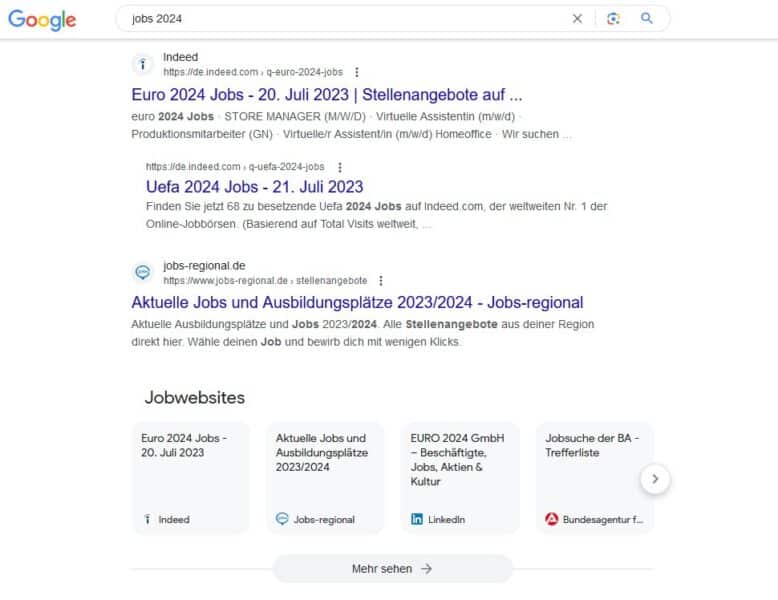
What it might look like. Last July, I spotted comparison sites units in the search results; I covered them at the Search Engine Roundtable.
Here is a screenshot from Kovi on Twitter and Frank Sandtmann on Mastodon from several months ago:

Some history. In 2020, Google tested a similar feature to list other local search engines; here is what that looked like.

In June, 2017 the EC fined Google roughly $2.7 billion for alleged abuse of market position in vertical (shopping) search. Following that decision, which Google is in the process of appealing, Google implemented a number of changes to provide “equal treatment” for rival Comparison Shopping Engines (CSEs) in Europe. In 2018, this group said it was only getting worse.
Why we care. If you currently show up in some of these vertical search units that Google shows often at the top of the page, this might impact your traffic and metrics. This should only impact the European search results right now. This also may mean that you need to focus on other vertical search engines, more than you do now.
Courtesy of Search Engine Land: News & Info About SEO, PPC, SEM, Search Engines & Search Marketing
Category seo news | Tags:
Social Networks : Technorati, Stumble it!, Digg, de.licio.us, Yahoo, reddit, Blogmarks, Google, Magnolia.
Setting PPC goals: How to tailor KPIs and metrics for each funnel stage
Written on January 17, 2024 at 10:13 am, by admin
When working with a new PPC client, I help them establish goals aligned with their business objectives. Surprisingly, many lack clearly defined campaign goals beyond boosting traffic or conversions.
Let’s explore a framework for setting effective key performance indicators (KPIs) and metrics aligned to your business goals for each funnel stage.
PPC KPIs and metrics: How do they differ?
It’s essential to identify goals and KPIs to evaluate success.
- KPIs are your end goals.
- While metrics are data points that measure progress toward those goals.
For example, if your goal is to increase qualified leads, metrics would include conversion rate, new users driven to a specific URL, etc.

PPC campaigns can help achieve many objectives, so understanding the difference between KPIs and metrics is key to setting yourself up for success. You need to pick KPIs that matter for your business and tie them to relevant metrics.
Clients commonly apply uniform goals to all campaigns regardless of their place in the marketing funnel. However, you should tailor goals and metrics based on the funnel stage to measure performance accurately.
Why aligning PPC goals with the marketing funnel matters
While paid search benefits bottom-of-funnel marketing, exclusively relying on it is a mistake.
PPC campaigns can aid each part of the marketing funnel, provided you set them up accordingly and measure them against metrics and benchmarks that make sense for that stage.
Clients often make the error of setting identical goals for campaigns at various funnel stages. This overlooks the need to align campaigns with specific goals, requiring distinct KPIs and metrics for fair and accurate evaluation.

Dig deeper: How to use always-on marketing in paid search
Top-of-funnel PPC campaigns
Top-of-funnel campaigns should be designed to create awareness where there isn’t. You want these campaigns to capture a broad audience of potential and future customers and (hopefully) generate some interest in your product or service.
With reach as a high priority, these types of efforts often use campaign types that provide high visibility for a lower cost.
Because PPC can be (incorrectly) synonymous with bottom-funnel marketing, it’s important to differentiate top-of-funnel campaigns from the rest of your PPC marketing.
Top-of-funnel campaigns often utilize the Google Display Network, which has different benchmarks, ad content, and benefits.
Ensure you’re evaluating your top-of-funnel campaigns fairly using appropriate KPIs and metrics.
KPIs for top-of-funnel PPC campaigns
- Increase brand awareness.
- Increase website traffic.
- Drive social media engagement.
- Boost brand engagement.
Metrics for top-of-funnel PPC campaigns
- Impressions
- Cost per mille (CPM)
- Click-through rate (CTR)
- Engagements (Google Ads)
Dig deeper: Guide to PPC top-of-funnel reporting
Mid-funnel PPC campaigns
Mid-funnel campaigns can be tricky because they can encompass a variety of goals and campaign strategies. They can include:
- Demand gen campaigns (formerly Discovery ads).
- Display ads.
- Search ads.
- Dynamic search ads.
- And almost anything under the sun.
What differentiates these campaigns is that they’re designed to meet users in the Interest/Consideration phase. That means your KPIs and metrics should be tailored to that end goal, finding users interested in your product or service and helping them consider whether they should take action.
KPIs for mid-funnel PPC campaigns
- Establish authority in the industry.
- Increase engagement.
- Drive consideration.
- Nurture leads.
Metrics for mid-funnel PPC campaigns
- Micro conversions such as demo sign-ups or PDF downloads
- CTR
- Bounce rate
- Engagement rate (GA4)
Bottom-of-funnel PPC campaigns
Finally, we get to what many folks think of when they speak about PPC campaigns – bottom-of-funnel efforts that are extremely effective in driving actions like form fills, phone calls, purchases and requests for a quote.
These include:
- Search campaigns with extremely high-intent keywords.
- Display remarketing campaigns targeting users who engaged with mid-funnel efforts to move them down the funnel.
KPIs for bottom-of-funnel PPC campaigns
- Acquire new customers.
- Increase revenue.
- Generate leads.
- Increase purchases.
Metrics for bottom-of-funnel PPC campaigns
- Primary conversions (i.e., form submissions or purchases)
- Conversion rate
- Cost per acquisition/conversion (CPA)
- Return on ad spend (ROAS)
- Average order value (AOV)
- Cart abandonment rate
- Item quantity
Paid search attribution in GA4
Marketing attribution can change how you evaluate the performance of your PPC campaigns.
By default, your PPC campaigns on Google and Microsoft Ads use a last-click attribution model unless you manually switch to data-driven attribution.
In July 2023, Google announced they would retire first click, linear, time decay, and position-based attribution models.
GA4, on the other hand, uses the cross-channel data-driven model as their default attribution model. It also provides paid and organic last-click, and Google paid channels last-click models that you can apply to certain reports at the property level.
Dig deeper: How to combine GA4 and Google Ads for powerful paid search results
The intersection of metrics and KPIs with business goals
Sometimes, your broader business objectives clearly tie into specific KPIs and metrics. Other times, you may have to get creative with aligning PPC efforts with the larger business goals.
The worst mistake you can make is to set KPIs and metrics that don’t contribute to business success. The second worst is failing to clearly and simply explain how KPIs and metrics contribute to business success.
You often try to get buy-in and budget from key stakeholders who need you to help them connect the dots. Help them see the value by clearly stating how your KPIs support the company’s aim and mission.
Setting KPIs and metrics for PPC
Ultimately, the KPIs you set for your PPC efforts should tie directly to your business objectives, and the metrics you use to measure those KPIs will depend on the nature of your business and the set-up of your campaigns.
Do your future self a favor, and don’t make the mistake of setting blanket KPIs for all your efforts. You’ll fare better (and your boss or client will be even more impressed) if you tailor your KPIs to the marketing funnel stage your campaigns are built around.
Courtesy of Search Engine Land: News & Info About SEO, PPC, SEM, Search Engines & Search Marketing
Category seo news | Tags:
Social Networks : Technorati, Stumble it!, Digg, de.licio.us, Yahoo, reddit, Blogmarks, Google, Magnolia.