

When and how to fire PPC clients
Written on September 25, 2024 at 6:03 am, by admin

As PPC professionals, we strive to deliver results, optimize campaigns, foster strong client relationships and grow along with our clients.
However, not all client partnerships are destined for success. Sometimes, the difficult decision to part ways becomes necessary.
Why maintaining a healthy client portfolio matters
A thriving PPC agency or freelance business relies on a client portfolio that aligns with your expertise, values and business goals.
Each client relationship should be mutually beneficial, allowing for:
- Sustainable growth for both parties.
- Professional satisfaction and development.
- Fair compensation for your services.
- A positive working environment.
When these elements are balanced, you can deliver your best work and achieve outstanding results. However, when the scales tip unfavorably, it may be time to reassess the relationship.
Dig deeper: 8 questions to ask your new PPC clients
Challenges of managing difficult PPC clients
Even the most experienced PPC professionals encounter challenging clients from time to time. These difficulties can manifest in various ways:
- Micromanagement: Clients who constantly question your strategies and demand excessive reporting can hinder your ability to implement effective campaigns.
- Scope creep: Some clients may continually request additional services without adjusting compensation, leading to overwork and reduced profitability.
- Unrealistic expectations: Clients who expect immediate, dramatic results without understanding the realities of PPC advertising can create undue stress and strain on the relationship.
- Poor communication: Unresponsive clients or those who fail to provide necessary information can impede campaign progress and optimization efforts.
- Ethical concerns: Occasionally, clients may request actions that conflict with industry best practices or ethical standards.
While facing these challenges is part of the job, there comes a point when the cost of maintaining a difficult client relationship outweighs the benefits.
Recognizing when to draw the line is key to your PPC business’s long-term success.
5 signs it’s time to consider firing a client
1. Consistent late payments
Cash flow is the lifeblood of any business, and consistent late payments can seriously jeopardize your operations:
- Repeated delays: If a client regularly pays invoices weeks or months after the due date, it’s a red flag.
- Excuses and broken promises: Constant explanations for late payments and unfulfilled promises to improve indicate a systemic issue.
- Impact on your business: Late payments can affect your ability to pay for ad spend, staff or other operational costs.
When late payments become the norm, it’s time to reconsider the relationship.
Consistently paying late shows a lack of respect for you and your services, and it’s important to address it.
2. Unrealistic expectations
Clients with unrealistic expectations can create undue stress and strain on your team:
- Demanding immediate results: PPC campaigns often require time for optimization. Clients who expect overnight success may not understand the process.
- Ignoring market realities: If a client refuses to acknowledge competitive landscapes or market conditions that affect campaign performance, it can lead to frustration on both sides.
- Constantly moving goals: Clients who continually change objectives or set unattainable targets without adjusting budgets or timelines may be impossible to satisfy.
When a client’s expectations are consistently unrealistic, it may be a sign the relationship isn’t working.
These expectations often stem from a lack of marketing knowledge or because another agency or freelancer made promises that are now your responsibility.
Dig deeper: How to set and manage PPC expectations for teams and stakeholders
3. Poor communication
Effective communication is the foundation of any successful client relationship:
- Unresponsiveness: Clients who consistently fail to respond to emails, calls or requests for essential information can hinder campaign progress.
- Lack of clarity: Vague or constantly changing instructions can lead to misunderstandings and poor campaign performance.
- Inconsistent availability: Clients who are hard to reach but demand immediate responses from you create an imbalanced relationship.
Before starting, you and your client should agree on communication channels, meeting frequency and when you need feedback versus when you’re just sharing information.
If communication issues persist and affect your ability to deliver results, it may be time to reconsider the partnership.
4. Disregard for expert advice
As PPC professionals, our expertise is what clients pay for. When that expertise is consistently ignored:
- Overriding strategic decisions: Clients who regularly dismiss your recommendations in favor of their own ideas, despite poor results, can be frustrating.
- Refusing to adapt: If a client is unwilling to adjust strategies based on data and performance insights, it limits your ability to improve campaigns.
- Micromanagement: Excessive involvement in day-to-day operations without trusting your judgment can hinder progress and efficiency.
If your advice is regularly ignored, it may signal a lack of trust or respect for your expertise.
5. Unethical requests
Maintaining ethical standards is non-negotiable in PPC management:
- Asking to mislead audiences: Requests to create deceptive ad copy or landing pages that violate advertising policies are major red flags.
- Pressuring for black hat techniques: Clients who insist on using tactics that go against platform guidelines put your account and reputation at risk.
- Ignoring legal requirements: Disregarding industry regulations or data privacy laws can have serious consequences.
Parting ways with a client who continually makes unethical requests is a must to protect your business and integrity.
Dig deeper: 5 tips for handling client and stakeholder requests for PPC projects
What to do before firing a client
Before deciding to fire a client, it’s important to handle the situation thoughtfully and professionally.
Consider these steps to potentially salvage the relationship or ensure you’ve addressed the issues thoroughly.
Open communication about issues
Clear, honest communication is the foundation of any successful professional relationship. When problems arise, it’s essential to address them directly:
- Schedule a formal meeting: Set up a dedicated time to discuss your concerns. This shows the client that you take the issues seriously and are committed to finding a resolution.
- Be specific and factual: Clearly outline the problems you’ve observed, using concrete examples and data where possible. For instance, “Over the past three months, payments have been late by an average of 15 days.”
- Listen actively. Give the client an opportunity to share their perspective. You may be unaware of underlying issues or misunderstandings.
- Document the conversation: After the meeting, send a follow-up email summarizing the key points discussed and any agreed-upon actions. This creates a paper trail and ensures both parties are on the same page.
Document everything. If issues arise, having records will protect you. It’s always safer to have documentation than to be without it.
Setting clear boundaries and expectations
Once you’ve openly discussed the issues, establish or reinforce clear boundaries and expectations:
- Create a formal agreement: Develop a written document that outlines the terms of your working relationship. This could be an addendum to your existing contract or a new service level agreement (SLA).
- Define roles and responsibilities: Clearly specify what the client can expect from you and what you need from them to perform your job effectively.
- Establish communication protocols: Set guidelines for response times, preferred communication channels and regular check-ins.
- Outline consequences: Clearly state what will happen if the agreed-upon terms are not met. This could include late fees for overdue payments or the potential termination of services.
Dig deeper: 5 essential PPC skills every agency pro must have
Offering alternative solutions
Before resorting to terminating the relationship, explore alternative solutions that could address the core issues:
- Adjust the scope of work: If the client’s expectations are unrealistic given their budget, propose a scaled-back version of your services that aligns with their resources.
- Implement new tools or processes: Suggest using project management software or automated reporting tools to improve communication and transparency.
- Offer training or education: If the client’s disregard for expert advice stems from a lack of understanding, propose a training session to help them better grasp PPC concepts and strategies.
- Revise payment terms: For clients struggling with cash flow, consider offering a different payment structure, such as smaller, more frequent payments instead of larger monthly invoices.
Taking these steps shows your commitment to the client and your effort to find solutions.
If the situation doesn’t improve, you can confidently move forward with ending the relationship, knowing you’ve done your best to resolve the issues.
How to fire a PPC client professionally
After exhausting all efforts to salvage the relationship, you may find that terminating the contract is the best course of action.
Handling this process professionally is crucial for maintaining your reputation and minimizing potential negative impacts on your business.
Let’s explore the key steps to firing a PPC client with grace and professionalism.
Timing considerations
Timing is key when ending a client relationship.
- Before proceeding, review your contract for termination clauses and notice periods.
- Ideally, align the termination with the end of a campaign or reporting period for a smoother transition.
- Be mindful of your client’s business cycle. Avoid ending the relationship just before their peak season or major events.
- Ensure you have the capacity to manage the transition and handover of accounts or data. Considering these factors will help minimize disruption and maintain professionalism.
Preparing necessary documentation
Gather all relevant documentation for the termination process.
- Start with performance reports that highlight the work done and results achieved.
- Prepare a document containing account access information, including login credentials and any accounts created for the client.
- Create a transition guide outlining the campaign structure, naming conventions and specific strategies used.
- Don’t forget to prepare a final invoice detailing any remaining billables or refunds.
- Draft a formal termination letter that includes the end date, a clear reason for termination, an overview of the transition process and any final obligations.
Initiating the conversation
When it’s time to inform the client about ending the relationship, approach the conversation with professionalism and empathy.
- Schedule a call to deliver this news verbally rather than by email.
- During the call, be direct and respectful, clearly stating your decision without being emotional or accusatory.
- Offer a brief, honest explanation for the termination without going into too much detail or inviting debate.
- Then, shift to the next steps, outlining the transition process and what the client can expect.
- Be ready for questions or objections by anticipating concerns and preparing calm, professional responses.
By managing this difficult conversation thoughtfully, you can maintain professionalism and preserve a positive relationship, even as you part ways.
Handling the transition
A well-managed transition process can help maintain a positive professional reputation:
- Provide a transition timeline: Outline clear deadlines for each step of the handover process.
- Offer a handover meeting: Propose a meeting with the client or their new agency to walk through your campaigns and strategies.
- Transfer assets and access: Ensure all relevant assets, data and account access are transferred securely and in a timely manner.
- Be available for questions: Offer a reasonable timeframe for addressing any follow-up questions after the transition.
- Maintain professionalism: Even if the client reacts negatively, remain calm and professional throughout the process.
Dig deeper: Client onboarding and offboarding: The PPC agency’s guide
Reflecting on the experience
After you’ve gone through the process of firing a client, take a step back and reflect on the experience.
This isn’t just about closing a chapter; it’s an opportunity for growth and improvement in your PPC business.
Analyze the reasons for termination
Take some time to analyze what led to the termination.
Were there early warning signs you missed? Could you have addressed any issues sooner?
This reflection isn’t about beating yourself up, but about learning and evolving your business practices.
Refine client selection and onboarding
Use these insights to refine your client selection process.
Consider developing a more detailed ideal client profile. What characteristics make for a great long-term partnership?
You might want to create a more comprehensive onboarding questionnaire to help identify potential issues early on.
Setting clear expectations from the start can prevent many problems down the line.
Dig deeper: PPC client kickoff: Strategies for a successful first encounter
Strengthen existing client relationships
Take this opportunity to strengthen relationships with your existing clients during this process.
Conduct a relationship audit with your current clients.
Are there any emerging issues you can proactively address?
Increasing communication and transparency can go a long way in maintaining healthy, long-term partnerships.
Review legal considerations
Always review your service agreement before terminating a client relationship.
Pay close attention to termination clauses, ownership of work and data and any confidentiality agreements.
Adhering to proper notice periods is important. If it’s not specified in your contract, a 30-day notice is typically standard in the PPC industry.
Manage proprietary information
Handling proprietary information is another important consideration.
Be clear about what constitutes proprietary information and outline the process for returning or destroying client data.
Make sure you’re complying with all relevant data protection regulations.
Ending client relationships: Steps for a smooth and professional transition
Healthy business relationships are crucial for long-term success in PPC management.
While retaining clients is important, it shouldn’t hinder your agency’s growth.
Open communication helps prevent issues, and clear contracts benefit both parties. However, sometimes, ending a relationship is the best option for everyone.
You can build a stronger, more sustainable PPC business by managing client relationships strategically and handling terminations professionally.
Focus not just on keeping clients but on finding those who share your values and goals.
Each client relationship, including those that end, offers a chance to learn.
Use these experiences to improve your processes and services, ultimately creating a thriving PPC business.
Courtesy of Search Engine Land: News & Info About SEO, PPC, SEM, Search Engines & Search Marketing
Category seo news | Tags:
Social Networks : Technorati, Stumble it!, Digg, de.licio.us, Yahoo, reddit, Blogmarks, Google, Magnolia.
Google recognizes content creators: A breakthrough for E-E-A-T and SEO
Written on September 25, 2024 at 6:03 am, by admin

Google is explicitly identifying people it understands to be content creators.
This article explains how we know that Google is recognizing content creators, why it’s important and what SEO professionals need to do in response.
Google’s growing recognition of content creator entities
I recently discovered Knowledge Panel subtitles like “Content Creator (Medicine)” and “Content Creator (Travel)” in the SERPs.
This shows Google’s explicit identification of individuals as authoritative content creators within specific fields.
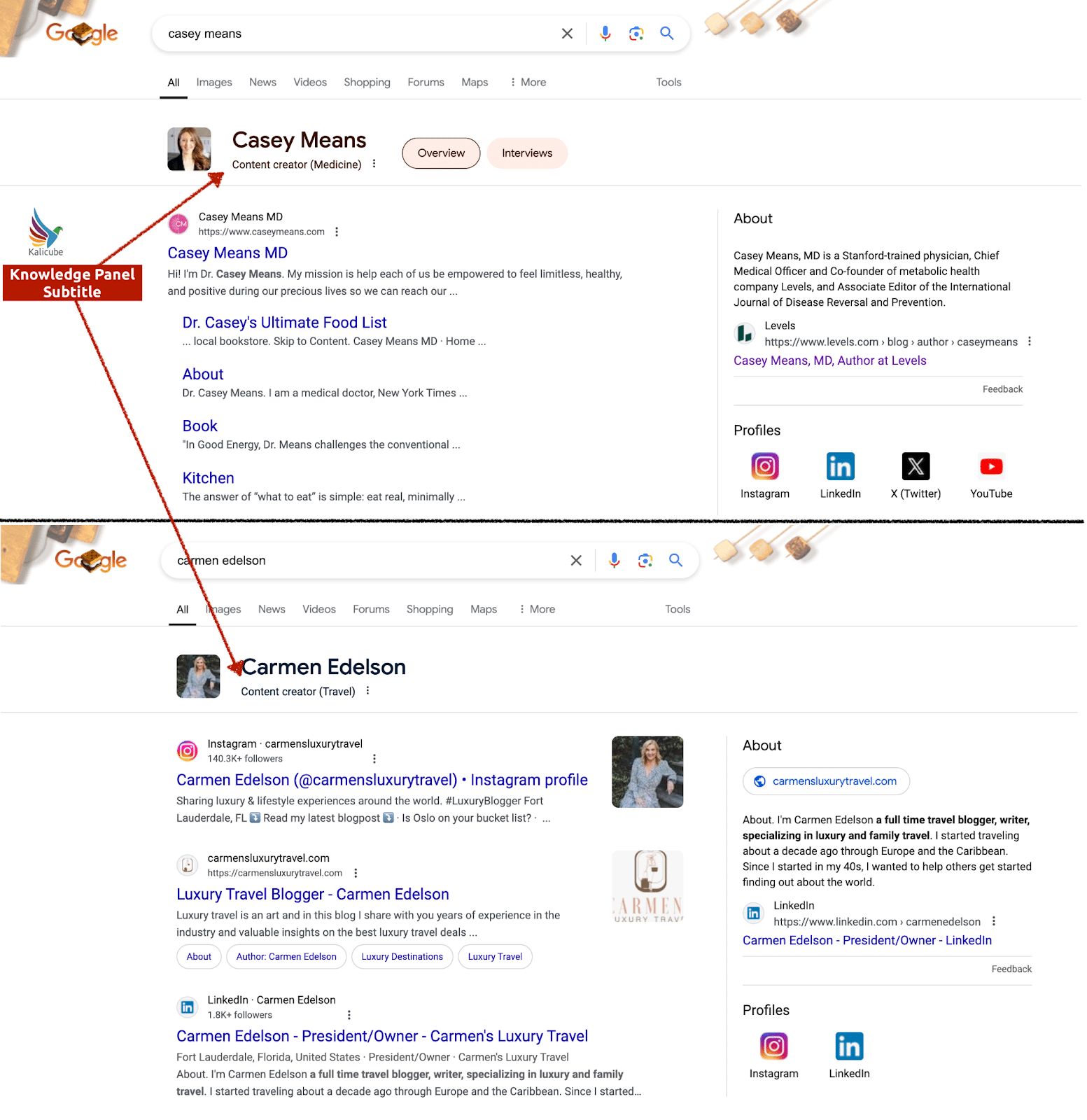
This is a significant E-E-A-T development for content creators as it gives visible and meaningful proof that Google has recognized them as credible sources of information on a specific topic.
It’s also a huge advantage in modern SEO, since the person’s content is more likely to appear in today’s search results and tomorrow’s AI-powered assistants.
Here are some examples from the Kalicube Pro dataset (tracking over 17 million person entities) for content creator topics:
- Agriculture, Animals, Art, Automobiles.
- Baking, Baseball, Beauty, Bodybuilding, Boxing.
- Camping, Cats, Coaching, Cooking, Cosmetics, Cricket, Cryptocurrency.
- Dancing, Dogs.
- Fashion, Fashion, Finances, Fishing, Food.
- Gambling, Games, Geography, Gymnastics.
- Health, Hiking, History, Humor.
- Interior design, Investing, Jazz, Law.
- Magic, Markets, Martial arts, Medicine, Mental health, Music.
- Nutrition, Painting, Parenting, Physical fitness, Politics, Psychology.
- Racing, Real Estate, Religion.
- Science, Shopping, Skincare, Soccer, Stand-up comedy, Surfing.
- Technology, Toys, Travel, Vegetarianism, Video games, Volleyball.
- Weather, Weight loss, Wildlife, Wrestling.
Google is looking for content creators
This focus on identifying content creators is a recurring theme at Google.
Three events in 2023 and 2024 demonstrated that identifying content creators is a major focus for Google:
- The Killer Whale Knowledge Graph update in July 2023.
- The March 2024 E-E-A-T update.
- The Google leak in May 2024 confirmed that Google explicitly associates people with their profile pages (isReference) and articles they have written (isAuthor).
Our Knowledge Graph monitoring tool shows small updates every 1 to 2 weeks. In 2024, they have mostly affected person entities.
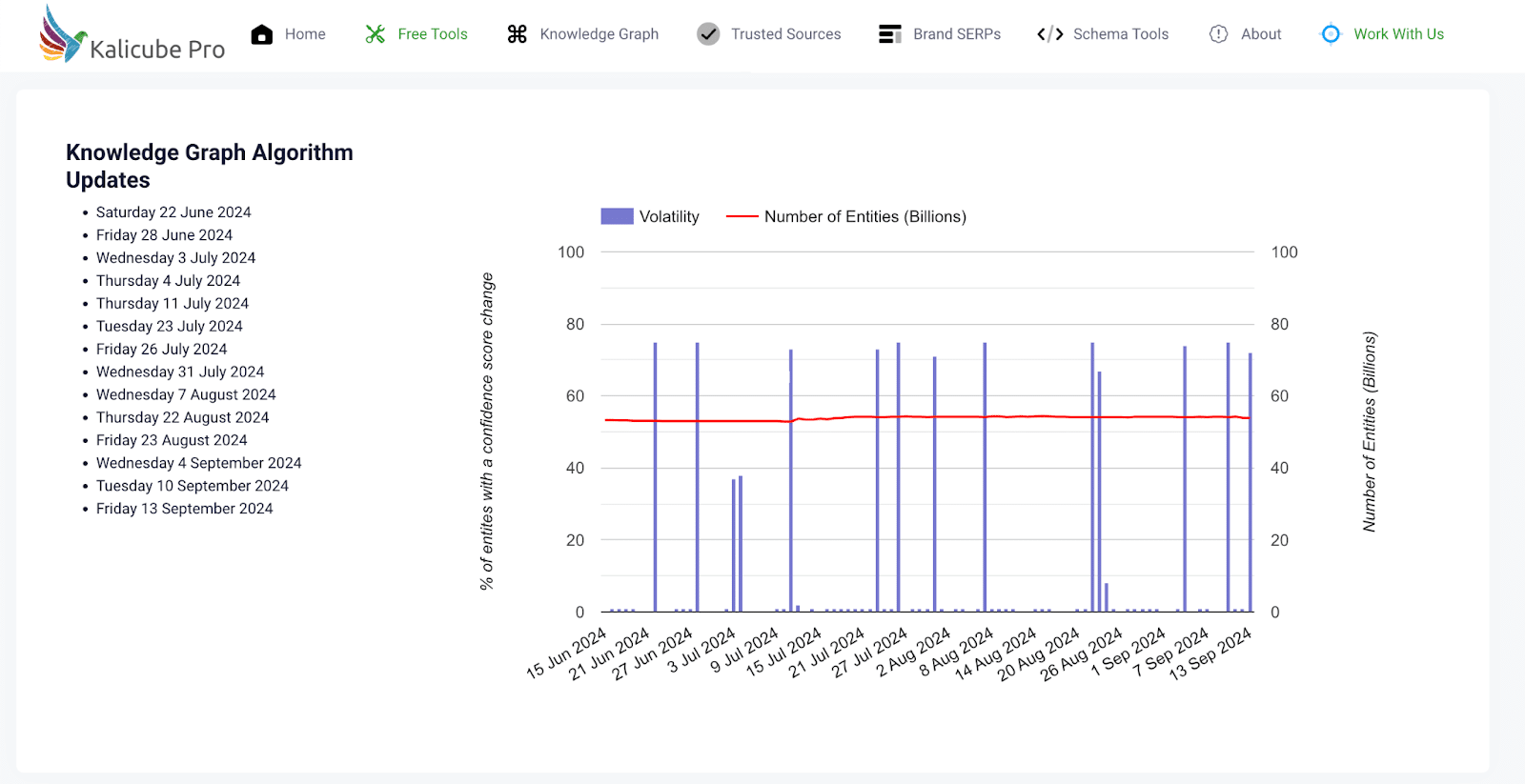
While these updates may seem random and impact around 10% of entities, they are typically minor “recalibrations” rather than strategically significant changes.
The key takeaway is that Google is increasingly focused on identifying trustworthy person entities and connecting them to the content they create.
Why this is important to E-E-A-T in SEO
E-E-A-T takes on real (measurable) meaning when Google identifies people it considers authoritative on a topic and can confidently link them to the content they create.
This places us firmly in the era of what I call modern SEO, where, in addition to optimizing the content (traditional SEO), optimizing the content creator and website publisher entities is necessary.
The logic is simple and irrefutable, given the data and the Google leak.
In order for Google’s algorithms to apply any E-E-A-T credibility signals, they need to understand the entity and the relationship between that entity and the web pages it creates or that provide information about it.
This is a zero-sum game. Without explicit understanding, the entity’s E-E-A-T credibility signals (links, awards, qualifications, reviews, testimonials, media coverage, etc.) will have no effect.
How to optimize content creator/author for SEO
To achieve optimal SEO results, you need to focus on optimizing both the content creator and website publisher entities. However, if you have to prioritize one, choose the content creator.
Google is increasingly focusing on individuals and optimizing content creators will likely provide the most value to your clients right now.
Optimization passes through three phases:
- Understandability.
- Credibility.
- Deliverability.
Understandability
Create clear relationships between the content creator and reference pages that Google can use to verify facts about the person. Ideal reference pages include:
- The creator’s personal website.
- The “About” page on their employer’s website.
- Social profiles.
- Trusted third-party sources like Crunchbase, Wikidata, etc.
Credibility
Establish connections between the content creator and relevant content. This includes:
- Articles they’ve written.
- Videos they’ve produced.
- Podcasts where they’ve appeared as a guest.
- Interviews they’ve participated in.
- Articles written about them.
Deliverability
Expand the content creator’s digital footprint by creating new content, getting content published about them and controlling all information strands. Ensure all content is:
- Clear.
- Consistent.
- Relevant.
- Topical.
- Factually accurate.
Use the creator’s personal website as a central hub in a hub-and-spoke model, linking all content to help Google and other AI systems connect the dots.
A simple, DIY method to check if Google recognizes the author
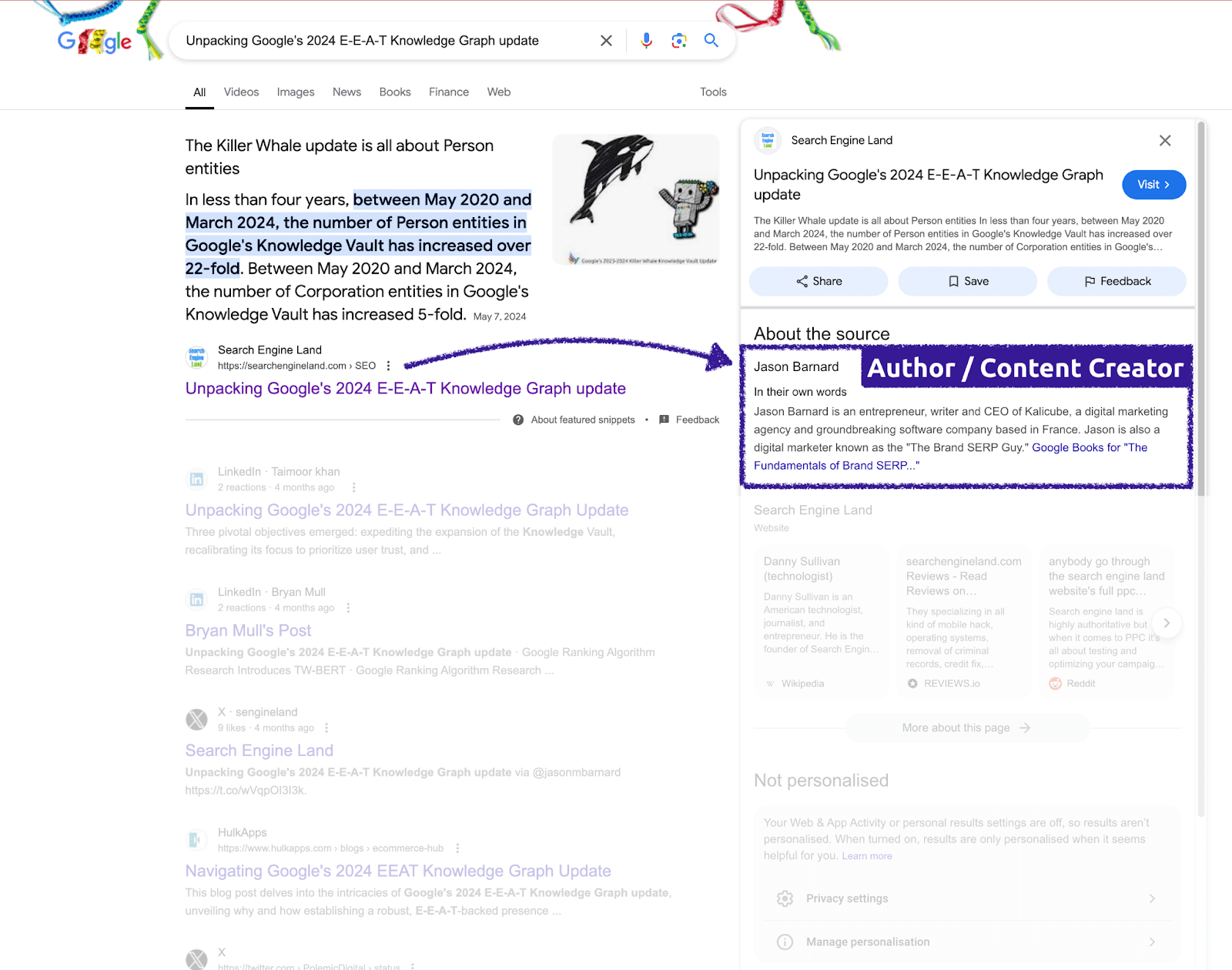
To see if Google recognizes an author, search for the title of one of their articles. In the SERPs, click the three vertical dots next to the result.
If Google shows the author’s name and a brief description, it means the relationship between the author and the content has been established in Google’s algorithms.
The person entity and URL relationships evolve over time
This strategy is not a “set-it-and-forget-it” approach. Over time, a person’s digital footprint expands, their niche evolves and Google’s dataset and algorithms continuously change.
For example, during the Killer Whale update, the number of person entities tripled in a single day, drastically altering the landscape for most entities overnight.
Even smaller updates can accumulate into significant changes:
- Seven minor updates In August and September led to the deletion of 19.21% of person entities and the creation of 21.26% new ones.
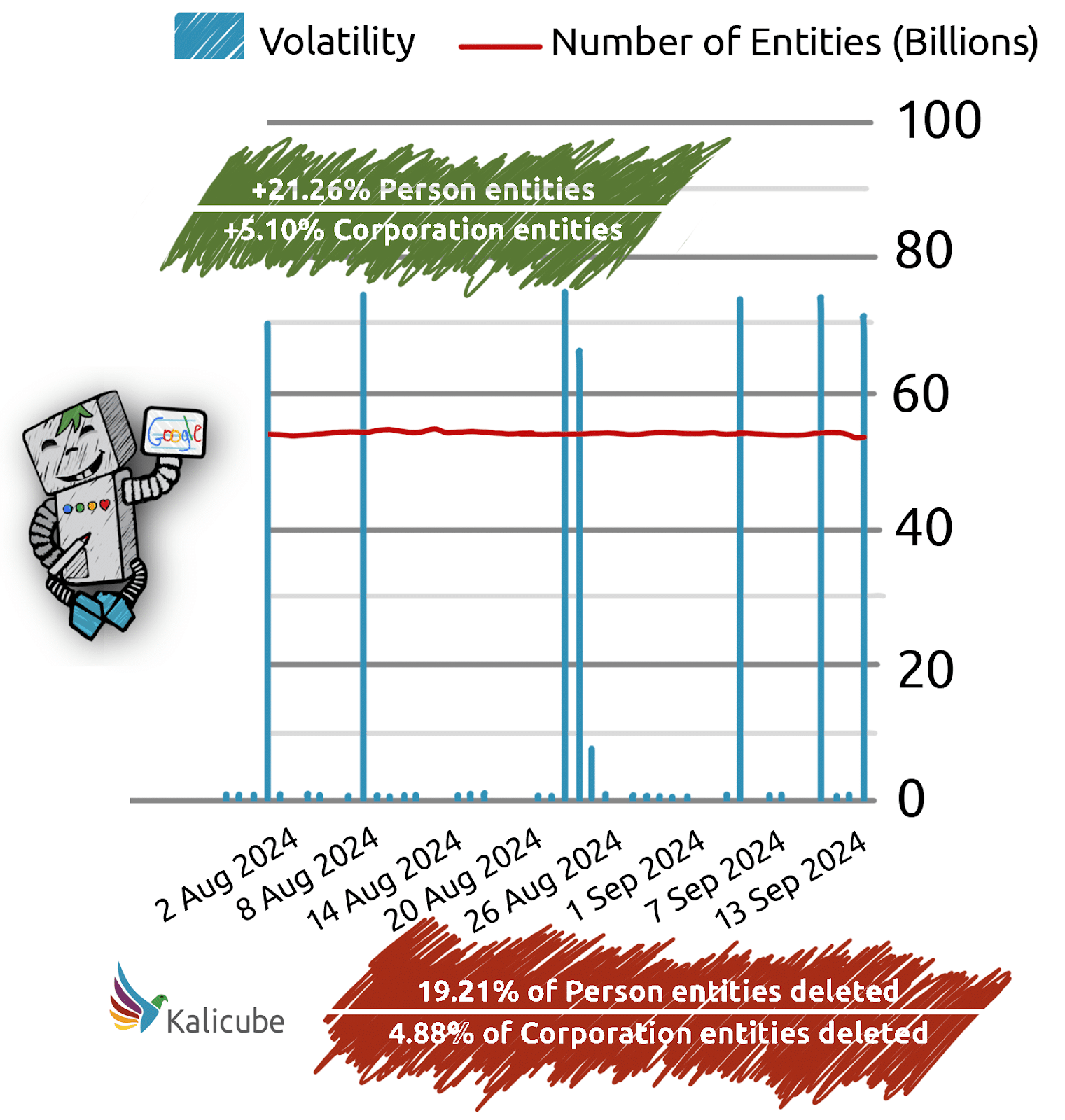
There is a constant risk of losing critical elements such as entity-to-reference relationships, author connections, specific facts about the entity and relationships with other entities.
The daily risk of losing their Knowledge Panel is particularly high for less established person entities.
Tracking these elements is essential, and ongoing maintenance is crucial.
We consider an entity to be established only after two years of presence in Google’s Knowledge Graph, as reflected in its entity home.
Entities that depend on sources like Wikipedia, Wikidata, Google Books, Crunchbase or other third-party resources for their existence in the Knowledge Graph remain vulnerable to changes in those sources.
Is this information integrated into the algorithms?
The simple answer is “yes.”
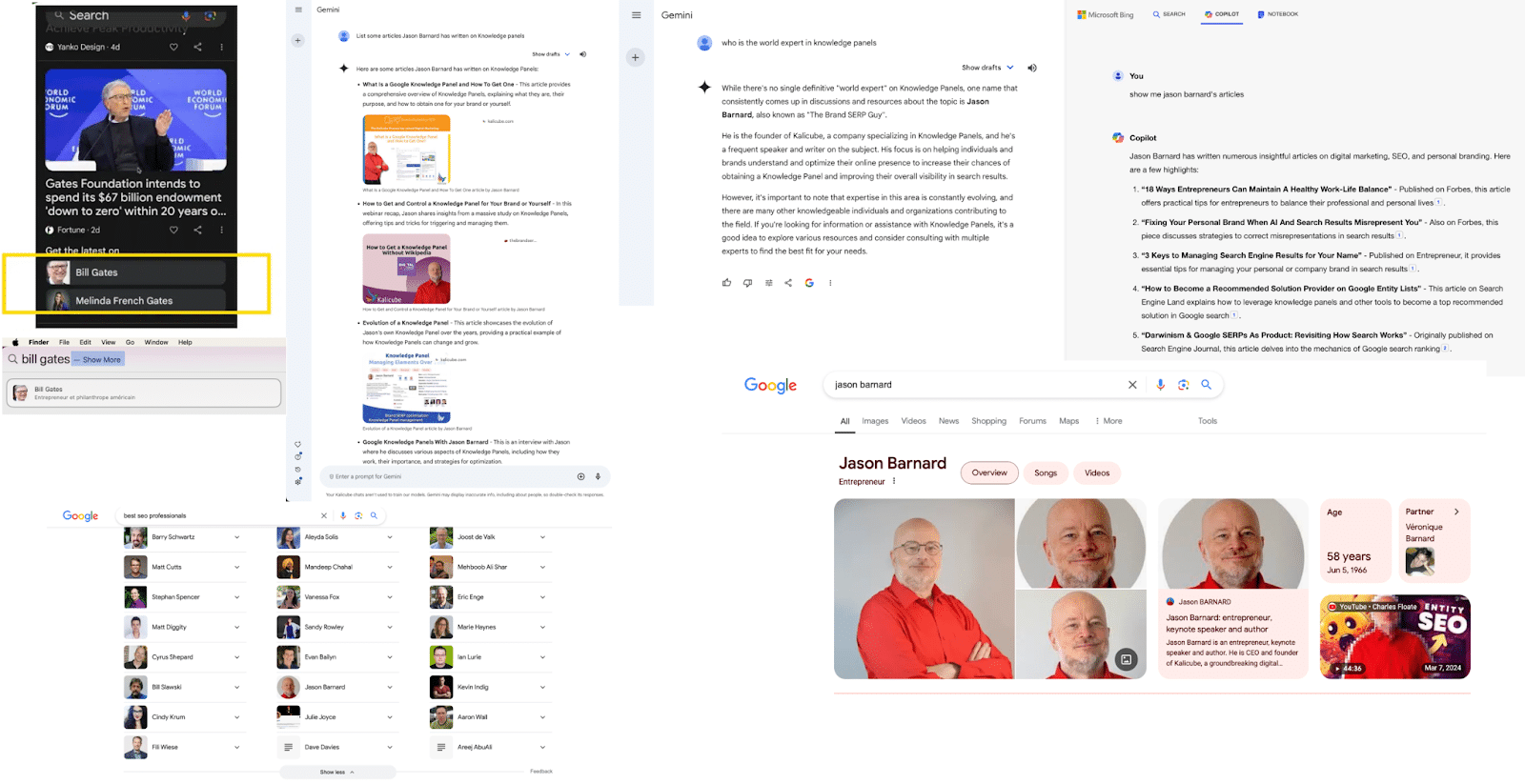
We can clearly see Person entities in Gemini, AI Overviews, Google Discover and in traditional SERPs through rich features such as Knowledge Panels, People Also Search For, “Best of” lists and much more.
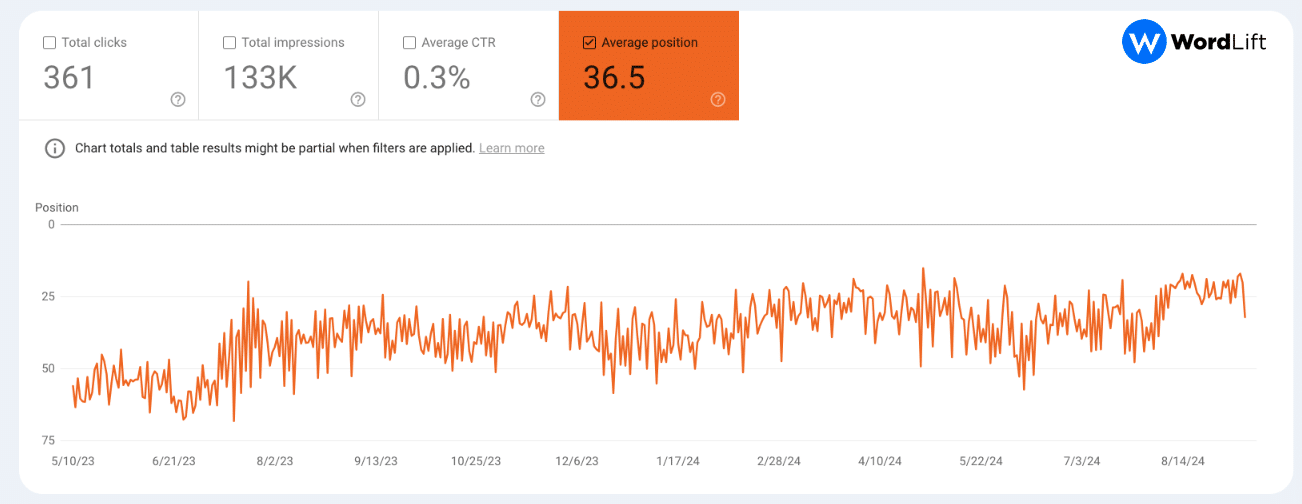
Even when considering a traditional KPI like ranking, you can see the positive impact of building these entity-to-URL relationships.
In collaboration with WordLift, I have been working on this for my personal brand. Below is the position tracking of pages explicitly associated with “Jason Barnard” as reference or author pages on WordLift’s website:
Here are some results from on and off-SERP assistive agents:
This is important to topical authority in SEO
The importance of topical authority is widely recognized in the SEO industry.
Because topics are considered entities, building topical authority involves developing URL-to-entity relationships for both the relevant topics and the content creator.
As you establish topical authority for a content creator, the likelihood of Google assigning a subtitle such as “Content creator (Topic)” increases.
This subtitle serves as a direct indicator of individuals whom Google recognizes as primary content creators with authority in a specific field.
However, this subtitle is not the only measure of topical authority.
If Google views an individual’s primary role differently, an individual can possess topical authority without it being reflected in their subtitle.
For example, while Google acknowledges me as a topical authority in SEO – evident from the topic-to-URL relationship with my entity home – my Knowledge Panel subtitle is “Entrepreneur.”
- On Sept. 14, a Google Knowledge Graph update recalibrated topic entities, leading to a 4.82% reduction in their numbers. Topics relying on Wikipedia pages were particularly affected, underscoring Wikipedia’s diminishing role in Google’s Knowledge Graph.
Other search and assistive engines and the future
In addition to Google Search and Gemini, various AI assistive engines – such as ChatGPT, Microsoft Copilot, Perplexity, Alexa, Apple Spotlight and Siri – are adopting similar strategies. Through direct or indirect partnerships, these engines:
- Selectively collect data from the web.
- Optimize this data to train their large language models (LLMs).
- Structure the information to create a Knowledge Graph, helping to reduce hallucinations and errors.
What you must do now as a modern SEO expert
To stay ahead, focus on building an understanding of person-to-page relationships (consider these as linkless links).
Apply this strategy to the content creators on your (or your clients’) websites to enhance rankings, increase SERP visibility and improve knowledge-based results such as Knowledge Panels, entity lists and AI Overviews.
Courtesy of Search Engine Land: News & Info About SEO, PPC, SEM, Search Engines & Search Marketing
Category seo news | Tags:
Social Networks : Technorati, Stumble it!, Digg, de.licio.us, Yahoo, reddit, Blogmarks, Google, Magnolia.
Open for your exclusive SMX agenda preview
Written on September 25, 2024 at 6:03 am, by admin
Join some of the world’s most respected search marketing minds for the final SMX event of 2024 – online November 13-14 – for free. Together, you’ll explore the latest, most critical search marketing trends and head into 2025 with the skills you need to stay ahead of the competition:
Your free pass unlocks the complete program:
- Actionable tactics. Walk away with reliable, actionable, brand-safe insights you can immediately apply to your campaigns to drive measurable results.
- In-depth live Q&A. Tap directly into some of the brightest minds in search, ask them your questions, and get real-time answers during Overtime!
- Engaging discussions. Connect with and learn from like-minded search marketers and industry experts during live Coffee Talk meetups.
- Instant on-demand access. Can’t attend live? On-demand replay is included with your free pass so you can train at your own pace.
- 100% online. Log on from your cubicle, coffee shop, couch – wherever! – and skip the plane ride, hotel room, and time out of the office.
- 100% free. Continued training doesn’t have to break the bank. Leave the expense reports (and expensive in-person training experiences) behind!
- Certificate of attendance. Showcase your knowledge of the latest industry trends with a personalized certificate and digital badge, perfect for posting on LinkedIn.
Since 2006, SMX has helped more than 200,000 search marketers from around the world achieve their professional goals. Now, it’s your turn. Grab your free pass now!
Courtesy of Search Engine Land: News & Info About SEO, PPC, SEM, Search Engines & Search Marketing
Category seo news | Tags:
Social Networks : Technorati, Stumble it!, Digg, de.licio.us, Yahoo, reddit, Blogmarks, Google, Magnolia.
TikTok Search Ads Campaign launch in U.S.
Written on September 25, 2024 at 6:03 am, by admin
TikTok is taking a direct shot at Google with the launch of TikTok Search Ads Campaign in the U.S. Advertisers can now target users on its search results page.
Previously, ads on TikTok’s search page were more generic. But now brands can tailor their ads to align with specific search behaviors.
Why it matters. TikTok has a growing role as a search engine for younger users – 57% of users use the app’s search function, according to internal TikTok data. This new feature lets you capture attention at critical moments of intent. TikTok’s move could threaten Google’s dominance, as younger users are increasingly using social media for search instead of traditional engines.
What can be done. Brands can now tailor ads to match TikTok’s unique search behaviors, which often blend intent-driven and spontaneous discovery.
The numbers. TikTok’s testing shows that combining Search Ads with In-Feed Ads boosts conversions by 20%, with users who don’t engage with an ad initially more likely to interact after seeing a related search ad.
The big picture. TikTok’s search capabilities continue to evolve, positioning the platform as a real contender in the search advertising space, and giving advertisers a new way to reach users who are actively seeking specific content.
But. The impending U.S. TikTok ban, which is expected to occur in January, could severely limit any threat to Google’s search ad dominance.
Courtesy of Search Engine Land: News & Info About SEO, PPC, SEM, Search Engines & Search Marketing
Category seo news | Tags:
Social Networks : Technorati, Stumble it!, Digg, de.licio.us, Yahoo, reddit, Blogmarks, Google, Magnolia.
Google Ads adds Video Enhancement for Performance Max
Written on September 24, 2024 at 3:02 am, by admin
Google Ads is rolling out a new Video Enhancement feature for Performance Max (PMax) campaigns. This feature aims to improve video ad performance through automated adjustments.
Why we care. The feature is designed to optimize video creatives, but you may not want to give Google this level of control. So, depending on many caveats, it may be worth testing.
What’s happening. Advertisers reported seeing this feature in some campaigns, with the option being automatically opted-in by default.
Reactions. Some advertisers are wary of Google’s use of terms like “enhance” and “optimize,” suggesting a cautious approach to automated adjustments that could affect campaign outcomes.
- Odi Caspi, Founder at EffectiveMarketing.uk responded to this update – “Any time Google use terms like ‘Enhance’ or ‘Optimise’ I get nervous”
First seen. This update was first brought to our attention by Natasha Kaura on X:
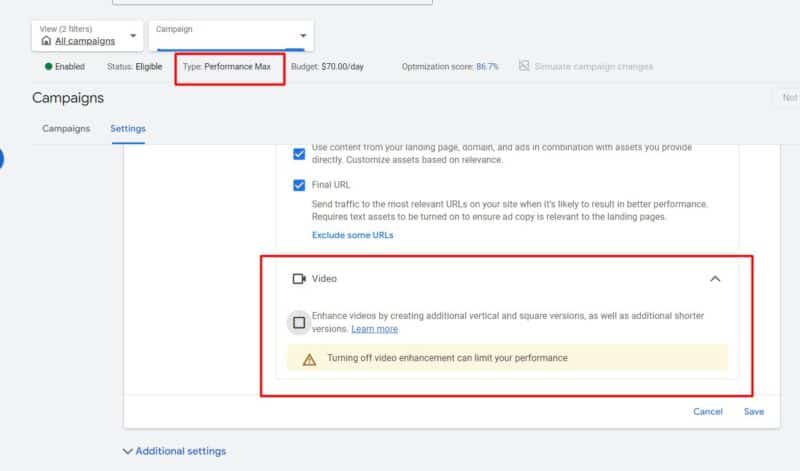
Bottom line. As Google continues to introduce AI-driven enhancements to its ad tools, advertisers should monitor how these changes impact campaign performance, and adjust settings as needed to maintain control over their creative assets.
Courtesy of Search Engine Land: News & Info About SEO, PPC, SEM, Search Engines & Search Marketing
Category seo news | Tags:
Social Networks : Technorati, Stumble it!, Digg, de.licio.us, Yahoo, reddit, Blogmarks, Google, Magnolia.
How to plan a website to maximize SEO success
Written on September 24, 2024 at 3:02 am, by admin

Many redesigned websites fail to improve SEO, often damaging existing rankings and creating challenges for SEO teams trying to recover lost traffic. This can severely affect business visibility, lead generation and sales.
I have been handed many a brand new website and asked to “SEO it” when untold damage has been done and significant time and effort must be spent just to get traffic levels back where they were before the redesign.
Many articles help with website SEO and how to retain SEO traffic during a redesign. There are also helpful books and frameworks for website planning.
Yet, seemingly no resource combines a sensible approach to planning a new site with the retention and improvement of SEO.
This article will outline how to plan a new website effectively to retain existing traffic and create a platform to improve your SEO.
To make following along easier, you can fill out the steps in the template below:
Website planning and SEO
To ensure your new website retains and improves your SEO, it is helpful to ensure you have a clearly defined SEO strategy and you have articulated this in a simple SEO plan.
The worst thing in any website design project is when unexpected problems or changes arrive during development.
A well-developed plan that has input from all stakeholders helps ensure less of this. More importantly, if the customer changes their mind or the scope creeps (the scope always creeps), you have the document to show the original scope and justify the necessary fee increases.
I wish I had a dollar for every time we were asked to review a new site that was almost finished – only to find that SEO hadn’t been considered, putting its success at risk.
We recently worked on a six-figure project for a business that thrived on organic traffic. The project would essentially destroy all the hard-earned SEO.
This took several months and probably another six figures in PPC spend (to replace what was free SEO traffic from an SEO vs. PPC perspective), as well as further SEO time and redevelopment. You want to avoid that if at all possible.
We have also seen other sites that had so comprehensively damaged SEO traffic that the only sensible approach was to roll back to the previous site.
Suffice it to say that ensuring you retain SEO traffic and set the scene for improvements is not something you can leave to chance.
The approach laid out here combines a fairly standard approach to website planning, which, done well, will save much time, money and pain, with the kind of jobs needed to retain existing SEO traffic while building a furtive platform for further SEO development.
The output of this process should be a document that either acts as the foundation of the website brief or is integrated into a traditional brief.
Note: Where the SEO brief and website brief are separate entities, I always recommend reviewing the final website brief to ensure the SEO brief has been incorporated before the project kicks off.
There are five key steps to work through to create your SEO-friendly website blueprint:
1. Existing rankings and traffic
Your must understand your traffic and where it comes from.
To do this, spend some time in Google Analytics and Google Search Console to identify:
- High-ranking keywords.
- High-traffic keywords.
- High-traffic content.
- High-opportunity pages.
- High-opportunity keywords.
Your goal is to clearly document what works currently. These must be included in the new site.
If high-traffic content is removed, not correctly optimized, or lost in the new site’s hierarchy, then you are inviting problems.
Google Search Console
Google Search Console is a treasure trove of SEO information and will give you the straight dope on your rankings and traffic.
Here, you’ll see high-opportunity keywords and pages with lots of impressions but not many clicks.
- Visit Search Console
- Performance > Search Results
The main information you are looking for is in the queries and pages tabs. You can order this by clicks (traffic) and impressions (which is an opportunity).
Work through this information and document your findings in the template.
Crawl data
Crawl your website and save a copy of the crawl (Screaming Frog is a cost-effective or free way of doing this under 500 pages).
This will allow you to check links to the page and compare with the new site if (and when) problems arise.
SEO tools
You can also use any SEO tools for rank tracking.
Still, I prefer Search Console and Google Analytics for this as they give you real data and insight, not the extrapolated data the typical SEO tools provide, which can often be wildly inaccurate and misleading.
Dig deeper: Website redesign SEO checklist: Retaining and improving SEO
2. SEO and website goals
Goals are crucial to any project. Starting with clear goals helps you understand your destination, making it easier to find the right path forward.
Goals provide you with a tool for assessing all decisions throughout the project.
Will doing something help us hit our goals? If not, don’t do it. If so, go for it!
You may have goals for the website project overall, ideally these will be hierarchical. For instance, we may have one super goal that states the goal of the new website is to generate more leads.
You may then have sub-goals such as to improve SEO and improve conversion rates that work in service of the master goal.
Remember to make your SEO goals specific and measurable, so SMART goals are helpful here.
Overall, you may need a hierarchy of goals here that covers:
- Website Goal: Generate more leads/sales.
- SEO Goal 1: Rank our service pages more highly.
- SEO Goal 2: Rank our upper funnel marketing content highly.
You may also find it useful to look at things you want to avoid with the new site. Determining what you are aiming at and what you are running away from can be just as helpful, if not more so.
- Anti-goal: Avoid having a site that is essentially no different from our competitors.
Document your goals in the website plan template and move on.
3. Audience and customer segments
Carefully define your target audience(s) along with some considerations regarding your competitors.
Remember, in marketing, targeting everyone is targeting no one.
That is not to say you can’t target multiple audiences, but you do need to give some consideration to each audience and factor this into the structure and segmentation of your new site.
We want to carefully consider the goals, problems and jobs of our target audience to ensure our business goals, website goals and the goals of the people we serve are all finely aligned.
Audience questions
We want to start by simply identifying the different audiences: men, women, students, Gen X, Millennials, etc.
For each audience:
- Audience name.
- Demographics (age, sex, location).
- What is the problem or goal of the target audience?
- Where do they hang out or find information online?
The information you gather here will help you when it comes to structuring your site to support the individual needs of each audience (which, in turn, makes optimizing for each audience so much easier).
To explore each customer segment in more depth, you can use the SEO Value Proposition Template and SCAMPER to understand your customers and identify the content you need to hit your goals.
Remember that Google wants you to focus on creating helpful, people-first content. To do this, you need to understand your people (audience) and ensure you are writing for them.
This process feeds into your SEO like no other, so spend the time getting into the minds of your audience segments. Your SEO will thank you for it.
Note all of this down in the website plan template and move on.
4. Structure and sitemap
A sitemap provides a simple overview of the new site and can be cross-referenced with the existing goals.
For instance, the new sitemap should include high-traffic pages on the current site that drive business performance.
Sitemaps help gather feedback from all stakeholders and facilitate difficult conversations during the planning stages. Addressing these issues early can prevent problems later on with delivery, timelines and budgets.
I am a big fan of the idea that you should really thrash things out at this point and good ideas get strengthened and remain, while bad ideas can die here – rather than in costly development.
Creating your sitemap
You want to create a simple bullet point sitemap in the first instance.
- Home
- About Us
- Category A
- Sub Category A1
- Detail Page
- Sub Category A1
- Category B
- Sub Category B1
- Detail Page
- Sub Category B1
- Resources
- Article A
- Article B
- Contact
I recommend writing this all down in a spreadsheet so you have clarity and numbering for all pages (which will be useful in the next steps).
You can use your favorite drawing tool to create your sitemap. Draw.io has a useful set of templates, including various maps, that you can use for site mapping (all of which are saved to Google Docs).
A visual sitemap can be useful for the major categories and sections of the site and can aid in getting feedback from stakeholders.
The key takeaway here is that we want to create a sitemap that is segmented by our target audiences and serves the overarching marketing objectives.
If our SEO goals are to retain traffic and create an optimized structure, then we can assess that here.
Key pieces of content that have been identified should be recreated on the new site within an optimized structure that sets the scene for growth.
Remember, the hierarchy here will inform you of your site’s folder structure, which helps provide context for each document.
This, in turn, helps you structure your keywords from high-level broad keywords to more specific categories and longer-tail product/service keywords. The structure is key, so spend time here until you are happy.
5. Page scoping
The next step of the planning process is to determine what content will be on each page.
Based on the level of detail you want to use here, you can either create columns in your spreadsheet sitemap that you created previously or go into more detail.
Typically, for each page, we should include:
- Goal of the page.
- Functionality / Features (e.g., forms).
- Content (images, text, video etc).
- SEO (Notes, Page Title, Meta Description).
- Notes.
The SEO aspect here is fairly obvious, and if we have a high-performing page currently, we want to ensure the main content is recreated.
There is little point in adding a page and changing things radically – minimize the variables wherever possible.
We want to examine the page’s goal and ensure that its functionality and content support it.
Some example goals for pages are:
- Generate exposure from SEO (to feed remarketing).
- Generate leads.
- Funnel users to product pages.
Work through each page detailing the goal for that page and then outline the content that supports that and update the website plan template.
6. SEO specifics
The planning is important, but we must document a few SEO specifics to ensure this build aspect will be handled correctly.
- Keep the old site live on a temporary URL if possible.
- Create a list of redirections from the old pages to the new ones.
- Migrate content, page titles and meta descriptions for high-performing pages.
- Update external backlinks where possible.
- Monitor performance after launch (rankings, traffic, impressions).
Factoring in these five areas will ensure the main SEO points are covered.
6. Your website plan
At this point, you should have a comprehensive but concise plan outlining what is needed on your new site.
The plan should cover:
- Existing rankings and traffic.
- Goals for the project.
- Customer segments.
- Website structure and sitemap.
- Page scoping.
- SEO specifics (redirects, etc.).
Most people don’t do this. They create a super skinny brief and leave it to the web developers.
But the web developers don’t know your business, so you have to put in the work to ensure the new site retains and improves your SEO (while also hitting the likely myriad of other goals that trickle down from management to marketing).
While it may seem like an additional step, planning will save you time, money and pain while improving your overall results – a win-win.
In a nutshell, you will get better results by doing the research and planning work.
Launch and beyond
The final aspects to consider are the monitoring of the launch and what your marketing and SEO KPIs are to measure results.
We always expect some turbulence, but keeping a close eye on the Search Console and your KPIs will help you spot issues and squash them quickly.
SEO-friendly website planning to retain and improve traffic
Most websites could be better planned.
If you follow the simple steps here, you will have done more pre-design planning than 99% of other website projects, which can help you join the 1% of companies that get all the results.
Ensure you understand what works currently and where you want to go. Weave that into the planning for your new site and prepare to fly high.
Courtesy of Search Engine Land: News & Info About SEO, PPC, SEM, Search Engines & Search Marketing
Category seo news | Tags:
Social Networks : Technorati, Stumble it!, Digg, de.licio.us, Yahoo, reddit, Blogmarks, Google, Magnolia.
6 advanced (yet missing) Meta Ads KPIs to track success
Written on September 24, 2024 at 3:02 am, by admin

Meta Ads provides a solid foundation of basic metrics like ROAS and conversion rate, but savvy marketers know that true optimization lies in the details.
Are your clicks translating into quality visits? Is your audience reach expanding or stagnating? These questions demand more nuanced data.
Below are six advanced key performance indicators (KPIs) that Meta Ads doesn’t readily offer out of the box but which can dramatically elevate your paid social strategy.
1. Awareness KPI: Net new reach
The first missing KPI to add to your Meta Ads strategy should focus on audience reach and saturation.
The key question: Is your top-of-funnel approach attracting people unfamiliar with your brand?
This is crucial for most businesses, especially B2B accounts with longer sales cycles.
Without fresh prospects, you risk depleting your funnel by repeatedly targeting the same audience, leading to diminishing returns.
To answer this question, you will want to tweak how Meta Ads shows your data.
Let’s start with frequency. It’s the average number of times each user saw your ad. The formula is:
- Frequency = Impressions / Reach
Frequency is a powerful KPI for tracking audience saturation, but it comes with two major caveats:
- Frequency is an average. And just like every average metric, it hides discrepancies that can destroy your campaign results. This means you always need to implement frequency caps. Unfortunately, Meta Ads does not always offer such options and you will need to contort your campaign settings to prevent such issues. But that’s a topic for another article.
- It’s bound to a predefined time frame. So you need to break it down to understand its full story:
- Last 3 or 7 days for an immediate snapshot.
- Last 14 or 30 days for your audience’s recent experience.
- Last 90 or 180 days to get a smoothed-out perspective.
- Etc.
This means Meta Ads could easily improve Ads Manager by providing frequency columns with such default time frames. But you have to manually do it. Or do you?
Meta Ads offers an alternate metric called “frequency (cumulative).” However, it’s not available as a column in Ads Manager: you can only get it if you hover over a campaign (ad set or ad) and click on “view charts” and then “customize.”
Here is an example of a retargeting campaign with a budget that’s probably too big for a relatively small audience:
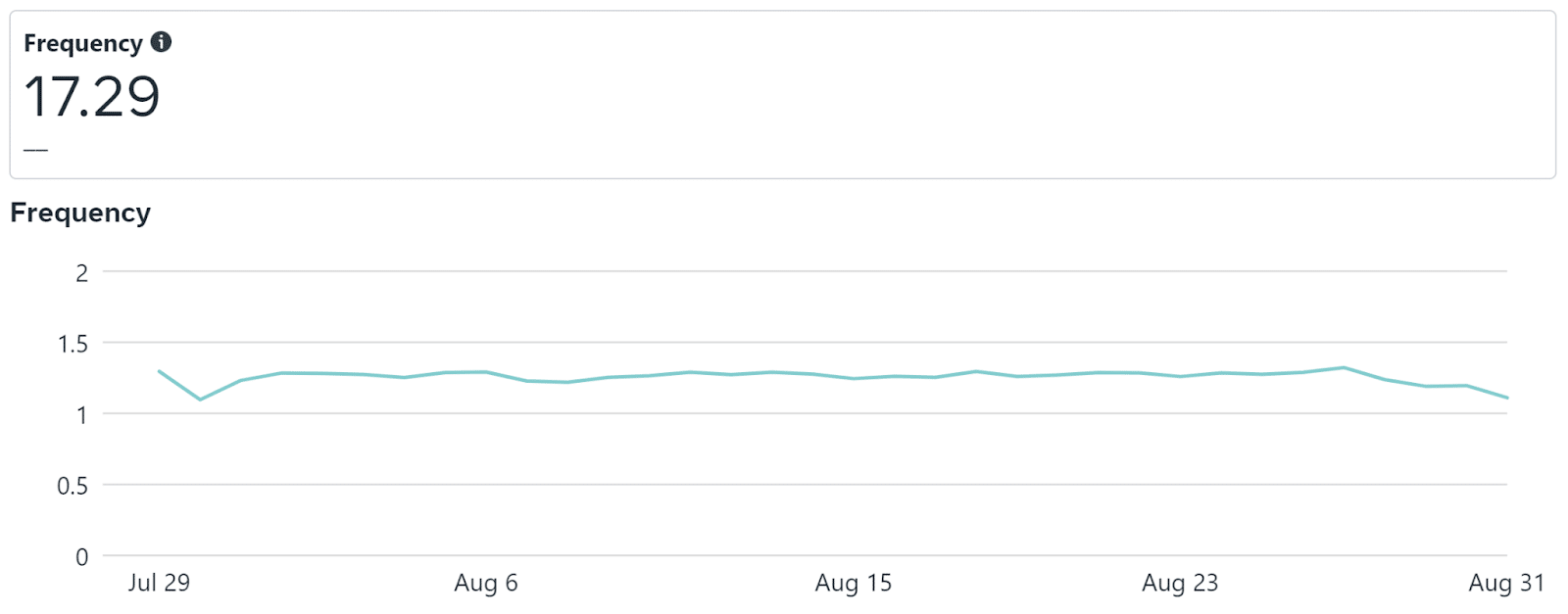
Looking at frequency over time, it looks OK. We’re reaching unique users about once a day.
However, the overall number should trigger some questions: why is it so high (17 impressions in about a month)? If we switch to frequency (cumulative), this is what we see:
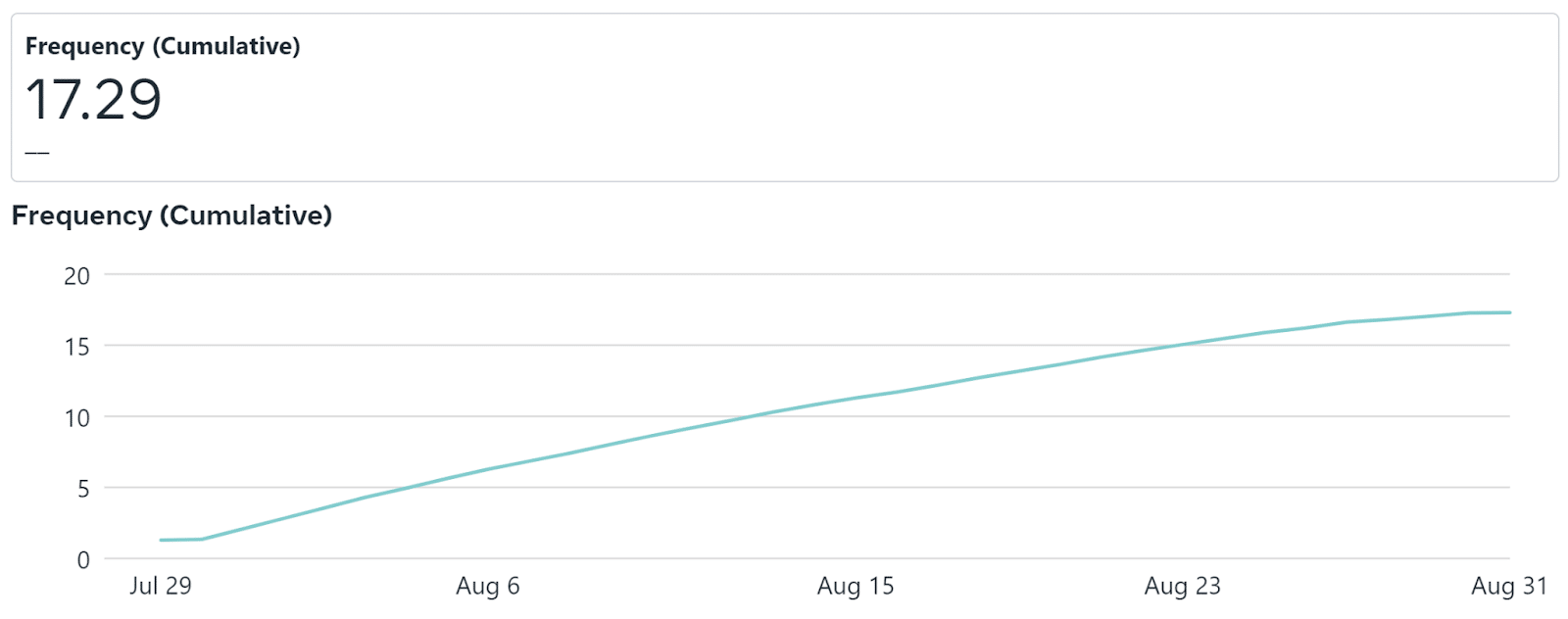
You never want to see such a frequency (cumulative) curve in most scenarios because:
- You don’t want to tap into the same audience indefinitely, resulting in a dried-up top-of-funnel.
- You want to anticipate such a scenario and avoid reactive behavior. That way, you avoid seeing performance go up and down and up and down again.
The question is: how?
Unfortunately, Meta Ads does not provide an easy way to do this: frequency (cumulative) sits at the campaign level only, and its sister KPI, reach (cumulative), too.
Also, it can’t be found in the regular data exports (API, Ads Report, etc.).
You’ll need to create a custom KPI called net new reach to accomplish this. Here’s the formula:
Net New Reach = Reach(s→y) – Reach(s→m)
With:
- Reach(s→y) being Reach from your start date (“s”) to yesterday (“y”)
- Reach(s→m) being Reach from your start date to a middle point in time (“m”)
This lets you know how many new users you reached who were not exposed to your ads before “m.” net new reach has two advantages:
- Unlike frequency (cumulative), it adapts to your granularity needs up to the account level. You can export its root component (Reach) relatively easily through the API, the user interface, etc.
- It shows your latest net new reach, which allows for anticipation. If it falls week over week (for example), you know you want to act to avoid saturating your audience
Now, there’s still one caveat with net new reach. You need to make it a recurring exercise (weekly?) and build a nice table out of that to make it digestible. Fortunately, since it’s recurring, it means it’s automateable.
I suggest exporting Reach(s→y) weekly to your database of choice and running a script to subtract Reach(s→y) from the previous week’s Reach (s→y) (that is, Reach(s→m), from the perspective of that new week).
That way, you will end up with a table like the one below, with “s” being your start date and “y” being yesterday, the date of the data pull.
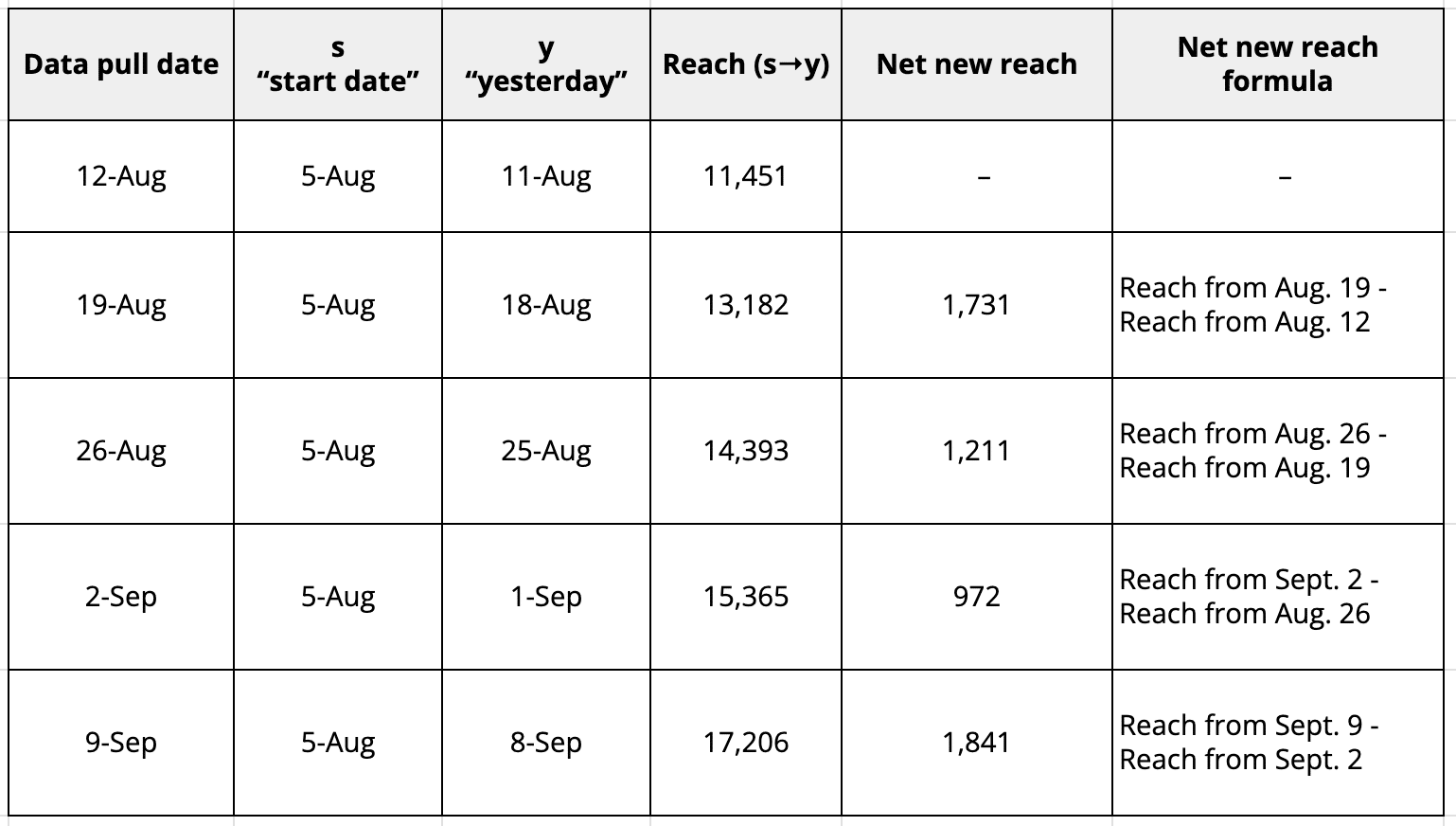
Once that table is ready, you only need to graph net new reach and/or analyze it weekly to know whether you have a top-of-funnel saturation challenge.
In the table above, since the net new reach is much lower than reach (s→y), it indicates that we’re not bringing in enough new users to our top-of-funnel tactics and/or have a disproportionate budget compared to our audience size.
Dig deeper: B2B audience targeting: Meta Ads as an alternative to LinkedIn
2–3. Engagement KPIs: Hook and retention rates
Another area where Meta Ads could do better is the engagement stage of the funnel.
If you ask me, when it comes to engagement, the most important goal is to catch users’ attention in a crowded feed or string of Stories and Reels. What they do next (from leaving a comment to purchasing) is up to the next stages of the funnel.
When your ad is catchy enough, it gives you a chance to:
- Deliver your message.
- Push your audience to complete the action you want them to take.
These two items can be calculated very easily using Meta Ads’ custom metrics:
- Hook rate: Determine if your ad is catchy enough to stop users from scrolling and grab their attention.
- Formula:
- Hook Rate = 3-second video plays / Video plays
- Formula:
- Retention rate: Check if your ad is well-crafted to deliver its message and encourage users to act (though this mainly ties into CTR and conversion rates).
- Formula:
- Retention Rate = ThruPlays / 3-second video plays
- Formula:
Using these two metrics, you can determine whether to improve your ad’s hook or body. This will help you create better-performing assets at a lower cost since you’d only need to adjust one part.
However, Meta Ads doesn’t offer the same depth of raw KPIs for images as for videos, which is unfortunate. Despite using it internally, a metric like dwell time could easily resolve this issue, but Meta Ads has yet to make it available to advertisers.
In the meantime, I don’t see a solution other than using CTR to determine whether an image engages well.
4. Traffic KPI: Quality visit rate
Like the engagement stage, the traffic stage of the funnel could benefit from additional KPIs.
Once your ad grabs users’ attention, the goal is to prompt them to take action. While Meta Ads provides various click-based KPIs to measure this, they tend to be fairly shallow.
Meta Ads doesn’t tell you whether that click was valuable: Did those users bounce? Did they consume your content in-depth?
You will not know unless you have enough typical conversions (purchases, leads, etc.).
In those cases, how do you assess performance? The good news is that you have everything you need to do so, and easily!
Your first goal should be to define what is a quality visit. One way to look at this is to consider users who, once they reached your website, did one or more of the following actions:
- Visited at least two pages.
- Scrolled all the way down to the bottom of your landing page.
- Spent more than 30 seconds on your landing page.
- Played a video on your landing page.
With these simple triggers, you can set up a custom conversion in Meta Ads. This allows you to optimize your campaigns with the new KPI and evaluate your landing page’s performance using the quality visit rate.
Here’s the formula:
- Quality Visit Rate = Quality Visits / Landing Page Views
I recommend using landing page views to filter out clicks that weren’t tracked due to issues like cookie consent or ad blockers. This way, you’ll have a reliable KPI for your analysis.
Dig deeper: 3 powerful micro-conversion strategies for paid social
5-6. Performance KPI: Lifetime value and benefits
While those KPIs may seem like a stretch since you typically need an analytics or CRM solution to access that data, it’s disappointing that Meta Ads doesn’t fully leverage its integrations with tools like GA4, HubSpot and Salesforce to showcase its true business value.
Still, I believe every PPC should periodically review these metrics. Here are the formulas you need to calculate:
- Lifetime Value (LTV) = average order value x total transactions / unique customers
- Lifetime Benefits (LTB) = LTV x profit margin
I wrote an entire article on this exact topic, so feel free to check it out and dive deeper into LTV.
KPIs to elevate your Meta Ads strategy
Meta Ads offers a robust set of KPIs for campaign management, but advancing your measurement and optimization capabilities requires the creation of more sophisticated metrics.
KPIs such as net new reach, hook rate, retention rate, and quality visit rate, along with more complex metrics like lifetime value, provide deeper insights into campaign effectiveness, allowing for more informed decision-making beyond just ROAS or conversion rates.
Hopefully, Meta will recognize the value of integrating these metrics directly into Ads Manager. In the meantime, savvy PPCs can leverage these advanced KPIs to stay ahead of the competition.
Dig deeper: Here’s why PPC now looks more like paid social and what it means
Courtesy of Search Engine Land: News & Info About SEO, PPC, SEM, Search Engines & Search Marketing
Category seo news | Tags:
Social Networks : Technorati, Stumble it!, Digg, de.licio.us, Yahoo, reddit, Blogmarks, Google, Magnolia.
Google Search Ads 360 (SA360) starter guide
Written on September 24, 2024 at 3:02 am, by admin
Since its rebranding in 2018, Google Search Ads 360 has continued to be a powerful tool for PPC advertisers. However, many marketers still struggle to understand its full potential.
This confusion often leads businesses, agencies and corporations to miss the benefits of integrating it into their marketing strategies.
This article will address some of the most common questions about Google Search Ads 360 and help clarify how it can enhance your marketing efforts.
What is Google Search Ads 360?
Search Ads 360, or SA360, is a tool created by Google to manage multiple paid ads accounts and platforms in one interface.
Search Ads 360 has a direct API connection with several search engines, allowing you to view all your campaign data in one place. This streamlined access helps you make informed strategic decisions without consulting multiple sources, saving you time and money.
Once you link Search Ads 360 to a search engine, you can create and manage your search marketing campaigns within the platform. Any changes you make can be automatically copied back to the engines.
You can also make adjustments directly in the search engine’s ad platform and easily import those changes back into Search Ads 360.
Currently, SA360 supports the following platforms:
- Google Ads.
- Microsoft Advertising.
- Yahoo Japan sponsored products.
- Baidu.
- Other third-party search engines.
You might remember SA360’s predecessor, DoubleClick or DoubleClick’s main product line, known as DART (Dynamic Advertising, Reporting and Targeting).
Google acquired DoubleClick in 2007 and integrated it into its offerings as DoubleClick Campaign Manager (DCM). The tool was renamed Search Ads 360 in 2018 – the same year Google AdWords became Google Ads.
How does Google Search Ads 360 help marketing efforts?
And what does Google Search Ads 360 have that regular ol’ Google Ads doesn’t?
Multi-platform campaign management with add-on cross-channel integration
Search Ads 360 allows you to manage and optimize search ads across multiple platforms, such as Google and Microsoft Ads, all from a single interface.
On its own, SA360 streamlines your advertising efforts and saves you time.
When integrated with other tools in the Google Marketing Platform, like Display & Video 360 and Campaign Manager 360, it allows you to develop cross-channel strategies that seamlessly combine search, display and video advertising for a more unified and consistent marketing approach.
Advanced audience targeting
With Search Ads 360, you can use advanced audience targeting features to reach specific segments across platforms.
Since it integrates with multiple search engines, you can consistently create and target audience segments across platforms like Google, Bing and Yahoo.
This ensures your message is relevant and reaches the right people no matter which search engine they’re using, thus improving engagement and ROI.
Time-saving automation
Beyond bidding, Search Ads 360 offers automation for many campaign management tasks, such as real-time budget pacing, scheduling and reporting.
Again, since it integrates with multiple search engines, you’ll have the ability to set up and manage automated rules across all your accounts and platforms.
This helps you and your marketing team to focus on strategy and analysis rather than repetitive tasks.
Dig deeper: Search Ads 360: 3 best practices for advanced PPC marketers
Why would you want to use Google Search Ads 360 instead of Google Ads?
At the time of publication, many features that used to be exclusive to Google Search Ads 360 have been integrated into the Google Ads platform.
Automated bidding, advanced reporting and ad copy testing all used to be unique to the Google Search Ads 360 platform.
While Search Ads 360 still boasts additional desirable features and flexibility, such as direct integrations with third parties and real-time reporting, the most widely-used features have also been migrated over to Google Ads.
Today, the biggest reason to use Google Search Ads 360 instead of Google Ads is the size of your marketing efforts.
If you’re a marketing agency managing hundreds of search campaigns across several accounts in Google and Bing, a centralized base of operations probably sounds pretty appealing.
SA360 makes it easier and faster for strategists to make changes across multiple campaigns on multiple platforms.
I liken it to comparing Google Ads Editor to the Google Ads UI via browser. The former simply makes my job easier and enables me to finish optimizations faster without needing to waste time navigating to the page I need.
Another reason to use SA360 over Google Ads is its integration with other Google tools.
SA360 is designed to interact with Display & Video 360 (DV360) and Campaign Manager 360 (CM360).
This trifecta of SA360, DV360 and CM360 gives you a streamlined approach to search, video and display across the web, apps, YouTube and even connected TV and offline data sources.
If you’re sorely lacking visibility in how your ad dollars translate to sales or leads and you’re ready to invest in your marketing analytics for a complete user journey, SA360 and its partner products could be the right choice.
Dig deeper: Google SA360 now supports Microsoft automated bidding
Why would you not want to use Google Search Ads 360 instead of Google Ads?
Cost
If you’re working with a limited marketing budget, you are likely not a good candidate for SA360.
In addition to being charged a platform fee plus a percentage based on your spend to access SA360, most advertisers and even agencies are simply not spending enough to justify upgrading.
Single-platform vs. multi-platform
One of the biggest benefits of SA360 is seeing all your data and performance across multiple channels and platforms.
If you’re only using Google Ads for one account, another interface to combine multiple data sources simply isn’t necessary.
Complexity
SA360 has several advanced features that can overwhelm even the savviest of PPC strategists and are likely unnecessary for most advertisers.
The traditional Google Ads platform makes using campaigns with a straightforward purpose and aim simple.
At the same time, SA360 offers a highly sophisticated set of tools to help marketers manage complex campaigns with varying strategies and goals.
Google Search Ads 360: Your key to multi-platform advertising success
Google Search Ads 360 is a powerful tool for big businesses and agencies managing complex, large-scale or multi-platform search campaigns.
It offers advanced features like cross-channel integration with other Google Marketing Platform tools, cross-platform audience targeting and enhanced time-saving automation.
These attributes make it ideal for marketers with big budgets who need a comprehensive solution.
However, for small and medium-sized businesses or those operating within a single platform, the complexity and additional cost of SA360 almost certainly outweigh its benefits.
Understanding when and why to use SA360 can help you decide if it’s the right fit for your marketing strategy. This will ensure that you maximize efficiency and ROI for your business or your clients.
Dig deeper: Google Search Ads 360 gains retail media capabilities
Courtesy of Search Engine Land: News & Info About SEO, PPC, SEM, Search Engines & Search Marketing
Category seo news | Tags:
Social Networks : Technorati, Stumble it!, Digg, de.licio.us, Yahoo, reddit, Blogmarks, Google, Magnolia.
Amazon Ads launches AI-powered video
Written on September 19, 2024 at 2:54 pm, by admin
Amazon Ads today unveiled new generative AI features aimed at helping advertisers create more engaging video and image content.
- The tools include Video generator and live image capabilities, both currently in beta for select U.S. advertisers.
Why we care. Time and cost are big challenges when it comes to creating good quality video content for campaigns. These AI-powered tools address these key challenges.
By the numbers.
- 89% of consumers want to see more videos from brands in 2024, according to a Wyzowl study.
- Businesses cite lack of time and cost as the top barriers to video marketing.
How it works.
- Video generator creates custom video content in minutes using a single product image.
- Live image allows brands to produce short, animated campaign images quickly.
What they’re saying. “Video generator is another meaningful innovation that leverages generative AI to inspire creativity and deliver more value for both advertisers and shoppers,” said Jay Richman, VP of product and technology for Amazon Ads.
Between the lines. These tools are part of Amazon’s growing suite of generative AI solutions similar to how all other tech giants continue to lean into more AI solutions.
What’s next. Amazon plans to refine these features based on beta advertiser feedback before a wider release.
Courtesy of Search Engine Land: News & Info About SEO, PPC, SEM, Search Engines & Search Marketing
Category seo news | Tags:
Social Networks : Technorati, Stumble it!, Digg, de.licio.us, Yahoo, reddit, Blogmarks, Google, Magnolia.
New data: Google AI Overviews show more often to signed-in users
Written on September 19, 2024 at 2:54 pm, by admin

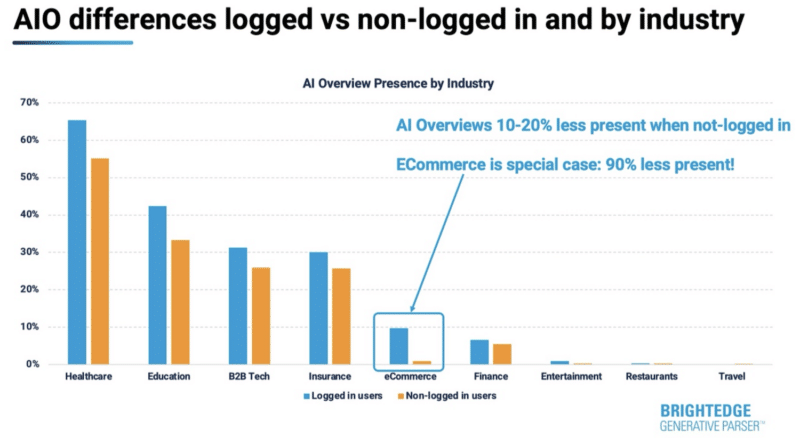
Google AI Overviews are triggered 10-20% less for signed-out users. While this percentage varies by industry, it is particularly noteworthy right now for ecommerce queries, which trigger AI Overviews 90% less often for signed-out users.
Why we care. We’ve been closely watching the evolution of Google’s AI Overviews because it has the potential to disrupt the amount of organic traffic you receive. Different industries will be uniquely impacted, so it’s important to understand how AI Overviews are rolling out to your industry.
By the numbers. While ecommerce had the largest difference, Google AI Overviews appear 10-20% less often to signed-out users in other industries, according to the latest analysis from enterprise SEO platform BrightEdge:
- Education: 21% less.
- B2B tech: 17% less.
- Healthcare: 16% less.
More Google AIO ecommerce findings. BrightEdge also found that:
- In August, product carousels for apparel-related queries increased by 172%.
- The use of unordered lists across industries rose by 42%.
Google AIO citations findings. Google is leaning away from consumer-focused media and blogs and more heavily toward specialized, expert, authoritative and trustworthy domains. For its healthcare citations:
- General health sites like verywellhealth.com saw a decline in citations.
- Domains like arthritis.org saw substantial increases in citations.
SearchGPT vs. Perplexity. In other AI search developments, BrightEdge told me that their customers (particularly large and Fortune 100 brands) are getting more referral traffic from SearchGPT than Perplexity. This is super interesting because OpenAI just introduced SearchGPT on July 25 and it is in a limited data. BrightEdge didn’t have data to share as of publication, but hopefully will soon.
Courtesy of Search Engine Land: News & Info About SEO, PPC, SEM, Search Engines & Search Marketing
Category seo news | Tags:
Social Networks : Technorati, Stumble it!, Digg, de.licio.us, Yahoo, reddit, Blogmarks, Google, Magnolia.