

GA4 now lets you recreate Universal Analytics audiences, and personalize the Home page
Written on December 22, 2022 at 3:11 pm, by admin
GA4, everyone’s favorite new Google Google Analytics product, will now let you use the Migrator for Google Analytics Google Sheets add-on tool to recreate many of your Universal Analytics properties into a GA4 property. You can also personalize the content on your home page to make what’s shown more relevant. Let’s take a look.
Why we care. First, these new tools attempt to make GA4 tolerable by allowing you to customize your dashboard and properties as close to UA as possible. Though not perfect, this should at least bring a little more familiarity into the mix. Advertisers who have been slow to implement or learn GA4 might find solace in these familiar features.
If you haven’t implemented GA4 yet, this is your sign.
Recreate Universal Analytics audiences in Google Analytics 4
Audiences based on dimensions and metrics that are the same in UA and GA4 can be recreated just as they are. When the audiences use dimensions or metrics that differ between UA and GA4, you can edit the audience definitions in the spreadsheet to use the relevant GA4 dimensions and metrics.
For each audience, the spreadsheet includes information about whether the audience is available for recreation; if it isn’t, the spreadsheet has information about why. Editable audience conditions are included so you can modify them before recreating them.
More information on the Migration tool can be found here.
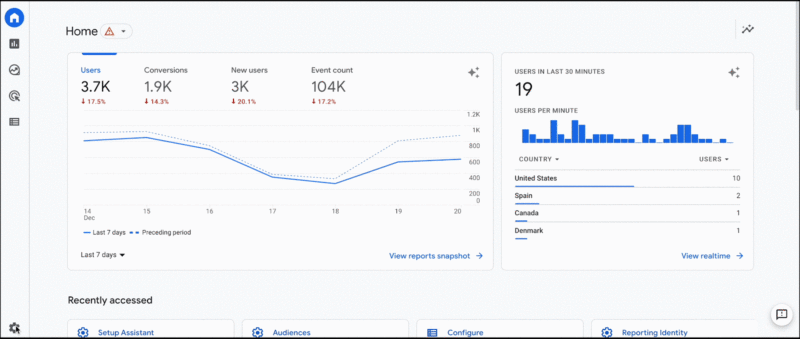
Personalize the Home page
Keep in mind that when you personalize your homepage, the customization is only visible to you. Other users will not see your dashboard.
The following information is from the Google Analytics Help documentation.
Personalize the metrics and dimensions
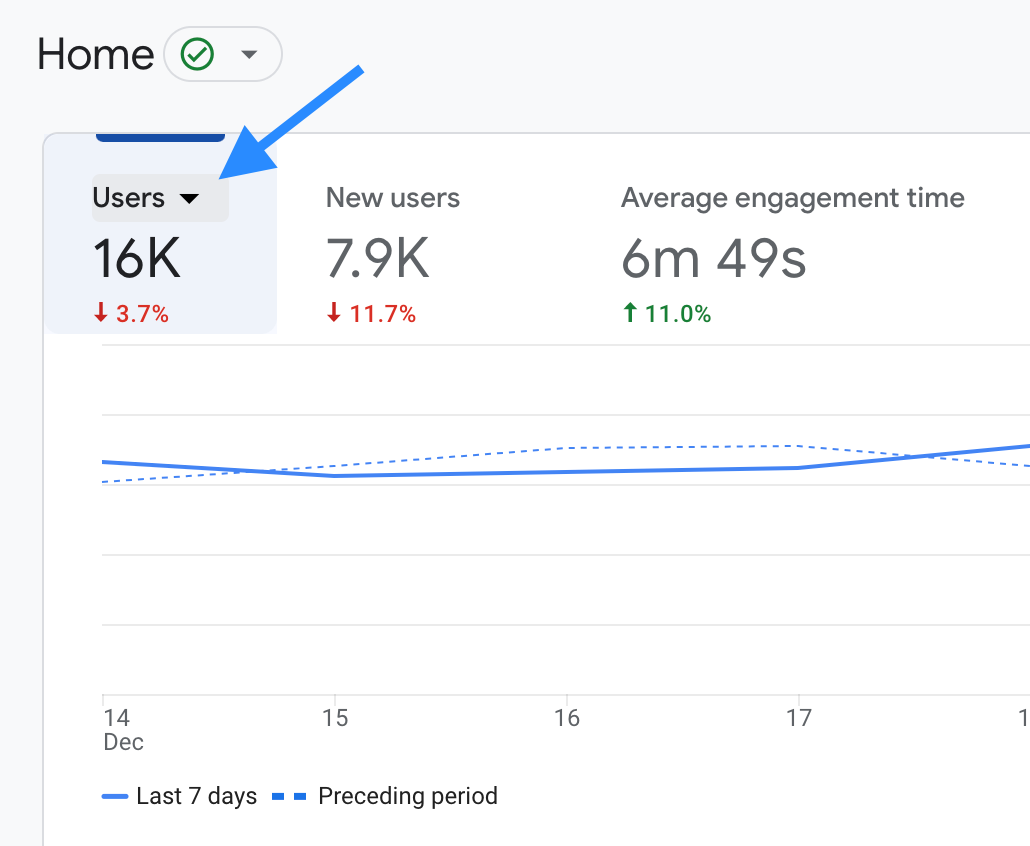
You can now change the metrics on the overview and realtime cards. On the overview card, hover over a metric to see a drop-down menu so you can change the metric.
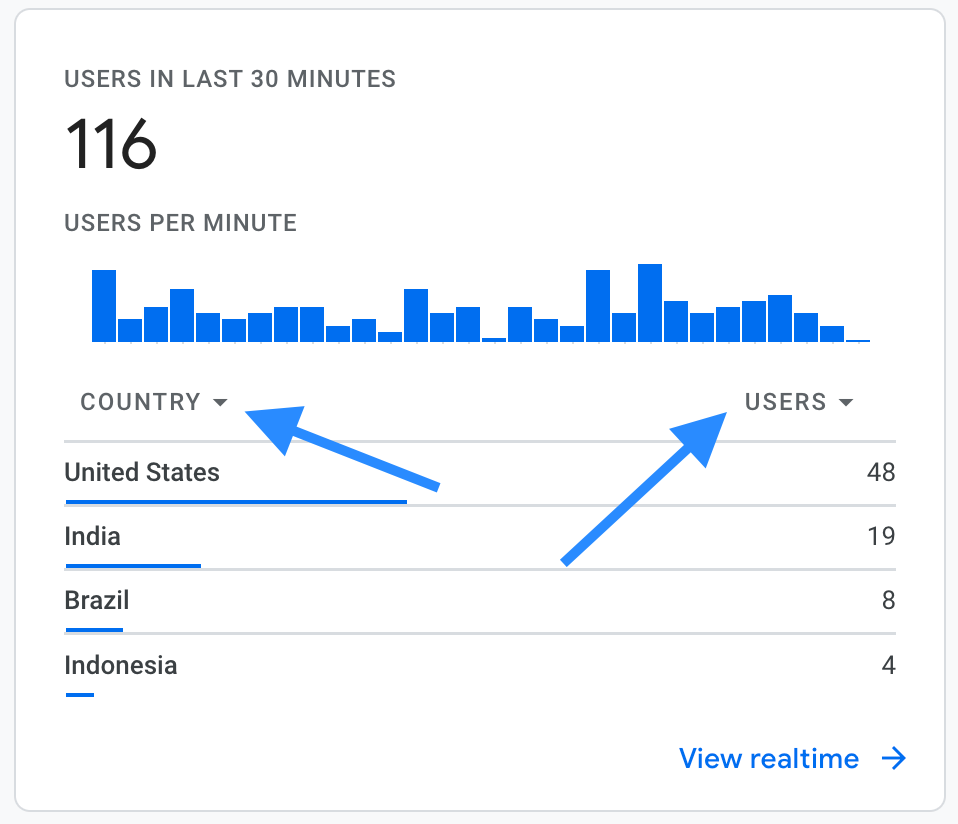
On the realtime card, you can also choose from a number of dimensions (e.g., Audience, City) or let us choose a dimension for you (i.e., Choose for me).
Restore your choices
Whether you change the metric, dimension, or date on a card, we’ll restore your choices in future sessions. For example, we’ll populate a card with City the next time you visit Google Analytics when you choose the dimension in your current session.
Additionally, when you return to a report using the Recently accessed section, you’ll see all the changes you made to the report. For example, if you changed the primary dimension, you’ll see the dimension applied when you select the report from the Recently accessed section.
Try Suggested cards
When you’re new to a property and haven’t viewed a card frequently, a new Suggested for you section will appear. The section surfaces cards that are popular across all Google Analytics 4 properties to help you find useful information in your property.
Provide feedback
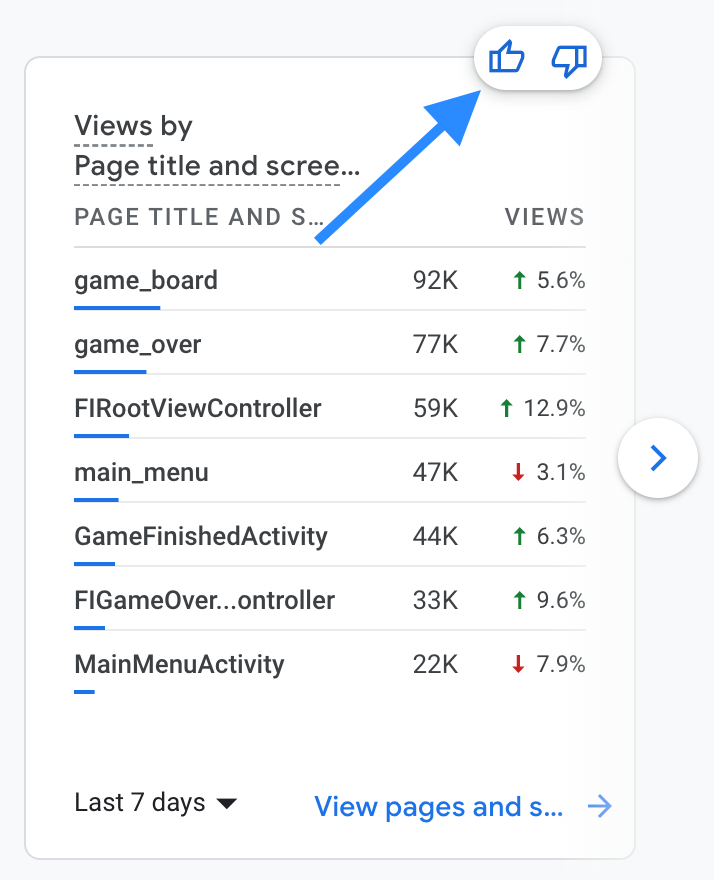
You can now give a thumbs up or thumbs down when hovering over the top right of a card in the Suggested for you, Because you view frequently, and Insights sections. The feedback options allow Google Analytics to provide you with more helpful information in the future.
The post GA4 now lets you recreate Universal Analytics audiences, and personalize the Home page appeared first on Search Engine Land.
Courtesy of Search Engine Land: News & Info About SEO, PPC, SEM, Search Engines & Search Marketing
Category seo news | Tags:
Social Networks : Technorati, Stumble it!, Digg, de.licio.us, Yahoo, reddit, Blogmarks, Google, Magnolia.
Why SEO experts rarely share actual success stories
Written on December 22, 2022 at 3:11 pm, by admin
Most SEO experts are still afraid to publish their success stories, with a few notable exceptions.
Many are simply unable to share their work even when it’s successful. How can SEOs stop practicing “ghost optimization”?
Before we dive into this question, let’s look at the reasons for the ongoing secrecy and still prevailing negativity among SEO practitioners.
SEO horror stories, anyone?
One of the most popular SEO hashtags within the industry over recent years has been #seohorrorstories.
Why are SEO experts much more likely to share the horrible failures of the industry and their colleagues than their own success stories?
Is this the overall prevailing negativity of society as a whole? Or do we have an internal problem aggravating the situation?
I think it’s probably both.
First off, the recent years have led to a never-ending, downward spiral of public debate. Diplomacy has made way for trolling.
When even presidents provoke people online to get attention, how is everybody else meant to stay civil in day-to-day conversations?
Also, social media like Facebook and Twitter have been capitalizing on fear and anger.
Such “bad news” goes straight to our lizard brain and elicits fearful and angry reactions without consulting the parts of the brain responsible for logical thinking.
No wonder that even within the relatively professional SEO industry, the discourse has degenerated into the realm of “OMG! Look at that nonsense! How stupid!”
I’m exaggerating a bit, but that’s the essence of most shares where #seohorrorstories are involved.
These are more than cautionary tales. It’s also a way of ridiculing those reckless enough to get caught red-handed while employing outdated SEO tactics.
Perhaps the thought process is that when one can’t shed light on their actual successes, then highlight others’ failures. This way, they indirectly stand in a better light by sheer comparison.
Of course, this is merely guesswork. The motivation behind the many horror stories may vary. It won’t simply gloat or malice, in most cases.
Get the daily newsletter search marketers rely on.
<input type=”hidden” name=”utmMedium” value=”” />
<input type=”hidden” name=”utmCampaign” value=”” />
<input type=”hidden” name=”utmSource” value=”” />
<input type=”hidden” name=”utmContent” value=”” />
<input type=”hidden” name=”pageLink” value=”” />
<input type=”hidden” name=”ipAddress” value=”” />
Processing…Please wait.
‘Look at this random graph, please – the growth is stellar!’
There is also a compromise, anonymized “success” stories – where the alleged success can’t be fully reviewed by peers.
Such stories seem to be the middle ground between failure and success stories. So what is the logic behind them, then?
You will find lots of social media posts shared of random graphs without any URL connected to them.
It’s usually an analytics screenshot clumsily anonymized before publication. Ultimately, the stellar growth they exhibit lacks any credibility.
I’m usually acquainted with those who share such success stories, so I know they won’t lie.
In most cases, they also add as much context as possible without giving away any meaningful detail so that you cannot track down the website they’re talking about.
What about industry outsiders and potential clients?
They have no idea who the people sharing the graphs are and how trustworthy the information is.
What is the purpose of sharing graphs without any context?
Again, I can only guess.
- Some SEO experts try to convey their expertise that way.
- Others share their success out of sheer joy at having made it.
- Some may want additional opinions on what happened when things went wrong.
Take note that #seohorrorstories are quite often anonymous. That way, some limited peer review does happen within a very small perimeter. It’s better than nothing, right?
Are there any SEO hero stories?
Some of you may have noticed. I have been looking for SEO hero (as in superhero) stories for two months and have been quite aggressive about it.
There were far fewer success stories than bad news from the SEO industry. Yet, I was astounded that even the prospect of getting additional free publicity did not motivate many SEO companies, in-house SEOs or SEO consultants to divulge their success stories or share their case studies with me.
I started a similar hashtag inspired by #seohorrorstories called #seoherostories to encourage sharing such positive examples, but it seemed like I was the only one using it.
Are SEO experts ashamed of their work or afraid to show it?
Given the poor reputation of the SEO industry in the last 25 years, it’s no wonder some people are not keen on outing themselves as SEO practitioners.
Numerous SEOs still engage in unethical practices, which might be why they are ashamed to show what they do.
Still, others may simply be afraid. I probed about the reasons behind this fear, and here are the obvious ones.
Manual Google penalties
This is an age-old fear of SEO practitioners stemming back from the early days. Sometimes, outing yourself as a practitioner of the dark arts of SEO – and mentioning the actual website you’re working on – was akin to suicide for your project.
Even before the somewhat weird term “manual action” was introduced by Google, penalties have been known to hit out of the blue and after too much publicity for SEO practitioners’ work.
This fear is no longer reasonable. And like most fears, it’s rather irrational.
SEOs are not criminals, and hiding is not necessary in most cases.
‘Secret sauce’ copycats
Another albeit more likely scenario is that the competition may steal your “secret sauce” and copy your SEO techniques.
While this is possible, it’s important to realize who your competition on the web is. Most SEOs would still say something like “businesses who sell the same thing in the same area.”
The reality of Google SERPs or the “SERP real estate” is that you mainly compete against the web giants:
- Google itself pushes its own services and ads above actual organic results.
- Huge websites like Amazon or Wikipedia are always on top by sheer popularity.
Would a competitor or colleague who happens to have a similar business as you really hurt you that much by looking at your site’s SEO?
Also, anybody can look up your secret sauce by using a tool like Semrush and find out about on- and off-page SEO with ease. So, why hide your success from the general public?
Client-stealing competitors
The other fear relating to the competition is that other SEOs may see who you work with and, thus, contact them and “steal your clients.”
People do this. I have had several clients notifying me of such attempts over the years.
I don’t think I lost any clients that way, though. Why? Is it just because I’m such an expert?
Probably not. I was a beginner at the time as well.
It’s such a sneaky practice that business people are not fond of offers made that way. If they are, you may be lucky to get rid of them.
Toxic clients often hurt you more than they help financially. I had to learn that lesson the hard way over the years, trying to satisfy everybody.
I believe the above common “reasons” for not sharing SEO work are often irrational fears and traditions – merely excuses.
One reasonable explanation for why someone would not want to share the actual website address or their “stellar growth” chart is that the work is still in progress.
Many other parts of the project were far from ready for prime time, and it was not a good idea to share them prematurely. I’ve only heard that justification once, though, even when I asked many times.
NDA: The dreaded acronym
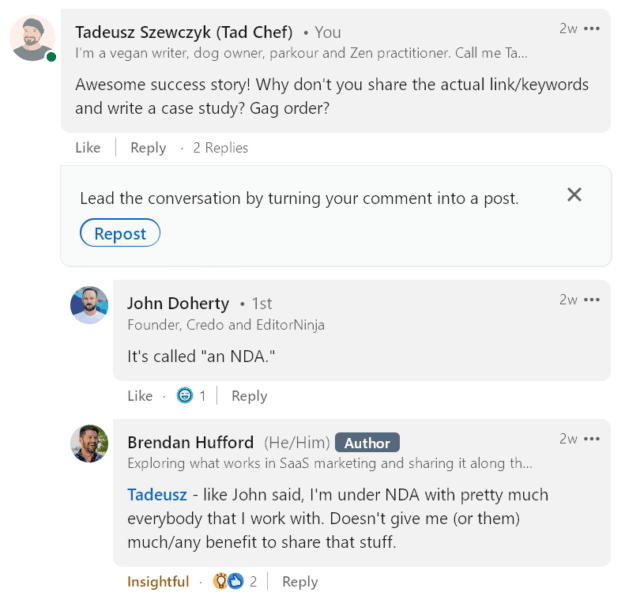
A common explanation for not publishing actual results or disclosing website addresses and client names is the typical non-disclosure agreement (NDA). It may as well be called a “gag order,” as most SEO experts have to shut up completely about their work.
Some popular search marketers, including John Doherty and Brendan Hufford, emphasized this point on LinkedIn.
For those in creative industries, being unable to share their work or having to do so anonymously would be virtually impossible.
Imagine the following scenario if designers, architects and programmers were involved.
- “Look at this house based somewhere in the northern hemisphere. Brown brick has been used for the structure, and the large window frames facing south are made of a local wood I can’t disclose here. To protect the owner’s privacy and hide the location, I had to blur some of the images.”
So why do we have to sign so many NDAs forbidding us to show our actual work or even sometimes tell our friends and families about it?
What’s with the high level of confidentiality? Are we secret agents?
Clients who demand that SEOs do not talk about their projects may be due to any of the following reasons:
- They are unethical and will ask you to perform SEO outside Google guidelines or even beyond what the law allows.
- They want to claim success for themselves and their sales department.
- They are simply ashamed to buy SEO services as these are still considered to be some kind of voodoo by some.
The common logic is, of course, about “trade secrets.” But as noted above, many tools allow you to analyze those supposed secrets.
The bright side: 3 inspiring case studies that welcome peer review
After talking so much about the issues surrounding (the lack of) success stories in the SEO industry, let’s focus on a few actual case studies that inspired me this year.
Hopefully, these SEO hero stories encourage you enough to follow in their footsteps.
Example 1: Missguided
Dogs and owners often become very similar to each other, even by their looks. I am one and can tell you that it often happens “accidentally.”
But there’s an artistic photo series taking it to the extreme, where dog owners and their pets dress up and get their hair done in the same style.
UK-based SEO agency Rise at Seven made this the idea behind a very successful campaign:
As CEO Carrie Rose reports in her case study, the results have been more than impressive:
“865% increase YoY traffic to this area of the site, 134,757 page views to be exact.”
She goes into great detail to explain how it worked and what exactly happened to make it such a success, so make sure to read the entire case study.
Example 2: LiberEat
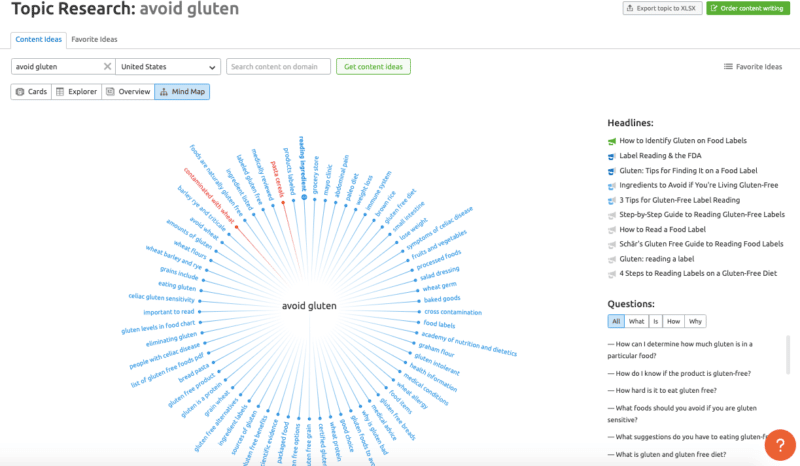
Olga Andrienko, well-known for her leadership role at Semrush, showcased the success story of LiberEat, made possible by Mich McClure and the team behind Hoojy.
“1000% organic traffic growth in 3 months”.
While this might sound too good to be true, especially given the approximate numbers, she goes to great lengths to highlight what happened, why and how in her extensive Twitter thread.
If that’s still not enough, check out the full-fledged case study with lots of screenshots, keyword examples and figures over at Semrush.
Example 3: Unbeatable Blinds
The folks over at Boom Online have many case studies, but their campaign for Unbeatable Blinds made me feel good. It might be the artistic quality of the images they have shared as part of the campaign.
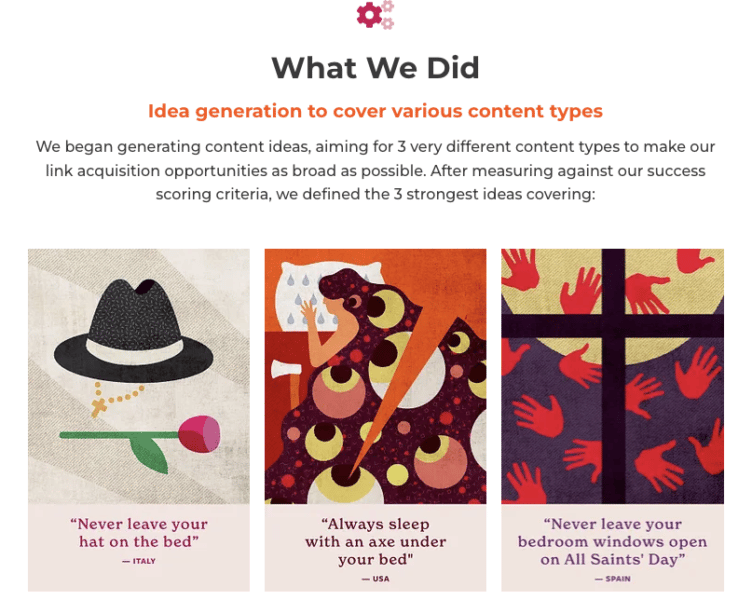
While they did not divulge the numbers, the links they attracted speak for themselves:
“The content was covered by a number of high-profile publications such as Design Taxi, Bored Panda, Line Today & The York Press among others.”
Given such attention from popular blogs and local press alike, I’m confident that the traffic and other metrics will follow suit.
How to get clients who are proud to work with you
As a writer, I do not offer ghostwriting services.
Ghostwriters tend to become invisible. Someone else gets the credit for their work.
Nobody knows what they have done, so they can’t prove their expertise.
It’s pretty straightforward when it comes to writing.
Potential clients usually tell you upfront that they are looking for a ghostwriter. You can just ignore such offers unless your financial situation forbids you to.
With SEO services, it’s much trickier. Nobody will tell you they are looking for a “ghost optimizer.”
Often, after plenty of discussions and only when you are short of signing a contract will you get a cryptic NDA full of legalese meant to hide its true scope.
In other cases, you get the NDA, or they don’t talk to you at all. Either way, you risk losing a lot of time and money and not getting the client.
Some NDAs are meant to protect trade secrets. Yet, most of them usually grant sweeping powers to the client to ban you from disclosing much of anything.
No wonder people working in SEO and adjacent industries (think marketing or advertising) are simply shutting up in general in order not to breach their agreements.
You never really know what goes too far, so you play it safe by keeping quiet.
So what can you do to identify clients who undermine your status as an industry expert?
You can prepare upfront, be clear during the preliminary talks and stand firm once you start working. Below are four specific tips.
Work on your own projects first
Always work on your projects first or at least keep them going in the background.
Once you have independent revenue sources and ways of gaining status outside client work, you can rest assured when choosing to engage with others.
Having to work for third parties out of necessity is never a good place to be at.
Whenever possible, work for others because you love the challenge and variety, not because you need the money. Ideally, clients seek you out because they are fond of your personal projects.
Build your authority in the industry and beyond
Visibility is not limited to client work. Many practitioners attend conferences, trade fairs or meetups to show up and teach others what they know.
Some hoard knowledge and keep it to themselves so that nobody can “steal their ideas.” This is a short-sighted approach.
Ideas can be discovered by more than one person at any given time. But the one who publishes it first or does so more widely is usually credited with the “invention.”
It’s crucial to become an authority within your industry, and beyond the narrow field you specialize in.
When I started out in SEO, I made sure to keep branching out into broader yet more popular areas like web development, marketing and blogging.
SEO is often viewed as merely “technical SEO” and a small subset of actual search engine optimization, in my opinion. The number of people interested in what you are talking about is very small.
By sharing your knowledge, you are enabling those unfamiliar with your work to understand what you do.
Introverts can share and teach on the web. You don’t have to show up in person, shake hands and pat backs.
You can also network online with like-minded individuals. LinkedIn is your best bet here.
Charge more for ‘ghost optimization’
A simple yet powerful way to make a point is to charge more money for something harder or more valuable.
Usually, ghostwriters are underpaid young writers who have no name yet so that they are forced to write in the shadows of the bigger names. But once you’ve built a name for yourself, you have to be proud enough to charge accordingly.
Almost nobody will think you are valuable as long as you undercharge or are too timid.
The few who know will be glad to exploit your expertise for low fees and shut up about your true worth in most cases.
Similarly, you have to make it clear that you charge more for ghost services from the start.
With “ghost optimization” being much more complex and riskier than mere writing, it’s even more important to charge your true value.
There are far fewer high-quality SEO practitioners out there, so don’t be afraid to get what you deserve.
Flatly refuse to do the dirty work
Once you have worked with a client for a while, some drop their masks or become more daring.
Others might get frustrated with the slow pace of SEO progress and demand you do what the competition does.
Riskier tactics may get their domain banned or penalized, but in the short term, the results may look impressive.
Now you have to keep your integrity. How?
Flatly refuse to make your hands dirty and to use questionable means of SEO.
The client feels safe due to the NDA, so they think they can get away with it. But SEO does not happen in a vacuum.
Just because you don’t tell anybody that you have to spam doesn’t mean it’s invisible.
As noted above, publicly available tools give you an X-ray vision of any website’s SEO.
Google also has human quality raters and increasingly sophisticated algorithms to find the bad apples.
The post Why SEO experts rarely share actual success stories appeared first on Search Engine Land.
Courtesy of Search Engine Land: News & Info About SEO, PPC, SEM, Search Engines & Search Marketing
Category seo news | Tags:
Social Networks : Technorati, Stumble it!, Digg, de.licio.us, Yahoo, reddit, Blogmarks, Google, Magnolia.
How the TikTok algorithm works: Everything you need to know
Written on December 21, 2022 at 11:11 am, by admin
Since its initial release in 2016, TikTok has become the fastest-growing social media platform.
If you’re looking to learn more about the popular short-form video app and how your brand can use it, you’ve come to the right place.
We read TikTok’s creator guidelines and newsroom documentation, so you don’t have to.
In this article, we’re sharing everything we learned – along with insights from the TikTokers well-versed in increasing views, engaging users and growing a following.
Find out how the TikTok algorithm works, what you need to do to create a winning video, and decide whether TikTok can benefit your brand.
In this article:
- What is the TikTok algorithm?
- What is the For You feed?
- How does the TikTok algorithm work?
- Keywords and the TikTok algorithm
- TikTok SEO and Google
- TikTok algorithm myths debunked
- What the algorithm won’t show
- 7 tips for working with the TikTok algorithm and going viral
- Why brands should care about TikTok
What is the TikTok algorithm?
The TikTok algorithm is a recommendation system that determines the videos you see on your app. Like any good algorithm, it works to bring relevant content that you enjoy based on your interests.
Recommendation systems are used all around us in the digital world and not new. Many platforms, including Netflix, use them to deliver you the content you like the most.
The purpose of a recommendation system is to share content that users like based on their preferences and those of people in similar demographics.
The TikTok recommendation system and algorithm centers around the “For You” page.
What is the For You feed?
The For You feed (a.k.a., For You page or FYP) is a curated stream of videos, a unique and tailored feed to the user’s interests.
Although TikTok users will see the same videos, your FYP is totally unique and curated only for you.
When you open the app, you land on this feed first. The great news is that you can curate your own FYP by interacting with the app.
When you first join TikTok, your FYP will likely be curated by the interests within your demographic based on the information you gave (i.e., age, gender and interests).
It’ll be a broad approach until you show TikTok what you want to see more of.
Let’s take a look at the actions that influence the algorithm.
How does the TikTok algorithm work?
TikTok documentation states three core factors that influence the algorithm:
- User interactions.
- Video information.
- Device and account settings.
1. Factor: User interactions
User interaction includes actions that users take on a particular video. These interactions can be negative or positive.
A positive interaction will cause the app to show you more of the same, and a negative interaction will do the opposite. More on negative actions and their impact on “What the algorithm won’t show.”
Positive interactions include engagements like:
- Posting a comment.
- Following an account.
- Liking a video.
- Video watch time.
As a creator, knowing how the TikTok algorithm works means that you know what to ask from your viewers to increase the right sort of engagement.
User interactions in practice
User engagements are certainly a factor in the algorithm, and TikTokers know it.
The TikTok algorithm got it right when it put the below viral video on my FYP a few weeks ago. I don’t engage with TikTok videos very often, but I did like the below video and left a comment about how wholesome the content was. I didn’t want to follow the creator, but I enjoyed the brief interaction.
@brialem


The video amassed 785,200 links, 9060 comments, 76,900 saves and 5,579 shares. Most impressively, the video has 6,000,000 views.
Thanks to my like and comment, when the creator made a second, similar/follow-up video, it landed on my FYP.
The second video didn’t quite have the same magic, but the virality of video one certainly helped the creator’s second video land in the right places based on previous user interaction.
To TikTok’s credit, there seems to be a level of trust in the TikTok algorithm.
On some of the most engaging videos – or videos made in a series – you’ll often see comments like, “Trusting the algorithm to bring me back.”
TikTokers might comment something like this when they want to show the algorithm that they’re interested in the content but (perhaps) don’t want to follow the creator.
In the video below, a creator reminds viewers they can hit the follow instead of trusting the algorithm. A follow is a desirable action for creators as it almost guarantees the user will see more of their content.
@molzysketch its there for a reason guys#tiktokartist #tiktokart #handsofthedsmp ♬ Luna, amore e no – Piero Piccioni
How to encourage user interactions
As a creator, you want to encourage user interactions. You can achieve this by creating great content, but you can inspire meaningful action from passive viewers with a call to action.
TikToker Tyla Brimblecombe from Styla Socials explains the importance of a call to action in her TikTok.
@stylasocials 3 more quick points in the commentsSend this to someone who would benefit from this
#tiktokcontentcreator #viraltips #growontiktok ♬ In a French Cafe – Relaxing Piano Waltz – Classical Piano Music Masters
She says:
- “We all know the most important metric on TikTok is watch time… someone is scrolling on the For You feed, they see your video, they like it, they make it all the way to the end. When they see your call to action, ‘take a look at my other videos,’ they click on your profile, they check out your other videos, which lets TikTok know your content is valuable and is going to push your content out to a wider audience.”
2. Factor: Video information
According to TikTok documentation, video information includes:
- Sounds
- Captions
- Hashtags
- Video descriptions
- Text overlays
Video information in practice
TikTok is well known for its association with trending sounds. With a trending sound, the TikTok algorithm can identify a group of people who are likely to engage with a video based on previous user interactions. If a user watches a video to the end each time a certain sound is used, they are likely enjoying the content and want to see more of it.
It’s important to note that trending sounds are not just viral dances. Brands can use sounds to get fast visibility to a wider audience.
Kristyn Higginson, Skinician’s TikTok creator, says:
- “Creating ‘viral’ content seemed challenging in the early days as a lot of the trending music wasn’t available for business accounts. The way around this was to opt for trending sounds when we wanted to create relatable, relevant content for the platform. This meant, as a brand, we leaned into trends without any copyright infringement. This might be a useful tactic for other small brands in the early stages of content creation on the platform.”
With early adoption of a trending sound, Skincian’s most viral video received 50,900 views, 2,142 likes, and 40 engaged comments. The video introduced the brand to their TikTok audience.
@skinician Get to know us!#skinician #skincare #localbrand #beautytok #skincaretok ♬ เสียงต้นฉบับ – [FS]ICHIGO_TH
– 「 saijoutakato7 」°• ⚘


TikTok creators are finding that video information contributes significantly to video success.
Kate Smoothy from Web Hive Digital is a TikTok creator.
Smoothy shares that captions, hashtags, and video descriptions are a core part of her strategy. She says:
- “I can’t express enough how much you have to caption your videos. This is essential for those without hearing but for those who prefer to scroll through TikTok without the sound on. You’ll significantly reduce your audience size and reach without captions. There has never been a better time to include keywords in your TikTok descriptions. We’re seeing a huge shift with the platform where videos optimized for their search feature seem to perform better.”
Smoothy credits the inclusion of video information tactics with the success of her “super low effort marketing hack video.”
@webhivedigital Not enough people know about this super low effort marketing hack to get interactive video on your website. I’ve got it on mine#websitetips #websitetipsandtricks #digitalmarketing #marketingtips #websitesyouneedtoknow ♬ original sound – Kate Smoothy | Websites & SEO
The video has 92,400 views, and amassed 5,913 likes, 91 comments, and 740 shares.
The keywords used in the video description, within the text overlay and within the video description have communicated to TikTok what the video is about. This resulted in the video ‘ranking’ for the search term ‘marketing hack’ and ‘marketing tips’ within TikTok’s search feature.
How to use video information
The top tip from TikTok experts is to conduct keyword research using the TikTok app, then use keywords in your video, captions and hashtags.
@socialby.lu Take advantage of the search bar results to see what others are looking for and create content to attract the right audience, make your account relevant, get more views and more followers! This is the easiest way to create a TikTok strategy aligned with your niche and according to the platform’s enhanced SEO! #tiktokseo #tiktokcontentideas #contentcreatortips2022 #growyourtiktok #socialmediastrategist #ugccreator #socialmediatipsandtricks #greenscreen ♬ Hold Me Closer – Elton John & Britney Spears
3. Factor: Device and account settings
TikTok is clear that device and account settings receive lower weight in the algorithm.
Some of the more obvious factors include language preference and country setting. It makes sense that users want to see videos in the language they speak.
TikTok also includes device type in its algorithm. They may prefer to show you videos that your device can play seamlessly since this would lead to a positive user experience for people using older phones or smaller screens.
Keywords and the TikTok algorithm
In recent months there has been a lot of talk from TikTokers about a change in the TikTok algorithm and how TikTok now prioritizes keywords.
If you search “TikTok Algorithm Change,” you’ll find people saying a lot of the same thing – TikTok SEO is becoming more prevalent.
@coach.alexrob NEW algorithm changes for TikTok! If you are a business owner or content creator, in this video I break down all the new changes happening to TikTok, you definitely want to make sure you are using some of the key features such as SEO, improved analytics and making your content longer form. #tiktokforbusiness #tiktokforcreators #socialmediaforbusiness #tiktokseo ♬ Trap Sax – Nish
Interestingly, TikTok doesn’t seem to mention “keywords” in relation to their algorithm anywhere in their documentation.
But that doesn’t mean that keywords aren’t important.
It’s no coincidence that TikTok increased video descriptions to 2,200 characters. In their announcement via the app, TikTok did say:
“Increased characters gives creators a chance to ‘generate engagement while becoming more searchable and better recommended by TikTok to viewers.”
TikTok also mentions captions and hashtags, which both contribute to FYP.
Captions and hashtags are words that help contextualize videos. If captions are a contributing factor, it suggests that words – or keywords – contribute to the TikTok algorithm.
We also know that TikTok users can limit content based on keywords (more on that later).
TikTok SEO and Google
To further explore TikTok SEO and how this transpires on the world’s most loved search platform, Google. We ran some tests to explore Google’s indexation of TikTok videos.
When you search for “TikTok recipes” on Google, you’d expect to return TikTok videos. But what we found was the contrary.
Google prioritized websites sharing TikTok’s viral recipe trends. TikTok ranked with a tag page in the eighth search position. Considering the relevancy to the search term, this isn’t an overly strong rank.
In the Video results, TikTok ranked sixth below five YouTube videos. It makes sense that Google would prioritize its owned channel, YouTube, above TikTok.
It is worth noting that videos featured in the TikTok recipes tag all featured the hashtag #recipes in the caption. Captions help the TikTok algorithm sort videos by topic and could even boost visibility via Google search.
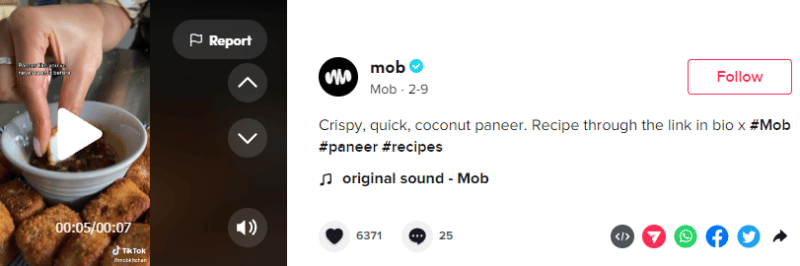
As shown in the screenshot, the caption includes the hashtag #recipes, suggesting that keywords are relevant to the TikTok algorithm.
So, what does this mean?
- Creators should use relevant keywords in their captions and hashtags.
- According to TikTok documentation, captions and hashtags are contributing to the TikTok algorithm.
- For increased visibility in Google, consider sharing your video on other platforms, like YouTube Shorts.
Get the daily newsletter search marketers rely on.
<input type=”hidden” name=”utmMedium” value=”” />
<input type=”hidden” name=”utmCampaign” value=”” />
<input type=”hidden” name=”utmSource” value=”” />
<input type=”hidden” name=”utmContent” value=”” />
<input type=”hidden” name=”pageLink” value=”” />
<input type=”hidden” name=”ipAddress” value=”” />
Processing…Please wait.
TikTok algorithm myths debunked
Let’s clear up some commonly held misconceptions about TikTok.
Myth: You need to post daily
Posting 1-3 TikTok videos daily is a common recommendation for new TikTokers. However, TikTok’s guidelines make it clear that it’s not required for growth.
That said, it may be useful to test different videos. TikTok’s documentation advises that experimenting with videos you share and posting quality content is more useful to keep an audience engaged.
Myth: Creators in the TikTok Creator Fund get more discoverability
The good news is: you do not need to be in the creator fund to increase your chances of discoverability.
Those in the TikTok Creator Fund are more likely to earn increased engagement, but this is because these TikTokers know how to create great content that engages the community.
Myth: TikTok is only for short-form videos
Although TikTok started as an app with seven-second videos, the maximum video length has since increased.
Within the app, you can create videos that are 15 seconds, 60 seconds, or three minutes long.
Alternatively, you can create extended videos and upload them to the TikTok app.
TikTok doesn’t mention longer videos earning favor in the algorithm, but they do seem to be sharing reasons why longer videos are engaging with creators.
@rachforaday make longer videos to get more views - it’s not me saying it - it’s the algorithm ! #tiktoktips #socialmediatips #makelongertiktoks #tiktokhacks #getmoreviews ♬ longer TikToks getting more views - Rach • Social SEO Expert
What the algorithm won’t show
To give TikTok credit, it’s taking action to safeguard and diversify recommendations in the FYP.
With a recommendation system, it would be easy for TikTok to become repetitive, showing only similar videos. Equally, it could be easy for TikTok to show unwanted content to its viewers.
TikTok is taking measures to make TikTok a better place for everyone. Here’s what TikTok won’t show in the FYP.
Duplicate content
TikTok says that too much of anything can get tiresome.
For this reason, TikTok won’t show duplicate content in the FYP. Plus, diversifying the FYP keeps users exposed to a range of ideas and perspectives.
Potentially problematic clusters
The TikTok algorithm works to deliver the platform’s mission to inspire creativity and bring joy.
To achieve this, TikTok avoids recommending similar content around potentially problematic subjects such as extreme dieting or fitness, sadness, or breakups.
TikTok wants to protect its users from viewing content that may cause distress if viewed together but might be okay as a single video.
This type of restriction is positively compounded by the “not interested” and “keyword filtering” features.
Content marked ‘Not interested’
TikTok lets users control what they want or don’t want to see on the platform.
Viewers can press and hold the screen on any TikTok video and select any of the following options:
- Save video: A positive video engagement indicator for the algorithm.
- Clear mode: View videos without usernames and captions, etc.
- Report: This action indicates that a video goes against TikTok’s Community Guidelines and must be addressed.
- Not interested: This tells the TikTok algorithm that you, as a viewer, don’t like a particular piece of content. In return, you will see less of it.
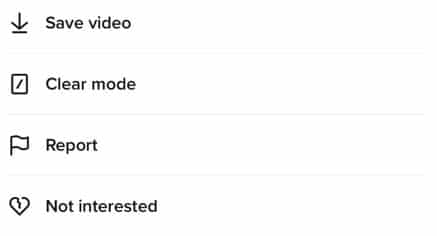
If a viewer clicks “Not interested,” you can expect this to influence the algorithm and their FYP.
Content including filtered keywords
Users can tell TikTok what they don’t want to see by heading to the menu in the top right and navigating to Settings and privacy > Content preferences > Filter video keywords.
Here, you can add keywords and filter videos from users you’re following and/or the FYP.
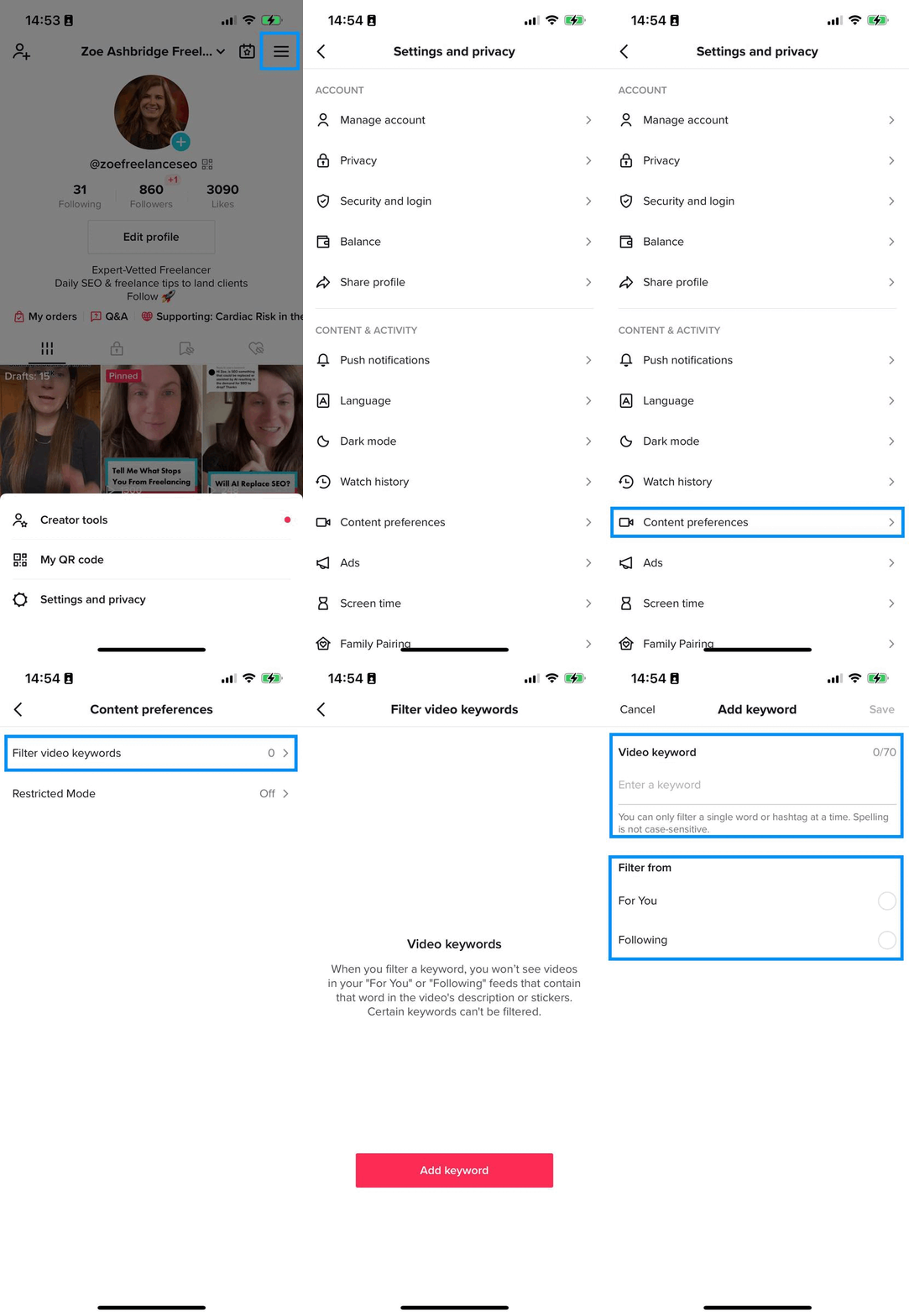
Content created by those under 18
In its commitment to keeping the app a safe place for all, TikTok introduced measures to protect its younger users.
Children or teenagers under 18 can’t feature content on the Explore feed – meaning their content and profiles are not so easy for other TikTok users to come across.
7 tips for working with the TikTok algorithm and going viral
Some top TikTok creators provide some best practices for creating video content that might gain the algorithm’s favor.
Tip 1: Switch to a TikTok Pro account
TikTok Pro Accounts provide more detailed analytics to creators.
By creating one, you’ll be able to see insights on:
- Weekly and monthly views.
- Follower growth.
- Trending videos.
If you’re a lover of in-depth analytics, this might be for you.
But it’s important to note that TikTok’s guidance advises against creating content primarily around analytics. Instead, think of the bigger picture when creating content.
Tip 2: Find your niche
Finding a niche on TikTok gives you a greater understanding of the bigger picture.
If you know what niche you fall into, you can explore topics using the search bar and see exactly which videos perform well, so you can recreate something like them.
@secretsocialari You Just Need To Learn The Right Way! #tiktokgrowth #tiktokgrowthtips #socialmediatips #viraltiktok ♬ Lookmeinmyeyes - Iloveslowedmusic
Tip 3: Use the right hashtags, add captions and write video descriptions
Keywords clearly have advantages, as shared above.
Remember to opt for hashtags highly relevant to your video or niche for a chance to feature in the top lists for keywords.
@brooklynsocial.co How to find trending hashtags for your niche @Brooklyn Social | TikTok Coach @Brooklyn Social | TikTok Coach #trendinghashtags #socialmediacoaching #marketingtips ♬ original sound - Brooklyn Social | TikTok Coach
Tip 4: Use trending sounds and music
No matter how much the algorithm changes, music and trending sounds are likely to have a place on the TikTok platform.
Remember, trending sounds and music aren’t always about voiceovers and viral dance moves.
You can use them to introduce your brand, make them relatable in your niche and stand out.
Tip 5: Create high-quality videos
TikTok’s editing tools allow users to create and edit eye-catching, high-quality videos within the app.
TikTok creators express the importance of creating engagement early on, so try to edit your videos in a way that captures the user’s attention in the first three seconds.
@jimmy_talbert 9 video hook templates. #marketing #socialmediamarketing #videomarketingtips #tiktokmarketing ♬ Shout Out (No Vox) - Chris Alan Lee
Tip 6: Engage with other TikTok users
Your comment section is a trove of video ideas! And you can reply to comments with a video.
This feature puts your reply in the comment section in video format.
You can bet other commenters have the same questions, so they’re likely to click through and join you in your next video.
Tip 7: Publish a series
Somewhat contrary to the long-form video format, shorter videos in series can still be effective.
Henry Purchase from A Couple Things To Do has grown a TikTok following to 193,000 followers. Purchase shares destination and activities for couples. He says:
- “We post several videos of the same activity, uncovering more information each time - this keeps people coming back for more. For example, at first, we didn’t post the location of our most popular video. Once it had gained popularity we used comments we got to create more content. Therefore reusing content and engaging with our audience.”
@acouplethingstodo Replying to @metaltirana_al our most popular question answered! Have you guys been?#milan #fyp #italy #qctermemilano #stormroom #travelcouple #acouplethingstodo #traveltips ♬ original sound - Ian Asher
Why brands should care about TikTok
Love it or hate it, TikTok is standing the test of time as its generous algorithm lends itself well to fast growth.
With a little commitment, brands can reach thousands of people in no time.
Although high-quality videos are preferred, simple to-the-camera videos can earn just as much visibility.
The post How the TikTok algorithm works: Everything you need to know appeared first on Search Engine Land.
Courtesy of Search Engine Land: News & Info About SEO, PPC, SEM, Search Engines & Search Marketing
Category seo news | Tags:
Social Networks : Technorati, Stumble it!, Digg, de.licio.us, Yahoo, reddit, Blogmarks, Google, Magnolia.
Ranking data during the December 2022 Google helpful content update and link spam update
Written on December 21, 2022 at 11:11 am, by admin
Google is now rolling out two different Google search algorithm updates simultaneously, the December 2022 helpful content system and the December 2022 link spam update. The helpful content update started on December 5th, and the link spam update started on December 14th. Both updates are not finished rolling out, in fact, Google said that the helpful content update “is going to take longer” to complete than the two-week timeline previously given.
I asked several data providers to send me data on what they are seeing with the Google search results during these updates, keep in mind, it is somewhat hard to look at data in aggregate and say this ranking volatility is related to one update over another. But nevertheless, I wanted to share what the data providers are noticing.
Data providers
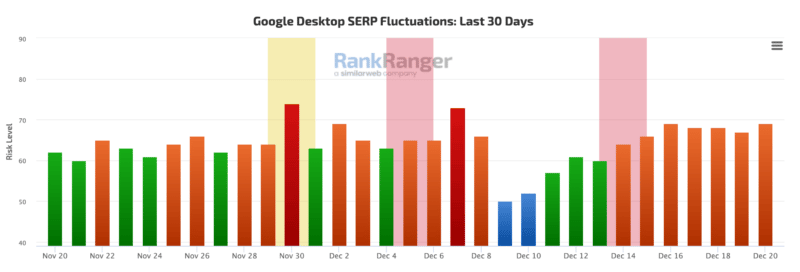
RankRanger. Let’s start with RankRanger who sent us data broken out by the start of each update. Generally, but not always, the first few days after an update is rolled out by Google is where you’d see the most volatility. So they went with that premise and sent us data on each update.
Here is an overview of the RankRanger risk index showing volatility by day:
The December 2022 helpful content update was less impactful and less volatile than the first helpful content update, according to RankRanger. You can see from the chart below the average position change was less in December than in August.
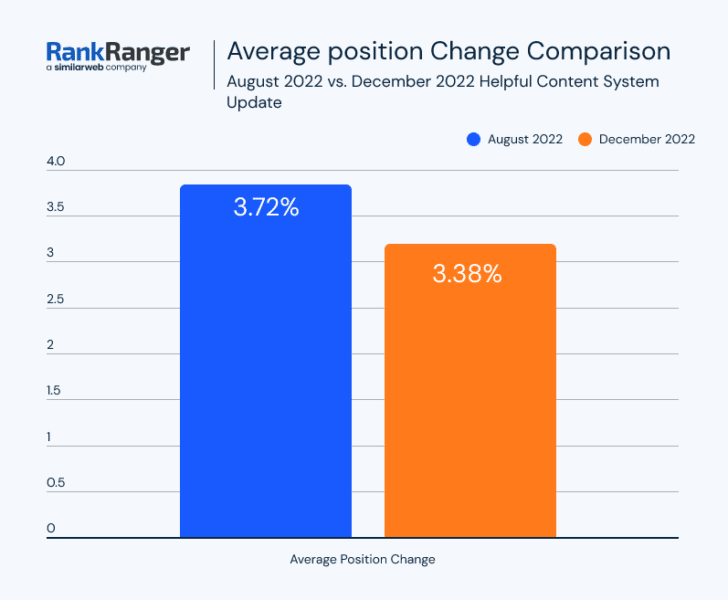
Diving deeper, you can see that the average top three, top five and top ten search results, the data says the December update fluctuations were lower in the top five results and substantially lower in the top three.
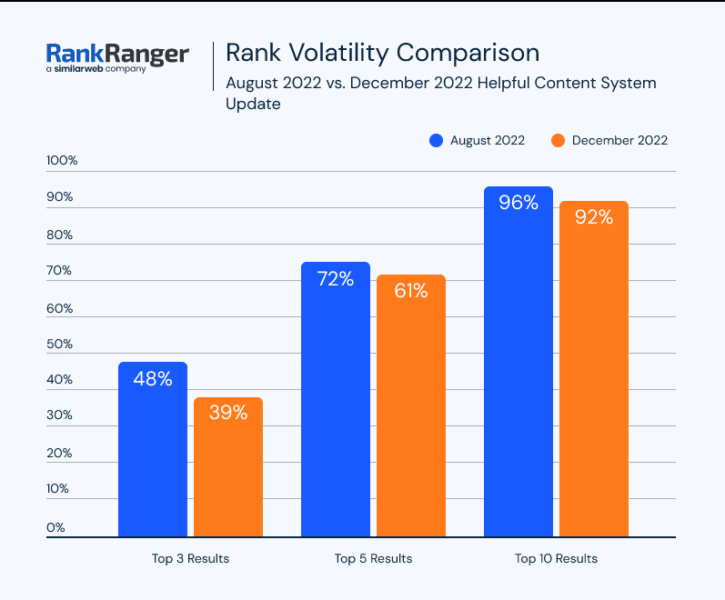
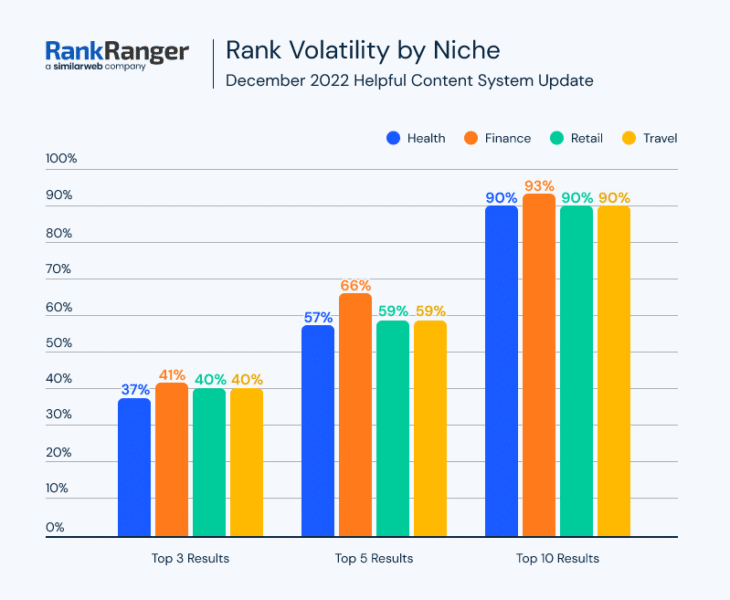
RankRanger also showed the volatility of the December helpful content update by niche or industry:
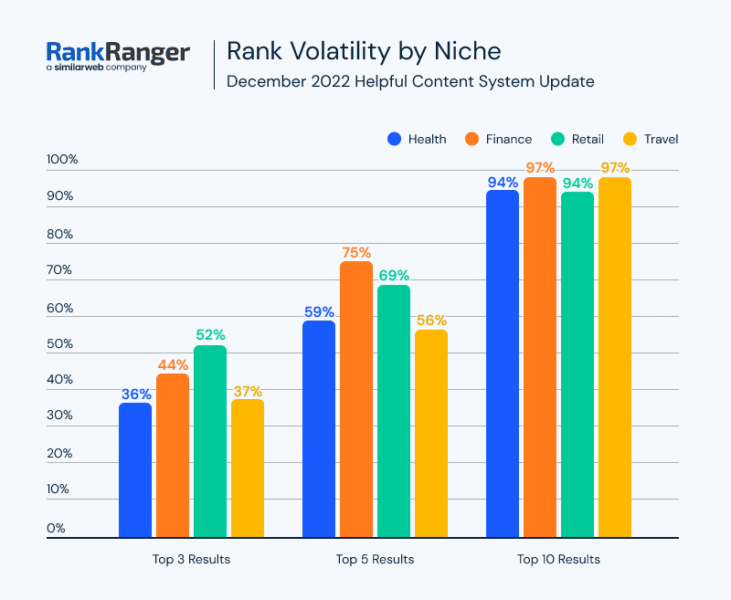
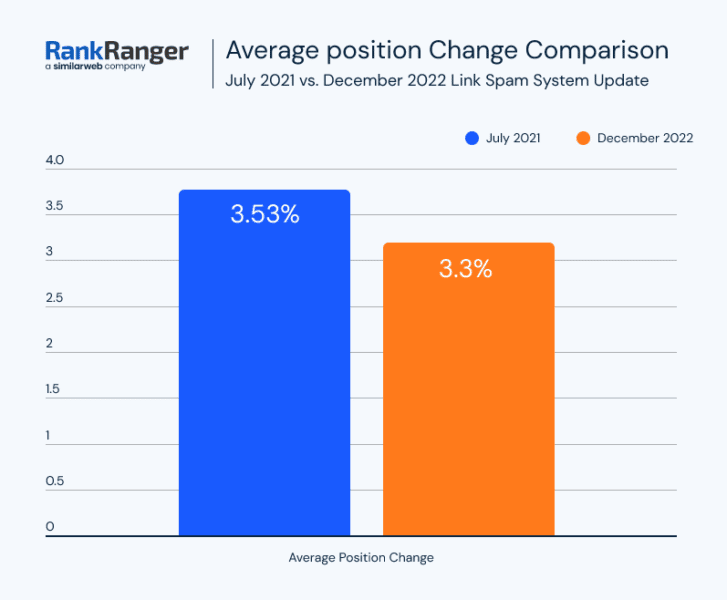
The December 2022 link spam update was less impactful and less volatile than the July 2021 link spam update, according to RankRanger. You can see from the chart below the average position change was less in December than in July 2021.
Diving deeper, you can see that the average top three, top five and top ten search results, the data says the December update fluctuations were lower in the top five results and substantially lower in the top three.
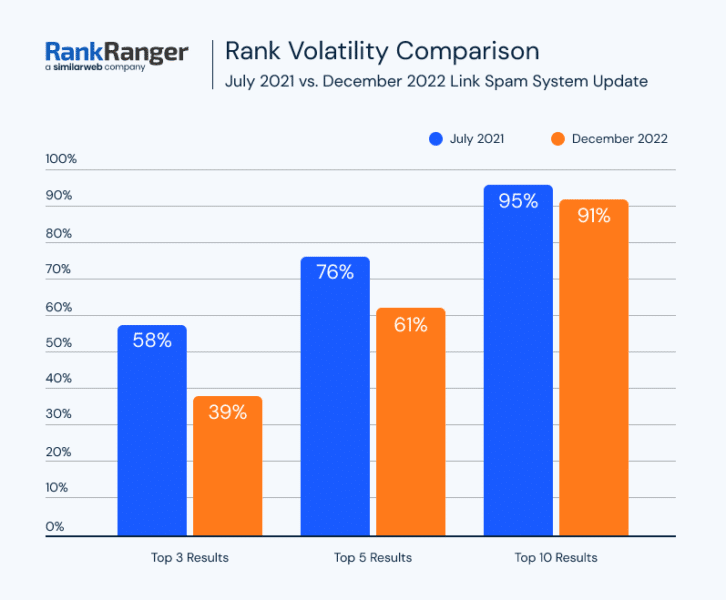
RankRanger also showed the volatility of the December link spam update by niche or industry:
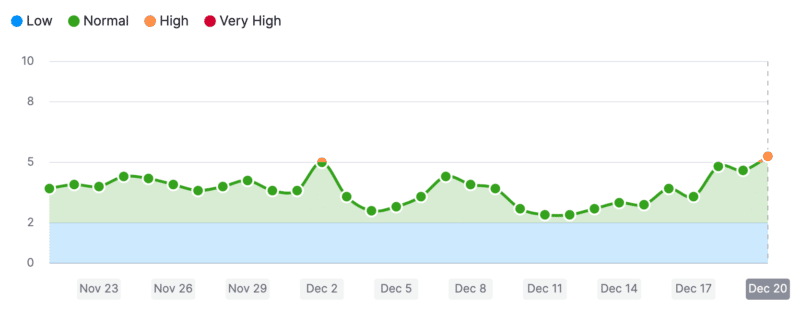
Semrush. The folks at Semrush did not try to break it out by the helpful content update versus link spam update, and I don’t blame them for not doing that. They just had their data for the past few weeks since that is when the two December algorithm updates began.
The Semrush sensor has been pretty calm, with a little blip today into the “high” volatility range:
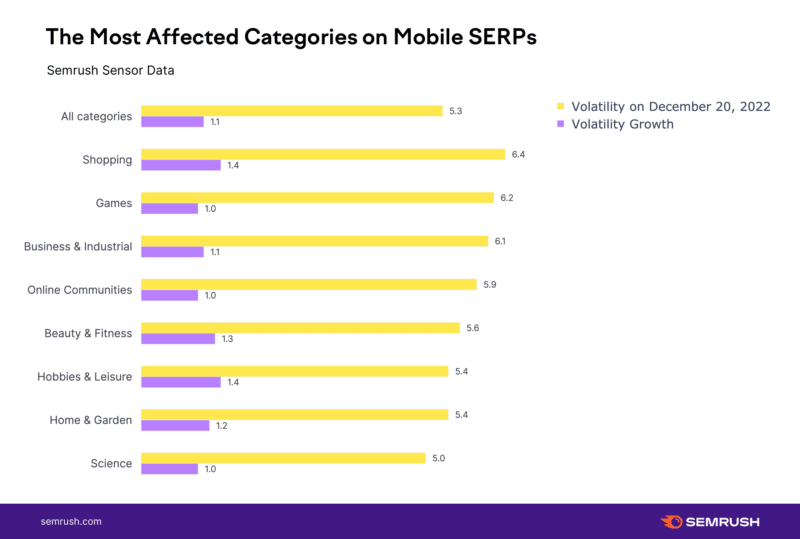
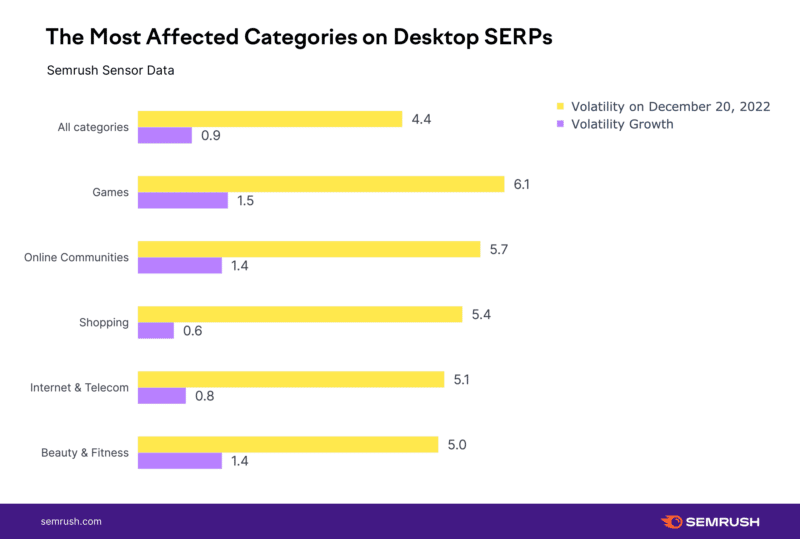
If you drill into each niche or industry, you will see some categories were more impacted than others. It is interesting to see it differ by mobile and desktop search:
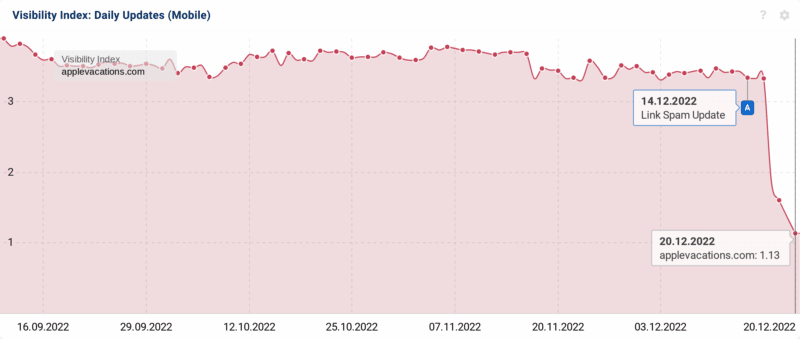
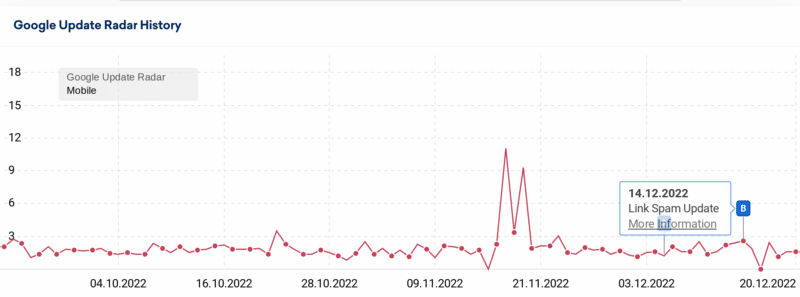
SISTRIX. SISTRIX also sent over some data in a different format. Steve Paine from the company told us that they did find evidence of volatility in their data for the link spam update but when it came to the helpful content update, finding such evidence was harder. He said “overall there isn’t a huge movement in SERPs,” the company posted some examples on their blog.
SISTRIX sent me these two additional examples of specific sites hit by these updates:
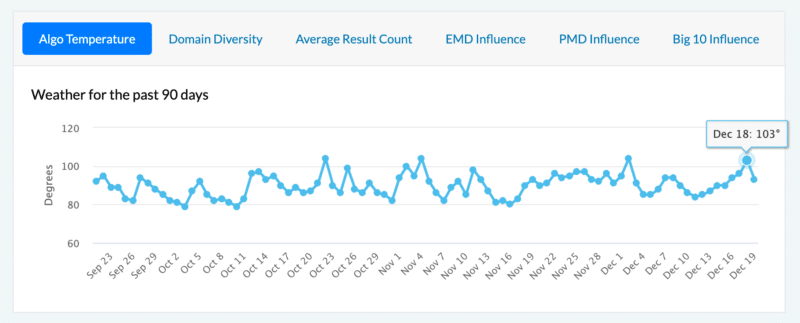
Moz. Dr. Pete Meyer from Moz told us, “I’m seeing some pretty heavy algorithm flux over this past weekend,” but he has not have had enough time to dig through all the data. Overall, Moz data shows that it has been “a noisy month, Google-wise,” he said. The issue is that it “hasn’t been easy to separate things,” like the other data providers showed as well.
You can see that Mozcast showed a lot of hot weather on December 14th, which is likely related to the link spam update.
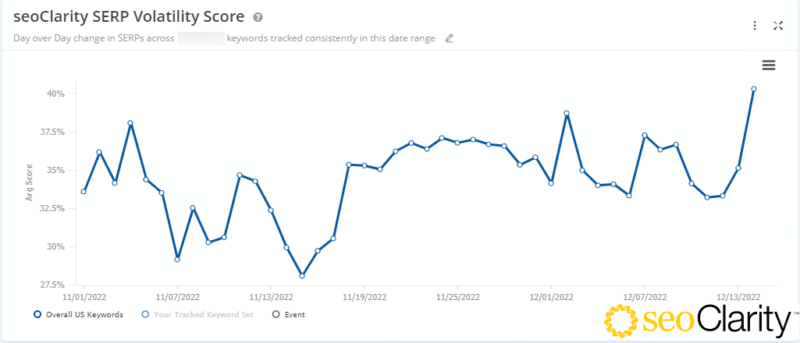
seoClarity. The folks at seoClarity sent me a graph showing the day-over-day change in Google search results they calculated across all the keywords in their data. They noticed a spike on December 2nd and then “gyrations” on the 7th, 8th, and 9th and then a massive change on December 15th.
Other data providers. Here is a list of other data providers charts that are available publicly.
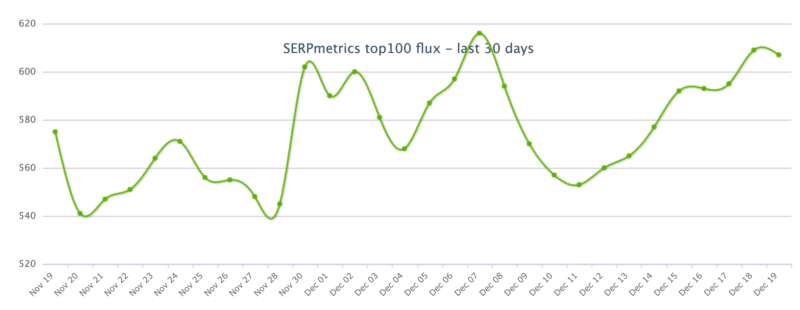
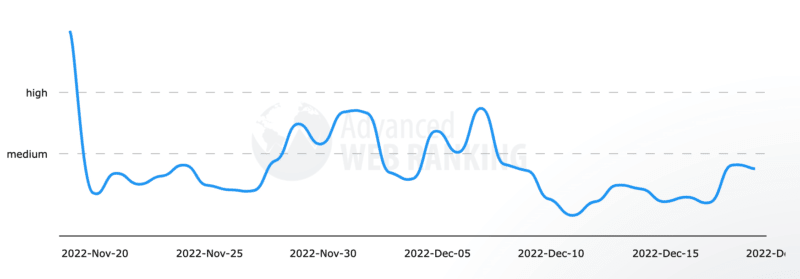
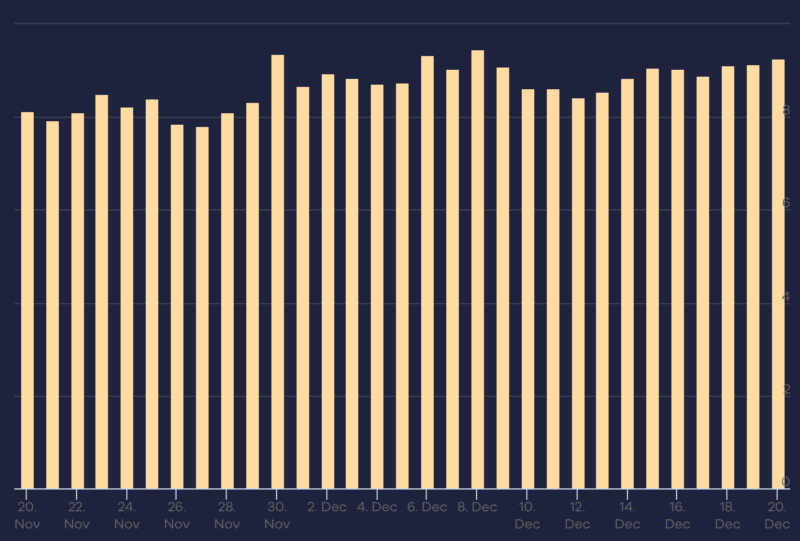
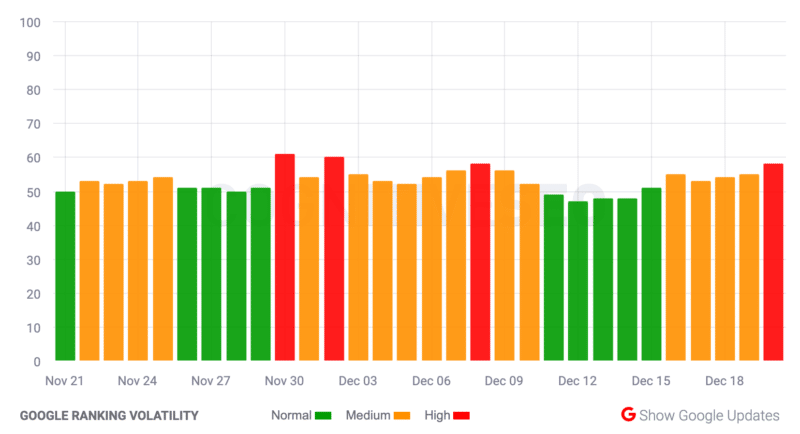
Why we care. As I said above, both updates are still rolling out at the time this was published. It is very hard to accurately say that one ranking change in aggregate is related to a specific ranking update when both are rolling out at the same time. That being said, it is likely easier to look at individual sites and know if the site was hit by a link algorithm versus a helpful content algorithm, especially if you look at the links and content for that site.
So you will need to do the due diligence and dig into sites impacted by each update on an individual basis. This just shows you that it appears that these updates did show movement and did cause ranking volatility in aggregate.
The post Ranking data during the December 2022 Google helpful content update and link spam update appeared first on Search Engine Land.
Courtesy of Search Engine Land: News & Info About SEO, PPC, SEM, Search Engines & Search Marketing
Category seo news | Tags:
Social Networks : Technorati, Stumble it!, Digg, de.licio.us, Yahoo, reddit, Blogmarks, Google, Magnolia.
Google updates Ads Policy Requirements
Written on December 21, 2022 at 11:11 am, by admin
Google has just released updated policy requirements for the month of December.
Their help page reads:
On February 21, 2023, the About Our Policies section of the Google Advertising Policies Help Center will be updated to include the following language:
Advertisers have a responsibility not to promote content or engage in behavior that risks harm to our users, employees, or the Ads ecosystem. If we see such content or behavior, we may take action, including but not limited to restricting or blocking your ads or suspending your account.
Why we care. All advertisers, even those for Display and Video 360 must adhere to the policies or risk their accounts being suspended. You can review the full policies here.
The post Google updates Ads Policy Requirements appeared first on Search Engine Land.
Courtesy of Search Engine Land: News & Info About SEO, PPC, SEM, Search Engines & Search Marketing
Category seo news | Tags:
Social Networks : Technorati, Stumble it!, Digg, de.licio.us, Yahoo, reddit, Blogmarks, Google, Magnolia.
Google Search testing search in video
Written on December 20, 2022 at 7:00 am, by admin
Google is testing the ability to search for spoken words in a video through a new “Search in video” feature. This is officially being piloted in India, but some are also seeing this feature being tested in the United States.
The announcement. Google posted this news on the Google India blog, writing, “besides images, videos are also a rich source of visual information but it’s often hard to find something buried inside a long clip. For example, perhaps you’re watching a long video about Agra, and you’re curious if it also covers Fatehpur Sikri. With a new feature we’re piloting, you’re now able to search for anything that’s mentioned in a video, right from Search. Simply enter a search term using the ‘Search in video’ feature and quickly find what you’re looking for.”
“Use the ‘Search in video’ feature beneath a video, enter a term, and quickly find what you’re looking for within the video,” Google added.
What it looks like. Here is a video showing this feature in action:
Like Google key moments. This, at least to me, isn’t too far off from the technology Google uses for key moments in a video. Google is able to isolate what sections of a video are talking about, without even having to be fed chapters these days. Plus, with YouTube’s advanced transcriptions, it is no wonder Google Search is able to do this.
US searchers. Searchers in the United States are also seeing this feature. Glenn Gabe tweeted that he saw it as well:
Here is an example of the "Search in video" feature in the SERPs. You will see an "expand" icon in the SERPs & then you can tap "Search in video". Here I searched for "404" in one of @johnmu's older videos. It highlights the text & the time code. And I can jump right there. pic.twitter.com/gqJSK87wV7
— Glenn Gabe (@glenngabe) December 20, 2022
Why we care. Besides this being simply cool and, for some, mind-blowing, it also shows how far search technology has come over the years. It also may mean that marketers who post videos should ensure the language used is clear and that Google is able to properly and accurately transcribe the words spoken in the video.
The post Google Search testing search in video appeared first on Search Engine Land.
Courtesy of Search Engine Land: News & Info About SEO, PPC, SEM, Search Engines & Search Marketing
Category seo news | Tags:
Social Networks : Technorati, Stumble it!, Digg, de.licio.us, Yahoo, reddit, Blogmarks, Google, Magnolia.
Customer segmentation models to improve the performance of loyalty marketing campaigns by Comarch
Written on December 20, 2022 at 7:00 am, by admin

Creating a loyalty marketing strategy is critical to understanding that every customer is unique. Every member has different needs, preferences, communication channels, behavior and emotions. Approaching all these unique members as one via mass communication is a big mistake when trying to scale your business. Segmenting your customers is critical to your success. But what is customer segmentation, why is it important and which segmentation models should be considered?
1. What is customer segmentation?
Customer segmentation is the practice in which marketers divide their customer base into specific groups in order to deliver more effective communication and a personalized experience. These segments can be based on one or several characteristics that clients have in common, such as demographics, psychographics, preferences, or even behavior.
For example, customers can be split based on demographics such as their age, gender or location – then these characteristics can be combined with preferences such as how they want to be contacted – in addition to account history, say the number of transactions made in the last few months or their lifetime value. Segments can be as simple or as detailed and granular as you prefer.
Defining a customer segmentation strategy requires your organization to understand who your audience is, as well as their needs and behavioral tendencies. This will allow the right allocation of budget and resources to provide more personalized communication and make your business grow faster.
2. Why is customer segmentation important?
Defining a customer segmentation strategy will bring many valuable benefits to any business. Here are some examples of why customer segmentation should be a top priority:
- More effective communication
Brands that understand the importance of customer segmentation have the greatest chance of hitting their target. The messaging used for a 20-year-old female shouldn’t be the same as for a 60-year-old male. A deep analysis of your customers will lead to a more personalized experience considering the segment group and the channel they are being communicated through. Ultimately, this will translate to higher response rates and engagement.It is also important to consider the number of times per day and days per week a customer should be contacted. Optimizing the communication time will prevent overcommunication and its potential consequence of losing the customers’ trust.
- Improve marketing ROI
Effective customer segmentation also helps in allocating internal human and capital resources. Companies can determine which groups will be more and less profitable and decide which ones deserve more or less attention. The final result – your revenue will grow while simultaneously stabilizing your customer base.
- Increase customer lifetime value
Improving the customer experience naturally leads to increased engagement. The key is to then maintain this engagement over extended periods. Some techniques to achieve this include custom offers tailored to the preferences of specific groups. This, together with recognizing their loyalty to your brand with incentives (coupons, rewards or promotions), all lead to gaining a larger share of your members’ wallets and spend.While most brands tend to target their top-spending customers to reward them and maintain their engagement, it is imperative not to forget about your underperforming members. Those who gave the company a high benefit in the past and whose purchasing trend has dwindled over time can receive special attention to bring them back to their old spending habits
Personalizing these communications depending on loyalty segments and/or trends also improves customer service and the way the business assists in customer loyalty and customer retention.
- Product improvements
By understanding what motivates customers to buy your brand’s products, you can tailor offers to suit client needs better. This will maximize customer satisfaction and in turn, create brand ambassadors. What is better than a happy customer recommending your brand to their friends?
- Separate your brand from the competition
All the customer segmentation benefits detailed above enhance clear distinctions from your competitors and prepare your brand to adapt to any and all market changes. Clients can be impulsive, and their opinions, behavior and needs can vary often. Executing customer segmentation means being ahead of the curve in terms of upcoming trends, understanding the clients’ new priorities and adapting to them.
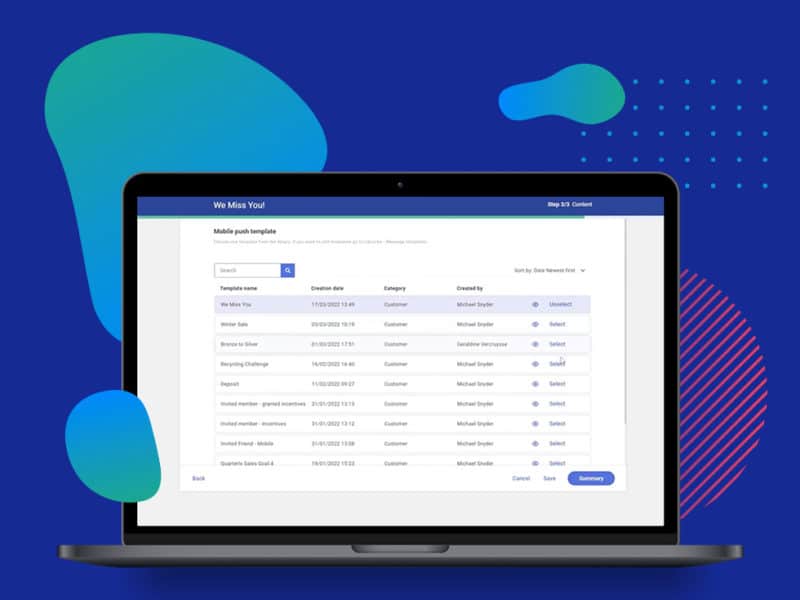
3. Actionable strategies to implement customer segmentation
When embarking on your customer segmentation journey, you must first ask yourself, “What is the goal?” What are your brand’s unique selling points? How many members of the marketing team will be involved? Once this is established, the focus shifts to your customer base. Some tasks could include determining the audience size, the number of potential segments needed, identifying which customer will spend more and which will spend less, etc.
Then, decide what data needs to be collected and how it will be collected. Remember that this information is crucial when creating your segments and will be the foundation of the marketing campaigns and initiatives. To execute any of these segmentation exercises, you must ensure you have access to the most important piece of it all… the data!
Data can be collected in different stages throughout the loyalty lifecycle, whether mandatory upon enrollment or optional after the fact, in the form of a survey. Now, all information received will come directly and voluntarily from clients. This is what is known as zero-party data.
What’s more, these data points can be compiled into segments. It is recommended to start with a broad focus and continuously narrow them down over time. AI and ML can do wonders in unearthing and analyzing behavior and trends, as well as shaving time and resources off the shoulders of your workforce. While defining these customer segmentation models, set up the main strategy to retain and gain customers loyalty, and after that focus on acquiring new ones.
5. Defining customer segmentation models
Customer segmentation models are the different ways in which a company decides to divide its customers. In loyalty, there is a wide spectrum of customer data points to consider, but the most relevant across the industry are:
- Demographic
Demographic segmentation is when customers are divided by their social characteristics as part of the population. Some examples include age, location, gender and birthday. - Psychographic
Psychographic segmentation considers an individual’s personality, attitudes, aspirations, interests, and values. For example, in customer segmentation for fashion, the audience can be divided depending on their size, favorite store, product, and even their concern for recycled clothes. For a Veterinary clinic, it will be more interesting to know what type of animals their clients have at home. Each industry will have very distinct data points that are more important to its unique business. - Customer behavior
Customer behavior is one of the most important attributes when building customer segments. This division will allow a deeper knowledge of customer trends, habits, and product usage. Some examples are the total amount spent on transactions, the total number of transactions, the date of the last purchase, the number of points spent in the last month, the number of redemptions completed, etc. Here is where customer engagement with the loyalty program can be measured.Now, member activity can be tracked, and trends can be identified automatically. Thanks to artificial intelligence and machine learning, segments can be created according to customer lifetime value (CLV) trends. Just to give an in-practice example, retail customer segmentation models should focus on targeting their best performers in stores whose lifetime value is greatest, but also send out communications and promotions to those members who have had a high spend in the past, but their trend is now decreasing.
- Campaign responses
Campaign response segmentation can be set up according to, for example, the way your members wish to receive communication -email, SMS, push notifications, etc.-, the channel used to enroll in the loyalty program – mobile app or web portal – or the number of referrals made to a friend. The response to the program awarding customers with different recognition tiers can be another factor to consider for segmentation. - Multiple conditions
Customer segmentation can apply to multiple different characteristics simultaneously. For instance, companies can target members by a condition as simple as membership type or by their membership in combination with their location and a purchase of a specific product. The most effective segments are as narrow and specific as possible to small groups to personalize the campaign at its lowest level.
6. Summary with CTA
Understanding your members needs, preferences and behavior is the beginning of your customer segmentation journey. Defining goals, resources, unique selling points and crucial data points will prepare your business for all segmentation possibilities. Customer segmentation helps target the right clients, who present more profitable opportunities at the right time and in the most efficient way. With it, their retention and satisfaction will be ensured, as well as the maximization of sales and revenue.
To learn more about customer segmentation models and how to build the most effective loyalty marketing strategy, request a demo with our Loyalty Experts! They will match you with an experienced Loyalty Consultant with experience in your unique market space and industry.

The post Customer segmentation models to improve the performance of loyalty marketing campaigns appeared first on Search Engine Land.
Courtesy of Search Engine Land: News & Info About SEO, PPC, SEM, Search Engines & Search Marketing
Category seo news | Tags:
Social Networks : Technorati, Stumble it!, Digg, de.licio.us, Yahoo, reddit, Blogmarks, Google, Magnolia.
How to set up a Google Ads account
Written on December 20, 2022 at 7:00 am, by admin
Advertising on Google Ads is a no-brainer for many brands.
Between the mammoth market share, the proven ROI on time and monetary investment, and the innovations in creative/targeting – it’s never been a better time to scale Google Ads.
Getting started can be a bit more complex than it used to be. You’ll need to make some key decisions on what kind of account you want and make sure you have your verifications ready.
This article is a step-by-step guide to setting up your Google Ads account.
Note: While there will be some strategic advice, the goal is to keep it as universally applicable as possible. In addition, we will not be going over setting up Local Service Ads or Merchant Center.
Getting started with Google Ads
Setting up a Google Ads account requires an email (can be Google or not).
If you don’t already have an email you planned on using, you can create a quick account before the ad account is set up.
Once you designate the email account you want to be affiliated with your ad account, you’ll be prompted to use a Google Business Profile as a starting point.
However, if you do this, you’ll be locking your account into being a Smart Campaign account.
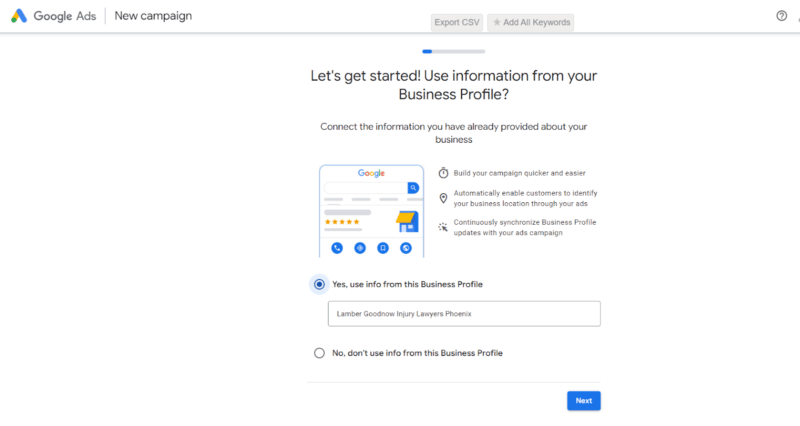
While Smart Campaigns can be useful for some brands, locking in the account to only support such campaigns is not ideal for most advertisers.
Be sure to select “Are you a professional marketer? Switch to Advanced Mode.”
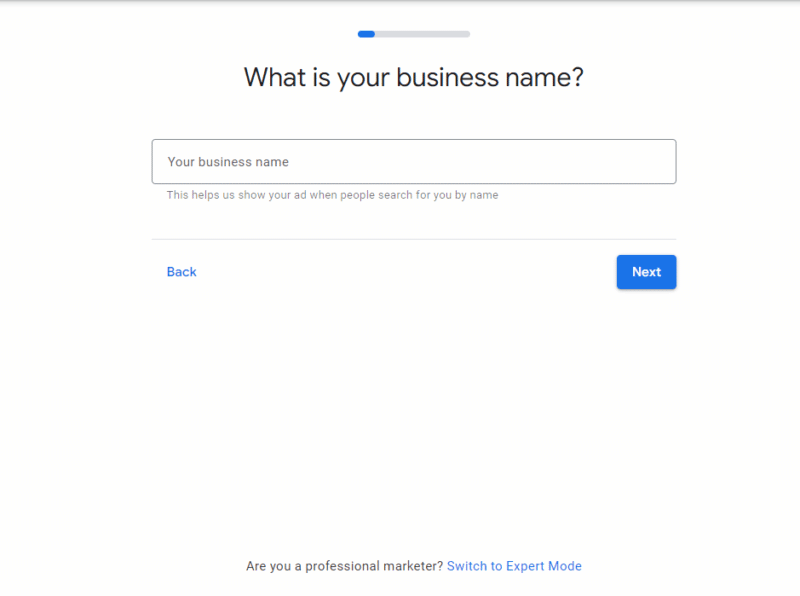
Once you’ve transitioned to a normal ad account, you’ll be prompted to create your first campaign. If you’re not ready, you can proceed to create the account without a campaign.
Google will look for assets associated with your email address (like YouTube channels). You can connect them for additional audiences and placements or leave them off for now.
If you are promoting your app or using it as a landing page, you can also connect it during this step. You’ll also be allowed to connect your phone number.
Ideally, if you’re using call tracking, you’d have that number ready. However, you can always adjust it later.
Conversion tracking is a critical part of any Google Ads account. You can choose the marketing objective of your campaign (conversions or brand lift) and set up the conversion tracking after.
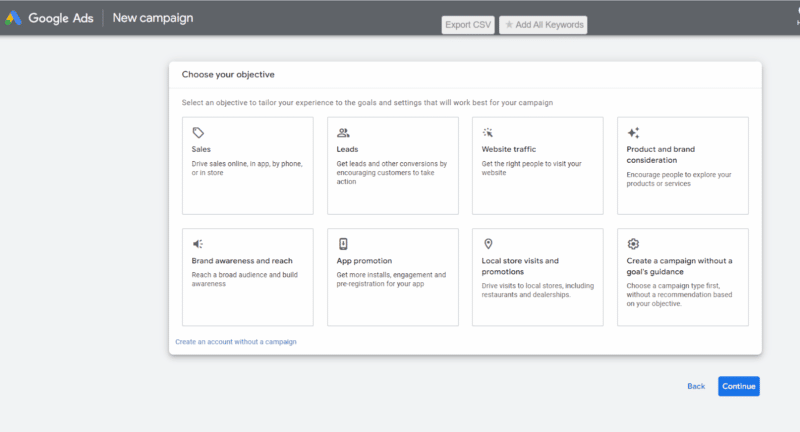
Note that you should not opt into multiple conversion goals in a single campaign.
Asking one campaign to be responsible for leads and sales will have too many variants in conversion values.
The next step is to decide if you will build a single-channel campaign or opt into Performance Max (PMax).
The campaign goals you select will influence which campaigns you are prompted to create. If you don’t select any, your options will be search and PMax.
PMax needs visual creative to succeed. If you do not have images and videos ready, it is best to start with a non-PMax campaign.
Opting for a search campaign will prompt you to begin filling in the following:
- Keywords: You can either manually enter them or get suggestions based on your site or themes.
- Search ad text: You’ll be prompted to enter headlines, descriptions, and the final URL for one responsive search ad.
- Assets (formerly known as extensions): Site links, structured snippets, callouts, calls, price extensions, promotions, lead forms, apps.
- Bidding strategy: During this stage of campaign setup, you will only be able to opt into Smart Bidding or automated bidding.
- Campaign settings: Aside from naming conventions, you’ll be able to set location targets, ad schedules, audiences, ad networks, and languages.
PMax campaigns focus on all Google Ads channels, so the lion’s share of the setup revolves around supplying creative.
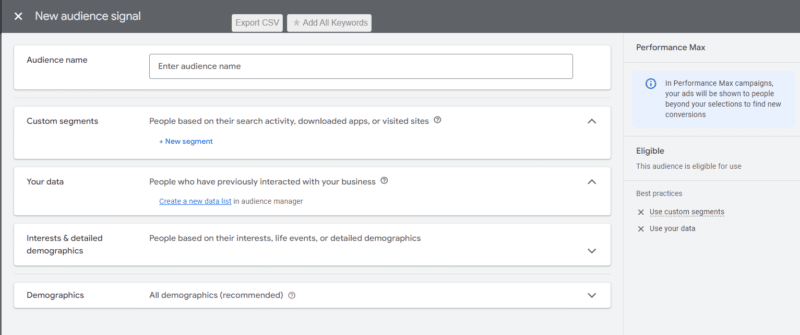
While you won’t be bidding on keywords, you can add a custom intent audience in the Audience signals.
Be sure you have video creative otherwise, Google will create a video on your behalf.
Budgets are critical to the success of your Google Ads account and campaign.
Setting one that’s too low will turn all spend into waste because there won’t be enough clicks to lead to conversions. Going too high might allow for budget misallocation.
When you set your daily budget, be sure you’re setting one that you’re OK with doubling daily. Google will attempt to make your monthly spend average out to your daily spend across 30.4 days.
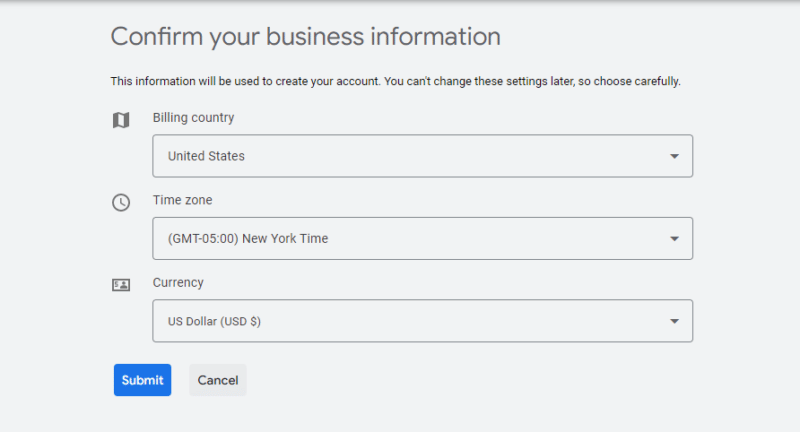
It’s important to note that your billing profile does not need to be the same as your main ad account.
For agencies, you can set up the billing profile under your client or yourself. Google Ads will take most credit cards, PayPal, and direct deposits from bank accounts.
Get the daily newsletter search marketers rely on.
<input type=”hidden” name=”utmMedium” value=”” />
<input type=”hidden” name=”utmCampaign” value=”” />
<input type=”hidden” name=”utmSource” value=”” />
<input type=”hidden” name=”utmContent” value=”” />
<input type=”hidden” name=”pageLink” value=”” />
<input type=”hidden” name=”ipAddress” value=”” />
Processing…Please wait.
Follow-up steps
Congratulations, your Google Ads account is set up! However, you’re not completely done yet.
Once you finish the initial setup, you must verify your account and set up two-factor authentication.
Verifying your account means requesting and sending back a postcard confirming your business is real. If you do not complete this step, your ad account will be canceled.
Additionally, if you don’t incur charges in the first few days of the account, you risk suspension.
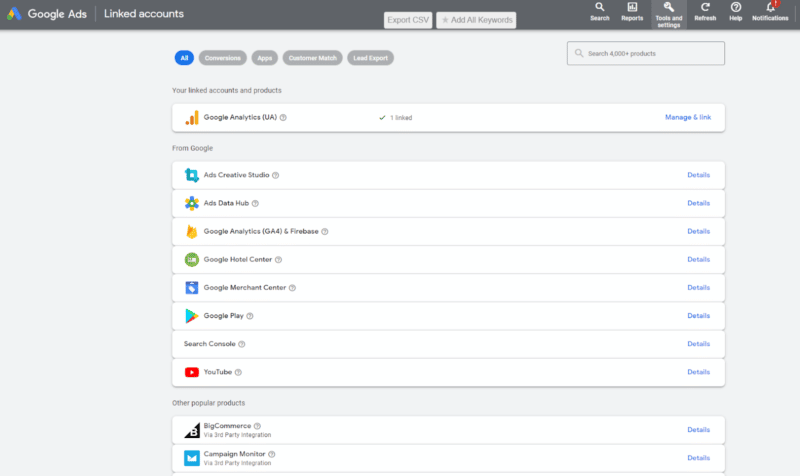
A great way to mitigate this is to link your Google Ads Console to Google Analytics.
Setting up conversion tracking doesn’t need to be a code-heavy experience. Codeless options include:
- Connecting your conversion tracking with Google Tag Assistant.
- Copying your conversion tracking code into your site’s analytics section.
You can also send conversion tracking setup to your developer.
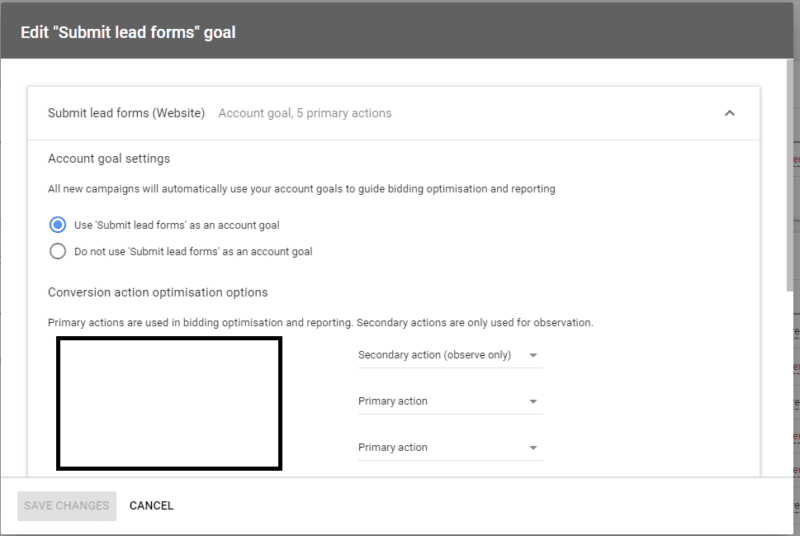
Conversion actions will either be primary or secondary actions.
- A primary action will factor into reporting and the Google Ads algorithm.
- Secondary actions will just report the data and are not factored into cost per acquisition (CPA).
Setting up your Google Ads account
Campaign structure and ad creative choices can be part of account setup. However, if you’re not ready, do not force the first campaign.
Make sure you’re setting yourself up for success by having your linking accounts ready (Analytics and Search Console) and your creative on hand.
The post How to set up a Google Ads account appeared first on Search Engine Land.
Courtesy of Search Engine Land: News & Info About SEO, PPC, SEM, Search Engines & Search Marketing
Category seo news | Tags:
Social Networks : Technorati, Stumble it!, Digg, de.licio.us, Yahoo, reddit, Blogmarks, Google, Magnolia.
Google search retires Web Light, Google’s method to serve faster, lighter pages to people
Written on December 20, 2022 at 7:00 am, by admin
Google has retired Web Light, Google’s mechanism to serve pages and content faster, using a more lightweight version of that page, to those with slower internet connections. Google said, “while this feature has worked as intended and enabled broader access to the richness of the web, increased affordability of more powerful smartphones has diminished the need for such functionality.”
What was Web Light. Google launched Web Light in 2015 as Google Lite, which was designed to help those with slow mobile connections on their search results page. Google would take the page, remove a lot of the heavier images and media and just show the searcher the text of the page. In 2018, Google even added a Search Console filter to see what pages were being served over Web Light.
Google’s message. As noted above, Google said, “We introduced Web Light to enable us to serve faster, lighter pages to people searching on entry-level devices. While this feature has worked as intended and enabled broader access to the richness of the web, increased affordability of more powerful smartphones has diminished the need for such functionality. We remain committed to evolving and refining the Search experience to meet the changing needs of our users.”
Web light user agent retired. With this news, Google retired the user agent for Web Light named “googleweblight.” So you should no longer see this user agent showing up in your log files.
Documentation removed. Google has also removed the help documentation for web light, so the only way to access the docs is to go to the Wayback Machine.
Why we care. A lot of publishers were not huge fans of Web Light because some felt it resulted in less revenue or no revenue. Plus, publishers do not like when their web pages and content do not look as they expect. In any event, this feature has been retired going forward.
The post Google search retires Web Light, Google’s method to serve faster, lighter pages to people appeared first on Search Engine Land.
Courtesy of Search Engine Land: News & Info About SEO, PPC, SEM, Search Engines & Search Marketing
Category seo news | Tags:
Social Networks : Technorati, Stumble it!, Digg, de.licio.us, Yahoo, reddit, Blogmarks, Google, Magnolia.
Google says don’t expect a new core update by year-end
Written on December 16, 2022 at 6:52 pm, by admin
With the Google December 2022 link spam update and helpful content update both still rolling out, SEOs are worried that Google may have one more Google algorithm update up its sleeve before the year’s end. Well, it will not happen, said John Mueller from the Google Search team.
No more core updates this year. John Mueller said on Twitter, “FWIW, just to be clear, there’s no core update lined up for the rest of the year.”
Rankings might not be stable. But like I said before, the link spam update and helpful content update both still rolling out, so ranking volatility may still occur until those are done rolling out. And of course, rankings are never static, new content is being added daily, and Google is crawling and indexing those new web pages and the signals that come from those pages.
John added on Twitter, “that doesn’t mean there won’t be visible changes; the linkspam & HCS updates are still rolling out, and, Search continues to reflect changes across the web.”
So SEOs still may have their work out for them throughout the next couple of weeks leading up to the holidays.
The tweet. Here is John’s tweet:
FWIW, just to be clear, there's no core update lined up for the rest of the year. That doesn't mean there won't be visible changes; the linkspam & HCS updates are still rolling out ( https://t.co/wgdE0g7SDr ), and, Search continues to reflect changes across the web.
— John Mueller is mostly not here
(@JohnMu) December 16, 2022
Why we care. With many SEOs and marketers already starting to take off for the holidays, some may be doing so with a little anxiety as these updates finish to roll out. That being said, core updates tend to be the most volatile updates and so far, the helpful content updates and even this link spam update, seem relatively minor in terms of the footprint it had across the web.
Sure, if your site was hit by an update, you will feel the ranking declines and traffic, but it seems like most sites were not yet impacted by these updates. And with no core updates scheduled for the next couple weeks, hopefully some of you can enjoy the holidays and new year.
The post Google says don’t expect a new core update by year-end appeared first on Search Engine Land.
Courtesy of Search Engine Land: News & Info About SEO, PPC, SEM, Search Engines & Search Marketing
Category seo news | Tags:
Social Networks : Technorati, Stumble it!, Digg, de.licio.us, Yahoo, reddit, Blogmarks, Google, Magnolia.