

Google Ads tests new verification badge
Written on April 11, 2023 at 2:16 pm, by admin
A new-look verification badge is starting to appear in Google Ads for verified advertisers.
What the verified badge looks like. This new-look badge takes the form of a blue shield with a white check mark, as shared by Saad AK on Twitter:
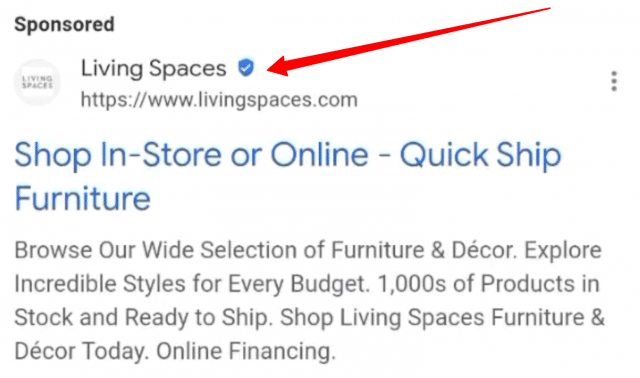
Clicking on the badge takes you to My Ad Center, where Google tells you the advertiser’s name, that it’s verified by Google and its location.
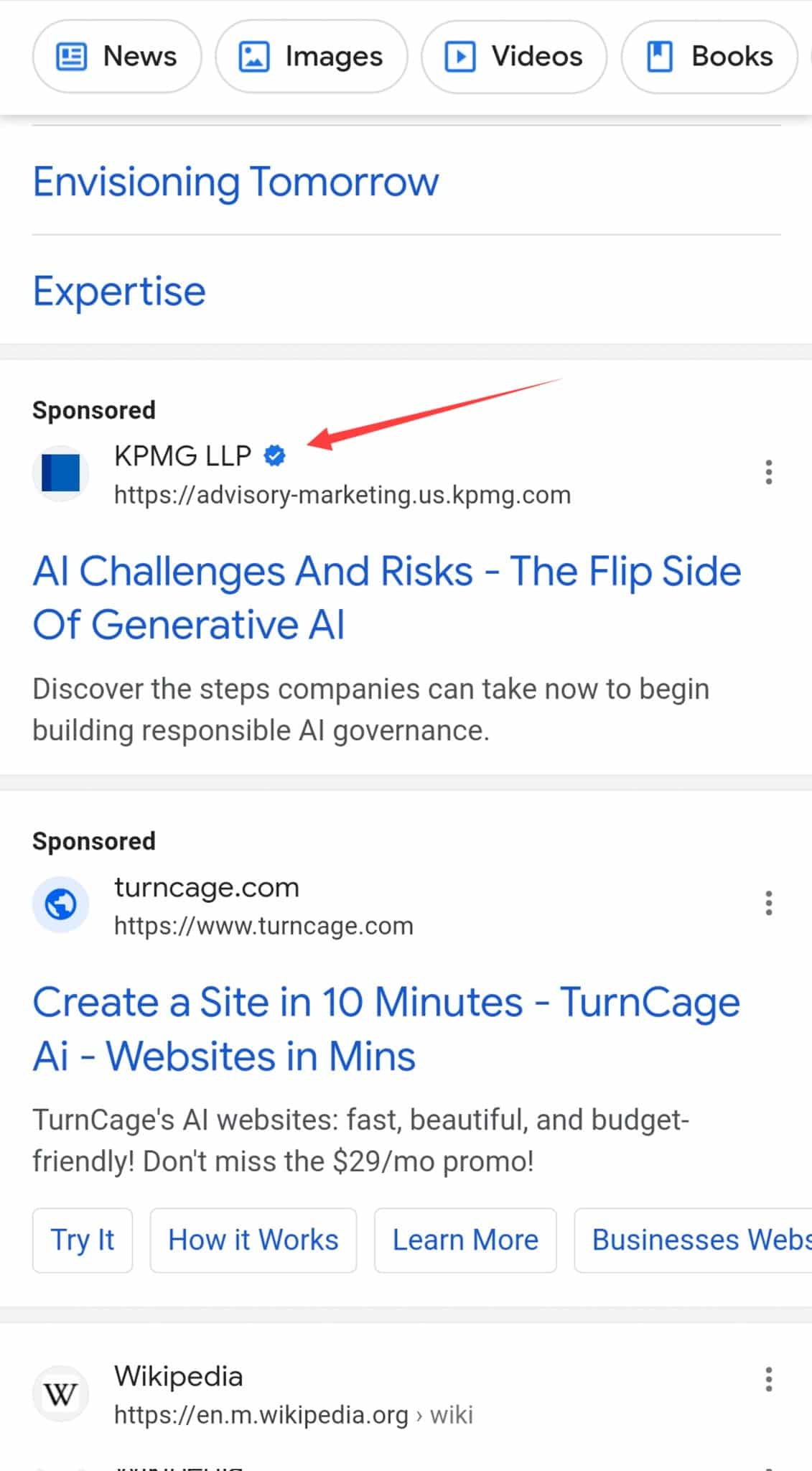
Previous badge design. Google has been experimenting with blue badge icons and labels in recent weeks. In Google Ads testing verification badges, we reported on a badge spotted and shared by Khushal Bherwani on Twitter.
The blue label featured a blue circle with ridges and a checkmark inside it. Here’s what that looked like:
Why we care. Verification badges are typically seen by consumers as a trust symbol. This small addition could impact potentially lead to more clicks, higher click-through rates and conversions for those advertisers who have it.
Advertiser verification program update. Separately, Google also posted this update on its business information beta:
- A subset of advertisers may qualify to voluntarily submit their identity verification to access the Business Information feature which allows advertisers to use a business name and business logo in their search ads. Advertisers who are qualified for this program, will see an option in their Google Ads account to complete advertiser verification to unlock this feature. There will be no deadline and no adverse consequences for failing to complete or meet the requirements of this advertiser verification program.
Google rolled out the site name, favicons, and sponsored label to desktop in March, after launching them on mobile last October.
The post Google Ads tests new verification badge appeared first on Search Engine Land.
Courtesy of Search Engine Land: News & Info About SEO, PPC, SEM, Search Engines & Search Marketing
Category seo news | Tags:
Social Networks : Technorati, Stumble it!, Digg, de.licio.us, Yahoo, reddit, Blogmarks, Google, Magnolia.
Google webspam report: SpamBrain caught 5x more spam
Written on April 11, 2023 at 2:16 pm, by admin
SpamBrain was able to catch five times more spam sites compared to 2021 – and 200 times compared to when it first launched in 2018 – according to Google’s newly released webspam report for 2022.
This led to 99% of visits from Google Search being spam-free, the search company announced.
Improvements to Spam detection. Google said it made improvements to SpamBrain to tackle abusive links, hacked spam, and more. Such as when the December 2022 link spam update rolled out, which was an update to SpamBrain to detect and neutralize spammy links. Google said that update led to them being able to detect 50 times more link spam sites compared to the July 2021 link spam update.
Also, hacked spam saw a 10 times improvement in detection and removal.
Google said it can detect spam faster. This is because SpamBrain now detects spam during the crawling process, instead of after it indexes and processes the pages it crawls,
Why we care. Less spam in Google Search means that more quality websites are ranking and a more fair playing field for SEOs, site owners, and content creators. Is it perfect? No. But Google continues to try to improve its search spam detection and techniques.
The post Google webspam report: SpamBrain caught 5x more spam appeared first on Search Engine Land.
Courtesy of Search Engine Land: News & Info About SEO, PPC, SEM, Search Engines & Search Marketing
Category seo news | Tags:
Social Networks : Technorati, Stumble it!, Digg, de.licio.us, Yahoo, reddit, Blogmarks, Google, Magnolia.
Drive better customer intelligence for a better customer experience by Cynthia Ramsaran
Written on April 11, 2023 at 2:16 pm, by admin

What are you hoping to get out of your marketing technology? Do you need help getting there?
At the heart of marketing technology, customer data platforms offer marketers and advertisers a powerhouse of capabilities to drive relevant, personalized customer experiences. And at the heart of the CDP lies the data that fuels customer insights.
Learn more by registering and attending “Get to the Heart of Customer Experience With Data that Delivers,” presented by Salesforce and Acxiom.
Click here to view more Search Engine Land webinars.
The post Drive better customer intelligence for a better customer experience appeared first on Search Engine Land.
Courtesy of Search Engine Land: News & Info About SEO, PPC, SEM, Search Engines & Search Marketing
Category seo news | Tags:
Social Networks : Technorati, Stumble it!, Digg, de.licio.us, Yahoo, reddit, Blogmarks, Google, Magnolia.
LinkedIn ads survey reveals humans, cities, and numbers increase performance
Written on April 10, 2023 at 11:15 am, by admin
Vidmob has just released its comprehensive report on global LinkedIn advertising trends, providing invaluable insights into the most effective visual elements, text, and creative strategies for capturing audience engagement on this prominent B2B social platform.
The report analyzes over 800 million ad impressions from brands executing paid video advertising campaigns on LinkedIn, spanning both the EMEA region and North America.
Let’s dive in.
The numbers. The survey found that videos including the following elements performed better than those that did not.
- +149% lift in view through 25% when displaying messaging in the opening quarter of a video
- +54% lift in engagement rates with 7-15 sec video duration
- +102% lift in view through 25% with high text contrast
- +175% lift in view through 25% when showing a person in the opening quarter
- +33% lift in click through rate when offer includes ‘Get a Quote’
- +17% increase in click through rate when featuring brand logo in the opening 2 sec
Key takeaways. The survey offers the following takeaways in five different categories.
Creative types. When used with the appropriate duration, video content effectively drives results throughout the entire marketing funnel. Shorter videos excel in engagement for consideration purposes, while videos of varying lengths, up to 30 seconds, demonstrate strong performance in both awareness and conversion. Notably, a 13% increase in click-through rate is observed with videos lasting between 15 and 30 seconds.
Branding. It is crucial to feature your brand’s logo or name consistently throughout the marketing funnel, including during conversion stages. A notable 17% increase in click-through rate has been observed when incorporating the brand logo within the initial two seconds of content.
Visualization. Incorporating numbers, percentages, and costs into your creative content can effectively demonstrate value. Utilizing data and statistics that highlight your brand’s competitive edge, industry expertise, or essential value propositions can significantly contribute to driving positive business outcomes.
Messaging. Using text effectively can enhance view-through rates and clicks. Although variations exist across the marketing funnel, featuring key messages prominently and employing contrasting colors have been shown to be successful in boosting views and clicks.
Humanity. Ensure that on-screen talent represents your brand authentically through their actions. Experiment with different approaches, such as product interactions, various testimonial styles, and showcasing individuals who embody your target audience. These techniques have been proven effective in resonating with viewers.
Dig deeper. You can download the report from Vidmob here.
Why we care. By leveraging insights from Vidmob’s report, advertisers can optimize ad creatives, target ideal audiences more effectively, and tailor your messaging for maximum engagement. In turn, this can lead to increased brand awareness, higher click-through rates, and ultimately, improved conversion rates, driving better overall business results.
About the data.
- VidMob analyzed 16.7K ads and 804M impressions from brands that ran paid advertising on LinkedIn in 43% EMEA (DE, ES, FR, UK, CH, IT), 52% NA (US & CA), and 5% APAC between 7/1/2021 and 7/1/2022 to identify key visual elements and creative strategies.
- 1.9K ads and 83.6M impressions were analyzed from brands that ran paid video advertising on LinkedIn in 20% EMEA (UK, DE) and 80% NA (US) between 7/1/2021 and 7/1/2022 to identify key visual elements and creative strategies.
- 9.9K ads and 393M ad impressions were analyzed from brands that ran paid video advertising on LinkedIn in 57% NA (CA & US) and 43% EMEA (UK, FR, DE) between 7/1/2021 and 7/1/2022 to identify key visual elements and creative strategies.
The post LinkedIn ads survey reveals humans, cities, and numbers increase performance appeared first on Search Engine Land.
Courtesy of Search Engine Land: News & Info About SEO, PPC, SEM, Search Engines & Search Marketing
Category seo news | Tags:
Social Networks : Technorati, Stumble it!, Digg, de.licio.us, Yahoo, reddit, Blogmarks, Google, Magnolia.
Google CEO: Search will evolve substantively in next 10 years
Written on April 10, 2023 at 11:15 am, by admin
The Google search experience “will evolve substantively over the next decade,” according to Google CEO Sundar Pichai in a wide-ranging interview with The Wall Street Journal.
Why we care. AI has already changed Google search – and continues to do so. The question is how much Google search will change in the coming years and what it all means for the organic and paid channels.
Google Search in 10 years. How will large language models (LLMs) and chat (e.g., Bard) change search in the next decade? Is this the end of link-based search? Pichai said it’s tough to predict, but ultimately it will be about understanding what users want and helping them accomplish it:
- “I think the experience will evolve substantively over the next decade. We have to meet users in terms of what they are looking for.”
Pichai was also asked whether the future Google Search may look more like “the original” Google (“10 blue links”) or Bard:
- “It may look like neither, or it will have elements of all that. I think we’ll be able to help users in much deeper ways. If I take a 10-year outlook, this will all be more ambiently available to users in radically different ways than we use them today. I think you’ll be able to do all of this in a much more personalized way, which means by nature we’ll be able to impact users in a deeper, meaningful way.”
The role of AI chatbots in search. Google has been using LLMs to improve search quality and the search experience. Pichai wants to bring the modern LLM capabilities into search – but stopped just short of saying “search” will evolve into “conversation”:
- “We are testing a variety of approaches so I don’t want to comment on the future iterations of it yet, but yes at a high level people come to Google to ask follow-up questions. We’ll be able to give them more powerful tools to be able to do that.”
Commercial potential. Pichai was elusive when asked what kind of commercial potential (e.g., Google Ads) he saw for LLMs and LLM search:
- “It’s tough to carve it out that way. You may be interested in ideas for how to celebrate a birthday, and at some point aspects of it become more commercial. We don’t come into it with the view of, we want to give you this commercial journey. It’s important to get the order right.”
Bard vs. Search overlap. Pichai once again made the point that Bard is not a search product. But, ultimately, Google Search and Bard are searching the web to provide users with answers:
- “Would there be queries which are overlapping? Absolutely. There are things we can do in Bard which may be difficult to do in search, or vice versa. I don’t view this as a constraint. I view this as a great opportunity to innovate.”
He also said Bard was an example of a time when being first “doesn’t matter”:
- “Throughout our history, there are many areas where we haven’t been the first to market something. We didn’t develop the first search engine. We didn’t develop the first browser or the first email product or the first mapping product, and so on.”
From from Pichai. Conversational AI ‘absolutely’ coming to Google Search, says CEO Sundar Pichai.
The interview. You can read edited excerpts from Pichai’s interview with The Wall Street Journal.
The post Google CEO: Search will evolve substantively in next 10 years appeared first on Search Engine Land.
Courtesy of Search Engine Land: News & Info About SEO, PPC, SEM, Search Engines & Search Marketing
Category seo news | Tags:
Social Networks : Technorati, Stumble it!, Digg, de.licio.us, Yahoo, reddit, Blogmarks, Google, Magnolia.
5 tips for creating a high-converting PPC landing page
Written on April 10, 2023 at 11:15 am, by admin
So much time, attention, and strategy go into optimizing traffic.
Search marketers work hard on perfecting ad copy or bidding strategies to squeeze another drop of efficiency out of already fine-tuned traffic machines.
However, your ad campaigns’ landing pages have tremendous advantages and are easy to implement and optimize.
The time you spend improving your landing page conversion rates will compound into better sales, higher profitability, and stronger digital marketing campaign results.
Tip 1: Create unique landing pages for unique audiences
This is not a suggestion to use a unique landing page for every keyword. However, you may consider using designated pages if you have high-performing, high-traffic keywords.
This high-relevancy tactic can improve conversion rates by providing a better scent trail for users so they understand they are in the right place.
Remarketing vs. first-time visitors
However, if you are sending your remarketing traffic to the same landing page as first-time visitors, this should be reconsidered.
What objections, obstacles, or questions did your visitors encounter the first time they visited your site? How can you address these more directly?
Can you offer a special incentive to get the person over the hump to take action?
You can address these items on your designated landing pages for retargeting audiences.
Segment by traffic source
Segmenting your landing pages by traffic source can improve your results even more.
This will allow you to tailor your page content, call to action, and even policy compliance for each medium, such as Google Ads, Google Display, Facebook, Reddit, etc.
For example, your Reddit landing page can have significantly more text than your Facebook landing page to allow this audience to learn and engage.
Depending on each audience’s funnel stage, you can then modify the call to action for the most appropriate stage.
For example, a free guide may be most appropriate for a visitor from a display ad before asking them to commit to scheduling a consultation.
Tip 2: Test smarter
With enough testing, you begin to learn that most thoughtful and researched hypotheses for improvement tend to be duds or will actually lower conversion rates.
Also, it is easy to overly focus on buttons and page colors and lose focus on the items that make big impacts.
Here are some recommendations to help you decrease your rate of failures and/or lackluster results from landing page testing.
Increase their desire to take action before anything else
When someone arrives on your page, their desire to take action is forged almost immediately.
A visitor will judge if they are at the right place and if they found what they want within the first few seconds of a page view.
When conducting a split test, isolate items such as the unique selling proposition, your elements of trust, and how both are perceived.
Focus on the page features with high visibility above the fold, such as headlines, hero images, and the call to action.
For example, we increased a client’s form submissions by over 30% by testing the page subheadline with a trust element versus focusing on relevancy to the target market.
It would be hard to achieve this performance by changing the button color.
Test layouts, not elements
Remember that if you are marketing to people in North America or similar areas, they are generally conditioned to enter from the left and exit from the right.
So, as a standard practice for these audiences, you should keep introduction elements on the left, such as your logo, and exit elements on the right, such as the phone number.
With that insight in mind, it is essential to understand that a page’s layout can significantly impact how users perceive and interact with the content.
Changing a single element may not lead to a significant improvement in conversions.
Testing drastically different designs and layouts will reap much better results and learnings that will help you further improve your performance.
In one test, we used a center-aligned form with a single field against a standard form with three fields aligned to the right. The center form produced a 105% improvement in conversion rates for initiating a multi-step form completion.
The big wins are what you are after.
Tip 3: Begin with the end in mind
If your goal is more leads, the best next step is to analyze your visitor’s goals and how you can help them achieve this on your page.
Eliminate distractions from the goal
The first thing to acknowledge is that people online can be easily distracted. This is why landing pages without navigation will usually perform better.
Typically, you want your landing pages to have one call to action and zero options for clicking away to a different webpage.
Make it easy, fast and convenient
Secondly, and most importantly for mobile users, most users scan and do not read webpage content after clicking on an ad.
Online visitors also do not typically scroll down; if they do, they don’t scroll far.
When someone does scroll, it is best to follow them with a sticky bar so that the call to action stays with them down the page. This prevents them from having to scroll even more once they are ready to act.
Rely more on bullets and pictures than descriptions and content for communicating benefits and establishing trust. Ensure these items are above the fold and little scrolling is required.
Tip 4: Less is more
Mark Twain is quoted as saying, “I didn’t have time to write you a short letter, so I wrote you a long one.”
It takes much more time and effort to write concisely. The conversion rate improvements are worth it, however.
Write clearly and concisely
High-converting landing pages are concise and communicate necessary information with brevity. Well-designed icons, images, and headlines are great at assisting with this.
The easier your content is to understand, the higher your conversion rates will be. The readability of your landing page text should be at a 3rd to 5th-grade level for most industries.
Use readability tools and improve your content so that it is easy to read and understand.
Did you know Ernest Hemingway’s writing score is at grade level 5? As such, your goal is to write intelligently and clearly simultaneously.
User experience trumps design
One major learning we experienced was after designing our best and most beautiful landing page to date.
It was exceptional, and everyone was impressed with the outcome of the design. We launched it, and the lead conversions dropped to zero shortly after.
This is an extreme case, and after we eliminated all other possible explanations, we reverted to the original website. The conversions improved.
Page speed and usability will always beat a great-looking design for conversions. It doesn’t matter how impressive you look.
If users’ needs aren’t served immediately, or they can’t load the page quickly, they won’t convert.
The same is true for legibility. Black text on a white background provides the best contrast for optimum readability.
Accommodate for impairments
It is also true that some users have vision or other impairments and require screen readers and other technology when using the internet.
There are website accessibility and compliance checkers that will scan and score your landing pages. These tools identify issues for screen readers and other assistive technologies to help ensure your content is accessible and usable for everyone.
Test your landing page with color filters to be sure those with color blindness can view and read your page elements.
There are also apps for accessibility adjustments that you can add to your pages that assist with WCAG (Web Content Accessibility Guidelines) and ADA (Americans With Disabilities Act) compliance.
Tip 5: Nothing beats a great offer, if it’s believable
The number one way to win in the marketplace is to advertise a better offer. As long as the offer is believable.
A great offer consists of the following:
- Scarcity and urgency.
- Immediate bonus or benefit.
- Uniqueness and believability.
Providing a great offer is the best and easiest way to improve your landing page conversion rates.
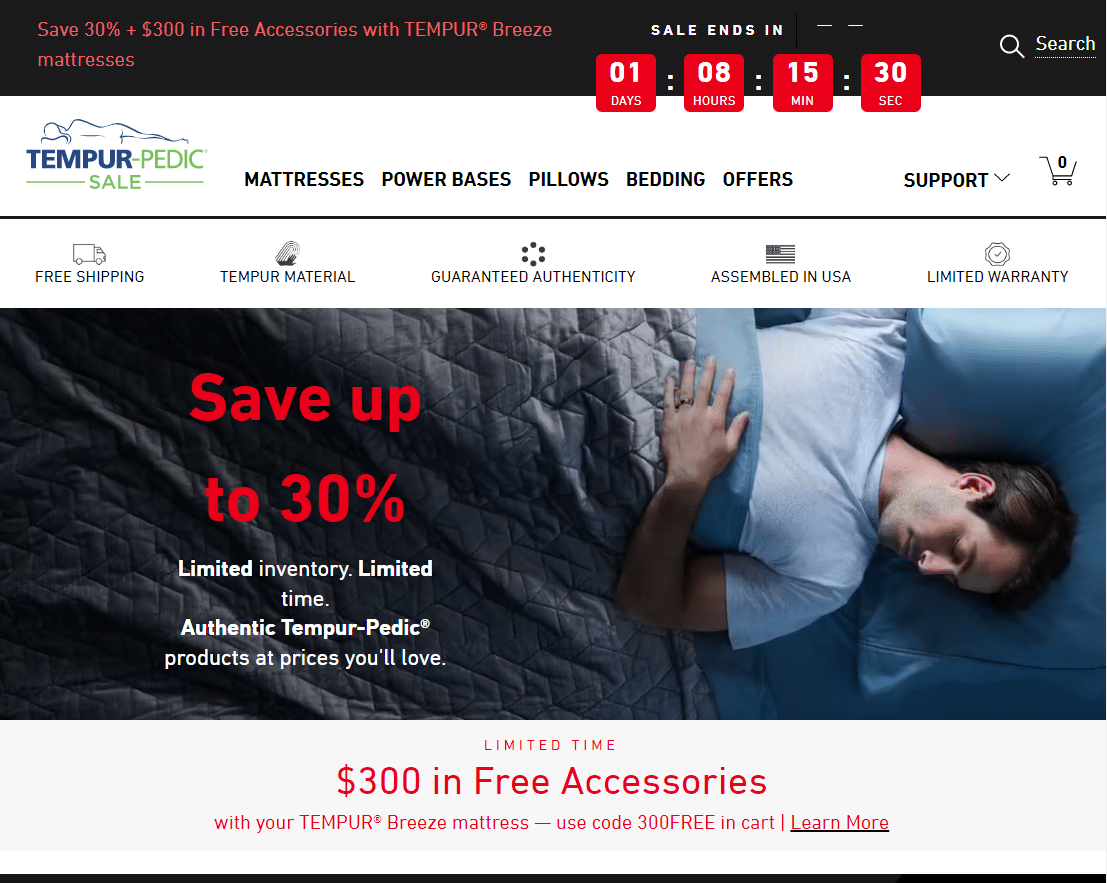
Scarcity and urgency
A great offer incentivizes visitors to take action and is a reason to convert now rather than later.
Having limited availability is an effective way to get someone to act. This is also known as FOMO (fear of missing out).
Brainstorm ways to incorporate FOMO and a sense of urgency into your offer on your landing page with legitimate scarcity, such as with limited availability and countdown timers.
Scarcity and urgency can be powerful tools for improving your conversion rates. It’s essential to use them responsibly and ethically, however.
The more legitimate, the more impactful and believable it will be.
Immediate bonus or benefit
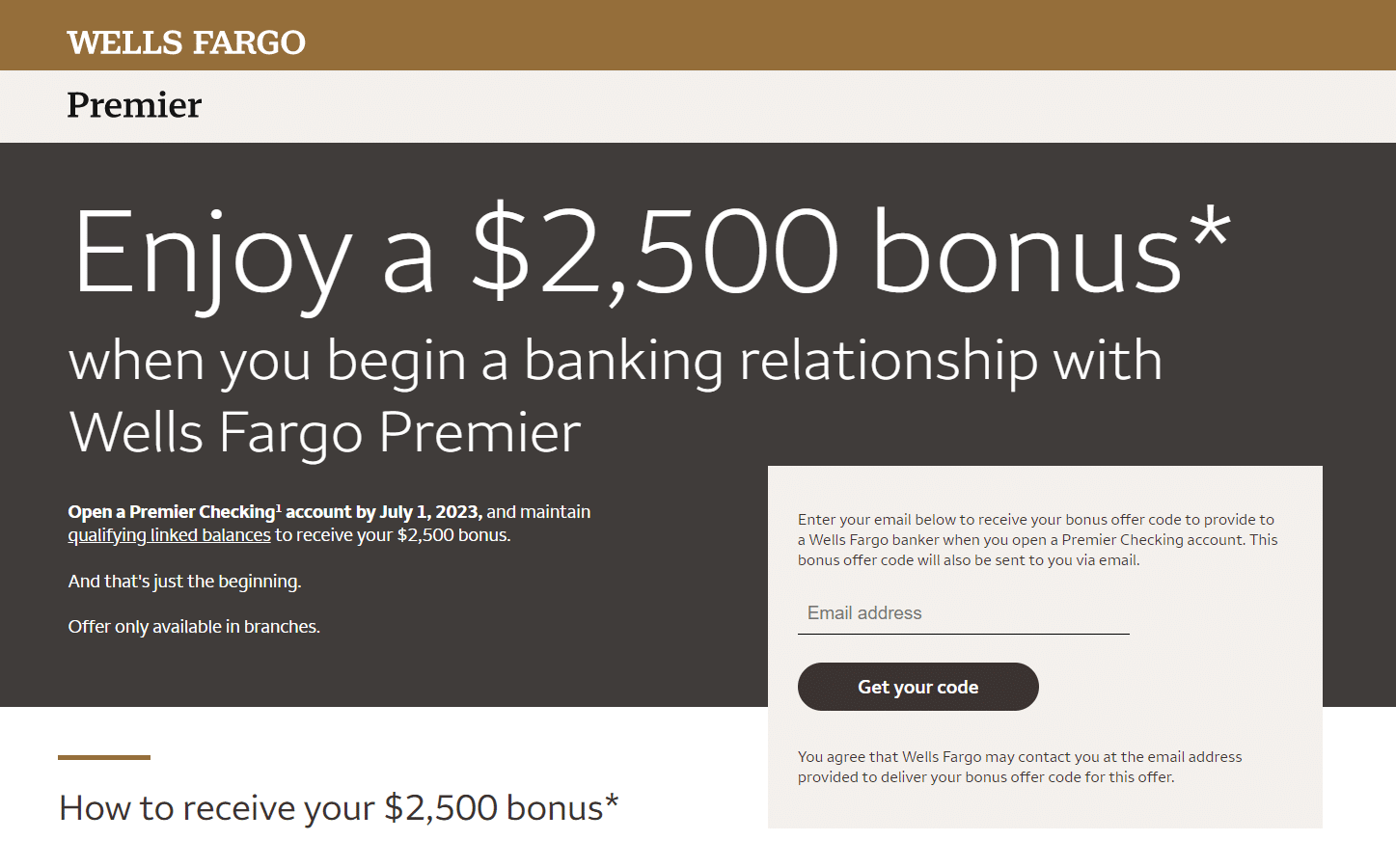
When landing page visitors are offered a free gift or bonus, the overall value of the offer is perceived to be higher.
This can make someone more likely to act and do it now, even if initially hesitant. This is true even with a small item, such as a free gift.
Additionally, providing a free gift or bonus can create a sense of reciprocity and enhance the overall customer experience. This helps to create goodwill for your brand and potentially more referrals.
Uniqueness and believability
If your offer is amazing and hits all the important points, but your competitors are using the same offer, the effectiveness of that offer is going to diminish.
The same is true for your unique selling proposition. If everyone has the same selling proposition, you are not unique.
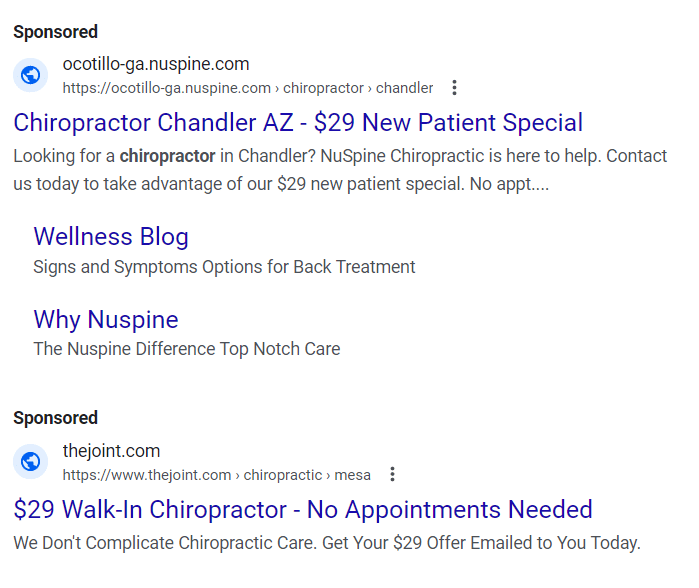
Get a good sense of what your competitors are offering and go bigger.
Believability is another important factor. Outlandish claims and offers can appear too good to be true. If you are making an incredible offer and people reject it, it is likely not believable.
Legitimate social proof is a great way to make your offer more believable and improve conversion rates overall. Ensure your landing page includes social proof through testimonials, case studies, and reviews.
Embedded and verified reviews are recommended versus the typical website testimonials anyone can add to a webpage. This helps to add credibility and trust. Video testimonials and audio testimonials are great at achieving this, too.
Improve your PPC landing pages for compounding wins
Your landing page conversion rates directly correlate to your customer’s ability to perceive that you are the answer to their needs and desires.
The better you can accomplish this while guiding your landing page users to take action, the better your outcomes will be.
This compounding impact leads to lower acquisition costs, increased investment for more traffic, and scaled growth over time.
The post 5 tips for creating a high-converting PPC landing page appeared first on Search Engine Land.
Courtesy of Search Engine Land: News & Info About SEO, PPC, SEM, Search Engines & Search Marketing
Category seo news | Tags:
Social Networks : Technorati, Stumble it!, Digg, de.licio.us, Yahoo, reddit, Blogmarks, Google, Magnolia.
How to create a helpful FAQ page (with 7 examples)
Written on April 10, 2023 at 11:15 am, by admin
What are your customers’ most frequently asked questions? What do prospective customers most want to know about your services, industry, brand or products?
Compiling these questions on a FAQ page is a tried-and-tested way to provide a baseline level of customer service on your website.
What is a FAQ page?
FAQ stands for “frequently asked questions.” A FAQ page gathers the most common questions your audience and customers ask in one place and provides detailed answers.
With a FAQ page present as one of the foundational, informational pieces on your site, you’ll hit a few birds with one stone:
- It’s a crucial resource any of your customer-facing staff can direct customers to when a common question arises.
- A FAQ page can offer key details about your company in one convenient place.
- Customers can read your FAQ page and get answers that may help them make a buying decision or move them further along your marketing cycle.
How to create a FAQ page
Let’s get into writing a FAQ page, including where to find your most common customer questions, how to create high-quality FAQ page content, and how to ensure your FAQ page is a foundational content piece on your website.
1. Gather your most common customer questions
Before you create your FAQ page, you need to find out which questions your customers ask the most.
To find these, look in a few key places.
- Customer service data: Your customer service data is the first place to look to find customer questions. Specifically:
- CRM software: Your customer relationship management software can help you track and collect customer questions.
- Customer service team: If you have a customer service team, ask them to gather common customer questions.
- Social listening: Keep an eye on your social media channels and collect the questions your audience asks in comments and posts. Track mentions of your brand and pay attention to what people are saying.
- Blog comments: If your blog has enabled comments, track them and record any questions that pop up.
- Emails: If you have an engaged email list, your audience may often respond or reply to your emails with comments and questions. Keep an eye on these, too.
Note: The number of questions you’ll need to include on your FAQ page will depend on the complexity of the service/product you offer. The more complex it is, the more questions customers will have.
2. Format and organize your FAQ page
Next up, consider the format and organization of your page.
Your FAQ can exist on one single page or multiple connected pages.
- Multiple connected pages: If your FAQ page is extra long and robust, or your service/product is complex, you might want to opt for more of a knowledge base that includes FAQs. If you do go this route, make sure customers can search for questions to get the information they need quickly.
- Single page: If you go for a single page, make sure it’s categorized and organized well so all the questions don’t run together. You don’t want customers to hunt through a long list of questions – most won’t have the patience for that.
As you format the page, get creative as you consider how it will function for users. What kind of information are you conveying, and what would be the best way to display it?
For example, you could sort related questions into categories and include a keyword-rich header to label each category.
Always avoid creating a long list of questions on your page without some formatting or organization to make the information easier to navigate and read.
3. Provide definitive answers
As you answer each question on your FAQ page, don’t just write a line or two with general information. Instead, think about answering questions definitively.
This means you’ll need to draw from your business’s policies, processes, mission, backstory, and more to answer questions. It also means you must answer with depth – knowledge and expertise informing what you say.
Even further, each answer should reflect your brand’s voice and tone. To that end, the person writing out the FAQ needs to have a handle on how your brand sounds across its communications.
As you might have guessed by now, creating a FAQ page is much easier if the business already has a content strategy laid out that provides guidance on all these pieces.
If you don’t have a documented content strategy, you’ll have to research to understand how to provide definitive answers to common customer questions.
You might have to interview various team members or double-check policies.
Some questions might even require you to decide your policy or stance on a certain issue once and for all – not a bad thing, but worth considering as you prepare to create your FAQ page.
Get the daily newsletter search marketers rely on.
<input type=”hidden” name=”utmMedium” value=”“>
<input type=”hidden” name=”utmCampaign” value=”“>
<input type=”hidden” name=”utmSource” value=”“>
<input type=”hidden” name=”utmContent” value=”“>
<input type=”hidden” name=”pageLink” value=”“>
<input type=”hidden” name=”ipAddress” value=”“>
Processing…Please wait.
4. Be helpful and thorough
Along with definitive answers, ensure your FAQ page answers are helpful and thoroughly address each question.
In a nutshell, your answers should be satisfying and straightforward. Don’t beat around the bush, don’t get overly descriptive, and don’t hedge. Just aim to be helpful and give good information.
If you can’t answer a question fully in one paragraph (i.e., it’s too complex), consider the next tip.
5. Include links to related pages and blogs
Sometimes a FAQ page question is too multi-faceted or complex to answer fully on that page.
If that’s the case, point the reader to additional resources addressing their question. That might include additional pages in your knowledge base, related blog posts, or even a service page or contact page.
Link to these pages clearly so the reader does not doubt that their question will be answered in full, even if they have to navigate away from your FAQ page to find that answer.
6. Keep your FAQ page current
Review your FAQ page regularly to ensure it’s always up to date with the most current information. For example, you could plan to review it quarterly or after every new launch (or even more often) to update answers and links.
It’s also a good idea to keep track of your customers’ frequently asked questions continuously, as these may change over time, too. Some questions may become less relevant or less asked as your company grows and changes, so you’ll want to remove those if/when that happens.
7. Make your FAQ page easy to find
If a FAQ page is impossible to find, does it actually exist?
Don’t let this thought run through your customers’ and potential customers’ heads as they hunt fruitlessly for your FAQ page. Instead, do the opposite and make it stupidly easy for them to find it.
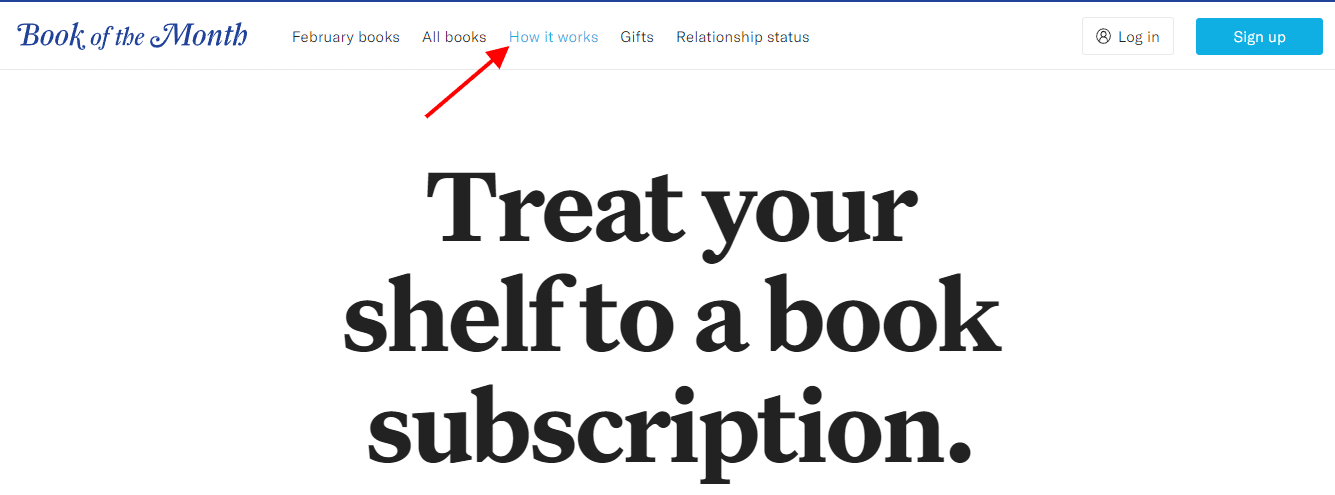
For example, you could include your FAQ page within your top navigation menu. For instance, Book of the Month features its “How It Works” page (which includes its FAQ) right in the top menu.
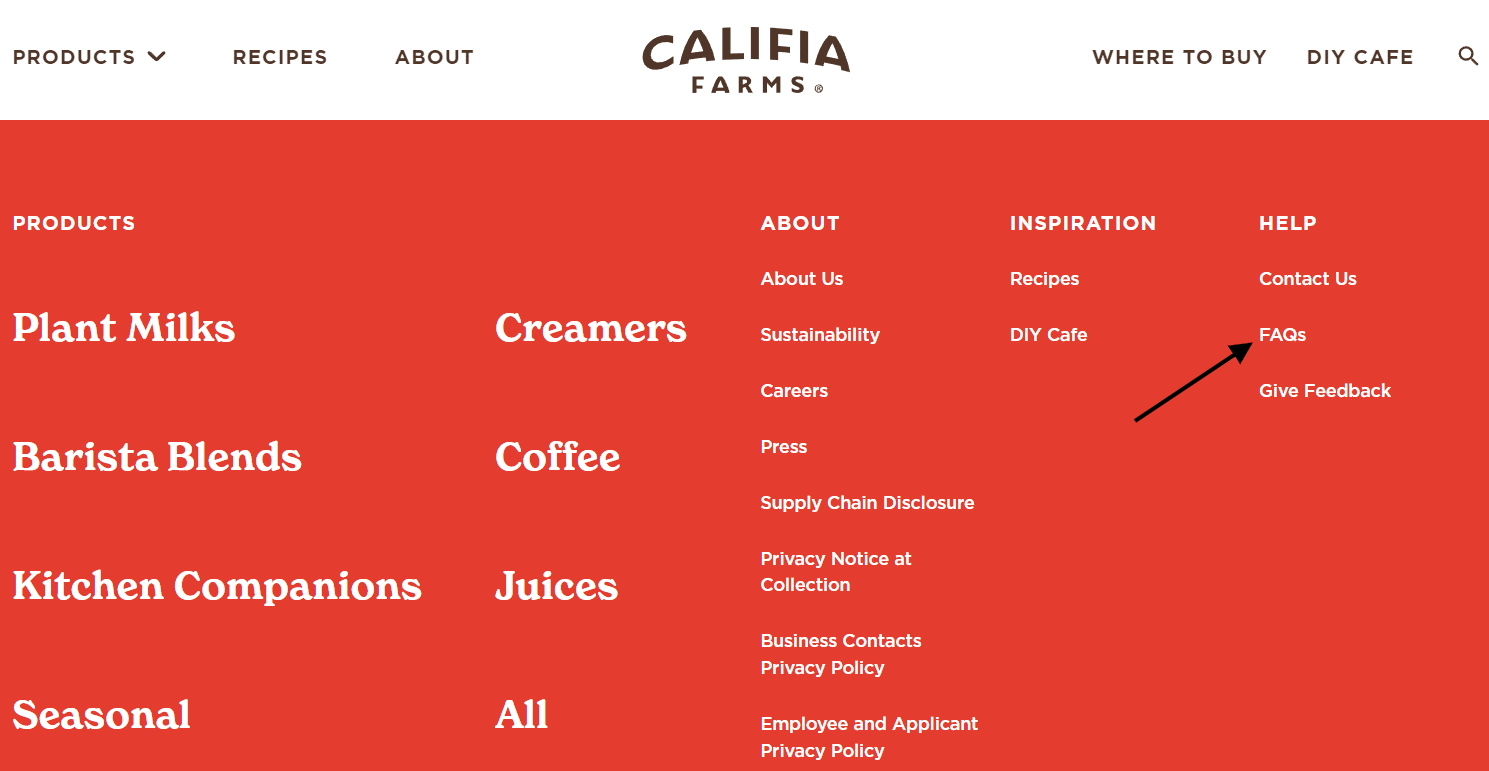
Or, include your FAQ page in a static footer that appears across every website page, as Califia Farms did.
8. Let customers know who to contact with additional questions
More than likely, your FAQ page won’t answer every possible question your audience has. That means an entire swathe of your audience may feel dissatisfied after reading your FAQ page.
Mitigate that by providing additional ways to get answers to questions on the FAQ page itself.
For example, you could direct customers with unanswered questions to start a live chat, email your customer service team, or talk to support staff on the phone.
Whatever you do, it’s a smart idea to ensure customers know additional help is waiting if they need it. That way, you’ll lessen the number of people who click away from your FAQ page in frustration.
FAQ page examples
For some inspiration and guidance, check out how these brands approached creating their FAQ pages.
As you’ll soon see, there’s no standard or set way to create a good FAQ page – do what works for your brand, what you sell, and your audience.
Glasses USA
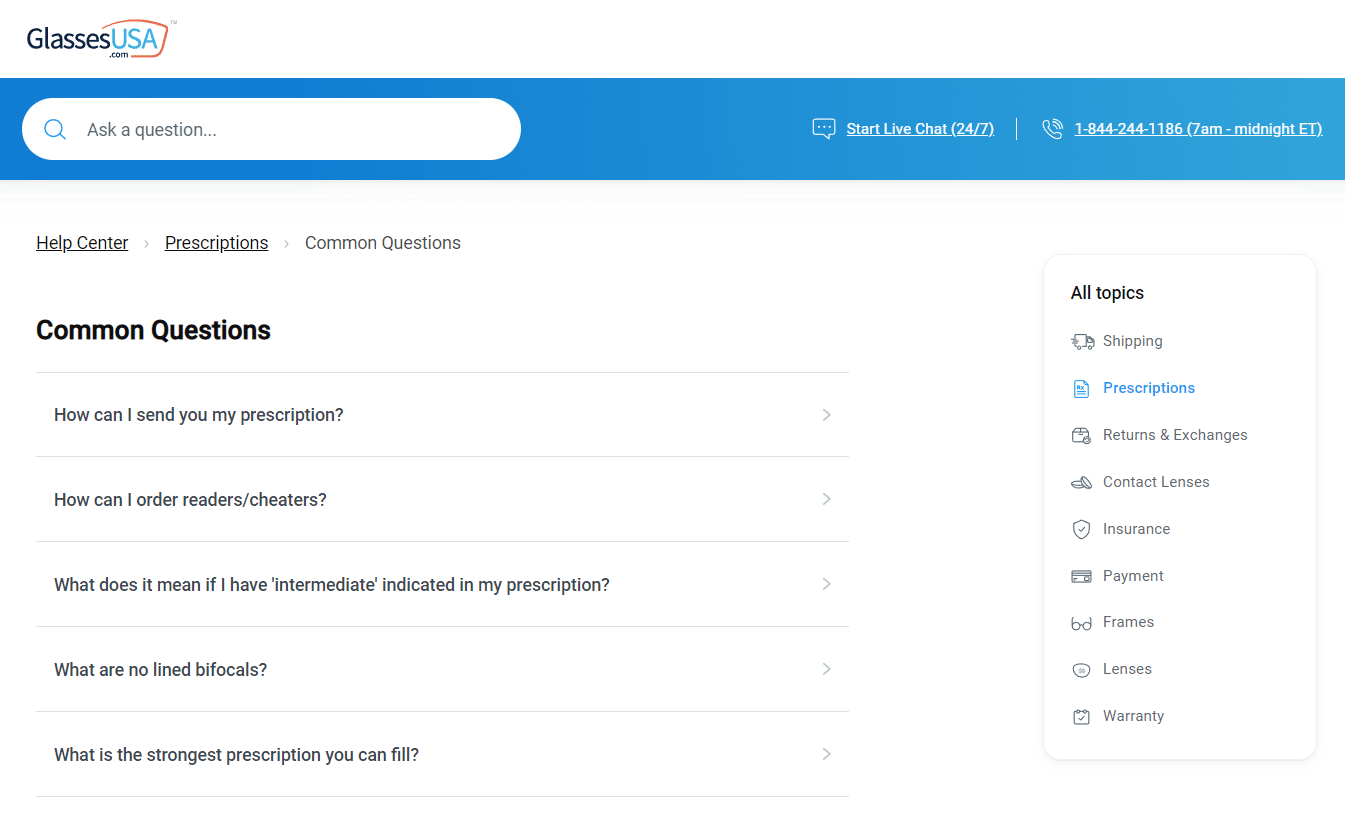
Glasses USA has a seemingly simple FAQ page that is very cleverly organized.
Questions are categorized by topic, and you can use the search bar to find the answer to your most pressing question quickly.
And, just in case your question isn’t covered in the FAQ, links to start a live chat or call customer service are right at the top.
Book of the Month
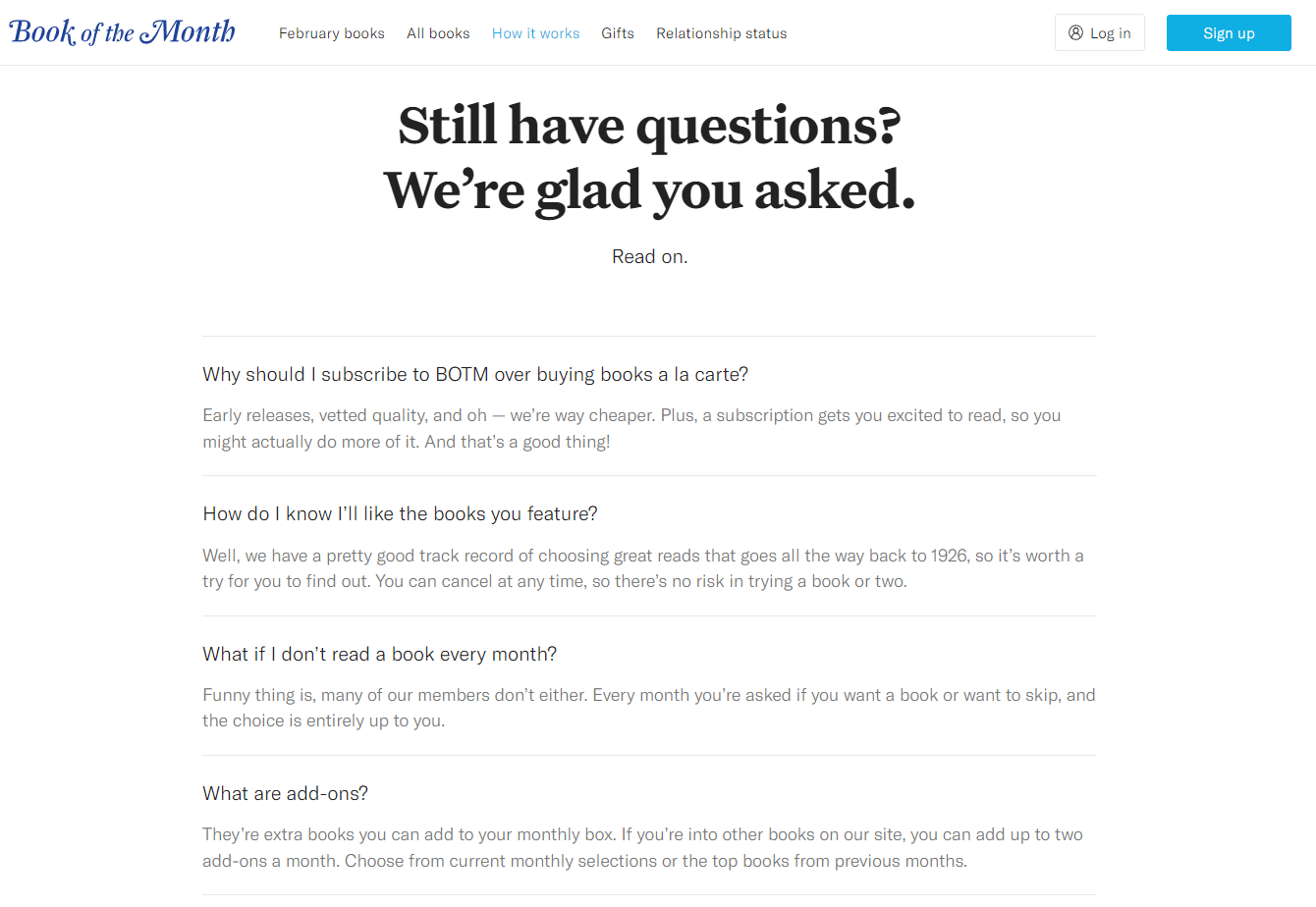
Book of the Month features a simple FAQ section as part of its “How It Works” page.
It’s short and sweet but to the point and ultimately helps potential customers make sense of the service they offer.
Bonus: Book of the Month’s brand voice is evident here.
Trader Joe’s
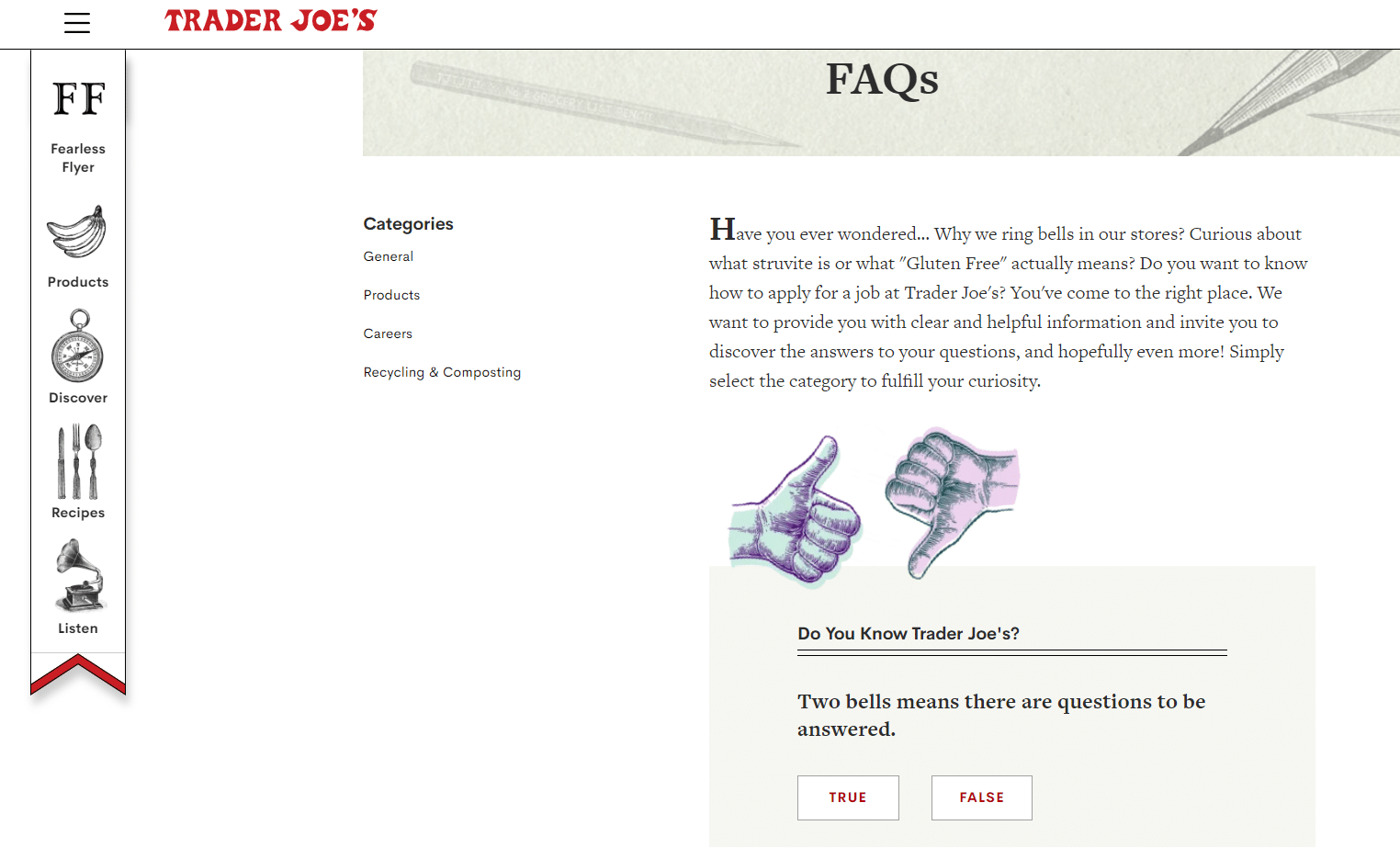
True to form, Trader Joe’s has a little fun on their FAQ page.
Along with practical information about their products, their recycling policy, and the forms of payment they accept, you’ll find fun facts about the brand’s quirks – like why they ring bells in their stores. There’s even a mini trivia game on the main FAQ page.
Overall, this is an excellent example of leaning into your brand voice and identity everywhere you possibly can.
Just because you must convey important information doesn’t mean it has to be boring or sound like every other FAQ page.
Aquaticare
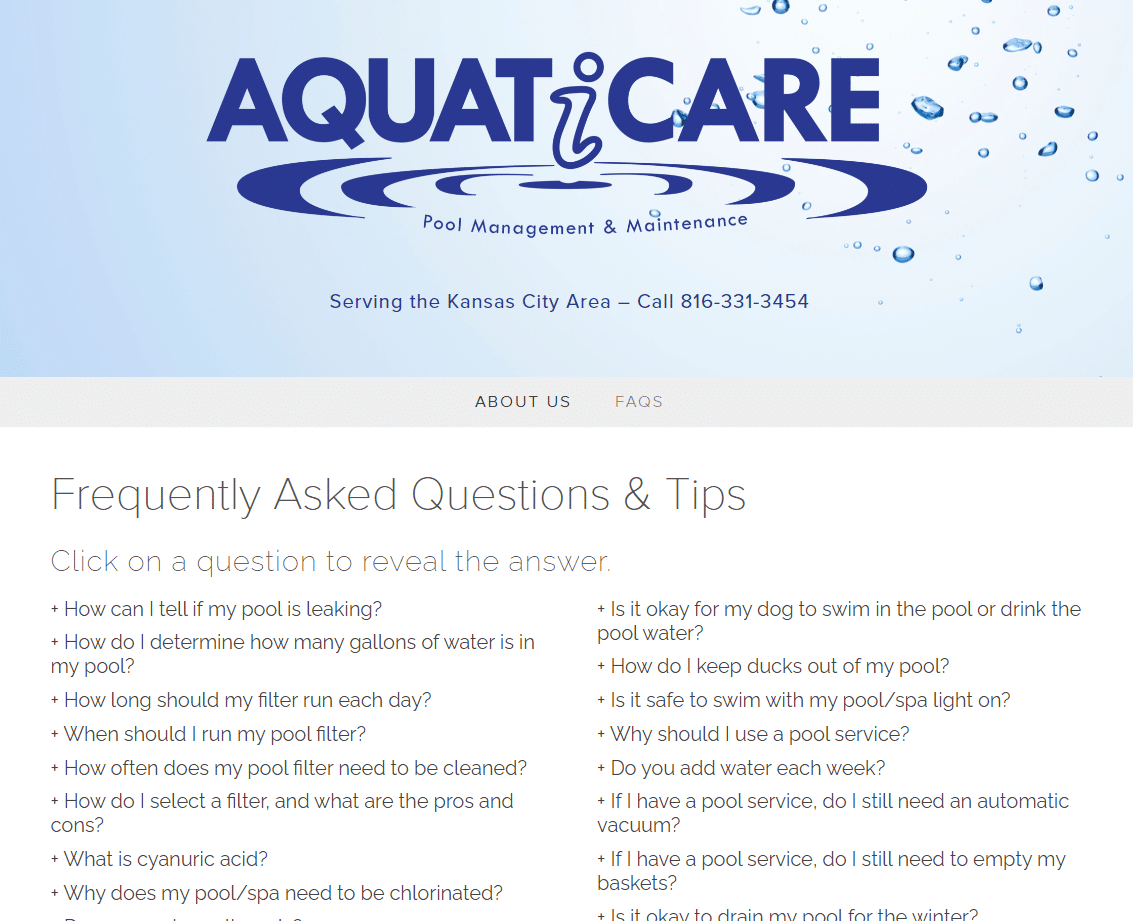
This local pool cleaning service has a simple, straightforward FAQ page with much good information. Since the list is relatively short, categorizing the questions isn’t necessary.
The page is further decluttered by hiding the answers using some simple code. Clicking on a question reveals the answer to that question.
Califia Farms
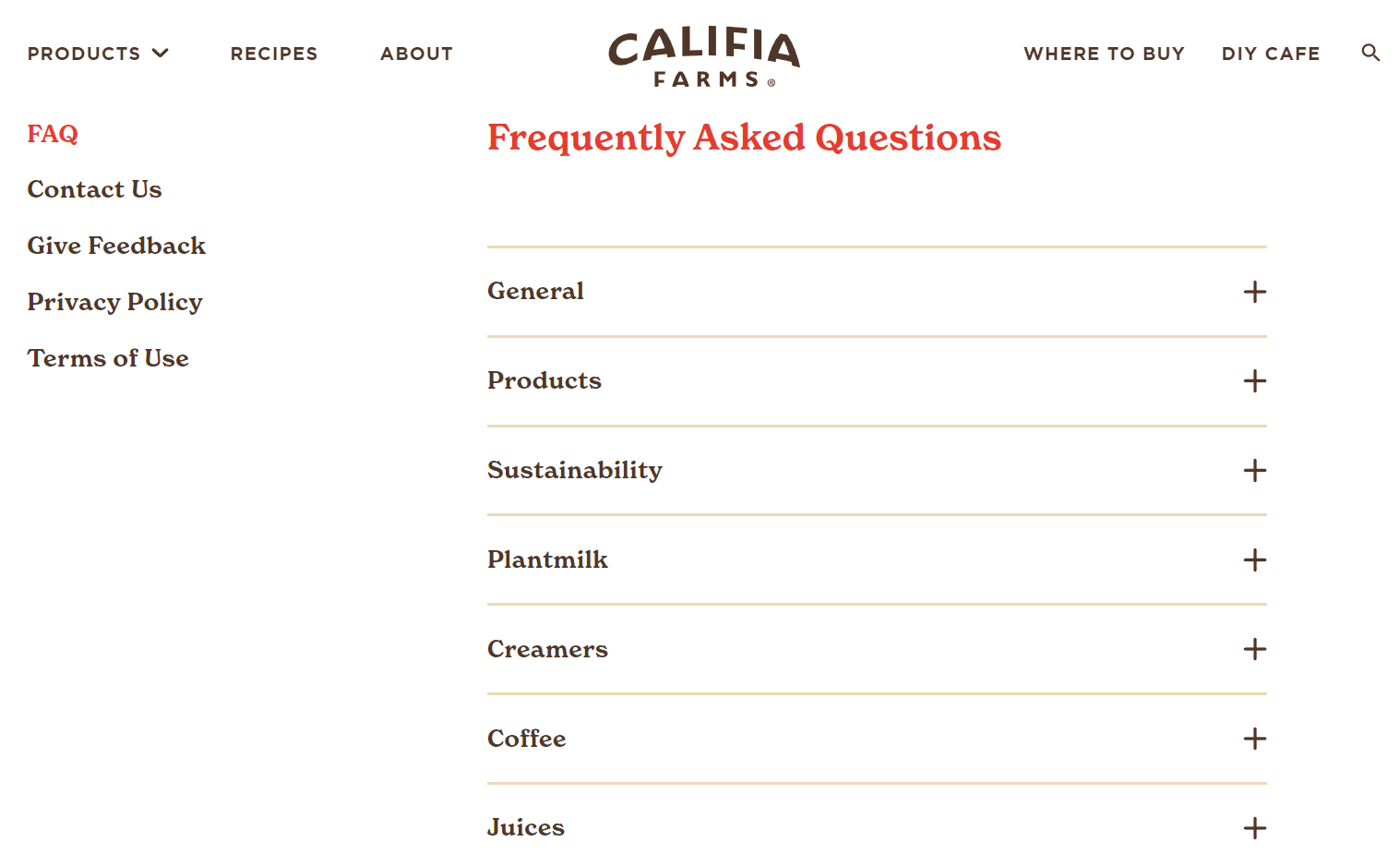
The FAQ page on Califia Farms’ website is elegantly laid out and ridiculously easy to read.
Common questions are divided into seven categories, each expanding when you click on them. Clicking on a question reveals a short but satisfying answer.
And, just in case the customer still has questions even after browsing the FAQ page, Califia includes a “Help! I still have questions” answer with contact information.

Airbnb
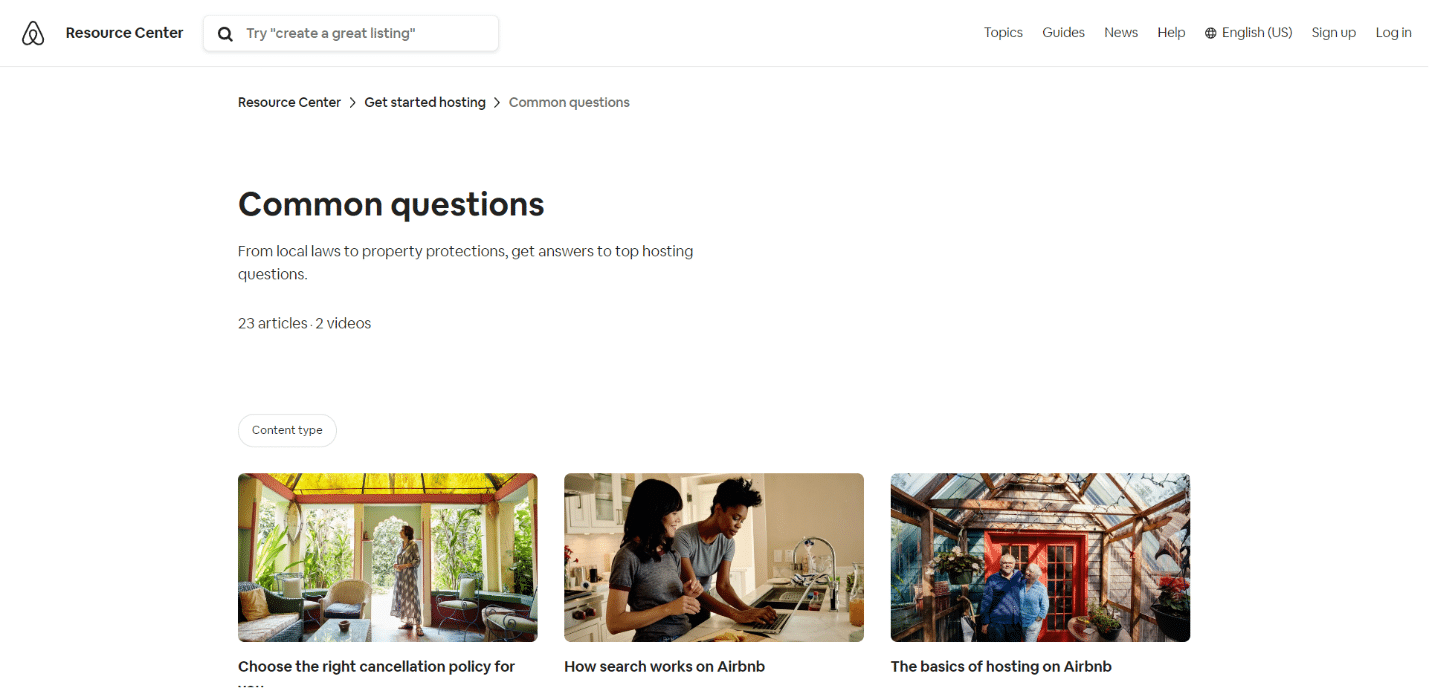
Airbnb takes a slightly different tack than the other examples on this list: Their FAQ page is, in fact, a library of articles on everything from hosting to cancellation policies.
For example, if you’re wondering how to get your rental listing more visible on Airbnb, you can read their guide on “How search works on Airbnb.”
SurveyMonkey
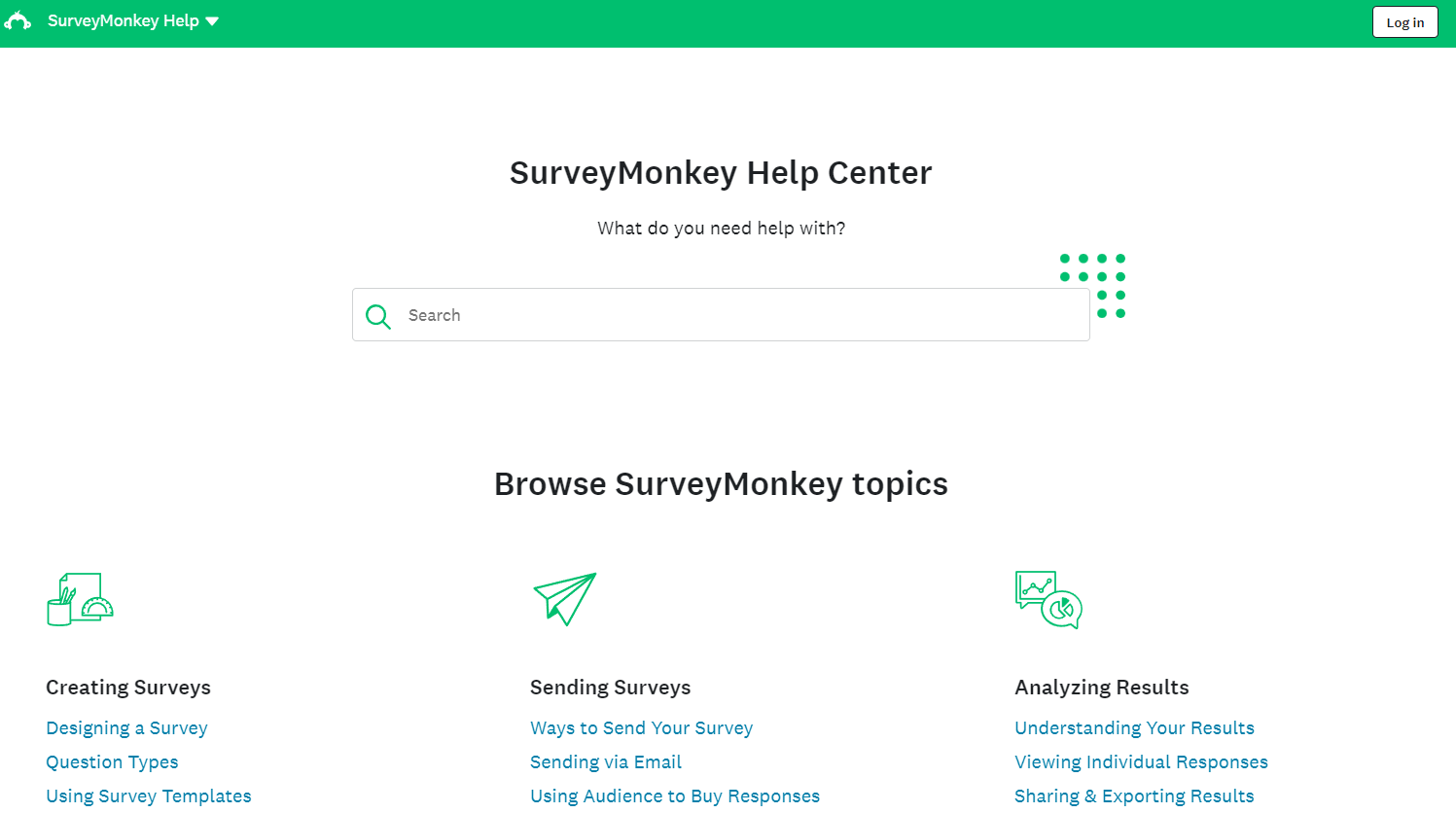
The more complex the service, the more complex the FAQ page becomes. It may even morph into a bigger entity, as SurveyMonkey demonstrates.
Instead of a simple one-page setup, they have an entire help center with guides divided by topic. And, of course, all of the guides are searchable, so you can quickly find the answer you need.
Most brands won’t have robust help pages, but seeing the entire range of possibilities is good.
Ready to write a useful FAQ page?
A truly useful FAQ page is a great resource to publish and update on your website.
Customers who find the answers they need on this page often won’t have to talk to customer service. They’ll feel informed and may even use that information to help them make a purchase decision.
Overall, a good FAQ page saves your staff time and nurtures your audience. However, none of that is possible if your FAQ page is messy, hard to read, or thin and unhelpful.
So, build your FAQ page with care and consider it an investment in your website’s overall usefulness. It might just pull more weight than you think, resulting in happier customers.
The post How to create a helpful FAQ page (with 7 examples) appeared first on Search Engine Land.
Courtesy of Search Engine Land: News & Info About SEO, PPC, SEM, Search Engines & Search Marketing
Category seo news | Tags:
Social Networks : Technorati, Stumble it!, Digg, de.licio.us, Yahoo, reddit, Blogmarks, Google, Magnolia.
Google search quality raters shift focus to chatbot response rating
Written on April 7, 2023 at 2:08 am, by admin
Google has prioritized rating chatbot prompt responses above rating the quality of search results, at least for some of its contract workers, since January, Insider reports.
Why we care. Google is clearly committing a lot of resources to Bard and other AI initiatives right now. Search remains its core product – and chief money-maker – so it’s interesting to learn that Google is so heavily invested in Bard that they have reportedly taken resources away from rating search results, which could potentially impact quality.
Reviewing AI prompts, not search. Raters are given a user prompt (e.g., a question, statment or instruction), along with two possible responses generated by an AI chatbot (the name “Bard” was not used). Raters were instructed to pick the best response.
But. Raters are finding themselves guessing vs. assessing and verifying the chatbot responses. That’s because some raters said they don’t have enough time to research which answer was better, especially on technical or complex topics they may not be familiar with, according to Insider.
So much for E-E-A-T. Google’s raters have a specific amount of time to complete their tasks, which vary from 60 seconds to several minutes.
- “Three hours of research to complete a 60-second task, that’s a great way to frame the problem we’re facing right now,” a rater told Insider.
Search quality raters. Google has employed human raters since at least 2005 – tasking them to rate the quality of pages, websites and search results, using an extensive set of guidelines. Google has always said the feedback from raters doesn’t directly impact organic search rankings but their feedback could be used to evaluate changes.
Googlers also were asked to help improve Bard. Google asked its employees to spend 2-4 hours testing Bard, rewriting answers or providing other forms of feedback, as we reported in February.
Read the Insider report (warning: paywall). Google contractors say they don’t have enough time to verify correct answers from the company’s AI chatbot and end up guessing via Thomas Maxwell.
The post Google search quality raters shift focus to chatbot response rating appeared first on Search Engine Land.
Courtesy of Search Engine Land: News & Info About SEO, PPC, SEM, Search Engines & Search Marketing
Category seo news | Tags:
Social Networks : Technorati, Stumble it!, Digg, de.licio.us, Yahoo, reddit, Blogmarks, Google, Magnolia.
Microsoft’s vision for a prosperous content ecosystem in a generative AI world
Written on April 7, 2023 at 2:08 am, by admin
Lost in the non-story about Bing adding ads to Chat (ads were already there) was a blog post by Microsoft attempting to assure content creators that the goal of new Bing is to “drive more traffic and revenue to publishers.”
“The Internet works because of an important ecosystem which starts with publishers creating great content which drives traffic and interest by people to consume that content, and then ultimately advertisers that want to reach people in a high quality and targeted environment.”
– Yusuf Mehdi, Microsoft corporate vice president, Modern Life, Search, and Devices, “Driving more traffic and value to publishers from the new Bing“
Mehdi was addressing concerns in the content creator community that search engines that provide results assembled by generative AI (a.k.a., “Chat” and “Answers” in Bing) will upend the ecosystem. The value exchange (content providers creating content in exchange for search engines sending monetizable traffic) will overwhelmingly favor the search engines.
Mehdi admits the concern is widespread by authoring this post. Why else would Microsoft need to assure content creators that things will be better in an AI-driven search results world?
Microsoft knows that content creators – publishers, content marketers, brands, and SEOs – are fretting about the prospect of less traffic and revenue.
Microsoft’s goals are laudable
Microsoft is expressing the best of intentions for all of its constituencies.
Searchers first. “The new Bing is helping to better address people’s search needs with new capabilities like chat, answers, and content creation,” Mehdi wrote.
Microsoft’s vision is to move “beyond search to create your copilot for the Web.” “People are finding value in having search, chat, answers, and creation capabilities all in one experience,” Mehdi wrote.
It’s difficult to argue with putting users first, but that doesn’t ensure that results generated in this way won’t disadvantage content creators.
For publishers, Mehdi said Microsoft’s goals are to:
- Drive more traffic to publishers. Measure success in part by how much traffic is being sent from the new Bing/Edge.
- Increase publisher revenue. Drive more traffic to publishers with new features like chat and answers, and pioneer the future of advertising in these new mediums by sharing revenue directly.
Traffic/revenue for all, more for Microsoft Start participants
Microsoft claims the benefits of adding a chat interface to search will inure to all publishers. But members of its Start program will reap the lion’s share of those rewards.
For all publishers, additional engagement generated by chat and the inclusion of citations in chat results will drive more traffic and create an opportunity for publishers to monetize that traffic.
Microsoft has experienced a traffic gain of about 15% since launching the new Bing. The service has approximately 100 million users and 100 million chats daily, the company said. About one-third of those users are new to Bing; Microsoft concludes those new users are an opportunity for publishers to get more traffic and sell more ads.
Start, launched and in beta September 2021, is Microsoft’s version of Google News or Apple News. It’s a personalized news portal, available as a website or mobile app, where you can manually add or remove interests and content from Start publishers.
Start publishers include heavy-hitters (e.g., The Wall Street Journal, The New York Times, Fox News and USA Today) along with less mainstream publications like Past Factory, The Stock Dork and Neon Moon.
Microsoft is exploring placing ads in chat and sharing ad revenue with Start partners whose content contributed to the chat response.
Traffic-driving tactics for Start members include:
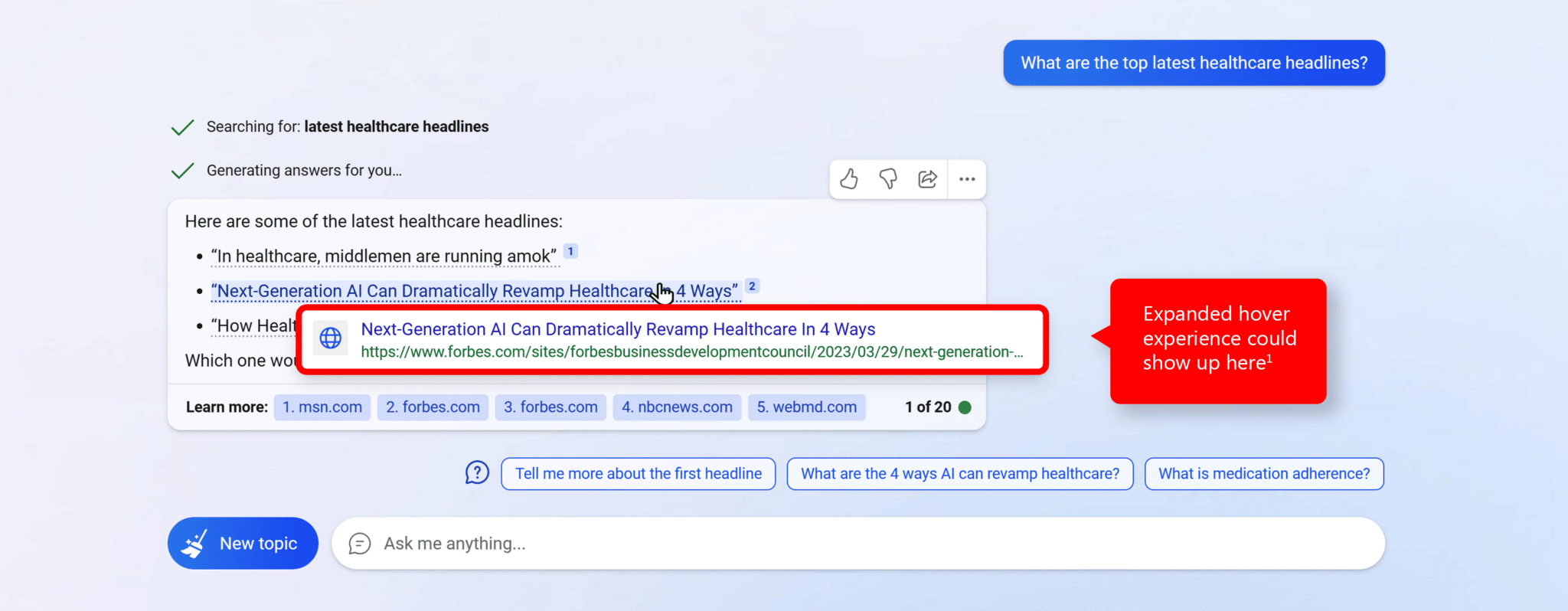
- An “expanded hover experience” where hovering over a link from a publisher will display more links from that publisher, increasing user engagement and driving more traffic to the publisher’s website.
- A “rich caption” beside the chat answer helping to drive more user engagement with the content on Microsoft Start. Users engaging with content on Start will be the catalyst for sharing ad revenue with partners.
Start participation is ‘limited’
Start “participation is limited right now while this program is in beta,” Mehdi wrote. It’s been in beta for 18 months. Publishers/bloggers can apply if they meet these criteria:
- Are based in the U.S., Germany, Spain, France or Italy.
- Post frequently and have an “active content site.”
- Bloggers/non-news content producers generally need to produce five articles or more per month.
- News publishers need to produce a minimum of 10 articles per day, including live/breaking coverage.
- All must use WordPress, Substack, or Medium – or have a website that generates an RSS feed.
- Fiction isn’t permitted.
As for benefits? Microsoft says Start has “millions” of daily users, so it’s good for brand building. You can also earn ad revenue from your content and reader gratuities.
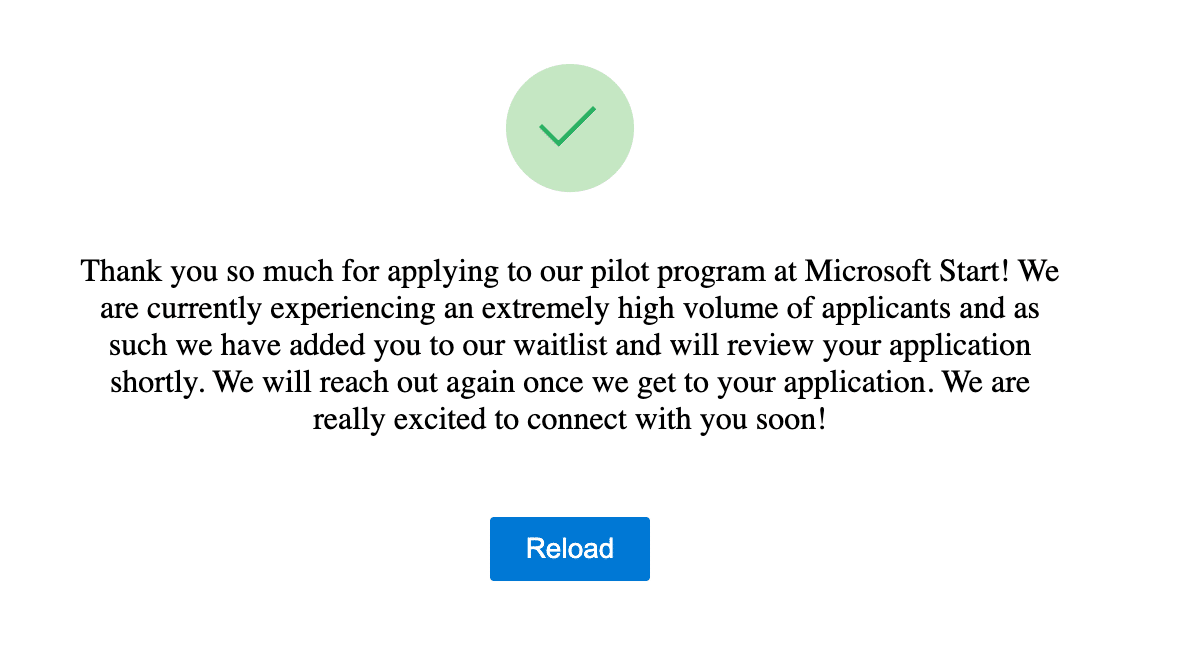
This is the message we received after filling out the “Start” application.
Paying publishers: The Facebook experience
Facebook dabbled with paying news publishers from 2019 to 2022.
The company shelled out more than $100 million to publishers including “more than $15 million to the Washington Post, just over $20 million to the New York Times, and more than $10 million to The Wall Street Journal,” according to a June 2022 WSJ article.
Meta stopped paying U.S. publishers in July 2022, after deciding to diminish the prominence of news in members’ newsfeeds.
Why we care
Microsoft has boldly stated its ambition to double the sales of its ad business to $20 billion in the next several years. Clearly, the company is betting on generative AI to play a role in its ascendance.
Microsoft also knows that it can’t do it alone, and is trying to convince publishers that its vision of a win-win publishing ecosystem will materialize.
At this early stage, who’s to say the brain trust in Redmond is incorrect?
It’s clear that traffic-hungry content creators have to go along with the ride for now. There is no alternative. (Although doubling down on building brand and non-mediated channels like email are wise investments.)
It’s heartening to see Microsoft acknowledge that publishers should be compensated for fueling new Bing, but we’re looking for more transparency on the Start program.
We understand that managing Start is an enormous task, even for a company of Microsoft’s resources. Microsoft’s minimum obligation should be to tell aspiring Start participants more about it. Here are some examples:
- How many applications are being approved each month?
- How many program participants do you expect by the end of this year? 2024?
- Are you committed to publishing a roadmap for the program that informs participants and aspiring participants of plans and progress, e.g., how much traffic are you driving to member sites?
Finally, not mentioning Google’s silence on its vision for the future of content creators would be an omission. Consider it done.
The post Microsoft’s vision for a prosperous content ecosystem in a generative AI world appeared first on Search Engine Land.
Courtesy of Search Engine Land: News & Info About SEO, PPC, SEM, Search Engines & Search Marketing
Category seo news | Tags:
Social Networks : Technorati, Stumble it!, Digg, de.licio.us, Yahoo, reddit, Blogmarks, Google, Magnolia.
Conversational AI ‘absolutely’ coming to Google Search, says CEO Sundar Pichai
Written on April 7, 2023 at 2:08 am, by admin
Large language models (LLMs) will eventually be part of the Google search experience. We still don’t know when conversational AI will appear in Search, but Google CEO Sundar Pichai promises it’s coming.
Why we care. The new BingGPT search with integrated AI chat generated a lot of excitement, but so far has only resulted in small gains in search engine market share. The biggest questions we’re all waiting to find out the answers to when Google deploys AI-powered chat into search:
- How much of an impact will it have on the amount of organic traffic Google sends?
- Will it impact the ROI for the brands and organizations who use Google Ads?
What he’s saying. “Will people be able to ask questions to Google and engage with LLMs in the context of search? Absolutely,” Pichai said in an interview with The Wall Street Journal.
Also of note: Google is “testing several new search products, such as versions that allow users to ask follow-up questions to their original queries,” according to Pichai.
Chatbots are an opportunity. Search ads generated $162 billion in revenue for Google in 2022. There has been lots of speculation about whether chatbots and generative AI pose a legitimate threat to Google’s core search business. Pichai downplayed any threat, saying:
- “The opportunity space, if anything, is bigger than before.”
The bigger picture. We’ve known since January that Google had plans to debut chatbot features within search. We got our first look at those with the preview of Bard on Feb. 6.
This is when the confusion began. Google has since tried to make clear that Bard is not search – Bard is a standalone, generative AI product like ChatGPT.
However, at the same time Google announced Bard, Google previewed what its AI-generated answers would look like in search. Not surprisingly, Bard became short-hand for these new AI chat features. As a reminder, here’s what those might look like:
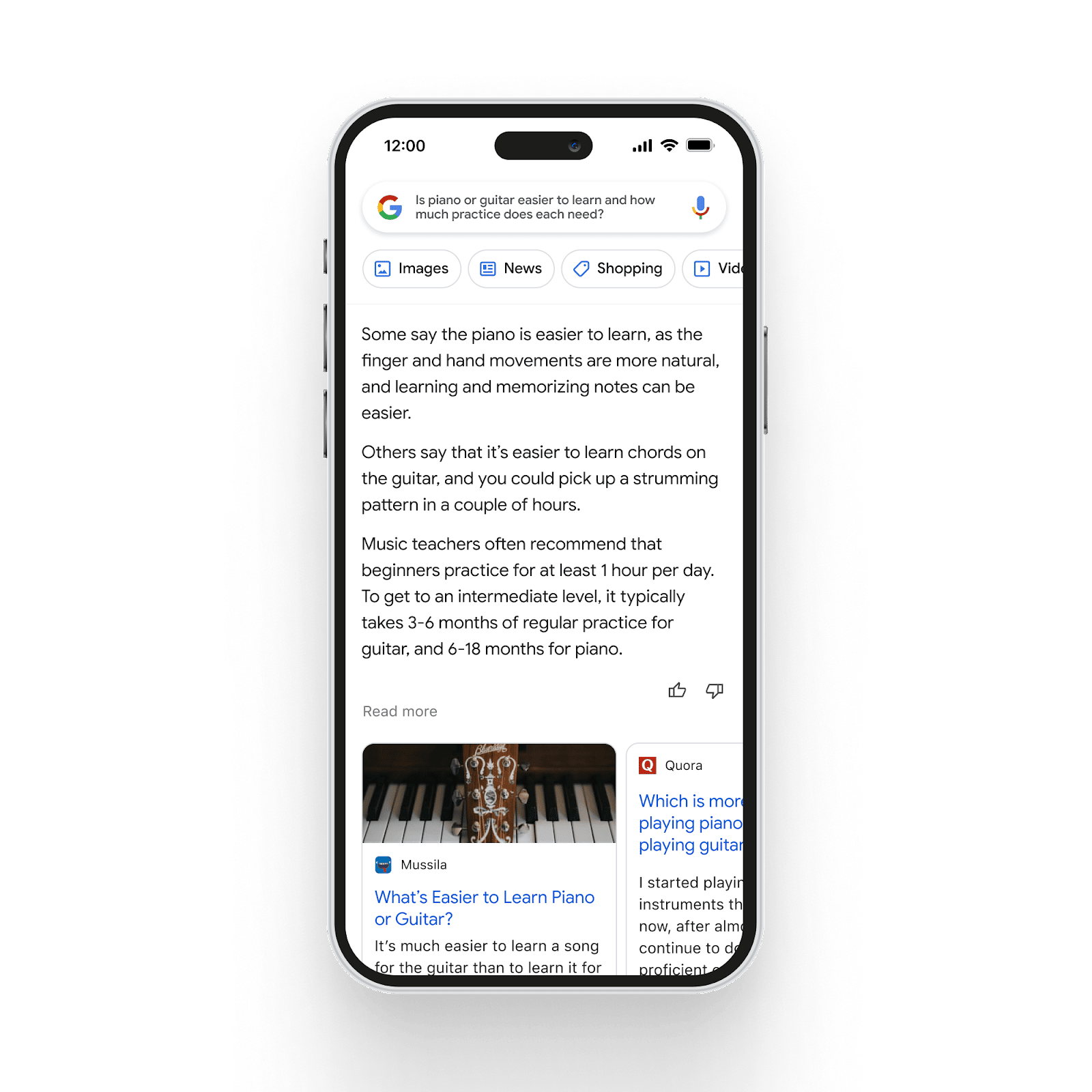
Google is “committed to getting it right with the publisher ecosystem.” Meanwhile, in a separate interview, Pichai was recently asked a question by Casey Newton that several digital publishers have been eagerly wanting an answer to:
“Today, lots of digital publishers rely on the traffic they get from Google. They get ad impressions. That pays their bills. When Bard is at its best, it answers my questions without me having to visit another website. I know you’re cognizant of this. But man, if Bard gets as good as you want it to be, how does the web survive?”
– New York Times podcast, Google C.E.O. Sundar Pichai on Bard, A.I. ‘Whiplash’ and Competing With ChatGPT
Pichai’s answer:
“I think through our work across, I think we’ll be committed to getting it right with the publisher ecosystem. In search today, while these things are contentious, in search, we take pride, it’s one of the largest sources of traffic. If I look at it year-on-year, the traffic we send outside has only grown. That’s what we’ve accomplished as a company.
Part of the reason we are also being careful with things like Bard, amongst many reasons, we do want to engage with the publisher ecosystem, not presume how things should be done. And so you will see us thoughtfully evolve there as well.”
That doesn’t read like Pichai has any answers right now. Meanwhile, Microsoft is discussing ad revenue sharing – at least with some publishers.
The post Conversational AI ‘absolutely’ coming to Google Search, says CEO Sundar Pichai appeared first on Search Engine Land.
Courtesy of Search Engine Land: News & Info About SEO, PPC, SEM, Search Engines & Search Marketing
Category seo news | Tags:
Social Networks : Technorati, Stumble it!, Digg, de.licio.us, Yahoo, reddit, Blogmarks, Google, Magnolia.