

Universal Analytics dies aged 11: ‘Be brave and be strong’
Written on July 1, 2023 at 4:11 pm, by admin
Universal Analytics, a platform beloved (or at least tolerated) by marketers, died today (July 1) after 11 years.
Although the digital marketing industry had been warned that Google was preparing to turn off its life support, the news has still somehow come as a shock to many.
Heartbroken marketers across the world have been flooding Twitter to pay their respects, with some even holding their own funerals.




Google Analytics was born in November 2005 after Urchin was acquired by Google and became a free service.
Seven years later, the search engine welcomed Universal Analytics into the world – a service that would go on to revolutionise the digital marketing industry.
The platform went on to grow from strength to strength and quickly became the most used web analytics service on Earth thanks to its many key benefits such as offline conversions and flexible session and campaign timeout settings.
Sadly, in March 2022, Google broke the hearts of advertisers in every corner of the globe when it announced that Universal Analytics would be departing our lives forever.
Russell Ketchum, director, product management at Google, fought back tears as he broke the jaw-dropping news:
- “Universal Analytics was built for a generation of online measurement that was anchored in the desktop web, independent sessions and more easily observable data from cookies.”
- “This measurement methodology is quickly becoming obsolete.”
Universal Analytics will be remembered for its user-friendly interface, easily accessible, up-to-date, accurate data, as well as its glorious reporting.
UA leaves behind Google Analytics 4, a replacement tool that marketers just seem to absolutely adore.
Share your stories, memories and the fun times you had with our departed friend by tweeting us @searchengineland.
Rest in peace, Universal Analytics. You were good to us.
Universal Analytics: 2012-2023.
The post Universal Analytics dies aged 11: ‘Be brave and be strong’ appeared first on Search Engine Land.
Courtesy of Search Engine Land: News & Info About SEO, PPC, SEM, Search Engines & Search Marketing
Category seo news | Tags:
Social Networks : Technorati, Stumble it!, Digg, de.licio.us, Yahoo, reddit, Blogmarks, Google, Magnolia.
Universal Analytics is officially replaced by Google Analytics 4
Written on July 1, 2023 at 4:11 pm, by admin
Well, it’s finally happening – the dreaded Universal Analytics sunset has started.
Here in the United States, UA is still processing data, but we were greeted by an ominous message when we logged into our account this morning:
- “This property is scheduled to stop processing data very soon. Once this goes into effect, you’ll need a Google Analytics 4 property to measure website performance.”
This warning started appearing on UA at around 7am EST, once again reminding marketers that they must migrate to Google Analytics 4 to maintain their website measurement.

Why we care. Today’s forced migration to GA4 is a historic transitional moment in digital marketing. Advertisers now have no choice but to use GA4 if they to track the performance of their websites and campaigns – unless they want to find an analytics alternative outside of Google of course.
How it works. Google has advised that today’s UA shutdown is being rolled out in stages which is why some marketers may still be able to access certain data. However, all properties that are still functioning are in a queue to be deleted, which will be happening on a rolling bases.
What has Google said? Google has been warning marketers that they need to migrate over to GA4 for more than a year. On Twitter and via a statement on the Analytics Help Center, Google said:
- “Today, we begin shutting down Universal Analytics as we welcome you to Google Analytics 4.
- “This will not happen overnight, so some Universal Analytics properties may continue to process data.
- “However, all properties have now been added to the queue, and those that have not completed the upgrade will Jumpstart on a rolling basis.”
- Google Analytics 4 is our next-generation measurement solution, and it has replaced Universal Analytics.”
- “Standard Universal Analytics properties have stopped processing new data. To maintain your website measurement, you’ll need a Google Analytics 4 property.
- “We strongly encourage you to make the switch to Google Analytics 4 as soon as possible. If you use Universal Analytics data in your Google Ads account, make sure you migrate your Universal Analytics property’s Google Ads links to your Google Analytics 4 property.
Get the daily newsletter search marketers rely on.
<input type=”hidden” name=”utmMedium” value=”“>
<input type=”hidden” name=”utmCampaign” value=”“>
<input type=”hidden” name=”utmSource” value=”“>
<input type=”hidden” name=”utmContent” value=”“>
<input type=”hidden” name=”pageLink” value=”“>
<input type=”hidden” name=”ipAddress” value=”“>
Processing…Please wait.
Timeline. The shutdown of Universal Analytics is being rolled out the following stages, with the final phase set for July 2023:
- March 2023: Google automatically created a GA4 property for marketers who didn’t opt out of the automatic property creation option. Where possible, existing site tags were used.
- July 2023: UA stops processing hits, including standard properties in accounts that also contain 360 properties. Marketers still have access to previously processed data in their UA property until July 2024.
- July 2024: All marketers, even those with 360 properties, will no longer have access to the UA user interface and API.
Deep dive: For more information on how to migrate to GA4, read Google’s ‘Learn how to make the switch‘ guide.
The post Universal Analytics is officially replaced by Google Analytics 4 appeared first on Search Engine Land.
Courtesy of Search Engine Land: News & Info About SEO, PPC, SEM, Search Engines & Search Marketing
Category seo news | Tags:
Social Networks : Technorati, Stumble it!, Digg, de.licio.us, Yahoo, reddit, Blogmarks, Google, Magnolia.
GA4 readiness: 23% have fully adopted, 50% still learning, 16% yet to begin
Written on June 30, 2023 at 1:08 pm, by admin
In just 48 hours we received around 400 responses to our poll question about Google Analytics 4.
With the standard version of Universal Analytics sunsetting tomorrow (July 1), we asked you:
What level of readiness are you (and/or your team) at when it comes to switching to GA4 from Universal Analytics?
Despite plenty of frustration:
- Almost a quarter of respondents said they have fully implemented and already are using GA4.
- Just over half said they had implemented it but were still learning how to use it.
- Almost 16% have it set up but have not started using it.
The takeaway from those statistics: more than 90% of our joint readership is aboard the GA4 train, for better or worse.
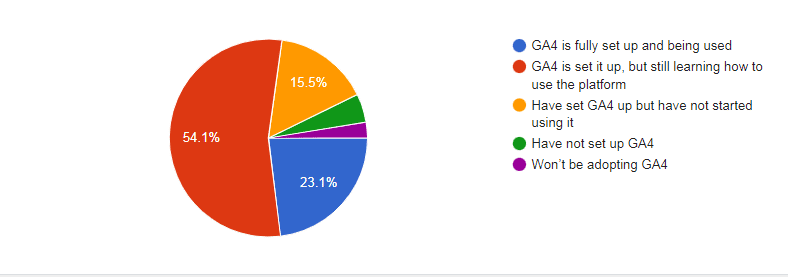
- Only 2.6% of respondents said they had no plans to use GA4.
- 4.6% have just not set it up yet.
Why we care. At first glance, this looks like a vote of confidence in Google’s analytics strategy. After all, there are plenty of alternatives to GA4. But it’s not that simple.
Rightly or wrongly, it’s possible to adopt a tool even though you really don’t like it.
“An unfinished product rushed to market.”
“It’s not that the masses aren’t ready for GA4, it’s that GA4 isn’t ready for the masses. The UI is terrible.”
“Terrible UI, terrible reporting.”
Selected comments from poll respondents.
We might need to wait a while to see if people can make GA4 work for them or if frustrations with it start to make the alternatives look more attractive.
The post GA4 readiness: 23% have fully adopted, 50% still learning, 16% yet to begin appeared first on Search Engine Land.
Courtesy of Search Engine Land: News & Info About SEO, PPC, SEM, Search Engines & Search Marketing
Category seo news | Tags:
Social Networks : Technorati, Stumble it!, Digg, de.licio.us, Yahoo, reddit, Blogmarks, Google, Magnolia.
YouTube stops playing videos for people with ad blockers in new trial
Written on June 30, 2023 at 1:08 pm, by admin
YouTube is disabling videos for people using ad blockers as part of a new trial.
The social media platform is asking users to either turn ad blockers off or pay £11.99 a month for YouTube Premium if they want access to its extensive video library.
Why we care. If this trial is expanded to the general population, all YouTube users, who want to continue watching videos for free, will be forced into allowing ads to play. This is great news for marketers as it will increase reach for campaigns, which ultimately, could result in more conversions.
How it works. Right now, the trial is being tested on a small group of people around the world that have ad blockers enabled. When they sign in to watch content, all videos will be blocked unless they either change their settings to disallow ad blocker or they sign up for YouTube Premium.
Get the daily newsletter search marketers rely on.
<input type=”hidden” name=”utmMedium” value=”“>
<input type=”hidden” name=”utmCampaign” value=”“>
<input type=”hidden” name=”utmSource” value=”“>
<input type=”hidden” name=”utmContent” value=”“>
<input type=”hidden” name=”pageLink” value=”“>
<input type=”hidden” name=”ipAddress” value=”“>
Processing…Please wait.
What has YouTube said? Oluwa Falodun, a spokesperson for Google, told The Verge in a statement:
- “Ad blocker detection is not new, and other publishers regularly ask viewers to disable ad blockers.”
- “We take disabling playback very seriously, and will only disable playback if viewers ignore repeated requests to allow ads on YouTube.”
- “In cases when viewers feel they have been falsely flagged as using an ad blocker, they can share this feedback by clicking on the link in the prompt.”
- “We want to inform viewers that ad blockers violate YouTube’s Terms of Service, and make it easier for them to allow ads on YouTube or try YouTube Premium for an ad free experience,”
Why now? YouTube has said that it is taking these measures to ensure that its content creators are compensated for their work. “YouTube’s ad-supported model supports a diverse ecosystem of creators, and provides billions of people globally access to content for free with ads,” the company said in a statement.
Deep dive: For more information on YouTube’s ad policy, you can visit the YouTube Advertising hub.
The post YouTube stops playing videos for people with ad blockers in new trial appeared first on Search Engine Land.
Courtesy of Search Engine Land: News & Info About SEO, PPC, SEM, Search Engines & Search Marketing
Category seo news | Tags:
Social Networks : Technorati, Stumble it!, Digg, de.licio.us, Yahoo, reddit, Blogmarks, Google, Magnolia.
Buy on Google program to shut down Sept. 26
Written on June 29, 2023 at 10:08 am, by admin
Buy on Google for Search and Shopping will shut down Sept. 26, the company announced today via an email sent to participating retailers.
Why we care. Google says it is dropping Buy on Google to create a new “streamlined buying journey for shoppers” that makes it easier for retailers to sell on Google and YouTube.
What Google is saying. A Google spokesperson told Search Engine Land:
- “Our goal is to support an open ecosystem by connecting shoppers directly with merchants, and this is a big priority for us. We developed a new streamlined checkout process that allows shoppers to go directly from Google to the checkout flow on a merchant’s website when they’re ready to buy. We’ve received great feedback from merchants and users. Buy on Google was a small feature that a very limited number of merchants used, so we’re investing in this new buying experience instead.”
New pilot. We’re told that more merchants are already using Google’s new checkout pilot than Buy on Google. Google has created a new form if you’re interested in the new checkout pilot.
Here’s what we know about Google’s plan for a “more streamlined buying journey for shoppers,” according to this page:
- “Instead of a multi-step buying journey, people who are ready to buy will now have the option to go directly from Google to the checkout flow on your website. Once there, they will see the chosen product already in their shopping cart and can checkout on your site with whatever payment method they select. We will be piloting this experience on Google and YouTube with select merchants and will share more information as we’re ready to take on additional partners.”
The email. Here’s a copy of an email Google is sending to merchants today:
Building great checkout experiences is something we’re focused on, and are always evolving. We’re writing to inform you that, as of September 26, 2023, the current Buy on Google program will be ending in the United States. We have some new channels that we’re excited to be testing (more info below), however, we wanted to share some key details about Buy on Google.
- Your participation in Buy on Google will end on September 26, 2023 and no listings on Search or Shopping will show the Buy on Google option. If you are currently onboarding, you will be removed from the process today.
- All orders received through September 2023 should be fulfilled with return policies honored, regardless of program termination.
- You have the option to terminate your participation in the program sooner than September if you feel this choice is more beneficial for your business. Please reach out to support for assistance with doing this.
- Order data will be available for one year post program ending. You can access your reports via the instructions here.
- No action is required from you to end the program.
We will continue to introduce new ways to optimize the way users navigate to checkout on our platforms, and look forward to continued engagement with our retail partners on other products such as our new checkout pilot and all other areas of collaboration through our tools, insights and training.
We’re excited about the streamlined checkout experience we introduced last year, wherein consumers who are ready to buy will have the option to go directly from a listing on Google to the checkout flow on your website. Once there, they will see the chosen product already in their shopping cart and can checkout on your site with whatever payment method they select. *Merchants using the new Google checkout feature see an improvement in gross merchandise value (GMV) between 1-10%
- *Source: Google Data, US, Retail, March 2023. [Caveat: Data pulled for existing pilot merchants]
Learn More:
- If you are interested in joining the checkout pilot, please complete the interest form here.
- Please note, if you are selected to join the checkout pilot ahead of September, any current Buy on Google experiences you have running will stop showing effective immediately.
- For those not selected to participate in the pilot, we will reach out to you once the solution is more widely available so you can onboard then!
For any questions or support regarding terminating your participation, please contact our support team or reach out to your Google contact.
The post Buy on Google program to shut down Sept. 26 appeared first on Search Engine Land.
Courtesy of Search Engine Land: News & Info About SEO, PPC, SEM, Search Engines & Search Marketing
Category seo news | Tags:
Social Networks : Technorati, Stumble it!, Digg, de.licio.us, Yahoo, reddit, Blogmarks, Google, Magnolia.
Bing adds new AI-powered shopping tools
Written on June 29, 2023 at 10:08 am, by admin
Microsoft has announced new AI-powered shopping tools powered by Bing and Bing Chat. These include new price match monitors, AI-generated buying guides, and review summaries, all aimed to “help you shop and save with confidence,” Microsoft said.
Price match monitors. These new price match monitors show you a product’s price after you purchase that product. This is so you can request a pricing match from the store you bought it from if that price changes after you ordered it.
Microsoft said they have “partnered with top US retailers with existing price match policies and will be adding more over time.” This is launching in the US search results soon, Microsoft told us.
Here is a video of how Bing’s sidebar shows you the price history over time and also alerts you after the price drops:
Buying guides. Bing now uses AI to generate buying guides based on the product or category of products that you are researching. The AI-generated buying guides will also provide you with product suggestions, show you the specifications of those items side-by-side and potentially offer other smarter comparison interfaces to help you along your buying journey.
These buying guides will launch in Bing in the US today and in the Edge browser worldwide today.
Here is a video of those buying guides in action:
Review summaries. Bing will also give you review summaries if you ask for them in Bing Chat or the Edge sidebar. The review summaries will summarize what customers are saying online about the product you are researching. It will also use AI to generate top insights and popular opinions about the products.
This rolls out worldwide today across Bing.
Here is what it looks like:

Here is a video of it in action:
Why we care. It is fascinating to watch how Bing Chat and other AI-based search features are expanding, getting more useful and being more human-like. Clearly, if you are a retailer, getting your products into Bing Shopping is important here. But what opinions and summaries the AI-generates also will be interesting to follow.
The post Bing adds new AI-powered shopping tools appeared first on Search Engine Land.
Courtesy of Search Engine Land: News & Info About SEO, PPC, SEM, Search Engines & Search Marketing
Category seo news | Tags:
Social Networks : Technorati, Stumble it!, Digg, de.licio.us, Yahoo, reddit, Blogmarks, Google, Magnolia.
GA4 for B2B: How to track events and conversions
Written on June 29, 2023 at 10:08 am, by admin
Starting July 1, Universal Analytics will no longer collect data. B2B companies looking to track their web or app performance must use Google Analytics 4 (GA4).
GA4 provides extensive capabilities for visualizing and analyzing data.
To avoid being overwhelmed by the abundance of data, it is crucial to fully understand the tool and determine key metrics for your business. This ensures effective measurement of web traffic in GA4.
This guide explores how to set up and track events and conversions for B2B companies.
How to measure web traffic through GA4?
To properly analyze website traffic in GA4, the first thing to understand is GA4’s acquisition reports, which are divided into two main groups with different purposes:
- User acquisition report: This report provides insights into how users were acquired and captured for the first time on the website.
- Traffic acquisition report: This report operates at the session level and helps identify the campaign from which each session comes from.
Hence, companies, whether B2B, ecommerce or SaaS, can use these reports to analyze the sources of users or traffic on their websites.
However, the situation changes when you move on to the next report provided by GA4, the Engagement report, which enables you to analyze events and conversions.
By default, the tool offers a wide list of events on our website. While they may all look useful, not all are equally important.
So, how do you identify the most valuable events for B2B companies and properly measure them? Let’s find out.
How to track events and conversions in GA4 for B2B companies
Define key KPIs for your business
To effectively track the main conversions on a B2B website, the first step is to define the most relevant KPIs for the company.
Generally, the main conversions for B2B companies include:
- Form submissions (requests, budgets, etc.)
- Lead generation (newsletter subscriptions, calls, information requests, etc.)
- File downloads (handbooks, instructions, technical data sheets, etc.)
- Video reproductions (videos on machinery operation, maintenance, installation processes, etc.)
When visualizing the events or conversions report for the first time, you’ll notice that GA4 records different events.
However, none correspond to the defined KPIs for a B2B website.
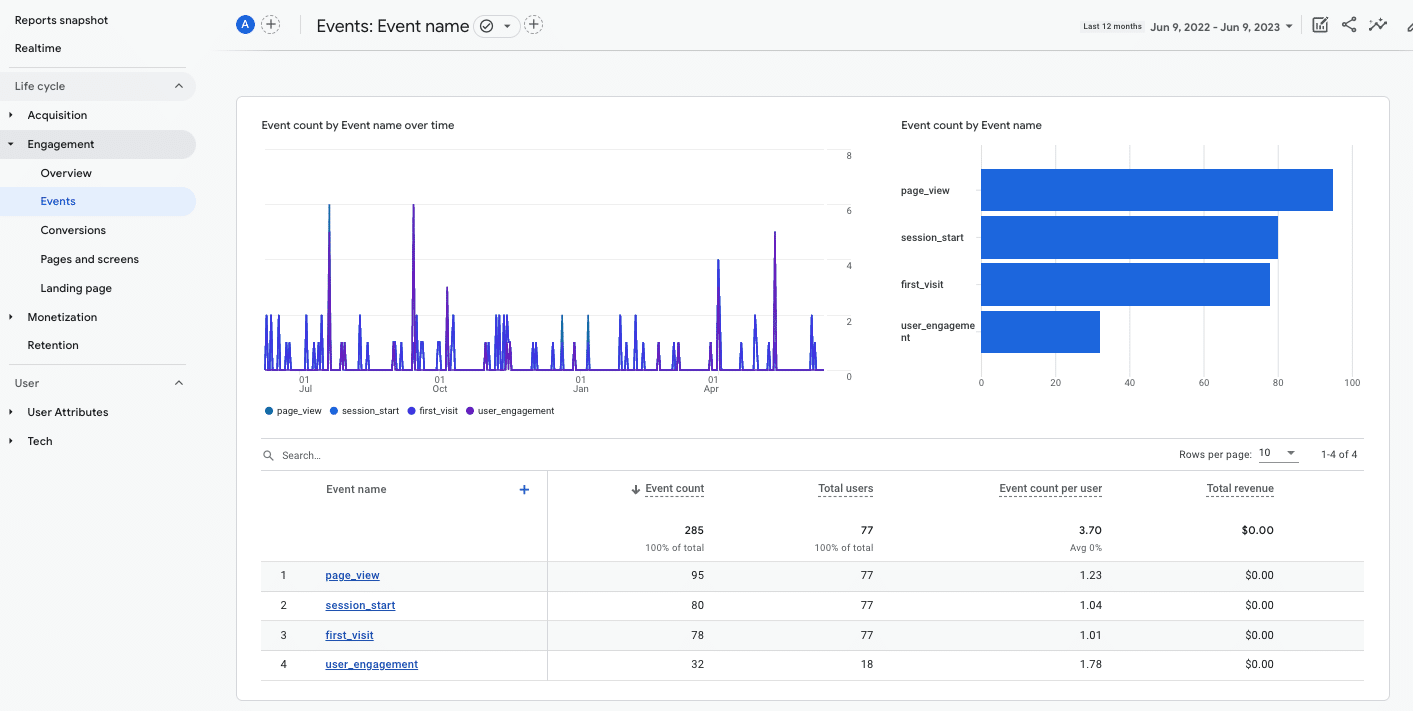
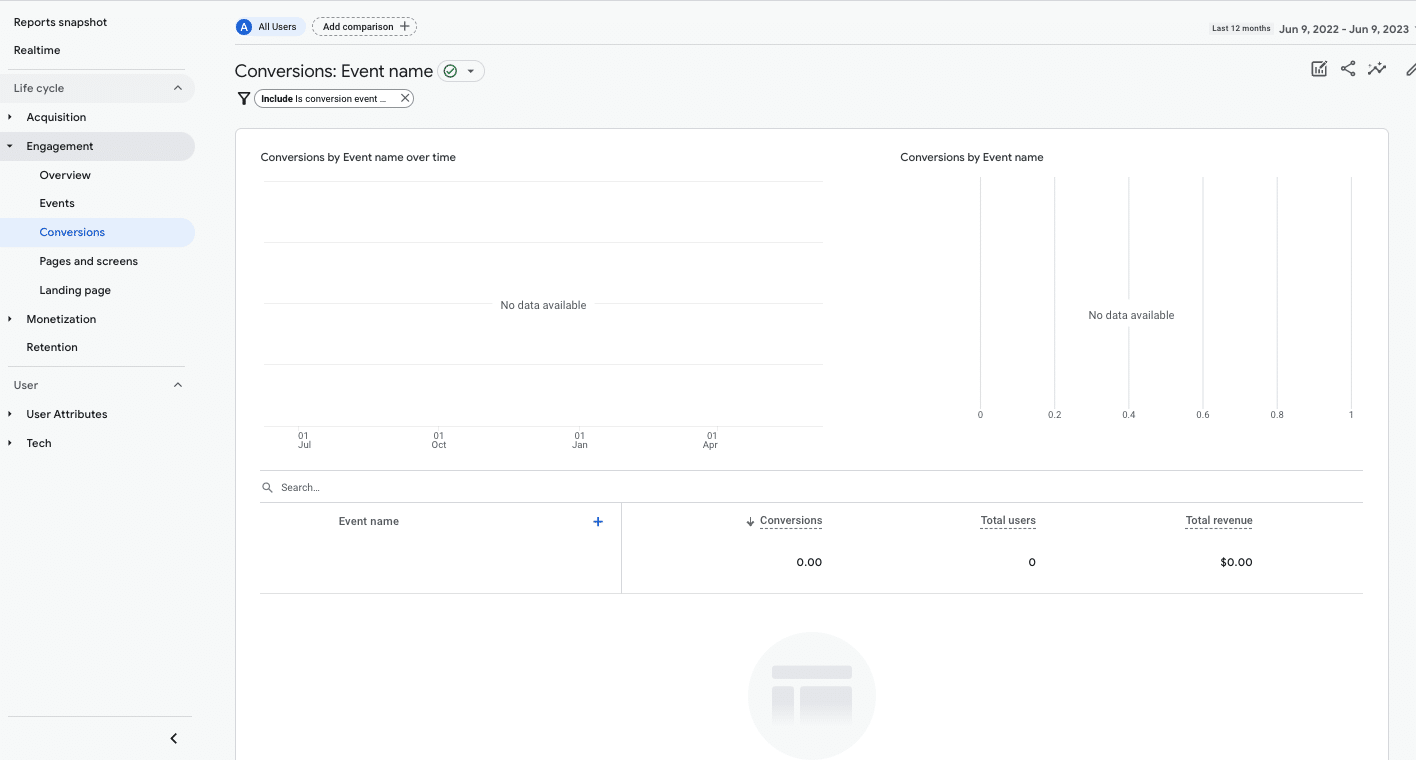
To track the main conversions for your B2B company, you need to identify each type of event and set it up.
GA4 event classification
In GA4:
- Events are the metrics that allow you to measure specific user interactions on a website, such as loading a page, clicking on a link or submitting a form.
- Conversions are the most important events for a website that you want to highlight.
There are four ways of classifying how to measure events in GA4:
- Events that are recorded automatically, which are subdivided into:
- Automatically collected events: Events that GA4 collects by default.
- Enhanced measurement events: When enhanced measurement is enabled, these events are automatically measured.
- Recommended events: Events you can implement yourself with predefined names and parameters. You will mostly do it through Google Tag Manager.
- Custom events: Events that are fully defined by the owner through Google Tag Manager.
It is best to follow the GA4 event classification guidelines to create your website’s own events. You can also create them in a recommended or customized way using Google Tag Manager.
Get the daily newsletter search marketers rely on.
<input type=”hidden” name=”utmMedium” value=”“>
<input type=”hidden” name=”utmCampaign” value=”“>
<input type=”hidden” name=”utmSource” value=”“>
<input type=”hidden” name=”utmContent” value=”“>
<input type=”hidden” name=”pageLink” value=”“>
<input type=”hidden” name=”ipAddress” value=”“>
Processing…Please wait.
From the KPI to the event: How to configure events in GA4 for B2B
Once you have defined the main KPIs for your B2B company, you need to identify the event to collect and learn how to set it up accurately.
Key events for B2B websites are not automatically triggered. They need to be tracked using GA4 and Google Tag Manager.
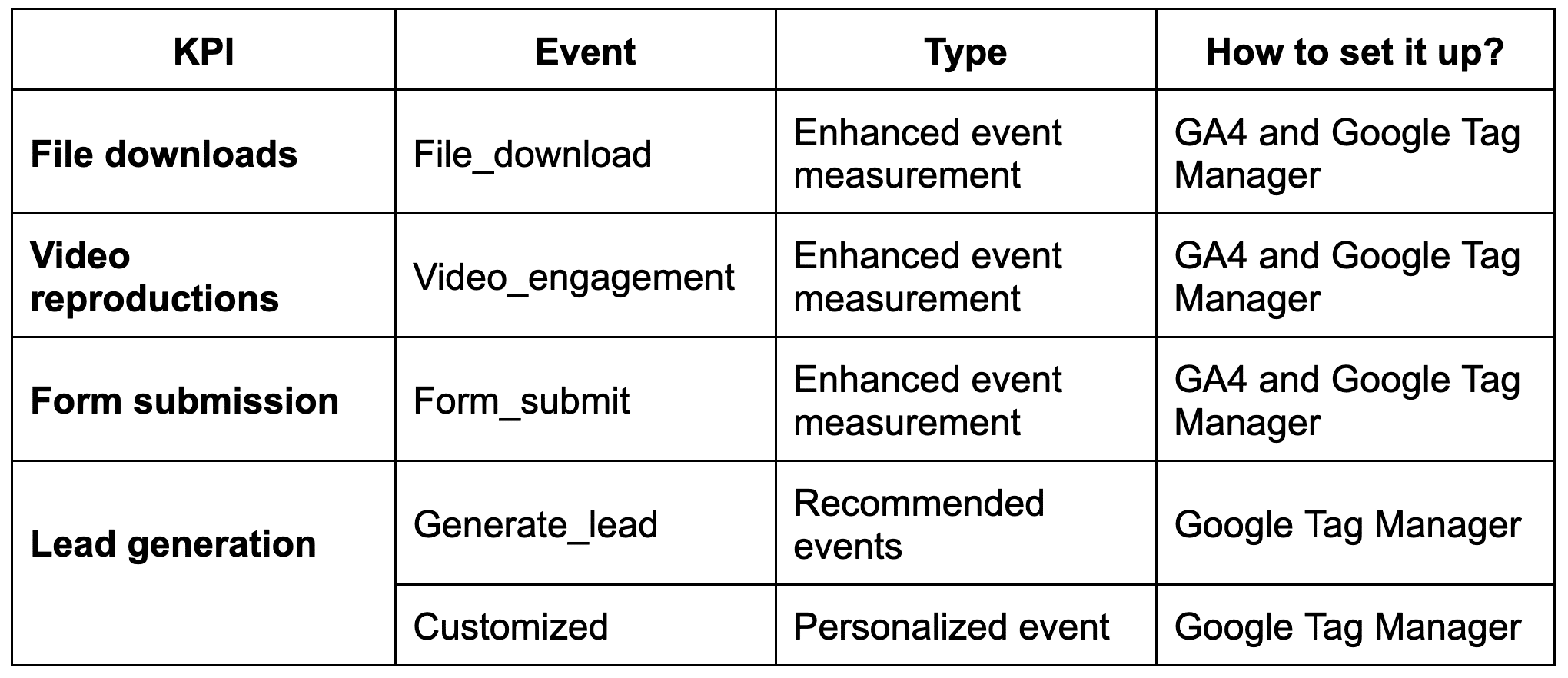
Let’s take a closer look at each one.
File downloads
Need to track when a user opens or downloads a file (such as a product manual or datasheet) from the website?
One of the best solutions is to use the enhanced measurement event called file_download.
This event is triggered when a user clicks a link to a file with common file extensions such as documents, text files, executables, presentations, compressed files, videos, or audios.
To activate this event, go to Admin > Data Streams, select the data, and enable Enhanced measurement.
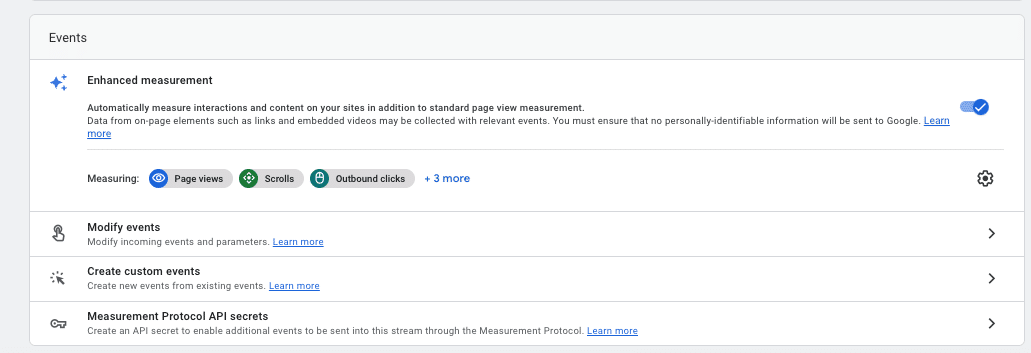
Then, check if the File downloads event is activated.

Google Analytics 4 triggers the file_download event when the clicked file extensions match the following regex:
pdf|xlsx?|docx?|txt|rtf|csv|exe|key|pp(s|t|tx)|7z|pkg|rar|gz|zip|avi|mov|mp4|mpe?g|wmv|midi?|mp3|wav|wma
To check if it is triggered correctly, go to DebugView (Admin > DebugView):

If the event is being tracked, everything works as intended.
You can now mark it as a conversion so that the results for this metric will appear in the events and conversions reports.
To mark the event as a conversion, go to Admin > Conversions.

After marking it as a conversion, when you validate using DebugView, the event will no longer appear in blue as a general event.
Instead, it will appear in green, indicating it has been marked as a conversion.

Triggering file download events via Google Tag Manager
The event may not be triggered correctly depending on the website’s CMS or how it is coded.
In such cases, you’ll need to create a trigger using Google Tag Manager. (You must have a Tag Manager account set up and linked to GA4.)
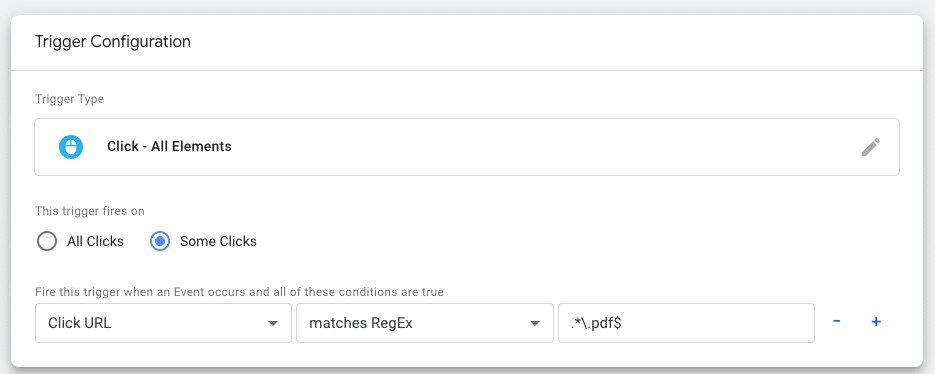
A trigger for when the file is clicked: You will configure the necessary parameters to track file downloads on our website.
For example, in the case of a PDF file, you can do it as in the following image:
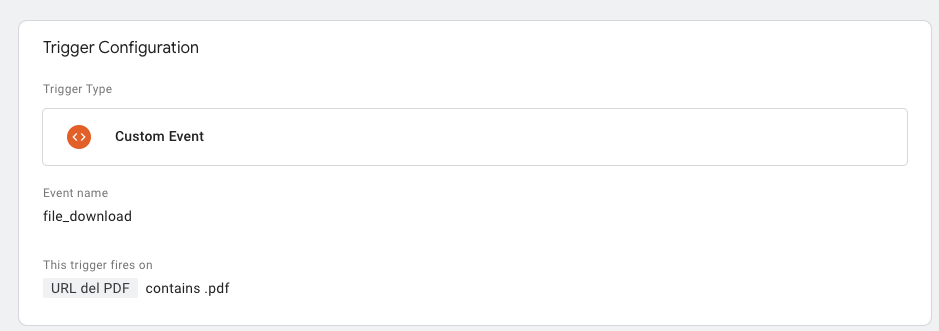
A customized trigger: If the previous method doesn’t work, you will create a custom event based on web insights. For instance:
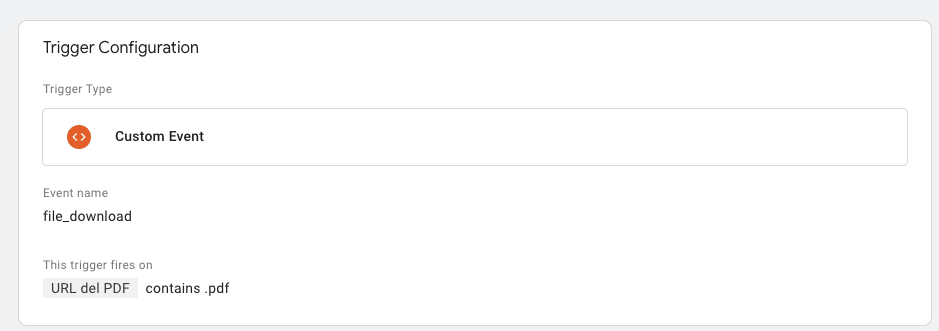
Finally, create the tag with the necessary parameters, either based on your own judgment or following GA4’s recommendations for this event.
Once the tag is created, analyze and verify that the event is correctly triggered.
This step ensures that the event tracking functions as expected and the data is accurately recorded.
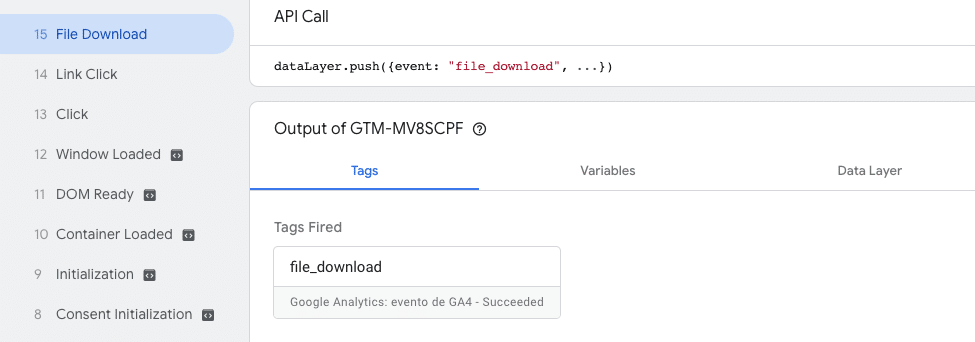
The parameters associated with the event will provide you with additional information about how users interact with the website through these events. It helps you gain insights into user behavior and engagement.
Every time you include events via Google Tag Manager, you must add them to GA4 through the Admin > Custom definitions section.
Video reproductions
Want to track interactions with videos on the site? You can use the video engagement event, which is also an enhanced measurement event.
This event is activated in phases:
- video_start: When the video starts playing.
- video_progress: When the video progresses past 10%, 25%, 50%, and 75% duration time.
- video_complete: When the video ends.
To set up the tracking, check if Enhanced measurement is enabled and ensure that the Video engagement event is enabled within it.

Next, verify if the tracking of the video engagement event is properly monitored and recorded.
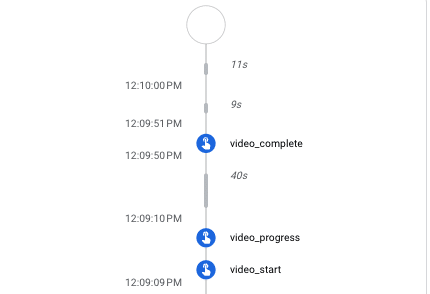
If it works successfully, activate it as a conversion.
However, if the data is not collected correctly, you need to trigger it via Google Tag Manager.
Form submission
To monitor form submissions, such as requests for quotations or to ask for more information, use the enhanced measurement event: form_submit.
Check if Form interactions is enabled in Enhanced measurement.

If it is being registered correctly via DebugView, you can configure it as a conversion.

Form submits via Google Tag Manager
If, for some reason, the event is not triggered, you can set it up through Google Tag Manager.
To do so, activate all the variables to collect the required data for forms.
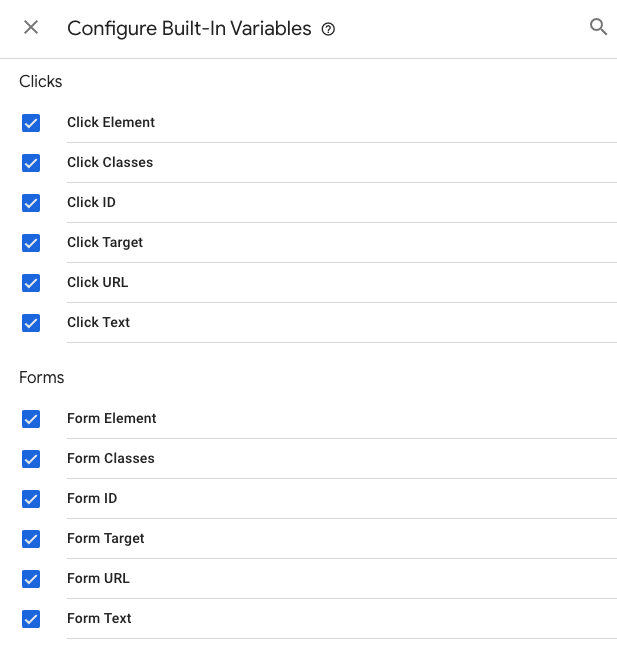
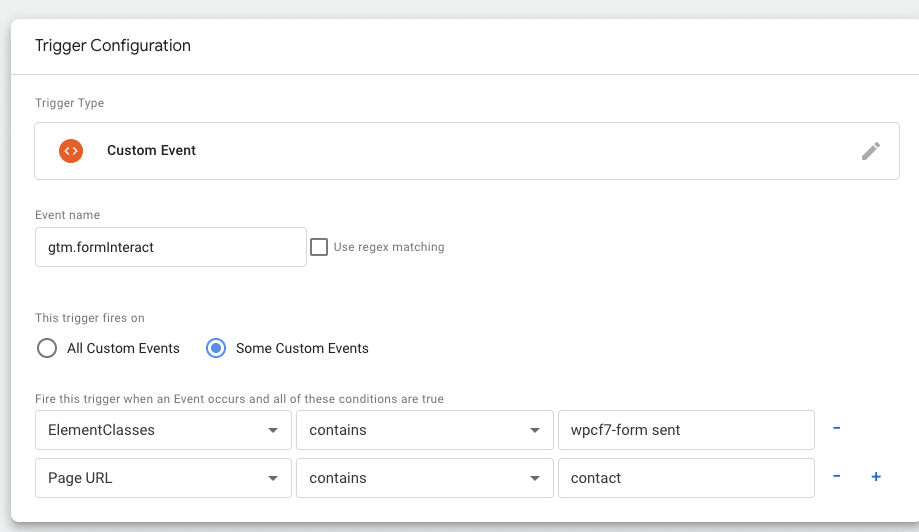
Then, create a general trigger for all forms in GTM. From here, you can generate tags and triggers either for all forms or specific to each form.
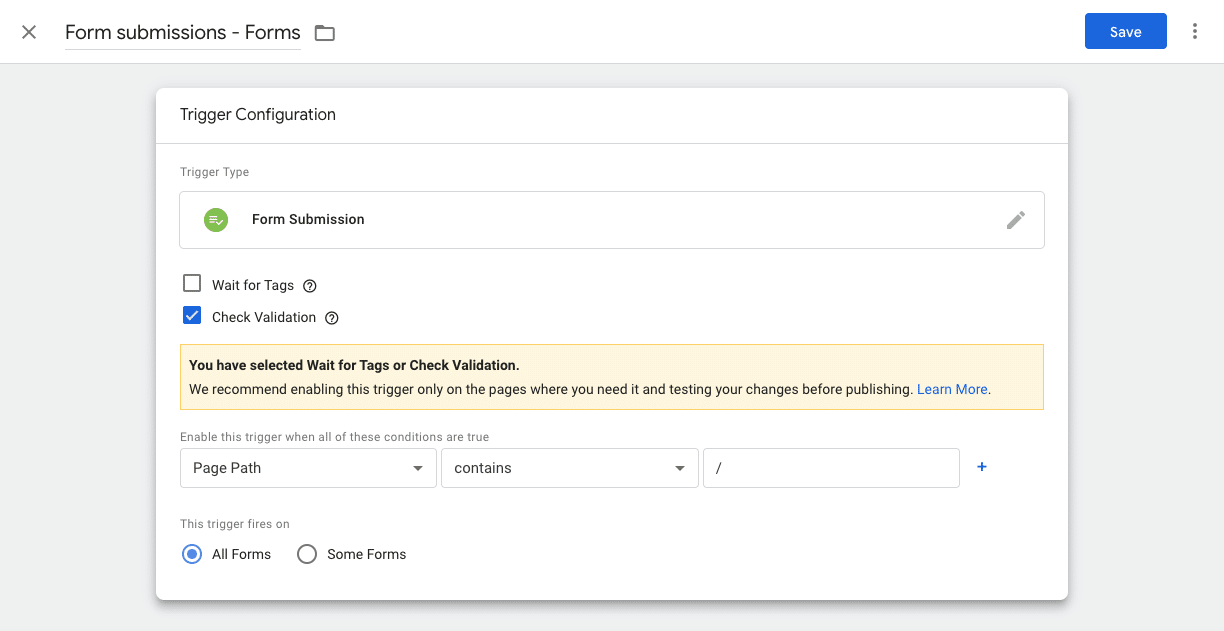
An example of a trigger configuration for a contact page form:
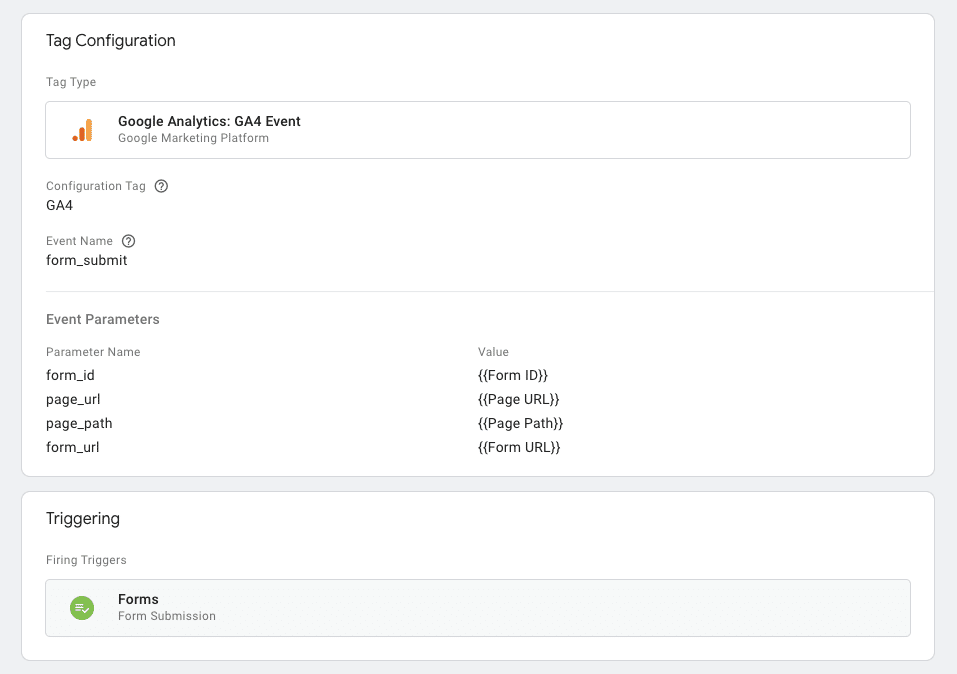
Once this is done, create the tag with the recommended parameters or whatever is necessary according to your goals:
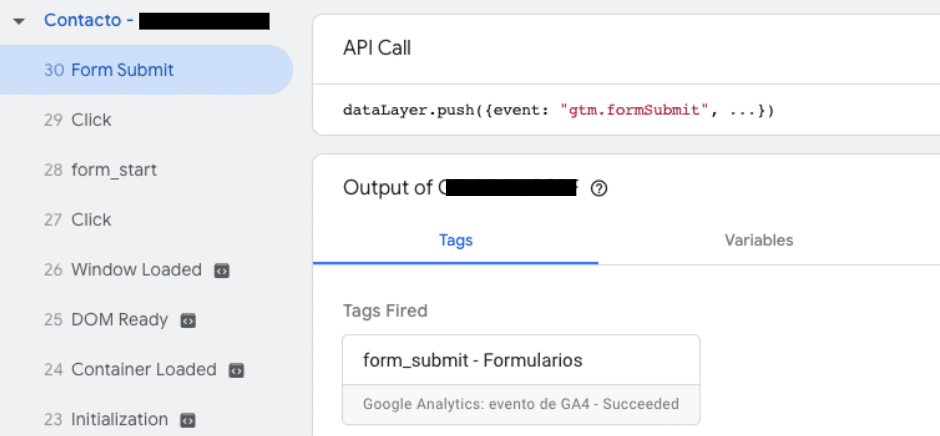
Finally, verify that the event is triggered.
Lead generation, calls and emails
As a B2B company, tracking various leads from calls, emails, or subscriptions to forms like newsletters are important.
GA4 does not define these events automatically. So, below are two ways to monitor these interactions on your website.
Generate_lead as recommended event
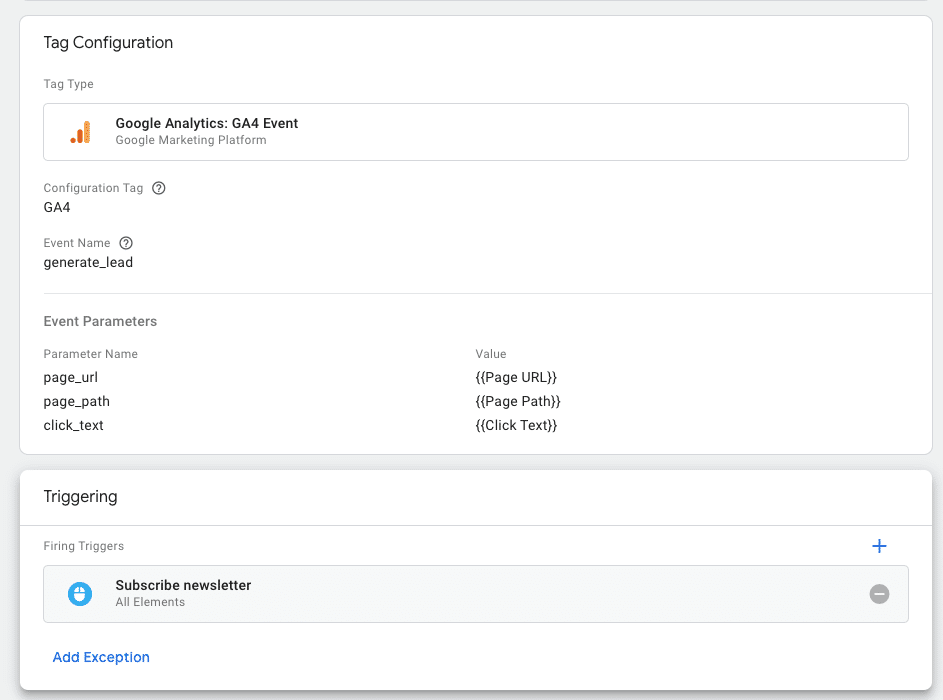
You can collect interactions such as newsletter form subscriptions using the recommended event generate_lead, which can be triggered when a user submits a form or a request for information.
To trigger it, in this case, the quickest recommended method is via Google Tag Manager.
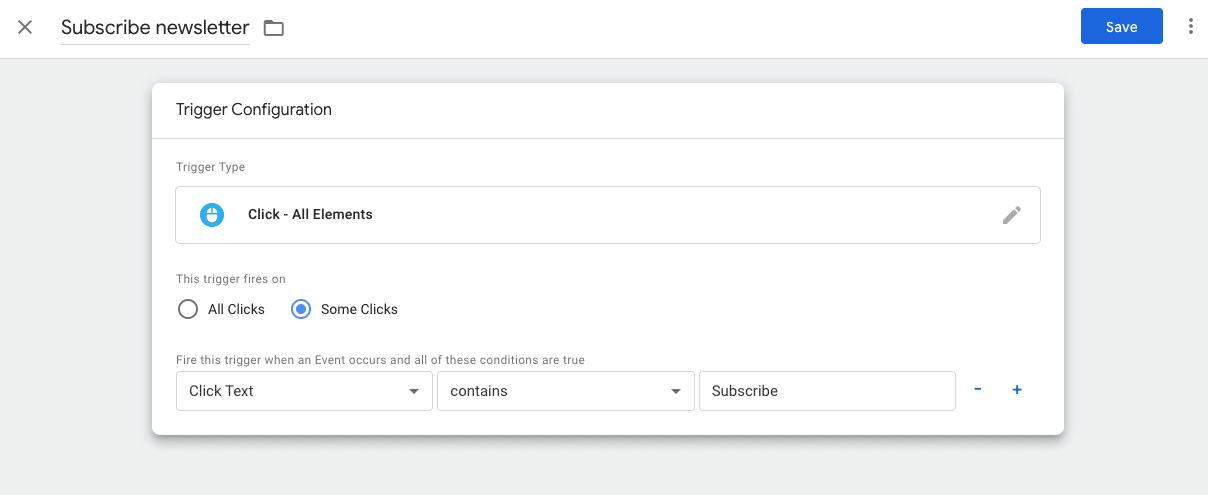
First, you need to create the trigger. For example, when a user subscribes to a newsletter:
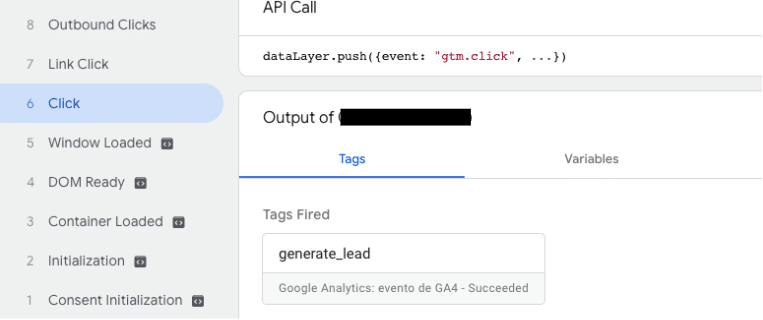
And then generate the tag and check that it is working:
Finally, check with DebugView that it is activated and flag it as a conversion. It may take a few hours for this option to appear.
Leads as custom events
However, suppose you don’t want to group subscriptions or other forms of requesting information with, for instance, calls or emails within the same analysis group. In that case, this can be done using custom events.
When naming the event, it’s ideal to make it similar to other events to simplify the data analysis. For example, when clicking on a phone to call, the event could be called click_phone.
To create this event, you would follow the same process as in the generate_lead, using Google Tag Manager.
First, create the trigger.
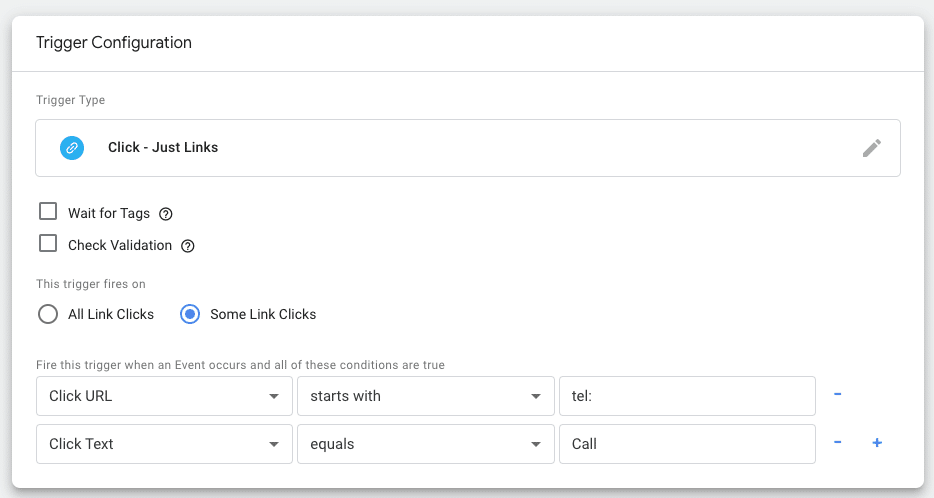
And then, set up the tag:
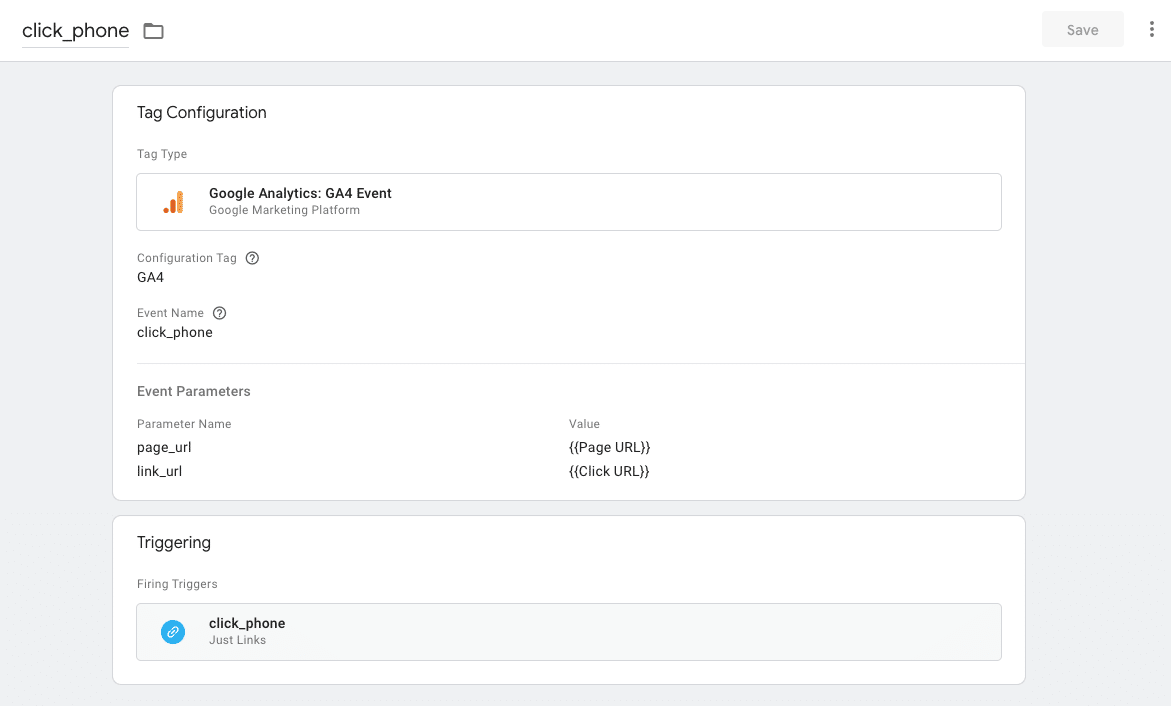
How to visualize the data?
Collecting key metrics for B2B websites is crucial, but it’s also important to visualize them quickly.
To visualize the generated conversions, go to Reports > Engagement > Conversions or create customized reports through the GA4 Exploration section.
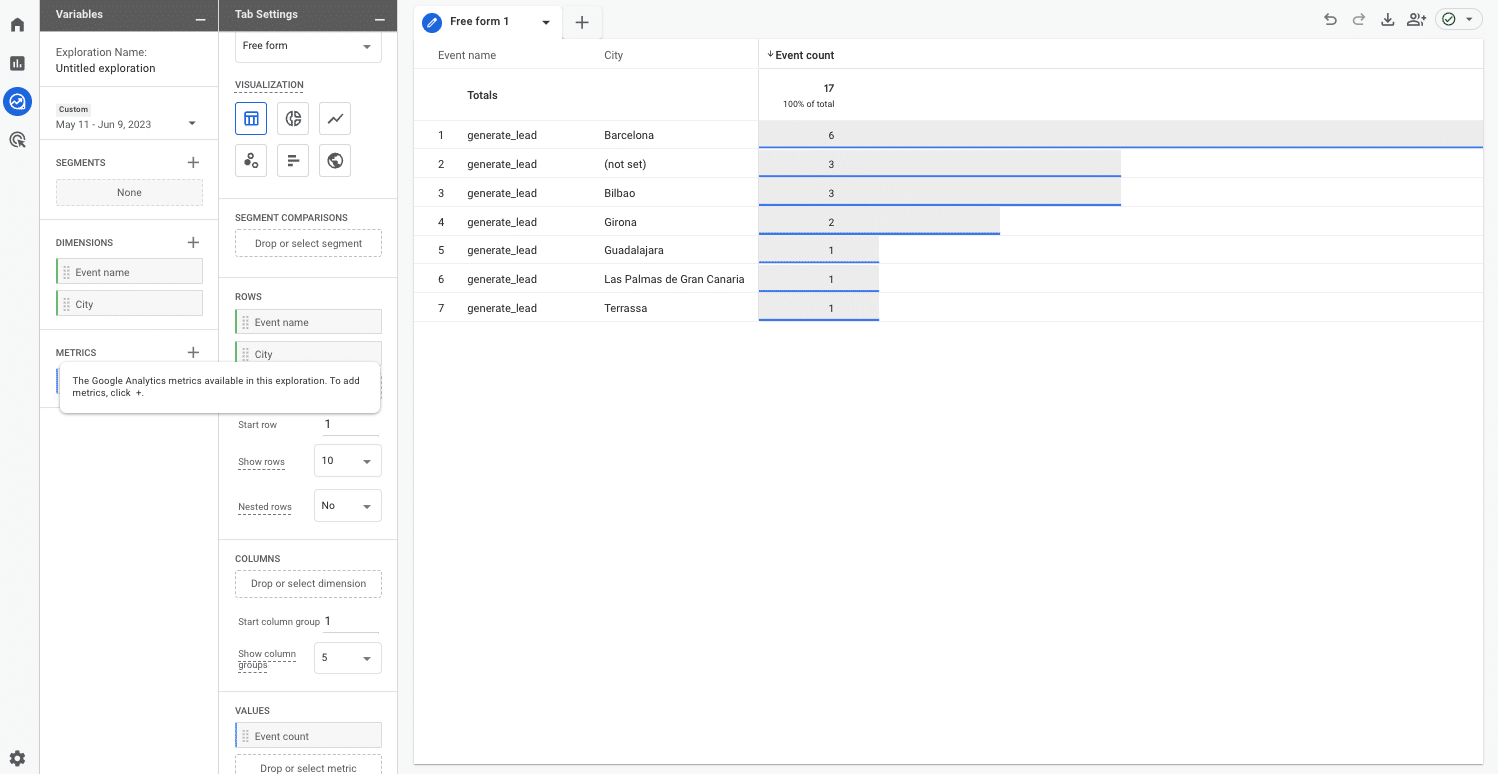
You can also create these reports using Looker Studio, as it allows easy integration with GA4.
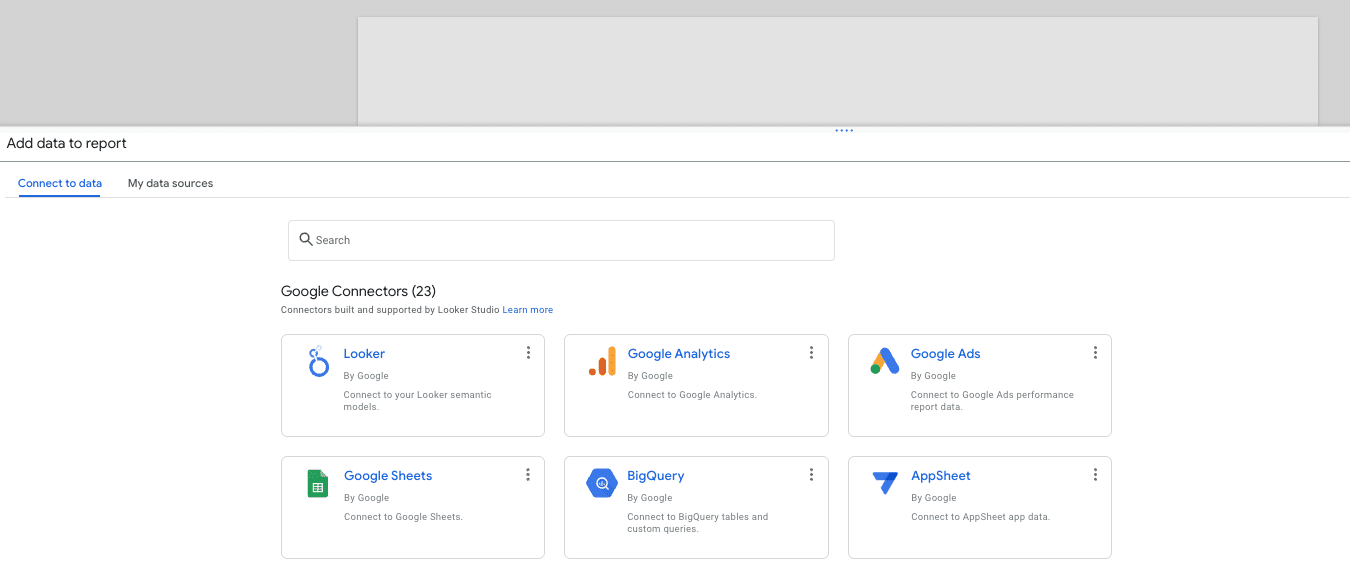
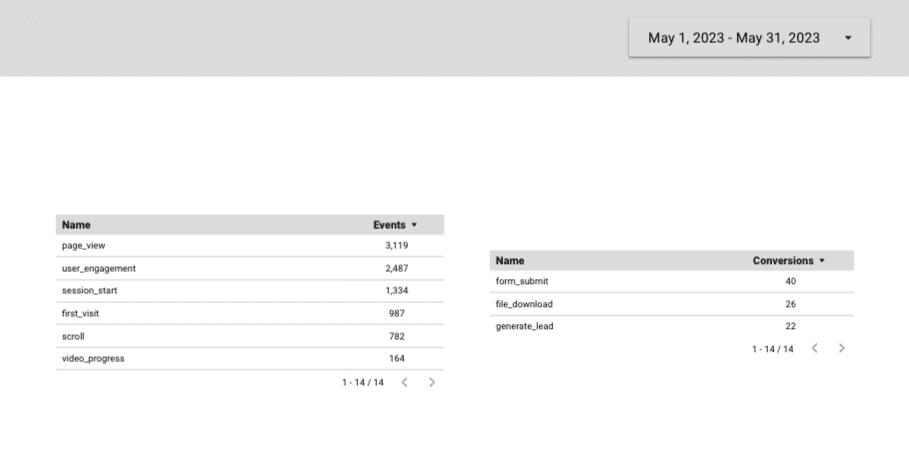
Then, you can create dynamic reports with all the events and conversions set up.
GA4 for B2B: Hone in on what matters to your business
GA4 provides a lot of data. This is why defining the most relevant metrics for your business is so important.
This way, you can track priority KPIs and analyze your performance efficiently.
The post GA4 for B2B: How to track events and conversions appeared first on Search Engine Land.
Courtesy of Search Engine Land: News & Info About SEO, PPC, SEM, Search Engines & Search Marketing
Category seo news | Tags:
Social Networks : Technorati, Stumble it!, Digg, de.licio.us, Yahoo, reddit, Blogmarks, Google, Magnolia.
7 PPC planning tips when entering a new geographic market
Written on June 29, 2023 at 10:08 am, by admin
Whether you’re opening retail locations in a new state or selling your software in a new country, entering a new geographic location requires a well-thought-out marketing strategy.
Paid media can be a foundational tool for cost-efficient sales generation from prospective customers in the new market.
This article provides several suggestions for tailoring your PPC efforts toward a region new to your brand.
1. Estimate search volume
Looking at projected search volume in advance will help you:
- Determine realistic budgets.
- Consider how wide a set of keywords you can include in your initial campaigns if you have strict budget limitations.
Google’s and Microsoft’s respective Keyword Planner tools offer free solutions to estimate volume for each platform.
Note that any data is approximate based on historical searches and can be particularly inaccurate for more niche queries.
Ultimately, you can use data after launching the campaigns to get an idea of actual volume.
2. Add regional keywords
If you’re promoting a business with local presence, think through regional terms that make sense to incorporate into keywords. These could include:
- City/town names
- County names
- State/province names
- Popularly used references for a particular area (i.e., “Capital Region”)
Additionally, your phrase and broad match keywords should pick up on queries that include local modifiers.
For instance, the keyword “furnace repair” may show for the query “charlotte furnace repair.”
Watch your search terms for local queries and add the ones that show significant enough volume or have converted.
3. Customize assets
While you may take learnings from existing markets as to what ad copy assets perform best, you should consider where to tailor ad copy to the region.
For instance, use location insertion to show city names in ads if applicable.
On the landing page end, include location callouts and pictures of landmarks from the region you’re targeting so prospects can see you’ve taken the time to identify with their area.
Additionally, consider offers you can put in front of people in the new area.
If you just opened new brick-and-mortar locations, you may be able to offer a free gift to the first 1,000 customers who visit and can mention that in your ad to promote while supplies last.
Get the daily newsletter search marketers rely on.
<input type=”hidden” name=”utmMedium” value=”“>
<input type=”hidden” name=”utmCampaign” value=”“>
<input type=”hidden” name=”utmSource” value=”“>
<input type=”hidden” name=”utmContent” value=”“>
<input type=”hidden” name=”pageLink” value=”“>
<input type=”hidden” name=”ipAddress” value=”“>
Processing…Please wait.
4. Check conversion tracking and tagging
This is an area that can all too easily slip through the cracks when launching a new marketing effort.
You need to be sure you’re getting accurate conversion data from the start to report on performance and allow ad platforms time to learn.
If you’re pushing traffic to new landing pages from new ad campaigns, make sure that you’re tracking results properly.
You may need to configure new conversion tracking or ensure existing pixels are carried over to these pages.
Depending on how you track lead performance on the backend, you may also need to ensure that URLs are properly tagged.
UTM parameters must be unique to these campaigns. Incorporate any custom parameters necessary to sync up with your CRM or automation platform.
If you’re offering a coupon code for the new market, you may also need a separate parameter for that.
5. Find local competitors
Competitor bidding can be an effective way to reach potential customers if they are searching for a business in a similar realm. They are likely looking for your products/services.
Research local competitors that appear popular in your market and incorporate their names into keywords.
Because competitor keywords can often be pricier, test segmenting out these keywords into their own campaign.
As a bonus, research top selling points for competitors and read their reviews to identify pain points to capitalize on.
For instance, if one competitor gets frequent complaints about poor customer service, emphasize the quality of your service in ad copy.
Your core search campaigns will also be valuable for identifying new competitors to bid on as you review search terms.
You’ll see what competitor names appear the most and which ones are likely to convert.
6. Support search with other channels
While this article focuses primarily on tactics for paid search, no marketing channel operates in a bubble.
Particularly in a new market, branding efforts via other channels can help to establish familiarity and legitimacy for your business. You can build credibility before people search and recognize your brand name.
Additionally, you can create audiences based on people who visit your site or engage with videos and social posts.
You can then retarget them with offer-focused messaging and layer these audiences onto search campaigns.
Some potential options for alternate channel efforts include:
- A YouTube campaign teasing the launch of your product/service in the new market.
- Social campaigns on TikTok, Facebook, Instagram, Snapchat, and/or other networks. Upload an existing customer list and target lookalike audiences to reach people with similar characteristics to existing buyers.
- A Google Discovery campaign incorporating in-market audiences for products/services in your industry and custom audiences based on top converting search queries and competitor URLs.
7. Set realistic expectations
Establishing CPA/ROAS goals for a new market will inevitably be crucial to planning conversations with business stakeholders.
Particularly when entering regions where people are unfamiliar with your brand, you should not expect to be able to drive conversions as efficiently as in markets where you’ve operated for years.
The team involved should know that CPAs will likely be higher (and ROAS lower) than in existing markets, at least while getting off the ground.
People will just be starting to become familiar with your products or services, and campaigns must go through the learning phase to bid efficiently.
Additionally, prepare to be flexible and adapt to trends as you monitor them.
You may find users have a higher conversion rate than expected, and you may be able to scale budget more quickly than anticipated.
Or you may discover that responses are lower than expected and need to experiment with a few different tactics before finding the right combination of messaging and channels that works.
Start planning
With these tips in mind, it’s time to get to work planning your campaigns for entering a new market.
Think through the channels, keywords, and budget. Work with your technical team to ensure conversion tracking is firing properly and links are properly tagged.
Finally, set reasonable expectations for performance and prepare to watch campaigns closely as they get off the ground.
The post 7 PPC planning tips when entering a new geographic market appeared first on Search Engine Land.
Courtesy of Search Engine Land: News & Info About SEO, PPC, SEM, Search Engines & Search Marketing
Category seo news | Tags:
Social Networks : Technorati, Stumble it!, Digg, de.licio.us, Yahoo, reddit, Blogmarks, Google, Magnolia.
How to use digital PR to drive backlinks and business growth
Written on June 28, 2023 at 7:08 am, by admin
Trust and credibility are traits everyone strives to earn in life.
In SEO, backlinks are an essential part of earning those coveted traits.
But many people overcomplicate how easy it is to generate backlinks.
There’s no need to beg site owners with a digital tin cup asking for favors or shell out thousands of dollars to pay for links.
Buying links is considered spam, consequently reducing your brand’s trust and credibility, and possibly putting you up as a manual penalty case from Google.
There are simply many more effective ways to generate backlinks and build an effective digital PR strategy.
What’s more, it’s well known that backlinks are an important part of SEO, but they have just as much impact on other parts of your business, too.
It comes down to one key aspect: third-party social proof.
When backlink efforts are combined with high-quality PR, these tactics drive more traffic to your site, boost quality inbound leads and – ultimately – generate more revenue to grow your business.
What is the difference between digital PR and link building?
Here’s how I’d define them from a basic conceptual perspective:
- PR: Using media coverage to gain attention for your brand.
- Link building: Tactics that encourage other websites to link back to your own.
Both are considered highly effective marketing tactics. While they’re technically different at the root, they should be used interchangeably to support your overarching business goals.
The best successes I’ve seen have come from earned link building. The most effective brands have something unique to say through thought leadership that incentivizes other sites to associate with your brand.
For example, using data and success stories to create compelling content are the best ways to earn trust and credibility.
This is particularly true when you contribute this information through media like a guest article, podcast, or webinar, in which you then get a backlink because the platform owner needs to cite who you are.
So, if you focus link building efforts on complementing what you’re already doing for digital PR, you kill two birds with one stone and reap the benefits from both efforts.
The advantages of using digital PR for link building
If you’re still on the fence about combining digital PR with link building efforts, here are the primary benefits of doing so:
Build brand authority based on thought leadership
When you repeatedly showcase your expertise on third-party platforms relevant to your audience, your audience begins to trust your advice.
This is what turns you into an authoritative brand within your industry.
Third-party social proof generates inbound leads and conversions
Once other sites recognize your brand as a trusted expert, they’ll start sharing your content with their own audiences and followers.
As those people see more of your own content, they’ll feel motivated to contact you and learn more about how you can help them.
Reduces hesitation and speeds up your sales cycle
When you’ve earned that authority, demonstrated your leadership, and boosted your organic inbound traffic flow, over half of your sales cycle is already complete.
Once an inbound lead requests a conversation, they’ve shown active intent and placed their trust in your brand. This is a major step towards closing a new sale for your company.
Creates a digital PR flywheel
Over time, you’ll become known as a go-to expert, so much so that you won’t need to pitch for links anymore.
Other brands will voluntarily contact you to collaborate, in which you automatically get backlinks for this.
This creates “the digital PR flywheel,” i.e., a system that constantly feeds into itself with less required input from your side.
Grow a highly targeted network
As the Digital PR Flywheel gains enough momentum to constantly create new PR link building opportunities, you’ve created an effective mechanism to expand your network and following.
The industry now identifies you as an authority figure in your niche space. Other players in the game will regularly involve you in their own promotional activities.
Generate backlinks without begging or paying
If you’ve followed closely, you’ll notice that none of this process for generating links involves cold outreach or payment – and when put into practice correctly, all backlinks come from authoritative sites.
As the results bear their own fruit, cold outreach and paying for links by your PR or SEO teams becomes a completely inefficient use of time and resources.
Get the daily newsletter search marketers rely on.
<input type=”hidden” name=”utmMedium” value=”“>
<input type=”hidden” name=”utmCampaign” value=”“>
<input type=”hidden” name=”utmSource” value=”“>
<input type=”hidden” name=”utmContent” value=”“>
<input type=”hidden” name=”pageLink” value=”“>
<input type=”hidden” name=”ipAddress” value=”“>
Processing…Please wait.
The 5 key steps to generate backlinks and grow your business with digital PR
Here are five of the key steps that you can use to fuel your backlink strategy, establish trust and credibility, and successfully grow your business.
Step 1: Identify the primary places your audience uses to learn and get advice
Like any good business strategy, the first step to earning quality PR backlinks is to conduct the proper research.
Look into the places where you know your target audience willfully spends their own time. You can do this by identifying resources like:
SparkToro is a great tool for doing audience research. It lists relevant platforms backed by search data and organized by audience types, interests, and other variables. Use a tool like SparkToro as a starting point to do your own research, and then build from there.
As you conduct your research, include a mix of large and niche publications that you can target for your digital PR strategy – both are important to an organic growth strategy.
Smaller publications are relatively easy to get featured on, resulting in more quantitative coverage within that niche.
Larger publications are important as well because everyone recognizes their name authority.
Any links you can earn on these sites translate into instant credibility for your brand – both from Google and your audience.
Step 2: Submit topics that you’re an expert in and are relevant to your audience
Since the best way to earn links is to lean into your strengths, contact the manager of the sites you’re targeting and contribute ideas for topics you’re an absolute expert in.
You’re much more likely to be approved when you have proof, such as bylined content and event recordings.
Topics you submit should be relevant both to the platform and your target audience. Don’t go wild on product promos – instead, focus on being helpful to your target audience.
Here’s an example of how you could pitch for a podcast:
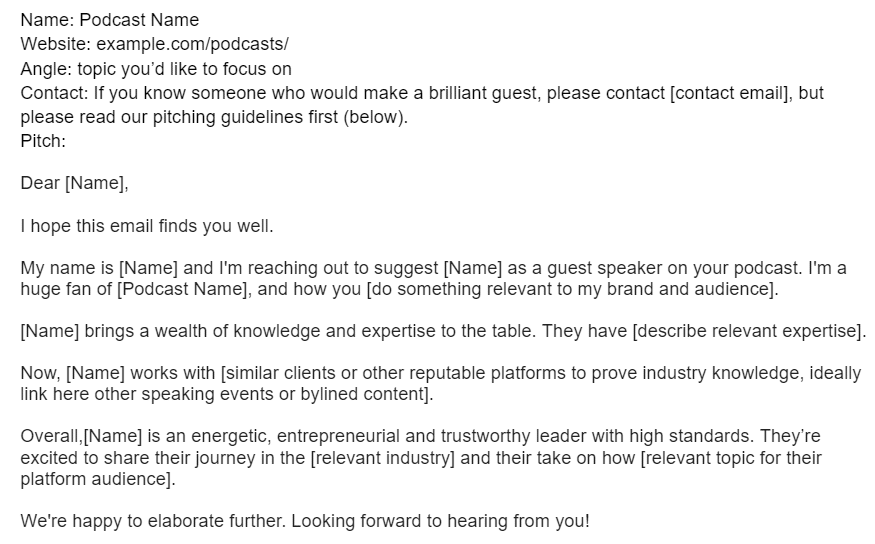
If your data or expertise tells a compelling story, you’re far more likely to create something that stands out and warrants earned backlinks from highly valuable sources.
Step 3: Start generating inbound leads, conversions, and high-quality backlinks
Repeatedly showcasing your expertise on third-party platforms is how to build those highly valuable traits of trust and credibility with your audience. This turns you into an authoritative brand.
Because your audience deems you a trusted expert, people will voluntarily contact you when they need help solving a core problem. This is precisely how digital PR generates high-quality inbound leads.
Depending on your business and the relative ease of your sales cycle, this approach can even translate into direct purchases that grow your business.
Additionally, events, publications, and anything that gains publicity automatically generate high-quality backlinks. This is the most effective way to do link building to support SEO and grow your business.
Remember that Google clearly states that buying or selling links can be considered spam.
These tactics are not only unnecessary (especially when you use the tactics I’ve described), but they can actually do more harm than good to the rest of your business.

Step 4: The digital PR flywheel starts to build
Follow the above steps, again and again, to create the digital PR flywheel – other brands willfully contact you to collaborate, so you no longer need to pitch.
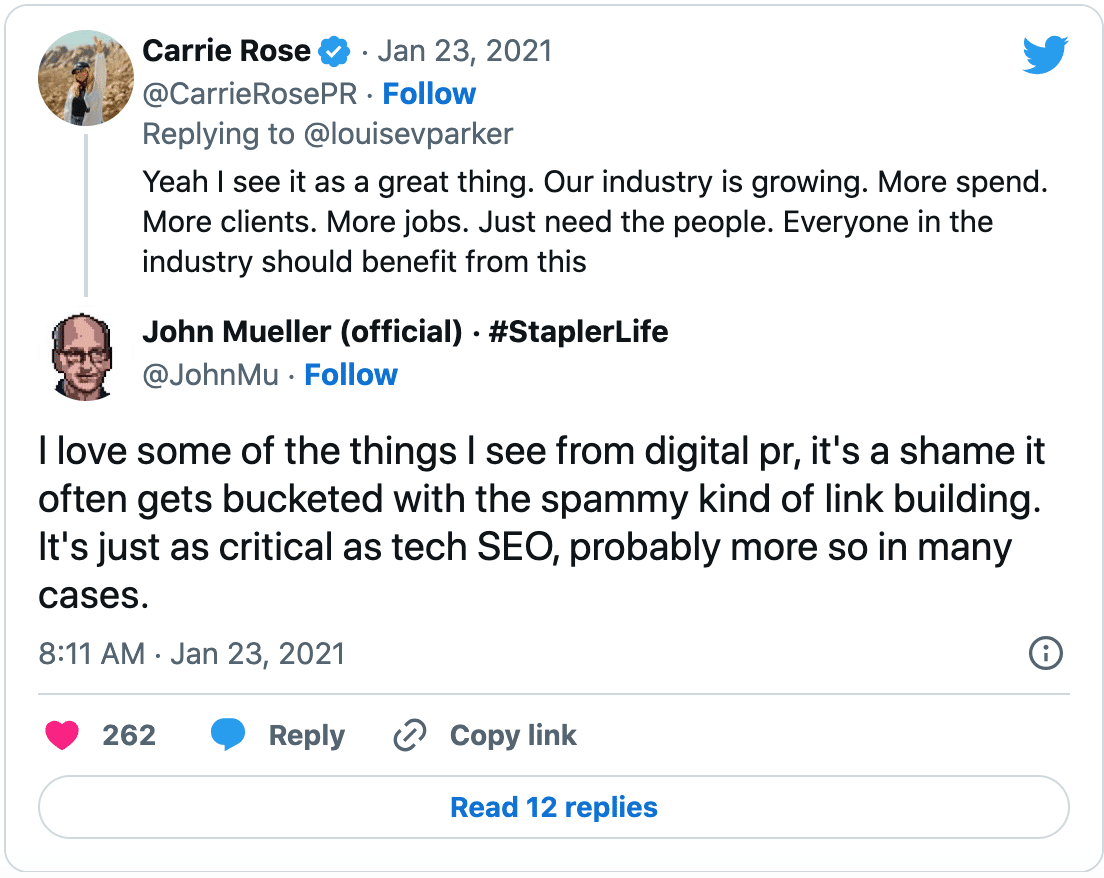
In 2021, Google’s John Mueller, one of the greatest authority figures in digital PR, SEO, and organic marketing, gave his own stamp of approval on digital PR link building.
He encouraged brand builders to disregard misinformation that digital PR link building is part of an outdated spammy tactic by doubling down on efforts to build your own digital PR flywheel.
Step 5: Showcase everywhere how trusted you are across multiple highly reputable platforms
Include links within your own content to everything you’ve created in collaboration with other brands, including:
- Events you’ve hosted with another brand.
- Guest articles you’ve contributed.
- Podcasts you’ve participated in.
Those backlinks become your social proof because you’ve been cited as earning approval from a third-party site.
Think of it as earning a “peer review” for scientific journals.
Once you’ve been cited by a highly authoritative brand in the industry, you’ve earned those traits of trust and credibility for your brand that make all the difference to help grow your business.
This is again how to generate more inbound leads and direct conversions directly. People are coming to you because they trust what you have to say. You’re now selling to a warm audience, not cold.
Publish, rinse and repeat this strategy to generate more backlinks and grow business revenue
Please remember that outreach and/or buying links are not only unnecessary but it’s also an entirely effective use of resources.
You can do more harm than good if you revert to tactics that Google and other search engines have deemed to be spammy. Don’t diminish your efforts to earn trust and credibility by falling into the link buying trap.
Overall, your PR and link building strategies should work in tandem: Link building shouldn’t just be for SEO, and when combined with PR, they bring a deeper impact on the brand authority.
A highly strategic and fully aligned digital PR and link building strategy translates into long-term benefits.
Invest your time and resources into creating highly valuable content that has something valuable to offer to give other sites a quality reason to associate their brands with your own.
Once the digital PR flywheel runs on its own steam, you’re well on your way to scalable growth!
The post How to use digital PR to drive backlinks and business growth appeared first on Search Engine Land.
Courtesy of Search Engine Land: News & Info About SEO, PPC, SEM, Search Engines & Search Marketing
Category seo news | Tags:
Social Networks : Technorati, Stumble it!, Digg, de.licio.us, Yahoo, reddit, Blogmarks, Google, Magnolia.
How non-retail advertisers can embrace value-based bidding in Google Ads
Written on June 28, 2023 at 7:08 am, by admin
As Google continues to push for automation, advertisers have gotten more creative about making updated best practices, including smart bidding strategies, work for their companies and verticals.
While value-based bidding has become a staple for ecommerce and retail brands, non-retail verticals have struggled to incorporate it effectively into their holistic PPC strategies.
This article explores the challenges faced by non-retail industries in embracing value-based bidding in Google Ads and how to make it work for your unique business.
Making value-based bidding work for non-retail brands
Most ecommerce and retail brands can seamlessly update their bidding strategies to value-based models.
The revenue is already set up.
The conversion path is clearly valued (i.e., add to cart, purchase, first-time or returning purchaser value)
The steps to transition make sense.
But for finance? SaaS? Insurance? Healthcare and education? It’s been a trickier shift for many advertisers in these fields.
At its core, value-based bidding takes designated signals noting the quality of a customer into consideration while ultimately optimizing for the highest possible value to the business.
This is absolutely attainable for non-retail companies and will function the same way. But it should be treated a bit differently in terms of strategy and setup.
Think about your business and what you’re most proud of from an advertising or website analytics standpoint:
- Do your users spend an average of 10 hours on your site per visit? (This could be a world record, so congratulations!)
- Have you spent a ton of time and energy making sure your attribution method is accurate?
- Does your YouTube channel statistically and unwaveringly contribute to 99% of your conversions?
- Are you struggling with conversion drop-off rates from a lead start to lead submit? If so, you are, in fact, a perfect candidate for value-based bidding.
Consider what’s valuable to your company and what tagged activities contribute to the lifetime value of your customers.
Once you’ve answered these questions, you’ve proven that value-based bidding will work for your business.
In the meantime, there are several bigger-picture factors to consider:
- Identifying the conversion actions to include
- Defining conversion rates and assigning values.
- Considering whether to include offline conversions in your data.
Below are different options and thought-starters for each step.
Defining goals: What matters most?
The funnel stage is an incredibly important piece of the puzzle.
For many advertisers, it can feel like there are limited options for which conversion actions are most important to their bid strategy.
For example, a B2B company whose main KPI is qualified leads generally cannot optimize that low in their funnel in a bid strategy due to data limitations or low conversion volume.
The best case scenario will be to have ~2-4 conversion actions marked with a value for value-based bidding to work effectively.
However, many non-retail companies may have difficulty deciding what else is important to them outside their final lead submission or last-step conversion item.
In many cases, lead form submissions are the last tracked data point via a conversion tag or Floodlight for advertisers to optimize for.
Marketers need to remember that every touchpoint is important in a customer’s journey.
Maybe you mark a pageview, time on site, and a lead start as your set of conversion actions to include in a bid strategy.
Each is a tick in the consumer journey to become a qualified lead. Foundationally, value-based bidding is optimizing for more than lead volume or an efficient tCPA.
Any data that advertisers can tag for the algorithm is helpful.
The fine line here, however, is determining conversion actions with a high enough conversion volume per month (30-50 actions at minimum) while also being low enough in the funnel to drive higher and more qualified conversion rates.
Secondary and tertiary touchpoints: The middle of the iceberg
If you’re struggling to identify secondary and tertiary goals to include values for, imagine your customers’ journey from their perspective.
How many pages do they need to visit or buttons do they need to click before completing the primary conversion?
If the primary goal is a button click on the homepage, consider including a minimum time on the page as a secondary conversion action to increase the number of qualified leads.
If a pageview feels too broad, how about creating an engaged visit action, where the time on page needs to be higher than 30 seconds to count as a conversion?
Or visiting 3-4 pages, using Google Analytics data to create a custom conversion?
From there, you can hone in on the most impactful chunk of the funnel before losing out to offline data that may be unavailable or hard to import on a consistent cadence.
In these scenarios, it’s crucial to align on the best inflection point.
Can we optimize for lead form submissions since they’ll be higher volume, or should we import offline data from submissions or scrubbed leads as a last touch even though we know the drop-off is steeper?
If offline conversions are less than 30 per month, even if they’re worth 100X of a lead submit, it would be better to aim higher in the funnel so that the bid strategy can best optimize.
Get the daily newsletter search marketers rely on.
<input type=”hidden” name=”utmMedium” value=”“>
<input type=”hidden” name=”utmCampaign” value=”“>
<input type=”hidden” name=”utmSource” value=”“>
<input type=”hidden” name=”utmContent” value=”“>
<input type=”hidden” name=”pageLink” value=”“>
<input type=”hidden” name=”ipAddress” value=”“>
Processing…Please wait.
Defining values: What’s it worth to you?
Once a goal has been agreed upon, it’s time to look at values. Google has released a helpful calculator as a starting point.
Still, it will also be good to have an internal contact and an analytics resource on hand to help comb through the known data points, conversion rates, lifetime values, and any other important variables for your business.
The conversion rates will be your easiest entry point.
If you’re looking at 100 engaged page visitors, 60 lead form starts, and 50 lead form submissions, with a lead form submission worth $100, you can calculate the trickle-down metrics using Google’s calculator.
This will tell you that your lead submission is worth $100, your lead form start is $83, and your pageview is $50.
If your approach requires lifetime values to be calculated, use your CRM as a source of truth to gauge your customers’ fullest potential within your company.
Once you’ve calculated the highest value (within the ~30 conversions per month guideline), work backward with your analytics team to determine specific values for the events leading up to the main goal.
Offline data: To ingest or not?
The last major commonality in a non-retail bidding strategy is the ingestion of offline conversion data to include in optimizations.
In a best-case scenario, offline conversions are set up and directly available in Google Ads or SA360 for conversion action with minimal proxies or gaps.
In reality, there are often data lags, connectivity issues, and other unforeseen hurdles when setting up offline conversions.
To get ahead of this, consider what resources you have available.
- Do you have a 20+ person team that can help get everything in order?
- Do you need to work with six different vendors to attach each puzzle piece?
Evaluate your appetite for a heavy lift and how you can set smaller goals to reach full value-based bidding. Can you set up value-based bidding using only online tags to start?
I’d offer that most of your customer journey on your website or in your ads is helpful to inform value-based bidding.
You’ve set up a great user experience online for your customers to find you (paid ads), reach you (your contact information is listed somewhere, I’m sure – if not, please make sure it is!), and raise their hand showing interest in your company (a lead form, a phone call, an appointment booking, and so forth).
Anything outside the web for the majority of these industries (a closed booking, showing up to an appointment, scheduling a follow-up meeting) will happen more naturally and at higher rates by strengthening the online footprint using value-based bidding.
Embracing what sets your industry and business apart
The shift into more automated bidding and the emergence of value-based bidding as an option for many verticals come with both headwinds and tailwinds.
Any businesses considering shifting to value-based bidding but wary of the effort or setup should zoom out and consider the strategies outlined above to start their journey towards bidding to value.
The future of advertising will only get more automated in exciting ways, so ensure the “best practices” work best for you before they are no longer optional and/or continue to evolve.
The post How non-retail advertisers can embrace value-based bidding in Google Ads appeared first on Search Engine Land.
Courtesy of Search Engine Land: News & Info About SEO, PPC, SEM, Search Engines & Search Marketing
Category seo news | Tags:
Social Networks : Technorati, Stumble it!, Digg, de.licio.us, Yahoo, reddit, Blogmarks, Google, Magnolia.