

Google offering concessions to avoid DOJ lawsuit
Written on July 9, 2022 at 5:53 am, by admin
In their latest efforts to fend off a lawsuit from the US Department of Justice, Google is offering to split the part of the business that auctions and places ads on websites and apps into a separate company under the Alphabet umbrella.
No word from the DOJ. While the Justice Department spokesperson isn’t commenting at this time, it’s not entirely clear if they would accept any offer short of an asset sale. Antitrust officials have hinted at deeper structural changes to the ad-tech business, rather than promises to change business practices.
Trouble for Google in EU. Google is also facing a similar ad-tech investigation in the European Union. Last month we reported that in their offer to the EU, Google has stated that they would allow competitors to broker the sale of ads directly on YouTube. “We are concerned that Google has made it harder for rival online advertising services to compete in the so-called ad tech stack,” said Margrethe Vestager, the EU’s competition chief.
Additional cases against Google include:
- The ongoing case from the DOJ alleging Google uses anticompetitive tactics to maintain the dominant position in online search.
- A lawsuit from Texas argues that Google is running a monopoly that harms ad industry competitors and publishers. One which Google is attempting to get dismissed and says is “full of inaccuracies and lacks legal merit.”
- U.S. senators have proposed a new antitrust bill that could force Google to divest parts of its ad-tech business.
- EU agreed this spring on two new major tech regulations, including one called the Digital Markets Act, that puts new fairness obligations on companies like Google.
- In 2013 Google resolved an FTC investigation by agreeing on changes to it’s practices. Google attempted to do the same in the EU but the EU rejected their offer and filed antitrust charges in 2015.
What Google says. “We have been engaging constructively with regulators to address their concerns. As we’ve said before, we have no plans to sell or exit this business. Rigorous competition in ad technology has made online ads more relevant, reduced fees, and expanded options for publishers and advertisers.”
Regulators are also investigating whether Google is abusing it’s role by representing both advertisers and publishers in online auction exchanges. Google denies the allegations.
What else is in store for Google. You can read the full article from the Wall Street Journal here.
Why we care. Any moves by Google to restructure parts of its ad-tech business or offer policy changes could disrupt the digital advertising industry. We all make a good living off of Google presently. But if Google gets broken up or changes, our industry will feel it.
Jeff Ferguson, Adjunct Professor, UCLA and CEO, Amplitude Digital adds “Google isn’t anywhere close to a monopoly of the internet advertising business, much less the entire advertising business, and there’s little chance the DOJ can prove actual anti-competitive practices. The only way they’ll ever get Google (or Facebook, by the way) is to rewrite the laws. Google must see something else going on because splitting off this part of the business won’t solve the DOJ concerns.”
On the other hand, giving rival ad-tech publishers the chance to compete and buy ads on Google owned platforms like YouTube could drive down costs for advertisers, who will have more options and additional ad-buying tools to consider.
The post Google offering concessions to avoid DOJ lawsuit appeared first on Search Engine Land.
Courtesy of Search Engine Land: News & Info About SEO, PPC, SEM, Search Engines & Search Marketing
Category seo news | Tags:
Social Networks : Technorati, Stumble it!, Digg, de.licio.us, Yahoo, reddit, Blogmarks, Google, Magnolia.
Google local justifications: Everything you need to know
Written on July 9, 2022 at 5:53 am, by admin
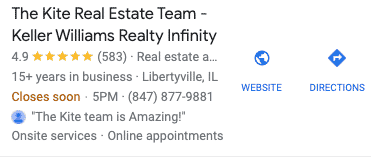
Justifications are snippets of text that Google shows in the local pack to help users “justify” why the business is showing up for their search query.
There are a variety of types of justifications. The type you see highlighted in the local pack varies based on a user’s search query.
This guide will help you understand Google justifications.
Why do Google justifications matter?
While they may not cause rankings, recent research from Moz shows that 57% of local packs feature justifications.
Some listings even show multiple justifications when a listing is expanded.
Types of Google justifications
Website mentions
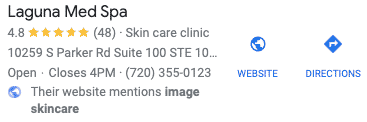
Pulled directly from content on your website, this type of justification will often show a user the page on your website where the content is being pulled from. It may include a meta description and photo.
Tip: Use these justifications to see what content on your site influenced the ranking for that search phrase, and use when working on strategy for other pages.
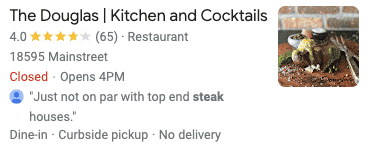
Review

Review justifications come from information within Google reviews for a business.
Review justifications can be influenced if reviewers use preferred keywords within their reviews.
Tip: Review justifications are not always positive. Actively managing Google reviews can help brands avoid embarrassing results.
In stock
If a business has activated See What’s in Store, or SWIS, function for their listing, in stock justifications may be displayed.
Tip: This is a third-party function. There are a few platforms that can help you get this feature enabled, like dbaPlatform.
Sold Here
Sold here justifications show a shopper that the product they’re searching for is available for sale at your location.
They’re identified by a checkmark in front of the justification. These justifications cannot be influenced.
Provides
Like “sold here”, these service-based justifications use a checkmark icon in front of the justification. They pull from a brand’s Services in their Google Business Page.
Tip: Be careful about how you word your GBP services to avoid embarrassing results. For example, a plastic surgeon offering a broken nose does not seem very welcoming.
Menu
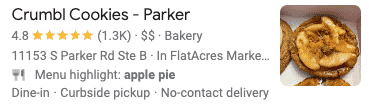
This is a justification for restaurants. Menu information is pulled from the restaurant’s menu within your Google Business Profile or the menu highlights, and menu items will display in the justification accordingly as a “menu highlight” or “on the menu”.
Tip: Keep your GBP menu information up to date – you never know when a midday craving will bring new business your way!
Post
These justifications pull in keywords from your Google posts and have an exclamation point icon in front of the justification.
Post justifications are updated as new Google posts are published by your brand, but do not just look for exact-match, they also pull related keywords. They can overwrite other justifications and can be influenced by your brand’s Google post content.
Tip: If you’re trying to optimize for post justifications, keep posts to one main topic instead of listing a variety of products or services.
Justifications: What you need to know
Justifications update quickly
We have seen results update nearly in real-time. Joy Hawkins has discovered justifications in search results based on an edit she had made barely minutes earlier.
This is great for correcting suggested edits, attributes that may be blocking justifications, or for changing information in your Google Business Profile.
If something isn’t working, review the above justification types and see if there’s something you can update in order to assist in triggering a new justification for a particular local result.
Justifications do not affect rankings
While website items featured in justifications may have a correlation to ranking, the justifications themselves do not.
If you see a result with a justification, that result was already ranking and now Google is adding more information to support the search result they’ve chosen to provide.
While many people believe that Google posts affect local rankings, testing has found that Google posts do not affect rankings.
Justifications are not a replacement or bandaid for a bad website or Google Business Profile.
Make sure that you’re providing relevant content for your business and your local area, strong onsite SEO, and are following other local SEO best practices.
Website justifications may be one possible exception to this rule.
When users see a “their website mentions” justification, this is likely an indication that Google finds this content to be reputable and relevant to the search query, and is likely relevant to the business ranking for that particular query.
Some justifications can be affected by user-generated content
Obviously, review justifications display content or information provided by users. However, Sold Here justifications do as well.
Google gets information on available inventory from Know this place? push notifications from Google Maps by asking users to answer questions about a local business after a recent visit.
At this time, we have not discovered a way to determine which questions Google will ask a user, only that Google pushes the questions after they’ve determined that a user has recently physically visited the business location.
Devices can cause variations in justifications displayed
Different device and display types will show different justifications.
A desktop result may show a justification when mobile does not, or mobile may show a review when desktop shows menu options.
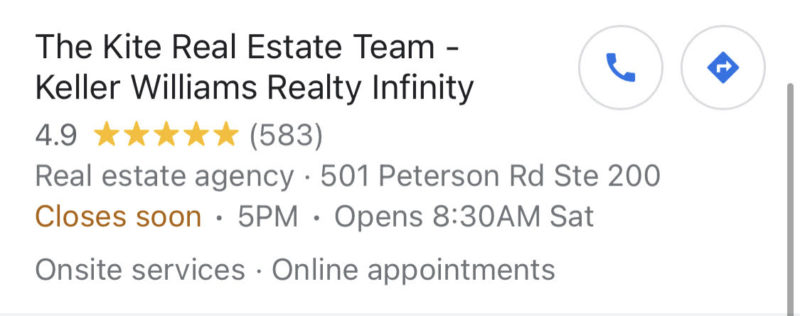
Why doesn’t your brand show justifications in local search?
Be careful when setting up your Business Profile.
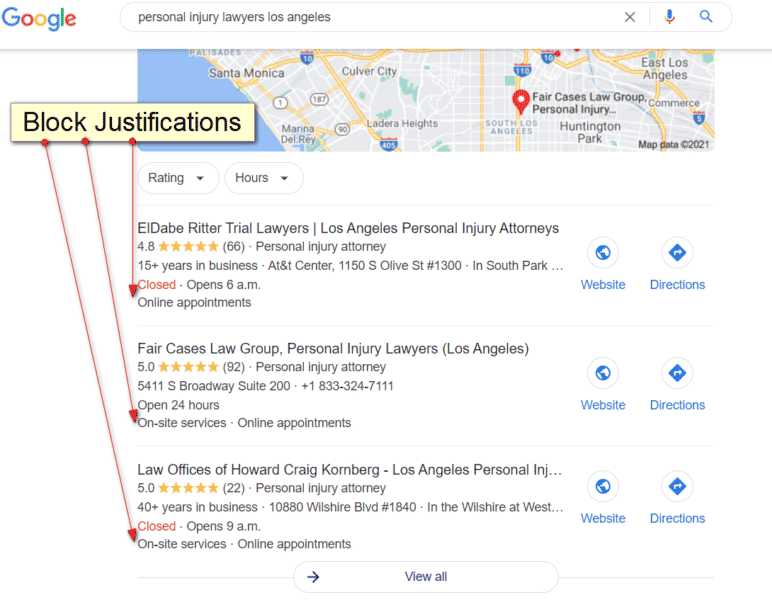
Both “online services” and “online appointment” attributes within a brand’s Google Business Profile will block justifications from showing in the local pack.
Typically, justifications will start showing up within approximately 48 hours of removing the attributes.
Share valuable information with justifications
Justifications are a fantastic way for brands to help share valuable information in the search results.
Map pack real estate is valuable. Take advantage of the potential of Google justifications.
Maximizing your efforts can pay off big.
The post Google local justifications: Everything you need to know appeared first on Search Engine Land.
Courtesy of Search Engine Land: News & Info About SEO, PPC, SEM, Search Engines & Search Marketing
Category seo news | Tags:
Social Networks : Technorati, Stumble it!, Digg, de.licio.us, Yahoo, reddit, Blogmarks, Google, Magnolia.
Digital marketing ranks in the top 3 hottest skills Americans are learning in 2022
Written on July 6, 2022 at 11:46 pm, by admin
It’s no surprise that the last couple of years have been hard on workers around the world. In the US alone, the “quit rate” reached a 20-year high and came to be known as the Great Resignation.
Earlier this year we reported another anomaly dubbed the “Great Reshuffle” that saw 618,000 marketers leave their jobs in 2021. A report from LinkedIn predicted that this trend would continue well into 2022 with 24% of marketers looking for a new job, and 62% changing jobs altogether.
What does the data say. Preply viewed Google Trends data and analyzed 572 keywords representing interest in over 50 different skills relevant to American workers. They found that 35% of the interest was in digital marketing alone.
LinkedIn noted that there was a 121% YoY increase in remote marketing job share. In the same report, LinkedIn also noted that some of the hottest jobs in demand this year are social media. The increase in digital marketing skills should come as no surprise. Workers are looking to go remote, as COVID protocols continue to change. Digital marketing jobs certainly offer the flexibility and location independence that many workers are searching for.
Other areas of interest. While digital marketing came in at #2 with 35%, it trailed behind data science at 76%. Other areas of interest were data management (34%), and interpersonal and management (34%).
Digital marketing hot spots. The report from Preply indicates that most of the interest in these skills comes from urban areas. However, online learning makes it possible for anyone with a solid internet connection to participate, no matter where they are. But the biggest increase in n digital marketing skills come from Arkansas (125%) and Chicago (32%).
Why we care. Digital marketing isn’t going anywhere any time soon. Even developments in AI and automation aren’t slowing down the need for social media marketers, account managers, and SEO specialists, and more. Marketers had previously looked to relocate to big metropolitan areas such as NYC, LA, and San Francisco. Because of inflation and the increased cost of living, we could see that change soon. Learning additional digital marketing skills helps set up workers to be in demand for the jobs they want and the salaries they deserve.
The post Digital marketing ranks in the top 3 hottest skills Americans are learning in 2022 appeared first on Search Engine Land.
Courtesy of Search Engine Land: News & Info About SEO, PPC, SEM, Search Engines & Search Marketing
Category seo news | Tags:
Social Networks : Technorati, Stumble it!, Digg, de.licio.us, Yahoo, reddit, Blogmarks, Google, Magnolia.
Google launches diagnostic insights for Performance Max campaigns
Written on July 6, 2022 at 11:46 pm, by admin
To help advertisers ensure their Performance Max campaigns are set up correctly, Google has launched diagnostic insights. The insights are aimed to help ensure there are no delays or issues causing low engagement or disapproved ads.
Visibility into potential issues. When a new Performance Max campaign is launched, the diagnostic insights view can automatically identify issues related to:
- Status
- Billing
- Policies
- Conversion tracking
- Budget
- Strategy targets
- Ad strength
You’ll also be able to view recommendations via the progress bar.
What Google says. Right now, the insights are only available for Performance Max campaigns, but Google says they plan on rolling out the insights for other campaign types in the next few months. You can read more information and visit the help doc here.
Why we care. The new insights could be helpful when it comes to ensuring advertisers don’t violate ad policies, and giving helpful visibility into ad strength. But advertisers should be aware that these are insights, and not all suggestions will be required fixes. Insights into budget and strategy are left up to the advertiser and should be manually reviewed and carefully considered before implementation.
The post Google launches diagnostic insights for Performance Max campaigns appeared first on Search Engine Land.
Courtesy of Search Engine Land: News & Info About SEO, PPC, SEM, Search Engines & Search Marketing
Category seo news | Tags:
Social Networks : Technorati, Stumble it!, Digg, de.licio.us, Yahoo, reddit, Blogmarks, Google, Magnolia.
Google Search Console Insights now supports Google Analytics 4
Written on July 6, 2022 at 11:46 pm, by admin
Google has added support for sites using Google Analytics 4 to show data in Google Search Console Insights. Previously, if you only set up GA4 for your site, Search Console Insights would show you almost no information but now that has changed.
The announcement. Google announced this on Twitter saying “Have a GA4 property but couldn’t use it with Search Console Insights? Now you can! We are rolling out GA4 support, check it out!”
Have a GA4 property but couldn't use it with Search Console Insights? Now you can! We are rolling out GA4 support, check it out!
https://t.co/XTwC0VhfIW
— Google Search Central (@googlesearchc) July 6, 2022
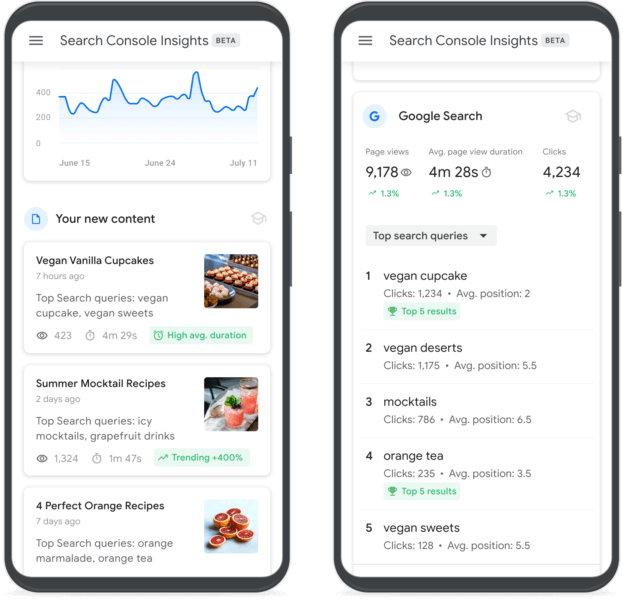
What is Search Console Insights. Search Console Insights is designed specifically for content creators and publishers and “can help them understand how audiences discover their site’s content and what resonates with their audiences,” according to Google. The Search Console Insights reporting is powered by data from both Google Search Console and Google Analytics.
When did it first launch. Google launched a beta of this last year and then opened limited access to some content creators to debug it and give Google feedback on the reports. Back then, Google said, “it’s a way to provide content creators with the data they need to make informed decisions and improve their content.”
Full launch. Google fully launched Search Console Insights in June 2021 and you can all access the Search Console Insights reports at search.google.com/search-console/insights.
What it looks like. Here is a screenshot of some of the reports:
Why we care. If you have set up a new site and only used Google Analytics 4, now you can see a lot more data in your Search Console Insights report. Also, with Google doing away with Universal Analytics 3 in about a year from now, this is an important integration Google had to make.
The post Google Search Console Insights now supports Google Analytics 4 appeared first on Search Engine Land.
Courtesy of Search Engine Land: News & Info About SEO, PPC, SEM, Search Engines & Search Marketing
Category seo news | Tags:
Social Networks : Technorati, Stumble it!, Digg, de.licio.us, Yahoo, reddit, Blogmarks, Google, Magnolia.
10 things to consider when hiring a ghostwriter
Written on July 6, 2022 at 11:46 pm, by admin
In marketing, content creation is mandatory. But what if you’re a lean team and can’t afford to spend time developing tons of content?
B2B content Marketers Spend 82% of their time creating content, according to a Casted study.
In addition, 72% of marketers say content marketing increases engagement and the number of leads.
Ghostwriting services are probably your quickest way to get content developed.
I had the opportunity to speak to various experts about certain insights a person or department needs to consider when hiring a ghostwriter or service.
1. Focus on finding individuals who are subject matter experts in your field
Writers you hire need to be proficient in the subject you’re asking them to write about. Finding individuals or a service that can write about your topic, while also know the intricacies is something you seriously consider.
Marty Weintraub, Marketing Lead and Founder of integrated brand and performance marketing organization, Aimclear states that “The writer(s) you hire must be strong enough to lead thinking and your brand. Work either with true subject matter experts or be prepared to hand over research, outlines, images, data, etc. to someone who borders on a subject matter expert.
No matter how large the firm you hire for ghost writing is, from solo to enterprise, hire a specific person/people, not a company who might assign anybody at any level.”
Andy Betts, Consultant & Advisor Focusing on Content and Media with 15 years’ experience writing and ghostwriting for publications, CEOs and CMOs as a consultant says that “experience with your core audience is one of the keys to ghost-writing and choosing a service is ensuring writers have relevant experience in your industry.”
2. Interview them and ask for writing samples
While experience in a specific industry or industries is important, getting insight into their writing style, ahead of time is equally or more important. Not only interview them but also get samples of the articles they have written.
Weintraub states,
“Remember, it’s not just about search engine results. If your content looks like everybody else (especially the ghost’s last seven and three current clients) you may rank but readers will not be impressed. Readers are smart and often spot ghosts a mile away. Evaluate their sample work for signs of freshness, heart, voice, technical chops, innovation, and style you would be proud to associate with. Pull out two to three sentences in a row from example posts and search for them.”
You don’t want to hire a ghostwriter who just repurposes or rewrites the same topic or idea over and over.
3. Pick a solution that has time-saving features
If you decide to go the route of picking a professional content writing solution, then it is important that that tool is powerful and scalable.
When working with the right service when it comes to outsourcing, can help boost your bottom line and expand on how often you publish content.
“Depending on your project having a ghostwriting service that has robust tools can be very important to produce high-quality content at scale,” said Robin Howard, from Crowd Content. “Tools like layouts, batch uploaders or keyword highlighting can be very helpful when producing a lot of content.”
This is especially where there are nuances and semantics – where one word or phrase can mean different things.
Hire specialists if you need them, as generalist ghostwriters tend to demand too much attention and editing.
4. It’s not a magic pill
Whether it’s an expert or a solution, one thing you need to come to terms with is that you most likely will have to tweak the content you receive.
Duane Forrester, VP, Industry Insights at Yext states that “they don’t know what you know. While many will say they have an expertise in your space, but the truth is, they aren’t you, so there will be a gap, which can lead to frustration. Knowing the gap will exist can help mitigate that frustration, though, as it’ll help you communicate better on both sides. Think of ghostwriting as a 75% – 95% solution.”
The good news is that majority of the work is done. Forrester says “You still need to do the work, but it’s vastly different that thinking, planning, writing, editing, rewriting. You do get to skip a bunch of the in-the-middle work.”
Forrester also mentions that what ghostwriters can do is make is in making your material much more readable. They’ll instinctively know how to write for a specific level of audience (101, 201, etc.), and can thread your thoughts into those levels
5. You must act like a project manager
If you’re thinking that you’ll simply hand off some keywords and a few links to inspire the writer and expect to get a great result, think again.
You need to project manage them or make sure the service or solution you’re working with has a PM that works with you.
Forrester states that you should “never just give a list of topics or keywords and expect 500 words on the subject that’ll satisfy you.”
Here’s some ideas Forrester suggests around developing a writing template:
- Create a framework for the final product
- What the length will be
- Reading level (101 or expert)
- Determine pronoun focus (she v. he in examples, etc.)
- Give insight into style, flow and whether this stands alone, or fits a broader narrative across the site/company
6. Ensure that they can adapt/know your tone, voice, and style
Speaking of style and flow, Betts suggests you need to ensure they can adapt to different writing styles. Forrester mentions that they need to know they can speak to your product, service, or POV subtly and succinctly.
It also helps to onboard them, as a direction helps. Nothing is worse than a ghostwriter who does not take advice and goes in their own direction.
You know when you have a successful service when your feedback cycles and editing time goes down
7. Check the writers’ reputation
If you’re seeking writers, then make sure they have the experience you’re looking for.
“If you’re using a ghostwriter, make sure to check his or her reputation as a writer,” said Ron Lieback from ContentMender. “Many should already be publishing across various channels, so a simple online search should show some results.
“Speaking of results, make sure the writer also understands SEO. Even if you’re publishing on Forbes, you can do much better with a bit of SEO thinking versus just writing. “
8. Passion and experience for your vertical
If your ghostwriter is creating a piece about motorcycles, he or she better know the difference between a clutch and a brake lever.
Or if they’re doing a piece about technical SEO, they should know the obvious like indexing and site speed.
A simple call will answer these questions.
If you’re using a company, make sure the person leading that department is a trusted writer.
Also, we make sure they have passion for their subject matter, which makes writing much easier for them.
“Understand that expertise costs more, but the product is worth it for serious brand building,” Lieback said. “Remember, this writer is representing you, so make sure they have passion and much experience writing in your vertical.
9. Hire an expert
If you’re unsure about utilizing a web content solution, look within your network.
You may be surprised at the expert individuals you will find who would be glad to develop content for you.
“Consider finding a mature thought leader who recently sold their company and would do it for fun and extra cash,” Weintraub said. “Another option is a highly regarded retiree or near retiree, with nothing to prove. Pay them a lot. It will be worth it.
Another great option is to find professional writers who write for major publications on the topic.
“Sometimes they’re willing to ghost for the money. Mainly, we don’t believe in content farm ghostwriting. If we don’t have bandwidth or a subject matter expert, we advise clients to go top shelf. You get what you pay for,” Weintraub said.
10. Sign an NDA
Having writers sign a nondisclosure agreement (NDA) should be mandatory.
“This a must! I make all my clients sign NDAs, and I also make all my ghostwriters sign NDAs,” Lieback said. “I dealt with a few that tried using their ghostwriting as a resume builder – this can ruin a reputation or trust quickly, so make sure to have the client and ghostwriter sign an NDA.”
The post 10 things to consider when hiring a ghostwriter appeared first on Search Engine Land.
Courtesy of Search Engine Land: News & Info About SEO, PPC, SEM, Search Engines & Search Marketing
Category seo news | Tags:
Social Networks : Technorati, Stumble it!, Digg, de.licio.us, Yahoo, reddit, Blogmarks, Google, Magnolia.
TikTok abandons plans to bring shopping to the U.S.
Written on July 5, 2022 at 8:31 pm, by admin
While popular in Asia, TikTok has abandoned its plans to bring shopping into the U.S. after its failed launch in the UK. The company had also planned to expand into mainland Europe, but those plans have also been scrapped.
What happened in the UK. Several team members in the UK working on the launch were either demoted after taking leave, were sick with stress or were removed from client projects altogether. The Financial Times reports:
TikTok has abandoned plans to expand its live e-commerce initiative in Europe and the US, after the social media platform’s foray into QVC-style shopping in the UK was hit by internal problems and struggled to gain traction with consumers […]
But the expansion plans have been dropped after the UK project failed to meet targets and influencers dropped out of the scheme, three people said.
Many TikTok Shop livestreams have achieved poor sales despite the company offering subsidies and cash incentives to encourage brands and influencers to sell through the app.
Cultural differences. TikTok and the UK have had their share of culture clashes. Last month it was reported that there were complaints about an “aggressive corporate ethos that runs counter to typical working practices in the UK.”
Joshua Ma, a senior ByteDance executive who ran TikTok Shop in Europe, was replaced, as the company investigated comments made to London-based staff that he “didn’t believe” in maternity leave.
At least 20 members of the London ecommerce team — around half of all its original staff — have left since TikTok Shop’s launch, while others say they are on the brink of quitting. Two employees have been paid settlements over working conditions […]
Ecommerce team members in London said they were expected to frequently work more than 12 hours a day, starting early to accommodate calls with China and ending late as livestreams were more successful in the evening, with “feedback reports” to be filed immediately after.
Convenient timing. This news comes just a week after it was reported that the FCC in the US asked Apple and Google to remove TikTok from their app stores after it was leaked that the app was accessing U.S. user data. Since then, TikTok has allegedly committed to making changes. Could the decision to abandon bringing shopping into the U.S. is at least partially related to privacy and data concerns?
Why we care. Advertisers and ecommerce business owners who were looking forward to promoting their stores using the new shopping feature will need to restrategize. But given the trouble TikTok has been in lately, it wouldn’t be a surprise if more advertisers started moving away from the platform. We’re not sure what big moves TikTok’s parent company ByteDance will be making in response to these developments, but we’ll be watching.
The post TikTok abandons plans to bring shopping to the U.S. appeared first on Search Engine Land.
Courtesy of Search Engine Land: News & Info About SEO, PPC, SEM, Search Engines & Search Marketing
Category seo news | Tags:
Social Networks : Technorati, Stumble it!, Digg, de.licio.us, Yahoo, reddit, Blogmarks, Google, Magnolia.
Why you should invest in branded keywords even if your company ranks #1 on Google
Written on July 5, 2022 at 8:31 pm, by admin
Search marketing is generally seen as a core tactic within digital marketing programs.
Capturing the intent of users actively searching your products or solutions is a no-brainer, right?
What seems like a simple question, can often be complicated.
Whether it’s due to budget-constrained environments or the brand having a stellar SEO team, I’ve fielded the same question for nearly every brand/client I’ve worked with:
“Why should I pay for brand search clicks, if our organic search listing is right at the top of the page?”
To be fair to those non-PPC stakeholders who may be reading this article, it is a valid question to ask. ]
Logically, I understand why it is appealing to capture free clicks and focus PPC budgets on tactics that will pull in new customers; however, there is a 1+1=3 effect to SEO and PPC results showing in conjunction.
Let’s look at some of the top reasons why brands should remain invested in their brand keywords.
1. SERP authority
Search engines are a part of daily life. Billions rely on search engines to answer information gaps in real-time, every day. They are a brilliant resource that only increases in terms of adoption and value.
Given how frequently we use search to solve problems, our brains naturally establish a correlation between the position of a search result and its relevance to our original query.
While a bit dated, Microsoft and Google have published studies confirming this notion.
If you still aren’t convinced, just look Google’s and Microsoft’s recent earnings – clearly, advertisers perceive this placement as valuable.
Search ads sit above the organic listings in premium real estate – directly below the search bar. Search ads are typically the first thing a user sees after initiating a search.
Not only does your ad box out competition from this prime real estate – which lowers the effectiveness of their competing offers – but in addition you have freedom to control the message users are seeing.
While site content can be optimized for search results, PPC provides full autonomy over the presentation of your brand’s message.
The impact of brand SERP management increases as the size of our screens shrinks.
Mobile searches continue to rise across nearly all categories of searches. Controlling the top result of a mobile brand search is critical, as the searcher’s attention is concentrated on the limited listings that make it above the fold.
Combine your search ad with the top organic listing (due to your team’s great SEO work) and you are now controlling the top of the SERP and with it, the prospect’s (nearly) full attention.
2. Auction dynamics
This is the most straightforward rationale for brand search keywords. Simply put, you’re getting much more bang for your buck with brand investment.
Take a step back and think about the purpose of search engines. They try to provide users with the optimal experience, meaning the most relevant results for a query. If you’ve run competitor keywords before, you’ve likely seen this in action.
Engines charge a surplus for clicks on competitor terms, based on the lower relevance of your ad and landing page. In my experience, competitor clicks have ranged from 5-25x more expensive than brand clicks.
Consider the SERP authority previously discussed and the economies of search engine auctions. Even if your brand budget is reallocated towards generic or competitor terms, it is possible (if not likely) that you will see an aggregate decrease in site visits.
Such approaches lean exclusively on SEO for brand visit volume, while reducing the effectiveness of your PPC budget.
Even if SEO captured 100% of the visits previously driven by PPC ads, the incrementality of reinvesting in nonbrand/competitor terms is unlikely to move the needle, due to the relative inefficiency of nonbrand/competitor investments.
To illustrate this, I’ve created a realistic simulation below of how redistribution of brand investment into nonbrand campaigns could actually yield lower total traffic to the site, due to the relative inefficiency of nonbrand volume.
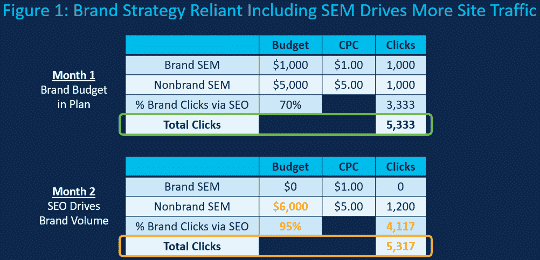
In this scenario, the $1,000 that had previously been allocated to brand campaigns is now shifted to nonbrand. Despite SEO results capturing 95% of all brand traffic, we still see about even total traffic month over month, as we netted 800 fewer PPC clicks by shifting from brand to nonbrand.
Setting up clean measurement for your own business is critical, should you find your brand investment threatened.
Work with your analytics teams so that you show how any shifts in investment are impacting total traffic to the site.
3. Meet the customer where they search
Though digital marketing has evolved in terms of the complexity of tactics, it’s important to remember why search marketing is so effective.
Folks searching for your brands are seeking out additional information about your brand. They are telling you what they are interested in learning more about.
We don’t need to identify those who are close to purchase, as they are revealing that via their chosen queries.
Search is often referred to as a pull channel because we do not need to push ads in front of users. This is an opportunity to meet those expressing interest in your brand with a catered message.
Using an offline analogy: it’s similar to someone approaching the front door of your store, but you don’t have the lights on and have the blinds down.
Never take your most engaged audiences for granted. Open the store up and show them what you believe is the best offer to get them in the door.
4. Messaging autonomy
It’s been mentioned in a couple of the aforementioned arguments, but the value of catering your message for users who are interested in your brand is far greater than the cost of the click.
In order to establish SERP authority or convert those prospects interested in your brand, you need a catered message that shows prominently at the top of the page.
I’ve been lucky to work with some incredible SEO professionals and it is fascinating what they do to influence a site’s performance; however, there is an element of certainty with PPC that cannot be replicated.
We all tune into this blog on a recurring basis, as we are aware there are variables on search engines that are out of our control, which can have a meaningful impact on site performance.
PPC provides an opportunity to customize the message, based on known attributes of the user. Whether its an early interaction in which you want to establish your brand’s credibility or someone who has been to your site many times, PPC provides you the flexibility and autonomy to control how your brand is perceived on some of the most frequently visited sites on the internet.
Brand search is a critical tactic that advertisers need to maintain support for at all costs.
There are few other places on the internet where prospects are actively seeking out more information regarding your business.
If in fact you are being asked a similar question, here are some tips for how to manage that conversation:
- Don’t panic: Seriously! It’s a common question to receive and comes from a logical perspective. It is our job as specialists to educate why brand search is so valuable.
- Consult your platform reps: If you are working for an agency or brand with existing platform partnerships, lean on your reps as they have data that quantifies the impact of SEO and PPC in conjunction. If not, Google Support should be able to point you toward useful resources.
- Turn to the numbers: Brand search is one of the most cost-effective digital marketing tactics. Work with your analytics team/lead to build a data-driven story.
- Measure impact: If budgets do end up being reduced, make sure you have a measurement in place that quantifies the impact and how much volume is being recaptured by your SEO listings.
The post Why you should invest in branded keywords even if your company ranks #1 on Google appeared first on Search Engine Land.
Courtesy of Search Engine Land: News & Info About SEO, PPC, SEM, Search Engines & Search Marketing
Category seo news | Tags:
Social Networks : Technorati, Stumble it!, Digg, de.licio.us, Yahoo, reddit, Blogmarks, Google, Magnolia.
Top 5 secrets your search bar is hiding
Written on July 5, 2022 at 8:31 pm, by admin

Your search bar is your secret weapon. How can you help improve the site search experience when someone has landed on your site? What can you do to ensure that you’re meeting their needs while on your site?
Once you segment the types of visitors on your site – informational, search intentional, navigational and transactional – you’ll know what they want to get out of your site and improve their search experience. You’ll also get better insights into what you can accomplish with those individual visitors.
Join Jonathan Meyer, senior solutions engineer at Hawksearch by Bridgeline, as he reveals how to optimize your site and transform searches into sales in his informative SMX Advanced session. By breaking down the four types of search personas, you’ll better understand how to leverage your website’s architecture to serve your ideal client best while increasing your chances for brand loyalty.
After this presentation, you’ll be able to break down your site into the key elements to drive conversion, direct traffic to precisely the right product for purchase and identify new opportunities to raise the value of every shopping cart.
Watch the session and learn how to improve customer trust by having resources available to deliver what your visitor is looking for.
The post Top 5 secrets your search bar is hiding appeared first on Search Engine Land.
Courtesy of Search Engine Land: News & Info About SEO, PPC, SEM, Search Engines & Search Marketing
Category seo news | Tags:
Social Networks : Technorati, Stumble it!, Digg, de.licio.us, Yahoo, reddit, Blogmarks, Google, Magnolia.
How to use Google Ads Competitive Metrics
Written on July 1, 2022 at 8:10 am, by admin
If you’ve been running Google Ads for any amount of time, you’re probably aware that there’s generally a competitive aspect to any campaign that makes you want to monitor your vanity metrics around where you rank.
In one of my former jobs, a senior leader would walk by every day and ask who ranked number one that day, us or the competition.
The question wasn’t are we lowering our cost per acquisition or improving the overall metrics of the account, it was pure vanity and the desire to “win.”
While “winning” in this way isn’t actually meaningful, it is important to pick your head up out of the sand from time to time and understand how your campaigns are performing vs. the competition. This helps you know who your actual competition is and how aggressive they are.
These data points can be used to understand fluctuations in your own data. If your click-through rate is down, but you really haven’t changed anything, that doesn’t mean your competition isn’t on the move. Google recognized the importance of these data points and has been rolling out more competitive metrics into the Google Ads platform.
In the reporting section of Google Ads, you will find these metrics under “Competitive Metrics” and “Auction Insights” from the metrics and dimensions menu list. Underneath these two areas are some really great tools for understanding how you stack up to your competition. Here are a few of my favorites.
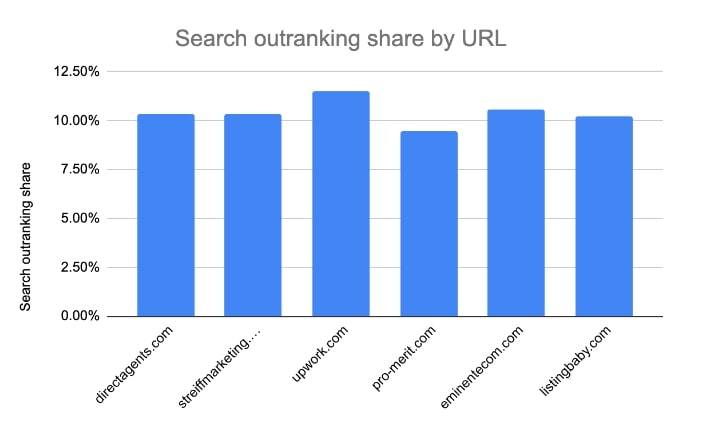
Search Outranking Share
This data will let you know what specific domains are outranking your ads and how often. You can use this data at all levels (account, campaign, ad group, and keyword).
We find this particularly helpful when there is a direct brand selling with various affiliates. Since seeing all the various competitors is difficult given a host of factors, it can also be helpful to understand and identify competitors that were not on your radar.
Search Overlap Rate and Position Above Rate
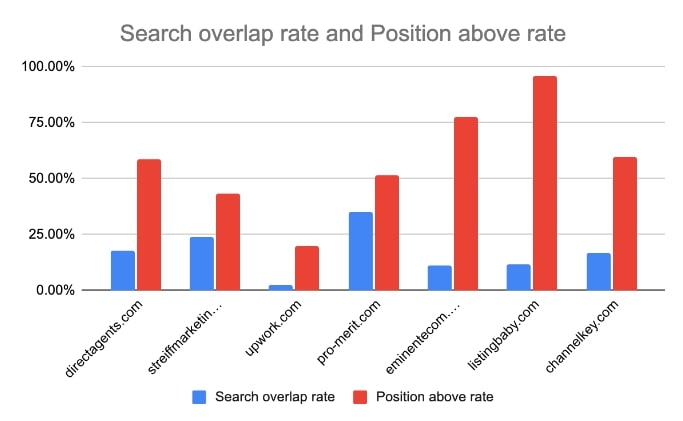
A couple of other similar, but important metrics available are Search Overlap Rate and Position Above Rate.
Search Overlap Rate helps you understand how often a brand or domain also appears with you. This will give you a better understanding of the options your consumers have on the search results page.
The Position Above Rate metric provides insights into how often that brands ad appears above your own ad when they are both shown together. The last part is really important.
The data is not just telling you how often that brands ad has a higher rank than your average rank, but specifically when you are bidding against one another for the same customer search result.
Why is this important?
Because it helps give some insight into direct competition.
In the below data Listingbaby.com outranks the clients ads almost 90% of the time.
The action I would take based on this would be to understand their ad copy and landing page experience to evaluate the search experience. Looking for potential variances that would impact quality score.
Under the competitive metrics there are also a lot of valuable data points. The data points we use the most are around Impression Share.
Understanding impression share helps give your brand insight into the total market opportunity.
Impression share is the percentage of total impressions that your ad was displayed vs. what was possible.
For example, if there are 100 searches for “running shoes” and your ad showed for 50 of those your impression share would be 50%.
The next piece that Google provides insight into is why your ad did not show for the other potential search results. They break it down into two buckets:
- Lost due to Rank
- Lost due to Budget.
These are really the two key levers to your ad being shown more. We use this all the time to help customers understand, “How high is up?” “What is the total market opportunity?” “How much could we spend if we exceed our ROI targets?”
For your keyword strategy the exact match impression share metric can help you understand how well aligned your keywords are to what consumers are searching for.
Having exact match keywords will give you a better ability to control bids and the entire experience. It’s certainly not possible to have this be 100%, but monitoring this metric gives you a sense of how closely aligned you are and when your customers might be altering what they search for or how Google is changing the algorithm.
Click share is another important competitive metric that is provided. “Click share” is the clicks you’ve received on the Search Network divided by the estimated maximum number of clicks that you could have received.
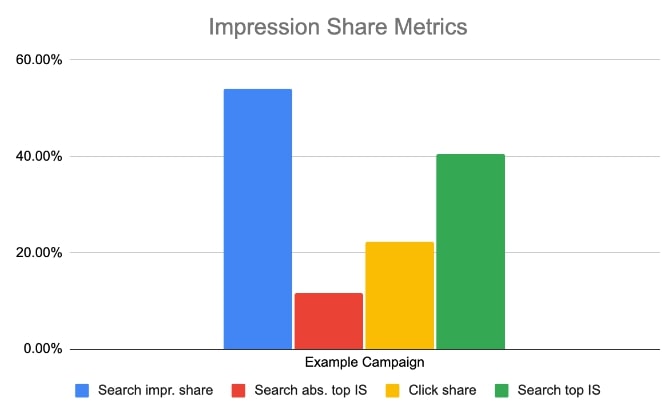
These impression share metrics are available for both display and search campaigns.
They are also available for absolute top impressions (true #1 ranking). Reminder, it is a vanity trap to just chase the absolute number one position, unless you are crushing your KPIs, then it’s game on.
These metrics can be used in the following various areas of your business.
- Search marketing: Inform bid and keyword strategies
- Product Management: Understanding more about who the true competitive set is and how they position their products (we find too often brands ignore who their true competitors are and focus on perceived competitors).
- Creative/UX: Can look at the competitors and their landing page experiences.
- Finance: To understand and forecast the market opportunity. Helping to inform budgets for upcoming fiscal planning.
These data points put campaigns into context
These data points help advertisers understand what volume is available and who you competing against.
Using this data can help inform a variety of business units beyond just search marketing.
Use the data wisely, keep your ego in check and go out and win!
The post How to use Google Ads Competitive Metrics appeared first on Search Engine Land.
Courtesy of Search Engine Land: News & Info About SEO, PPC, SEM, Search Engines & Search Marketing
Category seo news | Tags:
Social Networks : Technorati, Stumble it!, Digg, de.licio.us, Yahoo, reddit, Blogmarks, Google, Magnolia.