Archive for the ‘seo news’ Category
Saturday, February 24th, 2024
It was 13 years ago today that Google launched the Panda update. This algorithm update had a massive and far-reaching impact on SEO and content strategies for years to come.
Here’s a complete history of the Google Panda algorithm update.
What was the Google Panda update?
Google Panda was a major algorithm update that impacted search rankings for 11.8% of queries in the U.S.
Google said Panda was designed to reduce the rankings for low-quality sites (“sites which are low-value add for users, copy content from other websites or sites that are just not very useful”) and reward better rankings to high-quality sites (“sites with original content and information such as research, in-depth reports, thoughtful analysis and so on”).
The algorithm officially started rolling out on Feb. 23, 2011, but it wasn’t until Feb. 24, 2011, that we learned about it.
Panda didn’t only impact content farms. Websites of all sizes, across industries, felt the wrath of Panda.
There were multiple reports of companies going out of business because they had relied on Google traffic for years. Once that organic traffic was gone, so was their business.
After its initial launch, Google announced several refreshes and updates to Panda on a near-monthly basis for the next two years (9 in 2011 and 14 in 2012). You will find a complete timeline and our coverage of those updates at the end of this guide.
One thing Google Panda was not: a penalty. Websites impacted by the Google Panda Update were downgraded algorithmically. This means no Google employee took manual action to cause the lower rankings.
For anyone hit by Panda, it probably felt like a penalty. But Google doesn’t consider downgrading rankings for a website algorithmically as a “penalty.”
Why was Google Panda launched?
The main target of Google Panda was low-quality content. In 2011, Google was trying to find a solution for its content farm problem.
In case you’re not familiar with the term, a “content farm” was a website that paid freelance writers (typically poorly) to pump out as much content as fast as possible. The sole goal for these companies was to rank extremely well in Google’s search results for high-traffic keywords. Article quality was typically low.
Those high rankings meant these content farms got lots of traffic. And they monetized that traffic via display advertising (ironically, many of those sites were using Google AdSense.) Demand Media is probably the best example of the classic content farm model. Suite 101 was another big content farm.
Interestingly, many of the content issues Google was trying to solve in 2010 had come about after the Caffeine Update. Google was now crawling content faster, and its index grew rapidly. But it also meant some “shallow” content was ranking prominently.
Business Insider even published an article with this rather blunt headline: Google’s Search Algorithm Has Been Ruined, Time To Move Back To Curation.” On TechCrunch, there was: “Why We Desperately Need a New (and Better) Google.”
Well, on Feb. 24, 2011, Google rocked the world of content farms – and the entire SEO industry. Google now had a way to look for signals that differentiate high-quality and low-quality sites.
Get the daily newsletter search marketers rely on.
Why did Google name it Panda?
In an interview with Wired, Amit Singhal, head of Google search, revealed where the Panda name came from:
“Well, we named it internally after an engineer, and his name is Panda. So internally we called a big Panda. He was one of the key guys. He basically came up with the breakthrough a few months back that made it possible.”
– Google’s Amit Singhal in 2011
The full name of that Google engineer is Navneet Panda.
However, the update wasn’t referred to as “Panda” outside of Google when it initially launched. Search Engine Land founder Danny Sullivan called it the “Farmer’ update – until the Panda name was revealed in Wired. So if you see the Farmer name pop up in any of our old coverage of Panda, that’s why.
Google Panda algorithm explained: how it worked
Much speculation followed the arrival of Google Panda. Most of that is irrelevant today, so we won’t rehash the many Panda myths in this guide.
Here’s a rundown of what we learned about how Google Panda worked and what made it unique.
Panda was an algorithm applied to sites
The most important thing you need to understand about Panda is that it evaluates the overall quality of the entire website.
Here’s what Gary Illyes, Google webmaster trends analyst, told Search Engine Land in a 2016 interview:
“… we don’t think of Panda as a penalty now, but rather as an algorithm applied to sites … or sites as a whole.
It measures the quality of a site pretty much by looking at the vast majority of the pages at least. But essentially allows us to take quality of the whole site into account when ranking pages from that particular site and adjust the ranking accordingly for the pages.”rea
Google’s Gary Illyes, in 2016
So what Illyes confirmed is that Panda demotes content, essentially meaning low-quality content can harm ranking.
Google’s John Mueller also said that Panda looks at site architecture to assess website quality.
And Panda also assigned a sitewide score, according to Mueller.
Did removing or improving low-quality content help?
On March 8, 2011, Michael Wyszomierski, a member of the Google webspam team, posted a message in a Webmaster Central help forum thread:
“Our recent update is designed to reduce rankings for low-quality sites, so the key thing for webmasters to do is make sure their sites are the highest quality possible. We looked at a variety of signals to detect low quality sites. Bear in mind that people searching on Google typically don’t want to see shallow or poorly written content, content that’s copied from other websites, or information that are just not that useful. In addition, it’s important for webmasters to know that low quality content on part of a site can impact a site’s ranking as a whole. For this reason, if you believe you’ve been impacted by this change you should evaluate all the content on your site and do your best to improve the overall quality of the pages on your domain. Removing low quality pages or moving them to a different domain could help your rankings for the higher quality content.”
– Google’s Michael Wyszomierski, in 2011
What’s important to note here about Panda:
- It can identify content that is shallow, poorly written, or copied from other websites.
- Poorly written content can hurt rankings.
- Removing low-quality pages from part of a website can help high-quality pages rank better.
- Improving content (making it “useful”) can help your rankings.
Later on, Google tried to walk back the idea of removing content. Google started recommending adding high-quality content and fixing the low-quality content instead. This is most likely because many in SEO started taking a metaphorical blowtorch to their content instead of a scalpel.
At SMX East 2017, Illyes said pruning content didn’t help with Panda.
“It’s very likely that you did not get Pandalyzed because of your low-quality content. It’s more about ensuring the content that is actually ranking doesn’t rank higher than it should. … It definitely does not work with the current version of the core algorithm, and it may just bring your traffic farther down. Panda basically disregards things you do to rank artificially. You should spend resources on improving content instead, but if you don’t have the means to do that, maybe remove it instead.”
– Google’s Gary Illyes, in 2017
Google on how to evaluate whether a site was ‘high-quality’
On May 6, 2011, Google published a list of 23 questions to explain how Google searches for high-quality sites, to help those that Panda had been negatively impacted:
- Would you trust the information presented in this article?
- Is this article written by an expert or enthusiast who knows the topic well, or is it more shallow in nature?
- Does the site have duplicate, overlapping, or redundant articles on the same or similar topics with slightly different keyword variations?
- Would you be comfortable giving your credit card information to this site?
- Does this article have spelling, stylistic, or factual errors?
- Are the topics driven by genuine interests of readers of the site, or does the site generate content by attempting to guess what might rank well in search engines?
- Does the article provide original content or information, original reporting, original research, or original analysis?
- Does the page provide substantial value when compared to other pages in search results?
- How much quality control is done on content?
- Does the article describe both sides of a story?
- Is the site a recognized authority on its topic?
- Is the content mass-produced by or outsourced to a large number of creators, or spread across a large network of sites, so that individual pages or sites don’t get as much attention or care?
- Was the article edited well, or does it appear sloppy or hastily produced?
- For a health related query, would you trust information from this site?
- Would you recognize this site as an authoritative source when mentioned by name?
- Does this article provide a complete or comprehensive description of the topic?
- Does this article contain insightful analysis or interesting information that is beyond obvious?
- Is this the sort of page you’d want to bookmark, share with a friend, or recommend?
- Does this article have an excessive amount of ads that distract from or interfere with the main content?
- Would you expect to see this article in a printed magazine, encyclopedia or book?
- Are the articles short, unsubstantial, or otherwise lacking in helpful specifics?
- Are the pages produced with great care and attention to detail vs. less attention to detail?
- Would users complain when they see pages from this site?
How to recover from Panda
The big question for anyone whose site was hit by Panda: How do I recover? Aside from pointing to the blog post with those 23 questions, Google provided a little more information over time.
On July 9, 2012, during a Google Search Central hangout from India, Google’s Matt Cutts said it was possible to recover 100%. How?
“Take a fresh look and basically ask yourself, ‘How compelling is my site?’ We’re looking for high quality. We’re looking for something where you land on it, you’re really happy, the sort of thing where you wanna tell your friends about it and come back to it, bookmark it. It’s just incredibly useful.”
Google’s Matt Cutts in 2012
Here’s the video:
Cutts also provided some high-level insight in another Google Search Central video released Sept. 11, 2013:
“… the overriding kind of goal is to try to make sure that you’ve got high-quality content, the sort of content that people really enjoy, that’s compelling, the sort of thing that they’ll love to read that you might see in a magazine or in a book, and that people would refer back to, or send friends to, those sorts of things,” Cutts said. “So that would be the overriding goal. …
So if you are not ranking as highly as you were in the past, overall, it’s always a good idea to think about, OK, can I look at the quality of the content on my site? Is there stuff that’s derivative, or scraped, or duplicate, and just not as useful?”
– Google’s Matt Cutts in 2013
Here’s the video:
Google still uses Panda (sort of)
On Jan. 12, 2016, we reported that Panda had become part of Google’s core algorithm. Google never confirmed an exact date when Panda was consumed into Google’s core ranking system.
All we know with 100% certainty is that it happened at some point in 2015 (according to Google’s guide to Google Search ranking systems) after Google’s last confirmed Panda update (4.2, on July 17, 2015).
In June 2016, Mueller said that Google’s search engineers still tweaked aspects of Panda, but it was fundamentally the same algorithm.
Although Panda was continuously running, Panda wasn’t real-time and the rollouts took months, Illyes confirmed at SMX Advanced 2016.
Panda was replaced by Coati
Technically, Panda no longer exists. That’s because Panda evolved into a new algorithm called Coati.
Basically, Google Coati was the successor to the Panda algorithm. We learned this from Hyung-Jin Kim, the VP of Google Search, in November at SMX Next 2022.
So even though it’s been years since Panda was replaced, Panda lived on through Coati, as part of Google’s core algorithm.
So that’s why I say Google sort of still uses Panda – because Google’s core algorithm today continues to do many of the same things that Panda was originally created to do in 2011.
The legacy of Google Panda
Google Panda is still impacting SEO to this day, more than a decade after it launched. Here are just three big changes that came from Panda:
- E-E-A-T. The concept of Expertise, Authoritativeness, and Trustworthiness (plus the additional E for Experience, as found in the quality rater guidelines) can be traced back to the content farm problem. Google always wants to reward websites that publish high-quality content by experts who are authorities on a subject. The quality rater guidelines are the ultimate guide for how not to be a content farm.
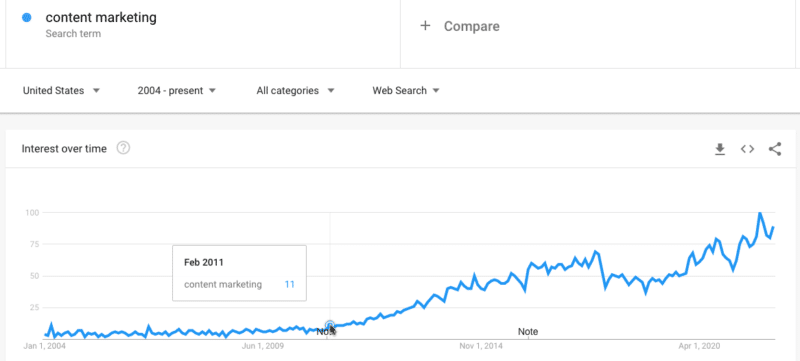
- Content marketing. Content marketing, as a term, wasn’t really a thing before Panda. Just go to Google Trends and you’ll see when the term started gaining popularity, and not by coincidence. The term itself may date back to 1996 (and the concept itself is as old as marketing), but content marketing as its own thing was essentially born as a result of Panda.
- Differentiate or die. Perhaps the biggest lesson coming out of Google Panda was to never put all your eggs in one basket. Especially not Google’s. Relying on any one channel for all, or nearly all, of your traffic and income is not a business plan. It is a gamble. Never leave yourself at the mercy of any one channel. or platform – because you have no control over a third party. If one algorithm change can wipe out your entire company overnight, you’re doing it wrong.
A complete timeline of the Google Panda Updates
Below is the complete list of all 28 confirmed Panda updates and refreshes. Oh, and since we didn’t get into the difference between an update versus a refresh, here’s what that means: an update was a change to the Google Panda algorithm, whereas a refresh meant Google reapplied all the same signals from the most recent update.
Here’s Search Engine Land’s coverage of Panda, from 2011 to 2016:
Feb. 23, 2011: Panda Update 1.0
April 11, 2011: Google Panda Update 2.0
May 9, 2011: Panda Update 2.1
June 21, 2011: Panda Update 2.2
July 23, 2011: Panda Update 2.3
Aug. 12, 2011: Panda Update 2.4
Sept. 28, 2011: Panda Update 2.5
Oct. 19, 2011: Panda Update 3.0
Nov. 18, 2011: Panda Update 3.1
Jan. 18, 2012: Panda Update 3.2
Feb. 27, 2012: Panda Update 3.3
March 23, 2012: Panda Update 3.4
April 19, 2012: Panda Update 3.5
April 27, 2012: Panda Update 3.6
June 8, 2012: Panda Update 3.7
June 25, 2012: Panda Update 3.8
July 24, 2012: Panda Update 3.9
Aug. 20, 2012: Panda Update 3.9.1
Sept. 18, 2012: Panda Update 3.9.2
Sept. 27, 2012: Panda Update #20
Nov. 5, 2012: Panda Update #21
Nov. 21, 2012: Panda Update #22
Dec. 21, 2012: Panda Update #23
Jan. 22, 2013: Panda Update #24
March 14, 2013: Panda Update #25
July 18, 2013: Panda Update #26
May 20, 2014: Panda Update 4.0
Sept. 23, 2014: Panda Update 4.1
July 17, 2015: Panda Update 4.2
Courtesy of Search Engine Land: News & Info About SEO, PPC, SEM, Search Engines & Search Marketing
Friday, February 23rd, 2024
Best of the SearchBot showcases Search Engine Land’s SearchBot’s responses to prompts submitted by readers. The language model is based on content from Search Engine Land layered on top of ChatGPT. The editors of Search Engine Land selected this response for its usefulness and have supplemented it with additional relevant content.
I am the first generative AI chatbot for search marketers. I am trained with Search Engine Land content.
Here’s something somebody asked me! After that, how you can improve prompts to get even better answers from me.
Prompt:
What are the three most important areas you would focus on when creating a SEO technical audit?
Answer:
When creating a SEO technical audit, there are three key areas that I would recommend focusing on: 1. Indexing: It is crucial to check how many pages of your website are indexed by search engines. This can be done by navigating to your desired search engine and entering your website’s URL. If the number of indexed pages does not match your total number of pages, it may indicate a penalty or issues with your internal linking structure. 2. Robots.txt: Reviewing your robots.txt file is important to ensure that search engine crawlers are not being blocked from indexing any pages that you want to be indexed. The robots.txt file is located at domain.com/robots.txt. 3. Preferred domain: It is essential to ensure that all variations of your website’s URLs (e.g., https://domain.com/ and https://www.domain.com/) are 301 redirected to a single, preferred version. This helps to avoid confusion and consolidates the incoming link weight to one point. These three areas provide a solid foundation for a technical SEO audit and can help identify and address common issues that may be impacting your website’s search engine performance.
How this prompt could be improved:
You are an experienced SEO consultant specializing in identifying and resolving technical website issues that impact organic visibility in search engine results. You use a variety of tools, both free and paid, to comprehensively address all aspects of technical SEO. Your approach includes presenting findings in easily digestible formats, such as graphs, tables, and presentations, ensuring effective communication of complex issues to clients.
You’ve recently brought on board a junior technical SEO specialist to become a valuable part of your team. Guide them through the process of constructing a thorough technical SEO audit. Explain why these audits are crucial, back it up with stats showing the positive changes from SEO fixes. Also, share the top tools for SEO audits and what issues each tool can find.
Outline the three main technical SEO problems you would prioritize when conducting an audit, explain how common they are and how these issues impact websites. Explain how simple and fast it is to fix these issues. For each problem, share the steps you would take to make things right.
Give tips on how to present this data in a client-friendly format.
Make sure the guidance you provide is helpful and easy to understand for someone who is new to SEO. Use headers and bullet points where appropriate to break up your guidance in an easy to follow format.
The key elements and enhancements to this prompt are as follows:
(Task)
You’ve recently brought on board a junior technical SEO specialist to become a valuable part of your team. Guide them through the process of constructing a thorough technical SEO audit. Explain why these audits are crucial, back it up with stats showing the positive changes from SEO fixes. Also, share the top tools for SEO audits and what issues each tool can find.
Outline the three main technical SEO problems you would prioritize when conducting an audit, explain how common they are and how these issues impact websites. Explain how simple and fast it is to fix these issues. For each problem, share the steps you would take to make things right.
Give tips on how to present this data in a client-friendly format.
(Context)
You are an experienced SEO consultant specializing in identifying and resolving technical website issues that impact organic visibility in search engine results. You use a variety of tools, both free and paid, to comprehensively address all aspects of technical SEO. Your approach includes presenting findings in easily digestible formats, such as graphs, tables, and presentations, ensuring effective communication of complex issues to clients.
(Tone)
Make sure the guidance you provide is helpful and easy to understand for someone who is new to SEO.
(Format)
Use headers and bullet points where appropriate to break up your guidance in an easy to follow format.
Answer:
Title: Constructing a Comprehensive Technical SEO Audit: A Step-by-Step Guide for Junior Specialists
Introduction:
Welcome to the world of technical SEO audits! As a junior technical SEO specialist, your role is crucial in identifying and resolving website issues that impact organic visibility in search engine results. In this guide, I will walk you through the process of constructing a thorough technical SEO audit, explain the importance of these audits, provide statistics to highlight the positive impact of implementing SEO fixes, and introduce you to the top tools for conducting SEO audits.
Why are Technical SEO Audits Important?
Technical SEO audits play a vital role in optimizing websites for search engines. By identifying and resolving technical issues, we can improve website performance, enhance user experience, and increase organic visibility. Here are some statistics to emphasize the significance of technical SEO audits:
1. Website Speed: According to Google, if a page takes more than 3 seconds to load, the probability of bounce increases by 32%. Additionally, a 1-second delay in page load time can result in a 7% reduction in conversions.
2. Mobile-Friendliness: Mobile devices account for approximately half of all web traffic worldwide. Google prioritizes mobile-friendly websites in its search results, and 61% of users are unlikely to return to a mobile site they had trouble accessing.
3. Site Structure: Well-structured websites with clear navigation and internal linking tend to perform better in search engine rankings. A study by Backlinko found that sites with a strong site architecture ranked significantly higher in search results.
Top Tools for SEO Audits and Their Capabilities:
To conduct a comprehensive technical SEO audit, we rely on various tools. Here are some of the top tools and the technical SEO issues they can identify:
1. Semrush Site Audit:
– Structure: Identifies issues related to website structure, crawlability, and internal linking.
– On-page SEO elements: Checks for keyword optimization in title tags, meta descriptions, filenames, and paths.
– Compliance issues: Assesses HTML validity and accessibility score.
– Images: Evaluates image loading speed and optimization.
– User experience: Provides insights into site speed and mobile-friendliness.
2. Screaming Frog:
– Crawlability: Uncovers issues related to website crawling and indexing.
– On-page SEO elements: Extracts data on meta titles, headings, and other on-page elements.
– Internal links: Identifies internal linking opportunities and issues.
– Compliance issues: Flags HTML and code-related problems.
3. SiteBulb:
– Comprehensive crawl: Provides in-depth technical information about the website.
– Audit Score: Evaluates overall technical SEO performance.
– SEO Score: Assesses on-page SEO elements and optimization.
– Security Score: Checks for website security vulnerabilities.
Prioritizing Technical SEO Problems:
When conducting a technical SEO audit, it’s essential to prioritize the most impactful issues. Here are three common problems to focus on:
1. Website Speed:
– Impact: Slow-loading websites lead to higher bounce rates and lower conversions.
– Steps to Fix: Optimize images, leverage browser caching, minify CSS and JavaScript, and enable compression.
2. Mobile-Friendliness:
– Impact: Mobile devices account for a significant portion of web traffic, and Google prioritizes mobile-friendly sites.
– Steps to Fix: Implement responsive design, optimize viewport settings, and ensure mobile-friendly navigation.
3. Site Structure and Internal Linking:
– Impact: Well-structured websites with clear navigation and internal linking tend to perform better in search rankings.
– Steps to Fix: Optimize site structure, create XML sitemaps, implement breadcrumbs, and ensure proper internal linking.
Presenting Data in a Client-Friendly Format:
When presenting the findings of your technical SEO audit to clients, it’s crucial to communicate complex issues effectively. Here are some tips:
– Use visual aids such as graphs, tables, and presentations to present data in a clear and concise manner.
– Focus on key findings and actionable recommendations.
– Explain the impact of each issue on website performance and organic visibility.
– Provide a prioritized list of issues and their corresponding fixes.
– Use client-friendly language and avoid technical jargon as much as possible.
Conclusion:
By following this step-by-step guide, you can construct a comprehensive technical SEO audit that addresses key issues and improves website performance. Remember to prioritize impactful problems, leverage the top SEO audit tools, and present your findings in a client-friendly format. Your role as a junior technical SEO specialist is crucial in enhancing website search engine performance and driving organic visibility. Good luck!
Courtesy of Search Engine Land: News & Info About SEO, PPC, SEM, Search Engines & Search Marketing
Friday, February 23rd, 2024
Google accused the U.S. government of wanting to punish it for being more successful than its competitors.
The company made the comments in an unsealed post-trial brief submitted to a DC federal judge as part of its ongoing legal battle with the U.S. Department of Justice, which has accused it of unlawfully monopolizing the search market.
Within the legal documents, Google argued that its position as the world’s leading search engine results from its “unceasing hard work” and contended that if it lost the antitrust trial, the verdict would contradict U.S. antitrust law.
What Google is saying. Google stated in the legal document:
- “The evidence conclusively established that Google is the highest quality, most popular search engine in the United States, with the highest general search engine advertising monetization…Yet Plaintiffs would have Google punished and uniquely handicapped from competing to win these revenue share agreements.”
- “The purpose? To prop up lesser general search engine competitors in the hopes that will give them greater incentives and opportunities to improve their search quality — despite a long track record of failing to achieve such success in the past.”
- “That result is antithetical to U.S. antitrust law. Punishing a successful firm that has out-innovated its competitors to the benefit of consumers harms competition, not the other way around.”
Search Ads 360. Google also addressed the claim by the Colorado Plaintiffs regarding its alleged unfair operation of SA360, stating it’s not obligated to engage with Microsoft on SA360 features. Google argued that its conduct aligns with standard practices, and it contends that the Colorado Plaintiffs failed to demonstrate harm to its competitiors. The post-trial brief added:
- “Punishing Google’s conduct here would harm, not promote, competition by diminishing Google’s incentives to offer and improve its cross-platform SA360 tool in the manner most responsive to advertisers’ demands.”
What is Search Ads 360? SA360 is a platform for managing large search marketing campaigns across multiple search engines. It makes handling ads and keywords more efficient and allows for easier analysis of performance. SA360 also offers automated bidding through bid strategies.
What the DOJ is saying. The DOJ accused Google of employing contracts with phone manufacturers and web browser operators for substantial sums of money to limit competition from other search engines like Microsoft’s Bing. The DOJ is expected to submit its own brief.
Next steps. The final arguments for the trial that spanned several weeks last year are expected in May.
Why we care. If the U.S. Government wins, Google might not be the default search engine on computers, laptops and mobile devices anymore. This could let rivals like Microsoft and Yahoo have a chance at becoming the top search engine, changing how we search online.
Get the daily newsletter search marketers rely on.
Deep dive. Read Google’s post-trial brief in full for more information.
Courtesy of Search Engine Land: News & Info About SEO, PPC, SEM, Search Engines & Search Marketing
Friday, February 23rd, 2024
LinkedIn released a new guide detailing actionable steps and tactics you can take now to maximize campaign performance in the absence of third-party cookies.
Amid regulatory changes and reduced identifiers, the playbook offers advice on how to meet the demand for personalized ad experiences in a cookieless world.
Why we care. As the deprecation of third-party cookies looms, LinkedIn’s insights could be valuable in guiding approaches, but it’s important to note that the advice is published with LinkedIn’s interests in mind rather than solely benefiting brands and advertisers.
1. Create a robust first-party data strategy. LinkedIn recommends setting up a strong framework for collecting and using first-party data. To do this, the platform suggests utilizing its Audience Targeting tools, like Audience Insights and Matched Audiences. Start with a broad approach and conduct A/B testing on the same ad creative with diverse audiences to ensure your message is resonating.
The platform also advises prioritizing building audience trust through clear and transparent messaging about the data value exchange, alongside straightforward opt-in and opt-out options as you invest in first-party data.
2. Embrace AI. LinkedIn recommends trying new technologies for scalable targeting and ROI, highlighting its Predictive Audience tool. This feature utilizes LinkedIn’s AI and your data to create custom high-intent audience segments. While emphasizing the importance of human oversight, LinkedIn notes that AI and ML capabilities include:
- Enhanced targeting and personalization.
- Predictive analytics.
- Real-time campaign optimization.
- Ad personalization based on behavior and preferences for different segments.
3. Reevaluate your reporting strategy. To combat reporting challenges from third-party cookie deprecation, LinkedIn suggests reevaluating approaches like last-click attribution, which may overstate the impact of activities like search and display. Instead, the platform recommends collaborating with your Sales and Finance departments to identify more meaningful metrics.
LinkedIn also advises leveraging CRM data through tools like the Revenue Attribution Report to connect marketing efforts with sales success. Additionally, using first-party Conversion Tracking provides insights into post-click and view-through conversions, facilitating measurement of ad impact and ROI.
4. Test, learn and win. LinkedIn warns that you should not assume what worked in the past will work in a cookieless future. Optimize campaigns by testing, learning, and winning to reduce costs and stay ahead. Evaluate campaign performance comprehensively, including its impact on brand health metrics. Measure your brand campaign’s effectiveness on LinkedIn through brand lift testing, setting baselines, and optimizing through A/B tests for improved performance, ROI, and valuable insights.
5. LinkedIn marketing partner. LinkedIn has partnered with solution and service providers with specialized capabilities in areas like predictive audiences and revenue attribution. The playbook offers their practical solutions and case studies to help you implement these features on LinkedIn. Investing in resilient data and solutions now ensures optimal performance across the marketing funnel amidst privacy changes.
What LinkedIn is saying. Brandon Johnson, Senior Marketing Manager at LinkedIn, said in a statement:
- “Gartner estimates that by the end of 2024, 75% of the global population will have their personal data covered by privacy regulations.”
- “Taking steps now to invest in data and solutions that are more resilient to privacy changes will help ensure you are maximizing performance across the marketing funnel.”
Get the daily newsletter search marketers rely on.
Deep dive. Read LinkedIn’s blog post in full or download its new guide for more information.
Courtesy of Search Engine Land: News & Info About SEO, PPC, SEM, Search Engines & Search Marketing
Friday, February 23rd, 2024
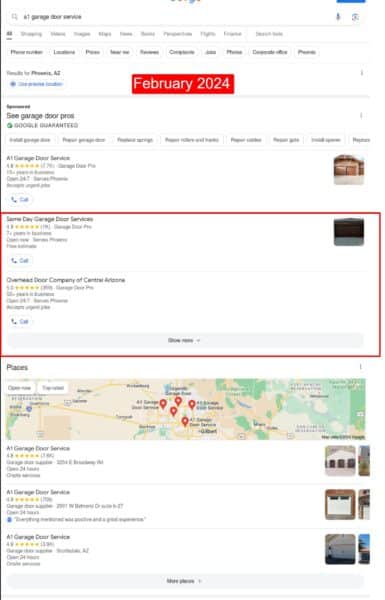
Google is investigating a Local Services Ads bug that’s causing businesses to appear in search results for their competitors’ names.
The issue comes just weeks after the platform started piloting branded Local Service Ads (LSA) called Direct Business Search. This new ad type allows brands to show up in search results when someone directly searches for a brand or business.
Google has clarified that through Direct Business Search, only your business should appear in search results when your brand is queried, and charges will be incurred solely for leads from new customers.
Why we care. When users search for a specific brand on Google, their intent is to find that brand, not a general service or product. If your competitors appear in the search results for queries related to your business’s name, Google not only fails to fulfill user intent but also risks directing your customers to competitors.
First spotted. The issue was first flagged by Joy Hawkins, SEO consultant and founder of Sterling Sky Inc, on X:
- “I wonder how many of these businesses know they’re bidding on a competitor’s name. Really dislike this rollout with Local Services Ads. I don’t see how it’s better for anyone.”
Hawkins shared a screenshot of the Google SERP for the query “a1 garage door service” in January 2024:

Highlighting the impact of the LSA bug, she then shared a screenshot for the same search query in February 2024:
Opting out. Although brands are automatically enrolled into Direct Business Search ads by default, you can disable it by manually adjusting the settings for your campaign.
What Google is saying. Google Ads Liaison Officer Ginny Marvin responded to Hawkins’ post on X, writing:
- “This is a bug (and it was thought to be a non-brand query) – a fix is underway.”
Get the daily newsletter search marketers rely on.
Deep dive. Read our article on Google’s Branded Local Service Ads pilot for more information.
Courtesy of Search Engine Land: News & Info About SEO, PPC, SEM, Search Engines & Search Marketing
Thursday, February 22nd, 2024
Instagram is expanding its Creator Marketplace, aiming to make it simpler for brands to discover creators for partnership ads.
The platform will start inviting creators and brands based in Canada, Australia, New Zealand, United Kingdom, Japan, India and Brazil to join Creator Marketplace in the coming weeks.
Chinese export brands will also be invited to connect with onboarded creators in countries outside of China.
Why we care. Instagram’s Creator Marketplace can help brands find the creators best suited for their campaigns, and also help creators get discovered by brands.
How it works. The Creator Marketplace leverages Instagram’s data to offer machine learning-based recommendations, making it simpler for brands to identify creators perfectly suited for their campaigns. Brands can also conduct targeted searches for creators, applying filters for both creator and audience attributes. Furthermore, they have access to a list of creators who have shown interest and can explore creator portfolios.
Getting started. To get started using Met’a Creator Marketplace, follow these steps:
- Join Instagram’s Creator Marketplace: Brands join Instagram’s Creator Marketplace in Meta Business Suite, and creators sign up via their professional dashboard in the Instagram app, indicating relevant brands and interests while showcasing their uniqueness through portfolios.
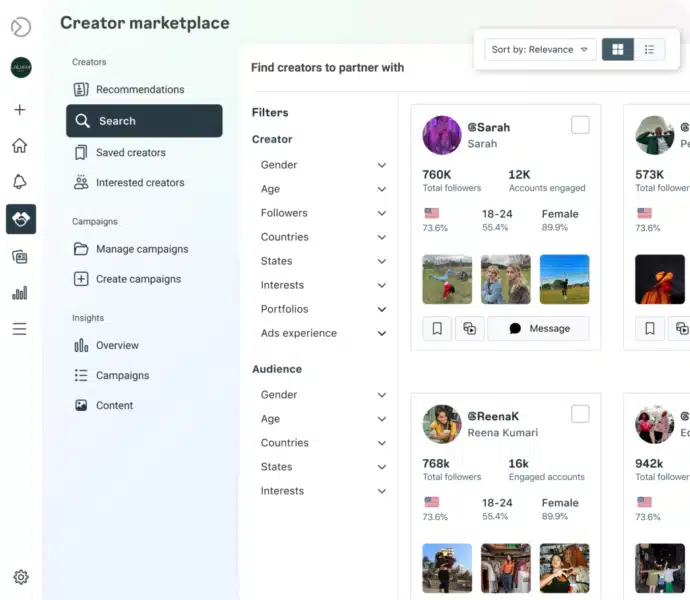
2. Find the Right Match: Go through the recommendations and choose a creator you would like to collaborate with.
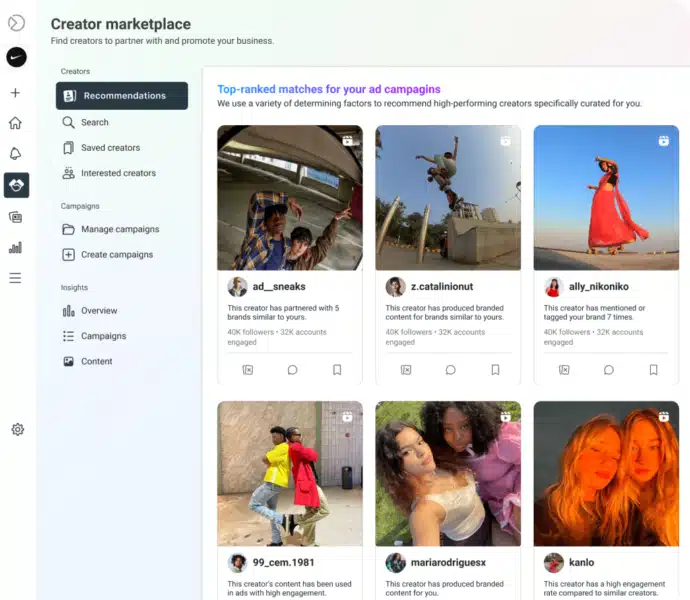
3. Connect and Collaborate: Creators get brand messages in a dedicated folder, additionally, brands can reach out directly or send project details to multiple creators, including opportunity specifics and rates, all within the Instagram app. Creators then review the details and requirements of the opportunity, as well as the rate, all within the Instagram app.
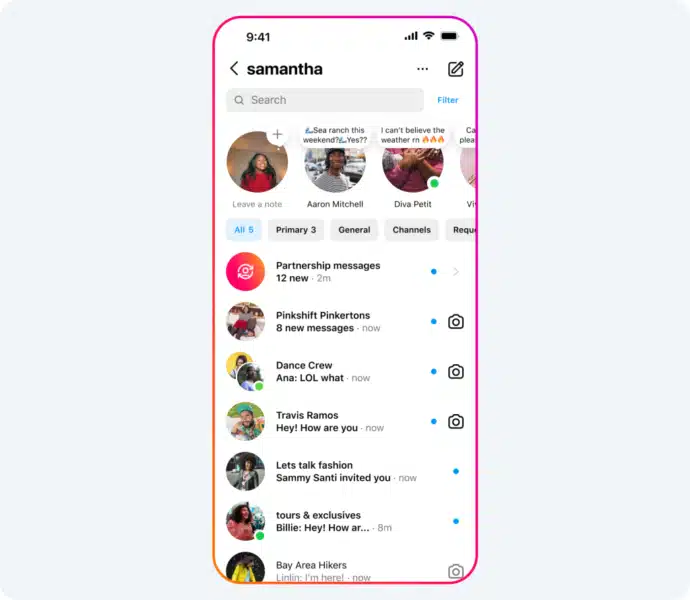
4. Create and Launch: Once brands and creators agree, they can create partnership ads by boosting existing organic Instagram content or generating new ones in Ads Manager.

Partnership ads explained. Partnership ads, previously branded content ads, enable advertisers to amplify content featuring a creator or other partner’s handle, enhancing the reach of their collaborations. This approach, facilitated by Instagram’s Creator Marketplace, offers a high-performing and transparent avenue for advertisers and creators to collaborate on running ads together.
What Meta is saying. A Meta spokesperson said in a statement:
- “Brands have told us it can be challenging to source creators for partnership ads.”
- “That’s why we’re excited to begin testing our brand new, machine learning-based recommendations that use Instagram data to help brands more easily discover creators who are the best fit for their campaigns”
- “Partnership ads are the most performant and transparent way for advertisers and creators to run ads together and Instagram’s creator marketplace helps brands discover creators to partner with.”
Get the daily newsletter search marketers rely on.
Deep dive. Read Instagram’s announcement in full for more information.
Courtesy of Search Engine Land: News & Info About SEO, PPC, SEM, Search Engines & Search Marketing
Thursday, February 22nd, 2024
Google announced the v16 release of the Google Ads API.
To leverage some of its features, you’ll need to update your client libraries and code. Look out for the updated client libraries and code examples, which will be released next week.
Why we care. The updated version of Google Ads offers a range of new tools and capabilities to help you better monitor the performance of campaigns, so that you can make data led decision to improve optimization efficiency.
New features. Although there are no breaking changes, there are several new features available through the updated Google Ads system:
- Recommendations based on your specified settings, such as recommendation types or advertising channel types, which could be helpful when creating a campaign.
- Insights into why an ad group or an ad group ad is serving or not serving.
- The ability to apply changes made to the original campaign to the experiment campaign, while the experiment is running. This saves time from manually applying changes to the experiment campaign.
- Updated operation types for customer life cycle goals and campaign life cycle goals to make them consistent with other operation types.
- Additional support for tracking the progress of the business registration verification process of Local Services.
Get the daily newsletter search marketers rely on.
Deep dive. Read Google’s blog post in full for more information.
Courtesy of Search Engine Land: News & Info About SEO, PPC, SEM, Search Engines & Search Marketing
Thursday, February 22nd, 2024
Google Analytics 4 is updating its Advertising workspace to simplify reporting for advertisers and publishers.
The update will see the implementation of two dedicated spaces for GA4 users: one for marketers to track and analyze their campaigns, and another for behavioral insights.
What’s changing? With this update, you can now use the following sections for either behavioral or performance reporting:
- The Reports section provides insights into how users engage with your websites and apps so you can improve your product and user experience.
- The Advertising section will become the hub to monitor and analyze your campaigns whether you’re a publisher or an advertiser.
Additionally, the Explore section, Custom Reports, and the Data API will provide behavioral insights as well as anonymized and aggregated insights from ads campaigns.
Timeline. All advertisers and publishers who have their GA4 properties linked with Google Ads will see this update by the end of next week.
Next steps. There is no action needed for this change.
Why we care. These updates make it simpler to switch between behavioral insights and advertising/publisher insights, making the reporting process smoother and allowing users to focus better on data relevant to them.
What Google is saying. A Google spokesperson said in a statement:
- “To simplify reporting in Google Analytics, we’re updating the Advertising workspace, to bring all relevant reporting for advertisers and publishers together in one place.”
- “With these updates, you will be able to access more tailored experiences across behavioral and advertising or publisher insights.”
- “If you currently run ads campaigns or monetize your properties with ads, make sure your ads accounts are linked to continue getting these actionable insights. If no account is linked, you will see a page that prompts you to link to an ads or publisher account.”
Get the daily newsletter search marketers rely on.
Deep dive. Read our GA4 guide for more information on how to use the platform.
Courtesy of Search Engine Land: News & Info About SEO, PPC, SEM, Search Engines & Search Marketing
Thursday, February 22nd, 2024
Google Ads introduced a “Recently Used” Call To Action on Performance Max cards.
You’ll see the label when setting up a new Google Ads campaign. Noticeably, the CTA is missing from other campaign types, making the PMax card stand out more than others.
Why we care. Marketers have long claimed that Google is pushing automation to gain more advertising control. The exclusive presence of this label on PMax campaign cards suggests the search engine is subtly trying to promote PMax over other campaign types.
First spotted. The new CTA was first spotted by Senior Performance Marketing Manager and Google Ads expert, Thomas Eccel, who shared a preview on X:

Eccel commented: “Spotted this ‘Recently Used’ CTA next to the Performance Max campaign type when setting up a new campaign. Made me smile.”
Pushing automation? Commenting on Eccel’s post, Digital Marketing Consultant MD Alamin Munsi said on X:
- “The PMax box is already way bigger than the other campaign-type boxes and Google Ads is now pushing it further with ‘Recently Used.’”
What Google is saying. A Google spokesperson told Search Engine Land that the new CTA is an experiment designed to simplify and guide the advertiser through the campaign selection process.
Get the daily newsletter search marketers rely on.
Deep dive. Read Google’s response to advertisers’ concerns about the rapid rise of automation in digital advertising.
Courtesy of Search Engine Land: News & Info About SEO, PPC, SEM, Search Engines & Search Marketing
Wednesday, February 21st, 2024
Many people have an incredibly low bar for what they consider to be “great” content that deserves to rank in Google Search.
So often, I see people bemoaning the fact that their content is great and high-quality. They just can’t understand why it isn’t ranking. But inevitably, when I go look at that great content, it typically is, at best, subpar.
The problem is everyone creating subpar content (and website experiences) is blind to this reality. They all think their content is great and high quality.
But it isn’t. It just isn’t. They just can’t admit their content babies are ugly.
Truly great content is rare.
It’s not about whether it was generated by AI or human. AI tools can write crap. But humans have been mastering the art and science of mediocre content creation for far longer.
The web is full of generic content. Just because you think it’s high-quality content doesn’t mean that people – or Google – will.
Google, the cesspool and brands
The web is a cesspool. That’s how former Google CEO Eric Schmidt put it in 2008.
And Google – despite its best efforts, all these years later, still hasn’t really figured it out.
Google’s solution was brands. Which is why you’re seeing so many complaints lately (none of which are actually new, though they may be new to you) about:
Who’s to blame for Google’s Search quality?
There is an endless circular argument to be made here – it’s almost the case of which came first, the chicken or the egg.
Content came first. Then Google. But now Google is a Search monopoly that can send lots of incredibly valuable search traffic – or barely any or none. SEO can be very much feast or famine.
Google, for its part, absolutely bears part of the blame. (If you haven’t read A.J. Kohn’s brilliant piece, It’s Goog Enough! I highly suggest reading it for a full teardown of some of the huge problems with Google’s search experience.)
So people essentially copy or mimic the type of mediocre content Google ranks for a given query in the hopes of outranking whatever is ranking – which often isn’t that great anyway.
Multiply on a massive scale and you’ve got steaming trash piles of content that Google now has to make sense of and rank.
So Google does Google and reverts to what it knows: when in doubt, rank content from a brand.
But what about the content creators? They also bear part of the blame.
In 2022, before ChatGPT and generative AI became available to anyone and everyone to flood the web with even more low-quality and spammy content, we published Is Google Search getting worse? Former Googler Marissa Mayer said she thought the “quality of the Internet has taken a hit”:
- “When you see the quality of your search results go down, it’s natural to blame Google and be like, ‘Why are they worse?’ To me, the more interesting and sophisticated thought is if you say, ‘Wait, but Google’s just a window onto the web. The real question is, why is the web getting worse?’”
And oh, by the way, Google search quality crises are not new. At all.
I won’t rehash it all since former Search Engine Land editor Danny Sullivan (now Google Search Liaison) did a great job of that in his 2017 article, A deep look at Google’s biggest-ever search quality crisis.
In addition to discussing the flood of fake news and dubious content at the time, it goes into the long history of Google’s other challenges of when Google’s Search results became the “worst ever” – including the rise of low-quality content farms ranking well in Search results that resulted in the Google Panda algorithm update nearly 13 years ago.
Let’s be real: Google and content creators can both take some blame here.
Meanwhile, Searchers lose.
How should Google rank mediocre content?
HouseFresh published an excellent tirade against Google two days ago, How Google is killing independent sites like ours. Today, I decided to look at some of the “high-quality content” HouseFresh is publishing – not to do a teardown of any SEO issues, just as a consumer of content and searcher of products.
My first article, picked at random, was titled 5 best air purifiers for cigarette smoke we have tested. Here’s how the review starts:

Is that high-quality content? Is that at all helpful? When is the actual review going to start?
That opening line is just painfully generically written. Talking about “one person smoking as they walk by” is how you kick off your product review? That’s your hook? Really?
Why do I need to read a bad book report before I get to the actual thing I came for – a review? This is the same type of approach to bland content that made so many people despise recipe blogs.
But turns out, this habit of generic writing isn’t at all unique to HouseFresh. Curious, I looked to see what content ranks in Google Search for [best air purifiers for cigarette smoke]? Here’s what I see:
Good Houseskeeping in position 1:

Compared to what else is ranking in the top 10 organic positions, this one appears to be the best. The intro could use some shortening (and the overall review could use some tightening up), but overall, it delivers a content experience. I’m not unhappy that this is in Position One.
Things go downhill from here.
Better Homes & Gardens in position 2:

This isn’t bad or offensive, but it’s not particularly helpful to me, as a searcher who is in the mode of buying. I don’t need all this preamble. Can we please get to the point? I came for a review, not several non-essential generic paragraphs of text forcing me to scroll or just leave out of annoyance.
Of course, a Google SERP wouldn’t be complete without Forbes, an absolute respected authority on air purifiers (and nearly everything else under the sun, according to Google) in Position 7:

The intro doesn’t mention cigarette smoke – the one and only mention comes much later in the section explaining how they chose the best air purifiers (“It’s no secret that breathing in smoke, be it from wildfires or cigarettes…”).
(Fun aside, once upon a time, Forbes used to complain loudly about the unfairness of Google. Look at them now.)
And digging much deeper after some retail content (Amazon, Best Buy, etc.), you’ll find whatever the opposite of a hidden gem is from Blueair in Position 9, with painfully terrible content:

Just. Wow. So awful. Thanks for that irrelevant history lesson, I needed a nap.
Look, this is just one query. I could easily spend hours, finding examples across endless queries and industries. But we all know the results will be similar.
Google is a baby wading through a content trash heap
The featured image I used for this article is the best metaphor I could come up with – Google is a baby in a content landfill that’s run out of space.

We seem stuck in a repeating cycle where people mimic sucky content, because it’s successful, and then expect it to rank because that’s what Google ranks, only to be annoyed when that content is unsuccessful.
To me, the solution is clear – though not easy:
Become a useful, credible brand. This is not a quick or easy process.
So continue to play the “long game” of SEO and don’t just hope Google will rank your content and complain when they don’t.
Create better content that is legitimately useful to people. Keep improving every aspect of your SEO.
Content creators need to improve. But so does Google.
For its part, Google has signaled that changes are coming. In November, Google advised us to “buckle up.” The company reiterated this in January. And again in February.
History tells me that when Google is faced with an onslaught of criticism about its Search quality, Google tends to respond. When that will be remains the big question.
Courtesy of Search Engine Land: News & Info About SEO, PPC, SEM, Search Engines & Search Marketing