Archive for the ‘seo news’ Category
Thursday, November 30th, 2023
Google has agreed to pay publishers in Canada $73.6 million a year to keep links to news articles in its search results.
The search engine had threatened to stop serving news links in response to a new law that forces tech companies to pay for news content.
However, Google was able to strike a deal with the Canadian government before the rollout of the Online News Act, which is planned for Dec. 19, 2023.
Why we care. This landmark deal will come as a huge relief for news publishers in Canada. Had Google followed through with its threat to remove links to news articles in search, organic traffic would have been severely impacted, which in turn would have negatively affected the value of the publishers’ ad space.
Terms and conditions. Canadian Heritage Minister Pascale St-Onge said in a statement that the “single collective” paid by Google would be distributed to “a wide range of news businesses across the country, including independent news businesses and those from Indigenous and official-language minority communities.” He added:
- “A sustainable news ecosystem is good for everyone.”
- “The health of the Canadian news industry has never been more at risk.”
Although the Canadian government and Google have agreed to solutions to make both parties happy, the final regulations have yet to be confirmed.
What Google is saying. Alphabet president of global affairs, Kent Walker, said in a statement:
- “Following extensive discussions, we are pleased that the Government of Canada has committed to addressing our core issues with Bill C-18.”
- “While we work with the government through the exemption process based on the regulations that will be published shortly, we will continue sending valuable traffic to Canadian publishers.”
Meta maintains its opposition. Despite Google’s announcement, Meta is standing firm on its decision to remove news from Facebook and Instagram in Canada. Meta spokesperson, Lisa Laventure, said in a statement:
- “Unlike search engines, we do not proactively pull news from the internet to place in our users’ feeds and we have long been clear that the only way we can reasonably comply with the Online News Act is by ending news availability for people in Canada.”
Get the daily newsletter search marketers rely on.
Deep dive. Read Google’s concerns about Canada’s Bill C-18 in full for more information.
Courtesy of Search Engine Land: News & Info About SEO, PPC, SEM, Search Engines & Search Marketing
Thursday, November 30th, 2023
YouTube is updating its Product Drops feature to improve accessibility and give creators more control.
The tool, which enables creators to announce new products during live shopping streams, is also being rolled out to first-party stores for the first time. In addition, creators will have more flexibility regarding timings of product announcements.
Why we care. The Product Drops tool offers a simple way to create buzz around product launches, engage audiences effectively, and boost sales. The new flexibility in timing allows marketers to strategically optimize promotions, ensuring maximum impact for their products.
Enhanced accessibility. More creators will be able to utilize Product Drops in the live control room on YouTube as the feature is now available to both:
- First-party stores (creators who have connected their stores).
- Third-party stores (participating in the youTube affiliate program).
More control. Previously, creators were restricted to pre-scheduling Product Drops for a specific time, however, this update allows them to drop products whenever they so wish during a live stream. This change has been rolled out to “give creators more flexibility to react to the moment and drive excitement in realtime,” according to a YouTube spokesperson.
Getting started. To use Product Drops, head over to the Live Control Room, schedule a live stream, and follows these simple steps:
- Tag the product drop and any other other relevant items to the live stream video.
- Click “Create Product Drop” next to the product.
- When you are ready to drop, select the timer (your product will be hidden until you are ready to drop it).
- Choose whether you want to do a one-minute countdown or an instant drop.
- Viewers will then see a countdown timer or a placeholder image of a shopping bag as a video overlay until the product has dropped. This will let viewers know the exact moment the product will be available for purchase.
Get the daily newsletter search marketers rely on.
Deep dive. Read the ‘Create and manage activities for tagged products‘ guide on the YouTube Help Center for more information about the Product Drops Feature.
Courtesy of Search Engine Land: News & Info About SEO, PPC, SEM, Search Engines & Search Marketing
Wednesday, November 29th, 2023
Google is no longer just a search engine. It is adopting social signals that increasingly impact content visibility across Google surfaces like Search, News and YouTube.
This shift requires brands to rethink what it means to do SEO today and beyond.
The article explores how Google is expanding into a surface ecosystem, why followership matters for visibility, and some initial ideas for brands looking to increase followers on Google.
Google’s shifting focus: From search to discovery
In the past four years, Google has undergone fundamental shifts:
- From answers to journeys.
- From search queries to queryless search.
- From text to visuals.
Google has transformed itself from a search engine to a surface ecosystem that focuses on anticipating and satisfying users’ needs, enabling it to reach and influence people before they need to search.
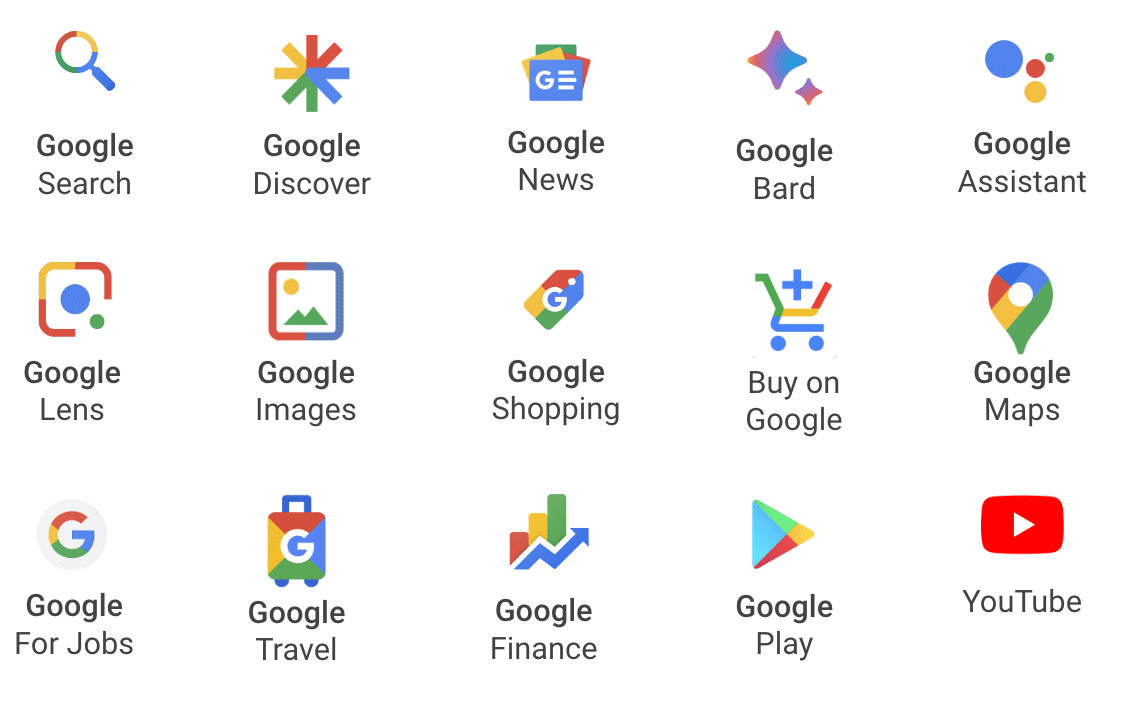
Think of the number of influential surfaces beyond the traditional SERPs. Google is now a:
- Ecommerce player with Google Lens, Shopping and Buy on Google functionality.
- Business directory with Google Maps.
- Aggregator in multiple industries with Google News, Google for Jobs, and Google Travel.
- Personal assistant, especially with the upcoming integration of Bard into Google Assistant.
Yet, the key functionality with the potential to greatly impact every brand and shape future visibility across all surfaces is Google’s hidden social networking feature.
Google is a powerful social network
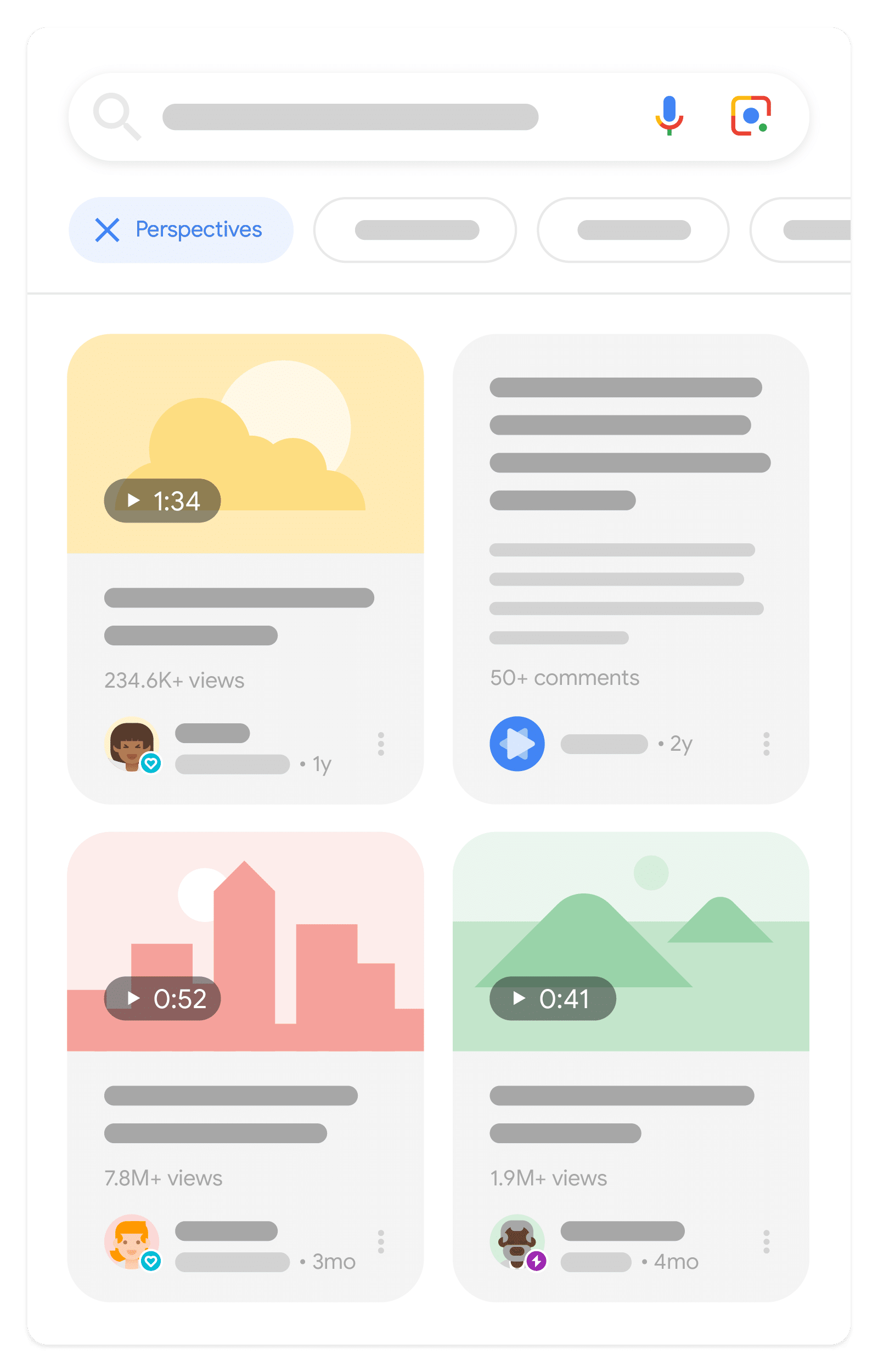
The Perspectives tab may highlight other social network content in search, but I doubt this is Google’s end game.
Despite the failure of Google+, I believe Google still intends to become a leading social network.
Think about it: Google already offers every feature of its social media competitors.
- Vertical video through YouTube Shorts.
- Stories on the open web.
- For You Page (FYP) with Google Discover, which treats webpages as social posts.
- Likes with the heart button in Google Discover.
- Comments with the new Notes feature in Search Labs.
- Shares through Google Chrome.
- Personalization algorithms based on topical engagement, especially with the new website visit frequency ranking feature, which feels like Google’s version of “Trusting the algorithm to bring me back.”
- Creator details such as social handle, social follower count or content popularity included in search results, and the recent avatar guidance.
- Chat, albeit to an AI, with Bard and the converse feature in SGE.
But Google’s main social weapon is Discover.
In terms of monthly active users (MAUs), YouTube’s 2.7 billion is only exceeded by Facebook’s 3 billion. And with Discover’s last MAU reporting in 2018 at 800 million, it’s likely competitive with TikTok’s 1.1 billion or Instagram’s 2.3 billion. And certainly beats X’s 528 million and LinkedIn’s 310 million.
Moreover, Discover can provide significantly more value to brands. Unlike many of its social counterparts, Discover is not an area for doom scrolling or click hoarding.
There is a limited number of posts highly personalized to each user with the primary aim of getting users to click through to read more.
This is how Discover delivers its value. This means being featured in Google Discover can be highly impactful and highly targeted.
Now, Google is promoting a way to optimize for Discover and many rich experiences with surface followership.
Google followership: The next frontier
Google has begun rolling out the Follow button in search results. This allows you to subscribe to topics with Google, adding it as an interest in your Google profile.
Doing this increases the likelihood of seeing content related to those topics in various places like Discover and search results. You may even receive push notifications from the Google app if there is relevant news.
But this is just one of many follow features available across Google surfaces.
Google News
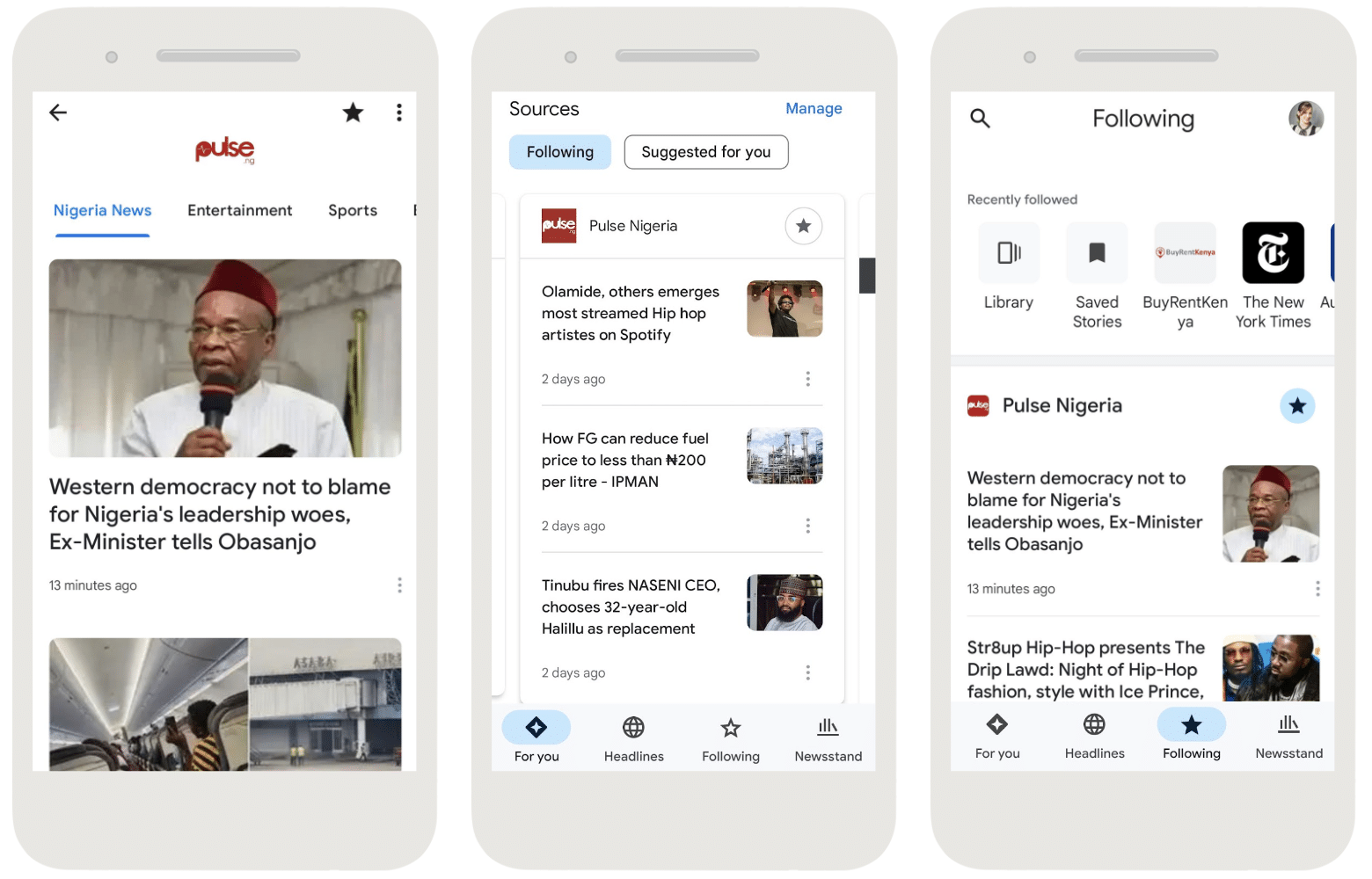
In Google News, I can click the follow star to show in the sources box in News and Discover, in the recently redesigned Google News following tab and the “From publishers you follow” SERP feature.
Google Shopping
In Google Shopping, I can favorite a brand, which gives more visibility to that brand’s offerings.
Google Maps
I can follow brands and local guides in Google Maps to receive updates on their activities in the maps following tab.
Google Chrome
I can follow any website with the Chrome Browser follow button, which adds it to the following tab. The content of which you can influence through a compatible RSS feed.
Google mobile app
In the Google mobile app, I can follow my favorite sporting teams to get game reminders and result updates, which also impact Discover personalization.
Knowledge Panel on SERPs
Or I can follow an entity by clicking the bell on its Knowledge Panel in Google Search to add it as a topic of interest, similarly influencing Discover and other surfaces.
Clearly, Google needs to consolidate. Yet, it’s evident that the company is heavily investing in encouraging users to follow content on Google surfaces, with more developments on the way.
In Chrome flags, you can enable enhancements to the Following and the New tab page.
These enhancements spell the end of Google’s desktop homepage as we have known it for 20 years.
It won’t just be a search box on a white background anymore. It will include Discover and other cards like its mobile counterpart, becoming a space for people to begin their journey through search or discovery.
To get on this Google homepage on mobile (and soon desktop), engaging your audience and growing a strong followership on Google surfaces will be key.
As Google increases followership numbers, it will potentially:
- Double down on the visibility of content from followed brands across all their surfaces.
- Use it as a more general visibility signal to support the algorithmic understanding of E-E-A-T.
Followership is a factor in many other existing social algorithms, after all.
Google recently added followership numbers as rich snippets accompanying social media profiles. What’s to stop them from displaying the domain followership numbers for your brand website?
No matter their motivation, Google is headed down the followership path. But SEO strategy is not adapting to these changes.
Why are “ranking factors” still in our vocabulary? Why is budget invested in keyword tracking tools? Traffic from Google isn’t driven primarily by blue links anymore.
The goal should not be just to rank in the SERPs. You must get your content in front of your target audience to drive engagement, which, if done well, will lead to conversions.
Do you talk about ranking in a social network like Instagram or TikTok? No. You talk about visibility. You know it’s hyper-personalized. What you publish this week matters because it impacts next week’s post reach.
It’s the same on Google. Google has finally owned up to site-level signals influencing visibility. What is in the index influences the performance of future pieces.
And just like on social media where engagement and followers boost visibility, the same goes for Google surfaces.
Get the daily newsletter search marketers rely on.
How to boost followers for Google surface visibility
So, how do you drive up followership on the relevant surfaces for your brand? While only you can answer that for your audience, here are some ideas for inspiration.
1. Add a ‘Follow Us’ button
This can lead to a Google News publication from your article pages. It’s worthwhile to test a button vs. a banner or a combination of the two, as is done here on Search Engine Land.
2. Write up a subtle ‘how to’ piece
If you are in a relevant space, you can create content about the new following capabilities on Google.
Informing your audience how it benefits them, with a convenient call to action showing how to try it out on you, like what 9to5Google did.
3. Cross-channel promotion
Adding posts, stories and videos on relevant social media channels, sending a push notification or adding a link in an email newsletter can all be effective ways to drive up Google followership numbers.
Don’t forget about the social power of Google surfaces. For example, Google Maps allows posting, which will show up for the brand query in the SERPs.
Optimizing for visibility beyond Google search
Google is expanding beyond just search and moving into content discovery and social media functionalities.
As a result, Google should no longer be viewed solely as a search engine but rather as an influential network of interconnecting surfaces like YouTube, Maps, News, Discover, and more.
Aside from optimizing for search traffic, brands must consider visibility and followership across Google’s ecosystem of products.
Whatever your tactics, it’s time to acknowledge the lines between search and social media are increasingly blurry. Be a first mover and optimize for followership on Google.
Courtesy of Search Engine Land: News & Info About SEO, PPC, SEM, Search Engines & Search Marketing
Wednesday, November 29th, 2023
LinkedIn has introduced new tools and upgrades to assist marketers in measuring their ad campaigns more effectively:
- New Conversions API (CAPI).
- Website Actions.
- Document ads upgrades.
Why we care. Accurate measurement of campaign performance enables advertisers to make informed decisions, allocate resources efficiently and demonstrate the value of their efforts to clients.
CAPI. LinkedIn’s new campaign performance measurement promises “more precision and clarity” as there is no need for cookie tracking. This allows LinkedIn to provide better insights into how users respond to ads on the platform. You can choose how to connect your online and offline data from two options:
- API integration
- Partner integration.
The ability to connect both online and offline data enables you to track the impact of your campaigns on website actions, phone sales, and in-person event leads.
LinkedIn asserts that its new Conversions API is designed to be “privacy-compliant and future-proof.” This means that it adheres to current privacy regulations and is built to adapt to future changes in data privacy laws.
Website Actions. This new feature simplifies how marketers track conversions in advertising campaigns as there is “no need for complex event-tracking installations”. Website Actions can measure actions based on CTAs, page visits, and data without the need for additional on-site code.
Document Ads upgrades. LinkedIn is rolling out three new upgrades to this ad type:
- Retargeting: This function provides the ability to engage with customers who have previously interacted with Document Ads.
- New metrics: You can now monitor objectives like website visits and website conversions for this specific ad type.
- Local Area Network (LAN) distribution: There is now an option to opt in for this feature, which could help improve delivery and cost-efficiency.
Get the daily newsletter search marketers rely on.
What LinkedIn is saying. Nicholas Hassebrock, Product Marketing Manager at LinkedIn, said in a statement:
- “If you’re currently focused on measuring the deeper impact of your campaigns, these new enhancements to LinkedIn Ads are worth your attention.”
- “In a study involving nearly 850 beta campaigns, CAPI delivered a remarkable 31% increase in attributed conversions and a 20% reduction in the cost per action.”
- “Early results for Website Actions users include a remarkable 33% CTR lift for Conversion Tracking campaigns, and a 31% CTR lift for Website Retargeting campaigns.”
- “Retargeting campaigns using Document Ads have seen CTRs approximately 2x higher compared to retargeting campaigns using lead gen forms.”
- “B2B marketers are under pressure to drive results and demonstrate impact. They need to be confident in the tools and platforms they are using to achieve their goals. At LinkedIn, we continue to innovate and enhance our product offerings to meet these needs.”
Deep dive. Read LinkedIn’s announcement in full for more information.
Courtesy of Search Engine Land: News & Info About SEO, PPC, SEM, Search Engines & Search Marketing
Wednesday, November 29th, 2023
Google Search added new Organization markup which now supports name, address, contact information, and other business identifiers. The previous markup previously supported only logo and URL structured data fields.
“Today we’re expanding our support for organizational information by extracting additional administrative data,” Irina Tuduce and Alex Jansen, Google Shopping software engineers announced.
What’s new. Google updated its developer documentation adding Organization structured data to support new business and organization-related fields. They include name, alternate name, legal name, description, sameas, address fields, phone numbers, email, number of employees, founding date, DUNS, NAICS, tax ID and other ID numbers.
The logo and URL fields are still available. The logo documentation was merged into the new organization documentation.
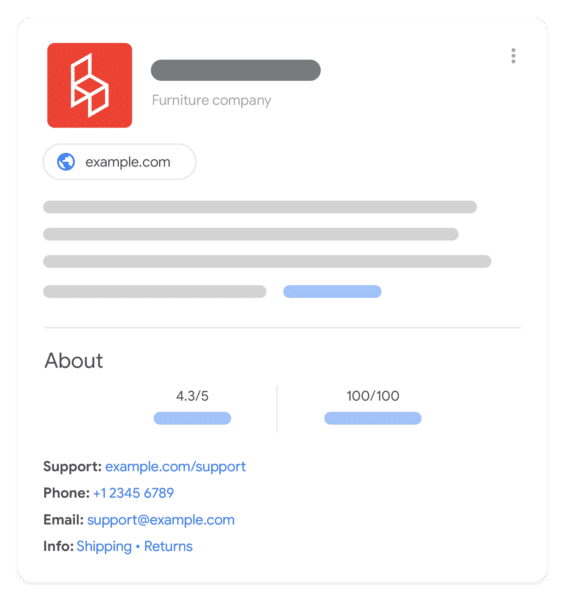
How it is used. This markup can be used in Google Search knowledge panels and other visual elements, such as attribution. It should help searchers “more easily find your organization’s details on Google Search,” the company said.
Here is the illustration of how it looks:
Reporting. Google updated the reports in Google Search Console to support validation of these new fields. The rich results testing tool to support validation of these new structured data fields was also updated.
“The existing logo report in Search Console and validations in the Rich Results Test are now replaced with more extensive organization validations in the Rich Results Test,” Google wrote.
“You can test your organization structured data using the Rich Results Test by submitting the URL of a page or a code snippet. Using the tool, you can confirm whether or not your markup is valid instantly,” Google added.

Why we care. Expanding the fields included in Organization structured data should help you communicate effectively to Google more information about your business or organization.
Google Search will use that information to deliver accurate phone numbers, addresses and other business identifiers, which should help searchers find and contact businesses that use Organizational structured data markup.
Courtesy of Search Engine Land: News & Info About SEO, PPC, SEM, Search Engines & Search Marketing
Wednesday, November 29th, 2023
Most Americans have spent November watching Black Friday ads. But on the other side of the pond, most of their British cousins have been watching Christmas ads (a.k.a., “adverts”).
Yes, Black Friday sales have become common in the U.K. over the past decade, but Brits don’t celebrate Thanksgiving. So, right after Halloween, most digital marketers in Old Blighty launch their Christmas ad campaigns.
If digital marketers in the U.S. want a sneak preview of creative effectiveness in December, then they should find a quiet moment during the current shopping frenzy on this side of the pond to analyze and evaluate what are the most effective Christmas ads for 2023 over in the U.K.
Measuring advertising effectiveness
In this article, I utilized DAIVID, an AI-driven creative effectiveness platform, to analyze and evaluate advertising effectiveness.
DAIVID has created a Creative Effectiveness Score (CES), a composite metric that combines the three main drivers of effectiveness: attention, emotions and memory.
Ads are evaluated using facial coding, eye tracking, and survey responses to determine which had the biggest emotional and business impact on viewers. Altogether, 3,600 respondents took part in the study, which analyzed 24 Christmas campaigns.
The UK’s most effective Christmas ads this year
Using DAIVID’s methodology, here are the six most effective Christmas ads from Great Britain that should have the biggest impact on Christmas shoppers’ hearts, minds and wallets during this year’s festive season (unless you’re into Festivus).
1. “The World Needs More Santas | Coca-Cola,” with a creative effectiveness score (CES) of 7.61 out of 10.
2. “The LEGO Group Holiday Hero,” with a CES of 7.55
3. “Boots Christmas Advert 2023 | #GiveJoy | Boots UK,” with a CES of 7.27.
4. “Duracell | Bunny Saves Christmas”
5. “Good as Gold | Shelter,” tied with a CES of 7.11.
6. “Snapper: The Perfect Tree | John Lewis & Partners | Christmas Ad 2023,” tied with a CES of 7.11.
Dig deeper: 3 key trends reshaping YouTube marketing today
Get the daily newsletter search marketers rely on.
What makes these ads effective?
I asked Ian Forrester, CEO and founder of DAIVID, for his take on this year’s most effective holiday ads:
- “Coke certainly brought the Christmas fizz with its ‘The World Needs Santa’ campaign, which generated one the strongest emotional reactions of any Xmas ad this year. But the spot did more than just pack an emotional punch.”
- “Like LEGO and Boots’ ads, which make up the rest of the top three, it grabbed people’s attention by trying something different from the usual festive fare and combined it with strong branding.”
- “Other ads, such as Shelter, also did well, but missed out on the top three because of poor brand recall. With so many festive ads coming out at the same time, advertisers need to do everything they can to wrestle attention away from their competitors by doing something different and memorable.”
Now, I’ve known Forrester since 2012, when he worked at Unruly. And over the years, we used to discuss the most shared Christmas adverts each year, until he left that company in 2019.
Back then, the retailer, John Lewis, and its ad agency Adam & Eve/DDB often created the Christmas advert at the top of the chart. This included “Monty the Penguin” in 2014, “Man on the Moon” in 2015, “Buster the Boxer” in 2016, and “The Boy and the Piano” in 2018.
But they seemed to have lost their magic formula for creating tear-jerking (but festive) ad fare somewhere around “Edgar the Excitable Dragon” in 2019, “Give a Little Love” in 2020, and “Unexpected Guest” in 2021.
Digital marketers on this side of the pond can guess what happened next. John Lewis changed agencies. Saatchi & Saatchi and production company Megaforce, which took over the creative reins this year for the first time, produced “Snapper: The Perfect Tree.”
Forrester’s ad research company had taken John Lewis’s Christmas campaigns from the last 13 years and ranked them using their CES yardstick. Altogether, 1,950 respondents took part in the study.
What did DAIVID discover?
Well, “Snapper: The Perfect Tree” was among the top four (or five) most effective John Lewis Christmas ads, behind only “Buster the Boxer” with a CES score of 7.4, “Man on the Moon” with 7.3, “The Boy and the Piano” with 7.2, and tied with “Monty the Penguin” with 7.1.
So, what does that mean?
Forrester said:
- “While this year we saw a new agency at the helm, Saatchi & Saatchi didn’t mess too much with the winning John Lewis formula, but still elevated itself above the sea of sameness. ‘Snapper: The Perfect Tree’ looks and feels like a John Lewis Xmas ad.”
- “That includes wheeling out many of the tried-and-trusted John Lewis emotions – including warmth, aesthetic appreciation and joy – to good effect. These emotions played a huge role in driving overall effectiveness.”
- “The ad also scored well for attention, the second strongest we have ever seen from a John Lewis Christmas ad, and decent branding resulted in a strong brand recall score. Yet strong negative emotions, most notably confusion, prevented the ad from finishing higher up the chart.
- “This was largely down to its portrayal of a Venus flytrap as a Christmas tree. This surprised people and many found it funny, with 14.7% of viewers finding it hilarious, but it also confused almost as many people (14.0%). High levels of boredom (11.2%) also held the ad back from finishing in the top three.”
There you have it: Critical data and strategic insights.
And that’s a winning combination, no matter what month it is or what side of the pond you’re on.
Dig deeper: Top video marketing trends for 2023 and beyond
Courtesy of Search Engine Land: News & Info About SEO, PPC, SEM, Search Engines & Search Marketing
Tuesday, November 28th, 2023
YouTube Shorts ads are being rolled out to more advertisers as the solution moves from beta to general availability.
For the first time, Marketers are reporting the ability to choose Short ads as a video format, integrate them with in-stream ads and combine them with in-feed ads.
While many advertisers worldwide are finally gaining access to these new options, Google notes that this feature is not yet available on all accounts, but will be rolled out to all advertisers within the coming months.
Why we care. PPC consultant Kristian Maltzahn, who was the first to flag the feature on LinkedIn, told Search Engine Land:
- “YouTube the Shorts format is what everyone is talking about right now, so I’m really excited about this!”
- “The Shorts format opens up for a whole new way of approaching YouTube Ads. YouTube ads have for a long time been a platform for TV-quality advertising, which is of course really interesting and still very relevant. However I think the demand from consumers is changing, which we have seen with ads on platforms like TikTok and Instagram Reels.”
- “I think YouTube Shorts welcomes that form of demand and makes it possible for marketers to embrace it. I think YouTube chose not to make the format exclusively available for marketers at first, to make sure that users wouldn’t be introduced to a new format that was pumped full of ads.”
- “So the fact that YouTube are now opening up for more exclusively advertising on Shorts, I think is a testament to how quickly the format has gained popularity.”
Getting started. To check if the YouTube Shorts ad format is available on your YouTube Ads account, go to:
- Create Campaign.
- Choose “Create a campaign without a goal’s guidance.”
- Select “Video.”
- If the feature is available on your account, you will find it under Video in the Efficient Reach section.
Expansion. Google Ads is reportedly planning to expand this feature to additional video campaign formats in the near future, so make sure you stay tuned for future updates.
Get the daily newsletter search marketers rely on.
What Google is saying. A Google spokesperson told Search Engine Land:
- “Ads on Shorts rolled out in 2022 and this year we announced new Shorts for awareness ads solutions. That highlighted the beta inclusion of Shorts in Video reach campaigns and the pilot of YouTube Select Run of Shorts lineups.”
- “Shorts in Video reach campaigns are now generally available to all advertisers, but YouTube Select Run of Shorts lineups remain in limited pilots.”
- “The new YouTube Select lineups are Shorts-specific. And with the evolution of Video reach campaigns, advertisers can opt in to just Shorts or other surfaces, should they choose.”
- “YouTube is a dynamic platform, so advertisers are encouraged to take advantage of the solutions that allow them to achieve their goals fluidly across formats.”
Deep dive. Read our guide to getting your YouTube Shorts noticed for tips and tricks for maximum engagement.
Courtesy of Search Engine Land: News & Info About SEO, PPC, SEM, Search Engines & Search Marketing
Tuesday, November 28th, 2023
Imagine walking into a hotel room and discovering a personalized note next to a plate of your favorite food. Opening the note reveals information about hotel amenities and recommendations for local attractions aligned with your interests. It sounds like a dream scenario, doesn’t it?
Personalization plays a crucial role in various industries, particularly in hospitality. It empowers businesses to customize experiences and services based on individual customer needs and preferences, ultimately leading to heightened satisfaction and loyalty. Ready to explore how personalized approaches can enhance customer loyalty in the hospitality sector? Let’s delve into this captivating domain.
Understanding personalization in the hospitality industry
Personalization stands out as a growing trend in multiple sectors, with statistics revealing a significant uptick in its adoption. According to recent industry reports, the implementation of personalized approaches has increased by 30% across diverse business domains. This surge underscores the recognition of personalization’s pivotal role in enhancing customer experiences and fostering brand loyalty. In particular, the hospitality sector has witnessed a noteworthy 25% rise in incorporating personalized services and amenities, affirming its status as a frontrunner in embracing tailored experiences for patrons.
However, it’s crucial to approach personalization with care to address guest privacy concerns. Overusing or mishandling customer data may make some guests uncomfortable and discourage them from returning. Additionally, not all establishments may have the capacity to provide extensive personalization options, and some efforts might burden staff with increased workloads. Successful implementation of personalization often requires advanced technology and data analytics in the hospitality sector.
The Past and the future of personalization
The concept of personalization in marketing dates back to the 1990s. However, merely targeting customers based on manual segmentation or personalizing a message using their name is no longer sufficient. With technological advancements, particularly in machine learning (ML) techniques and the growing utilization of artificial intelligence (AI), marketing activities can now be highly individualized and personalized.
Machine learning collects three general types of data:
- Customer interaction: Data related to reservations, special requests or other interactions are valuable for the hospitality business.
- Product or service ratings: Beyond traditional reviews, tracking activity is crucial for personalization efforts.
- Customer demographics: Information like age group, location or preferred communication channel is the foundation for personalization marketing systems.
Strategies to personalize loyalty touchpoints in the hospitality sector
After gathering necessary data with ML or AI, the next step involves developing profiles to gain insights into individual preferences, behaviors and their relationship with your business. While customized communication is prevalent in today’s marketing strategies, it’s essential not to overlook it. Utilize customer preferences to suggest personalized dining options, activities or local experiences. The collected data can also inform the design of marketing campaigns aligned with individual customer profiles.
Tailored services, such as offering choices in bedding, room amenities, room temperature, lighting or entertainment based on past stay data, can significantly enhance the guest experience. Real-time personalization enables customizing a customer’s journey during their stay by suggesting local attractions or events—an omnichannel approach can be incredibly valuable here.
Personalize the survey after the stay to encourage completion and gather more data from your customers. Your communication should not end when your guest leaves the hotel or restaurant. Remind customers of your services and regularly update customer profiles to ensure ongoing customization. Adapt your strategies based on evolving market trends. All of this can be managed through a customer loyalty management program.
Leading loyalty programs recognize and celebrate important occasions, offering personalized offers, messages, decorations or small gifts based on individual users’ preferences, spending habits and interests.
Comarch Loyalty Marketing Platform – An exemplar of AI-powered personalization tools
An exemplary tool that facilitates the creation of unique personalization solutions perfect for the hospitality industry is the Comarch Loyalty Marketing Platform. This AI-powered loyalty platform is perfect for delivering personalized customer experiences across multiple touchpoints. It achieves this through four main pillars:
- Loyalty management: Design and launch engaging marketing campaigns for the hospitality sector.
- Data analytics: Easily personalize marketing campaigns and analyze them in a matter of seconds.
- Marketing automation: Building and visualizing customer journeys enables you to send the right message at the right time.
- Omnichannel marketing applications: A dedicated set of frontend apps that enhance customers’ interactions with loyalty programs.
The presented tools and additional features, such as gamification elements, fraud detection or a mobile app, help you build long-lasting customer relationships and, ultimately, lead to improved ROI.
Personalization in the hospitality sector: Conclusion
In today’s dynamic hospitality landscape, personalized experiences can elevate a good hotel stay to a great one. More and more consumers expect brands to understand their preferences and be thoughtful, driving the industry to give their guests what they crave. Tailoring services and creating the ideal experience are key ingredients in increasing customer loyalty. Leverage technologies such as ML or AI in your marketing efforts for personalization and create the trip of a lifetime.
If you want to learn more about trends in hospitality, download the “Hospitality Report 2023″ prepared by Comarch and The Loyalty People.
Courtesy of Search Engine Land: News & Info About SEO, PPC, SEM, Search Engines & Search Marketing
Tuesday, November 28th, 2023
Google is planning to update its Video publisher policy on April 1, 2024.
All video inventory monetized with Google ad code (“Video Inventory”) through AdSense, Ad Manager, and AdMob, in accordance with the Google Publisher Policies, will be impacted.
The move aims to streamline policies across various Google products and align them with current industry standards, such as IAB OpenRTB.
Why we care. Take a look at the revised Policies to see if there’s an impact on your Video Inventory. If your Video Inventory was previously disapproved, and you think it should now comply with the updated policies, you can request a review or appeal starting from April 1, 2024.
How the Video publisher policy is changing.
The updated policies are as follows:
Accurately describe inventory.
- Video Inventory must provide declarations with accurate signals (for Ad Manager, see VAST ad tag URL parameters), including:
- Audibility of ad placement: Audible by default or muted (for Ad Manager, see vpmute parameter).
- Type of ad placement: Video ads serving into video players with video content must be accurately declared as either “In-stream” or “Accompanying Content” placements (for Ad Manager, see plcmt parameter). Video ads serving into non-video player placements do not require declarations, and will be automatically determined by Google based on inventory format as either “Interstitial” or “Standalone” placements.
- “In-stream” means a video or audio ad played within the stream of video or audio content, where the video or audio content is the focus of the user’s visit or explicitly requested by the user. Example: A video ad that is played before, in the middle of, or after the stream of a user-requested video content.
- Accompanying Content” means a video ad played within the stream of video content accompanying the main content of the user’s visit, where the video content is neither the focus of the user’s visit nor explicitly requested by the user. Accompanying Content placements must load within the body of the page, and muted by default. Example: A video ad that is played before, in the middle of, or after the stream of muted video content that takes up a small portion of a primarily editorial page.
- Interstitial” means a video ad played without the presence of any other streaming video content in a transition between content, where the video ad is the primary focus of the page and takes up the majority of the viewport. Example: A video ad that is independent of any other streaming video content, and that is placed in full view in a natural break or transition between content.
- Standalone” means a video ad played without the presence of any other streaming video content, where the video ad is not the focus of the page. Example: A video ad that is independent of any other streaming video content, and that is placed in a banner at the right rail of an article page.
Use supported implementations
2. In-stream or Accompanying Content placements must use the Google Interactive Media Ads SDK or Google Programmatic Access Library on supported platforms, unless through an official Google Beta program.
- Partners and publishers cannot use Interactive Media Ads products to monetize YouTube content. For YouTube content, partners and publishers must monetize through the YouTube Partner Program.
3. Interstitial or Standalone placements must use Google-provided solutions: on web: Google Publisher Tags; in app: the Google Mobile Ads SDK (for Ad Manager; for AdMob).
- The Google Interactive Media Ads SDK is not allowed for Interstitial or Standalone placements, except for placements in games.
Protect advertiser value.
4. Video Inventory content or controls (for example, play, pause, mute, skip, or dismiss), including ad content or controls where provided, must not be obstructed, hidden, or non-functional.
5. For In-stream placements, audio ads must not be requested or served in muted placements.
Respect the user.
6. Video Inventory may autoplay, provided that:
- Only one Video Inventory across all placement types may autoplay with sound at any time.
- Additionally for In-stream or Accompanying Content placements, only one video player may autoplay in view at any time.
- The ad must not autoplay until at least 50% of the ad unit is visible.
7. Video Inventory may be sticky, provided that:
- A dismiss option is presented for the entire duration of the video or ad content. This option must not be hidden, obstructed, or non-functional.
- For In-stream or Accompanying Content placements, the video player must start in the main content and only transition to a sticky placement as a user scrolls the video player off the page.
Terminology update. In Ad Manager, terms like “instream” or “in-stream” include both “In-stream” and “Accompanying Content” as defined in the updated Policies. Ad Manager Video Inventory categorized as “In-stream” or “Accompanying Content” must comply with the corresponding requirements outlined in the Policies.
Get the daily newsletter search marketers rely on.
What Google is saying. A Google spokesperson told Search Engine Land:
- “We’re updating our Video Publisher policies to align with new IAB standards around audibility and video placement, which we helped develop.”
- “We previously shared with our partners that we would be adopting these standards and are now formally updating our policies to reflect this update.”
Deep dive. Read Google’s current Video publisher policy to compare the planned updates which will come into effect next year.
Courtesy of Search Engine Land: News & Info About SEO, PPC, SEM, Search Engines & Search Marketing
Tuesday, November 28th, 2023
Google Search supports discussion forum and profile page structured data. This functionality allows Google to show “first-person perspectives from social media platforms, forums, and other communities” within the search results.
In addition, Google added new Search Console reports to support those who added structured data to their pages, the company announced.
Profile page structured data. The new profile page structured data and markup is for any site where creators, either people or organizations, share first-hand perspectives. This markup will help Google highlight the creator’s name or social handle, profile photo, follower count, or the popularity of their content in the Google search results.
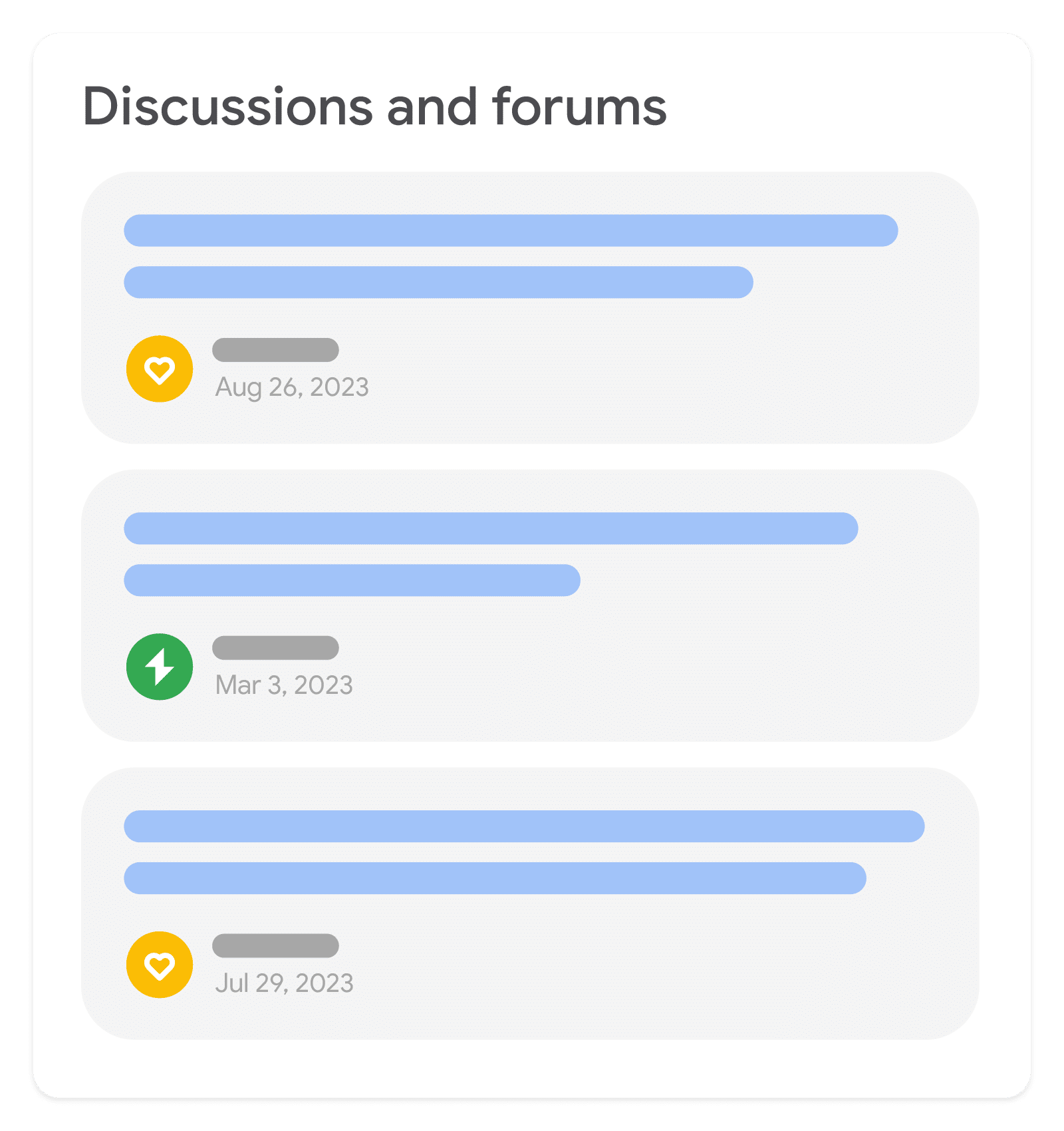
This information is also available in the Perspectives and Discussions and Forums search result features.
Here is what it may look like:

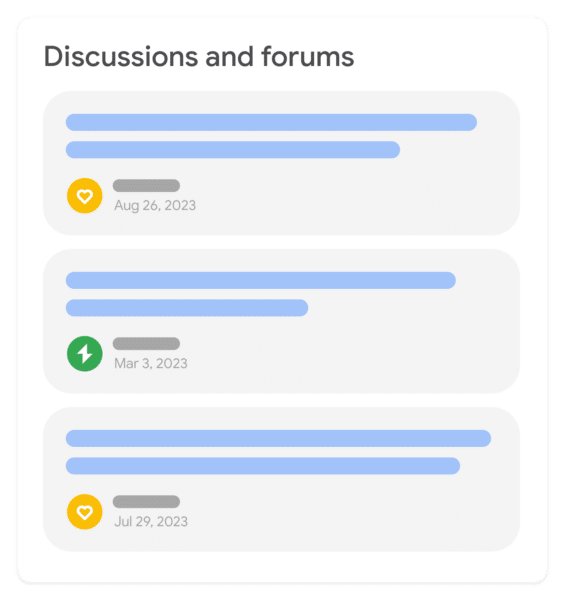
Discussion forum structured data. The new discussion forum structured data and markup is for any forum-style site where people collectively share first-hand perspectives. “When forum sites add this markup, Google Search can better identify online discussions across the web and make use of this markup in features such as Discussions and Forums and Perspectives,” Google explained.
Here is what it looks like:
Changes to Q&A markup. Google also updated its Q&A markup to say if you are already using Q&A markup for your question and answer user forums. The company is updating the Q&A structured data documentation to be more in line with the richness of the new discussion forum guidelines. You don’t need to use both types of structured data on the same page. You should instead use the one that’s best suited to your use case:
- Q&A forums: If your forum is structured by a question that’s followed by answers, use Q&A markup.
- For general forums: If your forum structure is more general and isn’t strictly question and answer content, use
DiscussionForumPosting.
Search Console reports. Google added new Search Console reports, which maybe why the tool went down earlier today, to help site owners monitor discussion threads and profile page markup issues. These reports show you valid items related to your marked-up pages. The company also updated the Rich Results Test to help you test and validate your markup.
Here are screenshots of those reports:


Why we care. With the rise of the new personalized search features, including how Google is promoting creators more in search through perspectives and other areas, it may make sense to implement these new structured data types. Google probably won’t support these elements forever but you may get a higher click-through rate if you add these to your pages.
Courtesy of Search Engine Land: News & Info About SEO, PPC, SEM, Search Engines & Search Marketing