Archive for the ‘seo news’ Category
Tuesday, March 12th, 2024
Joe Biden said he would sign legislation banning TikTok in the U.S.
The House of Representatives will vote this week on a legislation giving TikTok’s owner, China’s ByteDance, six months to divest the app. If ByteDance doesn’t comply, TikTok might face a complete ban in the U.S., affecting its 150 million users.
When asked by reporters to comment on the vote, President Biden said: “If they pass it, I’ll sign it.”
Why we care. A U.S. ban on TikTok would significantly impact advertisers, especially those targeting Gen Z. This demographic favors TikTok over platforms like Google, making it a crucial channel for advertisers seeking to reach this audience.
Next steps. While the White House offered technical support in drafting the bill, White House press secretary Karine Jean-Pierre mentioned earlier this week that the TikTok legislation “still needs some work” before reaching a point where President Biden would endorse it.
Legislation proposals. The proposed bill adopts a dual strategy. Initially, TikTok’s owner ByteDance will be forced to divest the platform within 180 days of the bill’s enactment; failure to do so will result in its prohibition in the U.S.. Additionally, the bill sets up a clear procedure, giving the executive branch the power to limit access to apps owned by foreign eadversaries, especially if they pose a national security threat.
Security concerns. The vote is being held to address concerns related to national security surrounding TikTok’s ownership. The app is owned by ByteDance, which is based in Beijing and therefore falls under China’s controversial cybersecurity laws. These laws, among other things, contain provisions that could potentially require TikTok to hand over U.S. user data to the Chinese Communist Party upon request.
White House ban. Amid security concerns, President Biden banned almost four million federal government employee from using TikTok on government devices. However, those same concerns didn’t stop the president from joining the platform to promote his re-election campaign last month.
What TikTok is saying. TikTok accused U.S. Senators of staging a “predetermined” vote to ban the platform in the U.S. The platform said in a statement:
- “This legislation has a predetermined outcome: a total ban of TikTok in the United States. The government is attempting to strip 170 million Americans of their Constitutional right to free expression.”
- “This will damage millions of businesses, deny artists an audience, and destroy the livelihoods of countless creators across the country.”
Get the daily newsletter search marketers rely on.
Deep dive. Read TikTok’s statement in full for more information.
Courtesy of Search Engine Land: News & Info About SEO, PPC, SEM, Search Engines & Search Marketing
Monday, March 11th, 2024
This Tuesday, Google will roll out a change to the Core Web Vital metrics where it will replace First Input Delay (FID) with Interaction to Next Paint (INP) as a Core Web Vitals metric. This March 12th you will see FID go away and INP take its place.
Please know that this is unrelated to the ongoing March 2024 Google Core update, core updates and Core Web Vitals have zero to do with each other.
On March 12, 2024 Google will replace First Input Delay (FID) with Interaction to Next Paint (INP) as a Core Web Vitals metric. The news of INP replacing FID is not new, and we knew it was coming, Google prepared us, and this Tuesday it will happen.
What is Interaction to Next Paint? As a reminder, INP is a metric that uses data from the Event Timing API. It assesses the responsiveness of a webpage. An interaction that causes a page to become unresponsive results in a poor user experience, Google said. INP observes the latency of all interactions a user has made with the page and reports a single value which all (or nearly all) interactions were below.
Google provided the following example of what poor versus good responsiveness looks like:
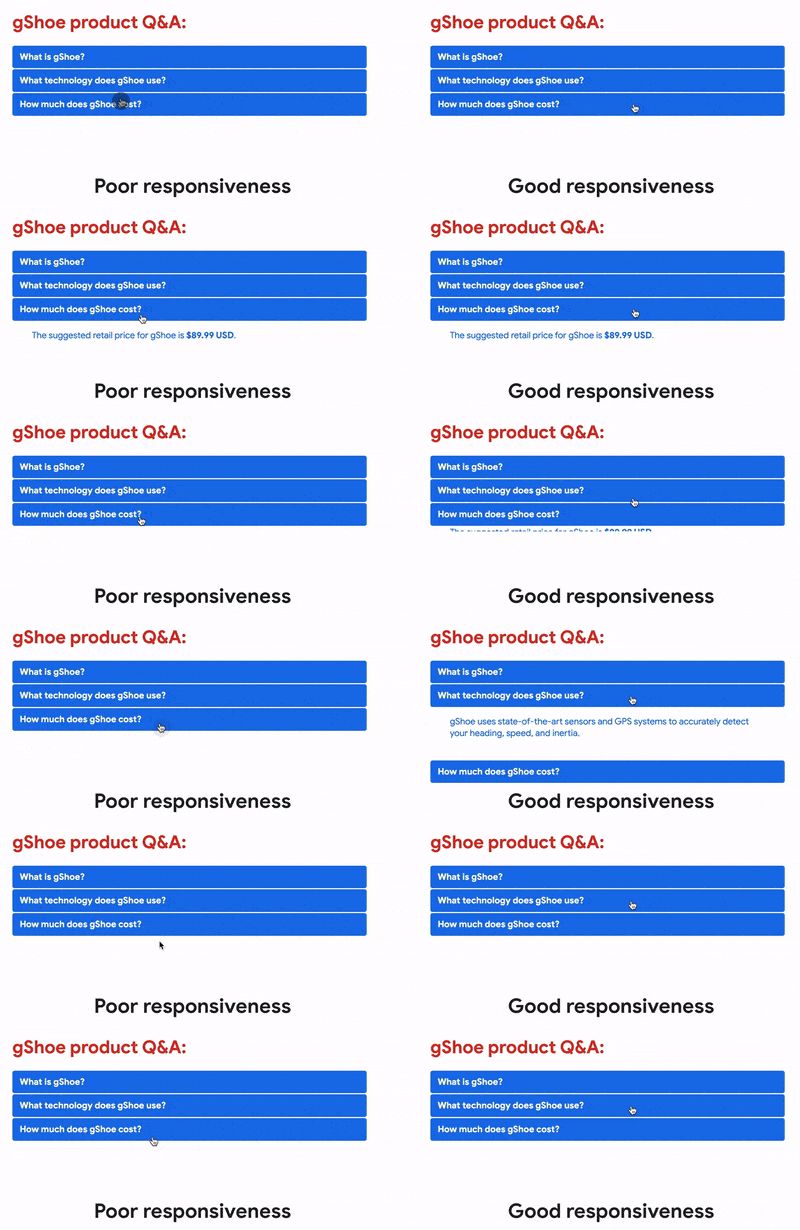
On the left, long tasks block the accordion from opening. This causes the user to click multiple times, thinking the experience is broken. When the main thread catches up, it processes the delayed inputs, resulting in the accordion opening and closing unexpectedly.
What is changing. Google will replace the FID metric with the INP metric as part of the Core Web Vitals on March, 12 2024. Google Search Console will include INP in the Core Web Vitals report later this year so you can start measuring your new INP scores.
When INP replaces FID in March, the Google Search Console report will stop showing FID metrics and use INP going forward.
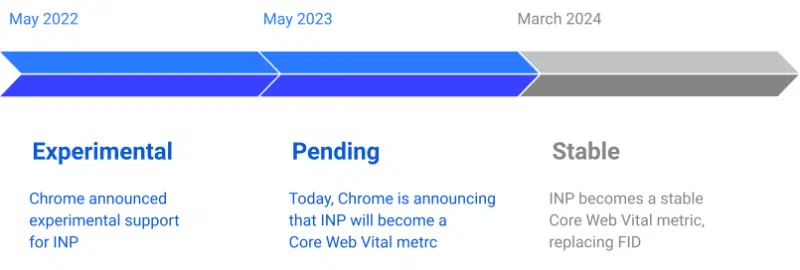 Timeline for INP change
Why we care. A lot of SEOs have focused a lot of time on Core Web Vitals and the FID score, for better or worse. Now those same SEOs will likely shift their focus from FID to INP. Here is a guide from Google on how to optimize for INP. We had a while to prepare for this change, Google even added the new INP reports to Search Console mid-last year.
Overall, I still recommend you don’t get bogged down in these metrics. Even Google says they’re only one aspect to consider when looking to improve your site’s page experience.
The fact that Google released the March 2024 core update during the same time that this Core Web Vitals changes is rolling out will confuse a lot of SEOs and site owners. In short, if you see a drastic ranking drop during the next few weeks, it is likely related to the Core update or Spam update and unrelated to the Core Web Vitals metric change.
In short, you know when browsing your website, whether it is responsive and fast. You don’t always need a third-party tool to tell you that. So make excellent sites for your users but don’t obsess about these scores. So take a look at your INP score and see if there are quick improvements you may want to make, or not.
Courtesy of Search Engine Land: News & Info About SEO, PPC, SEM, Search Engines & Search Marketing
Friday, March 8th, 2024
TikTok accused U.S. Senators of staging a “predetermined” vote to ban the platform in the United States.
Next week, the U.S. House of Representatives will vote on legislation that gives TikTok’s owner, China’s ByteDance, six months to divest the app. If it doesn’t, TikTok could be completely banned in the United States, losing its 150 million-strong user base in America.
In response, the app suggested that the outcome of the vote was already decided and voiced concern that it would cost people their livelihoods.
What TikTok is saying. TikTok said in a statement:
- “This legislation has a predetermined outcome: a total ban of TikTok in the United States. The government is attempting to strip 170 million Americans of their Constitutional right to free expression.”
- “This will damage millions of businesses, deny artists an audience, and destroy the livelihoods of countless creators across the country.”
Why we care. A U.S. ban on TikTok would significantly impact advertisers, especially those targeting Gen Z. This demographic favors TikTok over platforms like Google, making it a crucial channel for advertisers seeking to reach this audience.
Security concerns. The vote is being held to address concerns related to national security surrounding TikTok’s ownership. As TikTok is owned by the Chinese multinational ByteDance, it falls under China’s controversial cybersecurity laws. These laws, among other things, contain provisions that could potentially require TikTok to furnish U.S. user data to the Chinese Communist Party upon request.
Forced to sever ties? The bill is set to undergo a full House floor vote next week, following a unanimous approval of 50-0 by a cross-party group of 20 lawmakers that form the Select Committee on the Chinese Communist Party on March 7. However, the bill must receive Senate approval before becoming law. Announcing the result of the initial vote, House Majority Leader Steve Scalise said on X:
- “The @HouseCommerce Committee just voted 50-0 to force TikTok to sever their ties with the Chinese Communist Party. I will bring this critical national security bill to the House floor for a vote next week.”
Reaction. TikTok, asserting that it has never shared, nor would share, US user data with the Chinese government, reacted to the initial vote results by prompting its users to take action. Users received notifications urging them to “call your representative now” and encourage them to vote against the measure. This mobilization led to a surge of phone calls from users to Capitol Hill, with lawmakers reporting an influx of calls urging them not to support the measure.
Get the daily newsletter search marketers rely on.
Deep dive. Read TikTok’s statement in full for more information.
Courtesy of Search Engine Land: News & Info About SEO, PPC, SEM, Search Engines & Search Marketing
Friday, March 8th, 2024
Reddit is piloting a free suite of tools designed to help businesses improve their engagement with consumers.
The new feature, Reddit Pro, provides tools and insights to guide businesses on where, when, and how to effectively participate on the platform — whether it’s alongside their Reddit ads or by itself for more natural interaction.
New tools and insights. Reddit Pro is a user-friendly interface that houses a range of tools for boosting engagement, such as:
- AI-powered insights: Businesses can leverage these insights – such as trending topics – to join or start conversations, connect with new and existing audiences, and inform the way they interact with on the platform.
- Performance analytics: These insights allow businesses to analyze how well their regular posts are doing, shape their strategy, and increase engagement.
- Publishing tools: This assists businesses in creating and scheduling profile posts, offering simple steps to start contributing to Reddit communities.
- Pro dashboard: Businesses can utilize this to monitor their overall organic engagement and track monthly progress in comparison to account activity.
Paid ads. Reddit Pro users can also give their organic profile posts a boost by turning them into paid ads on Reddit with a simple click of the “promote” button using Reddit Pro, without leaving reddit.com.
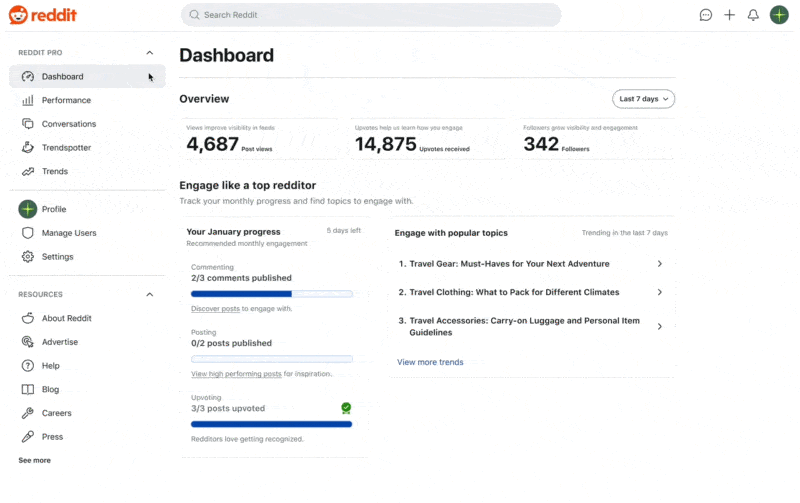
Why we care. Reddit Pro tools can help businesses have real and meaningful conversations with consumers, moving beyond just posting content. This approach aims to make marketing more effective and could lead to increased conversions.
Accessibility. If your business wants to try Reddit Pro, you can get access on a first-come, first-served basis by reaching out to Reddit directly.
Right now, Reddit Pro is still in the testing phase with more features expected to be added later this year.
Uptake. So far, over 200 businesses, including well-known names such as Taco Bell, the NFL, and The Wall Street Journal, have integrated Reddit Pro into their digital strategies.
Results. During the initial alpha testing phase with approximately 20 businesses, Reddit reported its Pro partners, on average, generated 11 additional posts and comments per month, experiencing a 35% increase in monthly upvotes for their organic content.
What Reddit is saying. Reddit Chief Marketing and Consumer Experience Officer, Roxy Young, said in a statement:
- “Through Reddit Pro, we’re connecting companies with communities in a mutually valuable way: unmatched insights and tools for enhanced participation from businesses, both organic and paid, which then drives more relevant and valuable experiences for our users.”
- “Reddit Pro will change the way businesses interact on our platform, and we’re delighted to see so many brands already getting more comfortable and acting like redditors – even mastering the art of the troll – all while building an authentic community around their brand.”
Get the daily newsletter search marketers rely on.
Deep dive. Read Reddit’s announcement in full for more information.
Courtesy of Search Engine Land: News & Info About SEO, PPC, SEM, Search Engines & Search Marketing
Thursday, March 7th, 2024

Marketers are leaving money on the table by focusing only on optimizing campaigns, not customer experiences. A campaign that leads to a customized/optimized landing page can dramatically impact overall campaign economics and customer engagement.
How can you create landing pages that deliver seamless, personalized experiences end to end?
This webinar will provide you with a set of AI-led tools and frameworks that will enable you to:
- Identify underlying drivers of your landing page performance
- Emerging ad formats
- Seamlessly build and manage customized and personalized experiences
- Run a high-impact, high-velocity experimentation program
Learn more by registering and attending “Use Cutting-Edge AI Strategies and Analytics Tools to Master Landing Page Success,” presented by iQuanti.
Click here to view more Search Engine Land webinars.
Courtesy of Search Engine Land: News & Info About SEO, PPC, SEM, Search Engines & Search Marketing
Thursday, March 7th, 2024
Google launched a new measurement tool for advertisers in anticipation of its plan to phase out third-party cookies later this year.
Meridian, an open-source Marketing Mix Model (MMM), has been introduced to help advertisers analyze campaign performance while prioritizing user privacy.
Accessibility. Meridian is currently available to select users. However, Google plans to make it accessible to all marketers and data scientists in the near future.
What are MMMs? Marketing Mix Models are statistical analysis methods that determine the effectiveness of campaigns by measuring the impact of marketing strategies alongside sales and customer retention efforts.
Why we care. Traditionally, Marketing Mix Models (MMMs) have been both costly and time-consuming to develop, often taking weeks, months, or even years. However, Meridian provides a more accessible approach to open-sourcing MMMs, enabling marketers to measure campaign performance efficiently while aligning with stricter online privacy laws.
Key benefits. As explained by Google, Meridian anchors on:
- Innovation: Meridian improves MMMs with innovations like calibration through incrementality experiments, integrating reach and frequency, and providing guidance on measuring search. These enhancements apply to all relevant media channels.
- Transparency: As an open-source solution, Meridian is fully transparent, allowing anyone to review the code and methodology innovations it’s built upon.
- Actionability: Meridian can help marketers to make better decisions by offering rich data inputs, model guidance, and cross-channel budget optimization.
- Education: Meridian users will have access to a range of resources for implementation and use. This includes detailed technical documentation with FAQs for troubleshooting. If users have additional questions, they can connect with Google and partner support for assistance.
What Google is saying. Harikesh Nair, Google’s Senior Director, Data Science, said in a statement:
- “As advertisers search for comprehensive and privacy-durable measurement solutions, MMMs are experiencing a renaissance. “
- “According to a study with Kantar, 60% of US advertisers are currently using MMMs, and 58% of those not using these models are considering doing so in the future. We have observed more customers turning to MMMs, especially performance and full-funnel marketers.”
- “MMMs today are not perfect, but are evolving. With Meridian, we look to help your team navigate toward your future North Star, both through innovation, and by sharing our data in conjunction with an open source model.”
Get the daily newsletter search marketers rely on.
Deep dive. Read Google’s announcement in full for more information.
Courtesy of Search Engine Land: News & Info About SEO, PPC, SEM, Search Engines & Search Marketing
Thursday, March 7th, 2024
Google Ads started limiting country-level location exclusion to 120 entities.
Moving forward, advertisers will receive a warning notification if the number of entities they enter exceeds this limit.
Exclusion list changes. The issue was first flagged by Google Ads marketing agency PPC Sauce on X:
- “I have an exclusion list (all countries but US, or Australia etc.) and have always been able to just plug it in until today.”
The agency then shared a screenshot of the warning notification sent by Google when you surpass the 120-country limit:

What Google is saying? Google Ads Liaison Officer Ginny Marvin said on X:
- “You will see this notification if you try to add more than approximately 120 country level location exclusions. The aim is to simplify location targeting workflows, and we recommend using positive geographic targeting instead.”
Why we care. Google’s guidelines state that where your ads shouldn’t appear is just as crucial for campaign success as where they should appear, so removing advertisers’ control to limit locations may cause concern. However, advertisers looking to exclude locations they haven’t previously targeted need not worry, as Google notes:
- “There’s no need to exclude areas that you haven’t already targeted — your ads won’t be shown in places unless you explicitly target them.”
Get the daily newsletter search marketers rely on.
Deep dive. Read Google’s guide to excluding ads from geographic locations for more information.
Courtesy of Search Engine Land: News & Info About SEO, PPC, SEM, Search Engines & Search Marketing
Thursday, March 7th, 2024
There is no clear connection between social media engagement and page views for news publishers, according to a new study.
Additionally, less than 1% of readers to news articles come from social media, according to research conducted by Memo.
Why we care. Using social media to increase your coverage doesn’t seem to bring as much benefit as before for news publishers. It’s also important to know that just because people engage on social media doesn’t necessarily mean they’re genuinely engaging with the news.
The study. In 2022, Memo conducted research comparing social engagement and article readership. Given the dynamic changes in the social landscape, Memo decided to revisit this study in 2024. The company analyzed 26,000 news articles published between January 20 and February 20, covering a wide range of topics and industries.
The results. Memo investigated the correlation coefficient between social engagement (total reactions, comments, and shares) and readership (unique visitors to news articles). To provide context, a perfect positive correlation is represented by 1, while 0 indicates no correlation. Across the various industries, Memo found that the correlation mostly ranged around or below 0.1. As explained by Memo”
- “Across all the articles and topics we analyzed, we found no clear connection between social engagement and actual readers of the news.”
Exceptions. Among the categories studied, only three showed a tendency toward a low-end moderate correlation: Politics, Sports & Athletics, and Crises (for example, incidents like mass shootings and major brand crises).
What Memo is saying. Memo said in a statement:
- “The social media landscape is shifting. Platforms are adjusting algorithms to de-prioritize news in an effort to combat the spread of misinformation.”
- “While social media used to be seen as the pulse of consumer interest, comms teams today know that it’s not the end-all-be-all.”
Get the daily newsletter search marketers rely on.
Deep dive. Read the study in full for more information.
Courtesy of Search Engine Land: News & Info About SEO, PPC, SEM, Search Engines & Search Marketing
Wednesday, March 6th, 2024
TikTok is encouraging creators to post more high-quality content by expanding its incentives, including:
- Allowing all creators to offer subscription packages.
- Bringing its Creativity Program out of beta.
- Upgrading its Creator Academy.
Why we care. Encouraging creators to share lengthier videos not only expands advertising opportunities for brands but also enhances engagement. Higher-quality content tends to captivate audiences more effectively, offering advertisers a valuable chance to connect with a more engaged viewer base.
Subscription packages. TikTok confirmed it will start allowing all creators to offer subscription packages in the coming weeks. Previously, the LIVE Subscription feature was restricted to live creators. However, the platform is introducing this change to incentivize creators to share more content.
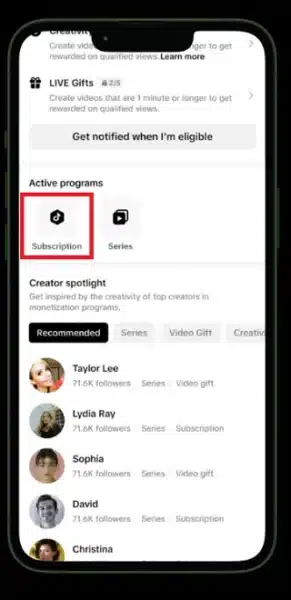
Benefits. By offering subscriptions, creators can enhance their community by offering added value through exclusive content and benefits, such as:
- Badges.
- Personalized Emojis.
- Exclusive Content.
- Subscriber-only chat.
TikTok said that by offering followers such benefits, creators are able to “form dynamic relationships with their community while increasing their monthly earnings.”
Accessibility. Initially, subscriptions will be limited to invite-only creators. However, in the upcoming weeks, eligible creators will have the opportunity to sign up.
Creator Program rolls out. TikTok also confirmed that it is bringing its Creativity Program out of beta, and has rebranded it as the “Creator Rewards Program”. The incentive encourages creators to post longer clips that are high-quality and original in exchange for rewards. As TikTok explained:
- “This program offers higher cash incentives with earnings based on qualified views, giving you the potential to earn 20 times the amount previously offered by the Creator Fund.”
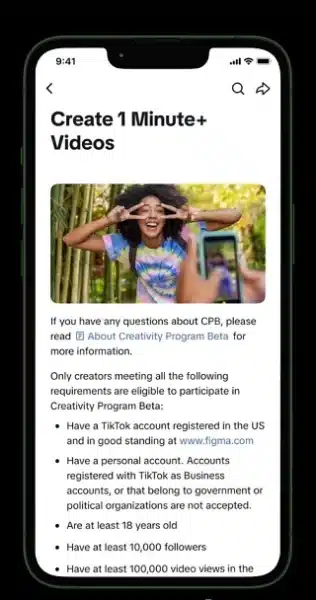
Creator Academy upgrade. Additionally, TikTok is enhancing its Creator Portal in the “Creator Academy” platform. The upgrade includes more and improved courses, articles, videos, and insights to help creators make the most of their efforts on the app. The goal is to offer valuable resources that support creators in improving their skills and achieving success on the platform.
What TikTok is saying: TikTok said in a statement:
- “We’re excited to continue seeing creators find success using our monetization offerings to turn their passions into careers, unlock life-changing opportunities, and drive meaningful impact.”
- “We’ll continue listening to our community for feedback to help inform our decisions, fueling our innovation to provide better ways for our creators to earn and grow, and build an experience that adds value to creators and viewers alike.”
Get the daily newsletter search marketers rely on.
Deep dive. Read TikTok’s announcement in full for more information.
Courtesy of Search Engine Land: News & Info About SEO, PPC, SEM, Search Engines & Search Marketing
Wednesday, March 6th, 2024
Crafting winning ads is crucial for attracting the right audience, enhancing brand visibility and driving business growth in today’s highly competitive paid search landscape.
As we navigate an AI-driven world, we must adapt our strategies to create impactful ads that resonate with their target audience.
This article explores top practices and insightful tips for creating successful paid search ads in 2024, leveraging historical data, incorporating engaging visuals and aligning messaging across multiple channels.
Paid search in an AI-driven world
Effective ads attract the right audience, enhance brand visibility and sustain business growth on platforms like Google and Bing.
We just started getting comfortable with machine learning. Now, we’re learning how to create winning ads in an AI world.
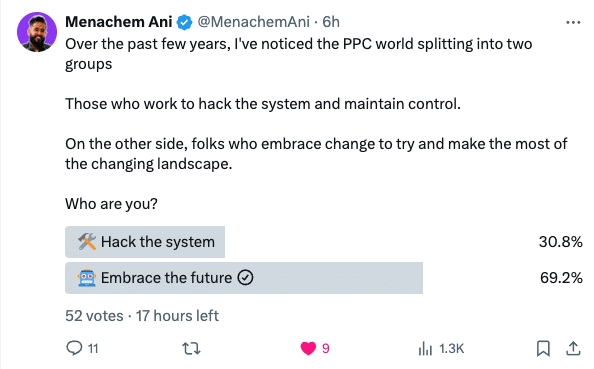
Fellow Search Engine Land contributor and paid search expert Menachem Ani posted a poll on X on how the paid search community feels about the change in the past few years, and the overwhelming response is to “embrace the future.”
While this question pertains to machine learning and not specifically AI, it provides a great backdrop for the world we are working in.
So, how do we create winning ads when two layers of technology promote less human involvement?
Danny Gavin, founder and chief strategist at Optidge Internet Marketing Agency in Houston, TX, said:
- “AI should not be used without consideration in ad creation; while AI is beneficial, human input remains crucial.”
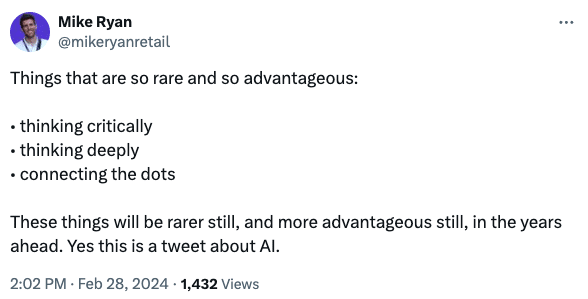
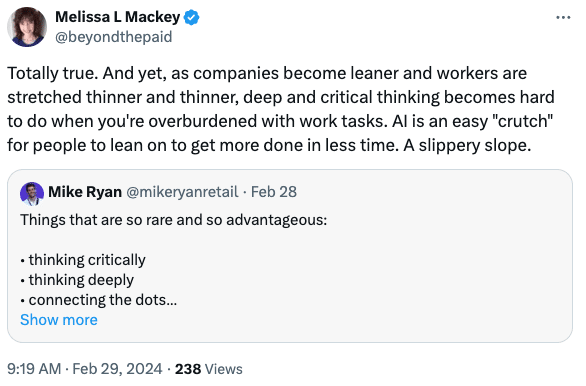
Paid search experts Melissa Mackey and Mike Ryan discuss the diminishing skill of critical thinking as we transition into an AI-driven world in the thread below.
There is a shared agreement that AI may be a support tool due to people’s busy schedules. However, both tweets reflect Gavin’s view that human involvement and critical thinking remain central.
Dig deeper: How AI is changing the game for PPC account managers
Let’s look at ways to leverage human knowledge and AI to create impactful ads this year.
1. Leverage historical data for strategic advantage
Choosing the appropriate data inputs plays a vital role in shaping the ads generated by AI.
Google and Microsoft accounts contain valuable historical performance data and examining winning assets from the past is an excellent starting point for today.
From standard text ads to responsive search ads
Initially, search ads were basic text. As time progressed, standard text ads evolved into expanded text ads.
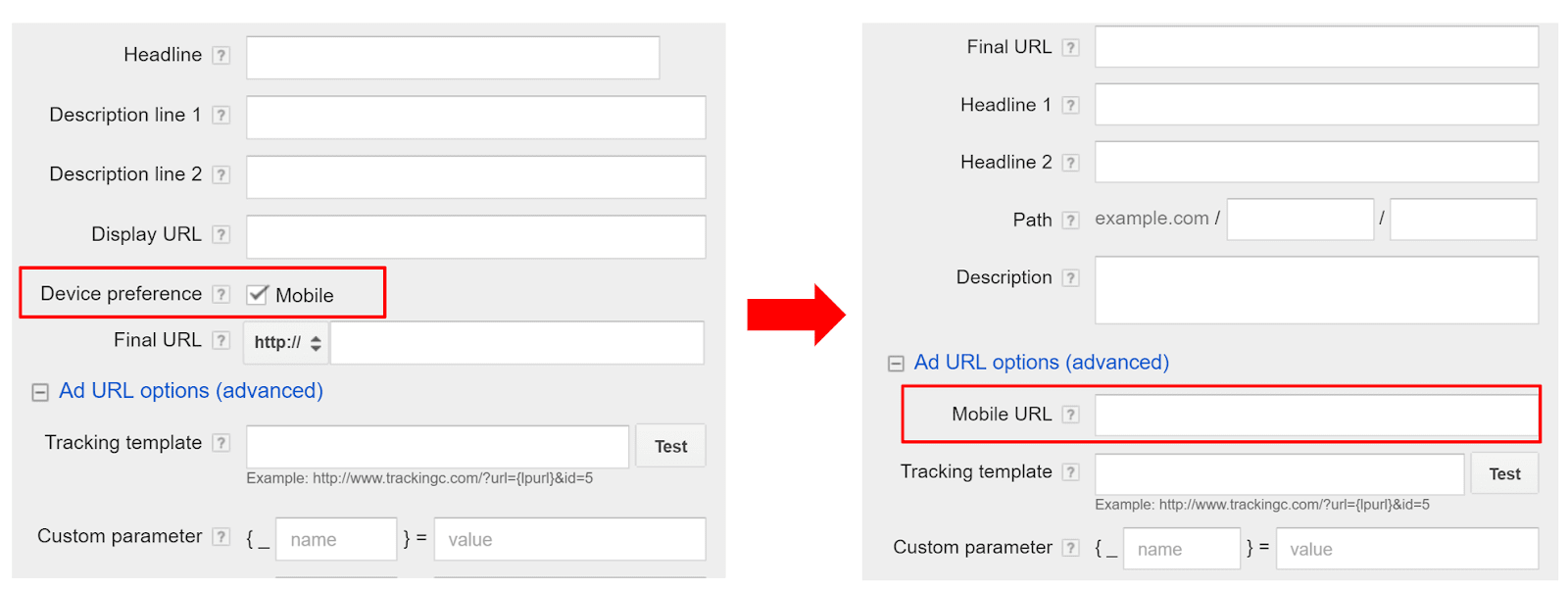 Screenshot from a 2016 Search Engine Land article, which recapped the early days of text ads moving to expanded text ads.
Many accounts in 2024 are still serving both standard text ads and expanded text ads.
- Maintain older ad types until they cease serving or until the responsive search ad demonstrates a noticeable performance boost.
- Consider analyzing successful ad copy from both text ads and expanded text ads. Use the effective headlines and descriptions as a foundation for creating responsive search ads.
- Utilize AI to produce refreshed assets inspired by successful themes and content from previous ad formats, expanding choices and aligning with the character limits of 2024 ad formats.
2. Inspire feelings with images and videos
Consumers discover products through images, product feeds and videos, transforming the resources required to create campaigns that cater to every stage of the buyer’s journey.
Remember that although search ads were groundbreaking, Google’s vast ecosystem encompasses Display, the Discover feed, product feed ads, YouTube and more.
It’s nearly impossible to navigate the online space without encountering ads in the Google network.
Here are some ideas for video and image ad creative that can trigger emotions.
User-generated content (UGC)
These ads highlight the product benefits, often featuring a person with a friendly demeanor in a natural environment.
Most UGC will prompt viewers to visit the website or make a purchase.
This style of content has increased in popularity with the rise of social media and works well on YouTube and in YouTube Shorts format.
Adding text and captions is also beneficial since audiences consume content in various situations and may prefer videos without sound.
Video scripts can be generated with AI, but the essence of UGC lies in sounding authentic rather than scripted. Therefore, scripts should serve as flexible guidelines rather than rigid rules.
Dig deeper: How to reach new audiences with multi-platform search advertising
Lifestyle images
These images help users envision the product in their daily lives or establish a visual connection to a product in action.
When executed effectively, lifestyle photography evokes feelings of aspiration in users, potentially prompting them to act.
Dig deeper: Why strong Google Ads creative is THE priority for advertisers
Get the daily newsletter search marketers rely on.
3. Redefine our measures of PPC success
The notion that marketing must be entirely attributable to be effective is flawed and troublesome.
This idea presents an ongoing challenge for paid search marketers striving to demonstrate their value in a larger platform than just the search network.
Here are a few other ways for marketers to evaluate account data that are helpful when considering ad performance specifically:
Assess success through engagement
Users may not always click on ads, so gauging ad effectiveness based on engagement and viewing duration can reveal if users are watching and engaging with the video content.
Consider the interaction metrics
Ad interactions occur when users engage with ads without clicking.
These metrics are commonly viewed as superficial and may not directly indicate conversions or sales, the ultimate objectives.
Nevertheless, they can serve as early indicators of creative effectiveness.
Embracing these metrics lets brands understand the influence of creativity to create more compelling ads that capture attention.
Google defines “interactions” as:
“The main user action associated with an ad format—clicks and swipes for text and Shopping ads, views for video ads, calls for call assets, and so on.”
Ultimately, interactions are memorable yet challenging to quantify, as they are often subconscious and may not be fully recognized until later.
Don’t let the intangible aspect of ad interactions overshadow a campaign’s success with the target audience.
Focus on the positive impact of ad interactions, even if they don’t always translate to immediate conversions.
Remember, brand awareness and engagement are crucial steps in the customer journey.
A look at ad interactions in a real-world context
To illustrate the concept of ad interactions, here is an advertisement that caught my attention today while watching YouTube.
The Skims ad initially displays in full color, but upon mouse hover, it transitions to a darker shade with a prominent “Shop now” call to action.
If I don’t buy immediately or online, the advertiser cannot track success.
Furthermore, if the advertiser only focused on conversions as a measure of success, this ad would be deemed a failure.
Focusing on ad failures solely due to a lack of direct attribution is myopic when the aim is to craft successful ads.
Remember, this is marketing, not sales.
Recognizing the concept of emphasizing metrics like ad interactions may not follow conventional methods. Nonetheless, it is crucial for paid search professionals to remember that marketing differs from sales.
Connecting with customers is an integral aspect of marketing
Humans tend to buy from brands we remember, so staying top of mind is essential.
How often have we opted to run to Target for toothpaste, even with four other drug stores on the route?
Shopping at Target provides a unique sense of satisfaction. In my teenager’s words, “It’s a whole vibe.”
This store is a familiar place we frequent out of habit and exposure. Ads can play a key role in sustaining this pattern and maintaining the relationship with customers.
4. Design ads differently for multichannel campaigns
Our history with complex buyer journeys led to the creation of Performance Max and Demand Gen.
Performance Max can be a wonderful campaign for remarketing and increasing average order value.
Performance Max also includes campaign types that advertisers had historically either opted out of or had to justify as brand awareness campaigns.
Demand Gen, on the other hand, is Google’s solution to competing with social networks.
These two campaign types certainly require a different approach to ad creation.
Unify messaging
With the rise of Performance Max, paid search ad copy in 2024 isn’t just about creativity but a way to unify messaging across channels.
Lean into consistency
The messaging should uphold consistency across various ad formats in an optimal scenario.
Maintaining brand consistency across different ad types requires human intervention to ensure the same tone and language are used within search engine character limits while adhering to brand guidelines.
Harmonizing the tone and messaging enhances the conveyance of value, recognition and emotion consistently across various advertising formats.
Storytelling is ideal
YouTube ads excel not through flashy graphics or clever wordplay but by telling compelling stories that connect with the audience and inspire action.
Image series excels in multi-touch ad environments
Image ads can also depict products in use, evoking emotions and inspiring consumer aspirations.
Using multiple images with different scenes that tell a story is a great way to demonstrate product or service value at different touch points for your customers.
Prioritize thematic consistency in developing RSA ads over analyzing individual assets.
RSA ads come together like a puzzle where each asset is an individual piece.
To create ads effectively, consider categorizing each asset by theme, like “social proof” or “fear-based” headlines and descriptions.
This approach becomes a tool for easier and more effective ad writing.
Here are some suggestions for themes to split your RSA ad copy lines into while keeping in mind your specific product or service.
- Value proposition: Highlight the core benefits and solutions your product or service offers to customers.
- Unique selling points (USPs): Emphasize what differentiates you from competitors and why customers should choose you.
- Social proof: Showcase positive customer testimonials, reviews, or case studies to build trust and credibility.
- Urgency or scarcity: Create a sense of urgency or limited availability to encourage immediate action.
Creating ad copy themes allows you to group each themed asset and measure performance using the collective theme data.
This can help address the challenge in machine learning, where some assets may not be quantifiable due to limited reach at the individual asset level.
Additionally, you can pinpoint trends in the data as each asset corresponds to a specific category.
Embrace the future of paid search
The world of paid search is constantly evolving and 2024 is no exception.
With machine learning and artificial intelligence increasingly shaping paid search and the platforms, advertisers need to welcome change and master the art of crafting successful ads alongside these technologies.
Most paid search professionals support this approach, as indicated by the earlier poll presented in this post.
By keeping up with current trends, paying attention to engagement metrics and being open to trying new strategies, you can outperform the competition and craft successful paid search ads in today’s competitive environment.
Here are a few additional tips for crafting winning paid search ads in 2024:
- Focus on your audience: Take the time to understand your ideal customer, including their needs, wants and pain points. This will help you create ads that are relevant and resonate with them.
- Use strong calls to action (CTAs): Tell your audience exactly what you want them to do, whether it’s visiting your website, signing up for a free trial, or making a purchase.
- Test different ad variations: Conducting A/B tests provides valuable insights into the ad performance with your audience. Experiment with various headlines, descriptions and visuals to determine what drives higher engagement and conversions based on the specific funnel stage being targeted by the ads.
By following these tips, you will win the paid search ad game in 2024 and beyond.
Courtesy of Search Engine Land: News & Info About SEO, PPC, SEM, Search Engines & Search Marketing