Archive for the ‘seo news’ Category
Tuesday, April 9th, 2024
LinkedIn content has been analyzed to identify posting best practices that lead to the highest success rates.
A new study conducted by Socialinsider reviewed posts shared by active accounts between January 2022 and December 2023 to determine which content generates the most shares, impressions, and engagement.
Key findings. After thorough investigation, researchers concluded that brands and marketers should consider the following to enhance their performance on LinkedIn:
- Opt for multi-image posts for maximum engagement.
- Prioritize video content to increase the likelihood of your posts being shared on LinkedIn.
- Interact with your audience via polls to increase impressions.
- Keep your captions short and pair them with multiple images to boost engagement.
- Encouraging employees to strategically create and manage their own personal profiles can significantly enhance the company’s message on LinkedIn.
- Brands should utilize LinkedIn page analytics to understand their audience better and tailor content to different audience segments.
Engagement. Overall, LinkedIn engagement is increasing – in fact, it’s up 44% year-on-year. However, it’s important to note that brands are also posting more frequently on the platform compared to before, which is believed to be influenced by the shift away from X.
Why we care. Use the conclusions of this investigation to improve your LinkedIn strategy. While there’s no one-size-fits-all solution, using the findings from this study can help you make data-led decisions about the type of content you post.
Multi-image posts. Researchers found that multi-image posts typically receive the highest engagement on LinkedIn, followed by document posts, images, and video. Although carousel posts were phased out by the platform last year, you can still implement a similar strategy by sharing a PDF with each slide featuring a different image.
Video posts. Researchers also discovered that video posts tend to generate the highest average number of shares on LinkedIn. This finding might be particularly relevant to businesses prioritizing brand awareness.
Poll posts. Polls have been found to generate the highest impression rate on LinkedIn. Researchers attribute this to people’s inclination to express their opinions on the platform, with polls providing a straightforward method to do so.
External links. The study emphasized that posts containing links to external websites tend to perform poorly on LinkedIn. One strategy that brands, especially publishers, are using to address this challenge is by posting the links in the first comment of their post instead.
Get the daily newsletter search marketers rely on.
Deep dive. Read the Social Insider report in full for more information.
Courtesy of Search Engine Land: News & Info About SEO, PPC, SEM, Search Engines & Search Marketing
Tuesday, April 9th, 2024

What’s next in first-party advertising? Our community came together in December at World Tour New York to learn about the latest marketing innovations and how to reach customers better. Here’s the scoop on our latest releases and updates — and what they can do for your business.
Companies are now prioritizing first-party customer data in their marketing campaigns. However, changes in data privacy laws, not to mention the fast-approaching cookieless future, make it tough for companies to meet these expectations without the right tools to collect and capitalize on that first-party data.
In December, we announced new Data Cloud integrations with Google Display & Video 360 and LinkedIn. These integrations help companies connect their first-party data and execute automated, personalized advertising campaigns.
Let’s take a look at how these innovations will help your advertising efforts.
Don’t follow the pack — be a leader
Read the 2024 Gartner® Magic Quadrant for Customer Data Platforms. Learn why Gartner named Salesforce a Leader, placing highest in ability to execute and furthest in completeness in vision.
Open the report
What is first-party data advertising?
First-party data advertising uses information collected directly from your company’s customers or users to personalize and target advertising efforts. This valuable data, comprising customer preferences and interactions, enables your business to create highly tailored campaigns, enhancing the relevance of your messaging.
In contrast to third-party data, customers consent to you using their first-party data, which your company directly manages. This leads to customer trust, as well as compliance with privacy regulations.
By letting your customers tell you exactly who they are and what they want, you unlock more effective retargeting, personalized content creation and an overall improved customer experience.
What our new Data Cloud updates mean for your business
As you explore how first-party data advertising can help your company, we want to make sure we tell you both the what and the why behind these new innovations. So what do these Marketing Cloud updates mean for you? You can improve the way you interact with your customers and your marketing systems, to do things like:
- Personalize at scale: With these new Data Cloud integrations, you can personalize advertising using a complete customer profile that unifies first-party data from customers across marketing, commerce, sales, service, or any touchpoint.
- Increase efficiency: The new integrations help you deliver the right message to the right person at the right time. You can do this with rapidly updated segment memberships, near real-time data sharing with advertising partners and suppressing users that have already purchased or have open Service Cloud cases.
- Segment and activate quickly: You can now compress the weeks it takes to build out segments with legacy SQL-based tools into minutes. Drag-and-drop and natural language generative AI interfaces help you create, test and build segments quickly. Then you can immediately activate the new integrations with Google Display & Video 360 and LinkedIn alongside your other channels like email, SMS, web, app and connected devices. This results in a more personalized experience for your customer on their preferred channel.
- Build trust with your customers: With these updates, it’s easier to build trust through messages that are more relevant to your customers and compliant with today’s regulations. The new Data Cloud integrations allow you to launch ad campaigns that are more relevant(using first-party data) and efficient, through the power of automation.
It’s time to redefine the CDP
Dig into use cases that show how to power personalized and connected experiences across your marketing.
Take the next step
What are some new things marketers can do with Data Cloud?
We’ve covered how your business can benefit from these innovations. Now let’s look at some specific ways you can use them to improve your results:
- Create connected advertising experiences across display, video, TV, audio and other channels with Google Display & Video 360. You can improve customer loyalty with engaging and seamless advertising by using unified customer profiles from Data Cloud. This allows you to deliver personalized ads and campaign measurement across multiple channels. For example, a media brand can increase loyal customers and retain at-risk subscribers by using AI insights to engage audiences in Google Ads campaigns, targeting those who are most likely to upgrade or churn with relevant messages and offers.
- Target a network of over 1 billion active professionals on LinkedIn based on job title, function, industry and more. You can use first-party data, combined with AI-powered product interest scoring from Marketing Cloud, Sales Cloud and Service Cloud, and product usage data from your own apps to reach more customers. For example, with Data Cloud, a tech company can create an end-to-end program to increase awareness and promote relevant upsell and cross-sell conversion opportunities to grow their sales pipeline.
Greater efficiency, effectiveness, and personalization are top of mind for every business looking to improve their advertising strategy. Capitalizing on trusted first-party data within your advertising is the key to delivering the experiences customers want — and the campaign performance your company needs.
How Data Cloud saves you time and money
Learn how you can make your marketing more efficient by using AI to optimize campaign performance and spend.
Watch the free demo
Originally published on Salesforce.com on January 16, 2024.
Courtesy of Search Engine Land: News & Info About SEO, PPC, SEM, Search Engines & Search Marketing
Tuesday, April 9th, 2024
A full-funnel PPC marketing strategy is incredibly important.
But do you understand how to implement this strategy in your accounts?
This article will take you step-by-step through the marketing funnel, giving you tactical recommendations on how to keep the marketing funnel in mind when building your PPC strategy and some recommendations on how to measure success.
We’ll use the hot tub industry as an example. I’ll split each section into three parts:
- Keyword research.
- Ad creation.
- Landing page optimization.
Awareness stage
Top-of-the-funnel (TOFU) campaigns are focused on consumers in the awareness stage, when they haven’t yet entered the market for your product or identified a problem that needs solving.
Awareness campaigns are meant to do exactly what they say: to make customers aware of your brand so that when they finally enter the market, you have a leg up due to brand recognition.
A perfect example of this is insurance companies. People don’t need insurance often, but when they do, it sure helps that the Geico gecko is one of the first things you think of.
Keyword research
- Identify keywords that are informational in nature that align with your brand’s offerings and your target audience’s interest.
- Use Google’s Keyword Planner or any other keyword research tool to develop a list of these keywords with a decent search volume.
- A couple of examples of search queries that fall into the awareness phase:
- “Are hot tubs good for you?”
- “Are hot tubs worth it?”
- “How much are hot tubs?”
Ad creation
- Display advertising is a big part of an awareness-based strategy, so it’s important to craft ads that are both visually compelling and effectively show your brand’s value.
- Video ads are another great tool for raising awareness. Use videos to introduce your brand and highlight key features of your products.
- The goal is to entice users to learn more, so use attention-grabbing headlines that are focused on the user’s search for more information.
Landing page optimization
- Design your landing pages so they match your ads’ messaging and visuals. Inconsistent branding and messaging only make the user’s journey confusing.
- Focus your landing pages on providing valuable content that educates the user’s about a specific product or your industry as a whole. Relevant blog posts are a great choice for awareness-based campaigns
- Include clear calls to action (CTAs) to encourage readers to continue down the purchase funnel. CTAs like “download brochure” or “learn more” are great here.
Dig deeper: Guide to PPC top-of-funnel reporting
Get the daily newsletter search marketers rely on.
Consideration stage
Middle-of-the-funnel (MOFU) campaigns are focused on consumers in the consideration stage, where they have officially entered the market for a product. Still, they have not found a solution or product that fits their needs.
Consideration campaigns are meant to give customers the information they need to make a purchase. This could be many different things, like information about the product or service or sales information that could entice the customer to finally purchase.
Keyword research
- Identify keywords related to your products or services that indicate interest by the user. Users in the consideration phase often use keywords like “best” or “review” to help find the best brands and products.
- Use Google’s Keyword Planner or any other keyword research tool to develop a list of these keywords with a decent search volume.
- A couple of examples of search queries that fall into the awareness phase:
- “hot tub sales”
- “Best hot tub brands”
- “Hot tub store”
- “Hot tub comparisons”
- “Jacuzzi hot tub reviews”
Ad creation
- Focus on ad copy that provides valuable information to the consumer while also showing the value of your brand specifically. For hot tub sales, this could include “One year of free service with purchase” and information about the hot tubs.
- Create compelling remarketing ads that keep user’s interested after they’ve interacted with your content.
Landing page optimization
- Design your landing pages so they match your ads’ messaging and visuals. This is consistent across all stages of the funnel. (Branding is important, folks!)
- Highlight social proof of your business and products, such as reviews, testimonials, case studies, etc. These build brand credibility and are incredibly important in building trust with new customers.
- Include clear CTAs to encourage users to proceed to the bottom of the funnel. CTAs like “Start your Free Trial” or “Subscribe to Our Email List” are perfect for the consideration stage.
Conversion stage
Bottom-of-the-funnel (BOFU) campaigns focus on consumers in the conversion stage, where they’ve identified what they want and are ready to purchase.
Conversion campaigns are designed to get users to convert at that moment. If users don’t convert, the rest of the funnel is pointless, so it’s important to ensure your conversion campaigns run as effectively as possible.
Keyword research
- Identify keywords that are transaction or purchase-based. These tend to be longer-tail keywords and could include the product name, model number or words like “buy.”
- Use Google’s Keyword Planner or any other keyword research tool to develop a list of these keywords with a decent search volume.
- A couple of examples of search queries that fall into the awareness phase:
- “Buy Jacuzzi hot tub”
- “Jacuzzi J-LX Smart Tub”
- “Jacuzzi hot tub store near me”
Ad creation
- Focus on ad copy that uses clear, purchase-oriented CTAs, as well as any promotions you have running currently. “Buy Now” or “Request a Quote” CTAs are great here.
- Dynamic remarketing ads that target people who have added items to cart but haven’t converted can be a great tactic for getting people to finally convert.
Landing page optimization
- Your conversion campaign landing pages should be as streamlined as possible so that no friction prevents the user from converting. Many conversion-based landing pages will even remove the top navigation from the page, so the user can only convert or leave the page.
- Include any promotional elements on the landing page, such as discounts, limited-time offers or free shipping.
- This applies to all landing pages, but ensure that the page load times are fast and that it works well on mobile. Nothing feels worse to a user than slow landing pages.
Measurement tips for your full-funnel PPC strategy
So, now that we have our campaigns set up and optimized for every stage of the funnel, how do we determine whether our campaigns are performing well?
Here are a few tips for measuring progress and success across the marketing funnel:
Set up conversion tracking
- Ensure that conversion tracking is set up throughout your site so you can track user’s interactions throughout every stage of the funnel. I recommend using Google Tag Manager for all conversion tracking purposes.
- Define and create conversion actions for every stage of the marketing funnel so you can determine success. Here are some example conversions for each stage:
- Awareness: Blog views, brochure/case study downloads.
- Consideration: Email list subscriptions, free trial sign-ups.
- Conversion: Purchases, quote requests.
Analyzing key performance metrics
- Continually monitor your KPIs to see improvement over time. Metrics like click-through rate and conversion rate can help you determine whether your campaigns are reaching a qualified audience or if you need to pivot.
- Within Google Ads, look at your different audience segments to see when and where people interact with your brand the most and focus on those high-quality segments.
Test, test, test!
- PPC is not a set-it-and-forget-it marketing strategy. As marketers, we should always be A/B testing something to see if we can improve our performance. Whether it be ad creating, landing pages, or targeting, there is no shortage of levers to pull to try and improve your campaigns.
- Optimize your campaigns based on the data you’re seeing so that you continue to improve ad targeting and performance over time.
Dig deeper: Setting PPC goals: How to tailor KPIs and metrics for each funnel stage
Courtesy of Search Engine Land: News & Info About SEO, PPC, SEM, Search Engines & Search Marketing
Monday, April 8th, 2024
As an agency, consultant or in-house provider, delivering quality is a top priority.
But what exactly defines a “quality” SEO service?
Is it solely about achieving results? Or are there other important factors to consider?
This checklist outlines key elements to assess and improve the quality of your SEO services.
Does price impact your service quality?
No, price is not part of how customers would view the quality of your service. However, it can impact their expectations and their perception of the service value.
Did you know that popular methods for measuring service quality, like SERVQUAL, don’t factor in the price? This means the cost of a service isn’t seen as part of its quality.
So, changing your price won’t necessarily make customers think your service is better. They might see the “value” differently, but that’s a separate topic.
How to deliver quality services to your SEO clients from day one
There’s no one way to define quality. It also gets complicated when we’re discussing a service like SEO vs. a physical product.
It’s easy to spot a quality shirt or shoes, but what does that look like when discussing SEO services?
That’s why I think it’s important to have a checklist that you can adapt to your needs and vision. If you’re part of an agency, you can use it to discuss internally with your team or you can measure how you perform against it if you’re working as a freelancer or a consultant.
The SEO service quality checklist
Score yourself on a scale of 1-10 on each of the following items and see how your total measures up out of 50.
1. Tangibles
In a remote-first world, your documented SEO deliverables are your tangibles.
Pay close attention to details and avoid spelling errors. It’s crucial to maintain proper branding and ensure each deliverable is clear and easy to understand.
If your clients frequently ask for clarifications, then maybe the format you’re using isn’t working.
This also applies if you work in-house. If you put effort into your deliverables, people can see that and appreciate it more.
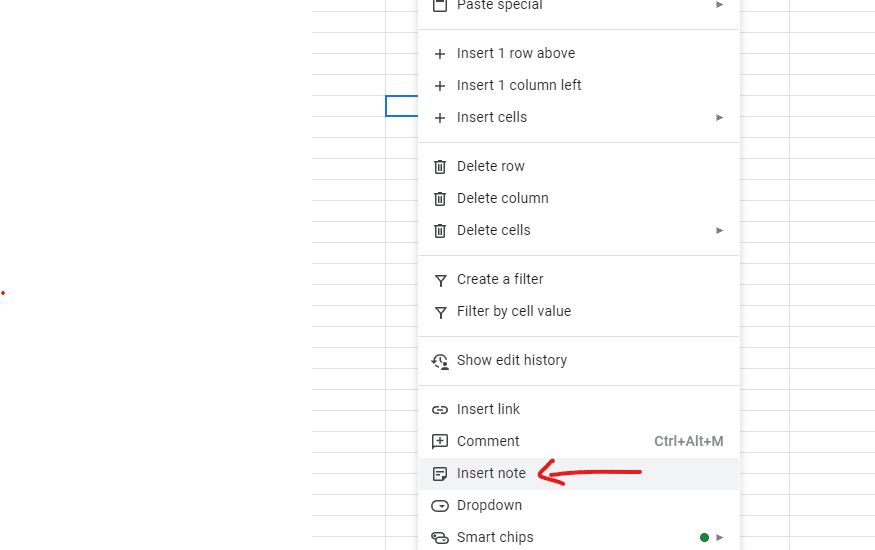
A small thing I like to use is tooltips. In Google Sheets, right-click on the cell title and add a description of what the data in this column means. Anyone who hovers with their mouse over the cell can see this additional information and better understand how to use/read the doc.
2. Assurance
Assurance is about how knowledgeable your team is and if they can communicate that to the clients. In other words, do your clients trust your expertise? Working with you gives the clients assurance that they will achieve the desired results.
Assurance is a feeling based on your and your team’s knowledge and the soft skills needed to communicate and build trust in your expertise and capabilities as a service provider.
So, first and foremost, hire smart people, always upskill and keep learning. SEO is always changing and you should always set time aside for your team to develop. Consider blocking an hour per week for the team to pick up on the latest industry news or SEO tactics.
The second part of assurance is soft skills. You must have good communication skills, patience and tact when communicating with your clients. Learn to explain complex SEO concepts in simple words.
If people don’t understand your work, they will not appreciate it. They can work with someone with less knowledge and expertise, but because they understand their work, they will perceive the quality of the service as much higher.
Assurance is also important since “business moves at the speed of trust.”
Ask yourself: How much do your clients trust you? And how can you improve that?
Another thing to keep in mind is that providing regular updates and reports and having transparent communication about SEO performance can also enhance assurance and trust.
Many people cannot interpret data reports, so make sure your reports are easy to understand. Use the “Keep-It-Simple-Stupid” concept when designing a report for your clients.
Once, a client was puzzled by the “rankings change” data. If rankings improve, such as moving from 10th to third place, the rankings change would be “-7.”
However, a negative number is associated with a drop in performance, which is quite the opposite of what the report is about. So make sure your reporting is easy to understand and walk your clients through them and answer any questions.
Dig deeper: How to build and maintain client trust in your agency
Get the daily newsletter search marketers rely on.
3. Reliability
Reliability comes in three parts:
- Meeting agreed-upon deadlines: No one likes to work with a freelancer or an agency that doesn’t deliver on time. That’s one of the biggest concerns, especially when discussing freelancers. This will impact the perceived quality of your service. It still surprises me that some people don’t use project management tools. Make sure you use one that helps you keep everything in one place and track progress and deadlines.
- Delivering on promises made to your clients: For instance, if you tell the client, “Let me check and circle back to you on this,” you must follow through.
- Implementing SEO strategies and tactics that bring results: I cannot really simplify this here but it’s basically everything you’ve learned in SEO so far.
4. Responsiveness
Replying back to questions and emails in a timely manner is important. I think this may be challenging to balance since some clients are more demanding than others, so you need some tactics to handle this.
I usually start my day by checking emails, checking it again once or twice during the day and one last time before I wrap up. If something is just a quick reply, I do it right away. Otherwise, I will reply and give the client an estimate of when this will be ready. For such situations, I say things like:
- “Thank you for your email. I will need to check with the team and circle back to you by end-of-day tomorrow.”
- “I will add this request to our plan, it should be ready by early next week, please let me know if you’d like to prioritize this request on the current work-in-progress tasks” [and you can also list the current tasks in-progress].
- I sometimes ask ChatGPT to help with those emails. Here’s one suggestion:
- “I’ve noted your request and will prioritize it accordingly in our plan. You can expect completion by early next week.” Then, include an update on the progress of current tasks.
Dig deeper: How to build a values-based agency that drives results
5. Empathy
While this may sound weird to include in a checklist for assessing your service quality, I think it’s a great point. In most instances, you may not necessarily work directly with the business owner.
You’re probably working with their internal marketing team, developers and copywriters; those people are usually very busy and have plenty on their plates. Having empathy in this situation means trying to find ways to support them in executing and making their lives easier by adjusting your deliverables to whatever format makes them comfortable.
I found this to be important if you’re working in-house as well. It’s important to take care of the people you are working with.
When working on the agency side, I would try to help the client’s team with whatever they needed help with. For example, I can request access to their WordPress and update title tags and alt tags myself.
Another thing I do is try to be resourceful. Try to find low-effort opportunities for them to execute on.
Recently, I wanted to launch a bottom-of-funnel page, but to avoid making requests to the content team, I duplicated the existing PPC page, updated the title tags and pushed it live. This helps with two things:
- Collecting initial data to see if this page is worth investing more effort into and optimizing further or if we should create more of the same type.
- Testing things fast while saving internal resources.
Also, give them ample floor time to speak during meetings. Listen to their concerns and try to resolve anything blocking them.
Your job is not to send recommendations and make requests but to partner with different stakeholders to build trust and long-term business relations.
Assessing and enhancing your SEO service standards
Delivering quality SEO services is essential for building trust, retaining clients and driving sustainable results. This checklist can help you systematically assess and enhance the quality of your SEO offerings.
Remember, quality goes beyond just the end outcomes – it’s about the entire client experience, from tangible deliverables to responsive communication and empathetic partnership. Continuously evaluating your performance against these key criteria will help you stay ahead of the competition and cement your reputation as a provider of exceptional SEO services.
Courtesy of Search Engine Land: News & Info About SEO, PPC, SEM, Search Engines & Search Marketing
Friday, April 5th, 2024
Some Google advertisers are convinced Ad Strength is a pointless metric that should be ignored.
The diagnostic tool, touted by the search engine as an effective way to assist marketers in creating better ads, has faced harsh criticism, with some labelling it a “waste of time.” What’s more, many marketers have noticed a peculiar trend: campaigns labeled with a “poor” ad strength rating often outperform those with an “excellent” rating.
With the debate intensifying, how much attention should PPC marketers be paying to Ad Strength?
‘Ad strength score doesn’t matter’
Mateja Matić, founder of Dominate Marketing and an expert in online marketing for over a decade, shared his perspective on Ad Strength. Despite Google’s emphasis on it, Matić revealed that he does not prioritize Ad Strength when building campaigns.
Having conducted countless tests, he said that Google’s responsive ads have never outperformed ads that he set up manually. With this in mind, he does not trust Google’s automated recommendations. He wrote on X:
- “If you are new to Google Ads, one of things you need to be aware of is Google’s recommendations are not necessarily the best things for your account. I can tell you from experience that the majority of things they recommend in your account do not work as good as other things you can do to make your ads better.”
- “I don’t believe Ad Strength score means anything. I have ads that are performing extremely well that have a very bad ad strength score. It says ‘poor’ and yet they’re getting a 10-15% conversion rate on actual leads.”
‘Don’t worry about Ad Strength’
Frederick Vallaeys, Co-Founder and CEO of Optmyzr, offered insights on Ad Strength, highlighting that exceptional campaign performance doesn’t always correlate with a high Ad Strength rating. Ad strength primarily reflects general trends rather than the nuances of individual campaigns and audiences, according to Vallaeys. This is why even if a campaign with a low Ad Strength rating performs exceptionally well, Google will not change the score.
Vallaeys emphasized this point in a blog post, advising experienced advertisers to prioritize other metrics over ad strength:
- “If you’re worried that poor Ad Strength means your ad will serve less frequently, rest assured that ad strength does not impact ad rank or quality score. In other words, if your ad strength is poor, it does not mean Google is deprioritizing your ad in the ad auction.”
- “A higher ad strength doesn’t mean a better CTR or a better conversion rate or a better quality score. If you’re new to advertising or don’t know what’s going to work, consider this a piece of advice. But if you’re an experienced advertiser, go ahead and do what you do best. Don’t just be blinded by the ad strength.”
‘Waste of time’
Anthony Higman, CEO of online advertising agency Adsquire, said he experimented with prioritizing Ad Strength when creating campaigns. Despite his efforts, he found that emphasizing ad strength did not result in an increase in quality leads.
Through extensive testing, Higman concluded that he would prefer campaigns with “poor Ad Strength and good leads” over those with increased expenditure and less relevant leads, which he deemed as a “waste of everyone’s time.” Despite his skepticism regarding Ad Strength’s effectiveness in generating quality leads, Higman suspects it may soon become a metric influencing ad rank. He told Search Engine Land.
- “I believe that they will soon make Ad Strength a factor of ad rank. About two months ago a rep who reached out to us said in an email that ‘ad strength’ is a factor of ad rank. I think he slipped up. When I lost it on him and said ‘excuse me but ad strength is not a factor of ad rank’, he backtracked.”
- “Either way, Ad Strength will probably influence ad rank in the future, which is disappointing. We are just praying that they come up with a fix before everyone abandons ship.”
Google responds
When Search Engine Land raised the PPC community’s concerns about the relevance of Ad Strength, Brendon Kraham, Google’s Vice President of Search & Commerce, addressed the issue. He asserted that Ad Strength is “very important” and emphasized its significance as an evaluative criteria that marketers should prioritize. He said:
- “I don’t know where [the idea that Ad Strength is not important] comes from. Ad Strength is at the centre of what we’re trying to do is because creative is going to be incredibly important, and Ad Strength is going to be the mechanism which we use to evaluate that both in Performance Max and channels like search.”
Kraham went on to explain that Ad Strength assesses the breadth and depth of assets within a campaign before assigning a rating. According to Google, this breadth and depth of assets are crucial for reaching users across various channels, including SERPs, video display, and other creative opportunities. Google prioritizes this aspect as it ensures campaigns are well-equipped to engage users effectively across different platforms and formats.
The role of Performance Max
Kraham noted that PMax offers asset generative capabilities that can enhance Ad Strength. He highlighted that advertisers who leverage PMax’s asset generation capabilities during campaign building have a 63% higher chance of achieving a good or excellent Ad Strength score. This indicates the effectiveness of Performance Max in optimizing ad assets and improving campaign performance. He added:
- “Advertisers need to market to the speed consumers to ensure they serve the right ads to the right user at the right time – but many advertisers, large and small, struggle to deliver the breadth and depth of assets needed. If you leverage [PMax’s] generative capabilities, it really does give advertisers the ability to put the right ads in front of the right user at the right time. It can really deliver on the promise of what marketing has been trying to do for quite some time.”
Is PMax the future of Google Ads?
Kraham concluded by emphasizing that AI represents the future of digital advertising, with PMax serving as a prime example of this concept. He highlighted how PMax provides businesses, especially small ones with limited resources, the ability to deliver a broader range and depth of assets, enabling them to keep pace with consumers’ evolving preferences.
In his final remarks, Kraham reiterated the significance of AI-driven solutions like PMax in empowering businesses to thrive in today’s fast-paced digital landscape. He said:
- “Automation is the future, and PMax is the best example of AI in ads because it’s the only campaign type that runs across inventory using AI; both predictive and generative.”
- “We will continue to build in both cases because we need to help marketers reach consumers at the speed at which they’re operating – PMax is the best manifestation of how to do that.”
Courtesy of Search Engine Land: News & Info About SEO, PPC, SEM, Search Engines & Search Marketing
Friday, April 5th, 2024
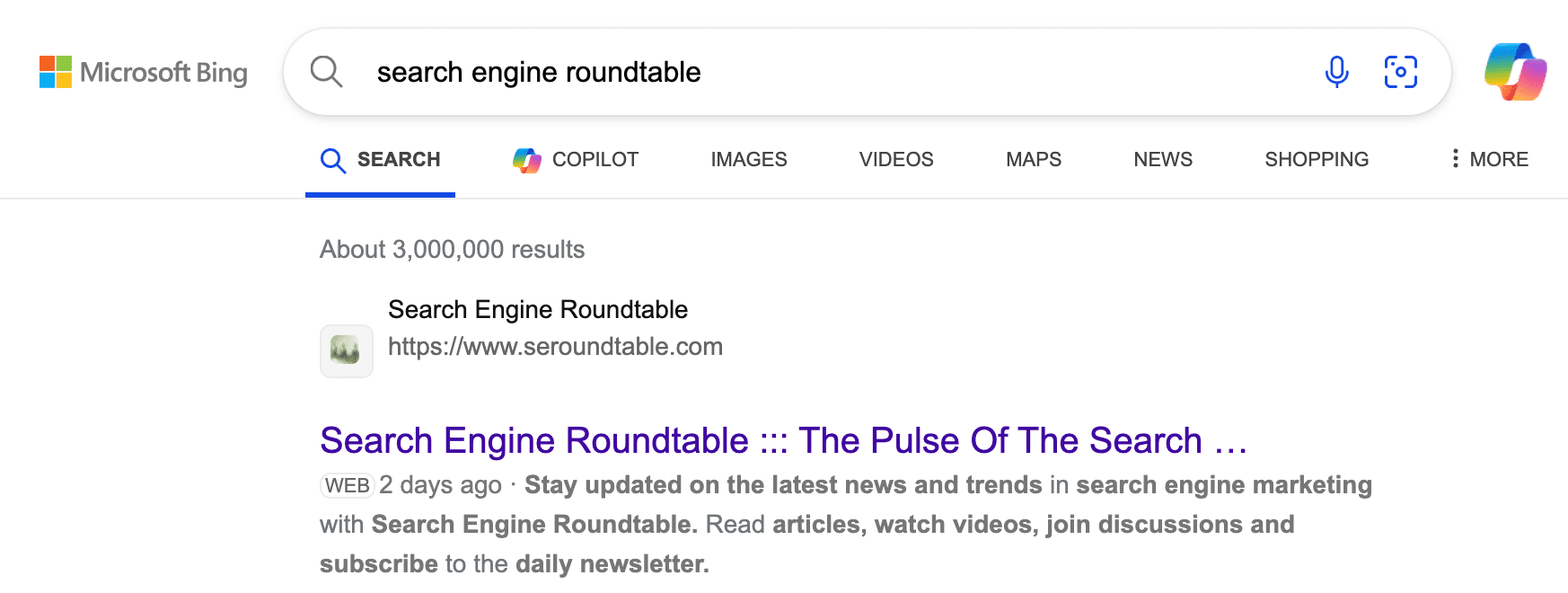
Microsoft is testing removing the cache link from the Bing search results a couple of months after Google officially removed the cache link from its search results.
Fabrice Canel from Microsoft confirmed this is a Bing test, he wrote, “Yes. Our team continuously experiments and tests various experiences to learn and deliver the best possible customer experience.”
The test. Here is a screenshot showing the cache link, which would be in a little down arrow, is missing from this search result snippet in the Bing Search results:
Here is what it looks like with the cache link:
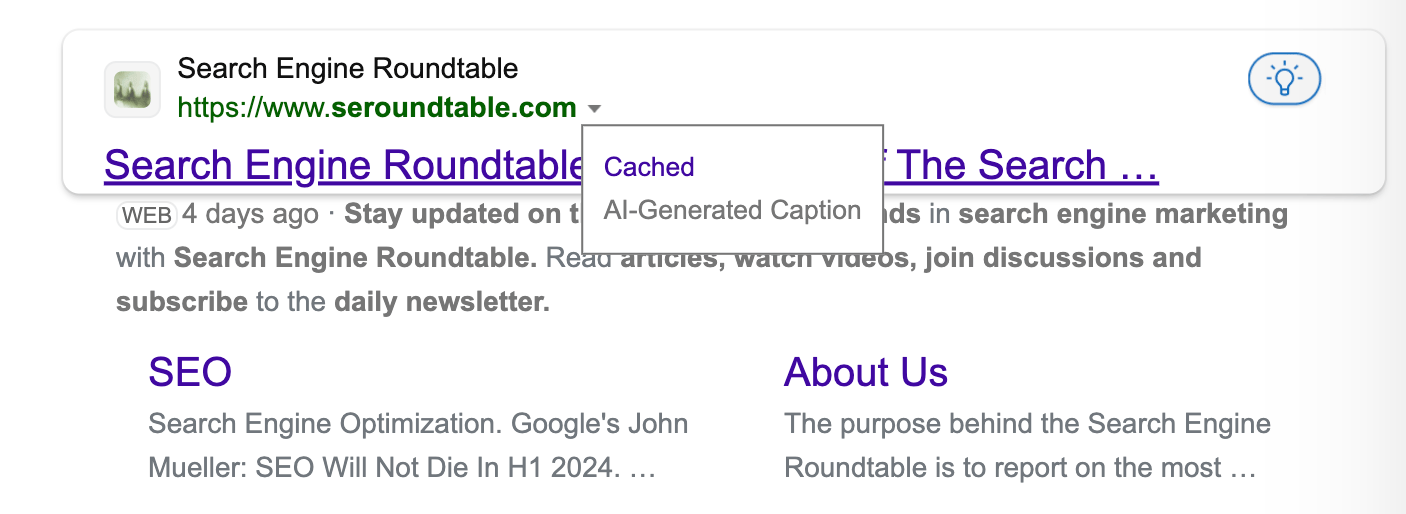
Fabrice Canel from Microsoft said I was on the “nocache flight,” which means a Bing test for not showing a cache link.
Why we care. Some SEOs have sought out other search engines that have cache links, such as Bing, even though the cache is not a good use for debugging SEO issues, it has become a defacto tool for many SEOs and searchers over the years.
Bing has not officially removed the cache link yet, but it may.
The Wayback Machine is an excellent way to see older versions of specific URLs, and it is free.
Courtesy of Search Engine Land: News & Info About SEO, PPC, SEM, Search Engines & Search Marketing
Thursday, April 4th, 2024
LinkedIn today introduced CTV ads, allowing marketers to include ads on CTV platforms in their B2B campaigns.
Advertisers can add CTV to their LinkedIn campaigns through a network of partners including Paramount, Roku and Samsung Ads.
In addition to LinkedIn’s self-service Campaign Manager, the company also has a managed offering, LinkedIn Premiere via its partnership with NBCUniversal.
Why we care. CTV is a growing channel for many marketers, including B2B businesses. As part of the rationale for introducing CTV, LinkedIn cited a study from Demandbase that found 90% of B2B marketers who used it in 2023 believed it helped reach customers.
Building on video. “LinkedIn CTV, including LinkedIn Premiere in partnership with NBCUniversal, builds on our suite of video solutions that help our customers reach their key audiences across our community of 1 billion members,” according to a LinkedIn representative. “Since only 5% of buyers are in market for a new purchase at any given time, it’s important for B2B marketers to consistently engage with their audiences to ensure their brand is memorable when it’s time to buy. We launched LinkedIn CTV to help our customers continue to reach and engage new audiences across streaming television content.”
Dig deeper: The B2B CEO’s social media checklist
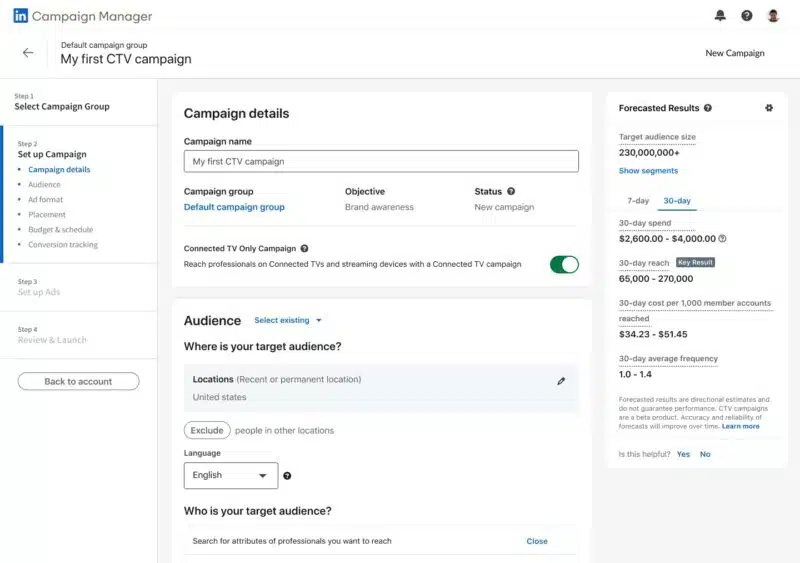
Getting started. Marketers who have created a video ad simply log into Campaign Manager and choose an objective. They can either select a CTV-only campaign or launch a multichannel campaign to boost brand awareness.
Marketers can then choose a target audience among English-speaking decision-makers in the U.S. and Canada found on LinkedIn. Advertisers can choose attributes for their target like company size, seniority and interests.
Advertisers then set a budget for their campaign and determine when they want it to run.
Measurement. In addition to native reporting on the site, LinkedIn partnered with Kantar for objective lift studies and with iSpot to provide advanced audience measurement.
- The iSpot partnership allows B2B marketers to measure campaign effectiveness across platforms, including on linear and CTV.
Driving results. “Customers can use native reporting in Campaign Manager, like Performance Summary Report, Revenue Attribution Report, Conversions API and our new CTV Brand Lift test to measure their success using metrics like reach, conversion rates and video completion rates,” said a LinkedIn representative. “Additionally, customers can retarget members who viewed their video ad with additional campaigns and formats, like lead gen forms and Document Ads, to drive measurable results at any stage throughout the purchase cycle.”
Live Event Ads. LinkedIn also introduced Live Event Ads to help B2B marketers promote live events. This global offering allows marketers to boost registration and engage prospects before, during and after live virtual events.
Courtesy of Search Engine Land: News & Info About SEO, PPC, SEM, Search Engines & Search Marketing
Thursday, April 4th, 2024
Google’s AI overviews are beginning to appear in search queries for a “small slice” of logged-in users in the UK.
Google’s Search Generative Experience has been in testing as a Labs experiment in the U.S. since May 2023. SGE has never been available in the UK.
Why we care. SGE, AI overviews – whatever you call it – could potentially change how people search and the amount of organic traffic your site gets from Google. It’s still unknown how often (if ever) searchers click on the citations in Google’s AI-generated answers.
Future of SGE. Google began testing AI overviews from SGE on a “subset of queries, on a small percentage of search traffic in the U.S.” as Search Engine Land reported on March 22. This seems similar to the UK search traffic test.
Some have speculated SGE could launch widely at Google I/O, but Google has not confirmed a date. And Elizabeth Reid, Google VP, Search, has indicated there likely won’t be a light-switch “moment” when SGE replaces Google Search as we’ve known it.
Could SGE become paid? Meanwhile, Google is considering making AI-powered search features available only to subscribers, according to a Financial Times report. It’s unclear if this is specific to SGE or other AI search features. Perhaps these “premium” features would be part of the Google One paid bundle that includes Gemini.
Essentially, the report indicated “classic” Google Search would remain free. Ads would continue to appear alongside search results even for subscribers. No decision has been made on whether or when it will launch:
“Google said the company was ‘not working on or considering’ an ad-free search experience but that it would ‘continue to build new premium capabilities and services to enhance our subscription offerings across Google’.”
– Google considers charging for AI-powered search in big change to business model (subscription required)
Courtesy of Search Engine Land: News & Info About SEO, PPC, SEM, Search Engines & Search Marketing
Thursday, April 4th, 2024
Google is reportedly in talks about putting in an offer to acquire Hubspot.
The search giant has allegedly been in discussions with Morgan Stanley about how much it should offer to buy the online marketing software company, which is said to be valued at $35 billion. However, no offer has yet been made.
Why we care. Buying HubSpot would help Google expand its services in the growing CRM software market, enabling it to reach more enterprise customers with the budget to allocate to marketing and advertising.
Why now? Alphabet CEO Sundar Pichai has been exploring new ways to accelerate growth after the tech giant reported lower-than-expected ad revenue in the fourth quarter of last year. Google Search and YouTube are also facing increased competition for advertising budgets from platforms like Facebook, Instagram, TikTok, and Amazon.com.
Antitrust concerns. Google is reportedly concerned that antitrust regulators may not approve the acquisition. If the acquisition is successful, it would be a significant deal amidst increasing privacy regulations under U.S. President Joe Biden’s administration.
Get the daily newsletter search marketers rely on.
What Hubspot is saying. A Hubspot spokesperson told Reuters:
- “As standard practice, HubSpot does not comment on rumors or speculation. We continue to focus on building a great business and serving our customers.”
Courtesy of Search Engine Land: News & Info About SEO, PPC, SEM, Search Engines & Search Marketing
Thursday, April 4th, 2024
Google will soon recommend linking your Display & Video 360 advertisers to Google Analytics.
Once it detects an unlinked DV360 advertiser, you may start receiving these recommendations similar to the notification displayed in the image below:

Why? Linking the DV360 advertiser allows you to export Analytics audiences and conversions to DV360. Additionally, you can view campaign cost data and user engagement data in Analytics, enhancing campaign measurement capabilities.
Why we care. Monitoring campaign performance accurately is crucial for effective optimization and generating progress reports.
How recommendations work. Google says it provides personalized recommendations “to help you get the most useful and accurate data and take advantage of new, relevant features as they become available.” Recommendations are based on your property’s history, settings, and trends observed across Google Analytics.
If your property has recently started running, you may not see any recommendations initially. However, be sure to check back again soon, as Google Analytics regularly identifies and introduces new recommendations tailored for you.
Accessibility. Recommendations are displayed in the Recommendations section of the Home page and appear contextually throughout Google Analytics, positioned at the top or to the right of relevant pages.
Get the daily newsletter search marketers rely on.
Deep dive. Read Google’s announcement in full for more information.
Courtesy of Search Engine Land: News & Info About SEO, PPC, SEM, Search Engines & Search Marketing