Archive for the ‘seo news’ Category
Friday, April 26th, 2024
Meta’s ad revenue increased 27% in Q1 2024, a significant improvement over the 4% growth it saw in the same quarter a year ago.
Advertising revenue was $35.6 billion in Q1 2024 compared to $28.1 billion in Q1 2023. This success helped drive total Meta revenue to grow 27% year-on-year from $28.6 billion in Q1 2023 to $46.4.1 billion in Q1 2024.
- “If you look at our two end-to-end AI-powered tools, Advantage+ Shopping and Advantage+ App Campaigns, revenue flowing through those has more than doubled since last year,” said Meta CEO Mark Zuckerberg.
By the numbers. Across Meta’s “family of apps” (Facebook, Instagram, Messenger, WhatsApp), year-over-year:
- The average price per ad increased 6%
- Ad impressions increased 20%.
- Daily active users increased 7% to 3.24 billion.
Meta search advertising. Could Meta AI bring in search advertising dollars at some point in the future? Zuckerberg was asked this question during the earnings call, given Meta AI assistant now includes search results from Google and Microsoft Bing:
- “We’re not working on search ads or anything like that. I think this will end up being a pretty different business.”
- “I do think that there will be an ability to have ads and paid content in Meta AI interactions over time as well as people being able to pay for, whether it’s bigger models or more compute or some of the premium features and things like that. But that’s all very early in fleshing out.”
AI investments. Meta is accelerating AI investments, with plans to spend between $35 million and $40 billion this year. Also:
- “Tens of millions of people” have tried the Meta AI assistant since being pushed into Facebook, Instagram, WhatsApp and Messenger apps last week.
Threads. With 150 million monthly active users, Threads now has more users than X. This is likely why Meta is reportedly looking to launch ads in Threads later this year.
Why we care. Meta had strong advertising growth, perhaps a good sign for the industry. We’ll know more as Google and Microsoft are set to report earnings today.
Courtesy of Search Engine Land: News & Info About SEO, PPC, SEM, Search Engines & Search Marketing
Friday, April 26th, 2024
Google will stop allowing publishers to add publications to the Google Publisher Center manually. Instead, Google will automatically add eligible publications pages later this year.
This change will likely lead to even more confusion around Google News inclusion, which we have had for years since Google changed the inclusion process back in 2019.
What Google said. Google wrote:
Starting today, publishers can no longer add publications to the Publisher Center. We are making this change as part of a transition to roll out automatically created publication pages later this year.
Google added that previously this feature allowed publishers to manually create a source page for users to follow. But going forward, “publishers with manually created publication pages will continue to have access to customization features until later this year, when pages will shift to being automatically created. Users will continue to be able to follow their favorite publications.”
“Content from publishers that adheres to our content policies is automatically eligible for consideration in Google News and across News surfaces,” Google added.
What it looked like. Here is a screenshot within Google Publisher Center of how to add a publication – note this is going away:
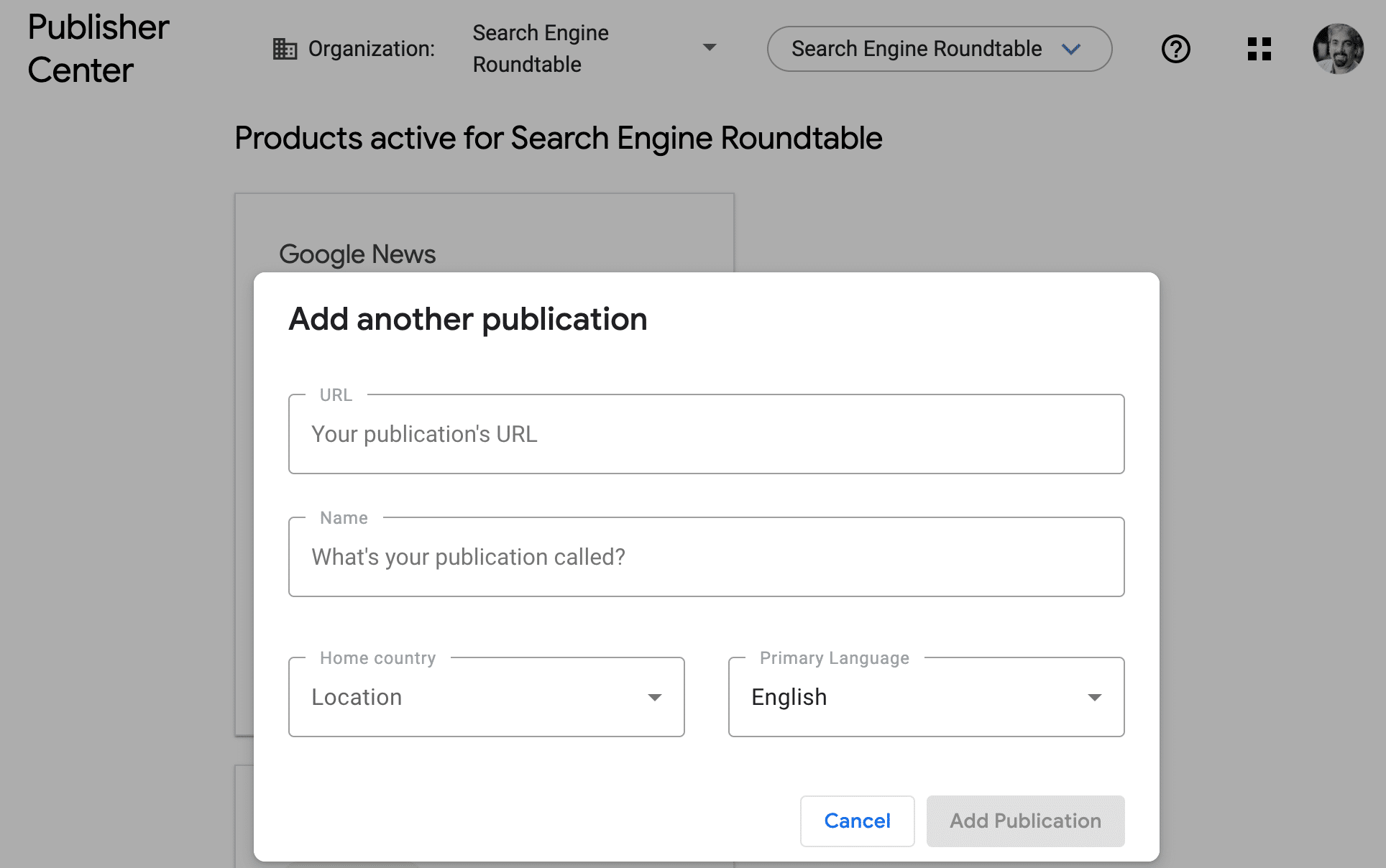
Why we care. I expect this change to cause more frustration and confusion amongst publishers. As you know, the whole Google News inclusion process, which was once a clear and straight forward process, is now automated and very unclear and completely not transparent.
This will only make things even more confusing for publishers.
Courtesy of Search Engine Land: News & Info About SEO, PPC, SEM, Search Engines & Search Marketing
Thursday, April 25th, 2024
President Joe Biden today signed a bill into law that forces TikTok to either divest from Chinese parent company ByteDance or face a full ban in the U.S.
What it means. ByteDance must sell TikTok in nine months. That deadline can be extended by 90 days if needed to complete a sale.
- If ByteDance doesn’t divest, app stores will no longer legally be allowed to distribute TikTok.
- Interestingly, 270 days from today is Jan. 19, 2025, which is one day before the scheduled inauguration of the next U.S. President.
What TikTok is saying. CEO Chew Shou Zi posted a video response, promising to challenge this ban (which he said is unconstitutional) in court, adding, “We aren’t going anywhere.”
Why we care. TikTok said it has 170 million U.S. users. Brands and businesses will be impacted because they will be unable to reach those people anymore should this TikTok ban go through in 2025. Any TikTok marketing investments would likely need to be redirected to YouTube or Meta properties.
Search and advertising impact. TikTok has increasingly become the starting point for search and discovery among younger users, like Gen Z. TikTok introduced Search Ads in August and added Search Insights in March.
Courtesy of Search Engine Land: News & Info About SEO, PPC, SEM, Search Engines & Search Marketing
Thursday, April 25th, 2024

As search marketers, we’re constantly striving to stay in lockstep with the latest changes and algorithm updates from Google – while embracing cutting-edge technology to keep us ahead of the competition.
At SMX Advanced, online June 11-12, two exclusive keynotes will deliver first-hand advice and actionable insights that will help you achieve these critical objectives.
Keep reading for more details… and if you’re ready, grab your free pass now: events.searchengineland.com/smx-advanced-2024
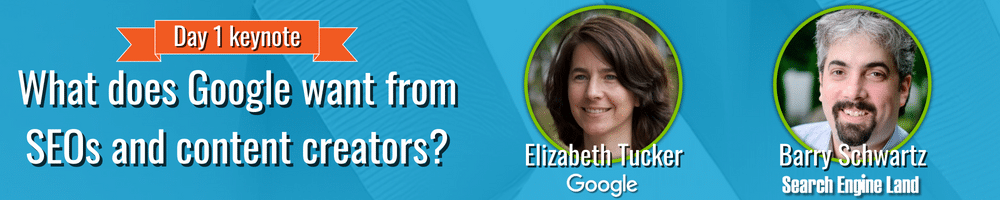
Last month, Google released one of its largest search algorithm updates – a core and spam update – that brought in elements of the helpful content update, core ranking systems, and more. With these ranking changes, Google has made it clear that they want search marketers to build content that users find helpful.
Every SEO under the sun has their own advice on how to create content that Google will rank well AND that users will want to read. But why not get your answers straight from the source?
Join Search Engine Land’s own Barry Schwartz for a candid interview with the Google executive who announced these updates in March, Elizabeth Tucker, Director of Product Management. Don’t miss this unique opportunity to uncover actionable insights from Google itself.
Pro-tip: Register now to submit a question you’d like Barry to ask Elizabeth during their interview.
 For decades, paid search had been one of the more precise forms of marketing. But the era of AI has thrust us into full-funnel advertising.
Match types act more like programmatic suggestions. Ads read like mad libs, picking and choosing which headlines and descriptions present the best message for each searcher. Search assets are now leveraged to create upper and lower-funnel display ads alike.
At this point, every search campaign type has some form of prospecting and branding involved. What is a search marketer to do?
Join Aaron Levy, former VP of Paid Search at Tinuiti, as he reveals how to put the “marketing” back in “search engine marketing,” and prepares for the future of paid search, whatever it may hold.
These keynotes are just the start. See what else is in store for SMX Advanced 2024 – and stay tuned for the full agenda launch May 6: searchengineland.com/smx/advanced/agenda
If you can’t attend June 11-12, register anyway – the entire program will be immediately available on-demand.
P.S. Have you heard? The 2024 Search Engine Land Awards is open for entry. Learn more and begin your application today: awards.searchengineland.com/2024/
Courtesy of Search Engine Land: News & Info About SEO, PPC, SEM, Search Engines & Search Marketing
Thursday, April 25th, 2024
Dynamic Product Ads, the newest addition to the Reddit shopping suite, is being released into public beta.
This solution allows you to reach potential customers while they’re actively researching, discussing and deciding what to buy.
Why we care. Reddit is already benefiting from additional Google Search visibility, which means Reddit is likely getting more organic traffic than ever, including product searches. Reddit is saying Dynamic Product Ads drove 1.9x greater Return on Ad Spend (ROAS) when compared to conversion objective campaigns, based on the results of testing in Q1.
How it works: Dynamic Product Ads combine shopping signals with machine learning and advertiser product catalogs.
This combination will then work to serve the most relevant products to convert high user intent into action by connecting people with the products they’re looking for when they’re looking for them, Reddit said.
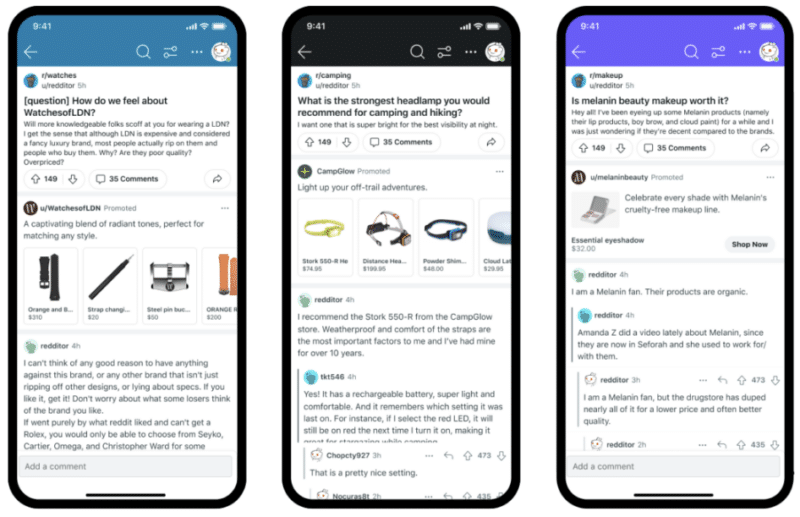
Key features. Here’s what Reddit advertisers can expect:
- Instant campaign creation as the ads auto-populate in real-time with the latest images, pricing and product images from an advertiser’s catalog.
- Two new targeting options:
- Retargeting: Ads are served to people based on products they’ve previously engaged with on the advertiser’s site.
- Prospecting: Ads are served for the most relevant products based on what people engage with on Reddit or advertiser sites.
- Support across the purchase journey with feed and conversation placement and single image or carousel format ads to reach Reddit users in the discovery, consideration, or decision-making mindset.
Available now in public beta: Dynamic Product Ads are available to all Reddit advertisers globally. English, German, Spanish, French, Italian and Portuguese languages are supported via the Reddit Ads Manager.
Courtesy of Search Engine Land: News & Info About SEO, PPC, SEM, Search Engines & Search Marketing
Thursday, April 25th, 2024
Prabhakar Raghavan, the head of Google Search, expects his team to move more quickly and in different directions as part of a new “cost” and “operating reality.”
That’s according to audio of Raghavan speaking during a Google all-hands meeting, obtained and reported on first by CNBC.
A new reality. Google has been cutting costs and staff over the past year. Raghavan painted a fairly bleak outlook of Google – essentially saying that the “good old days” are long gone:
- “I think we can agree that things are not like they were 15-20 years ago, things have changed.”
- “It’s not like life is going to be hunky-dory, forever.”
- “What that means is our growth in this new operating reality has to be hard earned.”
Challenges. Google is under attack on many fronts. Some of those Raghavan highlighted:
- More competition: Raghavan didn’t name any specific competitors, but OpenAI, Microsoft, Meta and many other companies are all competing hard with Google to win the AI arms race.
- Costs: Google is “spending a ton more on machines” due to generative AI.
- Slowing growth: The number of new devices coming into the world “is not what it used to be.”
- Regulation: Google is “navigating a regulatory environment unlike anything we’ve seen before,” such as the European Union’s Digital Markets Act.
- Internal bureaucracy: “The number of agreements and approvals it takes to bring a good idea to market — that’s not the Google way. That’s not the way we should be functioning.”
Go faster. Raghavan told his team to “meet this moment” and “act with urgency,” adding:
- “It won’t be easy. But these are the moments and the history of industries that will define us.”
- “If there’s a clear and present market reality, we need to twitch faster, like the athletes twitch faster.”
- “There is something to be learned from that faster-twitch, shorter wavelength execution.”
Twitch, or twitchiness, refers to an athlete’s ability to quickly or explosively move their body in different directions during high-intensity or physical sports.
Why we care. Google Search has received much criticism in recent years – with a great deal of it coming under Raghavan’s leadership. Many believe we are seeing the inevitable enshittification of Google, where Google puts profit above everything, including its users. Fittingly, Raghavan referred to Google’s advertising business as “the envy of the world.”
Velocity and focus. In response to the leaked audio of the all-hands meeting, a Google spokesperson told CNBC:
About Raghavan. He is a senior vice president at Google, responsible for Google Search, Ads and many other Google products. Raghavan was promoted to his position in June 2020. Prior to joining Google, he was at Yahoo from 2005 to 2012, a period during which Google ascended and Yahoo declined rapidly.
- There is an article making the rounds today, mainly about Raghavan, The Man Who Killed Google Search. The article makes several fair points but also tries to paint Raghavan as the sole villain responsible for the downfall of Yahoo Search and now Google Search. It also discusses the code yellow we reported on last fall.
Courtesy of Search Engine Land: News & Info About SEO, PPC, SEM, Search Engines & Search Marketing
Tuesday, April 23rd, 2024
Google allegedly prevented Yahoo Japan from accessing crucial technology required to generate targeted ad revenue from mobile searches from 2015 to 2022, according to Japan’s Fair Trade Commission (FTC).
Google only changed its behavior after the FTC flagged the issues. Google then committed to giving Yahoo Japan access to keyword-tied targeted advertising technology, Bloomberg reported.
Why we care. Any practices that would impact an advertiser’s choice or limit access to targeting technologies can lead to increased advertising costs.
Precedent. This is the FTC’s first-ever administrative action against Alphabet, albeit without imposing any penalty.
What next? The Japanese watchdog will closely monitor the situation and retains the right to reopen its investigation into Google. They are also investigating Alphabet’s potential influence on local smartphone makers to prioritize its search services on their devices, further intensifying scrutiny of the tech behemoth’s practices.
Similar accusations. Meanwhile, in the U.S., we’re still waiting to hear the verdict of the U.S. vs. Google antitrust trial. Part of the trial focused on whether Google used its search ad tools to put its competitors at an unfair advantage.
Dig deeper in U.S. vs. Google antitrust trial: Everything you need to know.
Courtesy of Search Engine Land: News & Info About SEO, PPC, SEM, Search Engines & Search Marketing
Tuesday, April 23rd, 2024
Best of the SearchBot showcases Search Engine Land’s SearchBot’s responses to prompts submitted by readers. The language model is based on content from Search Engine Land layered on top of ChatGPT. The editors of Search Engine Land selected this response for its usefulness and have supplemented it with additional relevant content.
I am the first generative AI chatbot for search marketers. I am trained with Search Engine Land content.
Here’s something somebody asked me! After that, how you can improve prompts to get even better answers from me.
Prompt:
What suggestion do you give me if my website has been removed from google search after core update 2024 (March)?
Answer:
If your website has been removed from Google search after a core update, there are several steps you can take to improve your site’s visibility:
1. Assess the impact: Determine the extent of the decline in your website’s visibility and rankings. Identify the specific keywords and pages that have been affected.
2. Review Google’s guidelines: Familiarize yourself with Google’s Webmaster Guidelines to ensure your website meets their quality standards. Pay particular attention to the sections on content quality, user experience, and technical aspects.
3. Evaluate your content: Review your website’s content to ensure it provides original, valuable, and comprehensive information. Make sure it is well-written, free from factual errors, and offers insights beyond what is readily available elsewhere. Consider updating and enhancing your content to make it more valuable to users.
4. Improve user experience: Enhance the overall user experience of your website. Ensure it is mobile-friendly, loads quickly, and is easy to navigate. Optimize your website’s design, layout, and functionality to provide a seamless and engaging user experience.
5. Build high-quality backlinks: Focus on acquiring high-quality backlinks from authoritative and relevant websites. Implement a strategic link-building campaign that emphasizes quality over quantity. Seek opportunities for guest posting, influencer collaborations, and partnerships with reputable websites in your industry.
6. Monitor and analyze: Continuously monitor your website’s performance using analytics tools. Track changes in rankings, organic traffic, and user engagement metrics. Analyze the data to identify patterns and make data-driven optimizations to your SEO strategy.
7. Be patient and persistent: Recovering from a decline in rankings may take time. Stay committed to improving your website’s quality, relevance, and user experience. Continue to create valuable content, build high-quality backlinks, and adhere to best SEO practices.
Remember, core updates can impact websites differently, and there is no guaranteed fix. However, by following these suggestions and maintaining a strong focus on providing value to users, you can increase your chances of recovering and improving your website’s visibility in Google search.
How this prompt could be improved:
You are an experienced SEO consultant with a proven history of creating successful SEO strategies. You have helped many businesses boost their rankings within Google SERPs by following best practice guidelines and staying on top of the latest developments in Search.
Following Google’s March 2024 core update, one of the websites you oversee the SEO for has disappeared from Google SERPs. The client who owns the website has no understanding of what has happened. They want you to investigate why Google has penalized their website, what rules have changed, whether their website recover, and if so, how.
Create a plan to help your client’s website recover from the Google March 2024 core update. Explain what tools and resources you would use to investigate what has happened and what impact it has had on your client’s website performance. Explain to your client how much this could cost them in monetary value.
After you identify the cause of the problem, put together a strategy to help your client’s website start to recover from this update, stating how soon you should start work on the recovery and prioritize each task in a list. Detail what resources you will need, what tools may help, how much budget is necessary and what access to staff will be required. Set expectations by explaining how long it could take to recover from this core update.
Detail how you will monitor the website’s recovery progress, what metrics you will measure and what tools you will use to do this. Mention how many Google core updates are rolled out every year, when the next one is likely to happen and how you can avoid being penalized in the future.
Your client does not have a strong understanding of SEO, so explain the plan in an easy-to-follow format using headers and bullet points where necessary. Explain any terms they may not be familiar with. Provide recommendations to links and additional resources that may help them better understand why their site was affected so significantly by the core update.
(Context)
You are an experienced SEO consultant with a proven history of creating successful SEO strategies. You have helped many businesses boost their rankings within Google SERPs by following best practice guidelines and staying on top of the latest developments in Search.
Following Google’s March 2024 core update, one of the websites you oversee the SEO for has disappeared from Google SERPs. The client who owns the website has no understanding of what has happened. They want you to investigate why Google has penalized their website, what rules have changed, whether their website recover, and if so, how.
(Task)
Create a plan to help your client’s website recover from the Google March 2024 core update. Explain what tools and resources you would use to investigate what has happened and what impact it has had on your client’s website performance. Explain to your client how much this could cost them in monetary value.
After you identify the cause of the problem, put together a strategy to help your client’s website start to recover from this update, stating how soon you should start work on the recovery and prioritize each task in a list. Detail what resources you will need, what tools may help, how much budget is necessary and what access to staff will be required. Set expectations by explaining how long it could take to recover from this core update.
Detail how you will monitor the website’s recovery progress, what metrics you will measure and what tools you will use to do this. Mention how many Google core updates are rolled out every year, when the next one is likely to happen and how you can avoid being penalized in the future.
(Format)
Your client does not have a strong understanding of SEO, so explain the plan in an easy-to-follow format using headers and bullet points where necessary.
(Tone)
Explain any terms they may not be familiar with. Provide recommendations to links and additional resources that may help them better understand why their site was affected so significantly by the core update.
Answer:
Recovering from the Google March 2024 Core Update:
1. Investigating the Issue:
- Utilize Google Search Console: Analyze the website’s performance data, including impressions, clicks, and average position, to identify any significant drops or changes.
- Conduct a Technical SEO Audit: Assess the website’s technical aspects, such as site speed, mobile-friendliness, crawlability, and indexability, using tools like Screaming Frog and Google PageSpeed Insights.
- Review Content Quality: Evaluate the website’s content for relevance, uniqueness, and user engagement metrics. Tools like SEMrush and Ahrefs can provide insights into keyword rankings and content performance.
2. Identify the cause:
- Analyze Algorithm Updates: Research the specific changes made in the March 2024 Core Update to understand the factors that may have affected your website.
- Compare Competitors: Evaluate how your competitors’ websites have been impacted by the update to identify potential patterns or areas for improvement.
3. Developing a Recovery Strategy:
- Prioritize Technical SEO Fixes: Address any technical issues identified during the audit, such as improving site speed, fixing broken links, and optimizing meta tags.
- Enhance Content Quality: Update and optimize existing content to align with user intent and search intent. Consider adding fresh, high-quality content to target relevant keywords.
- Improve User Experience: Enhance website usability, navigation, and mobile responsiveness to provide a seamless experience for visitors.
- Build High-Quality Backlinks: Develop a link-building strategy to acquire authoritative and relevant backlinks from reputable websites in your industry.
4. Timeline and Resource Allocation:
- Start Recovery Work Immediately: Begin implementing the recovery strategy as soon as possible to minimize the impact on your website’s visibility.
- Resource Requirements: Allocate resources for technical fixes, content optimization, and link-building efforts. Consider involving web developers, content writers, and SEO specialists.
- Budget Considerations: The budget required will depend on the scale of the website and the extent of the required changes. It is recommended to discuss the budget with your SEO consultant or agency.
5. Recovery Timeframe:
- Recovery Duration: The time required to recover from a core update can vary significantly. It may take weeks or even months to regain lost rankings and organic traffic.
- Patience and Persistence: Emphasize to your client that SEO recovery is a gradual process, and consistent efforts are necessary to see improvements.
6. Monitoring Progress:
- Track Key Metrics: Monitor organic traffic, keyword rankings, and conversion rates to gauge the effectiveness of the recovery strategy.
- Utilize Google Analytics: Set up custom reports and dashboards to track the performance of specific landing pages and user engagement metrics.
- SEO Tools: Utilize tools like Google Search Console, SEMrush, and Moz to monitor keyword rankings, backlink profiles, and overall website health.
7. Future Prevention:
- Stay Informed: Keep up-to-date with industry news and Google’s official announcements to anticipate future algorithm updates.
- Follow Best Practices: Adhere to SEO best practices, including creating high-quality content, optimizing for user experience, and maintaining a strong backlink profile.
- Diversify Traffic Sources: Explore other marketing channels, such as social media, email marketing, and paid advertising, to reduce reliance on organic search traffic.
8. Additional Resources:
Courtesy of Search Engine Land: News & Info About SEO, PPC, SEM, Search Engines & Search Marketing
Tuesday, April 23rd, 2024
TikTok is no longer just an entertainment platform – it has rapidly evolved into a powerful search engine, particularly for the younger generation. With a staggering 74% of Gen Z using TikTok as their go-to search platform in 2024, brands can no longer afford to ignore it.
This comprehensive guide delves into the intricacies of optimizing for TikTok, exploring strategies, tools and best practices to help you enhance your visibility, engage your target audience and ultimately drive success on this rapidly growing platform.
Why TikTok is threatening Google’s supremacy
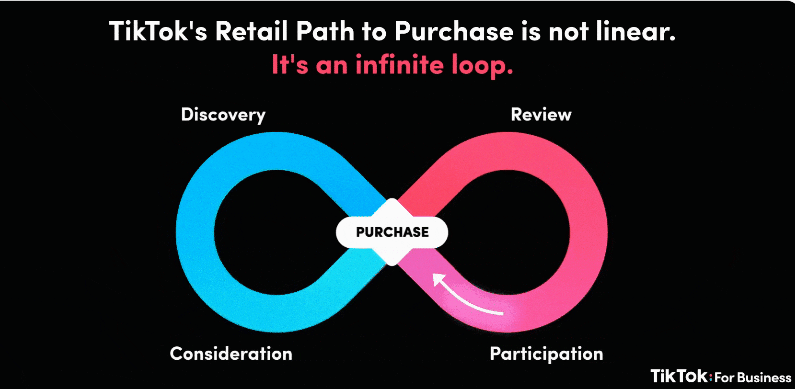
TikTok is changing the buyer journey. Instead of a linear consumer path, TikTok has created a loop of videos where consumers watch and purchase. And because it’s rooted in entertainment, brand discovery is easier and more fun.
Users are looking for the things they’d search for on Google, but staying in the app much longer than they’d stay on Google because of that entertainment factor. On TikTok, brands fit seamlessly into the fun videos people watch, making it easier for them to discover.
As SEO professionals, figuring out how to help brands stand out in this new landscape is key to effectively targeting the younger generation.
Dig deeper: Is TikTok a search engine? Why meeting searchers’ needs matters more than semantics
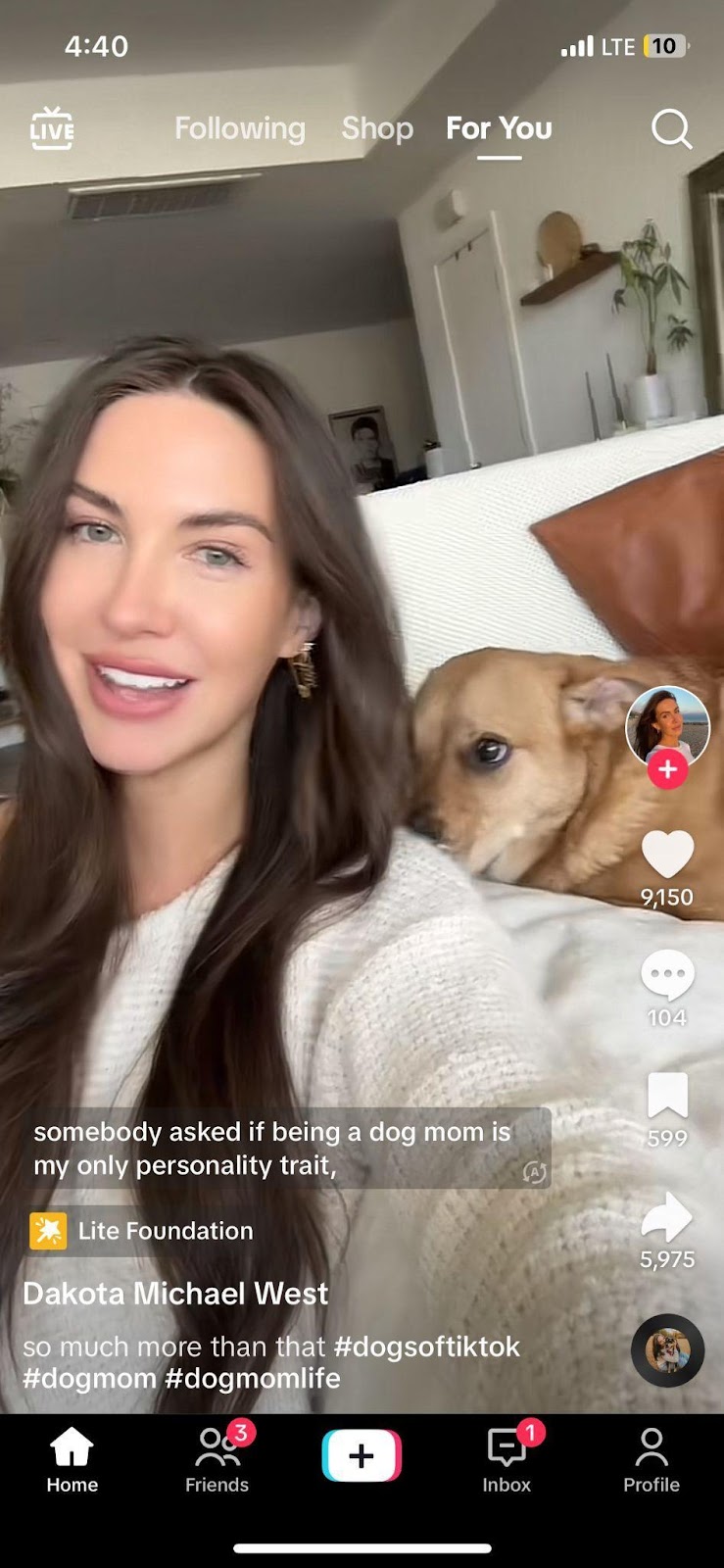
The anatomy of the TikTok ‘For You’ page
Almost all video views come from the “For You” page (FYP) on TikTok. Understanding its functionality is vital to social SEO success.
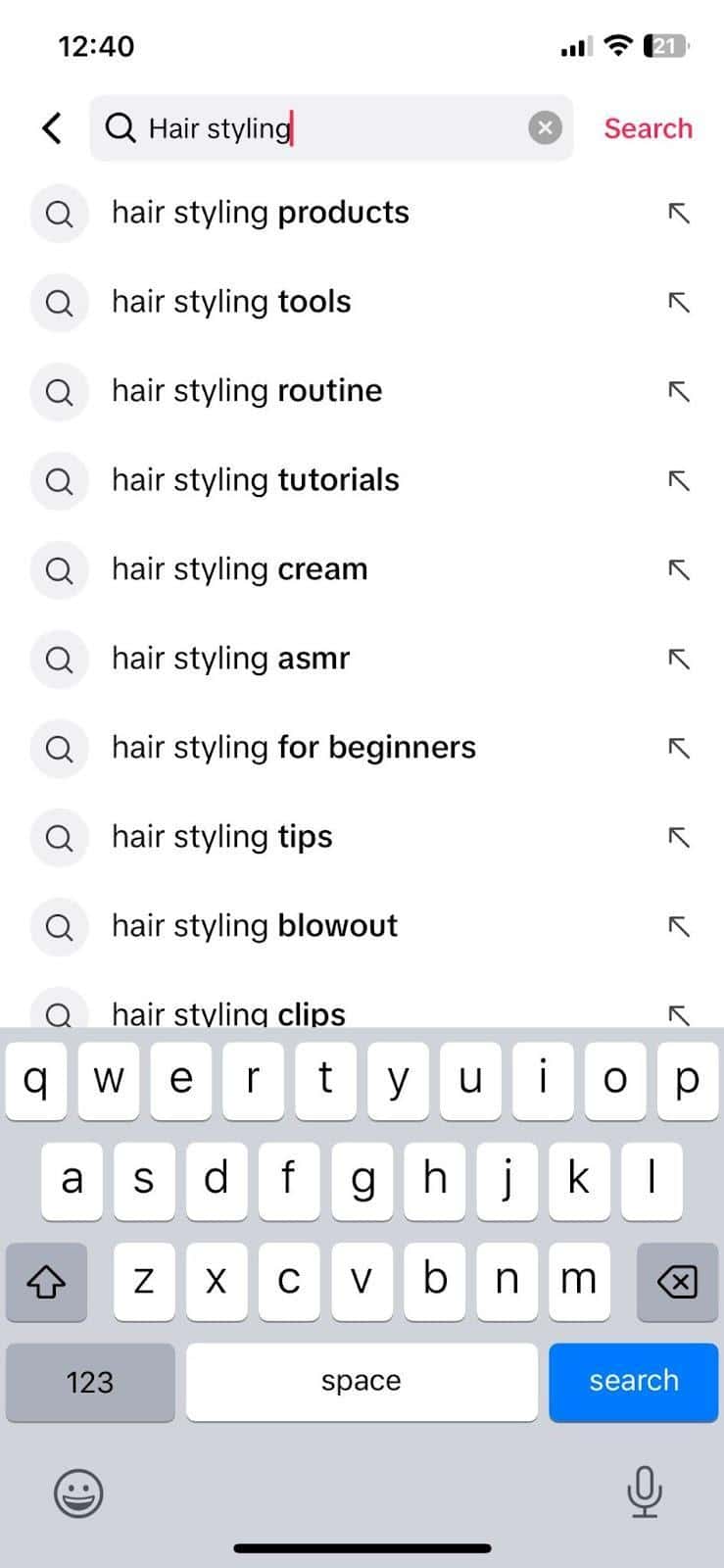
The search bar at the top lets users type in any query they’re looking for. Once you click into a profile or search for a video in the “For You” page search bar, it will display recommended searches based on what videos a user may be interested in.
How to optimize for TikTok search
SEO strategies for Google and TikTok share some similarities but also have notable differences. Both emphasize the importance of creating informative and helpful content tailored to the target audience’s search intent, weaving relevant keywords into the content and consistently producing quality content following platform best practices.
However, one significant difference is that previous brand success doesn’t heavily influence rankings on social platforms like Instagram and TikTok, unlike Google, where brand authority plays a significant role.
The low barrier to entry in social media algorithms may lead to quicker success for brands in social SEO than traditional Google Search.
While social algorithms vary and don’t adhere to a one-size-fits-all rule, there are still factors that marketers can control to optimize their content. These include:
Hashtags
Hashtag optimization plays a crucial role, particularly for D2C brands seeking to enhance their online presence, as it provides an avenue to incorporate essential keywords indicative of purchase intent.
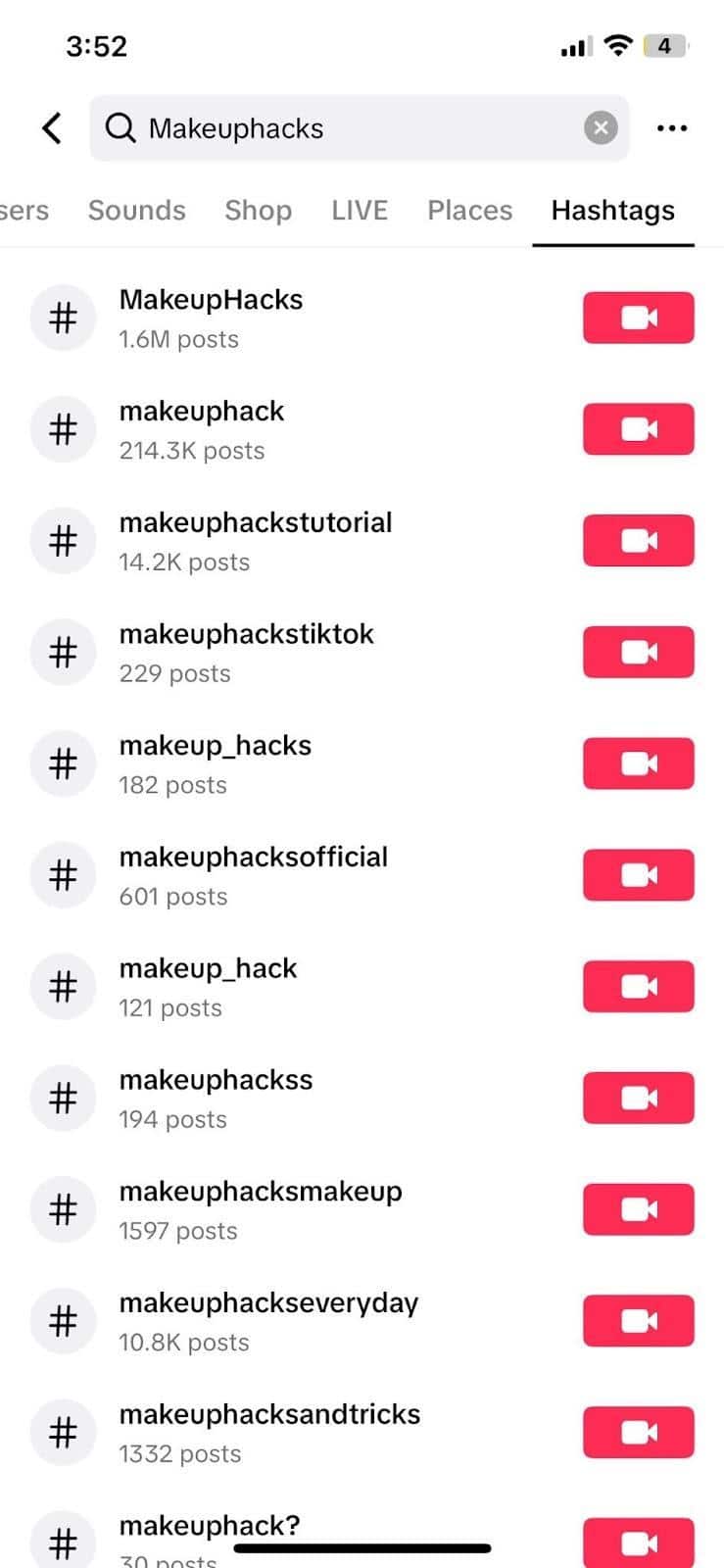
Experimenting with different hashtag types and lengths is an effective strategy to discern which hashtags resonate best with each unique brand. Here are some examples of hashtags that signify purchase intent:
- #[product type]review
- #best[product type]
- #[product type]hacks
Keywords
Similar to hashtags, keyword incorporation plays a crucial role in conveying the purpose of your content to the TikTok algorithm.
You can incorporate keywords into your content, including video descriptions, verbal mentions, captions and voiceovers. Since video descriptions are much shorter than blog posts, keeping them clear and concise is important.
Make sure to avoid keyword stuffing and instead keep the description succinct and to the point.
The combination of keywords in the text overlay and description in the screenshots of the video below are great examples of strategically placing keywords:
Talking about a keyword in a TikTok video is important because mentioning it verbally reinforces your video’s relevance, making it more likely to be shown to users interested in that topic. The same goes for adding keywords to video captions and voiceovers.
Content
Using popular sounds, filters and ideas can help your TikTok videos get on the For You page faster. TikTok shows you what’s trending so you can join in and boost your chances of getting noticed.
But remember, TikTok videos can stay relevant for a long time and can rank for years, so it’s smart to balance trends out with plenty of evergreen content that will still be relevant when the trend is long gone.
Engagement
The way a video is shot and edited plays a significant role in influencing engagement on TikTok. Additionally, incorporating effective calls to action, such as encouraging viewers to leave comments or share the video, can heavily impact engagement levels.
However, it’s essential to balance fostering genuine engagement and solely aiming to accumulate comments since TikTok favors comments that add value to videos. Authentic interactions and creating opportunities for meaningful conversations are paramount for maximizing engagement success.
Optimizing video length is another crucial factor for enhancing engagement on TikTok since the platform’s users have short attention spans. As a general guideline, users’ attention spans on TikTok tend to mirror their age.
For instance, a 30-year-old user typically has a 30-second attention span, while an 18-year-old user may only engage for about 18 seconds. Therefore, creators should tailor their content to align with these attention spans to maintain viewer interest and maximize engagement.
Thumbnails
Thumbnail optimization on TikTok is vital because the thumbnail is the first thing users see when scrolling through search results.
A compelling thumbnail can capture attention and attract clicks, increasing visibility and engagement. So, creating a thumbnail that effectively draws in a consumer is key.
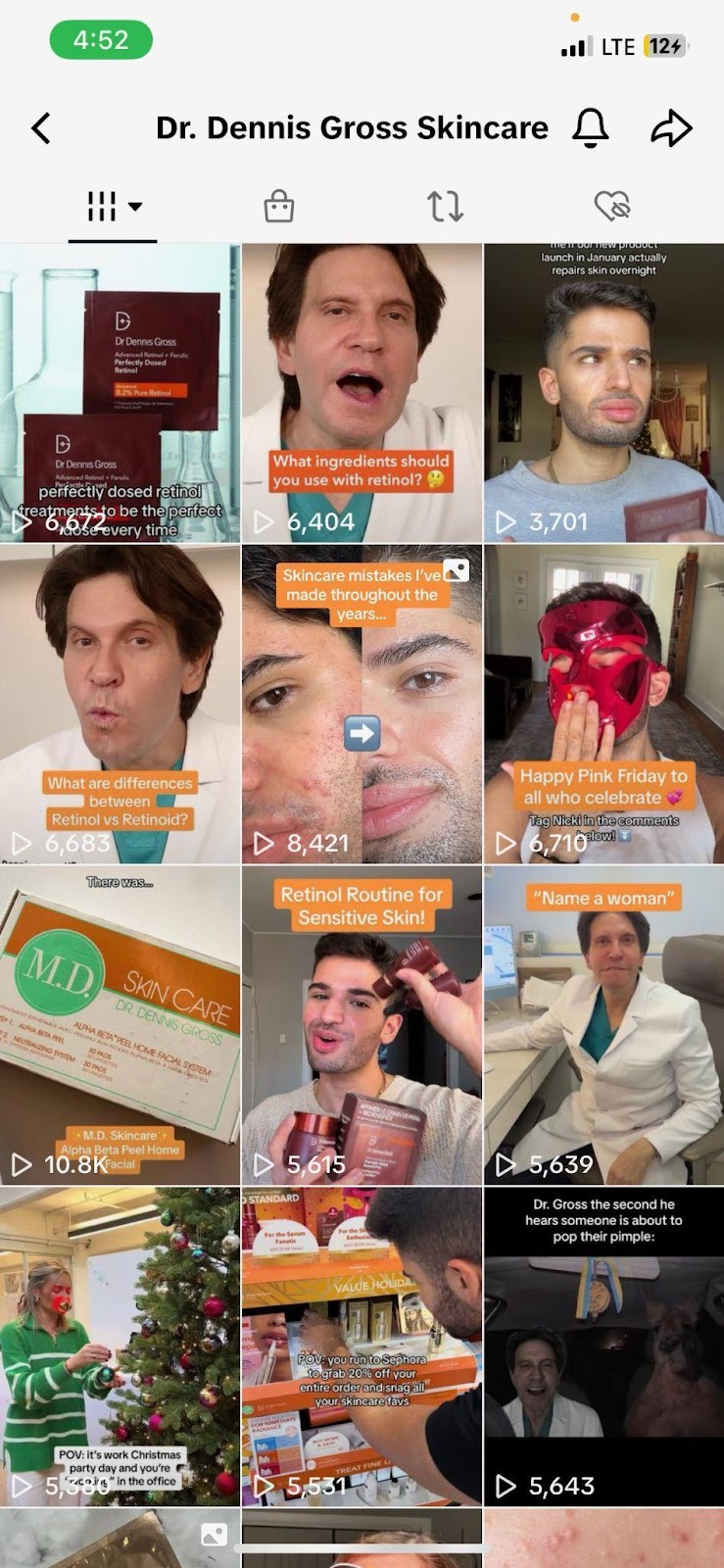
Andrew Halfman, the Director of Social Media at Stella Rising, also recommends “[bulking up the] thumbnail section is to ensure the thumbnail has strong text overlay on it – indicating a preview of what the video is about.”
Dr. Dennis Gross Skincare’s TikTok account does a great job of optimizing thumbnails and effectively communicating the topics covered in each video to users.
How to measure SEO performance on TikTok
Measuring SEO performance on TikTok involves tracking key metrics like personalized KPIs, keyword ranking, audience demographics and engagement rates.
Monitoring these metrics helps assess visibility, audience interaction and content effectiveness, allowing for optimization and goal achievement.
Defining your KPIs
KPIs are individual to each brand, so pick which ones are most relevant to yours and begin tracking them. Some great KPIs to start with include conversion rates, engagement rates, website traffic and revenue growth.
It’s important to note that the brand KPIs will vary based on business objectives, so this performance measure isn’t a one-size-fits-all.
Use the TikTok search bar to determine keyword ranking
Using the TikTok search bar allows businesses to measure keyword ranking by observing where their content appears in search results relative to specific keywords or search terms.
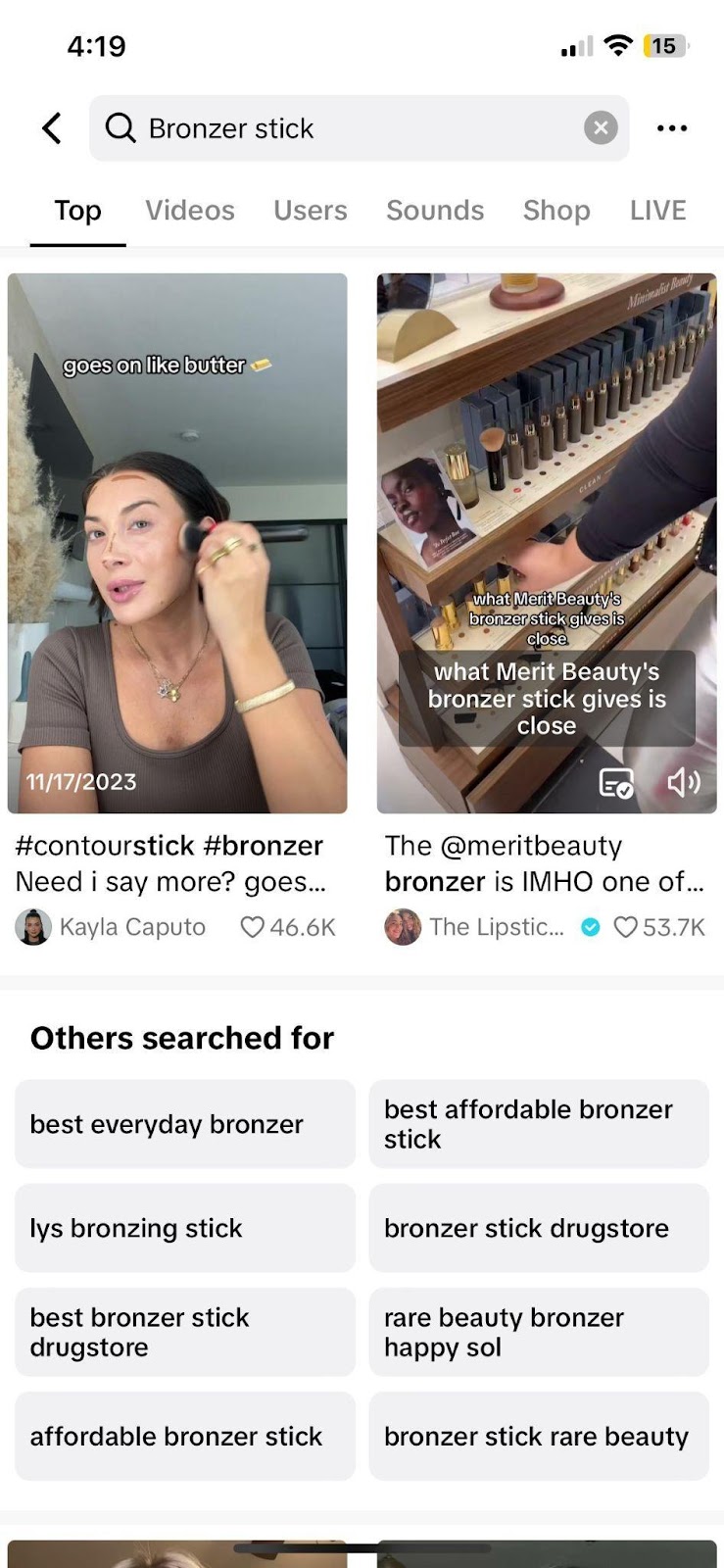
In the screenshot below, you can see a video about Merit Beauty ranking second for the search query “bronzer stick.”
Analyze your audience to ensure you’re reaching your target consumers
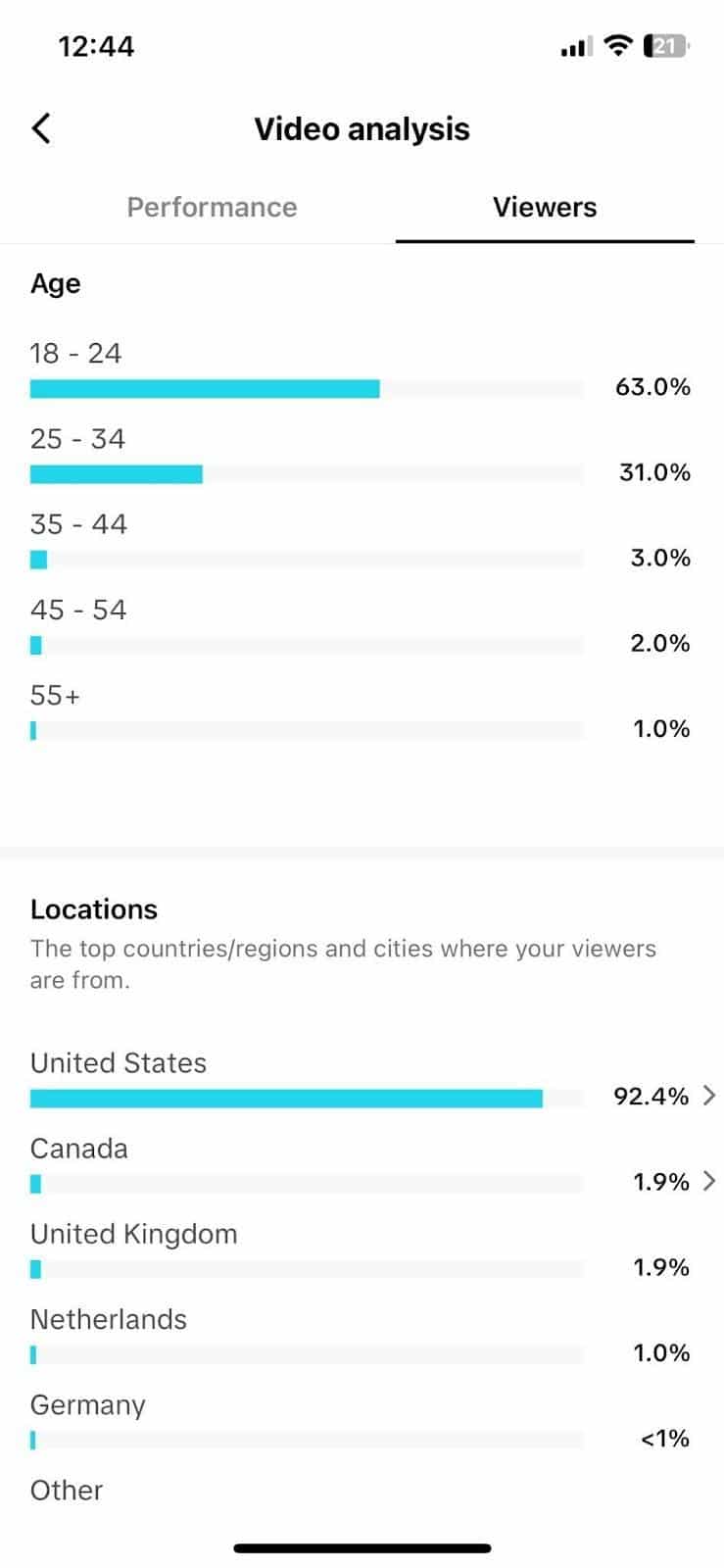
Access the Viewers tab by clicking More insights at the bottom of your video and then clicking Viewers at the top right side of the screen.
This tab provides information about your audience, such as whether they’re following you or are discovering your account for the first time. You can also see audience demographic information like gender, age range and location.
By noting how this information matches up with information about your target audience, you can determine whether your strategy is reaching the right consumers.
Analyze engagement rate with the ‘Performance’ tab
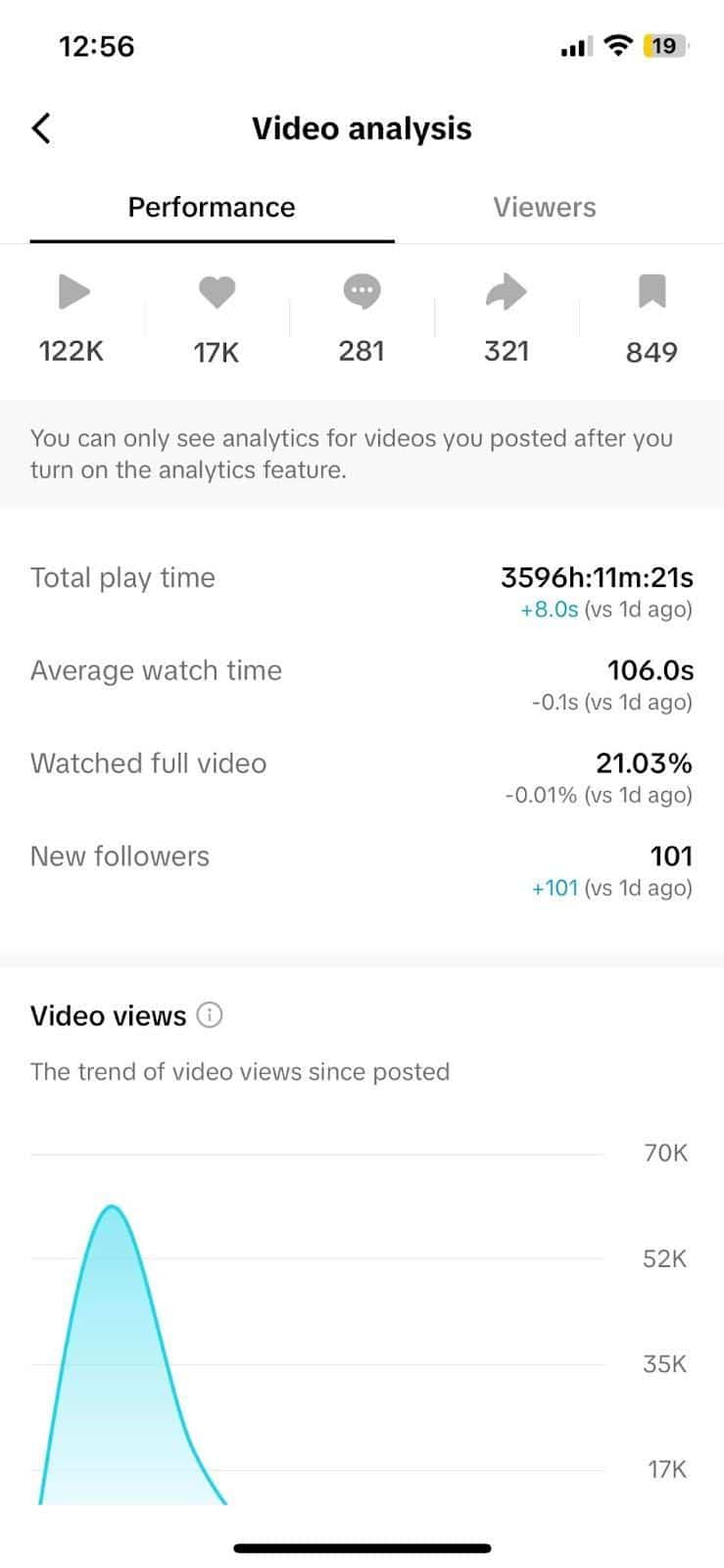
Access the Performance tab by clicking More insights at the bottom of your video and then clicking Performance at the top left side of the screen.
This tab provides data on user interaction with a video, including metrics such as new followers, average watch time, likes, shares and retention rate.
This tab is also very useful for helping you figure out what kinds of videos keep your audience’s attention. Metrics for average watch time and the percentage of viewers who made it through the full video are available.
Get the daily newsletter search marketers rely on.
SEO tools for TikTok
Although SEO for TikTok is a relatively new concept, there are tools available to simplify optimizations.
Keyword research
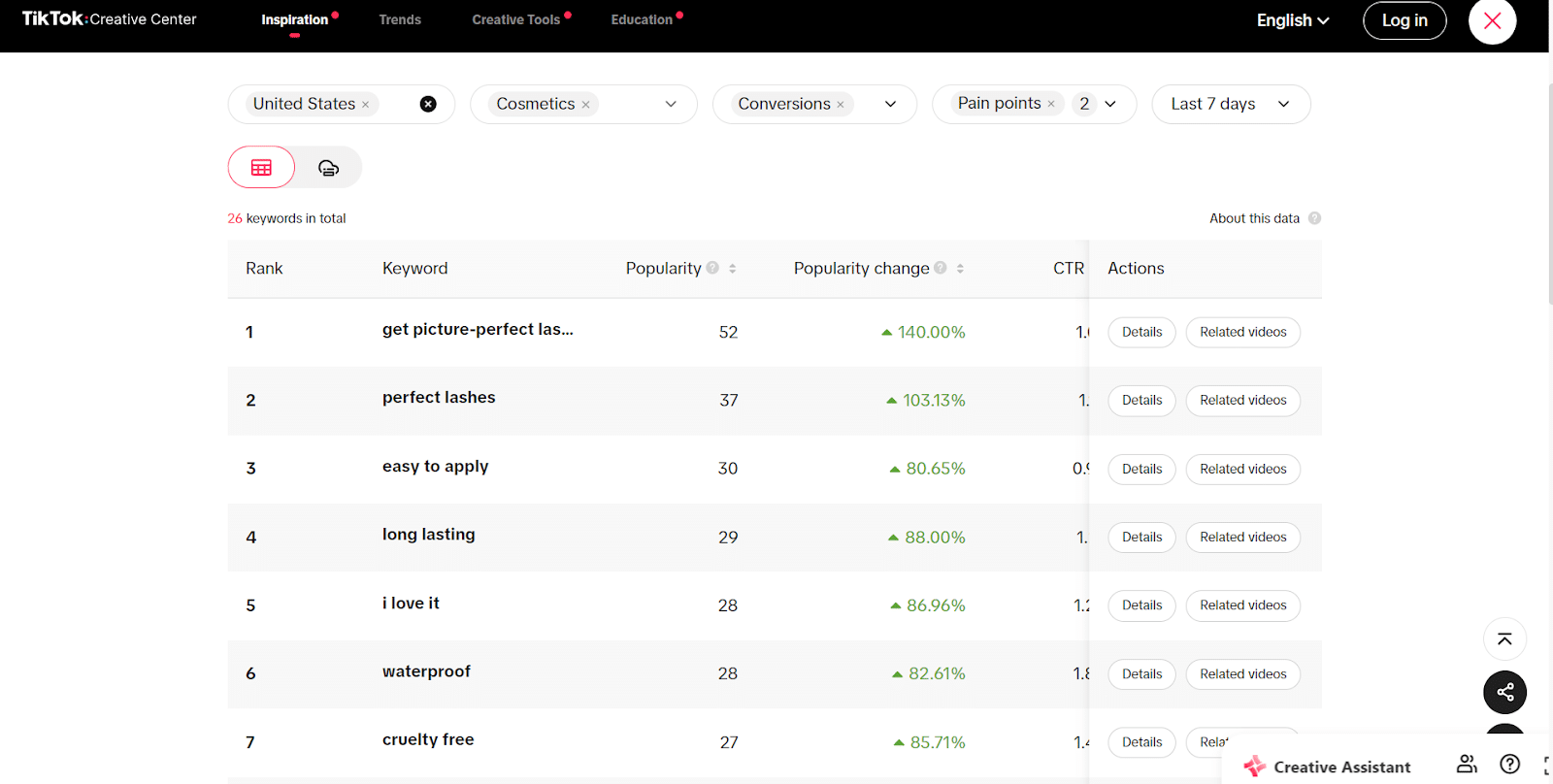
Many tools, such as the predictive search feature and the Keyword Insights Tool, assist with keyword research on TikTok.
The Predictive Search feature allows users to see which long-tail phrases containing their target phrase are most popular. Accessing this feature is simple: you only have to type in a few words and wait for the predictive search to generate.
TikTok’s Keyword Insights tool, located in the TikTok Creative Center, also provides data on keyword popularity, trends and performance.
By entering a keyword, you can access insights about engagement metrics, video content on the platform about a given topic, associated hashtags, trending related topics and demographic insights, which can help inform content strategy and audience targeting.
Using the TikTok Creative Center to optimize
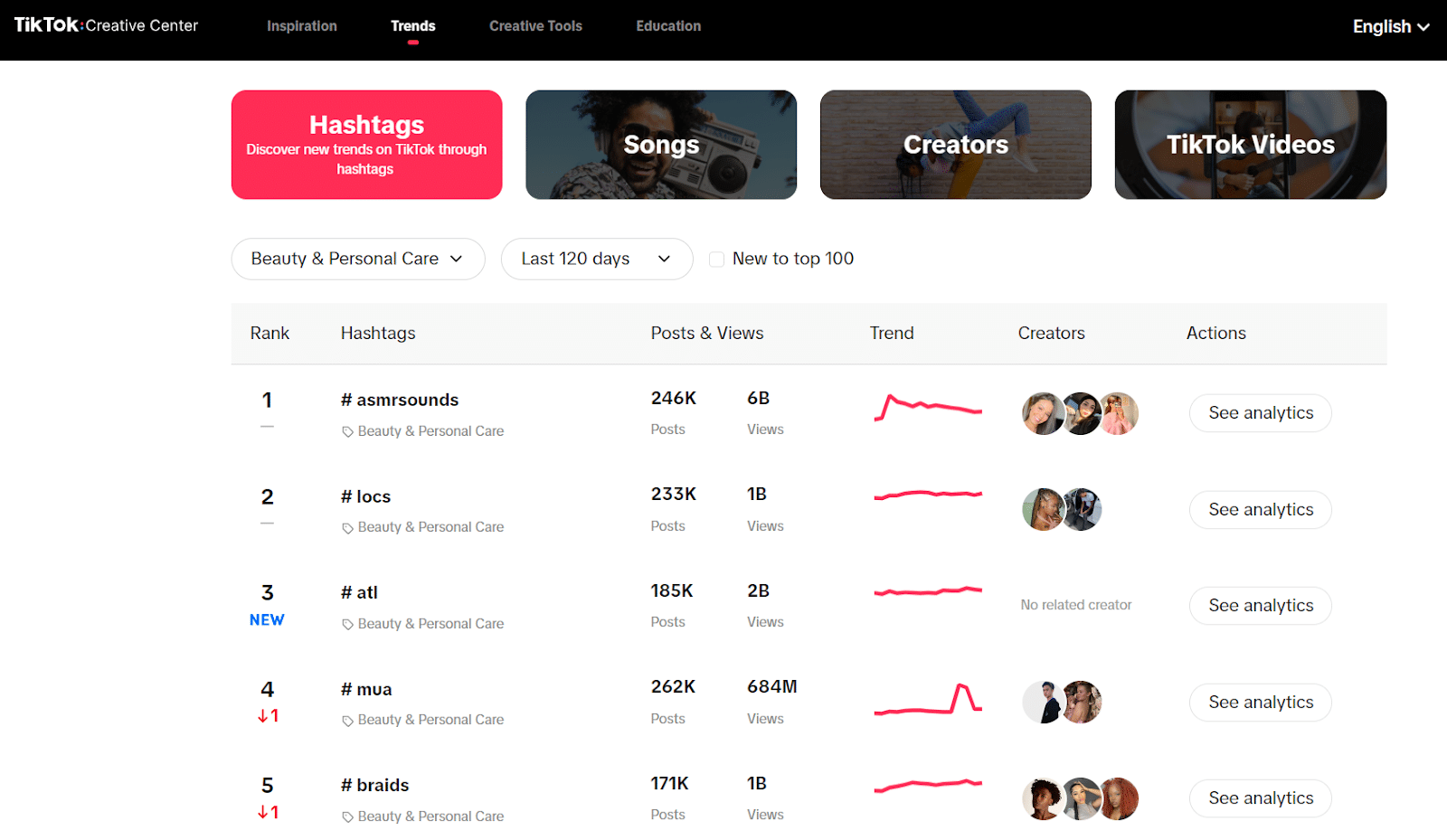
The best optimization tool for TikTok is TikTok itself. The TikTok Creative Center is the number one place to go to find trends, conduct keyword research and learn about the most up-to-date creative best practices.
The trends dropdown in the top navigation bar shows users what hashtags, songs, creators and videos are most popular at a given time.
Once you’re in the trends section of the Creative Center, you can choose to browse by hashtags, songs, creators or videos. You can also filter by industry and time period.
This tool is extremely useful for trend and hashtag optimization since it provides insight into the popularity of these video aspects.
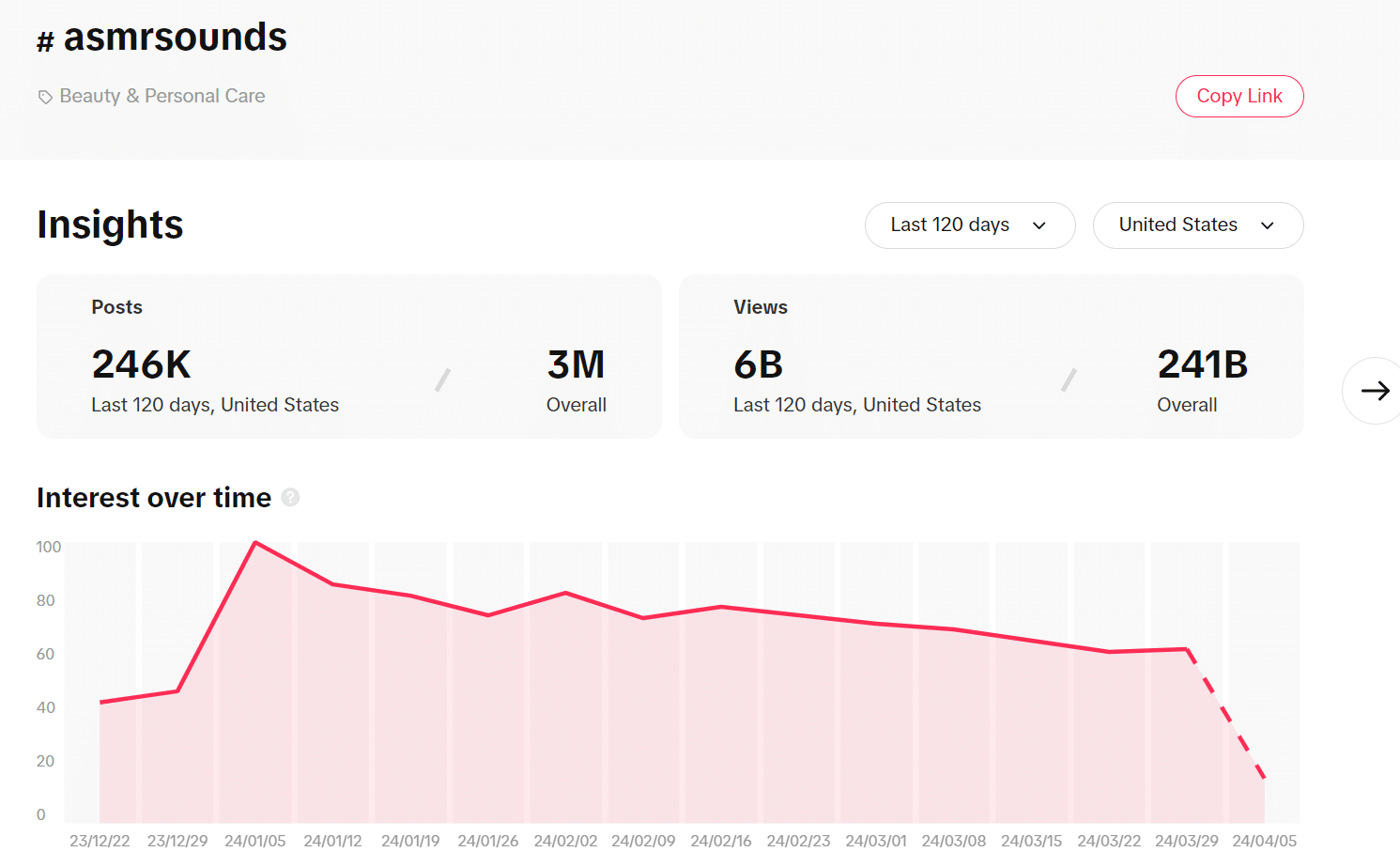
When you click on the See analytics tab in the Creative Center, you’ll be taken to a page that provides information similar to Google Trends.
The TikTok Creative Center shows how many posts are being created for each hashtag, how many views the hashtag is getting and interest in the hashtag over time.
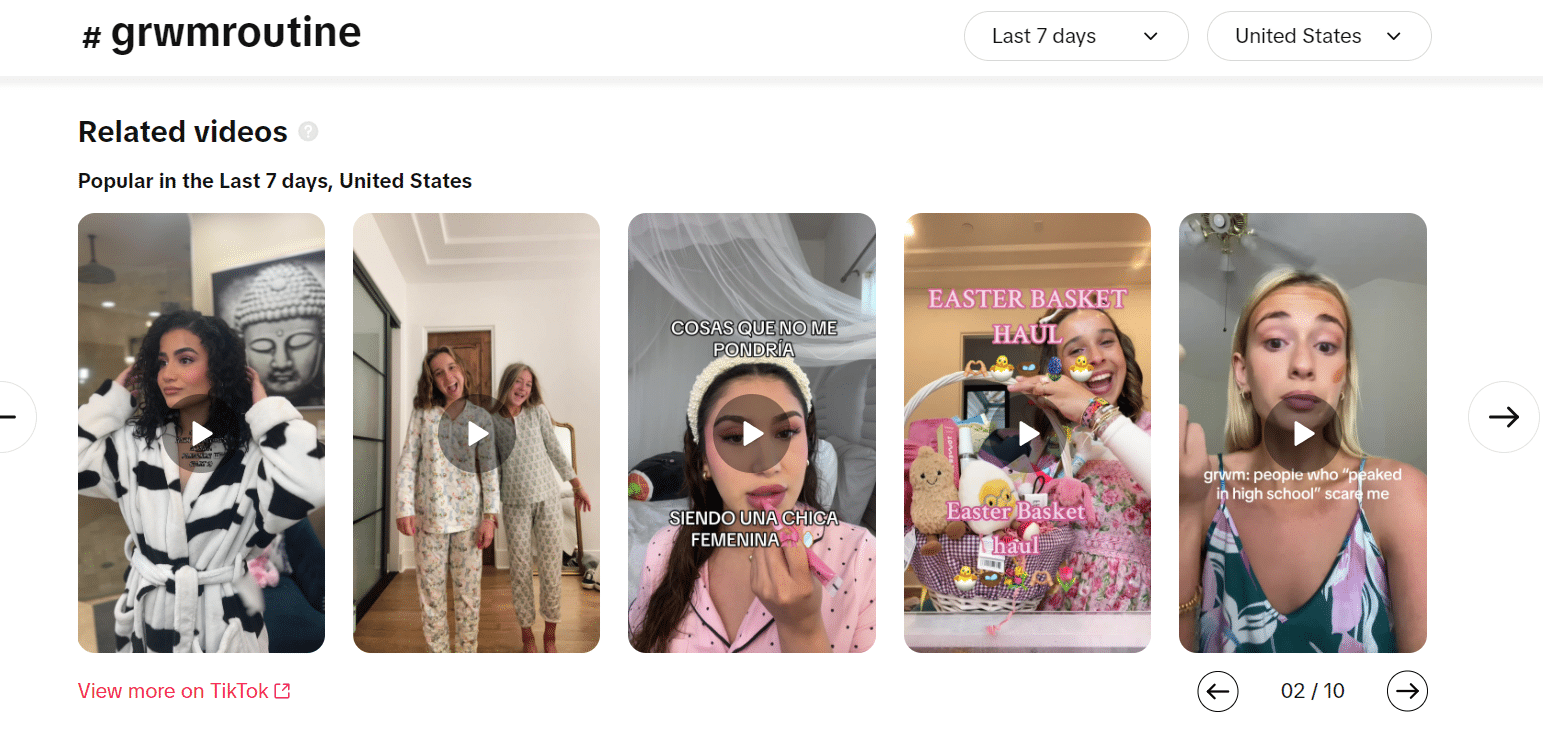
The TikTok Creative Center also shows related videos, which can be extremely helpful for content ideation on the platform.
In addition to trend popularity insights and related videos, the tool provides information about audience demographics and their related interests.
TikTok doesn’t have as many optimization tools as traditional search engines. However, the Creative Center does a good job of providing information that can be critical to improving organic visibility on the platform.
Measurement and reporting tools
Although TikTok doesn’t have nearly as many measurement and tracking tools as Google, creators and businesses can use TikTok Analytics through Business Suite to see how their content is performing and who’s watching it.
Within the Business Suite dashboard, you can seamlessly navigate to the Analytics section, where a wealth of performance metrics awaits.
From video views and likes to shares, comments and follower growth, every facet of account engagement is meticulously tracked and presented for analysis.
The platform also provides in-depth demographic data, furnishing crucial insights into your audience’s age, gender, location and interests.
Armed with these analytics, you can embark on a journalistic journey of understanding their TikTok audience dynamics, enabling them to fine-tune content strategies and foster heightened engagement on the platform.
Gain an edge with TikTok SEO
As SEO for TikTok becomes more prominent, more information on how to optimize will become available.
Even though limited resources are available at the moment, it’s important to optimize where everyone is searching – and that’s no longer just Google. You are left with a choice: adapt or get left behind.
Courtesy of Search Engine Land: News & Info About SEO, PPC, SEM, Search Engines & Search Marketing
Tuesday, April 23rd, 2024
More keyword data isn’t your problem.
No, what’s holding you back has nothing to do with your advanced ability to slice and dice keyword data dumps.
Data dumps on their own won’t help you; they’ll probably only hurt you.
Here’s why, how this mindset routinely sabotages keyword research and how to fix it.
Why keyword research is hard (and misunderstood)
Anyone anywhere can fire up a keyword research tool and export a giant list of “relevant” keywords. That’s not the problem.
The problem is that this haphazard, spray-and-pray approach doesn’t work. Not when your competitors (both direct but more importantly the indirect ones) actually know what they’re doing in competitive spaces.
In other words, your problem isn’t sifting through a ton of random keyword ideas, using arbitrary (and misleading) filters like keyword difficulty (KD) to sort which ones are a “good” target vs. a “bad” one.
My friend Ben Goodey helped illustrate the problem with keyword research in a recent LinkedIn post:
“Most keyword research “spreadsheet dumps” people make are NOT useful.
Easy keyword research:
– Full dump of entire set of keywords in “your industry”.
– Difficulty and volume appended.
– Clustered into related topics.
Useful keyword research:
– Keywords you can *actually* win based on your current authority
– Keywords that show YOUR buyer is looking for YOUR product
– Keywords where competing content is weak
Takes time and experience. It’s slow.
But it’s where the magic *actually* happens.”
See, SEO is part art, part science.
Yes, it can be technically complex at times. But for the most part, it’s more similar to weight loss:
What’s hard is the consistent execution, and not the actual theory or strategy (eat less; workout more).
So yes, pivot tables can be helpful, especially when you’re working with tons of data points.
But they’re only helpful to a point.
Because the best keyword research strategies actually blend multiple different types of subjective analysis at the same time, including:
- The likelihood or ability to actually rank, for…
- Business-generating topics, within a…
- Realistic time frame given your goals/objectives, considering…
- The competitive landscape you’re up against versus…
- Your site’s current inherent strengths and…
- The resources you’re able to allocate during these pre-defined time periods.
In a world of sophisticated SEO, over-engineered pivot tables, fancy formulas and similar basically become more fake busy work.
Let’s step through these six views or “lenses” so you can properly analyze keywords from different angles that are a better predictor for success.
1. The likelihood of actually ranking
This first one sounds trite but often isn’t in practice.
Yes, you should be targeting the biggest and best commercial terms in your space. But that brings us back to the age-old SEO Catch-22:
- The “best” keywords are often the most competitive.
- This means they’re also going to take the longest to rank for (so, you won’t see any results anytime soon).
If you’re ready and willing and able to stomach years of no results, then go for it!
Otherwise, if bosses or peers or clients are going to be breathing down your neck six months from now (read: most, if not all, of them), you’re gonna need to re-adjust your sights.
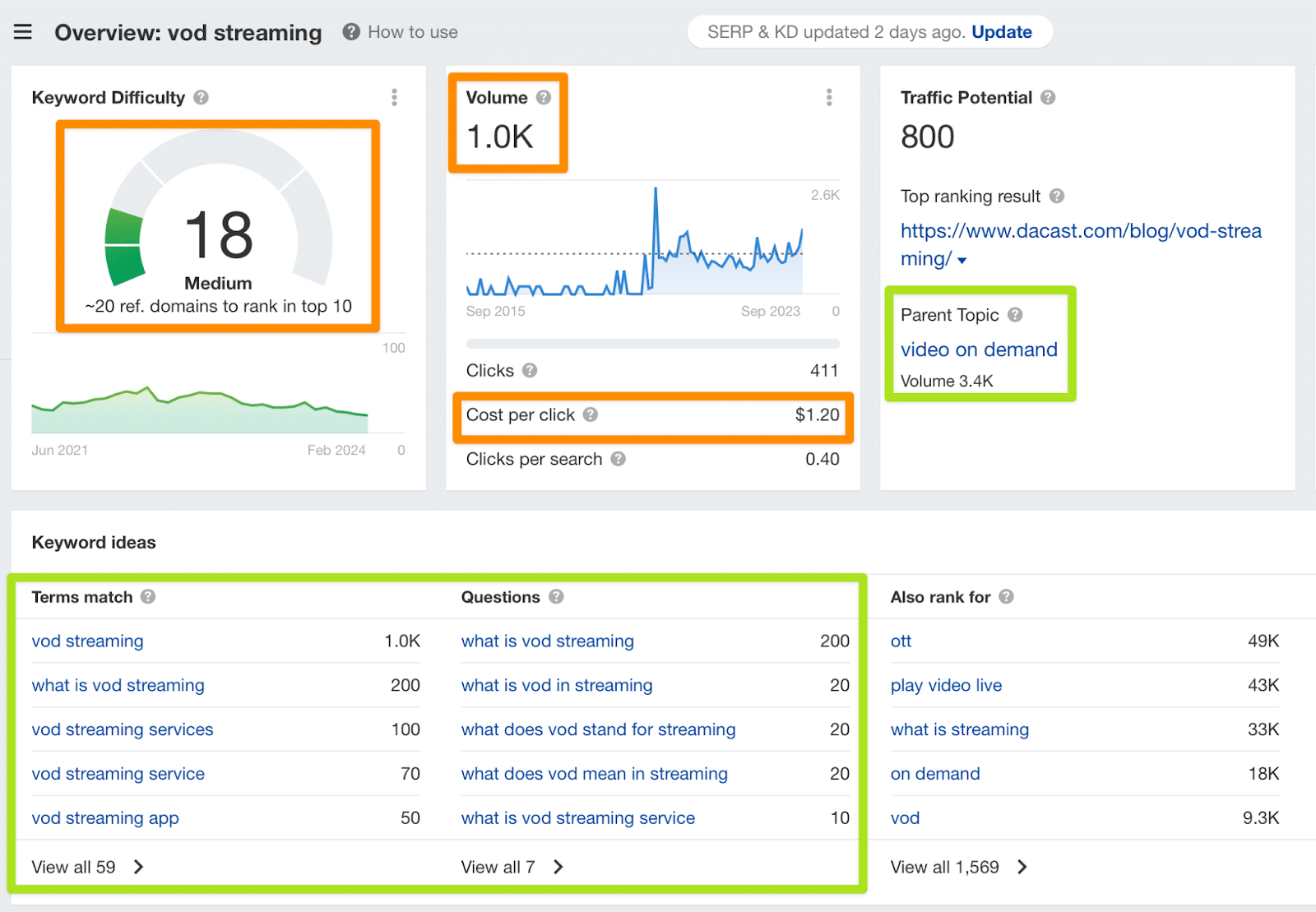
For instance, feast your eyes on this awesome “live streaming platform” keyword:
Yikes. “Super hard” keyword difficulty (KD) isn’t great.
(It’s not all bad per se; keep reading below to see why KD often lies).
However, unless your domain rating already reads ~80-90+, you’re looking at 12+ months at the earliest for any top page (let alone top five) rankings.
So. You adjust your sights – out and down!
What’s a similarly relevant keyword that you can rank for in under 12 months to help “balance the books” while you’re waiting to rank for this more competitive target?
You look for similar underlying intent and relevance but one that’s much more of a short-to-medium-term goal than a long-term one.
Like this:
No, you probably still won’t rank in the top 5 for this out of the gate. But the related long-tail variations are even more promising.
So, with the right approach, you’re able to:
- Pick up the long-tail variations in the short term (0-6 months).
- Get this “VOD streaming” pillar within ~6-12 months.
- Leverage this dominance to go back for “live streaming platform” 12+ months from now.
In other words, your keyword research + topic selection + content strategy should be more holistic.
One cluster sets up another, which sets up another, which sets up another.
No pivot tables required – only long-term thinking and strategizing.
Dig deeper: The trifecta of keyword research strategy: Volume, difficulty, intent
2. Business-generating topics
Ranking for all the top-of-the-funnel keywords in your space is a great start.
It might be enough for B2C companies, depending on the rest of their customer acquisition channels and options.
But, those terms alone often don’t move the needle for long, drawn-out, complex sales cycles.
Translation: Using AI to pump out all the crappy content in the world isn’t actually going to drive you new business.
If anything, the substandard quality will likely erode the trust and credibility you’ll need to drive five-plus-figure ARPUs.
That’s why B2B brands especially need to balance both ends of the buyer’s journey:
- You need enough bottom-of-the-funnel content to convert attention into interest (where demos, paid trials or sales enablement are more of the norm).
- You must not neglect the fact that the vast majority of your ICPs don’t know who you are – so you’ll need to address pain points and education.
You should also realize that sophisticated buyers are already comparing you to alternatives before ever reaching out in the first place.
So piggybacking on competitors and alternatives of your product – even if they’re not direct competitors but simply better known (or funded) – can help you thread the needle.
This way, you can double down on expanding the “vs” or “alternatives”-queries you’re targeting and actually pushing into the top five. Like so:
If you’re just doing keyword research with a giant data dump, chances are you’re missing these critical “bridge”-type keywords to help transform searchers into leads.
‘Cause you’re setting artificial minimums around things like “volume,” even though “volume” across most keyword research tools are:
- Completely inaccurate.
- Wildly different from tool to tool.
So keep in mind that keyword research data is all relative. Not absolute.
You don’t need to care about “how much volume” there is for a “vs” or “alternative” keyword. ‘Cause in real life, you already know you’re being compared against alternatives.
Learn to trust your gut, intuition and customer feedback more than any other artificial number in a spreadsheet.
Dig deeper: B2B keyword research: A comprehensive guide
3. Ranking in a realistic time frame (given your goals and objectives)
Here’s the thing:
Everyone wants to rank for the “best” keywords, except not everyone deserves to rank for the best keywords.
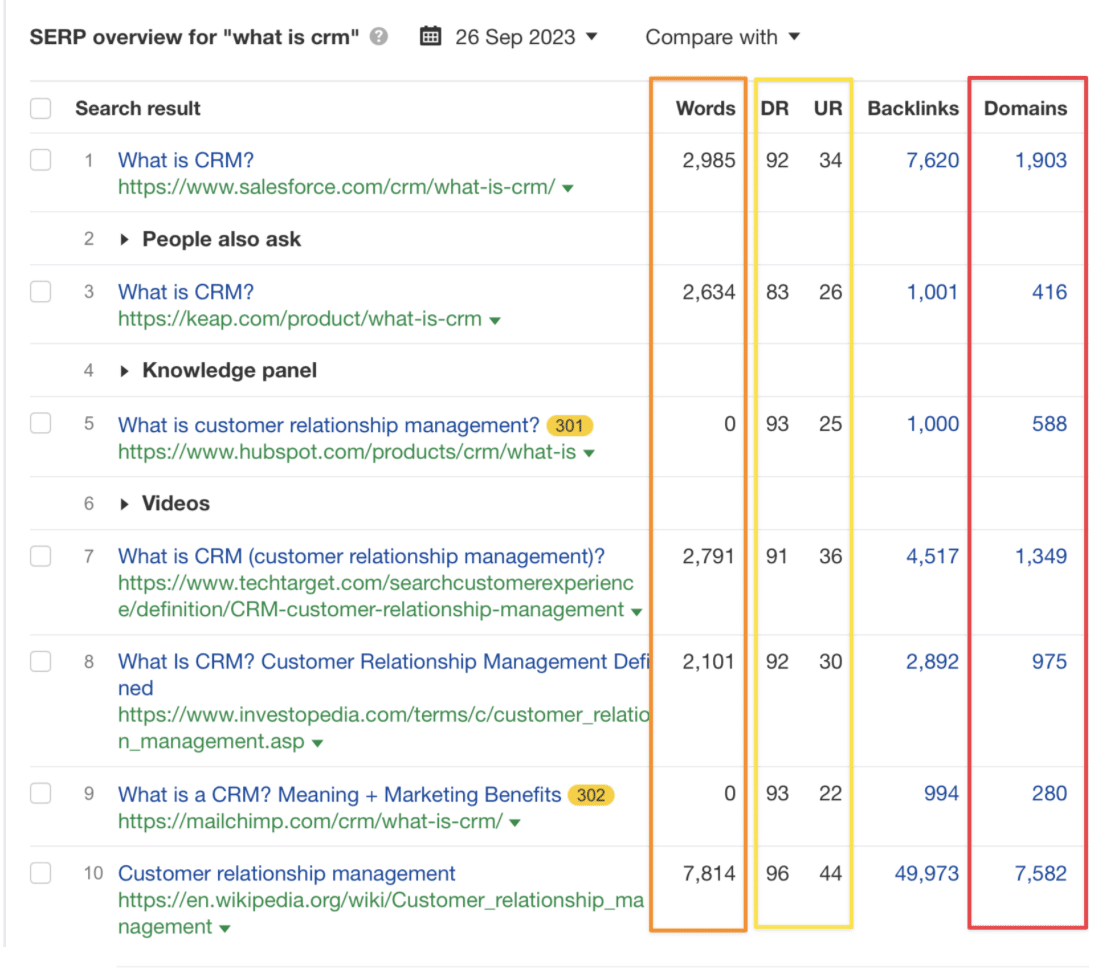
Check out this example below and look at the brand names dominating the top 10 for “what is CRM”:
Now, ask yourself:
If you’re not already a household name in the CRM space, what is the likelihood of you unseating one of these competitors?
Seriously, what’s the likelihood that you’ll rank in the top 10 for this keyword in one year?
And then, more importantly, what is it actually gonna take you – today – to get there tomorrow?
No. You probably don’t deserve to rank in the top 10 for this query.
Not today, and probably not over the next 12 months.
But two or three or five years from now? Sure! Why not?!
The Beachhead Principle can help, but only if you put in the hard work over the next few years to achieve it.
Get the daily newsletter search marketers rely on.
4. The competitive landscape’s relative strength
Keyword difficulty lies.
Not some of the time, but all of the time, across pretty much every single keyword research tool.
This means simply adding a filter for KD when doing keyword research isn’t good enough.
At best, it sets you up for bad expectations. At worst, it manifests in “pretty good” future rankings that never will actually break the bank (in a good way).
See, “keyword difficulty” usually relates specifically to the number (not even quality!) of backlinks to each individual piece of content currently ranking in the top ten or so.
However, it does not only ignore the quality of said backlinks but also the overall domain strength of the site.
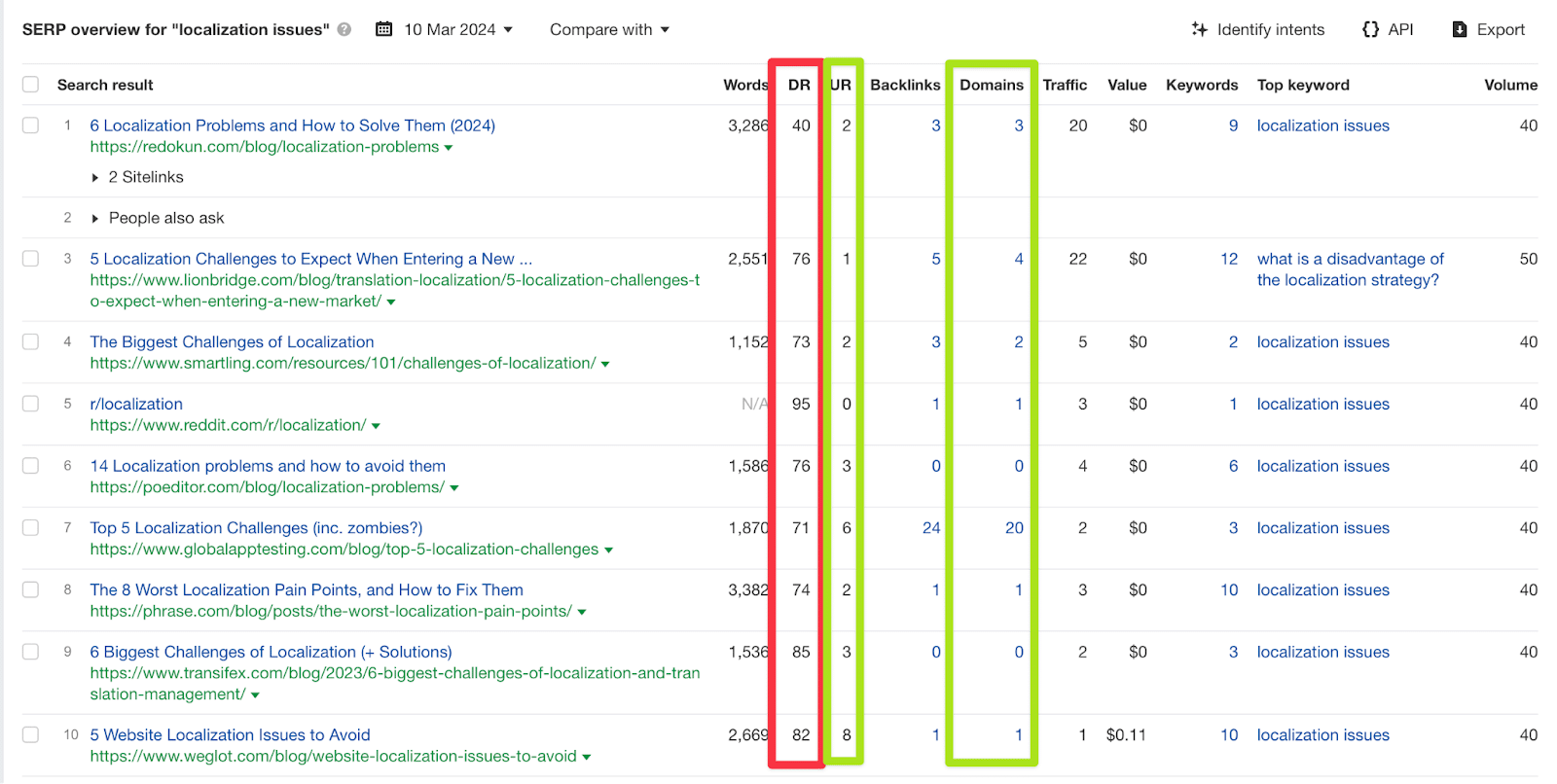
Check out this “localization issues” example below to see what I mean:
Nice! We SEOs like “Easy,” right?
Except, this:
Sure, the two green boxes (page-level strength) are kinda/sorta easy.
However, the red box? Domain strength overall? With one exception, the rest are sitting at 70+ domain ratings.
So no. This keyword isn’t “easy.”
This is why filtering a spreadsheet for “low KD” is misleading and inaccurate.
5. Your site’s current strengths
Topical authority can work practically in two ways:
- It can be a rising tide that lifts all boats (err, other similar keywords in the same space you’re deemed an expert), or…
- It can be a glass ceiling, giving you the dreaded “pretty good” rankings that never actually come to fruition (without a ton of extra work in other areas.
The simplest way to assess topical authority (or lack thereof) is to see if you have good rankings (top five or 10, at least) for lots of related content around these same queries.
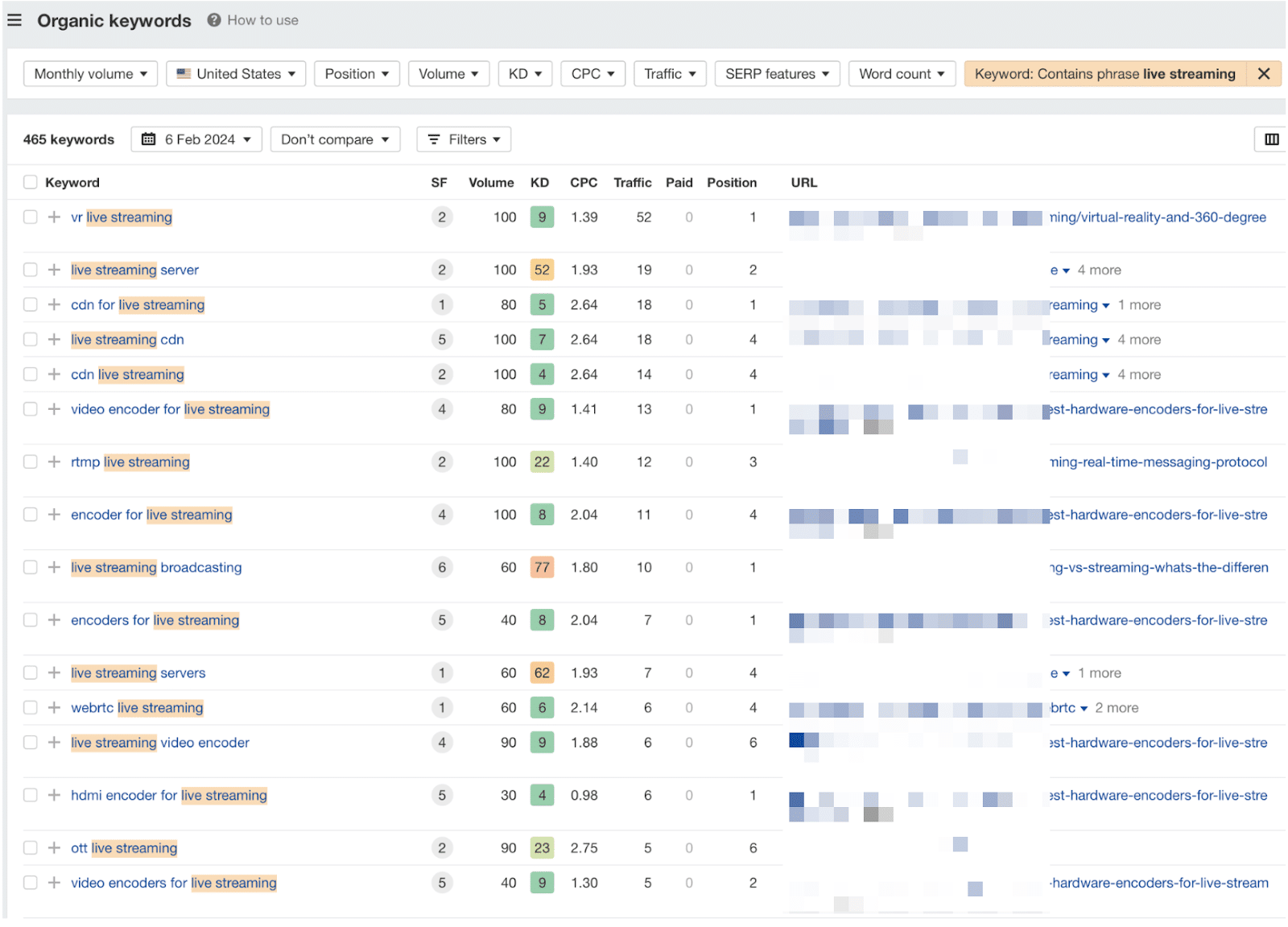
Wanna see what that looks like? Kinda like this:
Tons of top five rankings for related keywords around “live streaming.” Great!
But the inverse is true, too.
No strong rankings for other related topics or concepts? This means you have a lot more work to do!
Take a look at this pillar page below and specifically the sub-sections being called out:
Now, let’s assess each area to see if this site already has good rankings for those sections.
Example 1: A single 12th position, so not really.
Example 2: Two 60+ positions – not at all!
Example 3: Lots of 40-80+ positions. So clearly, no.
The point?
That first pillar page will always struggle to rank until you can also get these other supporting pages to help, you know, actually support it!
In other words, there is no existing topical authority in this space. Creating and reinforcing this should be priority number one.
And yet? No Excel sheet or formula is going to tell you this. At least, not without analyzing the problem of not ranking from different perspectives or angles like this.
6. Resources you’re able to allocate in a specific time frame
Let’s recap and combine the first five ideas. Then, add a sixth consideration: how many resources (i.e., people, time, money) you can realistically allocate to each keyword you might want to target over the next year.
Once again, back to “live streaming platform.”
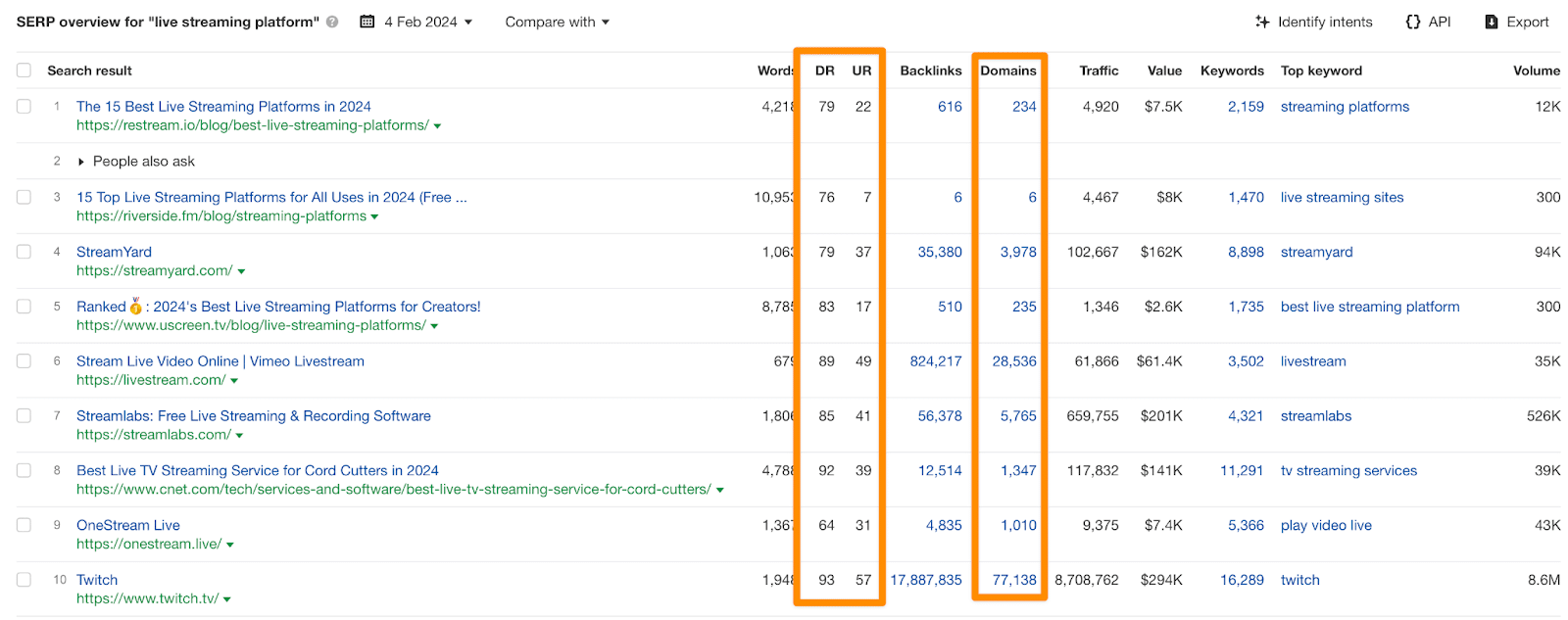
Take a peek at both the domain and page-level strengths below:
Now, an important caveat:
- You’ll notice the huge number of referring domains (in the right-hand orange box).
- That’s why this KD was listed as “Super Hard” earlier.
- But, those of you with eagle eyes will now see that the ones with thousands or tens of thousands of referring domains are actually homepages!
- This means that “Super Hard” ranking earlier is also overstated.
- Ahrefs is simply averaging out these tens of thousands of domains across the other results, too.
- If search intent is truly a comparison post, it will mean that you don’t need nearly as many links to actually rank for this query.
Confused yet?
Yes, this keyword is still pretty difficult. Don’t get it twisted.
But it’s not nearly as difficult or unattainable as that KD would have originally alluded to.
Once again, no Excel formulas would have helped you uncover this issue. Only your eyes, ears and experience can.
This is one of the many reasons why brands routinely fail at link building. When you see “1,000+” backlinks needed, you build tons and tons of cheap, low-quality links.
Yet, you’d probably be better off with better content, topical authority and fewer (dozens to hundreds) of really high-quality, editorial-based links instead.
Yes, you still need relevance and scale either way.
The type of campaigns and, therefore, the effective budget required for this one URL (compared to all the other URLs you might be juggling) should also be completely different.
A smarter, more intentional keyword research approach
Let’s face it:
SEOs are kinda geeky. We love data and want to live in a world of logic.
We believe everything we do is quantifiable and data-driven. But don’t take this way too far.
You don’t need fancy formulas and pivot tables when doing keyword research. The more data sets you’re juggling often lead you astray.
SEO is more art than pure science in this regard.
What’s hard about SEO is reading the tea leaves and then consistently executing over the long haul (read: 24+ months, minimum).
None of these can be answered by ChatGPT, Ahrefs, etc., with a simple prompt or export button.
This is why people and companies fail at SEO.
Not because “SEO is difficult/technical/doesn’t work in my space/enter other excuses here.”
Courtesy of Search Engine Land: News & Info About SEO, PPC, SEM, Search Engines & Search Marketing