Archive for the ‘seo news’ Category
Thursday, May 23rd, 2024
You can either have broad or deep subject matter expertise. The choice is yours.
If you’re in the early or middle stage of your career, then this is the perfect time to decide whether you want to go broad or deep.
Here’s how to think about this choice and decide what’s best for your search marketing career.
The T-shaped marketer
I base my approach on the “T-shaped marketer” model: an expert in one area (vertical bar) with broader knowledge across related disciplines (horizontal bar).
This allows for specialization and versatility – a valuable combination in marketing.
There is no wrong choice. Circumstances often dictate the decision.
My starting point for these decisions is the following concept:
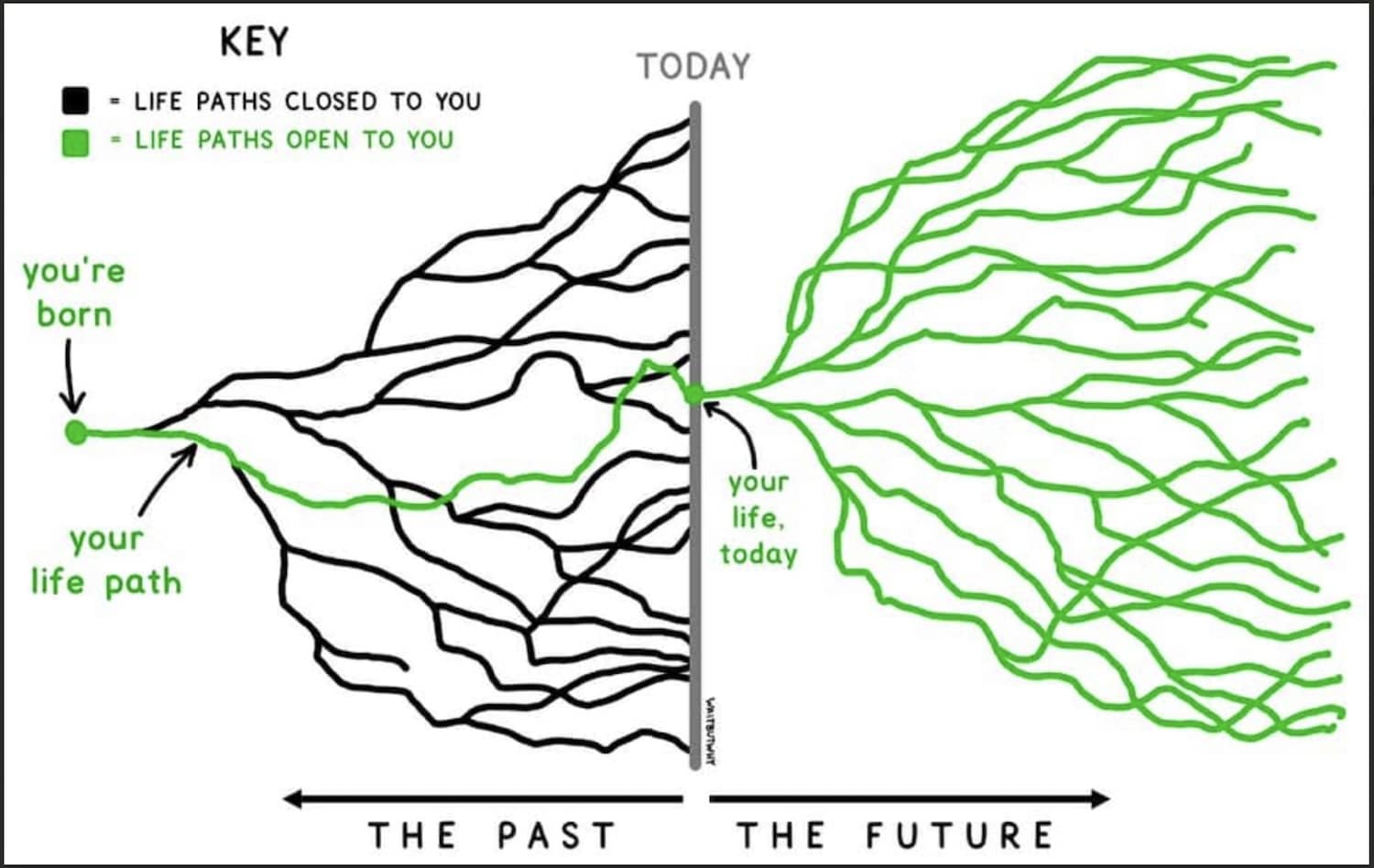
I revisit this concept frequently throughout the year, for myself and others.
Remember:
- You have around 40 working years.
- Even if you made a terrible call, there is time to correct it.
- There are far more things outside of your control than in your control.
- Sometimes you are lucky, sometimes you are not.
- Companies can go through explosive growth or go out of business.
The case to be a deep subject matter expert
- Deep expertise: Having an in-depth understanding of the subject matter has advantages. Knowing how to navigate strategically and technically can unlock unique opportunities that you’d be qualified for, but others would struggle with. This includes grasping the intricacies of algorithms, platform changes, staying updated with constant changes, and developing highly effective strategies.
- Demand: Generalists are more common, so demand often drives specialization. You could be an expert in a subject, vertical, or specific problem (e.g., technical SEO for Shopify sporting goods). When that problem arises, you’re well-positioned to solve it. Demand can also vary by market or company. For instance, an agency winning paid search work may spur opportunities in that area.
- Thought Leadership: Deep expertise provides a unique market perspective, enabling thought leadership. You can anticipate client needs and future trends. Specialists often become recognized authorities, writing for publications or speaking at conferences.
The case to be broad
- Versatility: Broad skills allow you to participate in diverse conversations and connect dots across disciplines. Many tactics share similarities, like keyword research for SEO and PPC, or campaign structures for paid social and search. These commonalities make your skillset more adaptable as clients’ and brands’ needs evolve.
- Big picture thinking: Hyper-specialization can make it hard to see the bigger picture. Having broader knowledge helps maintain a higher-level view. This facilitates solving complex problems like budget allocation, creative strategies or optimizing the customer journey.
- Communication and collaboration: Generalists excel at communicating across teams and departments, ensuring cohesive marketing. They can understand various tasks and requirements, helping bring projects together and resolve cross-discipline issues quickly.
5 tips to help you make your decision
Assess your strengths and passions
Consider what you genuinely enjoy and excel at.
Do you prefer diving deep into technical details, or do you thrive on variety and collaboration?
Find something you love. Your interests greatly impact job satisfaction.
2. Consider the market
Research the demand and salary trends for specialists and generalists in your area and industry.
These fluctuate as the industry changes and evolves.
Look at companies’ roles (e.g., VP of SEO or VP of Marketing) to gauge the value of specialization or generalization as you advance.
3. Think long term
Many worry that specialization could limit relevance or career growth, with generalist roles seeming more valued.
However, both paths offer opportunities as you advance – and require continuous skill improvement.
Getting paid as a senior specialist (e.g., paid search) may be harder than a generalist, but true expertise commands a premium.
Focus on what you can control and excel at. It creates opportunities over time, though patience is key. Expertise and skill are eventually recognized and rewarded, even if it’s challenging initially.
4. Talk to people in the field
Network with professionals who have taken different paths.
Ask about their experiences, challenges faced, and rewards reaped.
Their insights can be invaluable when weighing your options.
5. Experiment and explore
Still unsure?
Try different roles or projects to experience specialization and generalization.
This can help you discover what truly resonates.
What’s the right path for you?
There’s no one-size-fits-all answer about whether you should develop broad or deep subject matter expertise.
The best path is the one that aligns with your individual strengths, interests and long-term goals.
Carefully considering these factors can help you make an informed decision that sets you up for a fulfilling and successful marketing career.
Courtesy of Search Engine Land: News & Info About SEO, PPC, SEM, Search Engines & Search Marketing
Thursday, May 23rd, 2024
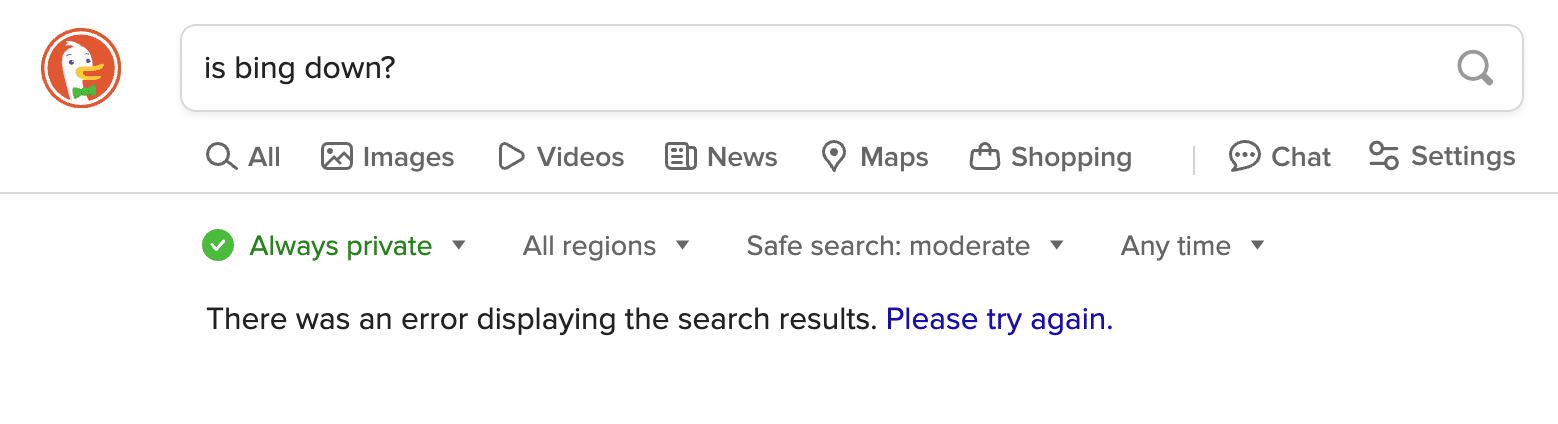
Starting at around 1:30am ET, Bing Search and the sites Microsoft Bing powers, have been experiencing global and widespread outages. This leads to many Bing Searches failing, and then third-party services that rely on Bing Search, such as Copilot for web and mobile, Copilot in Windows, ChatGPT internet search, DuckDuckGo and Ecosia, also failing.
Downdetector. According to Downdector.com Bing has been having issues since around 1:30am ET:
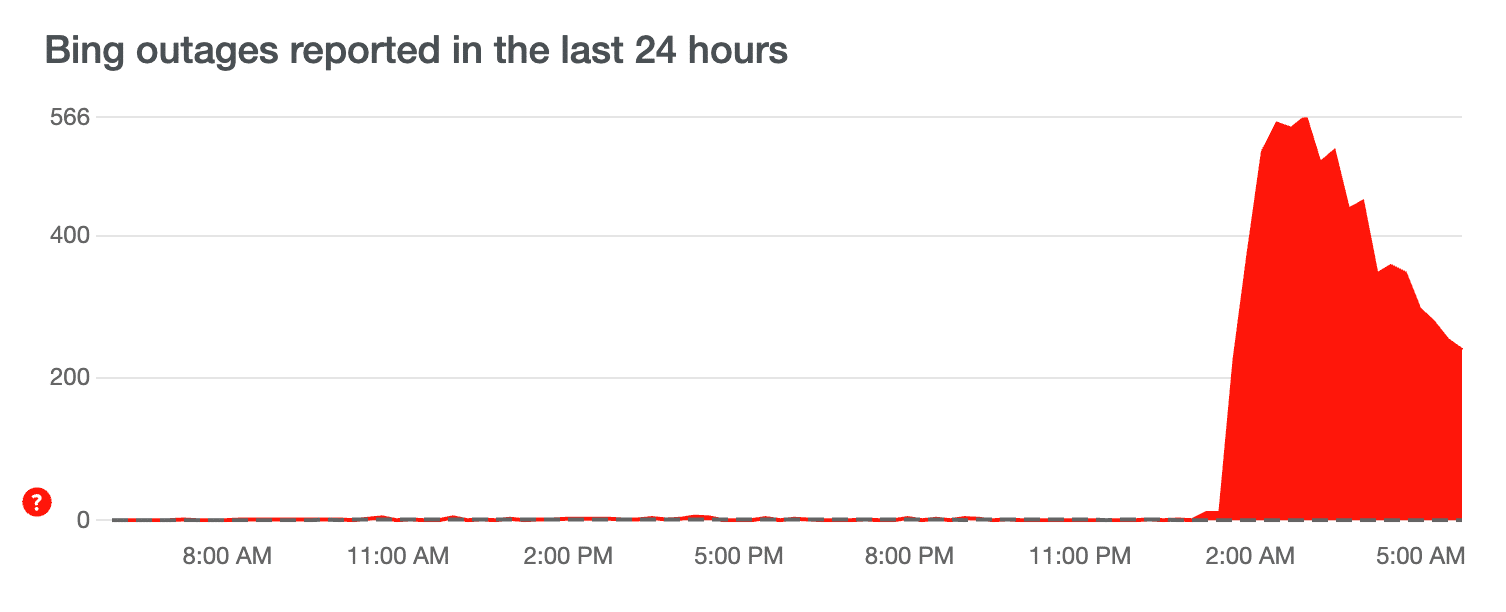
What Bing’s outage looks like. Here are some screenshots of Bing.com searches failing and of partner sites failing:

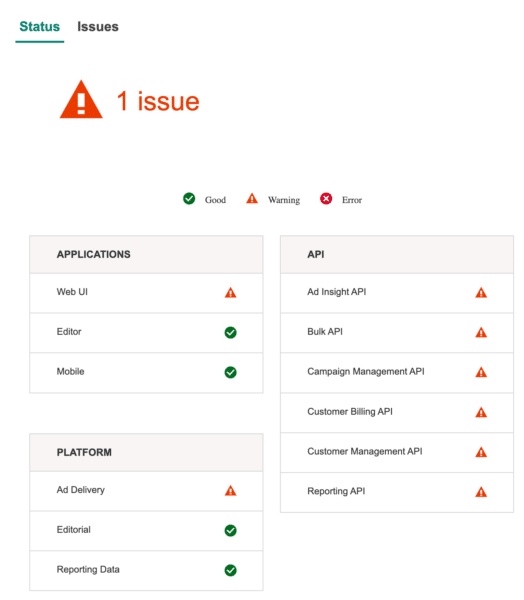
Microsoft Advertising services down. Also, Microsoft Ad platform server status page shows outages as well:
Why we care. If you rely on getting traffic from Bing or those third parties, you may see a dip in that traffic today. In addition, if you rely on using these services for your job, you may have to switch gears and work on something else until they are restored.
It’s back. Around 6:15am ET, it seems the services are now back up and running – at least for me at this moment. Although, many users are still telling me it is not working for them.
Microsoft update. Microsoft posted an update at around 7:30am ET:
While we isolate the root cause, we're transitioning requests to alternate service components to expedite service recovery. More information can be found in the admin center under CP795190.
— Microsoft 365 Status (@MSFT365Status) May 23, 2024
Courtesy of Search Engine Land: News & Info About SEO, PPC, SEM, Search Engines & Search Marketing
Thursday, May 23rd, 2024
In today’s digital landscape, inclusivity and accessibility are no longer optional; they are essential for engaging with diverse audiences and fostering meaningful connections. Neglecting digital accessibility can alienate potential customers and limit your brand’s reach.
During this webinar, our expert panel will delve into the evolving consumer behaviors and preferences, highlighting the importance of creating content that resonates across various audiences and platforms. They will also discuss the critical role of website accessibility in organizations, aligning with the Americans with Disabilities Act (ADA) to ensure broader reach and avoid potential legal pitfalls.
Attendees will gain valuable insights on how to craft digital experiences that are elegant, engaging, and inclusive, fostering a brand presence that makes everyone feel welcome. Register now to save your spot!
Courtesy of Search Engine Land: News & Info About SEO, PPC, SEM, Search Engines & Search Marketing
Wednesday, May 22nd, 2024
Unsurprisingly, AI took center stage during the various announcements made today at Google Marketing Live 2024.
Updates also focused on creatives, data and giving the consumer what they want straight from the Search results. Now is the time to start paying closer attention to your impression levels.
Here’s a recap of everything you need to know from Google Marketing Live, with links to our full coverage of each major announcement.
You can now produce high-quality creative assets rapidly and at scale for Performance max campaigns.
With Generative AI, will be able to create ads a lot faster, have brand customized ads, advanced image editing and automatic showcasing of product feeds in AI-generated creatives
New reporting functionalities have also been rolled out for Youtube and creative assets.
Video and virtual ad types come for Shopping Ads advertisers.
Retailers can integrate short-form product videos into ads, virtual try on allows shoppers to see how tops fit different body types, and 3D show spins.
Allowing consumers to engage with your creative and products (virtually) before landing on your page.
You can now target your potential customers with vertical videos, stickers, and automatically generated animated image ads.
These video ads are now available across the 3 billion users across YouTube, Discover and Gmail through Demand Gen campaigns.
More variety for your Demand Gen campaigns.
Your relevant Search and Shopping ads will appear in “sponsored” sections within AI-generated overview boxes on the SERP.
No need for you to do anything – existing Search, PMax and Shopping campaigns will be eligible.
How to make it not eligible – that is unknown as of now.
Centralize and activate your first-party data for more effective AI-powered campaigns with Google’s Data Manager Tool now available to everyone.
Use it for data integration (consolidates disparate first-party data sources into a unified analytics hub) and audience insights and targeting.
New tools have been released to better showcase your brands and create visual content.
You can create a brand profile to highlight key merchant information on Search, featuring brand imagery, videos, customer reviews, deals, and more.
Product Studio now includes brand alignment features that let you use uploaded images to inspire your AI-generated ad and the ability to create videos from a single product photo.
Google is testing giving consumers an interactive experience upon getting their search results.
AI will be used to provide tailored advice and recommendations based on user needs and context.
The aim is to improve user experience on the SERP and provide a ready to convert consumer when they reach the brand landing page.
But what will this do to search traffic to brand sites? Time will tell.
Why we care. A lot of updates this year focused on less effort for a consumer to click through the site. So it will be interesting to see what that leads to for driving traffic. Still, there are several functionalities that have been introduced that have been long awaited (like reporting) and allow brands to better showcase their creativity.
Courtesy of Search Engine Land: News & Info About SEO, PPC, SEM, Search Engines & Search Marketing
Wednesday, May 22nd, 2024
WordPress version 6.5 now supports including the lastmod element within sitemaps files, which can help search engines understand which pieces of content are new or updated. This can help improve crawl efficiency for search engine crawlers and reduce server load on your website.
Lastmod. Lastmod is an element that you can add to your sitemap file that should represent the last time that URL was modified. Search engines do look at that date when processing your sitemap files for crawling purposes. In fact, Bing said last year it would rely more on the lastmod date for crawling purposes.
Gary Illyes from Google posted this news on LinkedIn saying, “The lastmod element in sitemaps is a signal that can help crawlers figure out how often to crawl your pages.”
He added:
“If you’re on WordPress, since version 6.5, you have this field natively populated for you thanks to Pascal Birchler and the WordPress developer community. If you’re holding back on upgrading your WordPress installation, please bite the bullet and just do it (maybe once there are no plugin conflicts). Don’t be like Gary and still run a version 2*. If you’re not on WordPress, try to populate it with the last significant modification date, where “significant” loosely means a change that might matter to your users and, by proxy, to your site.”
Fabrice Canel from Bing commented on that post, saying:
“A big shoutout to Pascal Birchler, Gary Illyes, Google, and the WordPress developer community for their fantastic contribution to WordPress version 6.5. The integration of the lastmod signal within sitemaps is a game-changer, offering for millions of web sites, great data insight about when their content is changing allowing to optimize crawling activities and ensuring content freshness in search engines.
For anyone reluctant to update their WordPress installation, consider this feature a prime motivator. The more websites implement lastmod in their sitemaps, the search engines — whether AI-driven or rules-based — will increasingly capitalize on this signal.
Complimentary, please adopt https://www.indexnow.org/ to take control of crawl and your SEO game with real-time indexing. The right setup is IndexNow (for real-time update) and sitemaps with lastmod (daily – catchup mode) to ensure comprehensive and fresh coverage.
Having better online visibility isn’t just about having a website. It’s about your latest content being found.”
Upgrade. Currently, about 21% of WordPress installs are using version 6.5, so it might make sense to double check to see if you are on that version if you want to improve crawl efficiency.
If you are not on WordPress, you can ask your developers how to get accurate lastmod dates in your sitemap files.
Courtesy of Search Engine Land: News & Info About SEO, PPC, SEM, Search Engines & Search Marketing
Wednesday, May 22nd, 2024
Winning an industry award can greatly impact how customers, clients, and colleagues regard your brand.
Showcase your achievements and celebrate your professional excellence by entering the Search Engine Land Awards — the highest honor in search marketing!
Since its 2015 inception, the Search Engine Land Awards have honored some of the best in the search industry — including leading in-house teams at Wiley Education Services, T-Mobile, Penn Foster, Sprint, and HomeToGo – and exceptional agencies representing Samsung, Lands’ End, Stanley Steemer, and beyond.
This year, it’s your turn. And now is the best time to apply: Super Early Bird rates expire at 11:59pm ET this Friday, May 24… submit your completed application before then to save $300 off final rates (per entry!).
Want to learn more? Check out our FAQ page, explore the 2024 categories, and review advice from the judges.
Courtesy of Search Engine Land: News & Info About SEO, PPC, SEM, Search Engines & Search Marketing
Wednesday, May 22nd, 2024
Google is experimenting with a new ad experience on Search that aims to guide consumers through complicated buying decisions using AI assistance.
The big picture. The test explores how Google’s AI capabilities could enhance ads to provide more tailored advice and recommendations based on a user’s specific needs and context.

Why we care. With this update advertisers will be getting a higher converting clicka to their site. Although brands should look out for traffic volumes most likely decreasing as experience on the SERP increases.
How it works. If a user searches for something like “short-term storage” and clicks on an ad from a storage facility, they may be shown an AI-guided experience to determine their storage requirements.
- Users could share details like photos of items they need to store and their budget.
- Google’s AI would then analyze that information to recommend an appropriately sized storage unit and suggest packing materials.
- The experience would link back to the advertiser’s website to complete the purchase.
What’s next. The storage unit ads are currently just an initial test case. Broader rollouts to other verticals like travel, financial services and health care could follow if the AI proves helpful for guiding high-consideration purchases.
Courtesy of Search Engine Land: News & Info About SEO, PPC, SEM, Search Engines & Search Marketing
Tuesday, May 21st, 2024

The rise of generative AI and ChatGPT is unprecedented. Google’s March core update has major content implications. SGE is shaking up the SERPs as we know them.
Turn these daunting challenges into market-winning opportunities: Attend SMX Advanced for free, online June 11-12, to learn elite, actionable search marketing tactics that can help you keep a competitive edge and drive measurable success.
Check out the just-launched agenda, featuring exclusive keynotes with Google’s Director of Product Management and former Tinuiti VP Aaron Levy…
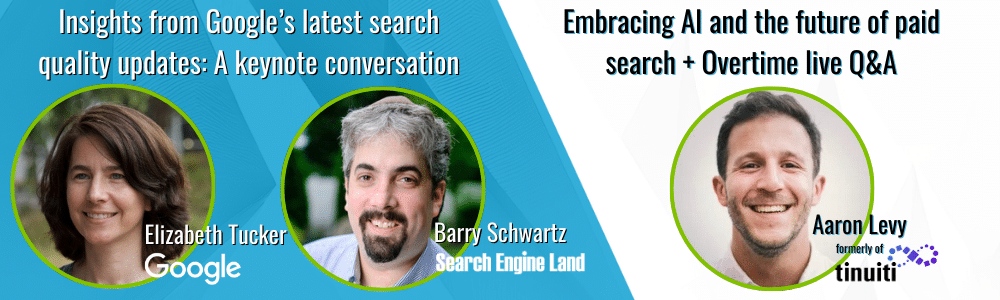
…plus 40+ tactic-rich sessions, Overtime live Q&As, Coffee Talk meetups, product demos, and more. Keep reading for 10 undeniable reasons why you should join us online next month:
- You’ll unlock unbiased, trustworthy content from the experts at Search Engine Land, the industry publication of record.
- Attend from anywhere: office, home, cafe, couch, etc. No travel headaches, no time out of the office, no carbon emissions.
- Can’t justify registration fees? No problem. SMX Advanced is 100% free to attend.
- You’ll only learn safe, reputable, reliable training — no get-rich-quick schemes or dodgy tactics.
- Hours of live Q&A means you’ll get expert answers to your toughest questions.
- Can’t attend live? On-demand access is included with your free pass, so you can train at your own pace.
- Hear what the best in the biz are up to… and validate your own initiatives and instincts.
- Discuss common challenges and forge game-changing connections during Coffee Talk meetups.
- Unite your departments with a shared training experience – invaluable to on-site and remote teams alike.
- Earn a personalized certificate of attendance to demonstrate your commitment to continued training and furthering your career.
Ready to register? Secure your FREE All Access pass now.
Psst… Yes, you’re an advanced marketer… but are you “award-winning”? Enter the 2024 Search Engine Land Awards for your chance to take home the highest honor in search. Super Early Bird expire at the end of next week! Learn more here: searchengineland.com/awards
Courtesy of Search Engine Land: News & Info About SEO, PPC, SEM, Search Engines & Search Marketing
Tuesday, May 21st, 2024
We’re in a disruptive moment, according to Alphabet and Google CEO Sundar Pichai. Although he is optimistic that Google AI Overviews and Search will drive more traffic and engagement, that is zero comfort for the many content creators who have seen their websites obliterated by Google in recent months.
In a new interview, Pichai discussed concerns about Google hurting websites and businesses, as well as the future of Search, content and the web.
‘These are disruptive moments.’ Pichai was asked about concerns from publishers following the AI Overviews rollout announcement at Google I/O. He likened this AI shift to concerns around the transition from desktop to mobile and the introduction of featured snippets:
- “I remain optimistic. … As a company, we realize the value of this ecosystem, and it’s symbiotic. If there isn’t a rich ecosystem making unique and useful content, what are you putting together and organizing? So we feel it.”
- “But I understand the sentiment. It’s a big change. These are disruptive moments. AI is a big platform shift. People are projecting out, and people are putting a lot into creating content. It’s their businesses. So I understand the perspective [and] I’m not surprised. We are engaging with a lot of players, both directly and indirectly, but I remain optimistic about how it’ll actually play out.”
Doomed businesses. Pichai was asked specifically about two sites that have loudly complained about losing 90+% of their Google traffic, including HouseFresh and Retro Dodo.
- “It’s always difficult to talk about individual cases, and at the end of the day, we are trying to satisfy user expectations. Users are voting with their feet, and people are trying to figure out what’s valuable to them. We are doing it at scale, and I can’t answer on the particular site…”
- “It’s not clear to me if that’s a uniform trend. I have to look at data on an aggregate [basis], so anecdotally, there are always times when people have come in an area and said, ‘Me, as a specific site, I have done worse.’ But it’s like an individual restaurant saying, ‘I’ve started getting fewer customers this year. People have stopped eating food,’ or whatever it is. It’s not necessarily true. Some other restaurant might have opened next door that’s doing very well. So it’s tough to say.”
- “You may be making a secondary point about small sites versus more aggregating sites… Ironically, there are times when we have made changes to actually send more traffic to the smaller sites. Some of those sites that complain a lot are the aggregators in the middle. So should the traffic go to the restaurant that has created a website with their menus and stuff or people writing about these restaurants? These are deep questions. I’m not saying there’s a right answer.”
Empathy. In an interesting moment, the tables were turned on Google, and Pichai was asked about how it felt when OpenAI transcribed over a million hours of YouTube videos to train GPT-4. The point being: Google is doing this same thing to millions of websites – taking their content, without permission, for profit. Pichai’s responses:
- “Look, be it website owners or content creators or artists, I can understand how emotional a transformation this is. …”
- “The way we have taken that approach in many of these cases is to put the creator community as much at the center of it as possible. We’ve long done that with YouTube. Through it all, we are trying to figure out what the right ways to approach this.”
- “…yes, I understand people’s emotions about it. I definitely am very empathetic to how people are perceiving this moment.”
- “Through this AI moment, over time, there’ll be players who will do better by the content creators that support their platforms, and whoever does it better will emerge as the winner. I believe that to be a tenet of these things over time.”
AI content and ranking. Google is in a unique position, where it helps generate AI content (via Gemini) that can be used to flood the web, with the goal of ranking in Search. Pichai said he thinks “using AI to produce content en masse without adding any value is not what users are looking for,” adding:
- “Anytime you have these disruptive platform shifts, you’re going to go through a phase like this. I have seen that team invest so much. Our entire search quality team has been spending the last year gearing up our ranking systems, etc., to better get at what high-quality content is. If I take the next decade, [the] people who can do that better, who can sift through that, I think, will win out.”
AI Overviews. Pichai continues to push the idea that AI Overviews are increasing Search usage. Pichai called it “one of the most positive changes I’ve seen in Search based on metrics.”
- “…In many cases, part of what is making people respond positively to AI Overviews is that the summary we are providing clearly adds value and helps them look at things they may not have otherwise thought about. If you’re adding value at that level, I think people notice it over time, and I think that’s the bar you’re trying to meet. Our data would show, over 25 years, if you aren’t doing something that users find valuable or enjoyable, they let us know right away. Over and over again we see that.”
While this may be true, it seems like it shouldn’t be true, as I discussed in Google AI Overviews: More searches, less satisfaction. Pichai also completely avoided two questions about whether Google will make any of this data public, so people can verify whether Google’s claims about AI Overview click-through rates and traffic are true.
A richer web. Pichai was asked what the web will look like in five years:
- “I hope the web is much richer in terms of modality. Today, I feel like the way humans consume information is still not fully encapsulated in the web. Today, things exist in very different ways — you have webpages, you have YouTube, etc. But over time, I hope the web is much more multimodal, it’s much richer, much more interactive. It’s a lot more stateful, which it’s not today.”
- “I view it as, while fully acknowledging the point that people may use AI to generate a lot of spam, I also feel every time there’s a new wave of technology, people don’t quite know how to use it. When mobile came, everyone took webpages and shoved them into mobile applications. Then, later, people evolved [into making] really native mobile applications.”
- “The way people use AI to actually solve new things, new use cases, etc. is yet to come. When that happens, I think the web will be much, much richer, too. So: dynamically composing a UI in a way that makes sense for you. Different people have different needs, but today you’re not dynamically composing that UI. AI can help you do that over time. You can also do it badly and in the wrong way and people can use it shallowly, but there will be entrepreneurs who figure out an extraordinarily good way to do it, and out of it, there’ll be great new things to come.”
The interview. You can watch the interview or read the full transcript on some tech news rag.
Courtesy of Search Engine Land: News & Info About SEO, PPC, SEM, Search Engines & Search Marketing
Tuesday, May 21st, 2024
Since its inception in 2015, the Search Engine Land Awards have recognized exceptional marketers on an annual basis — showcasing outstanding work, providing well-earned exposure in coverage and interviews, and bestowing upon them the highest honor in search.
But the road between deciding to begin an application and winning the award can be a long one. Although the 2024 submission process is exceptionally streamlined — it’s never been faster or easier to apply — there’s still a story that has to be told.
The way you tell that story is entirely up to you… but why not bear in mind some first-hand advice from select 2024 judges while you’re at it?
Keep reading for a roundup of fresh insights from some of our judges… and submit your entry before the May 24 Super Early Bird deadline to save $300 off last chance rates!
“Structure your submission as a story with three main parts: ‘Before’, ‘During’, and ‘After’. Begin by outlining the initial challenges (‘Before’), then detail your marketing strategy and actions (‘During’). Finally, showcase the outcomes and improvements (‘After’). Include images and data visualizations to clearly illustrate the transformation from ‘Before’ to ‘After.’ Be specific in how your strategy and implementation solved the initial challenges and led to the results; just showing an uptick isn’t enough, we want to see the full story.”
– Amy Hebdon, Founder, Paid Search Magic
“Clearly state the objectives of the campaign, and how your work helped to achieve and exceed objectives. Include details on your strategy, out-of-the-box tactics, and any tests you tried – and the results. Visuals such as performance graphs really help your work stand out.”
– Melissa Mackey, Director of Paid Search, Compound Growth Marketing
“Evidence; charts, analytics, screenshots.”
– Barry Schwartz, Editor, Search Engine Land
“Sound logic/train of thoughts. Reasonable time frame (no longer than 12 months campaign). Ideally a creative approach or overcoming an obstacle of some sort (optional).”
– Sara Taher, SEO Manager, Digital Sisco
“The two main things all award-winning entries share is that they explain the whys behind the hows, and they bring receipts (data to back up claims).
“If you can’t share the data behind your entry (budgets, revenue, etc.), you are putting yourself at a distinct disadvantage and may end up wasting the entry fee.
“A lot of people submit the same practices – if you can distinguish yourself by showing innovative thinking, you’ll do well!”
– Navah Hopkins, Brand Evangelist, Optmyzr
“When judging the Search Engine Land Awards, the best advice I can offer to applicants is to be detail-oriented. Clearly outline the specific actions you implemented to drive your results and back your success with concrete data and evidence. Make sure to showcase your achievements while also demonstrating the effective methods you used to set your application apart.”
– Celeste Gonzalez, SEO Strategist at RicketyRoo
“I am looking for projects that break new ground with innovative takes on SEO, and are backed up by data and numbers-driven insights every step of the way.”
– Olya Ianovskaia, Founder and Lead Consultant, MycoMinds SEO
“Make sure you match the metrics you quote in the premises and objective of your award entry to the results. If you mention how the aim was to improve revenue and CPA – clearly talk about how those metrics were improved in a before and after scenario. Extra points for a graph representation of that before and after testing period.”
– Anu Adegbola, Paid Media Editor, Search Engine Land
There you have it! Remember: The Super Early Bird deadline to enter the 2024 Search Engine Land Awards is coming up fast… submit your entry by Friday, May 24 for your chance to take home the highest honor in search and save big while you’re at it!
Courtesy of Search Engine Land: News & Info About SEO, PPC, SEM, Search Engines & Search Marketing