Archive for the ‘seo news’ Category
Saturday, July 6th, 2024
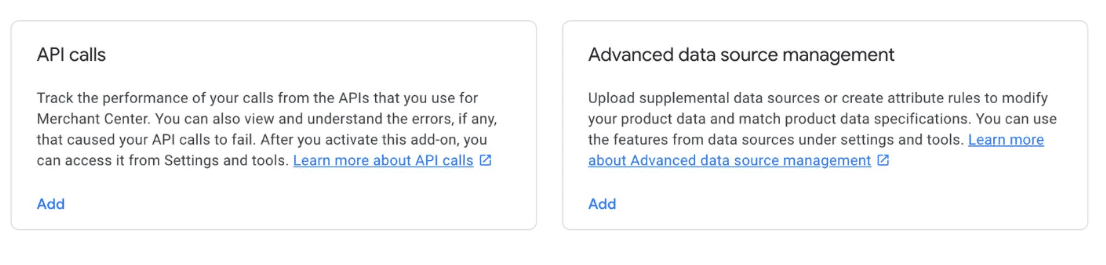
Google released advanced data source management in Merchant Center Next, alongside a new add-on for enhanced product data control. There are also new help articles to explain how to use them.
Key features:
- Attribute rules: Automatically fix common data errors.
- Supplemental data sources: Enhance primary product data with additional details.
Why it matters. These updates enable advertisers to potentially improve product visibility and performance on Google’s shopping platforms. With the automated functionalities in particular, even small business owners should find Merchant Center more cost effective to manage on their own.
How it works.
- Merchants can access these features through the new Advanced Data Source Management add-on.
- Step-by-step guidance is provided in the newly released Help articles.
First seen. Advertisers should now be seeing the options to add these new data sources. We first saw how courtesy of Georgi Zayakov on LinkedIn:
What’s next? Google hints at more updates and improvements coming to Merchant Center Next.
The bottom line. These new features could save merchants time and effort while improving the accuracy and richness of their product information on Google’s platforms.
Courtesy of Search Engine Land: News & Info About SEO, PPC, SEM, Search Engines & Search Marketing
Wednesday, July 3rd, 2024
Meta has introduced new attribution settings in its Ads platform, allowing advertisers to distinguish between all conversions and first-time conversions.
How it works. Advertisers can now choose between two attribution options:
- All Conversions: Shows every conversion after an ad view or click
- First Conversion: Displays only the first conversion after an ad view or click
Why we care. Advertisers have long struggled with discrepancies between Meta’s ad data and their own backend numbers. This update aims to bridge that gap, providing more accurate insights into ad performance and customer acquisition costs.
By the numbers. One advertiser found that Meta was counting about 25% of non-first purchases towards new customers, significantly inflating reported performance metrics.
Between the lines. Previously, Meta counted all conversions a user made after interacting with an ad, potentially including multiple purchases by the same customer. This led to inflated performance metrics and skewed customer acquisition costs.
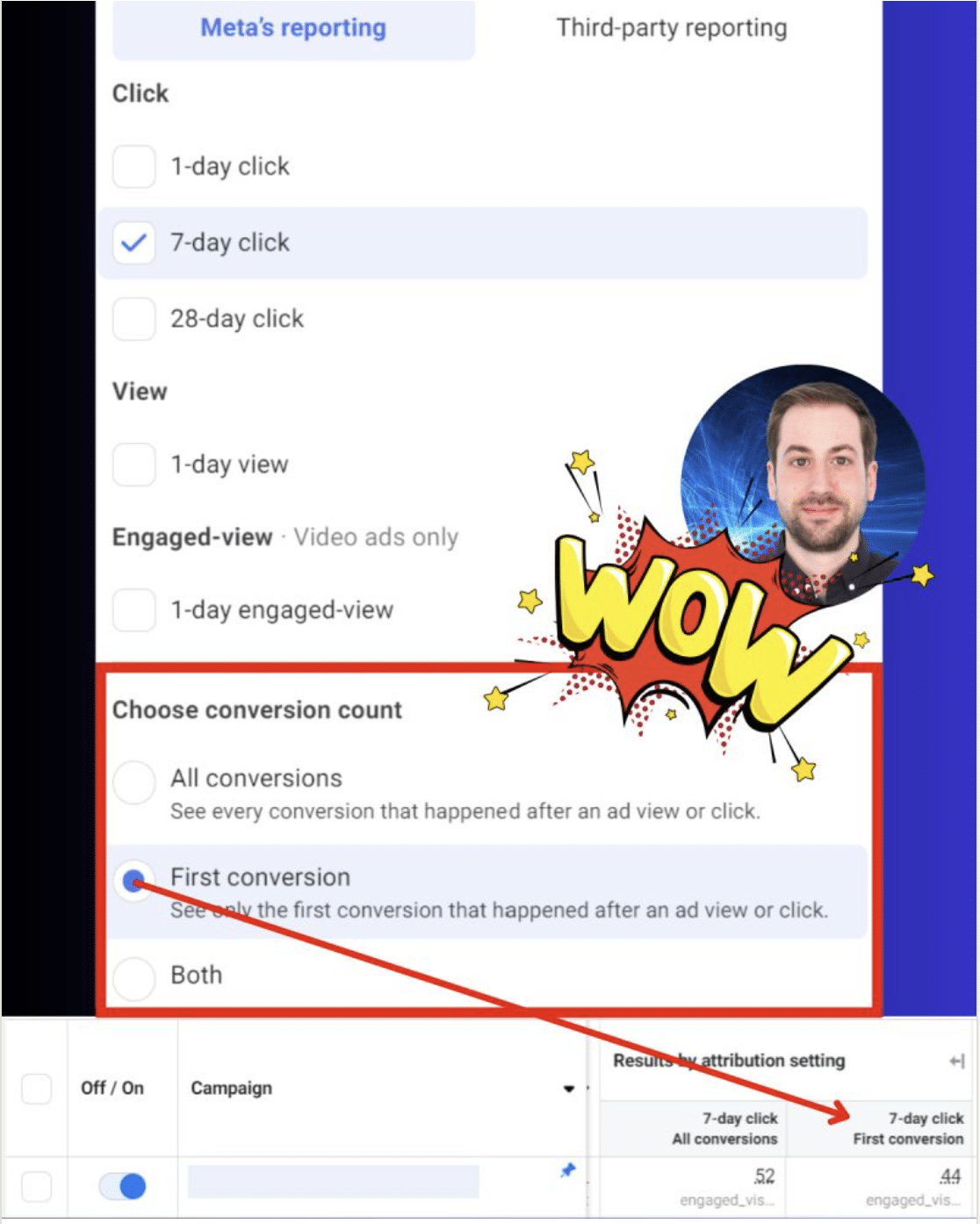
How to access. Advertisers can find the new feature in Ads Manager under Attribution settings, where they can select their preferred attribution window and conversion view.
What’s next. As advertisers begin to use these new attribution settings, we may see a shift in how businesses evaluate the effectiveness of their Meta ad campaigns and allocate their marketing budgets.
First seen. We discovered this update via Bram Van der Hallen on LinkedIn:
Courtesy of Search Engine Land: News & Info About SEO, PPC, SEM, Search Engines & Search Marketing
Wednesday, July 3rd, 2024
Google Ads has finished auto-migrating location extensions to assets for most active accounts, a process announced on July 24, 2023.
Why we care. This change expands the ways advertisers can use location information in their ads, potentially improving ad performance and reach.
The details.
- Migration affected accounts with activity between July 1, 2023, and Jan. 1, 2024.
- Inactive accounts during this period were not migrated.
How to check. Advertisers can verify migration status using two fields in the customer resource:
- bool location_asset_auto_migration_done
- string location_asset_auto_migration_done_date_time
What you’ll see. Migrated accounts will display an alert in the Google Ads UI and show assets under the account.
What’s next. Advertisers whose accounts weren’t migrated but want to use location assets need to create them manually via the UI or API.
Between the lines. This migration reflects Google’s ongoing efforts to streamline and enhance ad capabilities, potentially offering advertisers more flexibility in how they display location information.
Who to contact.
Bottom line. Advertisers should check their accounts’ migration status and take action if needed to ensure they’re leveraging the full potential of location-based advertising on Google Ads.
Courtesy of Search Engine Land: News & Info About SEO, PPC, SEM, Search Engines & Search Marketing
Wednesday, July 3rd, 2024
Google announced several new features coming to Display & Video 360.
Key updates:
- Report files download list:
- New page in instant reporting for Display & Video 360 and Campaign Manager 360.
- Allows customers to view status and access downloaded reports.
- User ID redaction:
- Affects Data Transfer files for users in Florida, Texas, Oregon and Montana.
- Driven by new privacy legislation, similar to California’s CCPA in 2020.
- First position targeting for YouTube Instant Reserve:
- Available for in-stream and shorts campaigns.
- Aims to increase brand awareness and engagement.
- Expanded third-party measurement:
- Audience Project now supports on-by-default enablement for third-party reach measurement.
Why we care. Advertisers may be especially eager to test out first-position targeting on YouTube, to secure prime position for better visibility and increased traffic. However, they should watch out how data analysis will be impacted by ID redactions. There haven’t been positive reactions whenever updates are made for the sake of privacy.
Timeline. These features are expected to roll out over the next few weeks.
The big picture. These updates reflect Google’s ongoing efforts to enhance its advertising platforms while addressing privacy concerns and expanding measurement capabilities.
Courtesy of Search Engine Land: News & Info About SEO, PPC, SEM, Search Engines & Search Marketing
Wednesday, July 3rd, 2024
Google released the Merchant API Beta, a redesigned version of the Content API for Shopping, with new features and improved architecture
Key features:
- Modular design with isolated sub-API updates.
- New sub-APIs including Data Sources, Notifications, Products, Inventory, and more.
- Improved alignment with Google’s API improvement proposals.
Why we care. This new API version could significantly enhance how advertisers showcase and manage their products on Google’s shopping platforms, potentially improving their ecommerce performance. With ecommerce being the biggest spenders on Google, it’s no surprise to see an update that continues to encourage ease of use for advertisers on the platform.
What’s new.
- Push notifications for account and product data changes.
- Unified Product & ProductStatuses resources.
- Enhanced inventory management capabilities.
- New reporting features, including non-product performance data.
Yes, but: The Merchant API Beta currently lacks full feature parity with the Content API. Google plans to address this in future updates.
What’s next. Google is inviting developers to test the beta version and provide feedback to shape future improvements.
How to get started.
- Access the Merchant API developer website.
- Review the Quickstart guide and Compatibility guides.
- Explore new Client Libraries and Samples.
Bottom line. The Merchant API Beta represents a significant evolution in Google’s ecommerce tools, potentially offering businesses more powerful and flexible ways to manage their online product listings.
Courtesy of Search Engine Land: News & Info About SEO, PPC, SEM, Search Engines & Search Marketing
Tuesday, July 2nd, 2024
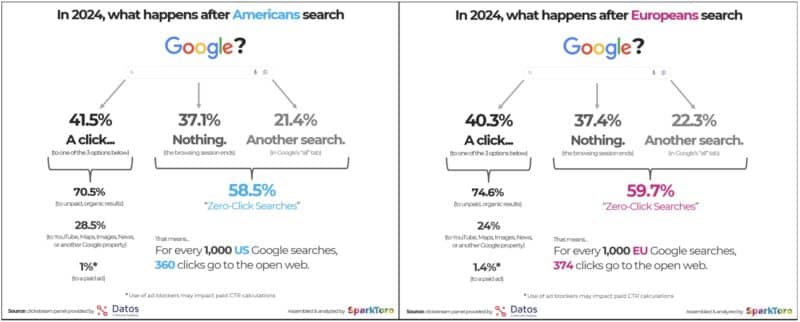
A majority of Google searches – 58.5% in the U.S. and 59.7% in the EU – result in zero clicks. A zero-click search happens when users end their session or enter a new query without clicking on any results.
This data comes from a new zero-click search study published by Rand Fishkin, SparkToro’s CEO and co-founder, based on clickstream data from Datos, which is owned by Semrush.
Why we care. Clicks impact Google Search rankings. This was confirmed during the Google antitrust trial and is indicated by the findings of the Google Search leak. That said, it’s important to remember that not all users want to click on a link and visit a website to get an answer. Also, many of those zero-click searchers were never your target user/client in the first place, according to technical SEO consultant Pedro Dias on X.
Here are more findings from the study.
Clicks to Google properties. Nearly 30% of all clicks in the U.S. go to Google-owned properties (e.g., YouTube, Google Images, Google Maps), according to the report.
A few “yes, but” thoughts:
- If people click on Google’s YouTube, they will see a video created by a business, brand or creator. In the case of searches with local intent, if someone wants directions to a restaurant or another type of business, does it matter if that person didn’t visit the website to get the same information?
- Yes, Google is keeping people within its ecosystem, but that shouldn’t necessarily be “concerning” if you’re optimizing for more than just Classic Search. Especially if searchers are getting what they want.
- It becomes concerning when Google expands into new verticals and essentially “takes over,” leaving websites to fight for crumbs of organic search traffic.
Dig deeper. Search everywhere optimization: 7 platforms SEOs need to optimize for beyond Google
Traffic to websites. For every 1,000 Google searches, 360 clicks in the U.S. go to the open web; in the EU that number is 374.
- While we don’t know exactly how many Google searches are conducted per day, multiple sites estimate this number to be 8.5 billion. That would mean more than 3 billion clicks per day go to the open web in the U.S. That’s still 3 billion more clicks than any other search engine or answer engine gets in a single day.
AI Overviews. Desktop searches increased “a little” while mobile searches fell “a considerable amount,” when comparing May to the prior four months, the study found. Some context:
Dig deeper. Google AI Overviews, clicks and traffic impact: Unraveling the mystery
About the data. The data was collected by Datos’ US & EU panel between September 2022 and May 2024 and represents “a diverse and statistically significant sample of users.” There are many other limitations and caveats mentioned in the report.
While this data is imperfect (just as all data is to some extent), it may help you understand the evolving behavior of searchers as Google shifts more toward becoming an answer engine rather than a search engine.
The report. 2024 Zero-Click Search Study: For every 1,000 EU Google Searches, only 374 clicks go to the Open Web. In the US, it’s 360.
Dig deeper. Here is Search Engine Land’s coverage of past zero-click studies:
Courtesy of Search Engine Land: News & Info About SEO, PPC, SEM, Search Engines & Search Marketing
Tuesday, July 2nd, 2024
Google updated its Political content policy, requiring advertisers to disclose election ads containing synthetic or digitally altered content.
Why we care. This policy update aims to increase transparency and combat misinformation in political advertising, particularly as AI-generated content becomes more prevalent.
Key details:
- Advertisers must select a checkbox in campaign settings to indicate altered or synthetic content.
- For specific formats (Feeds and Shorts on Mobile Phones, In-stream on various devices), Google will generate an in-ad disclosure.
- For all other formats, advertisers are responsible for providing a prominent disclosure.
How it works:
- Disclosures must be clear, conspicuous, and likely to be noticed by users.
- Examples of acceptable disclosure language are provided, varying based on ad context.
The big picture. This policy update reflects growing concerns about the potential for AI-generated content to mislead voters in political advertising.
What to watch. How this policy will be enforced and its impact on political advertising strategies, especially as the 2024 U.S. elections approach.
Between the lines. This move requires advertisers to be more transparent about their use of synthetic content, potentially changing the landscape of political ad creation and distribution.
Courtesy of Search Engine Land: News & Info About SEO, PPC, SEM, Search Engines & Search Marketing
Tuesday, July 2nd, 2024
Have you ever been tempted to pay for a really great link?
Between Google’s algorithm leak and Danny Goodwin’s subsequent exposé of the importance of links for rankings, the broader marketing industry is having its “aha” moment while scrambling to launch digital PR strategies that earn high-authority links at scale.
Sadly, many brands will look for shortcuts and they’re about to experience the scourge of link network spam.
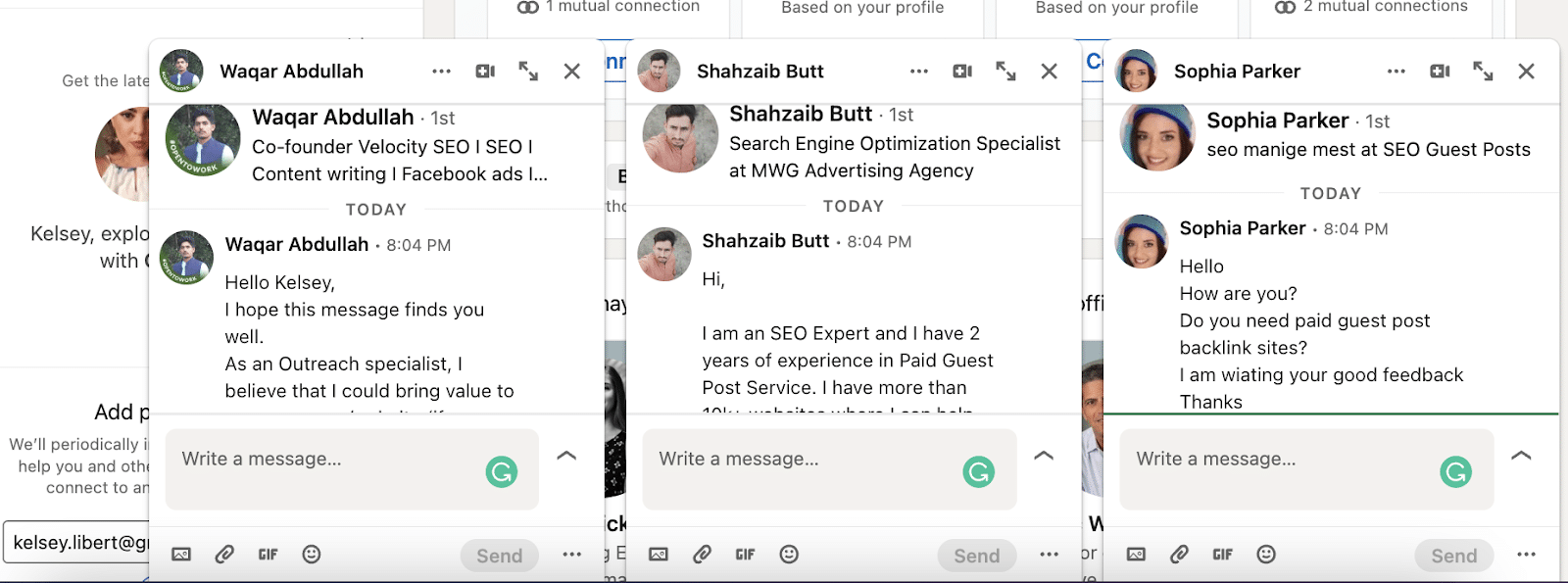
I’ve been at the receiving end of hundreds of scammy pitches promising high-authority links at seemingly legitimate sites for a fraction of the cost of most reputable content marketing agencies:
What’s even more terrifying is that some of these vendors have access to legitimate sites and these publishers could soon face penalties as a result.
How do you protect your brand from the deluge of link network spam and how can you spot the most toxic sites?
To provide a more data-driven exposé, I curated hundreds of spammy link network pitches we have received over the last few years.
I conducted an in-depth analysis of the commonalities between these pitches along with an audit of the common publishers associated with dozens of vendors, providing insights on how to identify and avoid them.
How to spot a spammy link network pitch
The first step in my analysis was consolidating hundreds of these pitches into a single repository, allowing for a thorough examination of their commonalities.
Here’s a brief snapshot of the pitches I analyzed for reference:
Quickly, patterns emerged in these often generic emails that lacked substance while simultaneously promising remarkable SEO results:
- Overly generic introductions: Vague introductions without specific details about the sender or their credentials.
- “I hope this message finds you well.”
- “I hope you are keeping well and safe.”
- Random capitalization: Incorrect capitalization and grammar issues throughout the pitch.
- “We provide Natural, relevant, in-content links, from 100% real bloggers.”
- “I have a good number of relevant Quality Sites, where I can help you to build Guest Post-Blog Post Links which help you to get good Domain Authority and Rank High in Google and other Search Engines.”
- Too-good-to-be-true offers: Promises of high-quality backlinks on sites with high Domain Authority (DA) for very low prices.
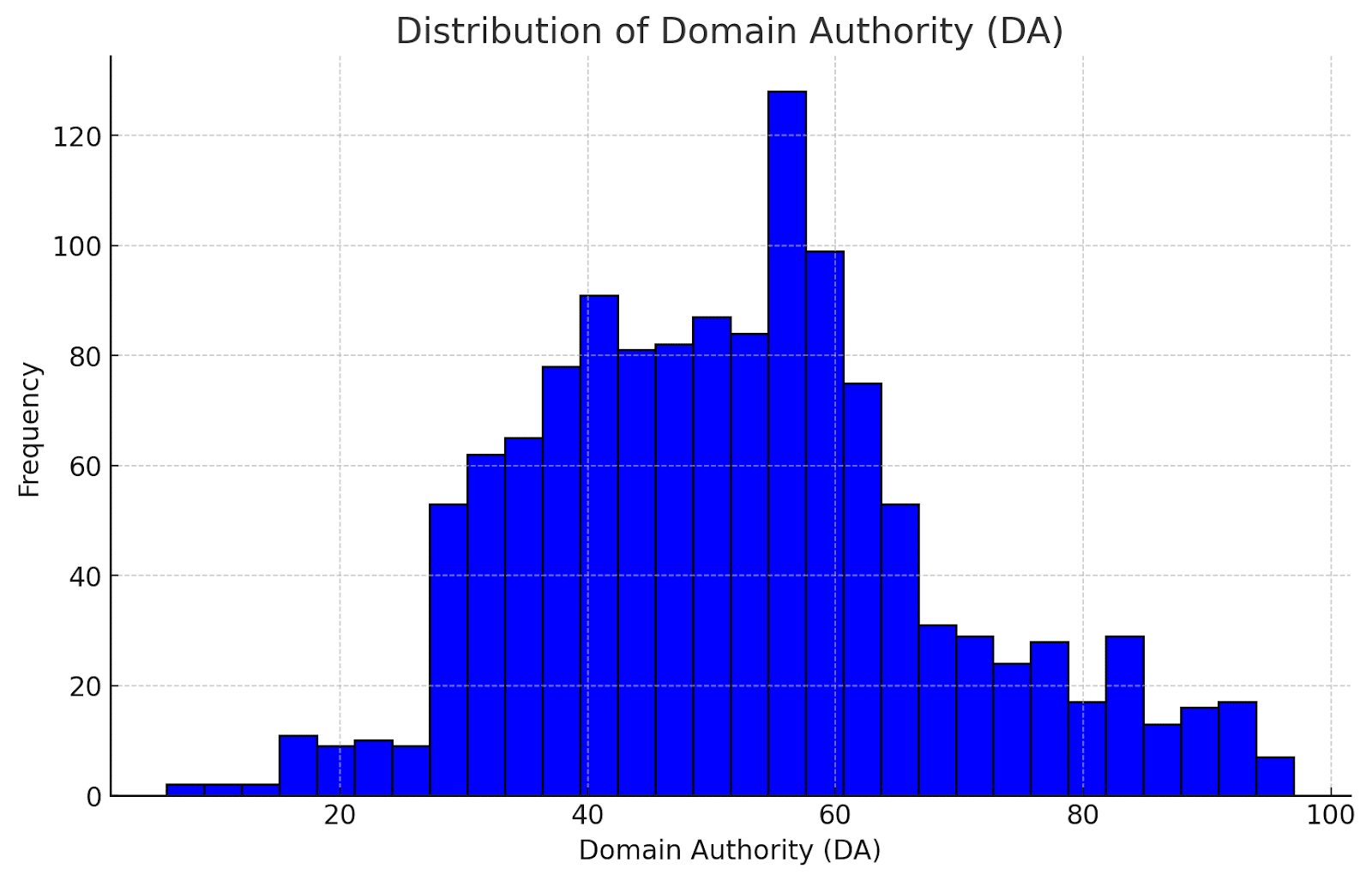
- “I can offer you access to a curated list of high-demand and premium websites with Domain Authority (DA) ranging from 50 – 90.”
- “We can tap into my extensive network to deliver exceptional results, improving your clients’ search rankings and organic reach.”
- Urgency and no upfront costs: Claims of no upfront costs, which often indicate a pay-after-results scam.
- “Permanent Post Guaranteed. Do-Follow. Payment after link. The post will be Google Index.”
- “I have more than 10k sites with high traffic. Price starts from $10. Should I send you my site lists?”
- Guaranteed results: Assurance of guaranteed results or permanent links, which is not always realistic in SEO.
- “We offer permanent links, guaranteed.”
- “Choose from 73k+ websites across 60+ niches for efficient link-building. Receive live links in 2-3 business days.”
- Lack of trust signals: No reference to specific brands they’ve worked with, nor the inclusion of any case studies or specific metrics demonstrating their results.
- Lack of personalization: Generic emails that do not address the specific needs or content of the recipient’s website.
- Suspicious contact information: Unbranded email addresses (@gmail.com); often lacking legitimate names and verifiable contact information.
Understanding these patterns should be the first step in redirecting these pitches to your spam folder.
While I’m hopeful that most CRMs will allow you to blacklist certain keywords from your contact forms (e.g., “guest post service provider”) one day soon, until then, it’s important to teach your team to recognize these trends.
This will help them better identify potentially harmful link building pitches that could jeopardize your website’s standing with search engines.
The most common strategies of shady link building agencies
While there are dozens of effective link building strategies that could drive incredible results for your brand, scammy vendors commonly rely on low-value or black hat strategies instead.
1. Guest post solicitors: ‘Pay a nominal fee to pen a column on my site that gets 50K monthly visitors’
One of the most common pitches we receive is from vendors soliciting guest posts as a way for our clients to “quickly and easily earn high-value” links. These pitches pose the most harm to SMBs, since they prey on their smaller budgets, limited capacity and eagerness to drive quick results.
But they come at a steep price: Your site being deindexed.
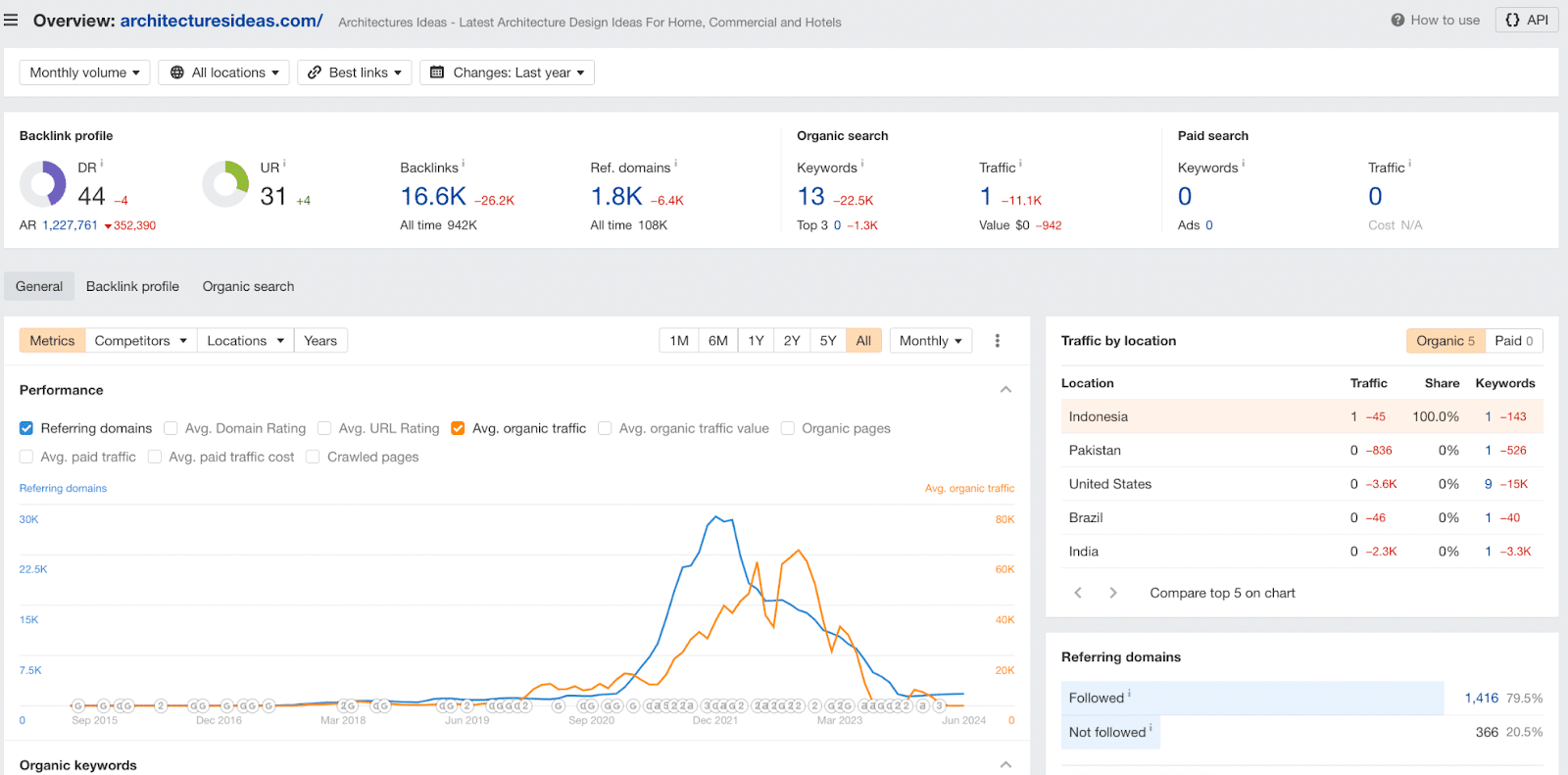
Oftentimes, these vendors claim to own sites that generate five figures in monthly organic traffic, which is your first opportunity for a quick spot check.
More often than not, you’ll see an exponential growth curve in referring domains, which is mirrored by an equally drastic decrease in organic traffic.
2. The link exchange: ‘If you link to my resource, I’ll link to yours’
Link exchanges are the second most common offer we receive, with pitches often highlighting seemingly legitimate publishers.
While I’ll often roll my eyes over Fortune 500 PR teams mass-blasting us with link exchanges around HR and design resources, I’m more scrupulous when vetting pitches from seemingly legitimate domains owned by niche SMBs.
Typically, these vendors will start with a somewhat personalized pitch about your brand’s impressive content strategy, but the remainder of the pitch will prove they know little about the overarching themes you cover:
While some site managers might be open to adding this “harmless link” into a somewhat relevant blog post in consideration of a high-value link exchange, these links actually open you up to a toxic backlink portfolio.
Over time, Google will catch up to these massive, unnatural link portfolios and both domains risk being penalized:
Get the daily newsletter search marketers rely on.
3. Guest post requests: ‘I see you cover ABC, I’d like to submit a post on XYZ’
The worst part about link spammers is the volume of irrelevant garbage that floods your inbox.
Writing guest posts for mainstream news sites or industry-relevant publishers is a great way to boost your thought leadership and earn reputable links.
However, accepting guest posts that don’t match your niche can severely damage your brand’s content quality and reputation, no matter how well you try to hide it.
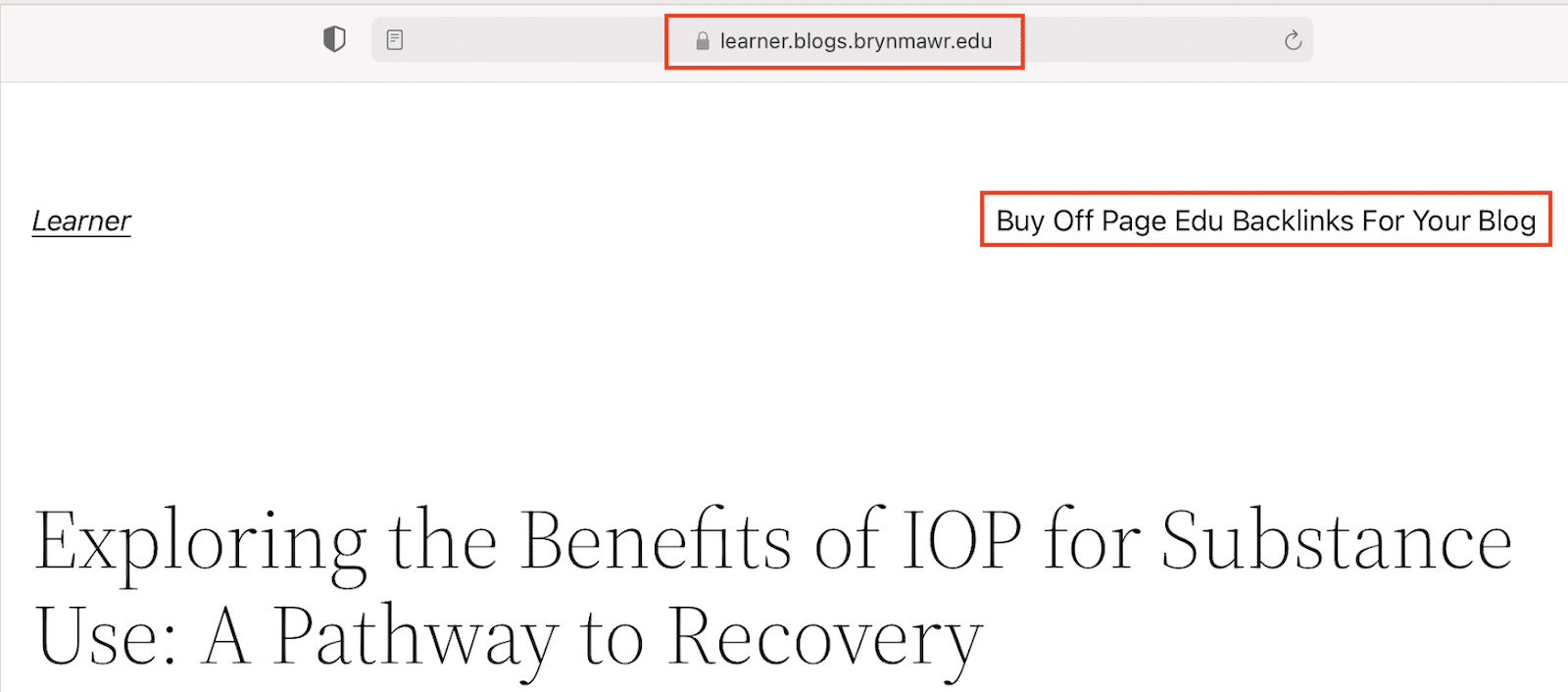
4. Guaranteed .edu links: AI-generated stories on hacked .edu domains
One of the most intriguing parts of this project was investigating vendors who promised coveted .edu links from Ivy League and other U.S.-based and international colleges.
First, I requested examples of the links they had achieved on these sites.
Although few vendors reluctantly complied with my request, I uncovered a trove of issues:
- Dozens of the examples were hacked pages on .edu sites, such as:
- https://wordpress.cs.vt.edu
- https://wordpress.ed.pacificu.edu
- Some leveraged PressBooks to gain access to .edu links:
- Several pages were created as .pdf links and were hidden from the main site navigation instead of being nested as normal blog pages:
- https://canvas.ubc.ca/eportfolios/46591/Parker/MCDLevel1_PDF_Dump_Easy_Technique_to_A_Success
- A significant portion of the examples presented as client wins either redirected (301) or resulted in server errors (502):
- https://gogs.as.arizona.edu/emmadobie/mblog/issues/6
- https://myweb.uiowa.edu/dpipr/
- The majority of the articles were incredibly thin (< 200 words), and many longer articles were flagged as AI content by basic detectors.
Ultimately, I identified dozens of SMBs that were the victims of these offers, with many sites receiving penalties.
How to verify a quality link from a shady one
In the deluge of link network spam, it seems that these vendors are scaling B2B outreach teams that exclusively target domain owners, agency owners, digital PR directors and any other LinkedIn profile that mentions growth or links.
It’s incorrigible, and more brands need to be aware of this risky offer.
As I hinted at above, the best ways to vet these vendors involves:
- Verifying which countries they’re getting the majority of their traffic from. These are the top 10 most common countries that appeared as a primary traffic source across the thousands .coms listed in the link vendor publications I analyzed:
- India
- Pakistan
- Indonesia
- Sri Lanka
- Malaysia
- Ethiopia
- Russia
- Kenya
- Philippines
- Australia
- Checking for an exponential growth curve in their referring domains. Whenever you see a site go from a couple hundred to a couple thousand referring domains overnight, something is fishy and likely will be followed shortly by a Google manual action.

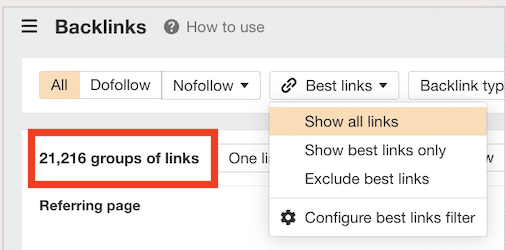
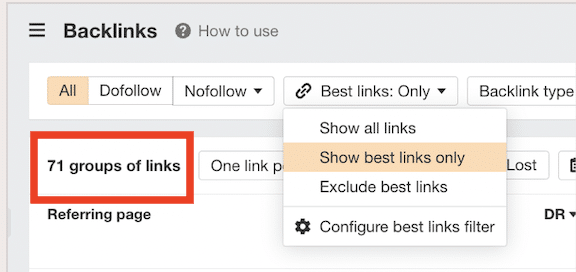
- Analyzing the volume of authoritative backlinks they’ve earned. Since domain authority is on a logarithmic scale, it’s normal for a site to have a significantly smaller percentage of authoritative links. However, when you see a site’s total backlink volume clearing 20,000 and high-authority links under 100, the ratio is off and can be a clear signal for a toxic backlink portfolio you want to avoid.
While there are dozens of methods for checking a site’s backlink portfolio and authority, these are the three quickest routes I’ve found for identifying shell sites being built as link networks that will one day be penalized by Google.
The cost of buying links
The best link building strategies are designed to earn relevant top-tier backlinks by providing something of value to journalists.
This typically involves quotes from subject matter experts (SMEs) or exclusive industry research your brand produced that journalists perceive as newsworthy and of value to their audience.
Unfortunately, too many brands still rely on quick-hitting strategies offered by paid link vendors, but in time, they’ll feel the full wrath of Google.
While SMBs with limited SEO knowledge are most at risk for falling prey to these offers, even reputable brands we work with have come to us for refuge after falling victim to these snake oil salesmen.
Although link vendors may initially appear to offer trusted publisher links at an insignificant cost, my analysis of over 20,000 paid link opportunities reveals a different story.
High-value links from these vendors often cost as much as those from reputable agencies, with the added risk of your site being deindexed.
- DA 30-39: $204.21
- DA 40-49: $229.58
- DA 50-59: $225.81
- DA 60-69: $277.74
- DA 70-79: $451.63
- DA 80-89: $549.03
- DA 90+: $597.76
- .edu links: $444.42
What’s even wilder is the seemingly reputable publishers that appear most frequently across these vendors:
- deadlinenews.co.uk
- natureworldnews.com
- latinpost.com
- kpopstarz.com
- kdramastars.com
- philly.com
- presstelegram.com
- newsmax.com
- timesunion.com
- cbs19news.com
- buffalonews.com
- suntimes.com
- psychcentral.com
- orangecounty.com
- valuewalk.com
- thedailybeast.com
- newsexaminer.com
- chronicleonline.com
- smmirror.com
- ibtimes.co.uk
And their sharp traffic declines in recent years:
The moral of the story? Don’t be lured by the “low cost” and perceived “high ROI” of paid link vendors. In the world of SEO, quality will always trump quantity.
By investing in high-quality, earned media strategies, you can secure valuable, sustainable links that enhance your brand’s authority and drive meaningful results.
Remember, the cost of buying links extends beyond the financial; it impacts your site’s integrity and your brand’s trustworthiness. Choose wisely and prioritize quality over shortcuts to build a robust, penalty-free backlink profile that drives rankings and qualified search traffic.
Dig deeper: Link building in 2024: 12 ways to win or fail
Courtesy of Search Engine Land: News & Info About SEO, PPC, SEM, Search Engines & Search Marketing
Tuesday, July 2nd, 2024
Google is updating its Political Content policy this month, expanding the definition of U.S. Election ads.
Key changes. The new definition will include ads featuring:
- Current officeholders or candidates for federal elected offices.
- Current officeholders or candidates for state-level elected offices.
- Current officeholders or candidates for U.S. territory-level elected offices.
- Federal, state, or territory-level political parties.
- State or territory-level ballot measures, initiatives, or propositions that have qualified for the ballot.
Why we care. This update broadens the scope of what constitutes a U.S. Election ad, potentially affecting a wider range of political advertisers and content.
What’s required. All advertisers running U.S. Election Ads must be verified by Google and complete Election advertising verification.
The big picture. This policy update reflects Google’s ongoing efforts to increase transparency and accountability in political advertising on its platforms.
What to watch. How this expanded definition impacts the landscape of political advertising on Google’s platforms, especially as the 2024 U.S. elections approach.
Between the lines. The policy update could potentially capture a broader range of ads, requiring more advertisers to go through Google’s verification process.
Courtesy of Search Engine Land: News & Info About SEO, PPC, SEM, Search Engines & Search Marketing
Monday, July 1st, 2024
It’s halfway through 2024. How many of your SEO, PPC, and AI resolutions have you kept? Now is the perfect time to take stock of your existing campaigns and initiatives, sharpen your skills and set yourself up for a winning Q3 and beyond.
Attend the summer edition of the SMX Master Classes — live two-day deep dives into organic SEO, Google Ads, GA4, gen AI, and more — online August 21-22.
These unique training experiences deliver actionable tactics you can implement immediately to drive measurable results – and engaging Q&A opportunities with industry legends that address your specific questions. It’s all streamed directly to your computer for a fraction of the cost of in-person events (and a fraction of the time investment, too).
Check out the complete lineup and learn more about each class, including detailed course curriculums and hourly breakdowns of what you’ll learn. Each two-day class runs concurrently from 12:00pm – 3:00pm ET* but you can purchase as many as you like.

These expert-led courses are split across two focused days of training and Q&A – equipping you with tactical insights, reliable next steps, and fresh inspiration without a major time investment.
On-demand access is included in your Master Class pass, so you can watch and rewatch for deeper learning — and digital access means you can tune in from anywhere – no plane ticket, hotel reservation, or travel headaches required.
You’ll also unlock a personalized certificate of completion and downloadable digital badge, perfect for posting on LinkedIn to showcase your knowledge of the latest in search.
Registration is open – and now is the best time to buy (Super Early Bird rates expire July 27!). Secure your spot at one of these exclusive SMX Master Classes for just $249!
Psst… Teams that train together, thrive together. Attend with your colleagues to score up to 20% off** with group discounts, depending on your party size. Learn more here!
*The Generative AI class runs until approximately 3:30pm ET. Bruce Clay’s SEO class runs until 4:00pm ET.
**Discounts cannot be combined.
Courtesy of Search Engine Land: News & Info About SEO, PPC, SEM, Search Engines & Search Marketing