Archive for the ‘seo news’ Category
Saturday, June 4th, 2022
Google has released a Search Ads Automation Guide that shares some best practices on how to use automation to reach customers. The guide is long overdue for some marketers who have an unfavorable opinion about automation in general. According to a recent Search Engine Land article, adoption of automation and recommendations is overwhelmingly positive, while satisfaction is low, with over half of users reporting a negative experience.
This new guide attempts to answer users questions and concerns around automation and ease the anxieties most advertisers have around letting go of control of their keywords and bids.
Best practice 1: use a broad match keyword strategy. Historically advertisers that used broad match keywords found wasted ad spend and irrelevant clicks. It seems like there haven’t been any new features or updates around broad match. But Googles is attempting to help users better understand why they should use them, and with what bid strategy they feel will have the biggest impact for their account. Google states “Broad match keywords work best with Smart Bidding because it ensures you only bid on searches that are expected to perform for you.”
Best practice 2: using smart bidding strategies. Google says that evolutions in automation and machine learning will allow us to simplify how we setup and manage campaigns. The guide goes into great detail on why a smart bidding structure is best to use with broad keywords. But veteran advertisers know that making too many account changes at once, especially moving toward a hands-off automatic approach, can be detrimental for performance. Testing smart bidding strategies are a great idea in general, but be cautious of spend, conversion changes, and general advice around this topic from your Google rep.
Best practice 3: use responsive search ads. Google advises to “use multiple headlines and descriptions to automatically build and serve relevant ads for every query based on auction-time signals.” This is one strategy we can get behind. Responsive search ads allow a level of automation, but within the parameters you define. You maintain control of your ads by creating multiple headlines and descriptions, and allowing Google to show the most relevant combination to your audience
The guide. All info is taken from Googles guide “Unlock the Power of Search: Inside Search Automation with Google Ads.” The guide is long at 28 pages and likely makes for great bedtime reading. The guide features a promising but generic case study from Tails.com (a pet food company for which Nestlé Purina Pet Care is their biggest investor), but provides no insight into their (what was likely a large) budget and ad spend, which is information most businesses would be interested in knowing.
Read the guide. The full PDF can be downloaded here.
Why we care. Google’s efforts at getting their users to understand automation is likely an attempt to get more people to not only adopt the best practices they define, but to leave those campaigns running long enough to see results. For many advertisers, this is simply not possible. If you have a large budget, go ahead and test these strategies and best practices. But as far as letting your campaigns run on autopilot, or firing your agency, we’re not there yet.
The post Google Ads shares three automation best practices appeared first on Search Engine Land.
Courtesy of Search Engine Land: News & Info About SEO, PPC, SEM, Search Engines & Search Marketing
Friday, June 3rd, 2022
You may soon have a new way to get push notifications from Twitter whenever someone’s tweets match a search query that you specify.
The Twitter feature is called “Search Subscribe.”
Twitter has not confirmed if or when the feature will roll out to users. It was first spotted by Dylan Rousse, an Android developer, in the latest pre-release version of Twitter’s mobile app.
Twitter is working on a feature allowing you to subscribe to search results. Once subscribed, you'll receive push notifications for Tweets about your search query!  pic.twitter.com/plTlt484oN
— Dylan Roussel  (@evowizz) May 31, 2022
How it works. When you do a search in the Twitter app, you will see a bell icon next to the search bar. Tapping that bell will bring up a message: “You’re subscribed to receive push notifications for Tweets about [insert your search query here]”.
Similar to TweetDeck. TweetDeck, which is also owned by Twitter, gives you an option to add a column. “Search” is a column type. So if you put in the search term “SEO” you would see every tweet that matches “SEO” in that column. Or, you can filter those results by location, authors and engagement levels.
Push notifications. Twitter lets you enable or disable a variety of notifications. This includes mentions, replies, retweets, new followers, direct messages and more. To date, search has never been one of these options.
For Twitter Blue? We previously reported that an edit button is coming to Twitter. But if and when that does finally launch, it will be part of the paid Twitter Blue service. Early speculation is that Search Subscribe would be part of Twitter Blue.
Why we care. If Search Subscribe works similarly to TweetDeck, this could be helpful for monitoring any keywords that are of interest to you. However, it could also become incredibly noisy so you’ll want to choose your search terms wisely.
The post New Twitter ‘Search Subscribe’ feature coming soon? appeared first on Search Engine Land.
Courtesy of Search Engine Land: News & Info About SEO, PPC, SEM, Search Engines & Search Marketing
Friday, June 3rd, 2022
We all know that “content is king.”
What many don’t understand is that for content to be king, it needs the support of its court.
To make the most out of your content strategy, it’s important for you to:
- Identify entities and topically-related keywords.
- Optimize for on-page elements.
- Build content that will stand out.
Create your editorial strategy
At this stage, you should have a comprehensive list of keywords. You should also have insights about your target audience, personas and buying cycle and what your competitors are doing.
Now it’s time to put that data to use.
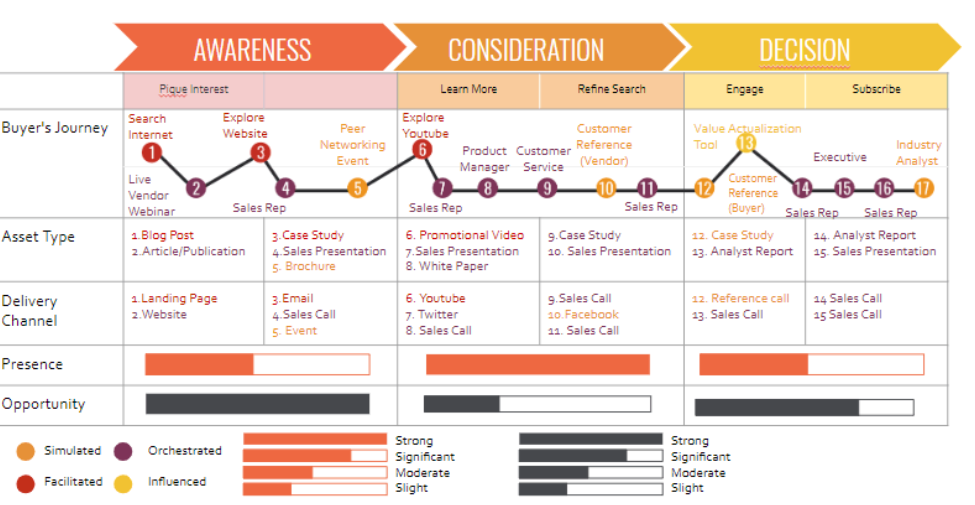
In the planning stage, you’ll need to determine:
- Cadence: How often will you publish content on your website/blog? Daily? Weekly? Monthly?
- Resources: How many writers do you have available? What about editors? How many words can they write every week while maintaining quality?
- Formats: What type of content will you be producing? Long-form articles? Infographics? Tutorials? Ebooks?
Get the daily newsletter search marketers rely on.
When developing your strategy, make sure you develop different types of content for the different ways of learning that your audience personas may exhibit. Some may learn visually, others prefer videos, yet others might enjoy looking at infographics or images.
Here’s how you should conceptualize your topic clusters or content pillars:
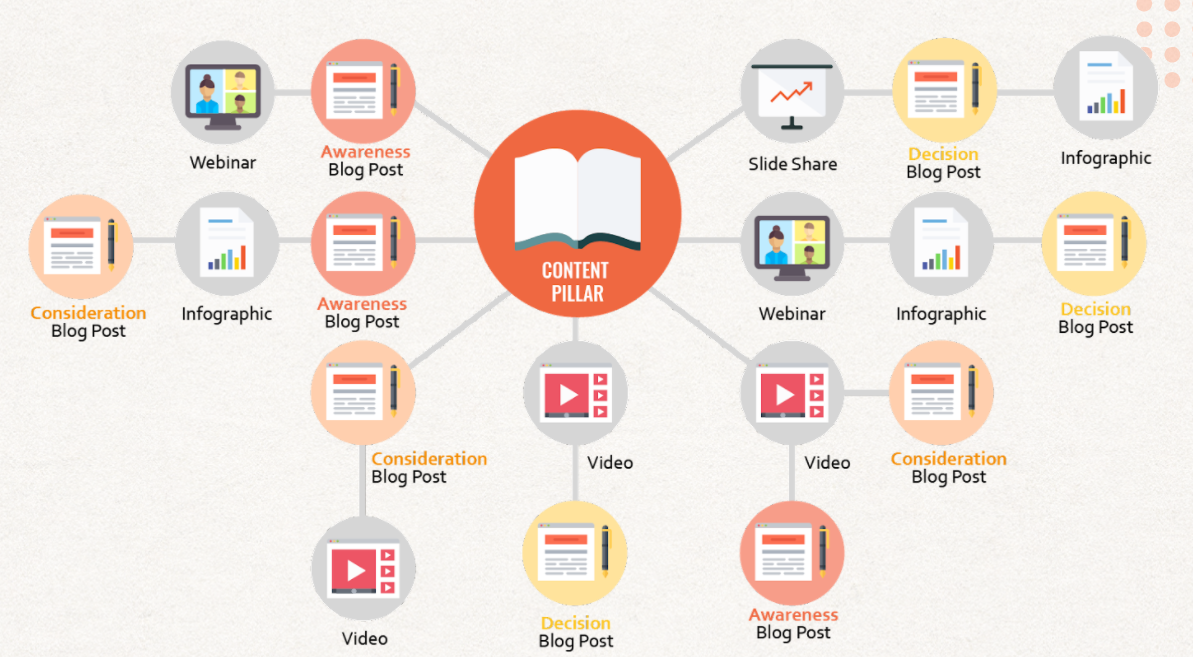
Style guides
Before developing content, make sure you have a style guide in place. For marketing agencies, this can be used as a library for assets: style guides, brand books, etc., provided to you by clients.
If you’re creating content for your own brand, this is where you can brainstorm your own style:
- What kind of imagery do you want to add to your content?
- What kind of voice should your authors use?
- What color palette should be used when creating visual content?
- What types of citations and references should your writers use?
Trending topics
What are some interesting trends in your industry that might appeal to your target audience? You can supplement your editorial calendar with trending topic ideas by setting up keyword alerts or an XML feed of relevant industry sites.
Tip: Watch for new patents or studies being released in your space. If you find a new patent that can significantly impact your industry, translating it into “people-speak” can help you gain news coverage.
A fantastic tool for monitoring news and staying up to date with your industry is BuzzSumo:
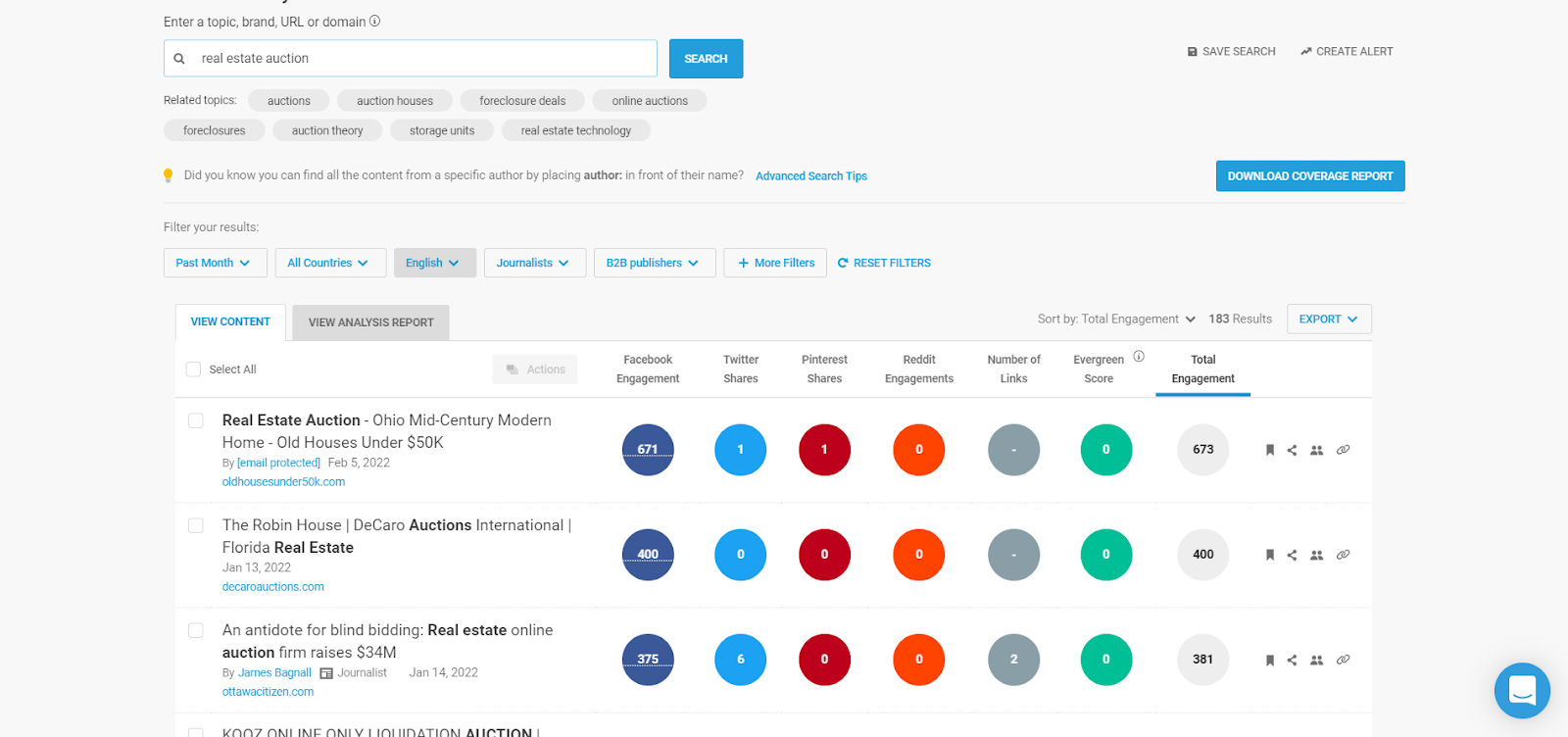
You can filter by keyword, site or date and see which articles resonated the most based on social shares.
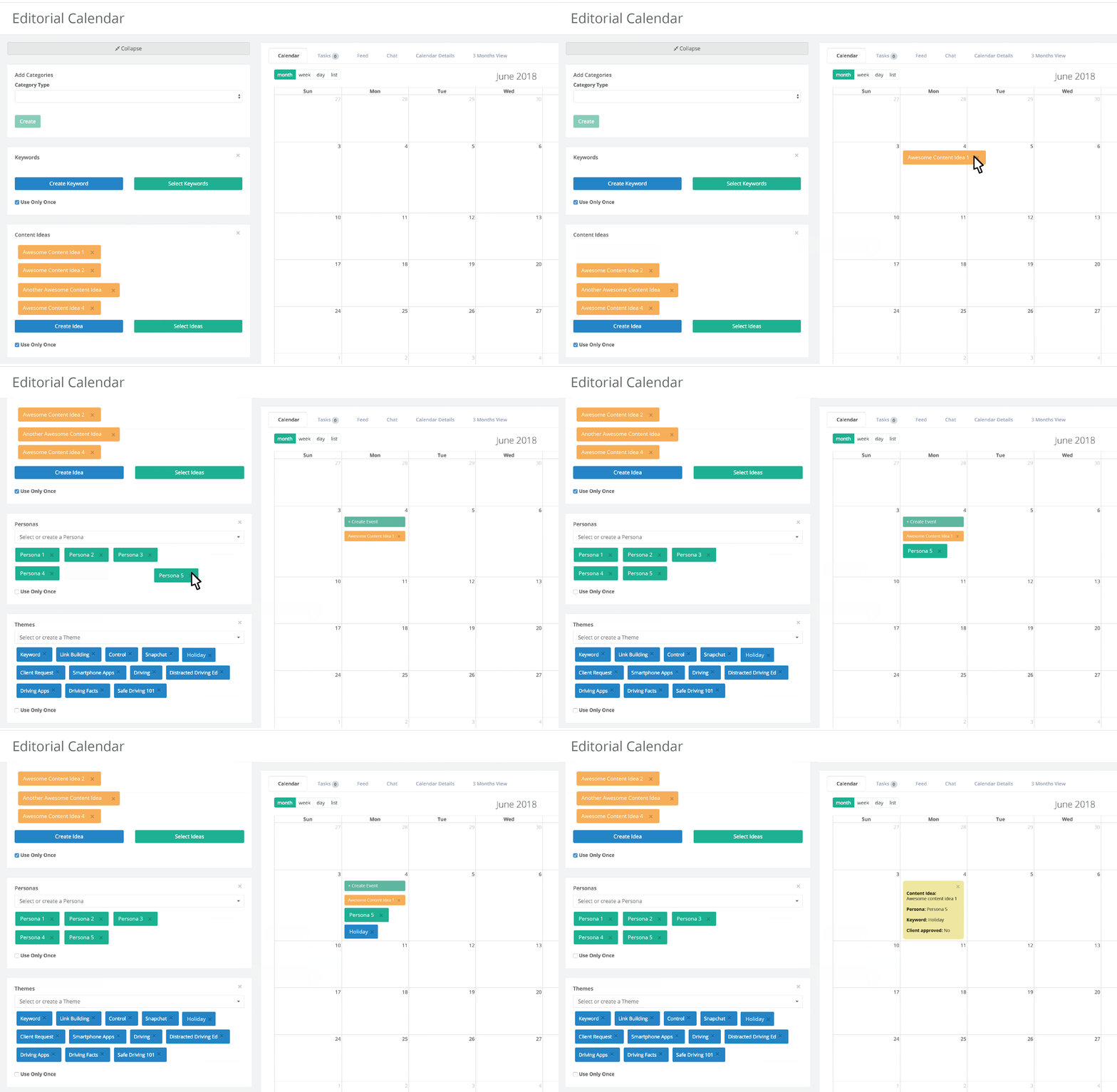
Create your editorial calendar
Next, you can formulate topics and themes based on your topics, keywords and target persons. Mind mapping can help you organize your thoughts and create a strategy.
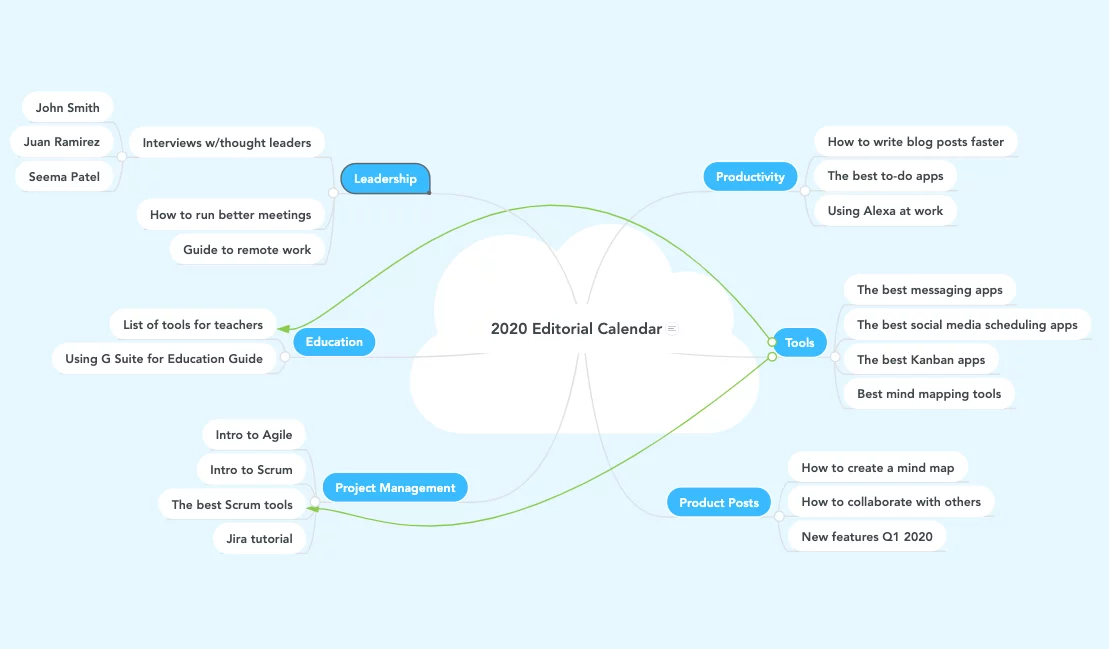
Next, map out your calendar by following these steps:
- Assign a theme, topic or seed set to each publication date.
- Segment each content piece by adding a buyer persona and buying stage.
- Select primary and secondary keywords for each content piece.
Here’s what it may look like at this stage:
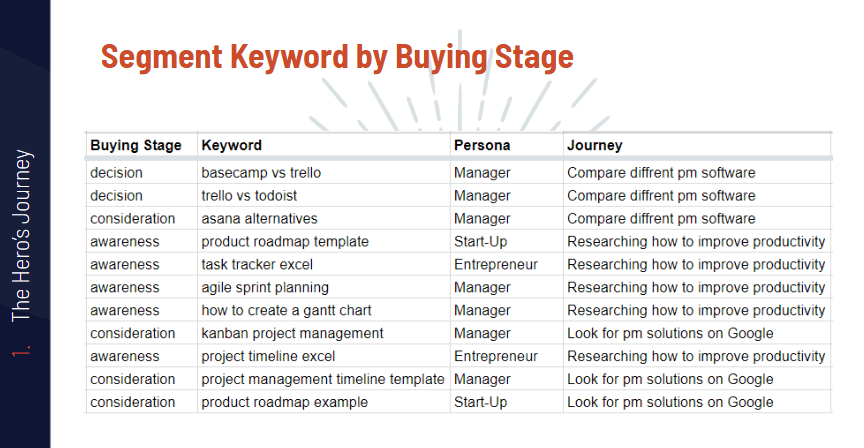
Next, you’ll want to find out what channels present an opportunity and create content for each specific channel. Some of these channels and content types include:
- Featured Snippets
- People Also Ask
- Knowledge Graph
- Videos
- Images
Here’s what your editorial calendar might look like at this stage:
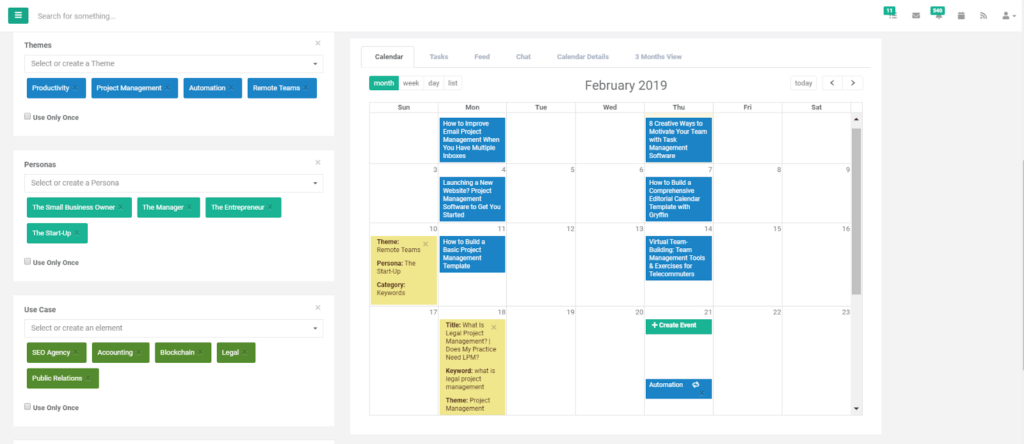
Your content cadence can help you determine what elements you use and how often. If you publish daily or multiple times a day, you can address all of your opportunity gaps faster than if you’re only publishing once a week or once a month.
The idea is to be strategic in the content you publish so it focuses on keyword gaps, your most devoted personas at their most advantageous stage in the buyer’s journey.
Having all the research handy can make your editorial calendar creation as simple as drag and drop!
When all of the elements are properly “framed,” it’s pretty easy to create appealing titles and to give your writers detailed descriptions to work with.
Manage your editorial calendar
To stay organized and strategic, you’ll want to include as much data as possible for each content piece. Here are some fields you should consider tracking:
- Article title
- Author
- Editor
- Date scheduled to publish
- Campaign
- Word count
- Content type
- Target persona
- Buying stage
- Primary keyword
- Secondary keywords
- People Also Ask questions
- Article description
Once you have all of these data points in place for each content piece, let’s look at your workflow.
Editorial workflow
Your workflow will change based on your content type. If you are creating a long-form article that does not need to be reviewed by a client, your workflow could look this:
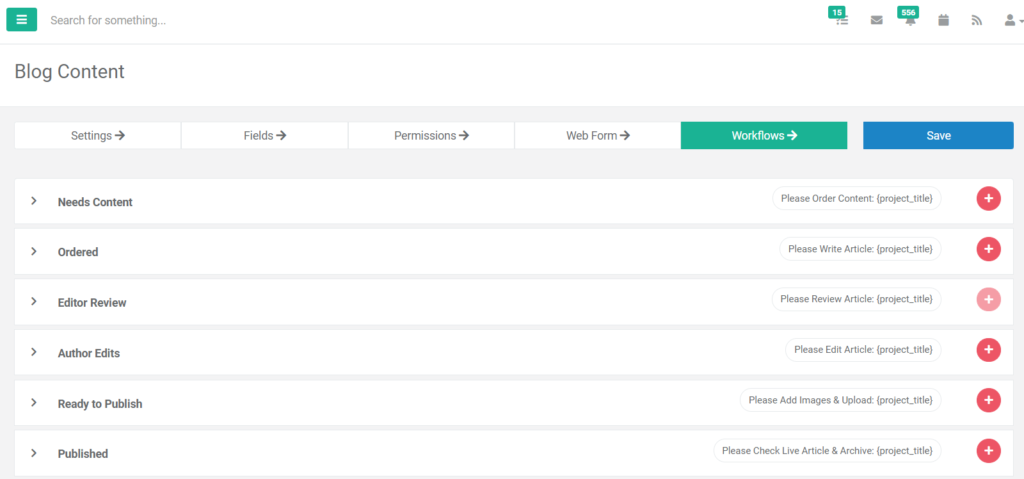
If you are creating a visual asset, such as an infographic, the workflow would require more steps and might end up looking like this:
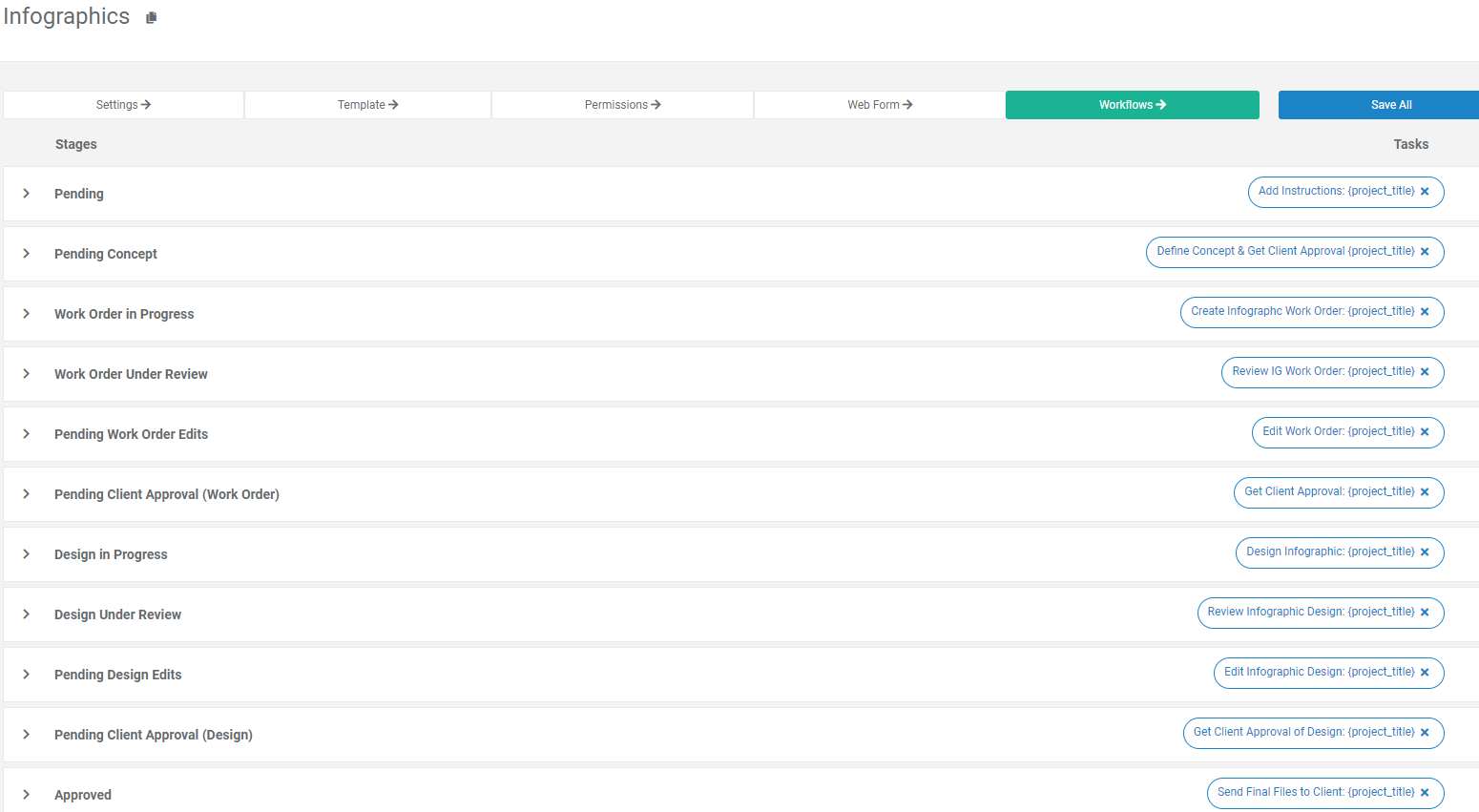
As you go through the editorial process, ensure that you check the content for Readability level, use of keyword variants, topical entities and proper formatting such as header tags.
Content length
How long should your articles be? Is Google truly rewarding long-form articles? How can you determine how long each article should be?
When planning content length, it’s important to use a tool such as SurferSEO or Semrush’s SEO Writing Assistant so you can map content length to the target query.
If someone searches Google for the question, “How tall is the Eiffel tower?” they probably don’t want to read a 5,000-word essay about the history of the Eiffel tower. They know exactly what they are looking for and want a quick, direct answer.
However, if your article is about “how real estate agents can get into the commercial auction field,” the person researching is more likely to want a detailed, comprehensive article and will be willing to read an ebook or a 3,000-word long-form article.
If you already use Semrush, the SEO Content Template or SEO Writing Assistant will allow you to search for a keyword and get an idea of what’s working in the SERPs for that particular query set, such as:
- Semantically Related Words
- Backlinks
- Readability Score
- Text Length
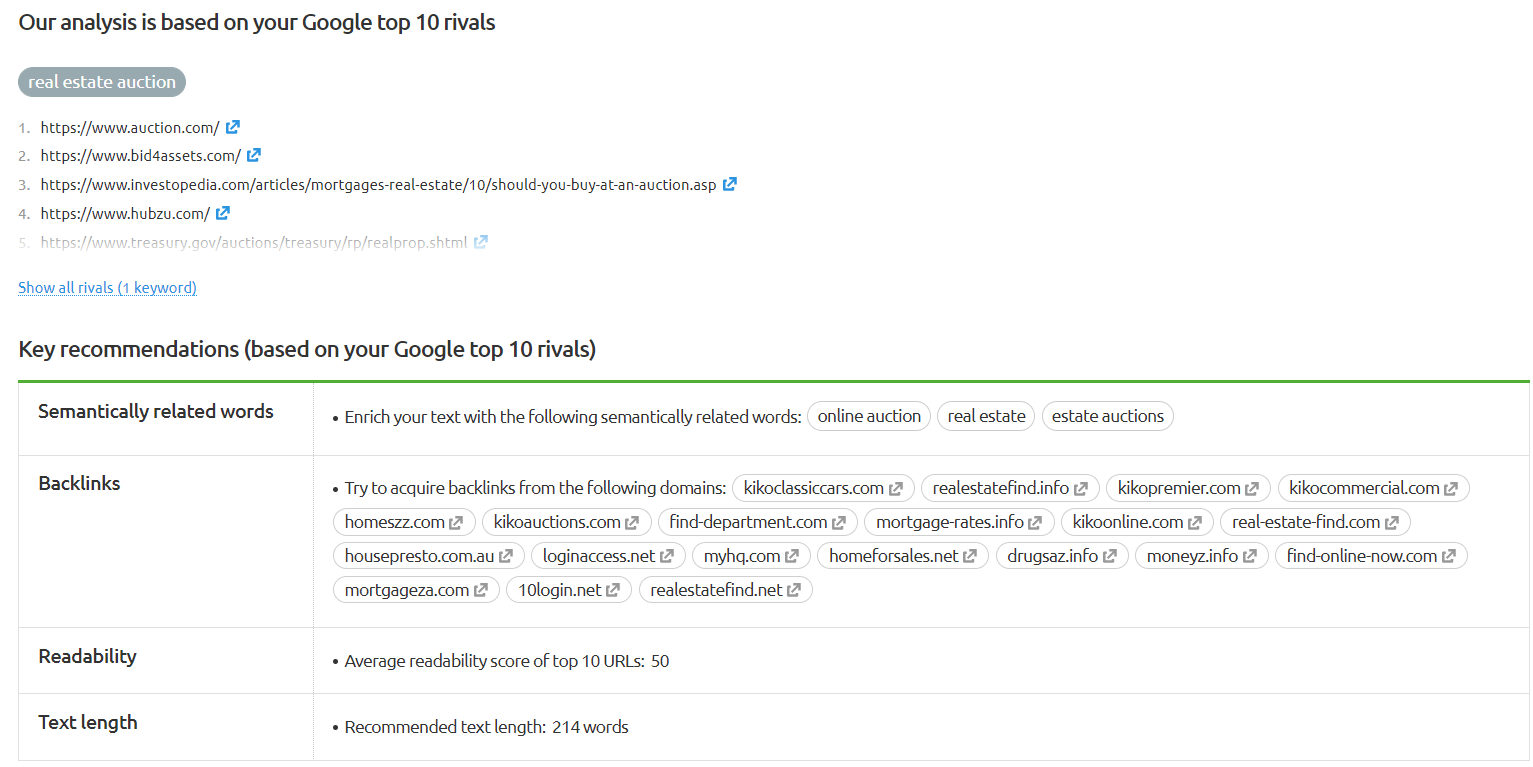
It’s ideal to use this data in the instructions given to your writing team for each content piece.
Beware the ides of duplicate content
Before finalizing and publishing your content pieces, make sure there is no duplicate content used by your authors.
It’s human nature to give others the benefit of the doubt, but it’s important to make sure that the content you’re publishing is not duplicated elsewhere on your site or the web.
Two great tools to check for duplicate content are:
- Copyscape: You can add a content block to Copyscape and it will show you other places on the web where your content is duplicated.
- SiteLiner: Siteliner will provide you with a detailed report based on duplicate content percentages and many more data points.
Sometimes, other sites scrape and publish your content on their sites after you publish. By running duplicate content checkers, you can identify those situations and request them to remove your content.
Adding internal and external links
Make sure all of your content pieces have links to other relevant pages of your own site within the body of the content. Internal, contextual links can help increase the topical relevance of your pages. Simultaneously, add links to authoritative external sources when it makes sense.
Publish your content pieces
Once your content pieces have gone through all the workflow steps and are approved, it’s finally time to get them live on your site!
When you upload to your CMS, verify that your content has all the proper tags in place and that you include the target keywords in your:
- Meta title
- Meta description
- URL
- Breadcrumbs
- H1 tag (primary keyword)
- H2/H3 tags (secondary keywords)
- …etc
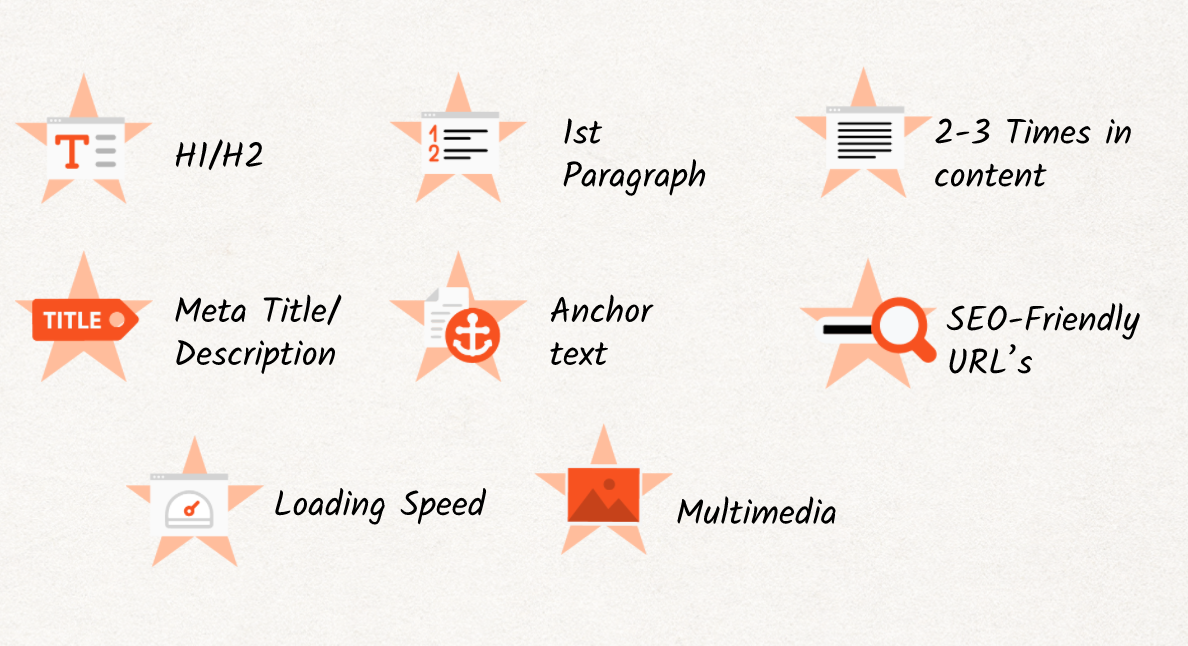
Also, make sure you assign your article to the most relevant category, which will help Google understand your site’s hierarchy.
Track your content pieces
Once you’ve published your content, create a reminder to check its performance after 30, 60 and 90 days.
This way, you can quickly identify pages that are not gaining traction and can work on adjusting the keywords or on-page SEO.
You can look at the metrics in Google Analytics and Google Search Console and change the date ranges to figure out how your articles perform.
Here are some of the elements you can review and track:
- No traction: The article doesn’t have any traffic and needs to be optimized.
- Trending up/down: If the article is trending up, you can enhance and extend it to target more keywords. If the article was doing well but started dropping, optimize for the keywords dropping and add more inbound links.
- Low CTR: These are articles ranking well and have good impressions but have low CTR, which means people aren’t clicking on your link from the Google results page. If you update the title and/or description, it might help to improve the CTR and increase clicks.
Promote your content pieces
Many marketers believe that publishing an article is the end of the content creation cycle. In reality, the end of content creation is just the beginning of the content promotion stage.
Here are a few ideas for ways to promote your article after you hit publish:
- Amplify with Facebook Ads: Boost your post to reach a wider audience and increase the chances of it being shared and linked to.
- Share in Facebook and LinkedIn industry groups: Join industry groups and, sporadically, share your articles. Make sure you engage with others, share thought leadership, and comment on other people’s content.
- Email marketing and networking: Build your email list and send out a newsletter sharing your latest blog posts. You can also email people directly by building a list based on relevant keywords.
- Answer questions on Quora or forums: Search quora for content related to your target keyword and, where possible, link to the relevant blog post. Make sure your answers are detailed, comprehensive, and valuable.
Ideally, you should only create as many content pieces as you can promote.
As Google’s database becomes increasingly crowded, Google will continue to emphasize quality content, and getting your content promoted is key to standing out.
The days of spaghetti marketing are over
You can’t just throw a bunch of content at Google and hope a few stick. Instead, focus on being strategic and producing truly helpful, unique content differentiating you from your competitors.
The content creation journey is the glue that makes SEO stick. If your approach is strategic and focused on quality, the next stage, outreach, will happen naturally.
The post How to create captivating, compelling and optimized content appeared first on Search Engine Land.
Courtesy of Search Engine Land: News & Info About SEO, PPC, SEM, Search Engines & Search Marketing
Friday, June 3rd, 2022
Snapchat has released an easy and automated way for businesses to reach travelers. The new product is called Dynamic Ads for Travel.
The new ad features. According to Snapchat’s announcement, the new ads will include the following components:
- Customized catalogs built to meet the needs of travel advertisers
- Advanced audience targeting based on intent
- Locally relevant delivery based on destination popularity
Good news for travel brands. Dynamic Ads for Travel, originally developed for companies such as Booking.com, allows advertisers and businesses to upload catalogs or feeds and show targeted ads to serve users based on their travel preferences and intent.
The announcement comes just months after many pandemic-related restrictions on masks and testing are being lifted, allowing tourism a chance to bounce back to pre-2020 levels.
Audience targeting uses machine learning and product ranking to serve ads to users who haven’t been to the advertisers website previously. While locally relevant targeting dynamically retargets users who have been to your website or app with listings they may be interested in.
Early results. Booking.com recently adopted the new strategy, serving ads with locally relevant listings of properties users had already viewed. The results were 20x lower cost per purchase, 1.3 times higher swipe rate, and 10.7 million impressions.
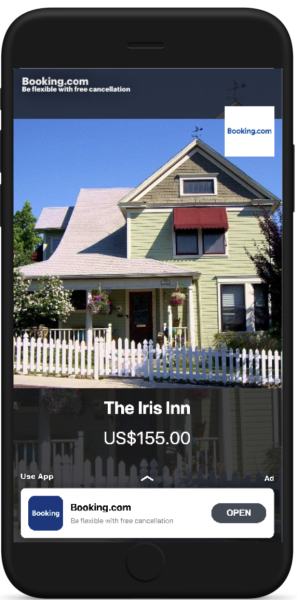
Booking.com used Snapchats Dynamic Ads to serve locally relevant listings to those interested in their properties
What Snapchat says. Snap head of U.S. verticals Sharon Silverstein said in a statement, “As the summer vacation season approaches, travel businesses are looking to optimize reach and drive conversions. Snapchatters are a particularly salient audience for the industry, with many eager and more likely to travel than users of other platforms. Dynamic Travel Ads are driving impressive results for our partners, and we look forward to unlocking them for more businesses as the travel industry enters its busiest season.”
Official Snapchat documentation. Read the complete ad setup guidelines here.
Why we care. When it comes to advertising dollars spent, Snapchat trails behind industry giants such as Facebook and Instagram. But Snapchat is gaining momentum, with most of its users falling into Gen Z and millennial age groups. And with those groups being the most diverse travelers, Snapchat is a great place to advertise airline and hotel deals, new destinations, and popular hotspots.
The post Snapchat now offers Dynamic Ads for Travel appeared first on Search Engine Land.
Courtesy of Search Engine Land: News & Info About SEO, PPC, SEM, Search Engines & Search Marketing
Wednesday, June 1st, 2022
Apple Search users will soon notice a new campaign pricing type. CPT, or cost-per-tap is Apple’s version of CPC, or cost per click. It is calculated by dividing your total spend by the number of taps your ad received.
Apple Search ads help people discover your app when they search on the app store. Like traditional manual cost per click ads:
- you choose a maximum amount you’re willing to pay each time someone clicks, or taps, your ad
- the actual amount you’re charged is based on what your nearest competitor is willing to pay for a tap on their ad.
The current CPM model. Apple will phase out the current CPM, or cost per thousand model as soon as the transition to CPT is complete. The current CPM model charges your account for every thousand impressions your ads receive – regardless of whether users click or tap.
Apple Search users promoting their apps can soon create the new campaigns in their accounts. Those new CPT campaigns will automatically be placed on hold.
When the transition goes live, current CPM campaigns will go on hold and the new CPT campaigns will go live.
If you prefer not to create new CPT campaigns until Apple releases the update, keep an eye out for an announcement to avoid a lapse in your ads serving.
As of right now there is no set launch date for CPT campaigns.
Why we care: This new CPT model reflects the traditional cost per click method advertisers are used to within search results ads. This means you can bid competitively without the worry of overpaying, and get more for your ad dollars by only paying when those most interested tap on your ad.
The post Apple Search campaigns shifting to cost-per-tap (CPT) pricing model appeared first on Search Engine Land.
Courtesy of Search Engine Land: News & Info About SEO, PPC, SEM, Search Engines & Search Marketing
Wednesday, June 1st, 2022

ABM is more than just another marketing channel to add to your mix. It’s a complete go-to-market strategy that requires new processes, better collaboration, and more accountability.
But don’t let that intimidate you. We’re here to help you get started and create a clear path for iteration and scalability.
Register today for “Take a Crawl, Walk, Run Approach to Multi-Channel ABM” presented by Terminus.
The post Webinar: An easy-to-use, actionable ABM framework (finally!) appeared first on Search Engine Land.
Courtesy of Search Engine Land: News & Info About SEO, PPC, SEM, Search Engines & Search Marketing
Wednesday, June 1st, 2022
Later this month Google will roll out a change to the condition attribute for shopping ads. If you’re a retailer, your products could be disapproved if you have the incorrect attribution set.
A condition attribute tells potential shoppers about the condition of the product you are selling. Currently, there are three condition attributes:
New products do not require a condition to be set, while Used and Refurbished items do.
What will this affect? All shopping accounts will be automatically opted-in to use automatic updates for condition. This critical attribute, used to refine Googles search results, will use your landing page information to help keep your data (products) more accurate and up to date.
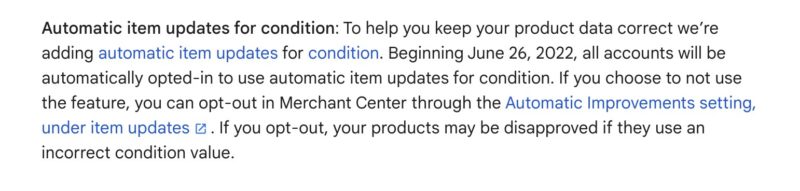
At the moment there is no word whether Google will start requiring the condition to be added for New items, or if the change will only affect items for which the condition has already been set.
Kirk Williams from Zato Marketing adds, “I don’t really see this as a negative thing TBH, since condition is something that should be set correctly on a PDP (product description page) anyway so if it’s not already… fix it anyway. But I always pay attention when I see the words “all accounts will be opted in!”
Why we care: Automatic updates can be a hassle for brands and marketers if they affect performance, cost, or visibility. However, this update seems to be more helpful than hurtful, and has been created to help retailers keep their product information up to date without the pain of modifying each item individually.
The post Google: Automatic updates for condition starting June 26 appeared first on Search Engine Land.
Courtesy of Search Engine Land: News & Info About SEO, PPC, SEM, Search Engines & Search Marketing
Wednesday, June 1st, 2022
Earlier this quarter, Google announced a series of changes coming to Merchant center that retailers should be aware of. Here’s a recap.
Pause attribute. In April, Google announced a ‘pause’ attribute to temporarily halt ads. This lets merchants the ability to temporarily pause shopping ads without needing to use the “out_of_stock” attribute or “availability” attribute.
This was a needed change because many times a retailer isn’t looking to halt ads completely, or that a product will be back available for purchase in the near term. Starting in 2023, using the “availability” attribute incorrectly may result in your ads being disapproved.
Availability dates for backorder and preorder products. Later this month, all items with the “backorder” or “preorder” attribute will require an “availability_date” on when the item will be back in stock. This date can be up to a year in the future and if further out it could have products disapproved.
Unsupported Shopping content. Google also announced that, effective this month, it has updated its Unsupported Shopping content policy to include a change to how motor-powered bicycles are listed:
“Electric bikes of a speed of 25 km/h or 15.5 mph or less are still allowed. However, product listings for these electric bikes are now required to explicitly state the bicycle’s speed on the landing page and either the product title or description. If the speed isn’t stated, the products are in violation of our policy and will be disapproved.”
Why we care. While these changes are all fairly small, the failure to adhere to the new rules could potentially stop products from showing. The ability to quickly pause product ads has been a nice touch that bypasses the previously needed workarounds.
The post 3 Google Merchant Center changes you may have missed appeared first on Search Engine Land.
Courtesy of Search Engine Land: News & Info About SEO, PPC, SEM, Search Engines & Search Marketing
Tuesday, May 31st, 2022
Digital marketing agency NP Digital announced today that it has acquired AnswerThePublic, a popular freemium keyword research tool. Terms of the deal were not revealed.
NP Digital, which was co-founded by marketing influencer and entrepreneur Neil Patel, is also the owner of another popular freemium keyword research tool, UberSuggest.
What this means for AnswerThePublic users. All the tool’s existing features will remain. Users can continue to access the tool via its website or app.
There are a couple of noticeable changes so far, including the addition of “by UberSuggest” under AnswerThePublic’s logo in the main navigation and Patel’s face on a dancing robot’s body on the homepage.
AnswerThePublic has approximately 1 million monthly users and has been a favorite among search marketers for years. NP Digital said it is working on new free features for marketers.
However, the tool hasn’t gotten any significant updates or improvements lately. That’s because the owners weren’t focusing on it (they had another software company).
What it means for UberSuggest users. UberSuggest has approximately 3 million monthly users who will now be able to access the features and data through either platform. Users can soon expect to see new features related to keyword visualizations.
NP Digital said Ubersuggest now spans over 30 billion keywords and 50 trillion backlinks across 249 countries.
Why NP Digital acquired AnswerthePublic. Both platforms leverage the same data sets. But each had its unique features, functions and visualizations.
NP Digital CEO Mike Gullaksen told me: “This platform allows marketers to leverage the data from the largest focus group in the world – Google search users. Being able to mine massive data sets to identify consumer interest around needs and wants is one of the most powerful yet underused strategies for content and search marketers. Layering on top of these data insights allows marketers to both look back and see real-time trends with powerful visualizations and quickly move their content initiatives forward while staying on the pulse of the consumer mindset.”
Why we care. NP Digital says this acquisition will mean more new free capabilities for both platforms – and that you can access these insights from either platform. So both tools will continue to help marketers find inspiration and insights that can help shape SEO and content marketing strategies.
A year of acquisitions. This has been a big year of change in the SEO tools space and we’re not even halfway through 2022. Below are links to coverage of the other big acquisitions we’ve seen so far:
The post NP Digital acquires keyword research tool AnswerThePublic appeared first on Search Engine Land.
Courtesy of Search Engine Land: News & Info About SEO, PPC, SEM, Search Engines & Search Marketing
Tuesday, May 31st, 2022
Google has dropped support for job training structured data and rich results in Google Search. Google said based on its initial tests, the search company “found that it wasn’t useful for the ecosystem at scale.”
Not useful. Google posted about this saying “We initially tested this markup with a group of site owners, and ultimately found that it wasn’t useful for the ecosystem at scale.” Google did not say how large its tests were but just said it did test this in Google Search.
Other job rich results not impacted. Google added that this does not affect any other features that may use Job training markup. Plus, Google said you are welcome to “leave the markup on your site so that search engines can better understand your web page.” Although, I am not sure which other search engines use this this markup.
Why we care. If you were using job training structured data, Google will no longer show them as rich results in Google Search. You may notice click through rate changes on those pages, as the rich results no longer will be displayed in Google Search.
The post Google drops support for job training structured data appeared first on Search Engine Land.
Courtesy of Search Engine Land: News & Info About SEO, PPC, SEM, Search Engines & Search Marketing