Archive for the ‘seo news’ Category
Wednesday, September 28th, 2022
At the Search On 22 event today, Google announced a number of new features across Google Search, Google News, Google Shopping, and beyond. Let’s go through some of the features that Google spoke about today.
One note: unlike the Search On events we had in the past, it seemed like this event was more focused on maybe more minor features versus Google announcing some major breakthrough in search. Such as with the past announcements with BERT, MUM, and other AI-based advancements in Google Search.
1. Multisearch expanding
Google is expanding multisearch to 70 new languages in the coming months. Google launched multisearch last year for English and U.S.-based queries.
What is Google multisearch. Google multisearch lets you use your camera’s phone to search by an image, powered by Google Lens, and then add an additional text query on top of the image search. Google will then use both the image and the text query to show you visual search results.
How Google multisearch works. Open the Google app on Android or iOS, click on the Google Lens camera icon on the right side of the search box. Then point the camera at something nearby or use a photo in your camera or even take a picture of something on your screen. Then you swipe up on the results to bring it up, and tap the “+ Add to your search” button. In this box you can add text to your photo query.
You can learn more about this feature here.
2. Multisearch near me coming soon
Last year, Google previews multisearch near me at Google I/O. Well, Google is going to launch that feature in the English and U.S. search results in the coming months. Google technically said it will launch late fall of 2022.
What is near me multisearch. The near me aspect lets you zoom in on those image and text queries by looking for products or anything via your camera but also to find local results. So if you want to find a restaurant that has a specific dish, you can do so.
3. Google Lens translated text now cleaner
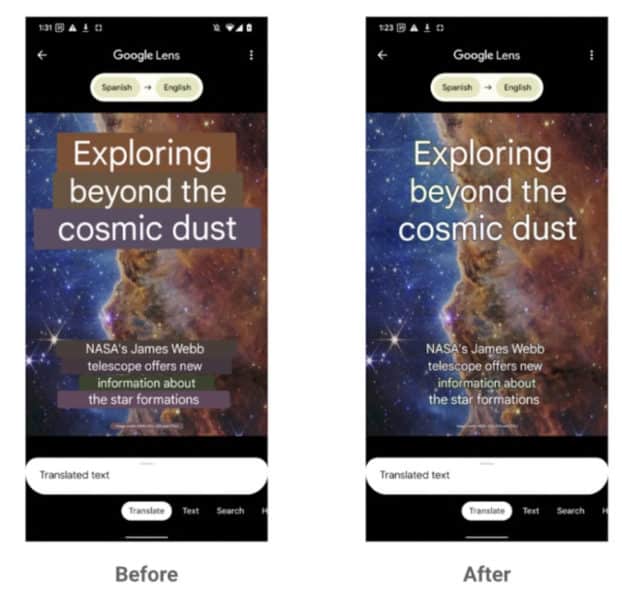
Google Lens is so much fun and it lets you point your camera at text in almost any setting so you can translate that text. Now, Google Lens is going to present that translated text in a cleaner and more blended approach. This is launching later this year.
Google is using generative adversarial networks, also known as GAN models, to present the translated text better. It is the same technology Google uses in the Pixel devices as the “Magix Eraser” feature on photos.
Here is a sample showing how Google Lens is overlaying the translation in an easier way for searchers to comprehend:
4. Google iOS App shortcuts
Today, the Google Search app for iOS will add shortcuts to make it easier for searchers to search, translate, use voice search, translate, upload screenshots, and more. Here is a screenhot of some of those shortcuts in action:

While this is launching today in the US for iOS users, it will be coming to Android later this year.
5. New Search refinements
Google is also rolling out new search refinements and aids for when you search in autocomplete and within the search results. Now as you type your query, Google will present tappable words to build your query on the fly. This is a form of a query builder, by simply just tapping on words.
Here is a GIF of it in action:
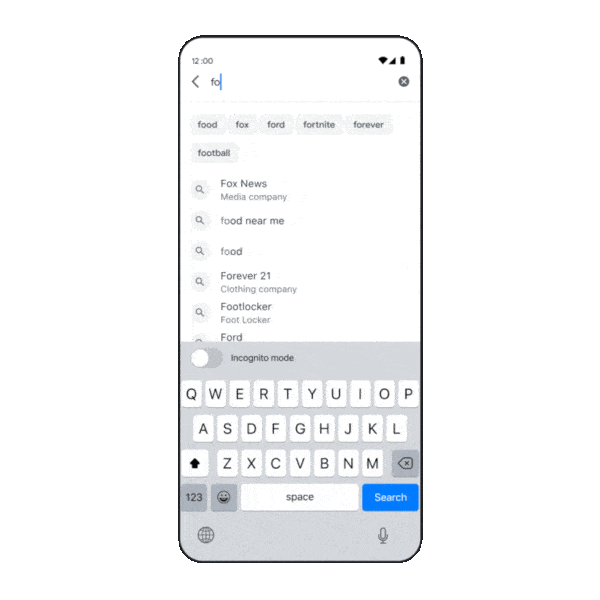
You will also see richer information show up in the autocomplete results as you type.
Google also has the ability to refine your query after you search by letting you add or remove topics you want to zoom into or out of. It helps you drill down into what you are looking for by adapting the top search bar to be more dynamically driven.
Here is a screenshot of that top bar with refinements:

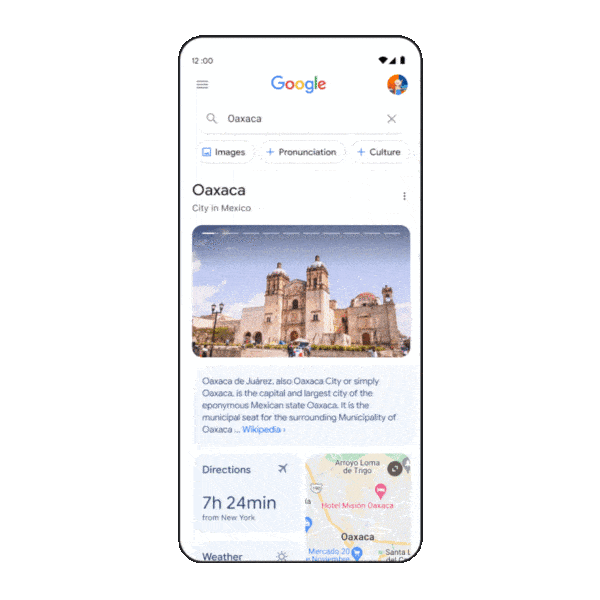
6. More visual information
Google is showing for some queries a more visually designed approach to the search results. This allows you to explore more information about topics around travel, people, animals, plants and so on.
Google will show you visual stories, short videos, tips, things to do and more, depending on the query. Google will also visually highlight the more relevant information in this UX.
7. Explore as you scroll
As you scroll through the Google Search results, sometimes the more you scroll, the less relevant the results get. I mean, that makes sense, Google should be ranking the most relevant information at the top.
So Google has added a new explore feature to give searchers inspiration around their query but not something that exactly matches their query.
Searchers can use this new explore feature to learn topics beyond their original query.
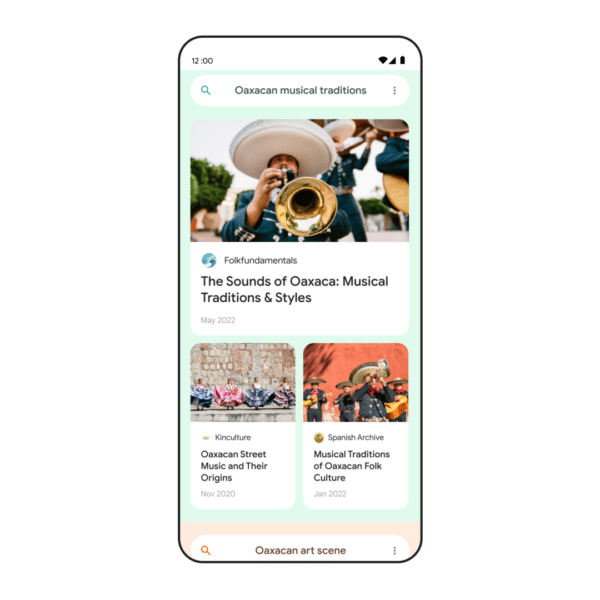
This is launching for English and U.S. results in the coming months.
8. Discussion and forums
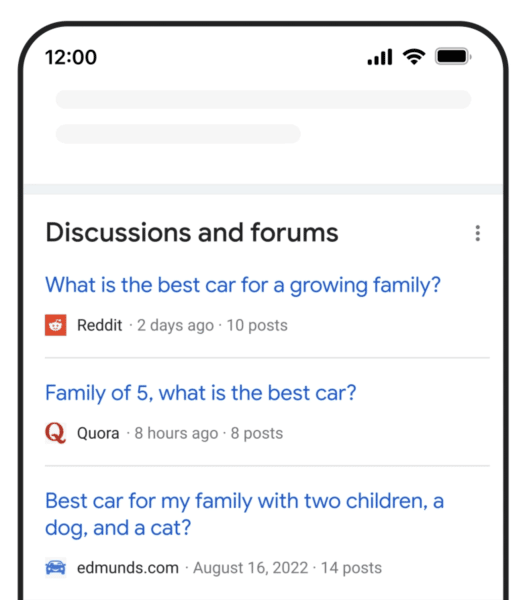
Google Search today may show a section for “discussions and forums,” today for U.S. English results. This is to help people find first-hand experiences from people on the topic in various online discussion forums, including Reddit but beyond just a single forum platform.
Here is what that looks like:
9. Translated local and international news
Google will be launching early next year a way to find translated news coverage for both local and international news stories. Using machine translation, Google Search will show you translated headlines for news results from publishers in other languages.
This will give you “authoritative reporting from journalists” directly from the country that is touched by that specific news story.
Here is a screenshot showing “translated by Google” near the headlines:

10. About this result displays personalization
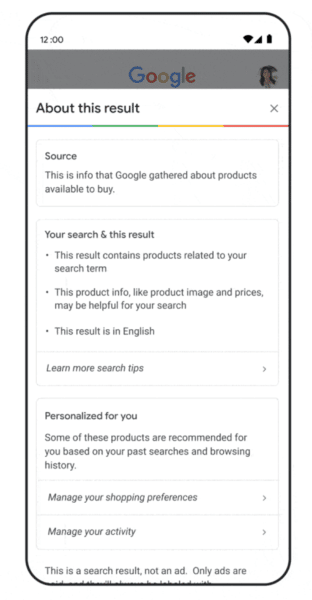
Google is also expanding the About this result feature to show if personalization is taken into account.
Google will now show you if the search results are personalized in any way. Plus, Google will give you the ability to turn off personalization or change them.
So if you say you prefer a specific department or brand, within the new shopping features, Google will let you configure that here.
Here is the about this result that says this has been “personalized for you.”
And here is the personalization feature for the shopping results, which we covered in more detail here.

That is most of what Google announced at Search On today related to Search, and here is our coverage on the Google Shopping side.
The post 10 biggest announcements from Google Search On 22 appeared first on Search Engine Land.
Courtesy of Search Engine Land: News & Info About SEO, PPC, SEM, Search Engines & Search Marketing
Wednesday, September 28th, 2022
Meta just announced 5 new updates to their call ads. The new updates are intended to help businesses build better customer relationships, find more quality leads, and reach more potential customers to grow their business, they stated in a blog post.
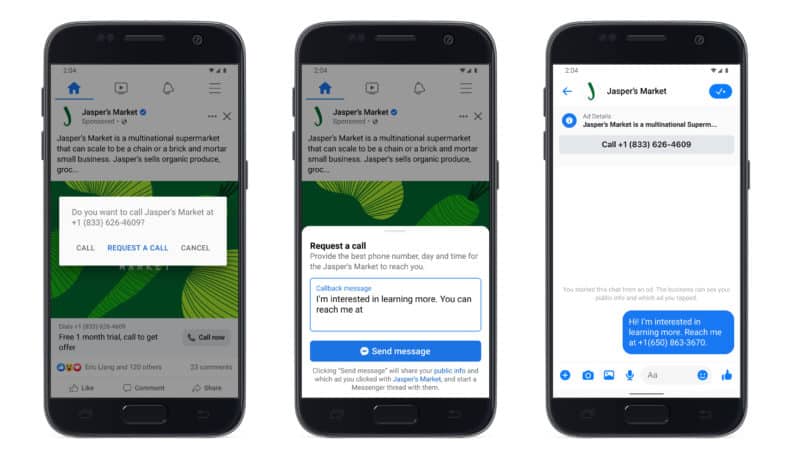
1. Get a callback
This feature is currently being tested and gives customers the option to request a callback from a business.
2. Call Ads in Sales Objective
Businesses will now have the option to include call ads as a format under the Sales/Conversions objective in Ads Manager.
3. 60s call in Lead Gen, Traffic, and Sales objectives
Meta has a added a 60-second call optimization option in lead generation, traffic and to-be-released sales ad objectives to allow businesses to optimize their ads to reach people who are most likely to engage in a longer conversation.
4. Pre-call business feature in Ads Manager
Businesses can provide additional context in ads to help educate potential customers to help them make informed decisions before they make a call.
5. In-app calling
Meta is testing a platform calling solution to enable businesses to connect with customers wherever they are browsing and allow them to continue that same experience within the app after the call is complete. Meta says that no call information is captured.
Dig deeper. You can read the blog post from Meta here.
Why we care. Advertisers and brands on Meta such as stores, restaurants, or service-based businesses should make sure their phone numbers, business hours, and answering messages are up to date so they can be reached by potential customers utilizing these new features.
There’s no indication that these new features will increase the number of leads a brand is receiving. As with every new feature, test the optimization and reporting options to ensure they support your goals and conversion objectives.
The post Meta has just announced 5 new call ad updates appeared first on Search Engine Land.
Courtesy of Search Engine Land: News & Info About SEO, PPC, SEM, Search Engines & Search Marketing
Wednesday, September 28th, 2022
With the holidays fast approaching, Google decided it was a good time to announce nine new shopping tools and features. During the announcement, Google said the intent was to drive a more immersive, personalized experience. Let’s dive in.
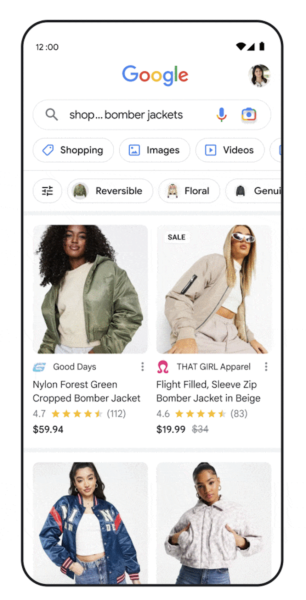
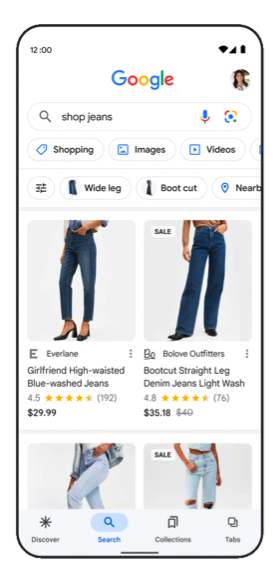
1. Search with the word “shop”
In the US, when you search for the word “shop” followed by the item you’re looking for, you’ll access the visual feed of products, tools, and inventory for that product. The shoppable search experience is also being expanded beyond apparel to electronics, beauty, and more, to additional regions for both mobile and desktop.
2. Shop the look
This new tool will allow you to see options of where to buy the products you see in search. The “shop the look” feature show links to the exact product you’re searching for, plus complementary pieces and where to buy them.
This feature was first announced in 2016.

3. See what’s trending
A new feature in Search, trending products shows you products that are popular right now in a specific category. U.S. shoppers will be able to use the new feature later this fall, but no specific date has been provided.
4. Shop in 3D
Google says people engage with 3D images almost 50% more than static ones. 3D visuals of home goods were launched earlier this year, and soon you’ll be able to see 3D visuals of shoes, starting with sneakers.
To give merchants and advertisers better access to 3D visuals, Google also launched a new automated 360-degree spin feature that can be accessed by using a “handful” of static photos. The new technology will become available in the coming months.

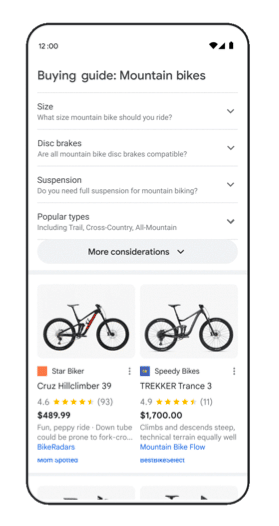
5. Get help with complex purchases
A new buying guide will share helpful insights about a category from a wide range of trusted resources. If you’re purchasing a large or expensive item, the buying guide may show you specs about weight, materials, features, sizes, and more.
The new buying guide recently launched in the U.S. and new insight categories are “coming soon.”
6. See what other shoppers think
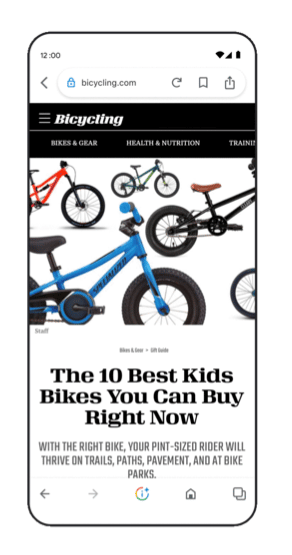
A new feature in the Google app gives you helpful context about a webpage you’re on or a product you’re searching like pros and cons, and star ratings, all in one view.
Page insights will launch in the U.S. in the coming months.
7. Get personalized results
You’ll soon see more personalized results based on your previous shopping habits. You’ll also have the option to set your preferences and turn off personalized controls.
When you’re shopping on Google you can make your selections on preferred stores and brands to see more of those in the future. If you no longer want to see those personalized results, or your preferences change, you can adjust that feature or even turn it off completely.

Get the daily newsletter search marketers rely on.
<input type=”hidden” name=”utmMedium” value=”” />
<input type=”hidden” name=”utmCampaign” value=”” />
<input type=”hidden” name=”utmSource” value=”” />
<input type=”hidden” name=”utmContent” value=”” />
<input type=”hidden” name=”pageLink” value=”” />
<input type=”hidden” name=”ipAddress” value=”” />
8. Shop your way with new filters
Whole page shopping filters on Search are now dynamic and adapt based o real-time Search trends. For example, if you’re searching for jeans, you could see filters for “wide-leg” and “bootcut” because they’re popular, but even those could change over time.
Dynamic filters are available in the US, Japan, and India, and will be launched to more regions in the future.
9. Inspiration beyond the Search box
Using Discover in the Google app, you’ll see suggested styles based on what you’ve been shopping for, and what others have searched for too.

Dig deeper. You can read the full announcement from Google here.
Why we care. Advertisers gearing up for the holiday season should ensure that their ads, images, merchant accounts, and stores are ready for these new features. Shoppers will have more choices, styles, and stores to choose from, so retailers will need to step up their game if they want to stand out.
The post 9 new Google search features and tools for shopping appeared first on Search Engine Land.
Courtesy of Search Engine Land: News & Info About SEO, PPC, SEM, Search Engines & Search Marketing
Wednesday, September 28th, 2022
SEO often doesn’t get a fair seat at the table when marketing budgets are determined.
Even though SEO is marketing.
As we’re approaching a time when many companies are having meetings in their conference rooms to determine budget allocations for the upcoming year, I want to help further the case as to why SEO should have a voice in the room (and budget in your marketing plans).
But first, let me address a bit more why I feel SEO doesn’t get its fair shake.
Proving the value of SEO is complicated
SEO can be a challenge for some in marketing departments to wrap their heads around. There are many moving parts and it’s not as easy as PPC when you understand exactly how that works.
With PPC it’s generally a matter of:
- Choose keywords.
- Write/ place ads.
- Pay when someone clicks.
- Send that click to a landing page of your choosing.
- Report on results (sales/leads).
It’s true. SEO is more complex than this. And, because of its complexity, I will often instruct prospects to think carefully about not just when to invest in SEO, but whether SEO is even a really viable investment in the first place. Often, the answer to these questions is “it depends.”
Remember, an investment in SEO doesn’t just revolve around hiring an agency or an individual in-house to oversee and drive the strategy.
Unlike PPC, there are many other considerations, including:
- Web design and development that may be required, such as:
- Creating a new architecture / navigational structure.
- Creating new page templates to better support SEO.
- Creating a blog/resource section on your website (if you don’t already have one).
- Content, such as:
- Page content.
- Resourceful content.
- Thought leadership, white papers or webinars.
- PR and legal reviews:
- Ensuring that content meets with company compliance needs (especially for medical/pharma/legal/insurance industries and other highly regulated industries).
Case in point: My agency has a client who’s engaged us to aid in the re-structuring of their website (including an audit of their existing presence versus that of a competitor).
The work coming out of this audit resulted in 130 hours worth of web development requirements this client needs to see through to completion in order for the investment that they’ve made with us to be substantiated.
I highly recommend that you consult with a trusted friend/partner who has experience in SEO to help you to make this determination. Many SEOs (the nice ones  ) would be happy to provide a free analysis/opportunity assessment. Take advantage of the advice.
Today, I’m going to assume that we’ve determined that there is an opportunity for SEO to provide value for your business. Undoubtedly, if you’re in the conference room trying to determine what – if anything – to budget for SEO, you will want to better understand:
- The size of the opportunity.
- The size of the investment needed to get you there.
Get the daily newsletter search marketers rely on.
<input type=”hidden” name=”utmMedium” value=”” />
<input type=”hidden” name=”utmCampaign” value=”” />
<input type=”hidden” name=”utmSource” value=”” />
<input type=”hidden” name=”utmContent” value=”” />
<input type=”hidden” name=”pageLink” value=”” />
<input type=”hidden” name=”ipAddress” value=”” />
Size of the opportunity
When determining the “value” of an SEO effort, there are two sides to the coin.
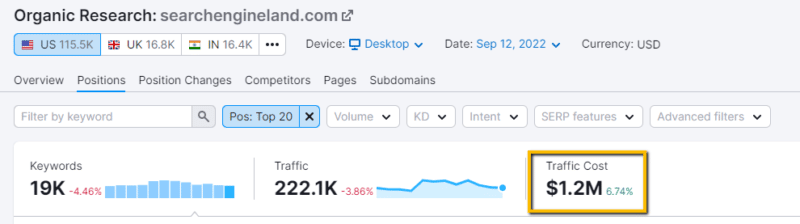
One easy metric is to consider “replacement cost” of the traffic. If you were to buy this same traffic via PPC (that you’re considering targeting via SEO) what would it have cost? Semrush makes this available via their “Traffic Cost” metric:
This can sometimes be a big number, as we see for Search Engine Land. You may find that many of your competitors are realizing this kind of value, yet you aren’t.
That may be as far as you need to go to make your case to the board that SEO is “worth the investment.” That’s one way to measure it.
Understanding the traffic potential of SEO efforts
But if you’re a mature marketer, you will try to move beyond just “click value” to something more meaningful.
- Tangible value.
- Sales.
- Leads.
- Downloads of white papers.
- Sign-ups for webinars.
How you measure this will depend upon whether your business is ecommerce or B2B/lead gen. For both verticals, you’ll need to do two things:
- Identify the possible keywords that you’ll want to target.
- Determine what it might take to compete (i.e., site structure/link acquisition).
Since I’m assuming that you’re a marketing head and perhaps not an SEO, here’s how I would quickly suggest you conduct this type of assessment.
Using Semrush (subscription required), navigate your way to the Organic Research section. Here, you can enter the domains/website addresses for direct competitors who you believe are doing well with their organic presence.
Once you’ve found a competitor who appears to have a significant organic presence, click into the Top Organic Keywords section and click View all organic keywords.
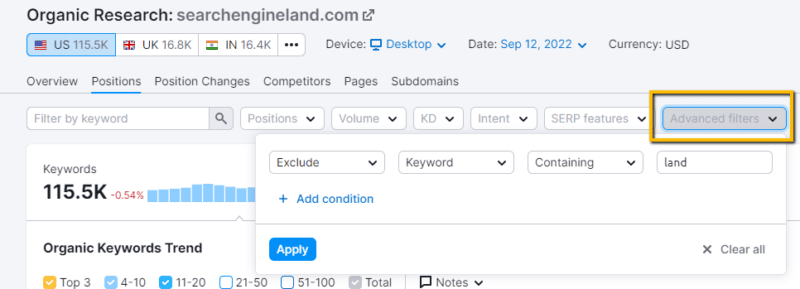
You will now see a complete list of your competitors’ keywords. But this will also include your competitors’ “brand” keywords (their company name, etc.). You need to filter this:
Still, though, this data isn’t great. It’s showing us any keywords that our competitor is ranking for within Google’s top 100 results.
Let’s make this more meaningful/useful by reducing that number down to rankings “which matter” (that’s a subjective metric). In this case, I’m going to only concern myself with the top 20 ranking keywords:
Now I have a workable list of keywords that I know are driving significant organic search traffic to my competitor(s):
This shows me that:
- There are 19,029 keywords ranking in Google’s top 20.
- The “local guide program” is driving a large share of traffic to my competitor.
- The “seo” keyword would have cost me approximately $6.20 cost per click if I were to buy that traffic via Google Ads.
And, as mentioned previously, we can see the “value” of this competitors’ non-brand organic traffic, based on the “replacement cost” (”Traffic Cost”):
If you’re highly ambitious, this is the next step that you can take. Download the Top 20 Rankings list into a spreadsheet.
Create columns into your spreadsheet to make some assumptions (i.e., Ranking Top 3; Ranking 4-7; Ranking 8-10; or you may want to get as detailed as to estimate each top 10 position).
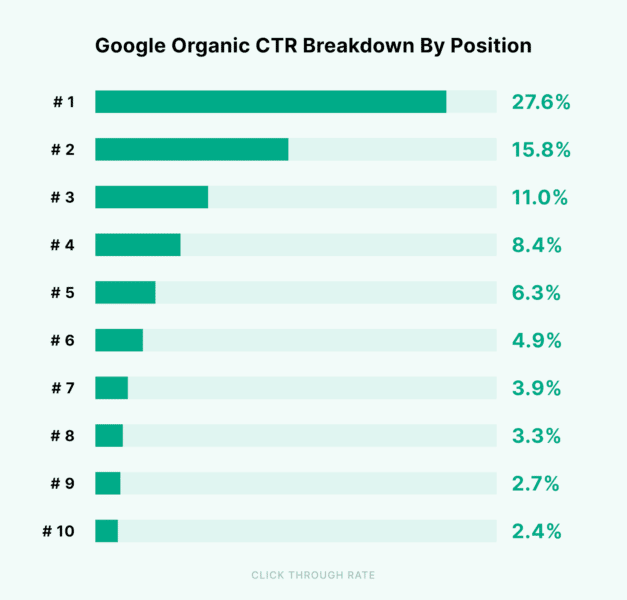
Since we have the estimated monthly search volume for each keyword, you can now multiply those numbers by the potential click-through rate of each potential/future rankings.
Thanks to Backlinko’s work on average CTR in the Google SERP, we have some estimates:
SEO is an imperfect science. But this at least gives you some visibility into the traffic potential that exists for an investment. In short, it puts some math into the projections.
Assessing SEO opportunities in ecommerce and B2B/lead gen
Now that you have at least an idea of the traffic potential, we need to break out the tasks for determining what potential “real” value might exist, in terms of things that are more tangible (sales/leads, etc.).
For the purposes of this article, I’ll be focused on either an ecommerce website or a B2B/lead gen website.
Ecommerce opportunity assessment
If you’re an ecommerce website, you should have a general sense of:
- Conversion rate into a sale.
- Average (net) value of a sale.
Knowing these things, you can run some estimates on how much you might make based upon varying degrees of traffic increases.
For instance:
- 10,000 visits per month x 1.5% conversion rate into a sale = 150 sales.
- 150 sales x $300 average net value of a sale = $45,000 per month.
Knowing this potential real value, you can then assess if the investment that you believe will be required in an SEO effort is “worth it.”
B2B/lead gen opportunity assessment
If you’re B2B/lead gen, you should have a sense of conversion rate into a lead (and hopefully you’re tracking form submissions, phone calls, chat/messaging apps and other “leads”/conversion types).
Working with this and your internal data on conversion rates from lead to qualified lead and qualified lead to sale, you should be able to calculate the potential ROI.
Taking the same traffic potential above (10,000), here’s what that calculation might look like:
- 10,000 visitors x 5% conversion rate into a lead = 500 leads.
- Let’s say that ½ of those leads are qualified (500 x .5 = 250).
- Then, let’s say that we convert 40% of our qualified leads into a sale (250 x .4 = 100).
- So, we have 100 potential sales from the SEO investment.
What’s our average net value of a sale?
Every business is different. We have a client whose average net value of a sale is $400,000. That makes the ROI argument pretty easy to make.
But let’s say that your average net value of a sale is $400. With 100 sales x $400, that’s $40,000 in net value from your SEO investment.
Knowing this, you can determine how much you can profitably invest into an SEO effort.
Putting the math in SEO
These formulas are far from perfect. But they provide an opportunity to put math behind what you’re asking for in an investment into an SEO effort.
You should also caution those involved that SEO is not a quick fix. It may very well be that you’ll spend the first months of the effort in deep research before big changes occur.
As mentioned above, other hard (internal) costs could be involved, such as a restructuring of your website, content additions, page additions and PR/thought Leadership items. Do your best to account for these things.
While there are certainly times when I have strongly recommended against a company investing in an SEO effort, it’s more often that you’ll know me as a champion of the channel.
The post SEO is math appeared first on Search Engine Land.
Courtesy of Search Engine Land: News & Info About SEO, PPC, SEM, Search Engines & Search Marketing
Tuesday, September 27th, 2022
Relevance is often discussed in digital marketing. It’s an important topic because not only is it good for consumers, but it is also good for advertisers since the inception of quality score.
Advertisers with higher quality scores and relevance are typically rewarded with more traffic and lower CPCs.
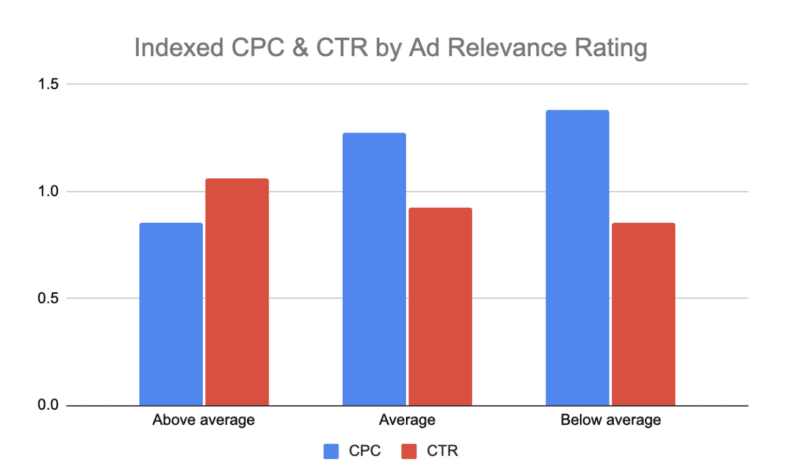
The following data (indexed to allow multiple verticals and clients to be merged) proves this point. As ad relevance scores go up, CPCs go down and CTR goes up.
Based on our data, an above-average ad relevance score vs. a below-average ad relevance score can decrease CPCs by 40%.
One of the most critical elements in relevance is the ad copy. In this article, I will break down several ad copy examples and identify what helps make them quality.
The elements of a relevant PPC ad
To start, we should set the ground rules.
Recently, Google has taken more control of ad optimization. With responsive search ads being the default ad type, Google has the power to choose the headline and the description it deems will perform best.
Yes, you can pin some elements down to override this auto-optimize feature, but Google’s leaning more and more on its machine learning capabilities to create the most relevant ad.
The other key is ad extensions which have just been rebranded as assets. Extensions have blossomed over the past few years, and there are now 19 different types in Google Ads:
- 8 of them are dynamic (e.g., rating, location extensions, structure snippet).
- 11 are manually set up (e.g., price, location, lead form).
When used effectively, all these elements can boost your performance. Remember the data about ad relevance. A more relevant ad can improve your CTR and decrease your CPC. The right information helps reduce friction for customers.
With that in mind, let’s look at some examples of relevant and high-quality PPC ads.
Example 1: Car insurance
Car insurance is one of the most competitive categories and high-spend verticals.
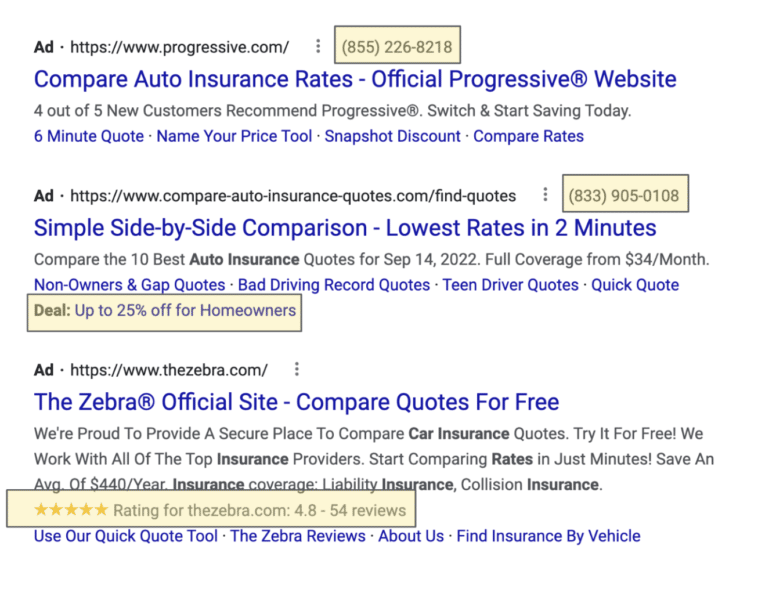
The ad I pulled is an interesting mix of a Top 3 big insurer, Progressive, and other lead generation sites. Notice which ad has bolded keywords that tie to the search term “auto insurance.”
It’s interesting to note that Progressive doesn’t have the term “auto insurance” in the description, instead focusing on consumer-proof claims (4 of 5).
They also used call extensions. When ads contain phone numbers, you instantly give the consumer the choice to call or interact online. That consumer choice is vital.
The other extensions are ratings and deals, which are used well to give consumers a sense of additional information to help make a decision.
Example 2: Concert tickets
I’m a music fan and started looking for examples for various artists and tickets to shows I might like to see. I found the below example in a search for “My Chemical Romance tickets.”

Seatgeek did a good job laying out two things:
- Calling out that the claim that it’s the lowest possible price.
- I didn’t specify which show I wanted to see, and the listings of various upcoming shows were broken out well in the extensions. This helps me choose a show and go specifically to those listings.
Example 3: Electricity rates
A similar use of the extensions in a different category was for “electricity rates.”
The use of copy and these extensions provide the right mix of options, while still focusing on performance/conversions (“Get a Quote”).
Get the daily newsletter search marketers rely on.
<input type=”hidden” name=”utmMedium” value=”” />
<input type=”hidden” name=”utmCampaign” value=”” />
<input type=”hidden” name=”utmSource” value=”” />
<input type=”hidden” name=”utmContent” value=”” />
<input type=”hidden” name=”pageLink” value=”” />
<input type=”hidden” name=”ipAddress” value=”” />
Example 4: Noise cancelling headphones
Let’s not forget that Google is not just showing text ads. Shopping ads are prevalent and frequently show for retail searches.
Below is a result for the search “noise canceling headphones.”
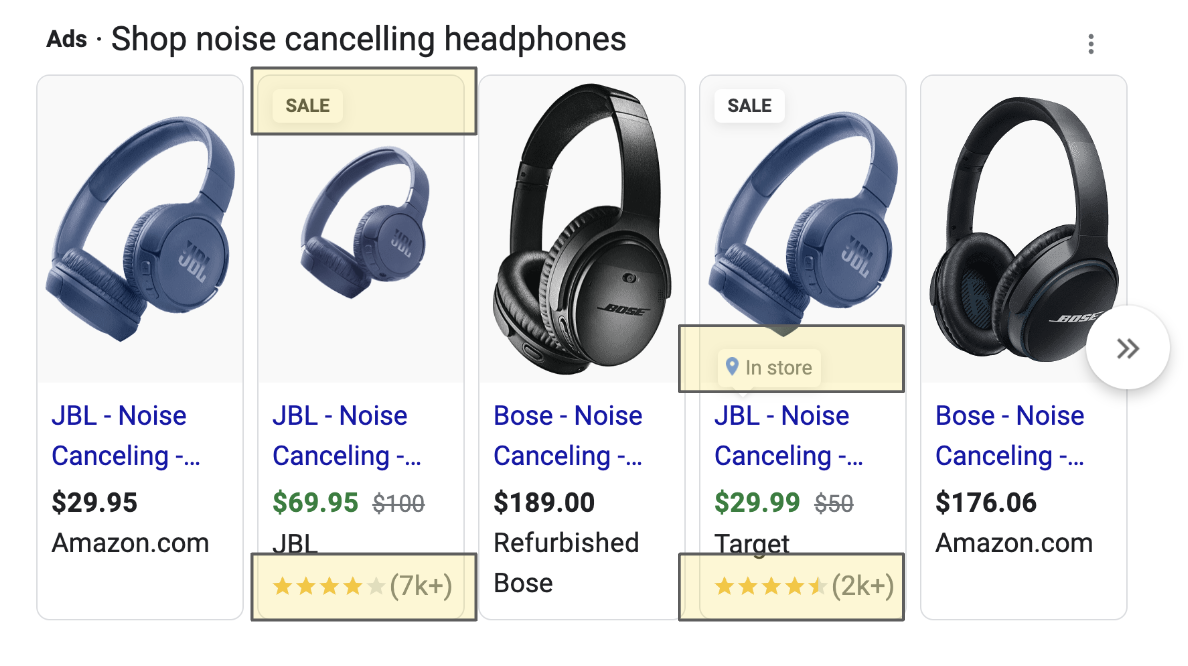
This is an interesting example because of the broad mix of pricing.
It looks like the JBL headphones are the cheapest at Target. Target also includes the “In store” note, plus the price markdown and ratings on the product. The combination of price and the robust listings is compelling.
Most brands don’t consider the price point of competitors as a reason why their conversion rates are high or low when doing optimizations.
While it’s a different topic, know that competitive research is a critical input needed to understand your performance.
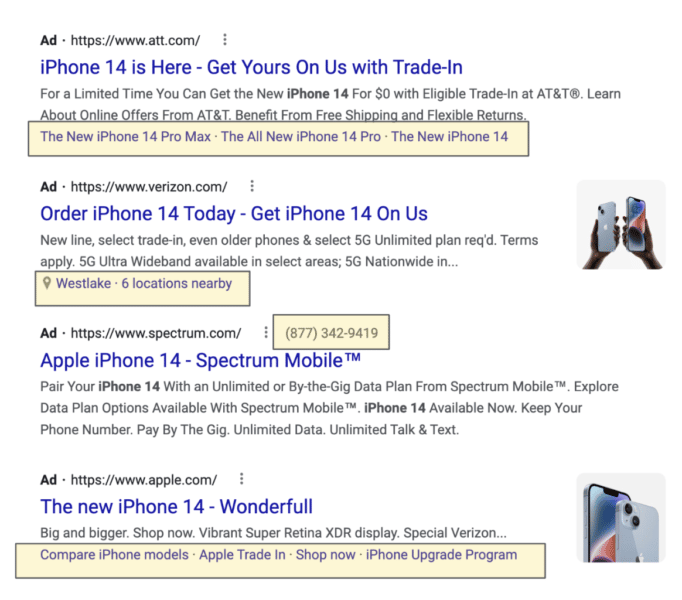
Example 5: iPhone 14
Let’s look at the hottest consumer product right now, the iPhone 14. The example below is some of the biggest players in the game.
The approach for AT&T and Verizon are similar, “Get the iPhone on Us.” What is different is the use of extensions and site links. They each have a different approach.
Which ad would you click on? Why?
I personally find the AT&T ad compelling enough in the first position, and the sitelinks let me click on the specific model.
Optimizing your Google Ads campaigns
When we talk to clients, we talk about the “search experience.” This includes the keyword, ad and landing page – three important elements of a PPC campaign.
Here, we focused on ads and as you’ve seen, different brands have different approaches – various extensions, copy and price points, among others. All of these will result in different outcomes for their advertisers.
The data shows there is real business value in delivering high ad relevance. Having the right elements to run tests and optimize is key. Be on the lookout for new elements that Google rolls out and keep testing.
The post 5 Google Ads examples with relevant and quality ad copy appeared first on Search Engine Land.
Courtesy of Search Engine Land: News & Info About SEO, PPC, SEM, Search Engines & Search Marketing
Tuesday, September 27th, 2022
Google’s September 2022 product reviews update is now fully rolled out. Google said this update only applied to English-language product reviews.
It took six days to complete, beginning Sept. 20 and concluding Sept. 26.
This marks the end of a flurry of Google algorithm updates that started with the helpful content update (Aug. 25 to Sept. 9), continued with the September 2022 core update (and Sept. 12 to 26) and concluded with the fifth version of the product reviews update.
Rollout complete. According to Google’s search ranking update page, “The rollout was complete as of September 26, 2022.”
Google’s July 2022 product reviews update also took six days to fully roll out.
There has been some discussion within the SEO community about the September product review update. Barry Schwartz covered that in What We’re Seeing From The Google Product Reviews Update #5 over Search Engine Roundtable.
About Google’s product review updates. These algorithm updates are meant to reward high-quality product reviews (in the form of insightful analysis and original research). Google said it will promote these types of product reviews in its search results rankings.
In short, if you were impacted, that means you probably need to put more effort into improving your product review content. Figure out how to make it unique so it stands out from the competition.
Why we care. Staying on top of Google’s multiple algorithm updates is important. This is a bit unique because Google rolled out overlapping updates this month – product reviews and a core update. Google says the product review update should only impact product review content. But having overlapping algorithm updates could complicate things – especially if you’re trying to diagnose ranking or visibility changes (positive or negative).
The post Google September 2022 product reviews update rollout complete appeared first on Search Engine Land.
Courtesy of Search Engine Land: News & Info About SEO, PPC, SEM, Search Engines & Search Marketing
Tuesday, September 27th, 2022
Google Analytics 4 may look simple on the surface, but there’s more to it than meets the eye. Did you know that there are multiple reports hidden in GA4?
Out of the box, the left-side navigation in GA4 looks pretty bare.
There are only 18 reports vs. the 90+ (not including integration reports) in Universal Analytics.
But contrary to popular belief, GA4 actually has a lot of the same reports built in.
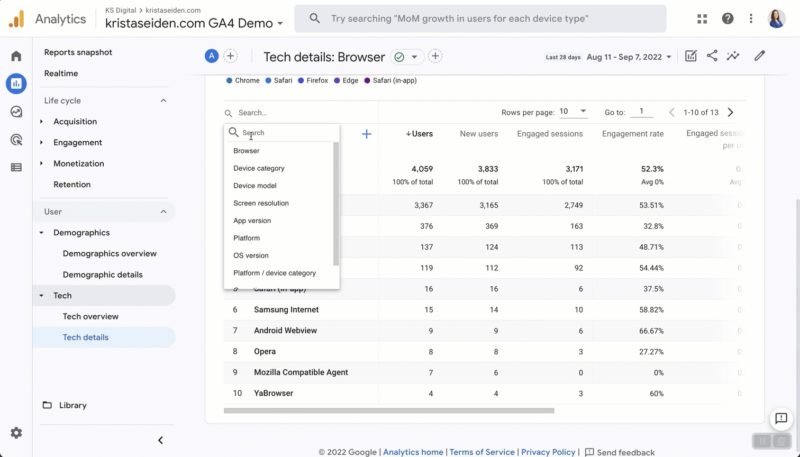
The best examples of this are the GA4 Demographic details and Tech details reports.
Where the reports are in Universal Analytics
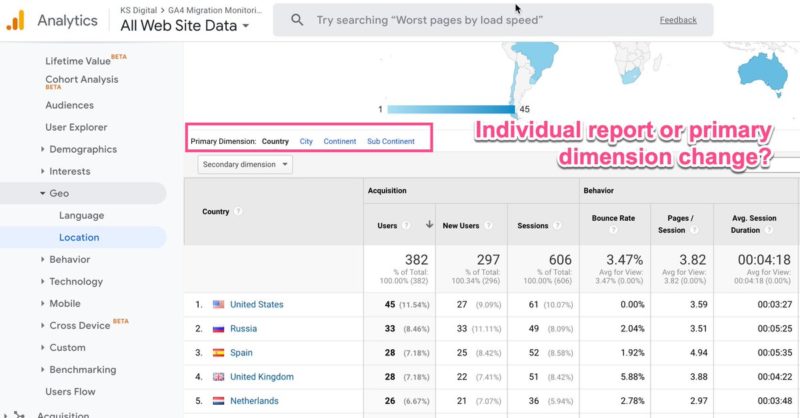
In Universal Analytics, these are all separate reports and each report is separated into subcategories as seen below.
On top of this, UA sometimes has additional dimensions you can choose from.
For instance, you can switch to “City” instead of “Country.”
But this made it confusing to know whether a report was standalone or another dimension in a single report.
Get the daily newsletter search marketers rely on.
<input type=”hidden” name=”utmMedium” value=”” />
<input type=”hidden” name=”utmCampaign” value=”” />
<input type=”hidden” name=”utmSource” value=”” />
<input type=”hidden” name=”utmContent” value=”” />
<input type=”hidden” name=”pageLink” value=”” />
<input type=”hidden” name=”ipAddress” value=”” />
The Demographics details report in GA4
Instead of multiple reports and a primary dimension change, GA4 combines all logical demographic dimensions into a single report, the Demographic details report.

The Tech details report in GA4
The same goes for the Tech details report.
Here, you get 10 reports in one, including:
- Browser
- Device category
- Device model
- Screen resolution
- App version
- Platform
- OS version
- Platform / device category
- Operating system
- OS with version
Now that you know where some of your favorite and most used reports have moved to, hopefully, GA4 feels a little more comfortable.
The post Google Analytics 4: A breakdown of Demographic and Tech details reports appeared first on Search Engine Land.
Courtesy of Search Engine Land: News & Info About SEO, PPC, SEM, Search Engines & Search Marketing
Tuesday, September 27th, 2022
Let’s face it: many consider email marketing boring. It’s not as flashy as jumping onto BeReal or TikTok, and besides, does Gen Z even use email?
Email marketing can be an exciting channel because it drives a lot of revenue for your business. Research shows that you can expect a 42X ROI when you invest in email marketing. So, let’s go over a few ways you can supercharge your email marketing and make it exciting again.
And yes, Gen Z still uses email – they actually prefer it as the way for brands to communicate with them.
Recover lost shoppers with verified offers
Online shoppers routinely abandon their carts, leading to lost sales. If it’s someone you have in your existing customer database, you might rescue that sale with an abandoned cart email. But if they weren’t logged in, the only option is to buy retargeting ads which don’t guarantee a strong ROI.
Thanks to platforms like SafeOpt, you can tap into an email list of 175M+ U.S. shoppers to send them a brand-approved offer and recover lost sales. You generate more revenue, and your abandoned shoppers are delighted because they save time and money.
Make sure your emails are built for mobile first
The majority of emails are now viewed on mobile. It’s no longer good enough to have your emails optimized for mobile. It has to be built with mobile as the primary screen and then optimized for desktop.
This means you might have to rethink a few things. For instance, research suggests mobile email readers click less than desktop. This makes a bit of intuitive sense because there’s less real estate to work with on mobile.
This might mean you consciously decide to build your emails with fewer calls to action and items to click on. This constraint can be good sometimes, as it forces you to focus on what clicks in the email will really drive business outcomes for you.
The name of the game is “personalization”
The average person gets more than 100 emails per day. Personalizing your emails is the best way to stand out from the crowded inbox and to get your messages noticed and read.
You can start small with your personalization journey. Maybe you just include their name in the subject line or the body of the email. Don’t have their name? You can include a recent product they’ve purchased or shown interest in.
Your personalization of emails can get more sophisticated as you gather more first-party data and incorporate it into your messages. You can include wishlist items, references to sections of the website they visited and much more.
Personalizing pays off, too. A personalized subject line is 50% more likely to be opened than a generic one.
Test, test and perfect
If you love data and experimentation, then email marketing is amazing because you can constantly be testing. Some elements you should routinely be testing are:
- Subject lines
- Day or time of send
- Main call to action
- The images within your email.
Testing can become unwieldy unless you come at it with the right strategy. First off, know what kind of testing you’re going to do and why. An A/B test or split testing only focuses on a single variable and will get you different results than a multivariate test, which tests different variable combinations at once.
Second, have an end goal in mind with your testing. This should be more than just a hunch or hypothesis: you should have an important goal like improving click-through rates by 15%.
From there, make sure that you’re waiting until you have statistically significant results. This might mean running your test for longer or expanding the sample size. This can be a pain if you have a smaller sample size but it’s worth it to make sure you’re getting actionable results.
Once you do get those insights, be sure to take action! If your test revealed that personalized subject lines get higher open rates, then start incorporating personalized subject lines into as many relevant emails as possible. Insight without action is worthless.
Finally, remember that you’re never done testing. You should implement the winners of your tests but that should lead to the next set of tests. You can always improve your email performance if you have a test-and-learn mindset.
Make email marketing exciting again
If you follow some of the strategies outlined above, your email marketing program will deliver a ton of value. And a growing business is always exciting.
The post How to get more out of your email marketing with SafeOpt appeared first on Search Engine Land.
Courtesy of Search Engine Land: News & Info About SEO, PPC, SEM, Search Engines & Search Marketing
Monday, September 26th, 2022
Traditional search engines use manual tagging or keywords queried against their index to provide results to a customer. This neglects what your customers think, how they behave and what they expect from their search experience.
With the evolution of search experiences provided by personalization masters like Google, Amazon and Netflix, customers want the same personalized experience on every website they visit.
Natural language search is essential to providing users with the relevant search they crave. It moves beyond keyword matching and programming tedious manual rules. It uses artificial intelligence to infer meaning from complex queries. It learns from data and search patterns to provide a uniquely personal search experience to every customer.
During this webinar, presenters discuss why NLP is gaining momentum and why companies should start investing in tools with NLP to help organizations better predict intent, surface content and customize digital experiences for everyone.
Key takeaways:
- Keep up to date with the latest trends in the evolution of search technology.
- Gain crucial insight into the world of natural language processing (to stay ahead of the competition).
- Learn to enhance your search experience with the help of machine learning (it’s easier than you think!)
Speakers:
Hanieh Deilamsalehy, machine learning researcher, Adobe
Eric Immermann, practice director, search and content, Perficient
Kurt Cagle, managing editor, Data Science Central
Vincent Bernard, R&D director, Coveo
The post Natural language search – what’s all the hype? appeared first on Search Engine Land.
Courtesy of Search Engine Land: News & Info About SEO, PPC, SEM, Search Engines & Search Marketing
Monday, September 26th, 2022
Writing. Everyone thinks they can do it, no one wants to do it, and it’s never perfect.
We love writing because it stimulates the mind, informs us of something new, and teaches us new ways to think about important topics in our lives.
However, writing can be a difficult skill to master. Even when you think you have, you’ll keep making the same mistakes as when you started.
Likewise, writing requires intense discipline and is not for the wandering or distracted mind.
So the next time you make a mistake or find yourself procrastinating content for a client, don’t sweat it. Even professional writers make some of these common mistakes.
1. Not knowing your target audience
Content requires focus and purpose.
Unfortunately, even as a seasoned veteran in the digital marketing industry, it’s easy to write broad content based on a few high-volume keywords with little relevance.
Writing content without understanding your audience is like throwing money at the wall and hoping it sticks.
Solution
Meet your audience where they surf. Use social listening tools like Hootsuite, examine Reddit forums, and look at other popular blogs/publications in your industry to examine what keywords users use to discuss and research topics in your industry.
In addition, keyword and topic research will uncover various subtopics that users are searching for and want answers to enrich your content.
Bonus tip: If you’re creating content for a client or business and want to excite them, focus on their top ROI products and services first. Find those money keywords with high relevance and low competition to create content that speaks to their audience and gains them traffic quickly.
2. Thinking too narrow
Writing quick blog posts around a single keyword may fulfill your client’s needs, but it most likely won’t net them much return on their investment. If your content thinks too narrow or fails to provide any unique perspective or educational value, it’s just as valuable if you never wrote it in the first place.
Solution
If you’re calling yourself a professional writer, you need to produce high-quality content. Research high-ranking content in your field and find new ways to provide additional insight or personal tips to enrich content.
It’s easy to regurgitate the same content as everyone else, but if you want to move the needle with your content, you’ll need to think outside the box.
3. Having a boring headline
There’s nothing more frustrating than failing to gain any traction on a piece of content you worked incredibly hard and long on.
Often, the problem isn’t your content; it’s your headline.
Solution
To garner clicks on your content, you’ll need to first research what keywords drive clicks and traffic. From there, I follow a simple formula for most of my headlines:
- Keep titles to an appropriate length (55-60 characters).
- Insert relevant keyword toward the front of the title.
- Provide a solution or reason for reading (e.g., Become a Better Writer Today).
- Use power words to entice clicks.
4. Not having a strong hook
The two most common reasons people click on content are for quick answers and stories. So, ideally, your headers should provide quick answers to subtopics and your opening has a strong hook to pull the reader into your piece.
Like a headline, your hook will determine whether or not you get clicks for content.
Solution
Make an impression on the reader. Easier said than done, right? But the point is to avoid going straight into a story or description. You need to give the reader a reason to read your post.
While there is no hard and fast rule for writing hooks, here are a few general tips:
- Cite a wild statistic. (e.g., Did you know that 50% of writers don’t even know how to write hooks?)
- Make a surprising or controversial statement.
- Ask a thought-provoking question.
- Start a story in medias res.
- Use an insightful quote.
Bonus tip: Use your first one or two paragraphs to lead people into a story. In certain cases, you might not dive into the details of your content until the first body paragraph.
5. Not optimizing your header and meta tags
I often come across several articles on highly reputable publications with unoptimized header tags or one-word lists that provide minimal context. Optimizing header tags allow readers to scan your article and find the right subtopics they’re researching.
Furthermore, optimizing header tags allows Google to direct users from an answer box to the highlighted portion of your webpage.
Solution
Find a seed keyword and then add question phrases to answer specific subtopic questions on Google SERPs.
Additionally, create subtopics for any related long-tail keywords. For example, if you write about motorcycles, listing out specs, like the suspension and motor, in specific sections with optimized keywords will give users the exact information they’re looking for and tell them where to find it.
Bonus tip: Take a note from the pyramid writing style of journalism. Start with the main topic at the top of your article, then write specific sections of your article with subtopics that relate to the main topic.
6. Not making content scannable
Good content should be easily scannable and consumable.
Most people will bounce right off a page that contains large run-on paragraphs and scrolls for a mile.
Solution
Make content less intimidating by breaking paragraphs up with images, videos, infographics, spaces and well-optimized headers.
Experiment with multimedia where it would make more sense to tell a story or explain a specific topic.
People are typically visual and kinesthetic learners, so find ways to appeal to those learning styles without inundating them with large paragraphs.
7. Failing to invest enough in editing
According to Stephen King, about 10% of writing is editing, but I’ve heard some authors say it’s a lot more. Realistically, any error you make in writing should be attributed to your editing. For this reason, writers need to master the editing process.
Solution
Ever heard the phrase “work smarter, not harder?” When I say invest more time in editing, I’m not talking about devoting more time or spending more money; I mean optimizing the process.
Pass your editing to another team member and get some fresh eyes on a piece.
Bonus tip: Wait a day or two and then quickly edit a draft so that you have an entirely fresh perspective on a topic. This strategy will make the editing process more efficient and less cumbersome.
Get the daily newsletter search marketers rely on.
<input type=”hidden” name=”utmMedium” value=”” />
<input type=”hidden” name=”utmCampaign” value=”” />
<input type=”hidden” name=”utmSource” value=”” />
<input type=”hidden” name=”utmContent” value=”” />
<input type=”hidden” name=”pageLink” value=”” />
<input type=”hidden” name=”ipAddress” value=”” />
8. Using complex jargon and words
This point relates to not knowing your audience, but it’s a mistake that we’re all guilty of making as writers and SEO professionals.
Using overly complex jargon and language can be difficult for readers to interpret and follow along with your content. If readers need to constantly Google every other word or phrase you’re saying, they’ll quickly grow bored and irritated.
Solution
Always substitute complex words with simple language. Ideally, you should be writing for an audience with the vocabulary of a 5th or 6th grader to make content easy to consume and retain.
Bonus tip: If you’re forced to use jargon, explain it, link it to another page on your site, and spell out any acronyms.
9. Making content too long
One of the hardest habits for long-time writers to kick is creating lengthy sentences and paragraphs. Unfortunately, we all have a natural impulse to say as much as possible or over-explain our points at the risk of overwhelming our audience.
I always recommend limiting the wording of online content to its medium. For example, blog posts don’t need to be over 2,500 words – save that content for an ebook!
Solution
Depending on the medium, paragraphs in blog posts should only be one to three sentences at most. Additionally, if you’re not writing an evergreen guide, keep subtopics short and sweet, saving content for each subtopic on a separate post!
Bonus tip: Take some inspiration from Hemmingway and his infamous iceberg theory. In some cases, your content can be simple and doesn’t need to explain every argument. For example, most readers understand why “content is king” and don’t need a paragraph reinforcing this point.
10. Not providing a clear call to action
Realistically, your content should provide solutions or next steps to motivate your readers toward a desired action. However, if you don’t include a clear call to action (CTA) or related content on your website, you could risk losing website visitors forever.
Solution
Give readers a reason to stay on your site or interact with your writing more. Offer a newsletter signup link at the end of an article or provide a CTA button that leads to a sale or consultation if you’re writing for a business.
Bonus tip: Create a drip campaign for readers who sign up for your newsletter using related content that eventually leads them to purchase something from your website.
11. Failing to properly interlink between content
You should always provide relevant links throughout your content to build authority on your website. Additionally, interlinking also increases website time on page and increases your website’s likelihood of a conversion.
Solution
Use your favorite organic research tool like Semrush to find your top-performing/highest ROI pages and insert links in your content relevant that reinforce the main topic of the article.
Bonus tip: Form content clusters around main topics and provide supporting links to subtopics on separate pages that interlink with each other. For example, suppose you have a top-navigation page for content marketing and a supporting page on link building. In this case, insert links in both pages of content to link between each other.
12. Forgetting to promote your content
On the flip side, most professional writers are often lazy when it comes to promoting their content. Unless you have an established audience on social media or your blog, your content’s reach won’t go far without links and shares.
Solution
Build links to your content by reaching out to other authors who have written about similar topics and asking for a link. In addition, there are several ways to build links to your site and specific content pages, such as guest posting, content syndication, reaching out to influencers, etc.
The goal is exposure, which will drive relevant metrics to your site and help it rank for various keywords.
Bonus tip: Advertise your content on sites like Facebook and Twitter to help put your content directly in front of your targeted audience. Sure, many people are skeptical of ads on social media, but if your content is good, it will drive engagement.
13. Not reviewing content
If we’re not tracking the performance of our content after it’s written, we’re not gaining any insight into what we’re doing wrong.
Solution
Use Google Search Console, Google Analytics, or your favorite organic research tool to see which content is driving traffic to your site and which is not generating clicks. Compare this data to its keyword ranking and identify areas where meta tag optimizations, different keywords, or adding multimedia could give your content an edge over the competition.
Content is a serious investment, so track its performance to get the best return out of your investment.
Bonus tip: Consider repurposing content by updating it to modern standards or adding video or infographics to content to help it rank organically again.
14. Spending too much time on one piece
Time management is one of the hardest skills for a writer to master. Depending on the length and topic of a piece, you could spend hours working on a single piece.
As a writer, your living is based on your work output. So how do you improve your output and spend less time on each piece without sacrificing quality?
Solution
Optimize your process with a few helpful hints:
- Block off a specific time in your day for writing.
- Set a goal for each piece of content, along with times to hit.
- Create a separate space in your home office for writing.
- Hone your craft by constantly writing (not when you’re in the mood).
- Create a template and then go in and fill in the blanks.
- Eliminate any distractions in your workspace.
Bonus tip: Find your flow state. Everyone has a way to enter a flow state of total concentration and focus. Meditate or listen to music if it helps you get into that flow state.
15. Not reading enough
I find that very few professional writers don’t read, but it’s still a helpful reminder that you’re not reading enough.
Reading is like weight lifting for a writer; it helps strengthen those brain muscles and form new neural pathways.
In addition, reading more about your industry and the topics you’re writing about will make you a topical authority and increase your credibility.
Solution
Set aside time each day or every other day for reading. I often block off some time during my lunch hour to read from my favorite publications, like Search Engine Land, so I’m always informed of the latest news in the SEO industry.
Bonus tip: Practice different forms of writing to improve your writing. For example, try writing about new topics, writing fiction, or writing for different formats like newsletters or press releases. This helps keep the mind fresh, and you’ll never get bored of writing.
All professionals make mistakes, but most of them are not published online for the whole world to see. However, your work will only improve if you go back to basics from time to time and refresh your writing knowledge.
This is why I read William Zinsser’s “On Writing Well” almost annually to hone my writing skills and get back to the basics.
However, the best way to overcome these mistakes is to keep writing. Never feel discouraged because even the most seasoned writers make mistakes constantly.
The post 15 horrible mistakes even professional online writers make appeared first on Search Engine Land.
Courtesy of Search Engine Land: News & Info About SEO, PPC, SEM, Search Engines & Search Marketing