Archive for the ‘seo news’ Category
Thursday, February 9th, 2023
TikTok has expanded its quick Promote ad feature with four new options, making it easier for brands to increase the visibility of their posts through a streamlined campaign creation process within the platform.
The new Promote campaigns. Brands will now be able to:
- Drive more visits to your TikTok page – TikTok’s added a new Promote goal focused on driving traffic back to your TikTok page, as opposed to your website
- Get more messages from potential customers – Prompt more direct interaction in the app with a new ‘more messages’ Promote goal
- Boost other creators’ content – Brands can also now use Promote to amplify content from creators that they’re working with. ‘Creators can also use Promote for others to give a boost to the content, creators and businesses they want the world to see.’
- Target your audience by location – Finally, TikTok’s also added location as another qualifier in its Promote targeting tools, providing more ways for SMBs, in particular, to reach relevant audiences in the app.
Dig deeper. You can read the full announcement from TikTok here.
Why we care. The Promote feature is a convenient method for boosting the performance of your top organic content, as well as the option to promote popular creator clips, offering a way to leverage trending material and optimize your advertising efforts.
The post TikTok enhances organic content reach with improved ‘Promote’ features appeared first on Search Engine Land.
Courtesy of Search Engine Land: News & Info About SEO, PPC, SEM, Search Engines & Search Marketing
Thursday, February 9th, 2023
Yusuf Mehdi, Corporate Vice President & Consumer Marketing Office at Microsoft, announced on Tuesday that Bing Search saw “the largest jump in relevance in two decades” after applying the AI model to the Bing core search ranking engine.
Much of the focus was on the new ChatGPT features in Bing Search, and while our coverage touched on the relevancy aspect, I wanted to pull it out a bit more.
What he said. “But a few weeks ago, something special happened. We applied the AI model to our core search ranking engine and we saw the largest jump in relevance in two decades. We believe we can continue to drive breakthroughs as we improve the models,” Yusuf Mehdi said. You can listen to what he said at the 19:43 mark in this video.
Chart. Yusuf showed this chart documenting the relevancy boost in Bing Search quality:
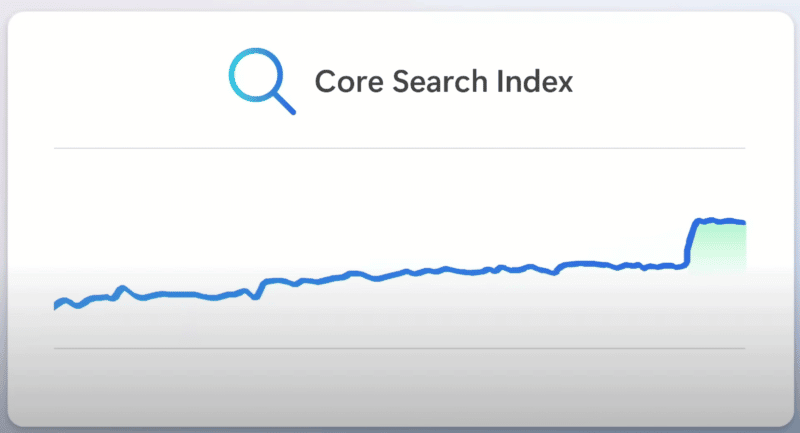
Bing ranking update. There was indeed a Bing ranking update around January 18th, as Glenn Gabe posted on the Search Engine Roundtable. That was a few weeks prior to this presentation, so the relevancy bump and the previously unconfirmed reports of a Bing search ranking algorithm update prove it.
Yes, Bing did a massive update to how it ranks search results around January 18th. “I received several reports of serious volatility with Bing rankings and traffic starting on January 18th into January 19th, and I dug in a bit across sites. And yes, it does look like there was some type of algorithm update that heavily impacted some sites,” Glenn Gabe wrote.
Why we care. Bing, while it has a much smaller market share compared to Google, is still a player in search. It may be an even larger player in search in the coming months and years if it can continue to improve relevancy and innovate with new search concepts, such as chat and other AI integrations.
We are living during such exciting times ins search right now and expect a lot more from Bing and other search engines.
The post Microsoft: Bing saw the largest relevancy jump in search in two decades appeared first on Search Engine Land.
Courtesy of Search Engine Land: News & Info About SEO, PPC, SEM, Search Engines & Search Marketing
Thursday, February 9th, 2023
Microsoft has just announced six new products and features for this month. Let’s dive in.
Expansion into 34 additional markets
Recently, Microsoft Advertising announced its expansion into 34 additional markets, bringing the total number of markets served to 164 globally. The 34 latest markets now available to all Microsoft Advertising customers include:
American Samoa, Anguilla, Barbados, Belize, Benin, Bermuda, Botswana, British Virgin Islands, Burkina Faso, Cameroon, Cote d’Ivoire, Faroe Islands, Gabon, Gibraltar, Greenland, Grenada, Jamaica, Marshall Islands, Niger, Northern Mariana Islands, Republic of Congo, Rwanda, Saint Kitts and Nevis, Saint Lucia, Saint Vincent and the Grenadines, Senegal, Somalia, Suriname, Tonga. Tunisia, Turks and Caicos Islands, Uganda, United States Virgin Islands, and Zambia.
Automated bidding and last-touch attribution on the Microsoft Audience Network
As of today, the Enhanced cost per click (CPC) option is now accessible in all markets across the network. To experiment with alternative bidding methods, you’ll need to consult with your Microsoft Advertising account team.
Additionally, the last-touch attribution feature is now available in all markets of the Microsoft Audience Network. This gives you the ability to adjust your attribution for conversion goals, enabling Microsoft’s automated bidding solutions to consider both click-based and view-through conversions.
Lastly, you can now create and manage your Audience Shopping Campaigns using the Microsoft Editor tool.
Data exclusions for Automated bidding
All automated bidding strategies now come with data exclusions. These exclusions will help Microsoft Advertising’s automated bidding algorithms in the event of website data outages or unexpected changes in conversion tracking. It also ensures that your automated bidding algorithms receive accurate information and maintain optimal performance.
You can find this tool, along with seasonality adjustments and portfolio bid adjustments under Tools -> Planning -> Bid strategies.
New In-market audience segments and pilot for custom combinations
The wording for this update came directly from the Microsoft Blog.
First, In-market audience segments for Valentine’s Day have now launched in India, and are also available in the United Kingdom, the United States, France, Germany, and Australia. You can find the complete list under “Valentine’s Day Shoppers.”
Additionally, there is now a pilot to expand the functionality of custom combinations. With the pilot, you’ll be able to create combined lists of the following audience types: Customer Match, Custom Audiences, Remarketing, and Dynamic Remarketing.
Previously, it was only possible to combine Customer Match with other Customer Match lists, or Custom Audiences with other Custom Audiences. Work with your Microsoft Account team to start using this feature.
Conversion tracking enhancements
There are a set of great enhancements we’ve made in the world of conversion tracking:
- Universal Event Tracking (UET) tag deletion: You can now easily disassociate your UET tags when needed.
- Custom events are now simpler and easier to set up.
- Implement conversion tracking easily across all accounts: You can now change the scope of your conversion goals from a single account to “all accounts” as part of the edit workflow. If you have conversion tracking set up only on one account, you can explore this new feature to expand the benefits of conversion tracking to all your accounts with just a click in your advanced settings.
Google Import for Smart Campaigns available in 11 new markets
The Google Import feature simplifies the process of transferring Smart Campaigns from Google Ads to Microsoft Advertising, allowing you to reach even more customers right away. This month, this capability is now accessible in the United States, United Kingdom, Australia, Canada, France, Germany, New Zealand, Ireland, Italy, the Netherlands, and Singapore.
Dig deeper. You can read the full announcement from Microsoft here.
Why we care. The new updates provide more options and capabilities for advertisers reaching their target audience and achieving advertising goals. With the expanded availability of Microsoft Audience Network, enhanced bidding strategies, and the ability to manage campaigns from within the Microsoft Editor tool, advertisers have greater control over their campaigns and can make more informed decisions about their advertising efforts.
Additionally, the addition of data exclusions and the ability to import Google Smart Campaigns help ensure that advertisers’ campaigns are running smoothly. By taking advantage of these features, advertisers can optimize their campaigns and reach their goals more effectively, driving greater returns on their advertising investment.
Google has had these features for some time, but if advertisers want to expand their market share or give Microsoft Ads a shot, the new features should be familiar.
The post 6 new Microsoft Ads updates, including data exclusions and in-market audience segments appeared first on Search Engine Land.
Courtesy of Search Engine Land: News & Info About SEO, PPC, SEM, Search Engines & Search Marketing
Wednesday, February 8th, 2023
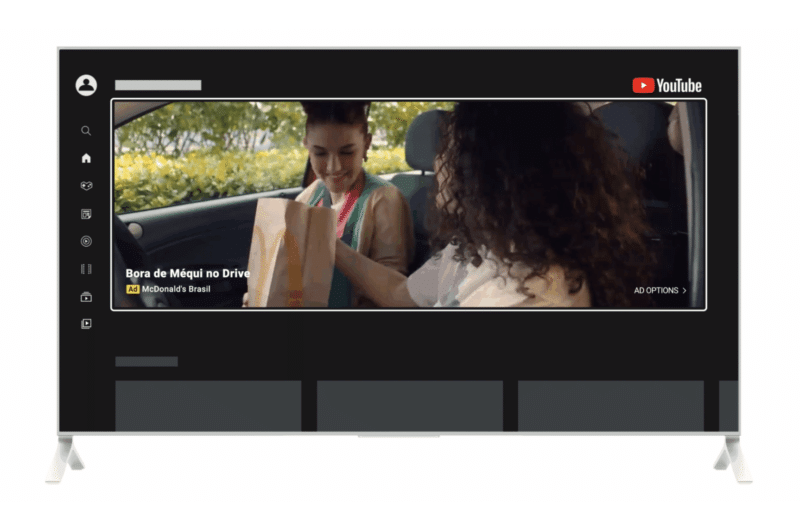
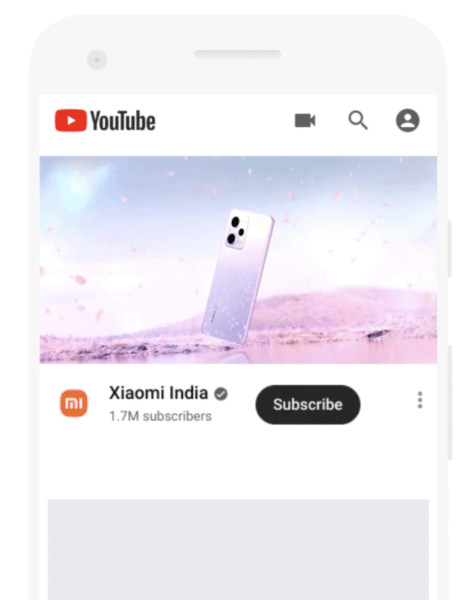
With its new Cost-Per-Hour Masthead, YouTube is giving brands and advertisers the ability to buy its most visible placement during the hour(s) leading up to, during or after priority moments such as a sports game or movie release.
What they look like. Here’s what a Masthead ad looks like on a desktop or PC.
Here’s what the ads look like on a mobile device.
Preview your ad. You can see what your ads would look like by using the Masthead Preview Tool.
Technical specs. You can review YouTube’s technical specs for Masthead ads here.
Why we care. YouTube’s Cost-Per-Hour Masthead provides a unique opportunity for advertisers and brands to secure a prominent placement and increase visibility to a large audience. By owning the Masthead, brands and advertisers can maximize reach and impact, delivering their message to a captive audience and potentially increasing conversions.
However, there’s no indication right now how much the Masthead ads cost, or how much of the inventory is available. They may be a better option for national brands versus small or local businesses.
The post Cost-Per-Hour Masthead placements: YouTube’s latest offering appeared first on Search Engine Land.
Courtesy of Search Engine Land: News & Info About SEO, PPC, SEM, Search Engines & Search Marketing
Wednesday, February 8th, 2023
Twitter announced the new feature in a long Tweet.
need more than 280 characters to express yourself?
we know that lots of you do… and while we love a good thread, sometimes you just want to Tweet everything all at once. we get that.
so we're introducing longer Tweets! you're gonna want to check this out. tap this  … https://t.co/lge9udRzLE
— Twitter Blue (@TwitterBlue) February 8, 2023
Twitter Blue only. In the announcement, Twitter says, “while only Blue subscribers can post longer Tweets, anyone and everyone can read them. you can reply to, retweet, and quote Tweet a longer Tweet, no matter if you’re a Twitter Blue subscriber or not. subscribers will be able to reply and QT with up to 4,000 characters.”
Why we care. If you’re a Twitter Blue subscriber, this is good news for you. But if you hate long Tweets and threads, you might want to reexamine your following list.
The post Twitter Blue subscribers can now Tweet 4,000 characters appeared first on Search Engine Land.
Courtesy of Search Engine Land: News & Info About SEO, PPC, SEM, Search Engines & Search Marketing
Wednesday, February 8th, 2023
With all the buzz around generative AI in search, Google today reiterated and clarified some of its advice about AI-generated content.
In short, Google does not care who – or what – writes your content, as long as that content is written to help people and not to manipulate the search results.
Google’s take. Google wrote:
“Our focus on the quality of content, rather than how content is produced, is a useful guide that has helped us deliver reliable, high quality results to users for years.”
– Danny Sullivan and Chris Nelson of the Google Search Quality team
Google went on to explain that you can use AI and automation to create helpful and useful content:
“Automation has long been used to generate helpful content, such as sports scores, weather forecasts, and transcripts.”
Google also said you can use AI to help you write better content:
“AI has the ability to power new levels of expression and creativity, and to serve as a critical tool to help people create great content for the web.”
Focus on people-first content. What you should focus on is not how the content is produced but whether the content is created to help people, not primarily to rank on search engines. Google previously provided its guidance around the helpful content update:
“The helpful content system was introduced last year to better ensure those searching get content created primarily for people, rather than for search ranking purposes. … As explained, however content is produced, those seeking success in Google Search should be looking to produce original, high-quality, people-first content demonstrating qualities E-E-A-T.”
Who, How and Why. Google added a new section to the people-first help documentation on “evaluating your content in terms of ‘Who, How, and Why’ as a way to stay on course with what our systems seek to reward.” Google then explained what they mean by who, how and why.
Just to be clear, the who, how and why are not a requirement but rather guidance provided by Google, as is E-E-A-T.
Here is how Google put it (quoting the revisions to the page below):
Who (created the content). Something that helps people intuitively understand the E-E-A-T of content is when it’s clear who created it. That’s the “Who” to consider. When creating content, here are some who-related questions to ask yourself:
- Is it self-evident to your visitors who authored your content?
- Do pages carry a byline, where one might be expected?
- Do bylines lead to further information about the author or authors involved, giving background about them and the areas they write about?
If you’re clearly indicating who created the content, you’re likely aligned with the concepts of E-E-A-T and on a path to success. We strongly encourage adding accurate authorship information, such as bylines to content where readers might expect it.
How (the content was created). It’s helpful to readers to know how a piece of content was produced: this is the “How“ to consider including in your content.
For example, with product reviews, it can build trust with readers when they understand the number of products that were tested, what the test results were, and how the tests were conducted, all accompanied by evidence of the work involved, such as photographs. It’s advice we share more about in our Write high quality product reviews help page.
Many types of content may have a “How” component to them. That can include automated, AI-generated, and AI-assisted content. Sharing details about the processes involved can help readers and visitors better understand any unique and useful role automation may have served.
If automation is used to substantially generate content, here are some questions to ask yourself:
- Is the use of automation, including AI-generation, self-evident to visitors through disclosures or in other ways?
- Are you providing background about how automation or AI-generation was used to create content?
- Are you explaining why automation or AI was seen as useful to produce content?
Overall, AI or automation disclosures are useful for content where someone might think “How was this created?” Consider adding these when it would be reasonably expected. For more, see our blog post and FAQ: Google Search’s guidance about AI-generated content.
Why (was the content created). “Why” is perhaps the most important question to answer about your content. Why is it being created in the first place?
The “why” should be that you’re creating content primarily to help people, content that is useful to visitors if they come to your site directly. If you’re doing this, you’re aligning with E-E-A-T generally and what our core ranking systems seek to reward.
If the “why” is that you’re primarily making content to attract search engine visits, that’s not aligned with what our systems seek to reward. If you use automation, including AI-generation, to produce content for the primary purpose of manipulating search rankings, that’s a violation of our spam policies.
FAQs. Google also published this new list of FAQs on the topic of AI-generated content and search:
- Is AI content against Google Search’s guidelines? Appropriate use of AI or automation is not against our guidelines. This means that it is not used to generate content primarily to manipulate search rankings, which is against our spam policies.
- Why doesn’t Google Search ban AI content? Automation has long been used in publishing to create useful content. AI can assist with and generate useful content in exciting new ways.
- How will Google Search prevent poor quality AI content from taking over search results? Poor quality content isn’t a new challenge for Google Search to deal with. We’ve been tackling poor quality content created both by humans and automation for years. We have existing systems to determine the helpfulness of content. Other systems work to elevate original news reporting. Our systems continue to be regularly improved.
- How will Google address AI content that potentially propagates misinformation or contradicts consensus on important topics? These issues exist in both human-generated and AI-generated content. However content is produced, our systems look to surface high-quality information from reliable sources, and not information that contradicts well-established consensus on important topics. On topics where information quality is critically important — like health, civic, or financial information — our systems place an even greater emphasis on signals of reliability.
- How can Search determine if AI is being used to spam search results? We have a variety of systems, including SpamBrain, that analyze patterns and signals to help us identify spam content, however it is produced.
- Will AI content rank highly on Search? Using AI doesn’t give content any special gains. It’s just content. If it is useful, helpful, original and satisfies aspects of E-E-A-T, it might do well in Search. If it doesn’t, it might not.
- Should I use AI to generate content? If you see AI as an essential way to help you produce content that is helpful and original, it might be useful to consider. If you see AI as an inexpensive, easy way to game search engine rankings, then no.
- Should I add author bylines to all my content? You should consider having accurate author bylines when readers would reasonably expect it, such as to any content where someone might think, “Who wrote this?” As a reminder, publishers that appear in Google News should use bylines and author information. Learn more on our Google News policies page.
- Should I add AI or automation disclosures to my content? AI or automation disclosures are useful for content where someone might think “How was this created?” Consider adding these when it would be reasonably expected.
- Can I list AI as the author of content? Giving AI an author byline is probably not the best way to follow our recommendation to make clear to readers when AI is part of the content creation process.
Can AI write content that has experience? I asked Google this and Danny Sullivan said not all pieces of content need to showcase experience, expertise, authority and trust. In fact, it is not always possible for every piece of content to hit all marks.
Google reiterated and clarified that trust is the most important part of E-E-A-T, as highlighted in our coverage of the new quality raters guidelines. Google updated this part of this page to add this section, in case you missed it in the revised PDF document.
Google added:
- “Of these aspects, trust is most important. The others contribute to trust, but content doesn’t necessarily have to demonstrate all of them. For example, some content might be helpful based on the experience it demonstrates, while other content might be helpful because of the expertise it shares.”
Why we care. If your goal when using AI is to find creative ways to add further context and information to help your readers, that is great. If you are using AI to find ways to get more content indexed by Google, then that is not great.
How will Google know the difference? Well, they figured it out with content farms, as I described here.
As Google has been saying for longer than most SEOs have been calling themselves an SEO, write content for the people and you will be rewarded. Now, how that content is written does not really matter.
The post Google reiterates guidance on AI-generated content – write content for people appeared first on Search Engine Land.
Courtesy of Search Engine Land: News & Info About SEO, PPC, SEM, Search Engines & Search Marketing
Wednesday, February 8th, 2023
Pinterest is leaning hard into its shoppable video and advertising-based revenue generation as part of its growth strategy.
Despite a 6% drop in monthly active users (MAUs) in the fourth quarter of last year, the social platform has regained growth, with a 4% increase in MAUs to 450 million and significant growth in mobile app users in the fourth quarter of 2022.
What Pinterest says. As part of its formal strategy, Pinterest aims to increase engagement and enhance advertiser outcomes through shoppability, along with enhancing monetization per user and streamlining operations. According to surveys, over half of Pinterest’s users consider the platform as a shopping destination, however, the company has not been efficient in making the shopping experience seamless, as acknowledged by the CEO.
“We’re building an experience that resonates with this audience, specifically around video. In fact, nearly half of all new videos pinned in Q4 were from Gen Z users.”
“Over the long term, we also want to make every pin shoppable. To that end, we’re making video content on Pinterest more actionable using the same playbook we applied to static images. Over the course of this year, we will be deploying our computer-vision technology across our video corpus to find products and videos and make them shoppable.”
Pinterest CEO Bill Ready
Future initiatives. Pinterest has initiated a project to improve the shopping experience by sending users directly to the product page on the merchant’s app and utilizing its mobile deep-linking format (MDL) for shopping advertisements. During the Black Friday Cyber Monday period, MDL generated 40% of the revenue from Pinterest’s shopping ads and contributed to a 50% growth in Q4.
The platform is also integrating shopping across its most-trafficked surfaces, including the home feed, search and related pins, to show users products most relevant to them.
Short form video content. Regarding monetization, Pinterest has seen over 10% of its engagement come from video content, with over 30% of its revenue being generated through short-form videos. The platform recently started letting advertisers create their own ads with the Idea Pin format, added support for video assets in product catalogs, and partnered with music labels to allow the use of licensed music in short videos.
Driving ad revenue. Pinterest ad revenue is now driven in roughly equal parts by campaigns driven by brand-oriented, consideration and conversion KPIs. The platform has “seen advertisers who take a full-funnel approach see more success than those who are only active on one campaign objective,” with advertisers that used a multi-objective media strategy seeing up to a 50% improvement in sales lift compared to those focused on one objective, Ready said.
Pinterest is also looking to help advertisers enhance relevance and personalization, Ready said, noting as an example its Q4 launch of ad-load management with whole-page optimization.
That enables flexing ad-load “opportunistically, in context, where ads are most well-suited for the user,” Ready said. “In our initial testing, this drove double-digit improvements in ad relevance on search, while simultaneously reducing CPAs for advertisers. We expect the whole-page optimization will enable us to continue to improve the efficiency with which we monetize our platform over time.”
Why we care. Adopting a full-funnel approach and utilizing a multi-objective media strategy, brands are likely to see better results and improvements in sales compared to those who focus on only one campaign objective.
On Pinterest, this has been shown to result in up to a 50% increase in sales lift. Additionally, the platform’s ad revenue is generated roughly equally by campaigns driven by brand-oriented, consideration and conversion KPIs, making it a valuable platform for advertisers looking to reach a wide range of objectives.
As platforms like Instagram and Facebook move away from shopping, Pinterest can step in as an alternative, giving advertisers an additional channel to showcase their products.
The post Pinterest puts more emphasis on its shoppable video feature appeared first on Search Engine Land.
Courtesy of Search Engine Land: News & Info About SEO, PPC, SEM, Search Engines & Search Marketing
Tuesday, February 7th, 2023
If you see “Discovered – currently not indexed” in Google Search Console, it means Google is aware of the URL, but hasn’t crawled and indexed it yet.
It doesn’t necessarily mean the page will never be processed. As their documentation says, they may come back to it later without any extra effort on your part.
But other factors could be preventing Google from crawling and indexing the page, including:
- Server issues and onsite technical issues restricting or preventing Google’s crawl capability.
- Issues relating to the page itself, such as quality.
You can also use Google Search Console Inspection API to queue URLs for their coverageState status (as well as other useful data points) en masse.
Request indexing via Google Search Console
This is an obvious resolution and for the majority of cases, it will resolve the issue.
Sometimes, Google is simply slow to crawl new URLs – it happens. But other times, underlying issues are the culprit.
When you request indexing, one of two things might happen:
- URL becomes “Crawled – currently not indexed”
- Temporary indexing
Both are symptoms of underlying issues.
The second happens because requesting indexing sometimes gives your URL a temporary “freshness boost” which can take the URL above the requisite quality threshold and, in turn, lead to temporary indexing.
Get the daily newsletter search marketers rely on.
<input type=”hidden” name=”utmMedium” value=”“>
<input type=”hidden” name=”utmCampaign” value=”“>
<input type=”hidden” name=”utmSource” value=”“>
<input type=”hidden” name=”utmContent” value=”“>
<input type=”hidden” name=”pageLink” value=”“>
<input type=”hidden” name=”ipAddress” value=”“>
Page quality issues
This is where vocabulary can get confusing. I’ve been asked, “How can Google determine the page quality if it hasn’t been crawled yet?”
This is a good question, and the answer is that it can’t.
Google is making an assumption about the page’s quality based on other pages on the domain. Their classifications are likewise based on URL patterns and website architecture.
As a result, moving these pages from “awareness” to the crawl queue can be de-prioritized based on the lack of quality they have found on similar pages.
It’s possible that pages on similar URL patterns or those located in similar areas of the site architecture have a low-value proposition compared to other pieces of content targeting the same user intents and keywords.
Possible causes include:
- The main content depth.
- Presentation.
- Level of supporting content.
- Uniqueness of the content and perspectives offered.
- Or even more manipulative issues (i.e., the content is low quality and auto-generated, spun, or directly duplicates already established content).
Working on improving the content quality within the site cluster and the specific pages can have a positive impact on reigniting Google’s interest in crawling your content with greater purpose.
You can also noindex other pages on the website that you acknowledge aren’t of the highest quality to improve the ratio of good-quality pages to bad-quality pages on the site.
Crawl budget and efficiency
Crawl budget is an often misunderstood mechanism in SEO.
The majority of websites don’t need to worry about this. In fact, Google’s Gary Illyes has gone on the record claiming that probably 90% of websites don’t need to think about crawl budget. It is often regarded as a problem for enterprise websites.
Crawl efficiency, on the other hand, can affect websites of all sizes. Overlooked, it can lead to issues on how Google crawls and processes the website.
To illustrate, if your website:
- Duplicates URLs with parameters.
- Resolves with and without trailing slashes.
- Is available on HTTP and HTTPS.
- Serves content from multiple subdomains (e.g., https://website.com and https://www.website.com).
…then you might be having duplication issues that impact Google’s assumptions on crawl priority based on wider site assumptions.
You might be zapping Google’s crawl budget with unnecessary URLs and requests. Given that Googlebot crawls websites in portions, this can lead to Google’s resources not stretching far enough to discover all newly published URLs as fast as you would like.
You want to crawl your website regularly, and ensure that:
- Pages resolve to a single subdomain (as desired).
- Pages resolve to a single HTTP protocol.
- URLs with parameters are canonicalized to the root (as desired).
- Internal links don’t use redirects unnecessarily.
If your website utilizes parameters, such as ecommerce product filters, you can curb the crawling of these URI paths by disallowing them in the robots.txt file.
Your server can also be important in how Google allocates the budget to crawl your website.
If your server is overloaded and responding too slowly, crawling issues may arise. In this case, Googlebot won’t be able to access the page resulting in some of your content not getting crawled.
Consequently, Google will try to come back later to index the website, but it will no doubt cause a delay in the whole process.
Internal linking
When you have a website, it’s important to have internal links from one page to another.
Google usually pays less attention to URLs that don’t have any or enough internal links – and may even exclude them from its index.
You can check the number of internal links to pages through crawlers like Screaming Frog and Sitebulb.
Having an organized and logical website structure with internal links is the best way to go when it comes to optimizing your website.
But if you have trouble with this, one way to make sure all of your internal pages are connected is to “hack” into the crawl depth using HTML sitemaps.
These are designed for users, not machines. Although they may be seen as relics now, they can still be useful.
Additionally, if your website has many URLs, it’s wise to split them up among multiple pages. You don’t want them all linked from a single page.
Internal links also need to use the <a> tag for internal links instead of relying on JavaScript functions such as onClick().
If you’re utilizing a Jamstack or JavaScript framework, investigate how it or any related libraries handle internal links. These must be presented as <a> tags.
The post Understanding and resolving ‘Discovered – currently not indexed’ appeared first on Search Engine Land.
Courtesy of Search Engine Land: News & Info About SEO, PPC, SEM, Search Engines & Search Marketing
Tuesday, February 7th, 2023
Mastodon was all the craze when Elon Musk took over Twitter, but its growth has not just slowed in the past several weeks but has actually declined. The monthly active users are now at about 1.4 million after reaching 2.5 million users in November 2022.
The growth and decline. Wired published a great chart showing the growth and decline of Mastodon over the past several months.
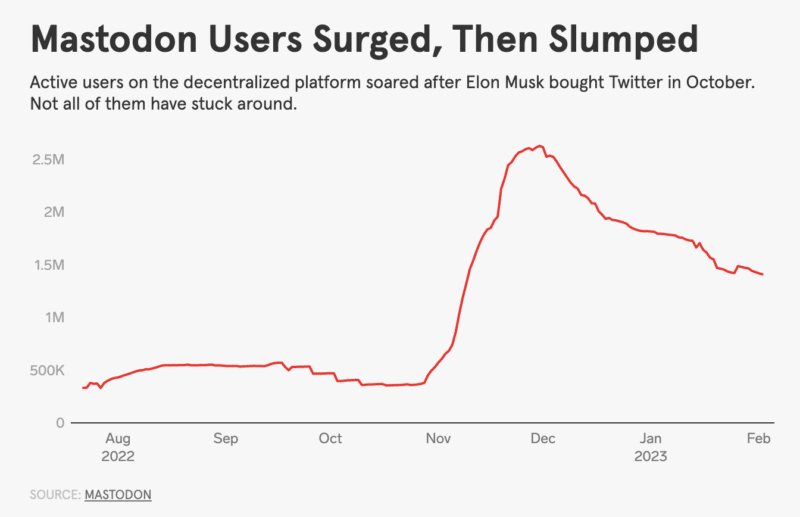
Why the decline. That is a good question, and many suspect that Mastodon, being a decentralized platform, is just too hard for the normal user to set up and use. Sure, there is a pretty active SEO community on Mastodon, but even that community seems to be less active today than it was a month or two ago.
The truth is, once you set it up and start using it, it is not hard to use. You just need to know how to find people on the platform, and the best way might be hashtags.
However, most users want to lurk and follow their favorite personalities on a platform. Finding people on Mastodon is hard, very hard, and you first need to find out what server that user is on and then search for that person’s username and server name. It is confusing and frustrating for the average user.
Why we care. Participating in social networks is time-consuming, and if you are active on those networks, you want to see a return on your investment. Maybe that return is friendship, and maybe it is engagement, maybe it is views on your content, maybe revenue or maybe something else.
If the people have a hard time finding you on a network and your reach is limited, is it worth investing your time on that platform? Seems like recent data says no.
The post Mastodon shows declined growth, despite concerns with Twitter appeared first on Search Engine Land.
Courtesy of Search Engine Land: News & Info About SEO, PPC, SEM, Search Engines & Search Marketing
Tuesday, February 7th, 2023
Google’s hard push into machine learning and automated bidding – and away from more manually controllable optimizations – builds a sense of exasperation for experienced PPC marketers.
The January revision to the “remove redundant keywords” recommendations, where they announced the removal of redundant exact and phrase match keywords in favor of broad match, was an aggressive example of that trend.
And it’s made some of us wonder if it’s time to reconsider a long-time little sibling of the paid search world, Microsoft Advertising.
In late 2022, Microsoft announced its ambitious goals for capturing a greater share of brand advertising budgets.
With such a promising prospect, let’s look at Microsoft Ads (or Bing Ads, as most PPC marketers still fondly call it) in relation to Google – including advantages, disadvantages, and opportunities for the platform to make some gains in market share.
What advantages does Microsoft search offer over Google for PPC experts right now?
There are a couple of major advantages Microsoft (and its search engine, Microsoft Bing) offers over Google as I’m writing this.
The first is an EQ advantage: I’ve found their reps to be reliable, helpful, and far less likely to push an agenda than Google’s reps.
This might be expected of a challenger brand that needs to work extra hard for market share, but it’s still a plus to work with folks who look for ways to achieve your goals and do what’s right for your clients.
Strictly from a growth marketing perspective, Microsoft has the unique ability to pull in LinkedIn targeting, which could enable an account-based marketing (ABM) strategy for marketers looking for ways to leverage tighter budgets.
Microsoft offers targeting by job function, industry, and specific companies. They don’t have full LinkedIn targeting capability yet (more on that in a bit), but you can leverage job-function exclusions and company targeting to construct ABM targeting for brands in your ICP.
Microsoft’s Search Partners network also includes DuckDuckGo, which gets some buzz even though – or maybe because – it’s a privacy-first platform and not an ad network.
If you’re interested in testing DuckDuckGo, you can exclude other placements in Search Partners to try and concentrate spend there, but you can’t actually isolate it for a clean test.
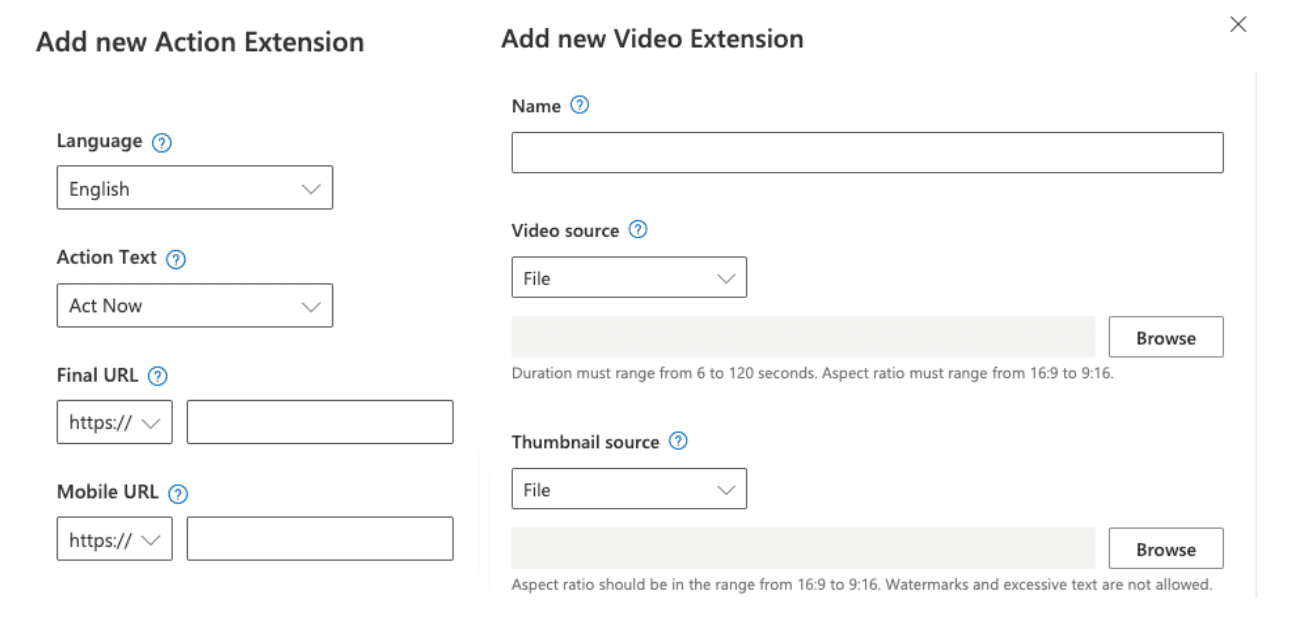
On the features front, Microsoft recently beat Google to the punch by rolling out video extensions, which complement action extensions and review extensions as nicely built-out ad features.
Get the daily newsletter search marketers rely on.
<input type=”hidden” name=”utmMedium” value=”“>
<input type=”hidden” name=”utmCampaign” value=”“>
<input type=”hidden” name=”utmSource” value=”“>
<input type=”hidden” name=”utmContent” value=”“>
<input type=”hidden” name=”pageLink” value=”“>
<input type=”hidden” name=”ipAddress” value=”“>
What disadvantages persist for Microsoft Advertising?
The first and most obvious is scale. Although Bing has closed the gap with Google in search engine volume over the past three years, Google’s volume is nearly 10x that of Bing’s.
And Bing is a little sibling in other ways. It tends to mimic Google with a few months of lead time. (For instance, the deadline for switching to Bing RSAs is approaching, and they’re pushing Performance Max-like functions for ecommerce brands).
In other words, most functionality released by Google eventually comes out on Bing whether advertisers like it or not.
On the quality front, Bing has traditionally struggled to match the consistency of Google’s algorithm, which has been an issue for advertisers fighting to maintain control of their top keywords.
Recently, their exact match query results look nearly as good as Google’s and they share almost all search term data on all keyword types (~99%, compared to Google’s <80%).
If this is still a disadvantage, it’s minimal – and could actually become an advantage if Bing continues to focus on consistency.
When (and why) should advertisers consider investing and testing more on Microsoft Advertising?
In my clients’ accounts, lower levels of competition for keywords on Bing generally result in lower CPCs than Google’s.
While this doesn’t always result in higher conversion rates (in fact, those tend to be higher on Google), it can result in more efficient CPLs.
That said, the scale is much lower that the competitive CPLs alone don’t justify big resource shifts.
But Bing is a smart play in a couple of scenarios.
- We always recommend keeping an eye on your brand terms to protect your turf. This might seem obvious, but there are lots of brands that forget that step.
- Lower CPCs can help you get enough volume to understand what your spend is delivering.
- I still recommend fully funding Google, but if you’re seeing a relatively soft month or opportunities to save budget from scrubbing lower-performing keywords on Google, it might be worth testing Bing.
Overall, if you’re putting in a consistent investment into Google and struggling to improve or maintain returns, look at where return has dropped and consider scaling that back and re-investing into Bing tests.
Where should Microsoft focus on improving to compete with Google?
Microsoft appears to be going all in on AI, given its recent $10B investment in OpenAI and its red-hot ChatGPT functionality.
If it incorporates ChatGPT into Bing search, as is rumored, it could instantly make waves for Bing as a trendy, user-friendly alternative to Google, helping it wrest away some market share.
On the advertising budget front, one thing I’d strongly recommend Microsoft work on providing advertisers is the ability to create audiences from LinkedIn targeting.
In-market audiences for B2B represent a major soft spot for Google that Microsoft should exploit as soon as possible. This could be a great grassroots ABM option for companies that can’t pay for expensive ABM tools.
There’s also room to add plenty of nuance to the existing LinkedIn-like targeting. The ability to target by job title and, more importantly, the ability to drill down by using the “and” piece of and/or targeting, would give B2B advertisers a nice level of precision that Google doesn’t have.
Along with targeting and chatbot innovation, I’d recommend Bing focus on buttoning up its offline conversion tracking.
It’s come a long way with the combination of the Microsoft click ID and the auto-tag for use with CRMs, but it’s not as robust as Google’s offline tracking, which is a big deal for B2B optimization.
Don’t overlook Microsoft Ads
At this point, other than in a few specific use cases, I don’t have a compelling argument for shuttling resources away from Google and over to Bing. That said, Microsoft is steadily building momentum with room to create more.
If Google’s engagement costs continue to climb, and Microsoft focuses on releases that allow advertisers to reach the right people more efficiently, the picture could change.
For now, keep an eye on product releases and announcements. Stay ahead of the curve on adoptions from a platform determined to become more relevant in the coming months.
The post Microsoft Ads in 2023: Key areas to leverage, test and optimize appeared first on Search Engine Land.
Courtesy of Search Engine Land: News & Info About SEO, PPC, SEM, Search Engines & Search Marketing