Archive for the ‘seo news’ Category
Thursday, February 23rd, 2023
You will soon be able to highlight what type of content appears in the Activity section of your LinkedIn profile.
Why we care. LinkedIn continues to add helpful tools and features for marketers and content creators. This change, while minor, is another small way to help increase the visibility of your content, which hopefully can help increase your presence on LinkedIn, expand your professional network (connections/followers) and ultimately help grow business or advance your career.
What is changing. You will get to choose which content type your Activity section shows first:
- Posts
- Videos
- Images
- Newsletters
- Articles
- Documents
What it looks like. Here’s a GIF of what this will look like:

The green, highlighted tab is what will show first for people who view your profile.
When the change will roll out. LinkedIn said this will be available to all members in the “next few weeks.”
LinkedIn’s announcement. You can read it here. It recaps several other recent updates, including the LinkedIn SEO change we reported earlier this month in LinkedIn now lets you add an SEO title and description.
The post New LinkedIn feature to boost your content visibility appeared first on Search Engine Land.
Courtesy of Search Engine Land: News & Info About SEO, PPC, SEM, Search Engines & Search Marketing
Wednesday, February 22nd, 2023
Despite announcing an end to layoffs at a meeting held on November 21st, Elon Musk has continued to terminate Twitter employees, even after already forcing out approximately two-thirds of the workforce in just a few weeks.
What’s happening. Musk intends to revamp Twitter’s ad targeting system to resemble that of Google’s search ads, which primarily focus on keywords searched for rather than a user’s activity or profile data. Although this approach has proven successful for search engines, where users seek out specific information, it has yet to prove effective for social media businesses.
Sorry for showing you so many irrelevant & annoying ads on Twitter!
We’re taking the (obvious) corrective action of tying ads to keywords & topics in tweets, like Google does with search.
This will improve contextual relevance dramatically.
— Elon Musk (@elonmusk) February 17, 2023
Set up for failure. Following his recent termination from his position as engineering manager for monetization at Twitter, Marcin Kadluczka suggested in a tweet on Saturday that the one-week deadline imposed by Elon Musk was impractical, stating that he believed it would take 2-3 months for Twitter to genuinely enhance its advertising capabilities. My sources have confirmed that Musk set this demanding timeline just before dismissing Kadluczka, as well as other employees in the ads, consumer, and sales departments last Friday.
Musk has been trying to improve Twitter ads since he acquired the company. While it’s uncertain whether altering Twitter’s ad targeting system to prioritize keywords, similar to Google ads, will result in better quality advertising, experts in the field have raised questions and identified potential drawbacks
Good luck with that. This is the essential difference between search and social networking. You search for things you're looking for, which makes keywords so effective for Google. You post about things you're interested in. Thoughts and prayers to advertisers buying keywords… https://t.co/2eGCr3xgKH
— Tom Morton  (@tommorton) February 19, 2023
Why we care. If the new targeting strategy fails to produce satisfactory results (which is the most likely scenario), advertisers could be wasting their advertising budgets on ineffective campaigns.
Additionally, any changes to Twitter’s advertising platform could have broader implications for the social media advertising industry as a whole, potentially leading to changes in advertising best practices across multiple platforms. The uncertainty and changes could cause the few advertisers still on Twitter could leave the platform.
The post Musk gave engineers one week to make Twitter’s ad targeting work like Google appeared first on Search Engine Land.
Courtesy of Search Engine Land: News & Info About SEO, PPC, SEM, Search Engines & Search Marketing
Wednesday, February 22nd, 2023
Social media as we’ve known it seems to be in its dying days – with one notable exception, Tiktok. That’s according to a new social media engagement rate benchmark report.
TLDR. There are five important takeaways for brands from the 2023 Social Media Benchmark Report, which was released today by Rival IQ:
- Organic engagement: falling or flatlining. Engagement rates declined on Instagram for the third straight year but have held pretty steady for Facebook and Twitter.
- Posting frequency declining. Post frequency was flat on Instagram but took a ~20% dive on Facebook and Twitter.
- Hot holiday hashtags. Almost every industry earned top engagement rates from holiday-hashtagged posts, while contests and giveaways were less popular than in other years.
- Reels rule on Instagram. Reels dethroned carousels in multiple industries to become the most engaging post type.
- TikTok tops the charts. With a median engagement rate of 5.69%, TikTok was every industry’s best friend this year.
Why we care. The report provides valuable information that can help advertisers gauge the effectiveness of their social media strategies and identify areas for improvement. By comparing their own brand’s engagement rates to the industry averages, you can determine whether your social media performance is above or below par and make necessary adjustments to optimize their campaigns for better engagement and conversion rates.
About the report. It examined the mean engagement rates for different brand verticals across major social media networks.
It’s important to note that Rival IQ chose 150 companies, at random, from each of the 14 industries they studied, including:
- Media
- Nonprofits
- Food & beverage
- Retail
- Travel
The companies they analyzed had active presences on Facebook, Instagram, TikTok, and Twitter as of January 2022, and had Facebook fan counts between 25,000 and 1,000,000 and minimum Instagram, TikTok, Twitter followers of 5,000 as of the same date.
Interesting statistic. Among all industries, the average engagement rate for Facebook, Instagram, and Twitter never goes higher than 0.47% (Instagram). Even still, Instagram took a 30% dip in 2022 compared to 2021, while Facebook and Twitter remained flat.
The rate of weekly posts on Instagram remained steady in 2022, while it decreased on Twitter and Facebook, likely due to reduced investment by brands.
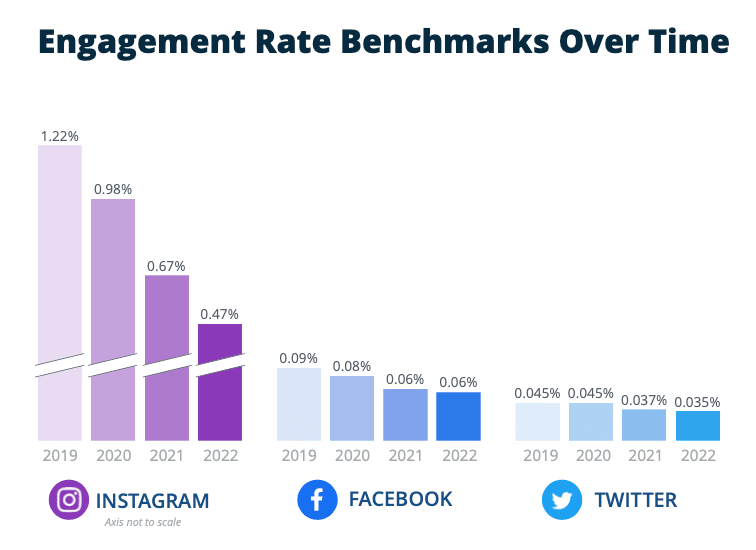
TikTok’s engagement rate, on the other hand, comes in at a whopping 5.69%. But brands are posting less frequently on TikTok than any other channel.
Higher Ed, for example, posts the least, but sees the highest engagement, whereas retail, influencers, and beauty post more frequently, but
“Higher Ed sees epic engagement rates on TikTok but is one of the least frequent posters, while Media brands’ lagging engagement rates prove once again that more posting isn’t necessarily better.”
Rival IQ
The bigger picture. Organic social, in general, has been trending downward in terms of traffic and engagement for years. Which is why brands have been flocking to TikTok (which arguably isn’t even a “social network” as it’s more about content discovery).
Enter AI. In addition to playing a key role in ChatGPT, AI and machine learning created some new possibilities for social networks.
“At first, social networks showed you stuff your friends thought was interesting — the Facebook model. Then they started showing you stuff based on the people that you chose to follow, whether you were friends or not — the Twitter model.
TikTok’s innovation was to show you stuff using only algorithmic predictions, regardless of who your friends are or who you followed. It soon became the most downloaded app in the world.
TikTok’s innovation was to show you stuff using only algorithmic predictions, regardless of who your friends are or who you follow. It soon became the most downloaded app in the world.”
Casey Newton, Platformer
Which gets us back to where we started. Facebook, Twitter and other social networks are trying to catch up (read: emulate) TikTok. Meanwhile, advertiser budgets have also followed. And TikTok continues to find new ways to improve reach for brands.
Dig deeper. You can download the report from Rival IQ here.
The post Social media engagement hits a new low, except for TikTok appeared first on Search Engine Land.
Courtesy of Search Engine Land: News & Info About SEO, PPC, SEM, Search Engines & Search Marketing
Wednesday, February 22nd, 2023

Don’t miss your chance to participate in tactic-rich, expert-led training on your search marketing specialty: Register now for your choice of live, two-day SMX Master Class for just $299 each – happening online next Wednesday and Thursday, March 1-2!
(Need to convince your boss to let you attend? These handy talking points and templated letter can help!)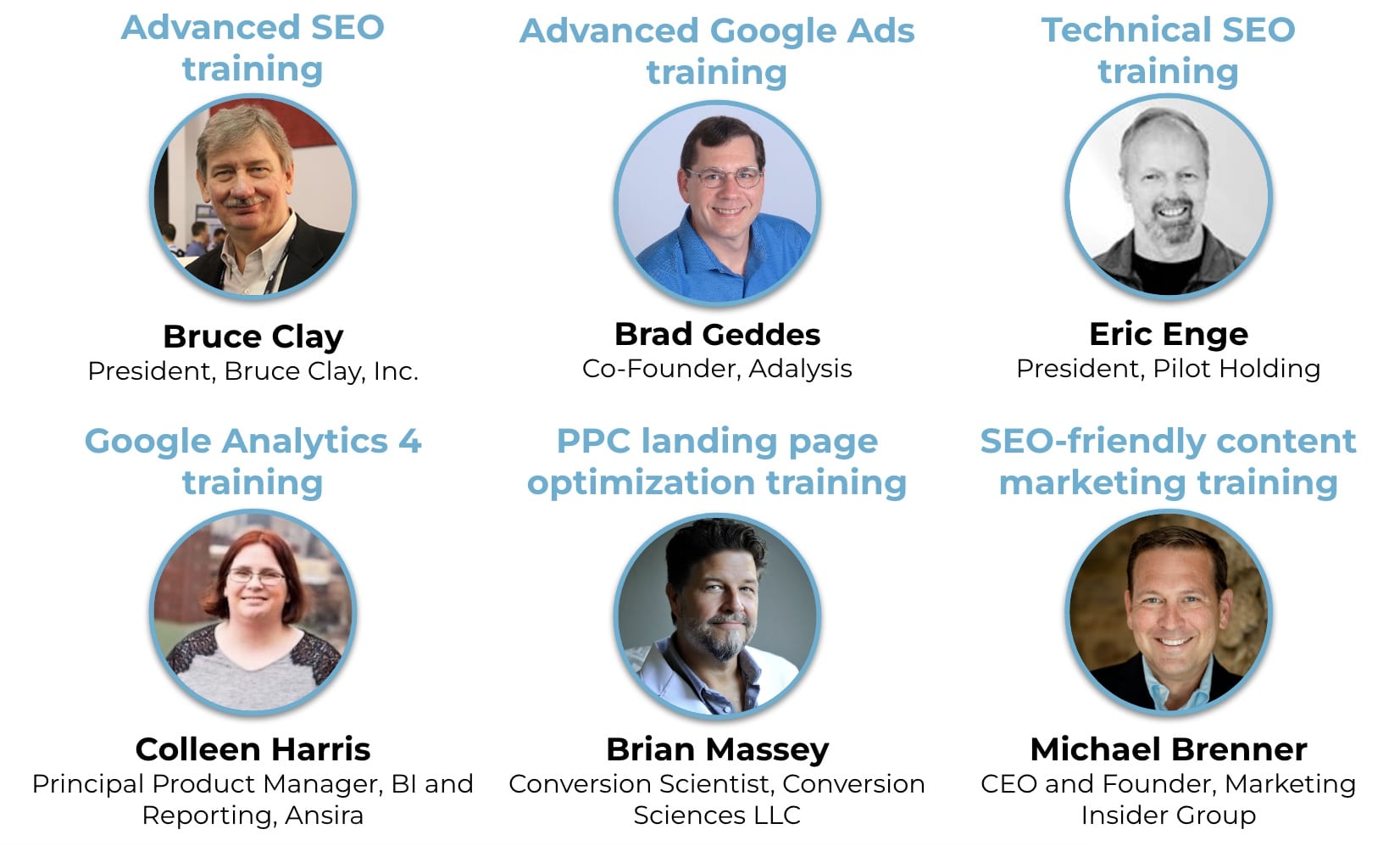
Breaking news! Many of our instructors are making last-minute additions to their curriculum that tackle ChatGPT and the expanding role of AI in marketing! Here’s a sneak peek:
Bruce Clay’s Advanced SEO class will now examine how ChatGPT can speed up your content writing process – provided you leverage it appropriately (hint: human fact-checking, wordsmithing, and so on).
Eric Enge’s Technical SEO class will now also explore the impact of conversational chat systems like ChatGPT:
- Who are the big players?
- What role will it play in content creation?
- The limitations of ChatGPT
- How ChatGPT will impact search in the long term
Brad Geddes’ Advanced Google Ads class will include examples and assistance for using OpenAI (and ChatGPT specifically) to:
- Research ad groups
- Find keywords for specific ad groups
- Create ad headlines
- Create calls to action and benefit statements for ads
- Refine your query and the results
Michael Brenner’s SEO-friendly content marketing class will now examine how you can (and when you shouldn’t) leverage AI in your creative endeavors:
- Why AI won’t kill SEO or take your job
- The impact of AI on Search
- How to use AI for content generation
- Reasons to avoid using AI content
And there’s more to come! Don’t be left behind. Explore the hottest topics in search alongside industry legends who are ready to answer your burning questions – all from the comfort of your own computer. Secure your spot at one of these exclusive SMX Master Classes for just $299 and join us online next week!
The post [Next week] All-new training on ChatGPT, GA4, and more appeared first on Search Engine Land.
Courtesy of Search Engine Land: News & Info About SEO, PPC, SEM, Search Engines & Search Marketing
Wednesday, February 22nd, 2023
Google has updated the Google Search Console user and permissions management feature to incorporate functionality related to ownership and user management. These features were in the old Google Webmaster Tools and has finally been brought over to the current version of Google Search Console.
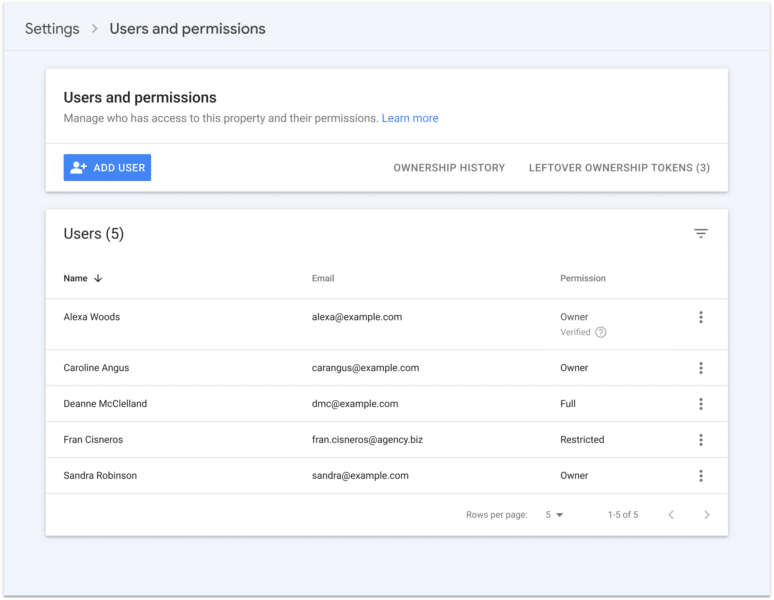
What is new. Google added to Google Search Console’s user and permissions management these features:
- Distinguishing between verified and delegated owners
- Easier, immediate removal of verified owners (no need to remove their ownership token)
- Ability to change delegated owners’ permissions levels (owner, full, restricted)
- Ability to see your property’s verification tokens for all current and previous users and specifically see tokens leftover by previous owners
- Ownership events history
What it looks like. Here is a screenshot Google shared in its blog post of this updated management interface:
Permission best practices. Google also posted some best practices around permission and user rights, including:
- Only give the level of access needed for that individual to do his or her work
- Update or revoke that access when that individual no longer needs access
- Regularly audit and update permissions through the users and permissions page in Search Console
- Use the share link to share reports on a one-off-basis
Why we care. With these permission updates, you will have a bit more control on who has access to what areas of your Search Console profiles. Make sure to “review the leftover ownership tokens so that removed owners cannot regain access to the property,” Google said. Also, make sure to review the new help documentation and permission levels to learn what levels give what access.
The post Google Search Console users and permissions management updated appeared first on Search Engine Land.
Courtesy of Search Engine Land: News & Info About SEO, PPC, SEM, Search Engines & Search Marketing
Tuesday, February 21st, 2023
Despite the hype surrounding automation and machine learning, managing a PPC account requires human hands on the wheel.
If anything, all these capabilities make it more complex. So set and forget, but at your own peril.
No one truly understands this more than PPC pros who manage a diverse set of accounts – large and small – in B2B, ecommerce and serveral other industries.
Several of those pros were kind enough to offer their insights to be compiled into the following simplified PPC checklist for daily, weekly and monthly account reviews.
- Daily account review
- New campaign elements
- Budget pacing
- Any flags, disapprovals or other notifications
- Weekly account review
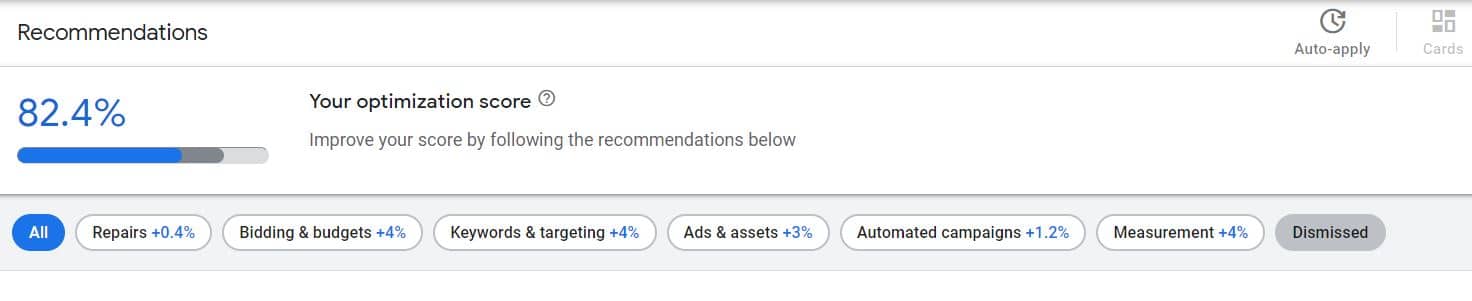
- Recommendations
- Budget pacing
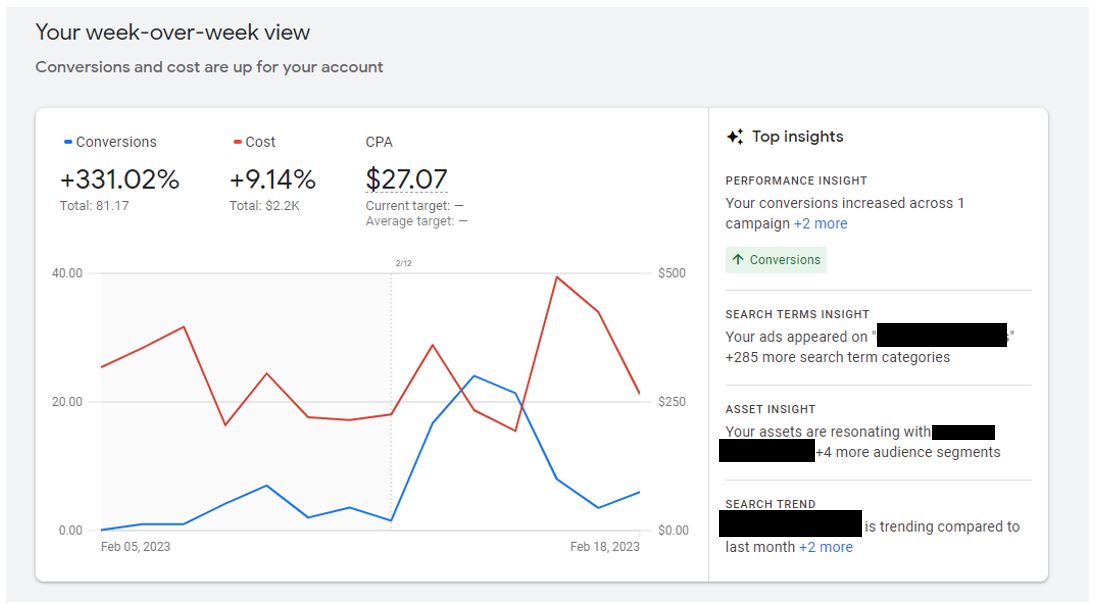
- Conversions
- Search terms report
- Abnormal performance spikes (up or down)
- Display placements
- Keywords / search terms
- Device performance
- CPC at an ad group level, adjust based on performance trends
- Country performance (traffic spikes or performance variations)
- Monthly account review
- In-depth performance review and analysis
- Client KPI metrics
- Key trends
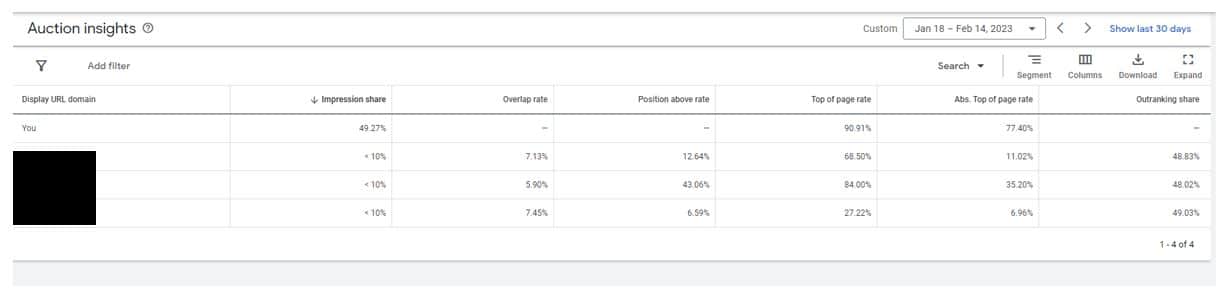
- Auction insights report
- Keyword research
- Quality score audit
- Ad copy audit
- General deep data analysis
Let’s dig deeper into each item below.
Daily account review
Progress of new campaign elements, especially:
- New ads.
- Extensions.
- Updated bid strategies.
Why: You’re introducing something new into the wild. Even if you planned and executed it well, you still want to ensure everything’s approved and progressing as desired, without unintended consequences.
Budget pacing
Why: You’ll also see this one in the weekly section. Depending on the size of the campaign, you may not need to check this every single day, but you want to find the right cadence.
If a campaign underspends or overspends at the end of the month, quarter, or custom length, that’s usually a bad thing. It means you missed some potential opportunities or you blew past the budget.
You may have one campaign where you struggle to spend the budgeted amount but another consistently running up against caps.
Review any flags, disapprovals, or other notifications to address
Why: These things always happen, even to the best pros.
The only difference is the best pros stay on top of it and quickly take corrective action or make appeals when needed.
Get the daily newsletter search marketers rely on.
<input type=”hidden” name=”utmMedium” value=”“>
<input type=”hidden” name=”utmCampaign” value=”“>
<input type=”hidden” name=”utmSource” value=”“>
<input type=”hidden” name=”utmContent” value=”“>
<input type=”hidden” name=”pageLink” value=”“>
<input type=”hidden” name=”ipAddress” value=”“>
Weekly account review
Recommendations
- Dismiss anything irrelevant.
- Apply anything helpful.
Why: Dismissing anything irrelevant will raise your optimization score and hopefully train the machine learning system algorithm to offer better ones in the future. Also, in the event there is a recommendation that’s actually helpful you want to try it.
Word of caution: Google makes it very easy to simply “Apply” changes so be crystal clear about what you’re approving.
Budget pacing
Why: See above under daily checks.
(If you’re checking this daily then by default it would be getting weekly attention. Either way, hopefully you get the message that proper budget pacing is critical, especially on enterprise-level accounts where a hard budget cap is spread out across multiple ad groups, campaigns, etc.)
Conversions
Why: When necessary, pivot spend to campaigns with higher conversion rates or lower cost per conversion and you’ll be the hero.
Search terms report
- Look for irrelevant keywords to negate.
- Look for relevant keywords to be added.
Why: The last thing you want to do is waste money on keywords irrelevant to your business. The second to last thing you want to do is miss out on keywords you should be bidding on.
Abnormal performance spikes (up or down)
Why: It’s always better you be the one to catch and analyze an abnormal spike in performance rather than be caught by surprise. Plus, you need to see if any recent optimizations are making the desired impact.
On the flip side, if you’re regularly monitoring performance spikes you can catch red flags and resolve any issues sooner.
Display placements
Why: If not checked regularly, display can be quickly taken over by low quality or irrelevant placements.
Every week you should look to verify where display dollars are being spent and don’t be shy about making exclusions when you think you’re wasting budget.
Keywords / search terms
Why: Check weekly to ensure you’re not wasting budget on irrelevant terms.
This means tracking keyword performance to see if any should be removed. This is also useful for seeing search trends in real-time, which may present you opportunities to capitalize on.
Device performance
Why: Sometimes it matters. If you’re a B2B supplier with a very limited budget, you may find mobile campaigns just don’t convert. Or maybe they convert better. Perhaps they convert fine, but the cost per conversion is far too high and not profitable. Just check it!
Cost per conversion (CPC) at an ad group level and adjust based on performance trends
Why: Make sure you’re not paying too much. As a general rule, always optimize for success metrics that justify more budget.
Country performance (traffic spikes or performance variations)
Why: This applies only if you’re running campaigns in more than one country. If you are, don’t assume performance is consistent across borders.
Monthly account review
In-depth performance review and analysis
- Account level
- Campaign level
- Ad group level
- Audience level
- Ad level
- Keywords
- Conversions
- Cost per conversion
Why: This is fundamental to managing a PPC campaign. Changes in performance happen. It’s your job to know why and what action to take.
In addition, you’ll get more buy-in if you can take the complex and present it in an easy to consume report for your clients and stakeholders.
Client KPI metrics
Why: Make sure the performance of the campaigns you’re managing are serving the needs of the client’s business objectives. This is the time to analyze and make adjustments as needed.
Key trends
- Year-over-year (YoY) trends
- Month-over-month (MoM) trends
Why: Analyzing YoY trends is more likely to provide an apples-to-apples comparison since you’re looking at a similar time period.
Analyzing MoM data will help you identify key turning points resulting in the YoY number.
Auction insights report
- Any new competitors?
- Any existing competitors spending more?
- Any competitors drop out?
Why: An aggressive competitor with deeper pockets than you can quickly change the dynamics of your PPC campaign. Ignorance is not bliss.
Keyword research
Why: Look for new keyword ideas relevant to your campaigns.
It’s best to understand volume, intent, cost, and likelihood of conversion before you allocate budget toward them.
Quality score audit
Why: Low scores generally mean poor performing campaigns.
Look to improve low scores by analyzing the data to ensure the keywords you’re bidding return ads relevant to the query intent and ultimately lead to a landing page that converts.
Ad copy audit
Why: Keep improving your ad copy until you can’t improve it anymore and you’ll have well-optimized PPC campaigns.
Look at the individual ad copy snippets and how they get assembled together.
Is there anything that needs a pin? Is everything submitted headline and t audience? Create new ads to test based on past performance.
General deep data analysis
Why: You must understand what’s working and not and use experiments to test new hypotheses.
Regular review is key to successful PPC performance
Even with automation in ad platforms, taking your eyes off your campaigns for too long isn’t advisable. Without proper monitoring, paid search accounts can go sideways.
While not a complete list, following the above checks will keep your PPC campaigns on a much better path.
The post PPC management checklist: Daily, weekly and monthly reviews appeared first on Search Engine Land.
Courtesy of Search Engine Land: News & Info About SEO, PPC, SEM, Search Engines & Search Marketing
Tuesday, February 21st, 2023
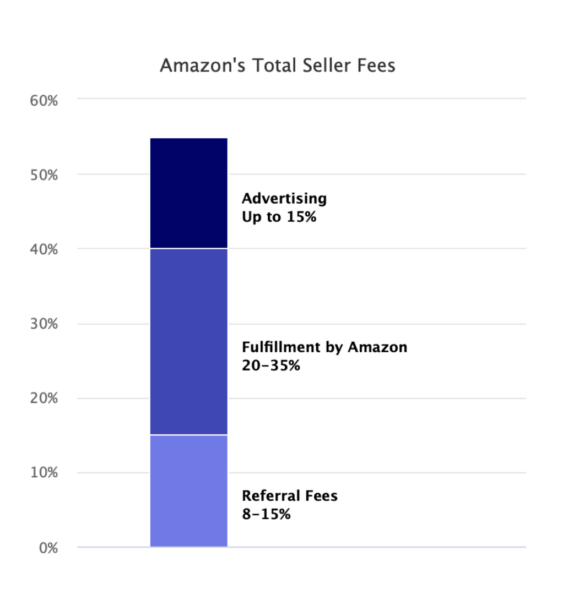
Based on P&Ls provided by a sample of sellers, the fees incurred by a typical Amazon seller include a 15% transaction fee, referred to as a referral fee by Amazon, and 20-35% in Fulfillment by Amazon fees, which encompass storage and other fees. Additionally, advertising and promotional expenses on Amazon can amount to up to 15% of the total fees, with the overall costs varying according to category, product price, size, weight, and the seller’s business model.
 marketplacepulse.com
While the 15% transaction fee has remained constant for more than a decade, it can vary by category and be as low as 8%. Meanwhile, Fulfillment by Amazon (FBA) fees have increased gradually over time, with Amazon introducing yearly increases in fulfillment fees and storage fees. Given that selling on Amazon is tied to using FBA, most sellers rely on it to succeed on the platform.
Not news for many sellers. I reached out to a few Amazon sellers and agencies and was asked to keep their information private. But I was told:
“For several years Amazon has been prioritizing Advertising revenue and increasing fees which has put pressure on sellers, especially smaller brands. Despite that brands would be leaving money on the table not being on Amazon. Smart brands diversify to other channels(DTC/Retail) and continue to optimize their business to adapt to the changing landscape.”
I’m not an Amazon seller, and my digital experience is more limited to lead generation, so I thought this was eye opening. But for those more familiar with the ecommerce landscape in 2023, it’s not a surprise.
“At the same time it’s not necessarily cheaper to sell elsewhere – fees have gone up everywhere.”
Forcing sellers to advertise. While Amazon does not dictate how much to spend on advertising, competition among sellers who choose to advertise drives up that cost. Unlike other marketplaces, advertising on Amazon is not a choice, as the most prominent screen space is typically reserved for ads.
Consequently, sellers must advertise to increase their chances of being discovered by customers. Some sellers still spend relatively little on advertising, and some resellers spend less than 5% of their sales on ads. However, private label sellers often spend over 10% of their revenue on advertising to grow their brand.
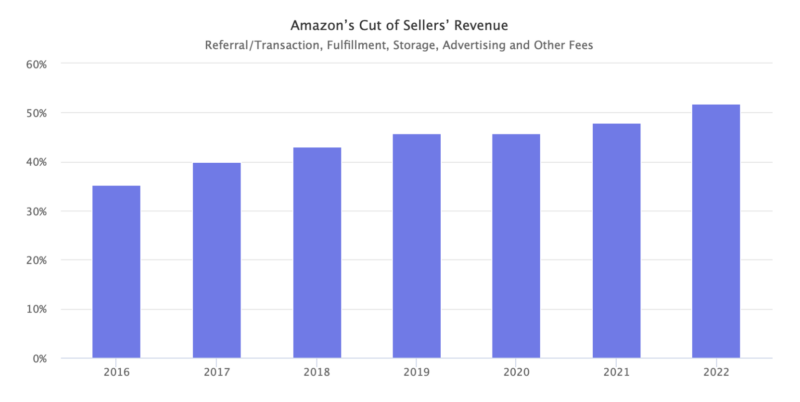
The percentage of fees paid by Amazon sellers as a proportion of their sales increases every year, not because they are using more services, but because the cost of certain services has risen (e.g., FBA) or because certain fees are now unavoidable (e.g., advertising).
 marketplacepulse.com
Other options for ecommerce sellers. Compared to Amazon, Walmart is a more economical choice, particularly for new sellers that can take advantage of transaction fee discounts. However, Walmart’s market size is significantly smaller than Amazon’s, meaning that sellers cannot entirely replace Amazon with Walmart. Additionally, direct-to-consumer e-commerce platforms like Shopify operate on a fundamentally different business model, and fees are not the sole consideration.
To cope with the rising fees, sellers are either increasing their prices, seeking alternatives to FBA, or branching out from Amazon entirely. Nevertheless, some sellers only realize how little net profit they have left at the end of the tax year, with a few even reporting paying up to 60% or 70% of their revenue to Amazon in fees. They must still account for other expenses, such as inventory, freight, and employees.
Dig deeper. You can read the full study on Marketplace Pulse.
Why we care. Rising fees on Amazon have a direct impact on advertising costs, as advertising is a necessary expense for most sellers on the platform. As more sellers choose to advertise, the competition for ad space increases, driving up advertising costs. Consequently, advertisers may need to adjust their advertising strategies and budgets to account for these costs.
As fees continue to increase, advertisers may face difficulty generating a return on investment, which could impact their bottom line. Therefore, advertisers need to keep a close eye on the costs of selling on Amazon and ensure that they are making informed decisions when allocating their advertising budgets.
The post Amazon’s share of seller revenue is now 50% appeared first on Search Engine Land.
Courtesy of Search Engine Land: News & Info About SEO, PPC, SEM, Search Engines & Search Marketing
Tuesday, February 21st, 2023
Based on P&Ls provided by a sample of sellers, the fees incurred by a typical Amazon seller include a 15% transaction fee, referred to as a referral fee by Amazon, and 20-35% in Fulfillment by Amazon fees, which encompass storage and other fees. Additionally, advertising and promotional expenses on Amazon can amount to up to 15% of the total fees, with the overall costs varying according to category, product price, size, weight, and the seller’s business model.
marketplacepulse.com
While the 15% transaction fee has remained constant for more than a decade, it can vary by category and be as low as 8%. Meanwhile, Fulfillment by Amazon (FBA) fees have increased gradually over time, with Amazon introducing yearly increases in fulfillment fees and storage fees. Given that selling on Amazon is tied to using FBA, most sellers rely on it to succeed on the platform.
Not news for many sellers. I reached out to a few Amazon sellers and agencies and was asked to keep their information private. But I was told:
“For several years Amazon has been prioritizing Advertising revenue and increasing fees which has put pressure on sellers, especially smaller brands. Despite that brands would be leaving money on the table not being on Amazon. Smart brands diversify to other channels(DTC/Retail) and continue to optimize their business to adapt to the changing landscape.”
I’m not an Amazon seller, and my digital experience is more limited to lead generation, so I thought this was eye opening. But for those more familiar with the ecommerce landscape in 2023, it’s not a surprise.
“At the same time it’s not necessarily cheaper to sell elsewhere – fees have gone up everywhere.”
Forcing sellers to advertise. While Amazon does not dictate how much to spend on advertising, competition among sellers who choose to advertise drives up that cost. Unlike other marketplaces, advertising on Amazon is not a choice, as the most prominent screen space is typically reserved for ads.
Consequently, sellers must advertise to increase their chances of being discovered by customers. Some sellers still spend relatively little on advertising, and some resellers spend less than 5% of their sales on ads. However, private label sellers often spend over 10% of their revenue on advertising to grow their brand.
The percentage of fees paid by Amazon sellers as a proportion of their sales increases every year, not because they are using more services, but because the cost of certain services has risen (e.g., FBA) or because certain fees are now unavoidable (e.g., advertising).
marketplacepulse.com
Other options for ecommerce sellers. Compared to Amazon, Walmart is a more economical choice, particularly for new sellers that can take advantage of transaction fee discounts. However, Walmart’s market size is significantly smaller than Amazon’s, meaning that sellers cannot entirely replace Amazon with Walmart. Additionally, direct-to-consumer e-commerce platforms like Shopify operate on a fundamentally different business model, and fees are not the sole consideration.
To cope with the rising fees, sellers are either increasing their prices, seeking alternatives to FBA, or branching out from Amazon entirely. Nevertheless, some sellers only realize how little net profit they have left at the end of the tax year, with a few even reporting paying up to 60% or 70% of their revenue to Amazon in fees. They must still account for other expenses, such as inventory, freight, and employees.
Dig deeper. You can read the full study on Marketplace Pulse.
Why we care. Rising fees on Amazon have a direct impact on advertising costs, as advertising is a necessary expense for most sellers on the platform. As more sellers choose to advertise, the competition for ad space increases, driving up advertising costs. Consequently, advertisers may need to adjust their advertising strategies and budgets to account for these costs.
As fees continue to increase, advertisers may face difficulty generating a return on investment, which could impact their bottom line. Therefore, advertisers need to keep a close eye on the costs of selling on Amazon and ensure that they are making informed decisions when allocating their advertising budgets.
The post Amazon’s share of seller revenue is now 50% appeared first on Search Engine Land.
Courtesy of Search Engine Land: News & Info About SEO, PPC, SEM, Search Engines & Search Marketing
Tuesday, February 21st, 2023
Microsoft’s plan to leverage its investment in ChatGPT’s parent company, OpenAI, is moving fast, with ChatGPT already surfacing in the Microsoft Bing interface.
Mere months after Alphabet CEO Sundar Pichai referred to chatbots as a “code red,” Google soft-launched Bard, its answer to ChatGPT.
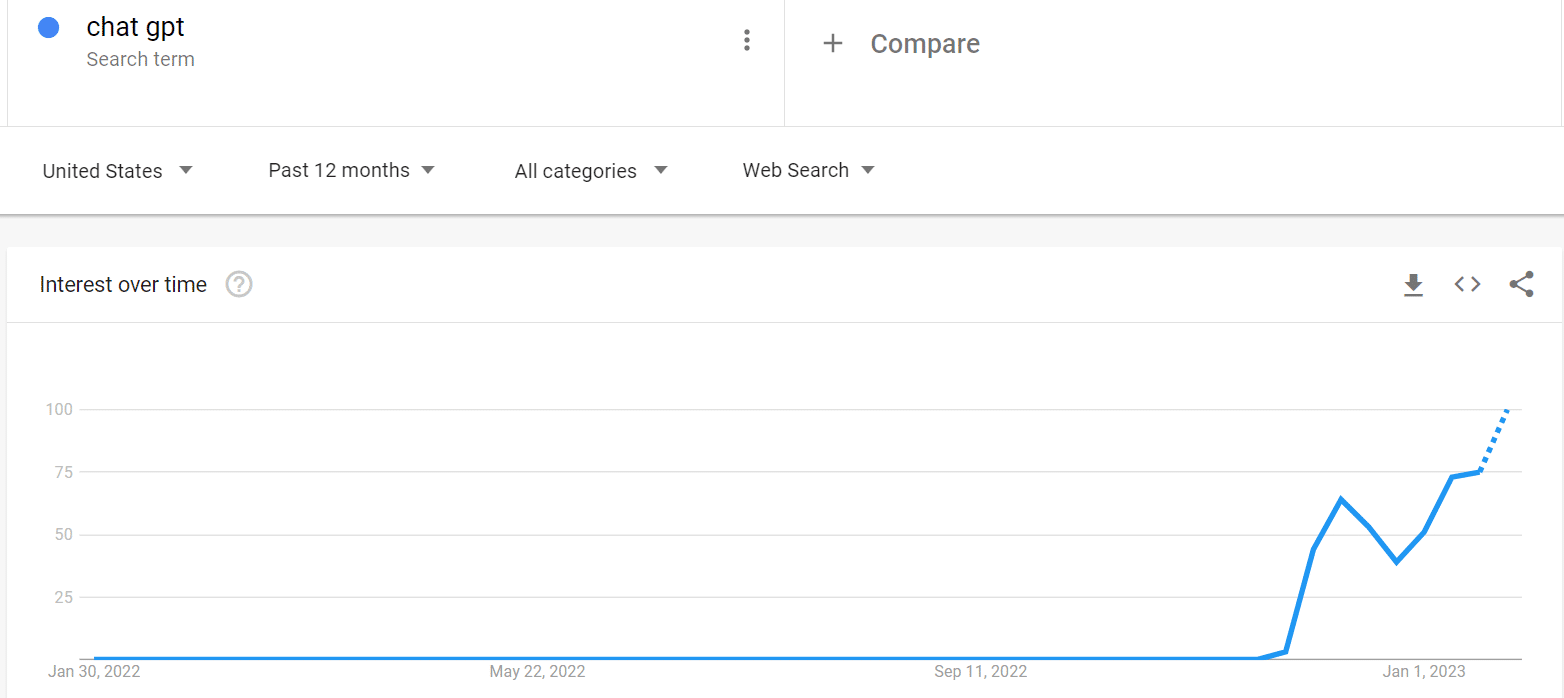
And user interest is keeping up. Interest in ChatGPT has exploded since it was released to the public at the end of November:
For SEOs contemplating a future that combines chatbot results with Google (and Bing’s) fundamental focus on “helpful content,” the path forward is a complicated one.
In this article, I’ll take on the topic of keyword research in the ChatGPT era:
- What’s changed for the better.
- Potential threats that could emerge.
- What might happen next.
- The skills and philosophies SEOs need to maintain to get results.
Let’s jump in.
AI in search: How does it help?
First, remember that AI-driven chatbot technology has been around for a while. What changed with the release of ChatGPT is that it was suddenly broadly accessible.
That said, many SEOs are already familiar with using ChatGPT (either by reading one of the thousands or articles or trying the free tool themselves) for keyword research.
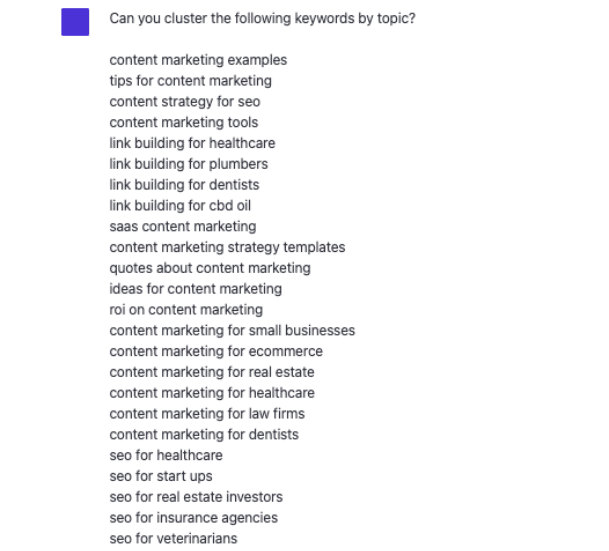
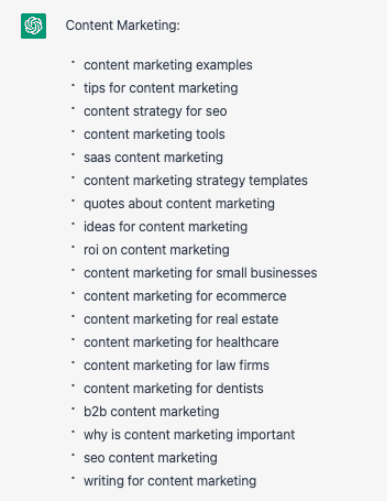
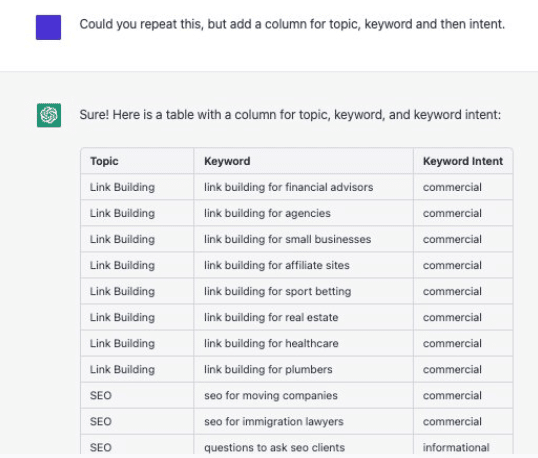
Here’s an example of some block-and-tackle work it can help you perform.
Query
Initial output
Drill-down
In two short queries, we took a good-sized list of keywords, sorted it by topic, and assigned user intent – all in seconds.
This is a great surface-level start that saves SEOs a ton of time over more manual methods. It’s a great example of ChatGPT’s function as a tool.
In general, ChatGPT speeds up the way you can do research. You can ask it to create relevant topics quickly, it can help you classify the intent of different keyword lists, and it can look at semantics and cluster them.
Think of it like you would think of Excel. In Excel, macros let you spend more time in analysis rather than writing the formulas manually. ChatGPT can serve a similar function, doing the grunt work and leaving more time for the human layer of nuance.
Get the daily newsletter search marketers rely on.
<input type=”hidden” name=”utmMedium” value=”“>
<input type=”hidden” name=”utmCampaign” value=”“>
<input type=”hidden” name=”utmSource” value=”“>
<input type=”hidden” name=”utmContent” value=”“>
<input type=”hidden” name=”pageLink” value=”“>
<input type=”hidden” name=”ipAddress” value=”“>
What threats could it pose?
I’m sticking to the topic of keyword research here. (It would take many thousands of words to dig into the topics of AI-generated content vs. human-generated content, the business threats of chatbots keeping users on the SERP and away from brand sites, and AI-driven SERPs vs. current SERPs.)
The main threat posed by ChatGPT functionality to effective keyword research is similar to the threat posed by other powerful tools: it tempts marketers to take too many shortcuts.
It can be enticing to type in a keyword and ask ChatGPT to find all the related keywords for you and stop there. But that work won’t be very good and it’s something a lower-priced competitor could offer.
The next step after that should be a gap analysis. What’s not there?
Finding a negative is hard work. It takes reading and deep thought around the concept to realize what’s missing. Uncovering the need nobody else is addressing is how you strike keyword gold.
The threat of using ChatGPT for keyword research is falling in love with its ease.
The real value of good SEOs still comes in doing the hard work of nuance and recognizing negative space. (Once AI can do that, we’ll have new threats to discuss.)
What’s not changing at all?
ChatGPT hasn’t changed the questions I hear about keyword quantity and word count.
I still get asked “It should be at least 300 words, right?” and “How many times should we include the main keyword in this?” with regularity.
ChatGPT also hasn’t changed how I answer these questions.
It’s about delivering value, not counting words or keywords.
Good SEOs use keywords to evaluate intent and understand what the user wants to learn.
They strive to understand the psychology of a searcher. Sometimes they need short content (”How do you double-knot your shoelaces?” but sometimes they need a book (”What is the meaning of life?”).
Especially as systems get more intelligent at delivering what people need, the human differentiator of assessing the psychological nuance of keywords will become more important.
I have a process called “keyword drafting.” Here, I think of the concept first and then write the draft only thinking about the value and quality of the answer to the question.
Only after that do I start to ask what keywords could be applied, then re-draft the content.
This works well when you have information from your sales or product teams on customer questions and needs. You’ve gotten your topic without researching keywords, so write your content without them before figuring out where they seamlessly fit in.
What might come next?
My educated guess for the near future of ChatGPT is that it’ll be integrated into keyword planning tools, content and topic analysis features. AI-driven chatbots will become more entwined in the SEO planning landscape, not a separate workflow.
The details of Google and Microsoft’s AI-driven chatbot rollouts will be closely scrutinized. Marketers will keep a close eye on user behavior and traffic trends to get a pulse on the short-term effects on the SEO industry.
What’s certain is that understanding and utilizing AI for keyword research now can help clue SEOs into the models and how they’re trained.
The more understanding you can build now, the better you’ll be positioned to use AI to your advantage as it becomes more integrated.
Search marketers can gain an edge
As with most tech innovations, ChatGPT will force marketers to understand and develop skills around the layer(s) of expertise that will supercharge the power of the tech output.
Once ChatGPT has had its say during keyword research, the nuance and psychology of intent must inform what you do with those keywords – including finding the gaps the tech can’t yet reach.
The post How to navigate SEO keyword research in the era of ChatGPT appeared first on Search Engine Land.
Courtesy of Search Engine Land: News & Info About SEO, PPC, SEM, Search Engines & Search Marketing
Tuesday, February 21st, 2023
Microsoft’s plan to leverage its investment in ChatGPT’s parent company, OpenAI, is moving fast, with ChatGPT already surfacing in the Microsoft Bing interface.
Mere months after Alphabet CEO Sundar Pichai referred to chatbots as a “code red,” Google soft-launched Bard, its answer to ChatGPT.
And user interest is keeping up. Interest in ChatGPT has exploded since it was released to the public at the end of November:
For SEOs contemplating a future that combines chatbot results with Google (and Bing’s) fundamental focus on “helpful content,” the path forward is a complicated one.
In this article, I’ll take on the topic of keyword research in the ChatGPT era:
- What’s changed for the better.
- Potential threats that could emerge.
- What might happen next.
- The skills and philosophies SEOs need to maintain to get results.
Let’s jump in.
AI in search: How does it help?
First, remember that AI-driven chatbot technology has been around for a while. What changed with the release of ChatGPT is that it was suddenly broadly accessible.
That said, many SEOs are already familiar with using ChatGPT (either by reading one of the thousands or articles or trying the free tool themselves) for keyword research.
Here’s an example of some block-and-tackle work it can help you perform.
Query
Initial output
Drill-down
In two short queries, we took a good-sized list of keywords, sorted it by topic, and assigned user intent – all in seconds.
This is a great surface-level start that saves SEOs a ton of time over more manual methods. It’s a great example of ChatGPT’s function as a tool.
In general, ChatGPT speeds up the way you can do research. You can ask it to create relevant topics quickly, it can help you classify the intent of different keyword lists, and it can look at semantics and cluster them.
Think of it like you would think of Excel. In Excel, macros let you spend more time in analysis rather than writing the formulas manually. ChatGPT can serve a similar function, doing the grunt work and leaving more time for the human layer of nuance.
Get the daily newsletter search marketers rely on.
<input type=”hidden” name=”utmMedium” value=”“>
<input type=”hidden” name=”utmCampaign” value=”“>
<input type=”hidden” name=”utmSource” value=”“>
<input type=”hidden” name=”utmContent” value=”“>
<input type=”hidden” name=”pageLink” value=”“>
<input type=”hidden” name=”ipAddress” value=”“>
What threats could it pose?
I’m sticking to the topic of keyword research here. (It would take many thousands of words to dig into the topics of AI-generated content vs. human-generated content, the business threats of chatbots keeping users on the SERP and away from brand sites, and AI-driven SERPs vs. current SERPs.)
The main threat posed by ChatGPT functionality to effective keyword research is similar to the threat posed by other powerful tools: it tempts marketers to take too many shortcuts.
It can be enticing to type in a keyword and ask ChatGPT to find all the related keywords for you and stop there. But that work won’t be very good and it’s something a lower-priced competitor could offer.
The next step after that should be a gap analysis. What’s not there?
Finding a negative is hard work. It takes reading and deep thought around the concept to realize what’s missing. Uncovering the need nobody else is addressing is how you strike keyword gold.
The threat of using ChatGPT for keyword research is falling in love with its ease.
The real value of good SEOs still comes in doing the hard work of nuance and recognizing negative space. (Once AI can do that, we’ll have new threats to discuss.)
What’s not changing at all?
ChatGPT hasn’t changed the questions I hear about keyword quantity and word count.
I still get asked “It should be at least 300 words, right?” and “How many times should we include the main keyword in this?” with regularity.
ChatGPT also hasn’t changed how I answer these questions.
It’s about delivering value, not counting words or keywords.
Good SEOs use keywords to evaluate intent and understand what the user wants to learn.
They strive to understand the psychology of a searcher. Sometimes they need short content (”How do you double-knot your shoelaces?” but sometimes they need a book (”What is the meaning of life?”).
Especially as systems get more intelligent at delivering what people need, the human differentiator of assessing the psychological nuance of keywords will become more important.
I have a process called “keyword drafting.” Here, I think of the concept first and then write the draft only thinking about the value and quality of the answer to the question.
Only after that do I start to ask what keywords could be applied, then re-draft the content.
This works well when you have information from your sales or product teams on customer questions and needs. You’ve gotten your topic without researching keywords, so write your content without them before figuring out where they seamlessly fit in.
What might come next?
My educated guess for the near future of ChatGPT is that it’ll be integrated into keyword planning tools, content and topic analysis features. AI-driven chatbots will become more entwined in the SEO planning landscape, not a separate workflow.
The details of Google and Microsoft’s AI-driven chatbot rollouts will be closely scrutinized. Marketers will keep a close eye on user behavior and traffic trends to get a pulse on the short-term effects on the SEO industry.
What’s certain is that understanding and utilizing AI for keyword research now can help clue SEOs into the models and how they’re trained.
The more understanding you can build now, the better you’ll be positioned to use AI to your advantage as it becomes more integrated.
Search marketers can gain an edge
As with most tech innovations, ChatGPT will force marketers to understand and develop skills around the layer(s) of expertise that will supercharge the power of the tech output.
Once ChatGPT has had its say during keyword research, the nuance and psychology of intent must inform what you do with those keywords – including finding the gaps the tech can’t yet reach.
The post How to navigate SEO keyword research in the era of ChatGPT appeared first on Search Engine Land.
Courtesy of Search Engine Land: News & Info About SEO, PPC, SEM, Search Engines & Search Marketing


 (@boo)