Archive for the ‘seo news’ Category
Monday, May 1st, 2023
This week YouTube announced new strategies for incorporating Shorts to engage new audiences.
- Expanding Shorts into Video reach campaigns
- Positioning alongside trending Shorts content
- First Position on Shorts
Incorporating Shorts to optimize reach. Shorts is being integrated into Video reach campaigns, which employ Google AI to present the most effective combination of ads, enhancing reach and efficiency on YouTube.
In-feed video ads are also being added to Video reach campaigns to increase opportunities for audience engagement across the platform. Paramount+ was among the early partners to experiment with the updated version of Video reach campaigns.
With the Video reach campaigns update, advertisers can simply upload a 60-second (or shorter) vertical video along with other assets. Alternatively, existing horizontal creative can be adapted and optimized for vertical screens using YouTube’s AI-powered campaign setup tools.
Positioning ads alongside trending Shorts content. YouTube Select enables advertisers to place their ads alongside the most popular content on the platform within a brand-safe environment. The same technology is now being applied to Shorts, allowing brands to reach 1.5 billion logged-in monthly Shorts users.
YouTube Select Run of Shorts lineup. This ensures that ads appear next to the most popular and relevant videos in users’ Shorts feeds, keeping brands at the forefront of viewers’ minds. The First Position on Shorts pilot, available through YouTube Select, allows advertisers to make a strong initial impression in a highly immersive setting by ensuring their ad is the first one viewers see when they open YouTube Shorts.
Leveraging YouTube’s long and Shorts content YouTube offers a wide variety of content, including different entertainment categories, music genres, and video formats (live, short, long, podcast, and music). Both Shorts and long-form videos contribute to viewer engagement and discovery on the platform, making YouTube the preferred destination for creator and short-form content consumption.
By incorporating YouTube into awareness campaigns, brands can reach more people with their creative messaging while users enjoy their favorite content. YouTube’s products and tools make short-form video advertising a seamless addition to campaigns, helping brands of all types maintain relevance and connections with today’s viewers.
Dig deeper. Read more about the new Shorts updates on the Google Ads & Commerce Blog.
Why we care. By incorporating short-form videos into their campaigns, advertisers can tap into new audiences, enhance their reach, and improve brand recall. This creates an ideal environment for brands to stay relevant, connected, and top-of-mind for today’s viewers, ultimately driving better results and fostering long-term brand loyalty.
The post 3 new enhancements for YouTube Shorts appeared first on Search Engine Land.
Courtesy of Search Engine Land: News & Info About SEO, PPC, SEM, Search Engines & Search Marketing
Monday, May 1st, 2023
To enhance media buying efficiency, Google Ads plans to adopt real-time bidding auctions for apps, ceasing to respond to multiple calls in mediation starting October 31, 2023. Google Ads will no longer engage with or participate in the practice of handling multiple requests for the same ad impression within the mediation process.
How it works. Prior to this date, Google Ads will commence transitioning away from waterfall buying for certain multi-call requests. The shift to real-time bidding is expected to enable advertisers to find optimally-priced app inventory more efficiently and boost competition within the real-time auction.
Third-party integrations. Google Ads and Display & Video 360 are broadening their real-time bidding integrations with third-party app monetization platforms. These integrations are transitioning to open beta and will be accessible to all app developers using AppLovin (Max), Chartboost Mediation, Digital Turbine FairBid, and Unity LevelPlay monetization platforms.
Implementations. No alterations to campaigns will be required for advertisers to reap the benefits of this program. In the coming week, the option to enable Google bidding will be made available to all app developers using the supported third-party monetization platforms. App developers can also access Google’s demand through real-time bidding integrations with AdMob and Ad Manager publisher offerings.
Dig deeper. You can read about the new integrations on the Google Ads & Commerce Blog.
Why we care. The transition to real-time bidding auctions for apps, and ceasing to respond to multiple calls in mediation, will streamline the media buying process, increase competition, and ensure that advertisers find the best-priced app inventory more efficiently.
The post Google expands media buying with real-time bidding integrations appeared first on Search Engine Land.
Courtesy of Search Engine Land: News & Info About SEO, PPC, SEM, Search Engines & Search Marketing
Friday, April 28th, 2023
When it comes to SEO, there is always something to do. It’s easy to get sidetracked by the next shiny thing instead of focusing on the tasks that will move the needle for the business.
Having hundreds, thousands, or even millions of potential keywords worth targeting is overwhelming. You need to prioritize SEO keywords and create a measurable plan.
How do you get started? Read on to find top tips on prioritizing SEO keywords for content creation.
Think about business and marketing goals
If you’re creating SEO content, you must have a goal in mind.
You should be working toward ranking a particular set of keywords, usually based on a specific topic. An end goal is essential for measuring SEO success.
A complete optimization might be doable if your site is less than 20 pages. More than that, you need to hone in on a topic cluster.
Your topic cluster will be a section of your website. For example, if you sell housewares, you might prioritize one particular room and related items.
You can prioritize your essential clusters by considering the following:
- Management’s desires and business goals: Marketing should support management to drive the business forward.
- What’s working well already: You might find some easy wins if a site already has some authority in a particular topic or product.
- Well-converting pages: If a page converts well, increase organic traffic to drive more conversions.
Finding keywords for prioritization
Before you start prioritizing keywords, you’ll need to research keywords for SEO. You can do this in many ways, but here are three ways to get started.
Google Search Console
If you’ve got a site with organic visitors, then Google Seach Console (GSC) can be a great place to start. GSC tells you every keyword your site ranks for.
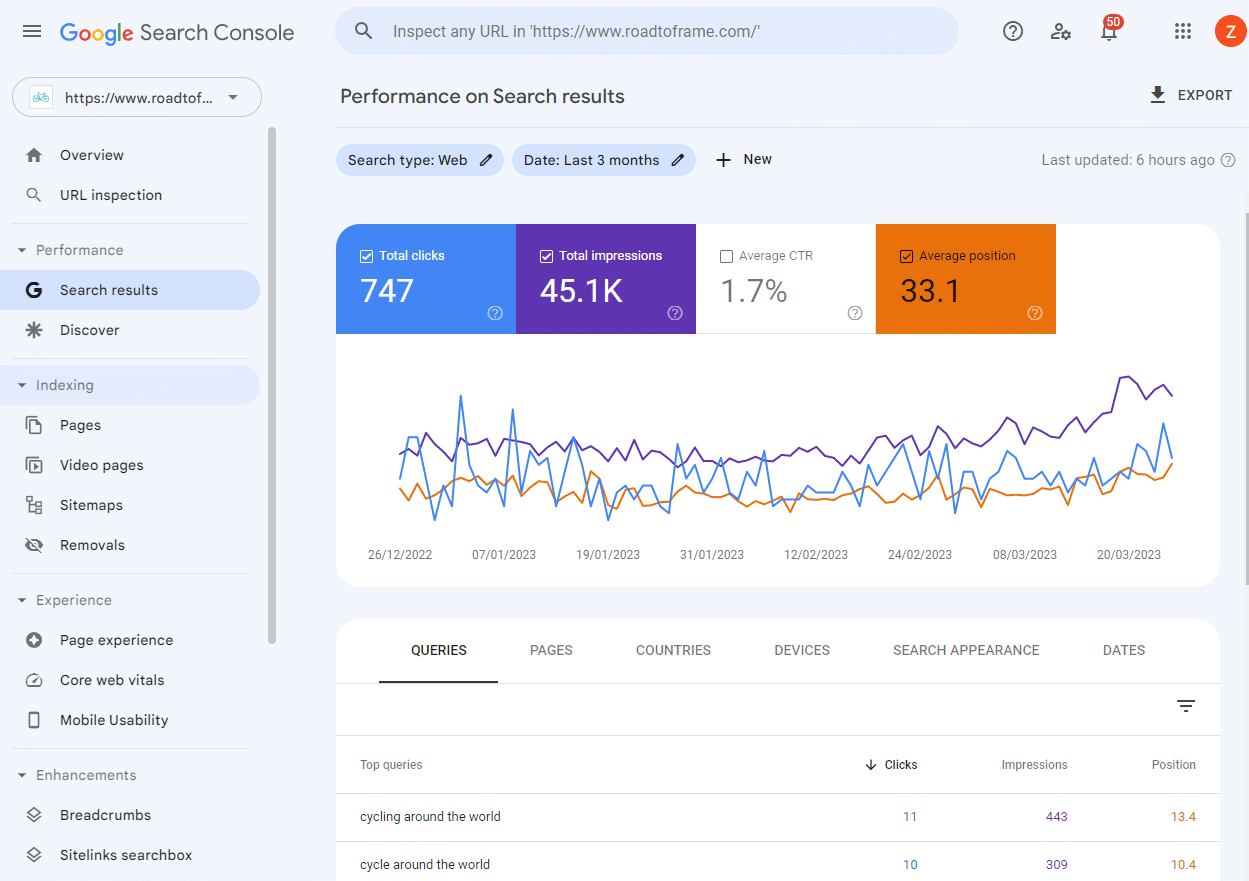
Go to Search results in the left-hand menu and click Average position so it turns orange. I recommend filtering by country but clicking the plus above the graph and choosing Country. Now you can see the average position of all ranking keywords in the country you’re most interested in ranking in.
Look through the keywords and pay attention to those in positions six to 20.
These keywords are your bottom of page one, page two, or top of page three keywords, also known as your low-hanging fruits.
In theory, moving these keywords up the ranks will be easier.
Competitor analysis
As part of a competitor analysis, you can find keywords that competitors are ranking for. SEO tools like Ahrefs or Semrush will give you insights into potential search volume, traffic and search intent.
There are two major benefits to researching competitor keywords:
- You will eventually show up in the SERPs where they are so that you can receive some of that traffic.
- You can demonstrate E-E-A-T to Google. If you cover the same keywords (and, more specifically, content) that your competitors are, you’re proving to Google that your site is at least as valuable as theirs.
Just because your competitor is ranking doesn’t necessarily mean that you should. Use the prioritization tips below to help determine what to use on your site.
Customer research
Nothing beats finding keywords than talking to the people you most want on your site.
Talk to your customers and prospective buyers. Alternatively, talk to sales and customer support or customer success managers.
If you can understand customer pain points and the words or phrases buyers use to find you, you can be sure they’re also putting these words into Google.
Get the daily newsletter search marketers rely on.
<input type=”hidden” name=”utmMedium” value=”“>
<input type=”hidden” name=”utmCampaign” value=”“>
<input type=”hidden” name=”utmSource” value=”“>
<input type=”hidden” name=”utmContent” value=”“>
<input type=”hidden” name=”pageLink” value=”“>
<input type=”hidden” name=”ipAddress” value=”“>
Tips for prioritizing SEO keywords
Paid ads
Ads data is a trove of information for SEO. If a website runs ads, getting a list of converting keywords is necessary. If a keyword is converting for ads, it will likely convert with SEO, too.
Not every keyword that ads are bidding on can rank organically, but where it can, you should go for it providing it fits into those business and marketing goals.
You can also trial keywords with ads by bidding on them to test their conversion rate.
Google Keyword Planner
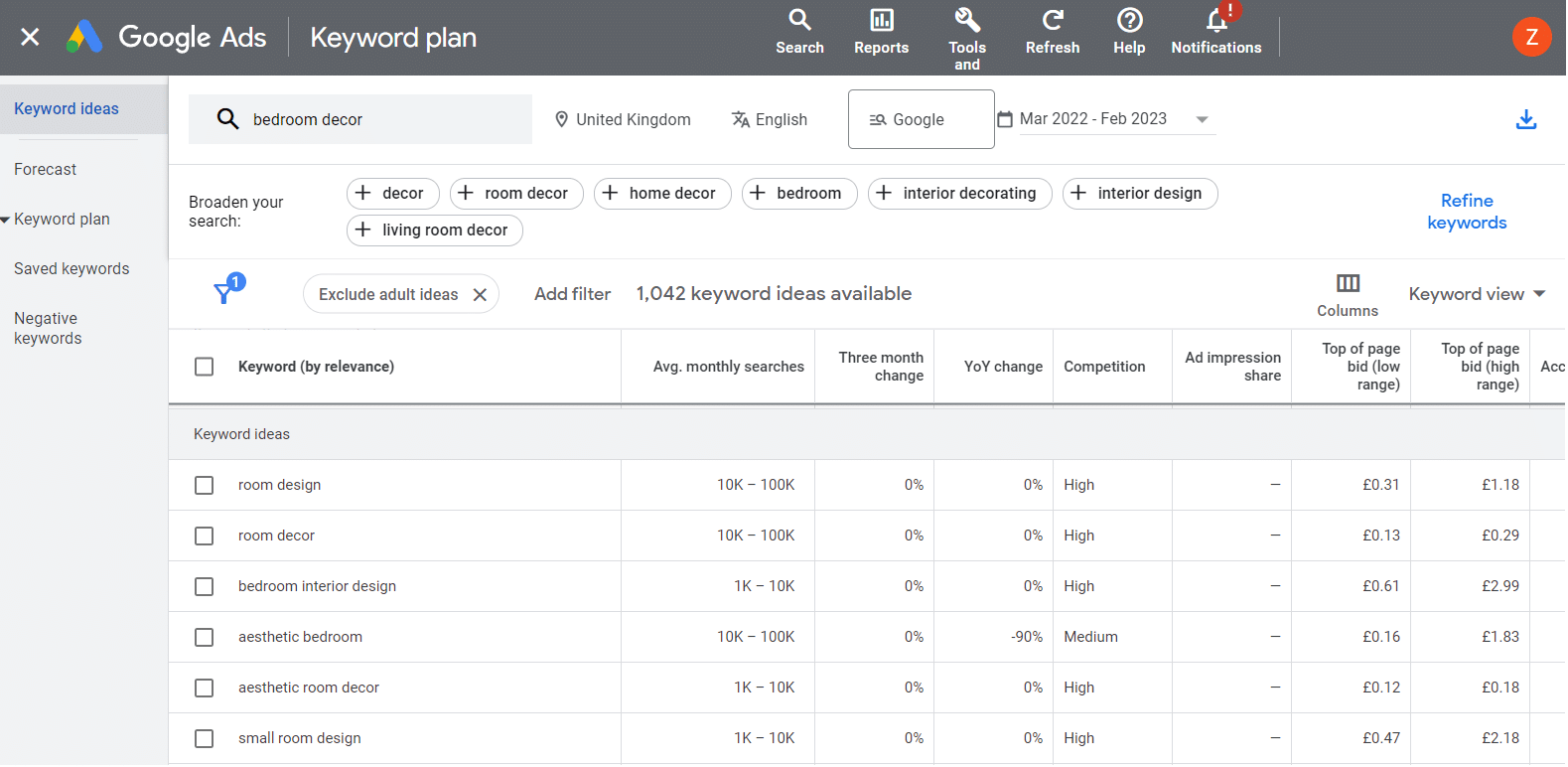
If you’re not already running ads, Google Keyword Planner – an advertising tool – can still support you (and it’s free).
Screenshot of Google Keyword Planner to illustrate how competition and cost per click can help influence keyword prioritization.
Google Keyword Planner provides some interesting data:
- The keyword with its average monthly searches (exact searches if you’re running ads).
- Competition means how difficult it is to get visibility with ads for this keyword.
- Bid range means how much people are paying for the keyword.
So, what does this mean for SEO?
If a keyword has high competition, many people are bidding on it, and businesses tend not to bid on keywords that aren’t making them money.
A high competitor is an indicator that a keyword is making an ROI.
If you can earn a rank organically for the same keyword, then there’s a chance it’ll make money for your site.
Prioritize conversion keywords and money pages
SEO’s primary goal is building a qualified audience. You want people on your site who will likely be interested in your product or service.
You want visibility for the pages that lead to conversion, be it a sale or an email sign-up, a download, or something that brings web traffic into your marketing funnel.
Your SEO efforts should be in pursuit of bolstering these highly important pages so that you can accelerate the marketing funnel.
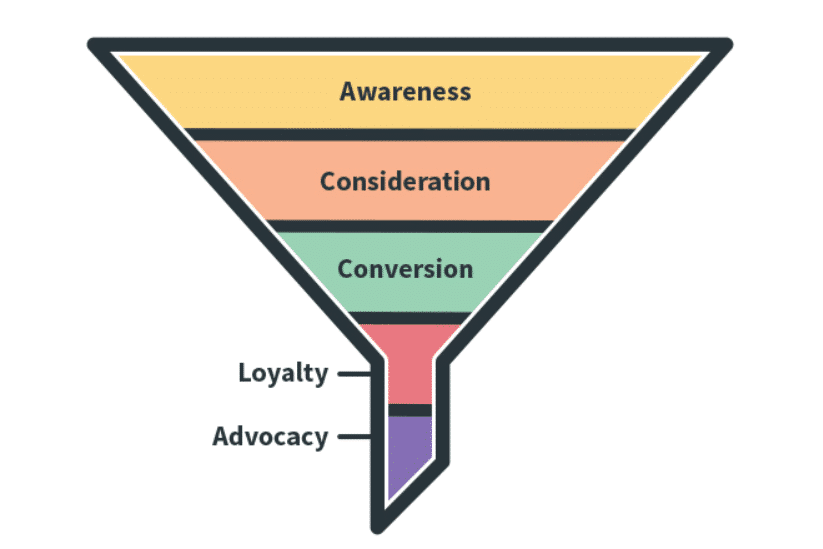
SEO can bring users to the site who are in the awareness stage of the marketing funnel.
This stage is also known as the top-funnel (ToFu). ToFu users are unlikely to convert. But, good to have if marketing can nurture them through other means – by email if users sign up, for example.
SEO can also bring bottom-funnel (BoFu) traffic – a.k.a. conversion traffic – if those money pages rank high enough on page one.
BoFu users are ready to buy. If you know which pages are converting, you can work to develop an SEO content strategy that helps these pages rank.
Search volume
Generally, your keywords with high search volumes will be your ToFu/awareness keywords, and your BoFu keywords will have lower search volumes.
Since the BoFu keywords convert, you’ll likely find them in your ads accounts.
Getting sidetracked by high-search keywords is easy, but you must remember that your goal is to get conversions and revenue, not just traffic.
The keywords you choose should be less volume-focused and more conversion-focused.
Ask yourself how your SEO content is helping those BoFu ranks.
Keyword difficulty
It is worth considering keyword difficulty. Like the competition metric on Google Keyword Planner, keyword difficulty indicates how easy or difficult it might be to rank for a particular keyword.
New sites might have a long road ahead to rank for seed keywords. In this instance, prioritize longer-tail keywords.
That said, topical authority is more important than keywords and difficulty. Although some of your keywords may not hit the top pages of Google sometime soon, you should consider adding pages with the keywords to the site anyway.
Topic coverage helps build E-E-A-T, and only some pieces of content have to rank immediately. In the interim, you can share the content through other marketing channels.
Do it well, or don’t do it at all
You can’t cut corners when creating content that ranks in SERPs.
Google wants to provide its users with the best possible experience and it’s not enough to just use keywords.
You need to be creating content that is highly valuable and genuinely useful.
If you’re looking at the competitor pages and seeing 3,000-word articles with video embeds and images, you should make your play for the keyword only when you can create something as good as those pages ranking.
Measure and improve for SEO success
As you build your SEO and content strategy, you’ll find that new opportunities will surface and take priority.
After a few months, you can refer back to that Google Search Console tip at the beginning of this article. Likely, new keywords will be ranking on the bottom of page one and onwards.
You’ll repeat the optimization process continually, building your content architecture and discovering new opportunities.
Once you’ve got your chosen cluster ranking and bringing in revenue, you can move on and repeat the process for a second cluster.
The post How to prioritize SEO keywords for content creation appeared first on Search Engine Land.
Courtesy of Search Engine Land: News & Info About SEO, PPC, SEM, Search Engines & Search Marketing
Friday, April 28th, 2023
If you’re interested in creating helpful content for your audience (and you should be), you should consider making a resource page.
It’s the best way to collect your top recommendations for products or services and promote the tools and resources you love and use in your business.
And as part of your content strategy, a resource page can add depth and value to your website.
Let’s go deeper into what a resource page is, why you should create one, and how to do it, plus resource page examples.
What is a resource page?
A resource page is a curated page that links to helpful resources, tools, apps, products, services, media, or websites that your audience may find useful.
(You may also know this page as a “recommended tools” page, an affiliate links page, or even a brand “toolbox.”)
A resource page is a one-stop shop for finding a brand’s recommended resources, including the tools or products its staff uses and loves in the company’s day-to-day business.
If you’re a solopreneur or freelancer, your resource page can be very personal and reflect your expertise. And, if you’ve built a following and an engaged audience, your resource page will be valuable for the people who trust your guidance.
There are three ways to approach a resource page:
- Use affiliate links. (This means you and the company of the product you recommend have an agreement – you earn a small commission from people who click your affiliate link and engage with that company.)
- Link to resources organically (because you love them and for no other reason).
- Include a mixture of affiliate and organic links.
Why you should create a resource page
The first and most important reason to create a resource page is the helpfulness factor.
- A resource page curated by you can help your audience discover tools, websites, and resources to help them solve problems they face.
- The resource page you create can be personalized with hand-picked links that you actually use, enjoy, or get value from – and since your expert opinion matters to your audience, they’ll care about the resources you recommend.
The second reason to create a resource page is if you’re involved with affiliate programs and want to maximize your income.
Including your links on a dedicated resource page in your top navigation gives your readers an easy way to find and engage with them.
But, remember – never create a resource page just to get people to click your affiliate links.
Instead, create this type of content to help your audience connect with great resources that have aided you during your own journey in your niche.
How to create a resource page with value
Anyone can throw together a list of links. To avoid the plague of thin, useless content, follow these steps to create a resource page with real value for your readers.
1. Gather links to your most trusted resources for your niche
This initial step in creating a resource page should be the easiest.
You simply need to gather a list of links to your favorite, most trusted tools, websites, products, services, etc. that relate to what you do in your niche.
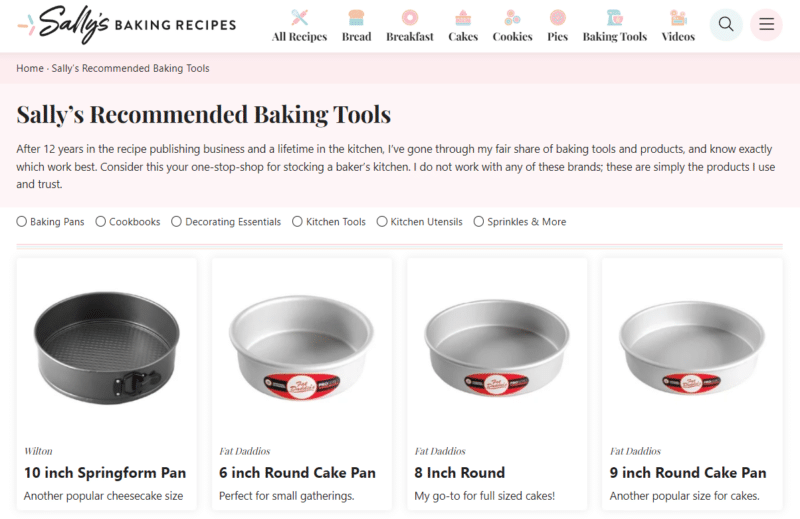
For example, if you’re an expert baker who posts recipes, your resource page might be full of the baking tools you trust and use daily, like on this baking website:
Similarly, if you sell content marketing courses, your resource page would likely include a list of tools you use to make content marketing easier.
(Think SEO tools, content creation tools, your favorite website host, and the content calendar tool you depend on.)
Don’t include just any resources. Think about what would be most beneficial for your audience.
Finally, never recommend anything you haven’t actually used or liked. Honesty and transparency are essential for maintaining the trust between you and your audience.
2. Including affiliate links? Add a disclosure
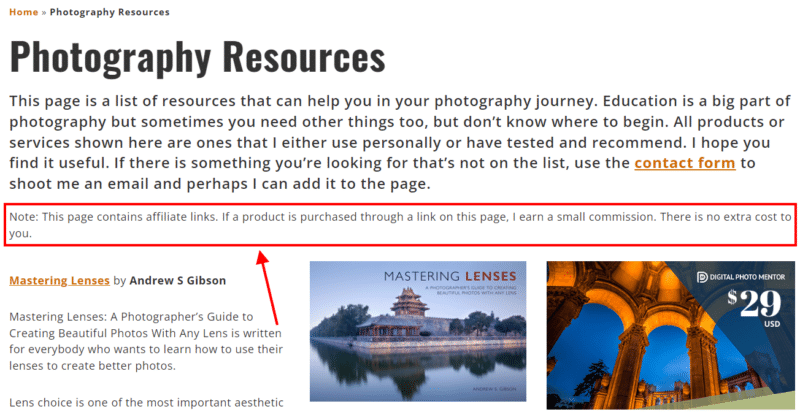
If you plan to include affiliate links on your resource page, add a clear disclosure that you may earn a commission when your visitors click those links.
This isn’t just good practice for ethics and transparency – it’s also a requirement of the U.S. Federal Trade Commission (FTC).
The FTC considers linking to affiliate sites without disclosure to be deceptive advertising.
Luckily, the disclosure itself doesn’t have to be a big deal. A simple, clear statement at the top of your page will suffice. Here’s a great example from a photography website:
Get the daily newsletter search marketers rely on.
<input type=”hidden” name=”utmMedium” value=”“>
<input type=”hidden” name=”utmCampaign” value=”“>
<input type=”hidden” name=”utmSource” value=”“>
<input type=”hidden” name=”utmContent” value=”“>
<input type=”hidden” name=”pageLink” value=”“>
<input type=”hidden” name=”ipAddress” value=”“>
3. Describe each resource and why you included it
Now we can start beefing up your resource page with useful content.
What will make your page useful beyond the links themselves?
Helpful descriptions that explain why you’re recommending each product, service, tool, etc., and why they’re valuable.
Here’s a good formula for describing the resources on your page:
- Introduce the product/service/tool/resource and explain what it does.
- Explain why you use it and trust it.
- List at least one way it could improve your reader’s life.
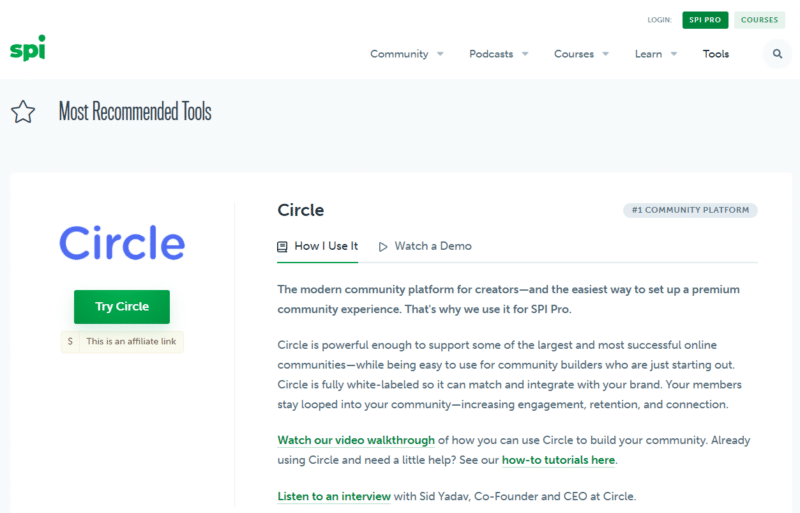
Your descriptions don’t have to be long, either. You can summarize each of the above points in one or two sentences. Here’s an example from Smart Passive Income:
Ultimately, this list of recommended tools is much more valuable because SPI describes how and why each tool is trustworthy and effective.
If, on the other hand, they just provided a list of links, you wouldn’t understand the value of any of them.
4. Organize and optimize your resource page
Again, don’t just throw a list of links on a page. Put some effort into organizing and optimizing your resource page so the most visitors will get the most use out of it.
Particularly, organize your resources into categories and add a heading (an H2 or an H3) to each one.
For example, if you have a list of media to consume to learn more about a topic, you could categorize the links by type of media, e.g., books, podcasts, videos, blog posts, courses, etc.
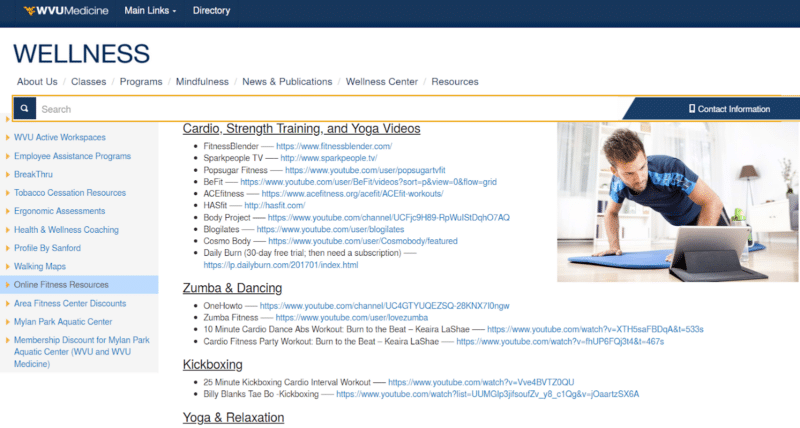
This wellness center, for instance, has a resource page for employees and their families that includes online fitness resources categorized by workout type:
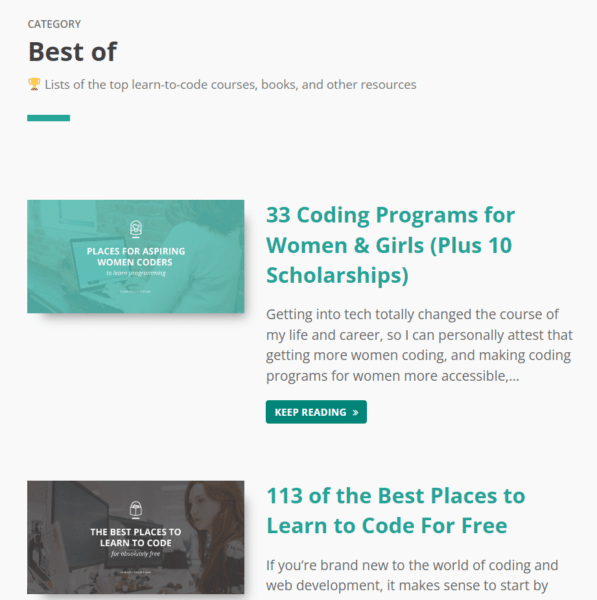
Another option: If you regularly blog about great industry resources, collect them on one resource page, like Learn to Code With Me did:
5. Link to relevant content on your site
Yes, you can include your own content on your resource page, but take care – adding too much of your content can look a bit too self-promotional.
Instead, look for ways to mention or link to your content organically.
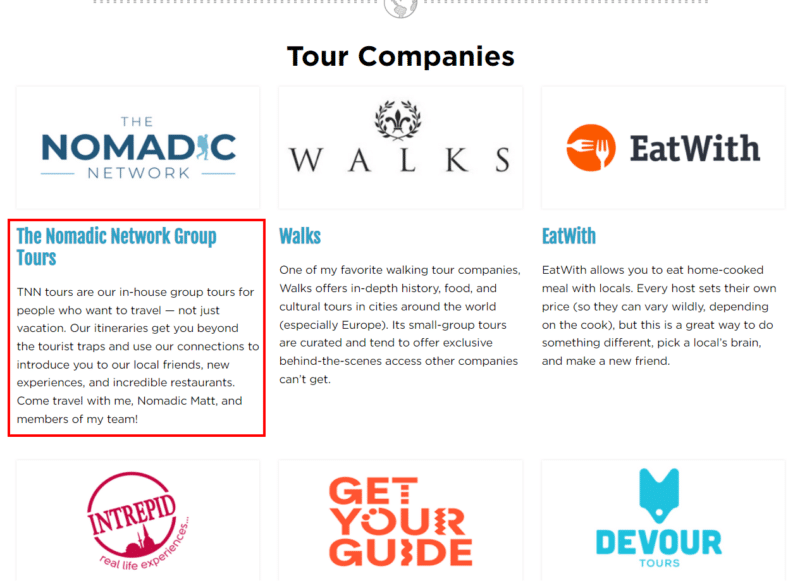
For instance, this travel blog includes their in-house tour company as one of the resources under their “tour companies” category.
However, the mention isn’t overtly salesy and looks even less so next to their other recommendations.
Another way to include your content on your resource page is to link to related blog posts.
Add these links in the descriptions for each category, such as, “Want to learn more about choosing a travel company? Check out our guide.”
6. Update your resource page regularly
Next, since your resource page is essentially a page full of links, you’ll want to make sure the links are working and accurate regularly.
For example, this can be a task you set as part of your regular website or content audit.
A quick way to check all the URLs on the page for dead links is to use a broken link checker.
Lastly, ensure your affiliate links are all accurate and working so it’s tracked each time someone is referred through your page to a product.
7. Link to your resource page in your other content
Once your resource page is created, link to it in your other content, including blogs and core site pages like your About Us page.
For example, a baking blog could link to its resources page whenever they talk about baking equipment. E.g., “The right size mixing bowl is essential to creating this recipe. Check out my resource page to see the large mixing bowls I use and love.”
Essentially, any “learn more” opportunity or mention in a blog could connect back to your resource page.
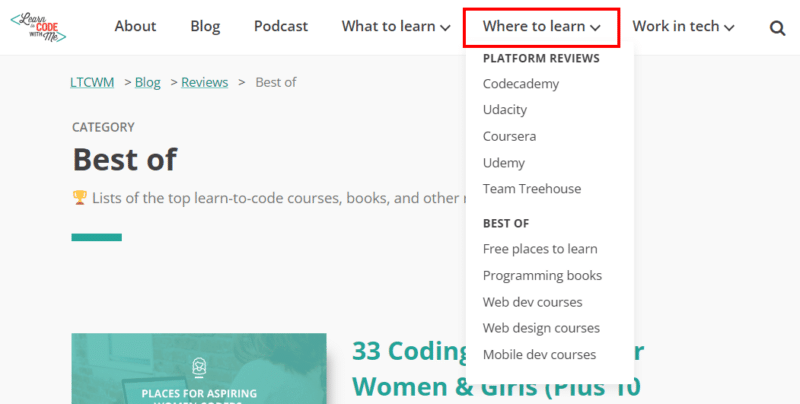
Of course, another great place to include a link to this content is right in your main menu. Learn to Code With Me does this well – its resource hub is located in the top menu under the heading “Where to learn.”
Those aren’t the only possibilities. Here are some other suggestions for linking to your resource page in your other content:
- Include a link in your site’s footer menu.
- Create a call-to-action banner or graphic to place strategically inside blogs.
- Add a link to your lead magnets, ebooks, or freebies.
- Create a perpetual link for your blog sidebar.
- Link to and promote your resource page in social media posts.
A resource page is helpful content
Correction: A resource page can be helpful content if you create it with the above steps in mind.
And that’s important because helpful content matters to your audience as part of their overarching experience of your brand. It also matters to Google, because the search engine wants to serve searchers content that helps them.
As you’ll remember, helpful content is:
- Created with a specific audience in mind.
- Has trust and credibility markers.
- Includes expertise from the creator(s).
- Meets the needs of the audience.
Created with care, your resource page can add value to your content strategy by educating your audience and strengthening your website. And those are worthy goals.
The post How to create a resource page appeared first on Search Engine Land.
Courtesy of Search Engine Land: News & Info About SEO, PPC, SEM, Search Engines & Search Marketing
Friday, April 28th, 2023
Google page experience was never a ranking “system” but is still considered a ranking “signal,” Danny Sullivan, Google’s Search Liaison, said this morning. Google emphasized that just because page experience was removed as a ranking system, it does not mean it does not reward pages that have a good page experience.
What changed. A week ago, Google removed page experience system, the mobile-friendly system, page speed system and the secure site system from its ranking systems page. Google also wrote, “The page experience update was a concept to describe a set of key page experience aspects for site owners to focus on.”
So Google seemed to have downplayed page experience signals as an overall ranking system.
We did email Google for a statement about this a week ago, and Google only referenced the line about page experience update being a concept but would not tell us anything more on the record.
Clarification. This morning, Sullivan wrote a long post on Twitter, saying, “This just meant these weren’t ranking *systems* but instead signals used by other systems.” Why did Google make this change? “We dropped the systems that were actually signals so that if people did go to that page in the future, they wouldn’t (hopefully) get confused,” he added.
“As our guidance on page experience says in the first sentence: Google’s core ranking systems look to reward content that provides a good page experience,” Sullivan said.
Signal not system. So Google said the page experience update/system was never a “system” but is still considered a ranking signal. “Taking them off didn’t mean we no longer consider aspects of page experience,” Sullivan said.
Why we care. Continue to provide a good page experience. Google said it is still a ranking signal, while not being a ranking system. Of course, you should have always provided a good page experience, even if it is not a Google ranking system. Heck, even if it is not a ranking signal, which Google says it is, but even if it was not, you should still provide a good page experience to your users.
That being said, this may clarify some confusion on this topic, or this may create even more confusion.
My advice? For SEO, focus on providing outstanding content that helps your users. Build content and a website that go above and beyond your competitors. Make sure that users can access that content, and that they have a good experience while consuming that content on desktop and mobile.
Do not obsess about making sure you score 100s across all Core Web Vital metrics. Core Web Vitals is not that big of a ranking signal. You know better if your site is providing a good page experience than a third-party tool from Google.
The post Google: Page experience is not a ranking system, but it is a ranking signal appeared first on Search Engine Land.
Courtesy of Search Engine Land: News & Info About SEO, PPC, SEM, Search Engines & Search Marketing
Friday, April 28th, 2023
Pinterest just announced a significant advertising partnership with Amazon.
How it works. When Pinterest users encounter an Amazon ad, they will be directed to Amazon’s website to complete their purchase.
Timeline. The integration of Amazon ads will be rolled out over several quarters, with no specific details on ad placement or short-term revenue forecasts. Pinterest does not expect any significant impact on its revenue until next year.
The multi-year collaboration will make Amazon the first-ever third-party advertising partner on Pinterest, according to a blog post released with the company’s first-quarter earnings report.
Moving away from creator tools and into shopping. Some of the creator-focused initiatives introduced recently were scaled back prior to Pinterest’s disappointing revenue performance in the previous quarter.
The partnership with Amazon could offer a more seamless shopping experience for users, as most Amazon customers already have their payment information on file, leading to faster checkouts.
What Pinterest says. In a blog post, Pinterest said:
“This milestone partnership will add to the great brands already on the platform and provide more comprehensiveness, shoppability, and a best-in-class buying experience for users, along with greater performance for brands and advertisers,” said Bill Ready, CEO of Pinterest. “This aligns with our goal of making every Pin shoppable, so that we can enable as many users as possible to bring their dreams to life.”
Dig deeper. Read more about the partnership on the Pinterest blog.
Why we care. This new opportunity presents a unique way to reach a highly engaged audience with strong commercial intent. The collaboration could provide a seamless shopping experience, connecting users from inspiration to action more effectively.
By leveraging Amazon’s robust advertising capabilities and Pinterest’s large user base, advertisers can potentially achieve higher conversion rates and increased return on ad spend, positioning their brands for success in a dynamic digital landscape.
The post Pinterest and Amazon team up for multi-year ads partnership appeared first on Search Engine Land.
Courtesy of Search Engine Land: News & Info About SEO, PPC, SEM, Search Engines & Search Marketing
Thursday, April 27th, 2023
Marketing conversations nowadays almost always involve artificial intelligence, particularly when it comes to the future of search.
Will AI chatbots powered by large language models (LLMs) such as ChatGPT and Bard ultimately replace “traditional” search as we know it?
Generative AI brings a meaningful shift with vast possibilities for the future of search. The potential for disruption makes it an exciting time for the industry.
Curious about the strengths and weaknesses of traditional search engines versus AI chatbots, I ran 100 identical queries in both Google search and ChatGPT. The results revealed that each approach has its own advantages in certain situations.
This article covers key areas where traditional search engines and AI chatbots like ChatGPT have the upper hand.
Advantages of traditional search
Where do search engines have the edge? Four areas will be hard to shake from consumers’ minds.
Facts and figures (birthdays, ages and math problems)
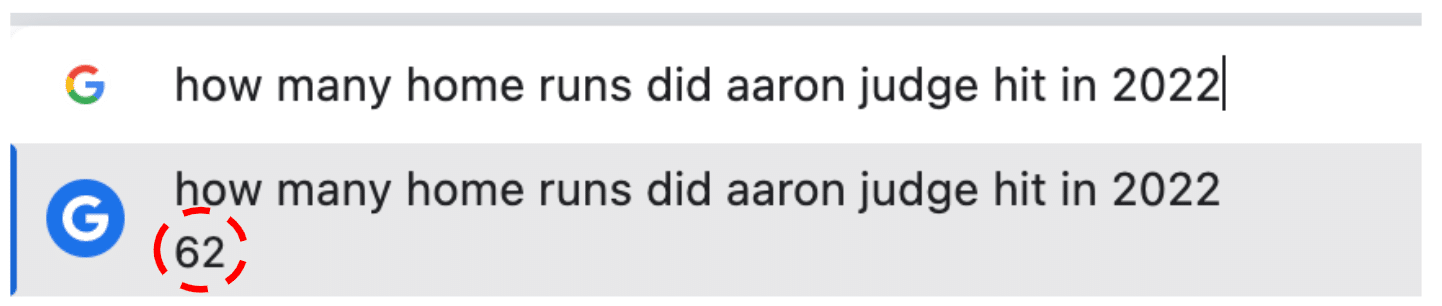
When you search on Google, it does not only suggest and anticipate the full query.
In most cases, it also provides the answer without hitting enter.
This applies to queries where the answer is specifically a number result.
Integrations
If you want anything visual, traditional search is the way to go.
While ChatGPT may eventually catch up in this area, Google’s vast ecosystem is currently a major advantage.
With access to Maps, YouTube, and Gmail, Google has a wealth of knowledge about its users.
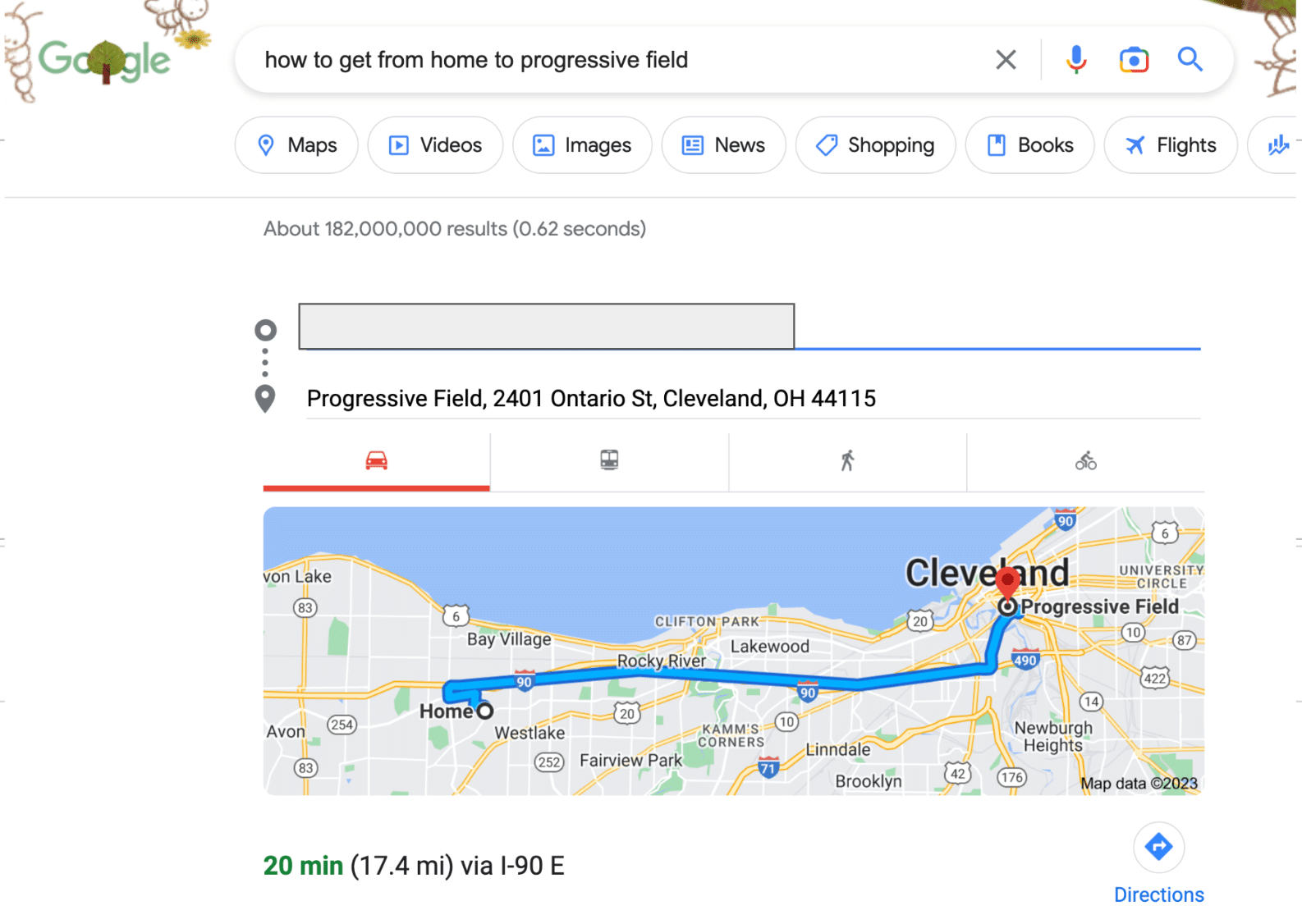
For example, you can simply tell Maps to navigate from “home” to a specific location like Progressive Field.
YouTube is another powerful tool, particularly for “how to” searches. Google can quickly pull up relevant YouTube videos and take users directly to the section of the video that answers their query.
Images
Similar to the integrations point above, Google’s ability to identify the contents of an image and provide users with relevant results is a valuable use case for search.
As AI chatbots evolve, they will have the ability to integrate with multiple components and absorb even more images to understand them.
Google Lens is already using AI to decode images, and the next step is to apply this to AI chatbots.
But for now, image searches for products, plants, animals and more remain a key differentiator, adding value to users.
Opinion and nuance
Having the ability to choose the source to get your answer or opinion is important.
For example, you might be seeking a restaurant recommendation and want to see if multiple sources agree on the same spot. Or perhaps you want to compare Fox News and CNN’s takes on a particular story.
With an AI chatbot, you’ll only receive one viewpoint without the ability to access a range of opinions.
Whether it’s a debate about the best Wu-Tang Clan rapper or a contentious political issue, gathering information from various sources can help you develop a well-rounded opinion.
Get the daily newsletter search marketers rely on.
<input type=”hidden” name=”utmMedium” value=”“>
<input type=”hidden” name=”utmCampaign” value=”“>
<input type=”hidden” name=”utmSource” value=”“>
<input type=”hidden” name=”utmContent” value=”“>
<input type=”hidden” name=”pageLink” value=”“>
<input type=”hidden” name=”ipAddress” value=”“>
Advantages of ChatGPT
Here are four areas where AI chatbots like ChatGPT shine.
Content creation
ChatGPT has the ability to generate copy at lightning speed, whether it’s a poem, blog post, email, or even a script.
This has significantly reduced content creation time, putting pressure on marketers to evolve their writing and creativity.
Imagine the possibilities for your brand. You could quickly generate engaging blog posts or craft personalized emails for your customers.
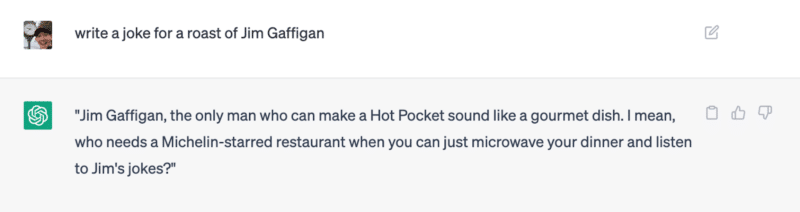
 While this is a nice poem, I did not use it for my anniversary. My wife still appreciated the personal poem I wrote (at least, that’s what she told me).
Creativity
Similar to content creation, AI is transforming the creative process. You can now easily create everything from images and jokes to screenplays and songs.
While this technology is still being refined, it is set to change how we approach creativity – from ideation to execution.
‘How to’ tasks and recipes
Have you ever found yourself wading through endless ads and scrolling through cluttered websites when you only need a simple answer?
This may be more of a problem for the ad ecosystem overall, but AI chatbots do better when you just need straightforward answers to your queries.
Case in point: recipe websites.
They often provide a poor user experience, with too much fluff, numerous ads and the need for endless scrolling – even if you only really wanted a simple recipe for chocolate chip cookies.
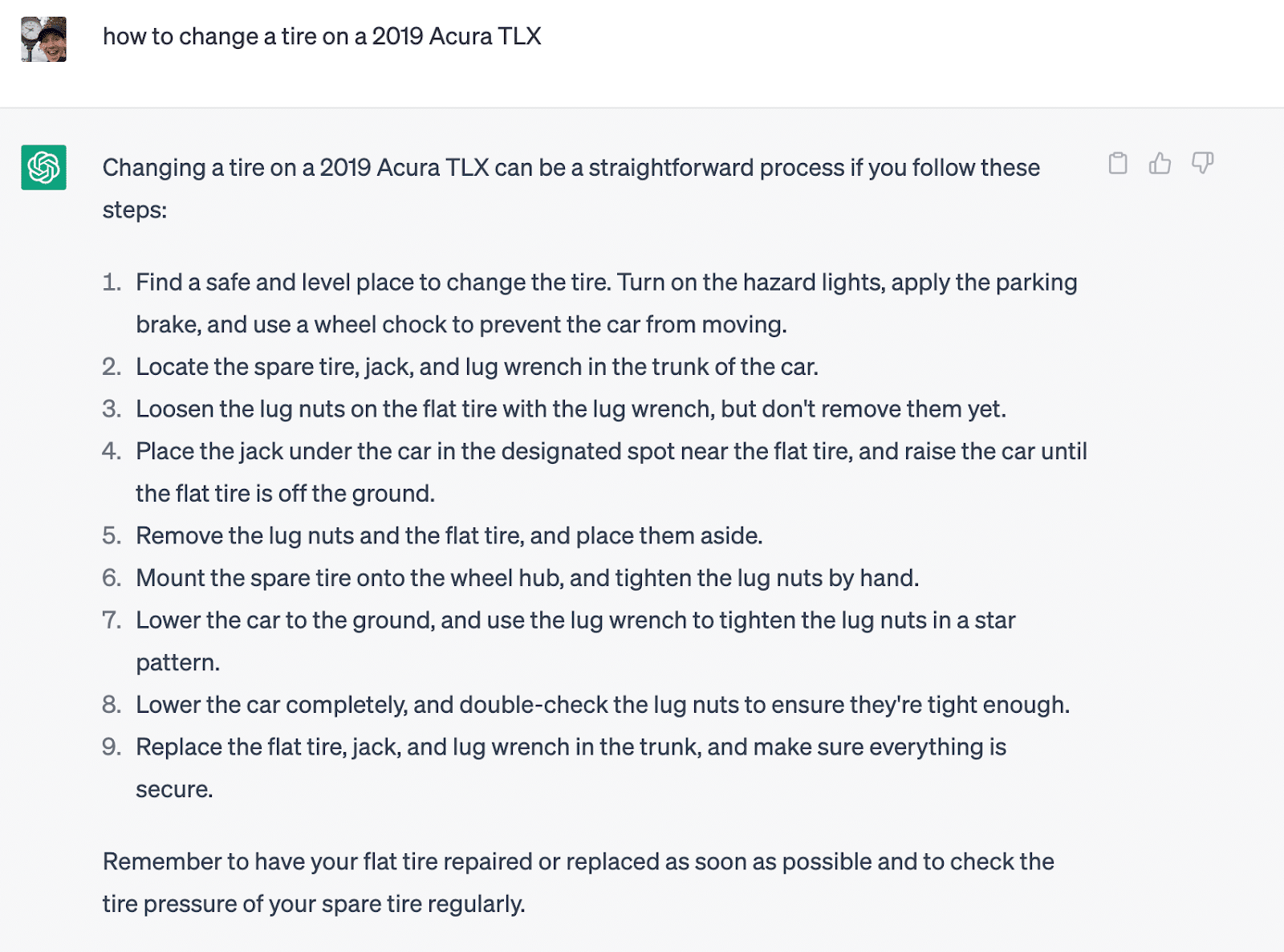
On the other hand, ChatGPT simply gives you an answer. It takes you step by step and keeps the answer straightforward in a bulleted list.
Support (coding and problem-solving)
“Everyone can be a 10x engineer.”
I’ve heard this statement many times since ChatGPT rolled out.
AI chatbots help support various tasks, such as summarizing meeting minutes, finding errors in code or helping solve math problems.
These tools enable users to expedite tasks that were previously tedious or time-consuming.
Search helped us find answers, but AI chatbots can become personal support agents.
They go beyond seeking answers and surface the answer with the solution already completed for us.
Riding the crest of change in search
We are witnessing the early days of a significant change in the industry. It’s a thrilling time for digital marketers since the rise of social media during the Web 2.0 era.
However, this change is much more consequential because AI has quickly disrupted the way we work. This will put pressure on existing business models, ultimately benefiting consumers.
Despite this, some critical use cases are still not yet accessible in AI chatbots. Thus, we’ll still need to rely on traditional search engines for now.
Strap in, keep testing and enjoy the ride.
The post Where traditional search and AI chatbots excel: A closer look appeared first on Search Engine Land.
Courtesy of Search Engine Land: News & Info About SEO, PPC, SEM, Search Engines & Search Marketing
Thursday, April 27th, 2023
Google has just announced the v13_1 release of the Ads API.
In order to utilize some of the v13_1 features, users will need to update their client libraries and client code. There are no breaking changes in this version.
What’s new. The highlights of the release are as follows:
- Bid simulations can now be obtained at a campaign level for Performance Max via campaign_simulation.
- Several recommendation types related to Shopping campaigns have been added, including suggestions for migrating to Performance Max and resolving a Merchant Center account suspension.
- Google Ads now supports SKAdNetwork conversion value schemas for iOS App campaigns. Information on setting up schemas and best practices for iOS campaigns can be found here.
- The LeadFormField.has_location_answer has been added to indicate whether the locations of location assets at the campaign or customer level should be displayed with a lead form.
- (Allowlisted feature) Performance Max campaigns now feature a VEHICLES listing type in the new Campaign.listing_type field, replacing ShoppingSetting.use_vehicles_inventory, which will be designated for Smart Shopping campaigns.
Dig deeper. Learn more about the change on the Google Ads Developer Blog.
Why we care. API v13_1 introduces new features and improvements that can enhance campaign management and performance. The update includes new recommendation types for Shopping campaigns, support for SKAdNetwork conversion value schemas in iOS App campaigns, and additional functionality in Performance Max campaigns.
The post 5 new changes to the Google Ads API appeared first on Search Engine Land.
Courtesy of Search Engine Land: News & Info About SEO, PPC, SEM, Search Engines & Search Marketing
Thursday, April 27th, 2023
With the prevalence of social media and online review platforms, what people say about you online can make or break your personal brand or small business.
This article covers best practices for managing your online reputation so you can set your brand up for success both online and in the real world.
Why does my online reputation matter?
Online reputation consists of the overall perception of a brand based on the information available to your audience.
A positive online reputation can help attract business partners and customers, build trust, and improve the overall public perception of your brand.
Your online reputation consists of brand-related information, including:
- Reviews.
- Social media content.
- Articles.
- Anything else that appears in the search engine results when someone searches for your brand.
Your reputation can make or break your brand, and managing it appropriately is imperative.
Set SMART goals
Before anything else, establish what you’re working toward.
What are your goals for your online presence? How can they help contribute to your brand’s success?
Set SMART goals, ensuring they’re specific, measurable, achievable, realistic, and time-based. The clearer and more well-defined, the better.
Setting one or two overall brand goals in addition to more granular goals for specific campaigns allows you to focus on long and short-term goals simultaneously.
Brand goals should not be altered often unless your business model changes.
Campaign goals, however, can rotate more frequently depending on your brand’s needs.
Identify your strengths and weaknesses
Where do you excel? Where are you weakest?
There’s a reason interviewers ask these questions.
Knowing your weaknesses helps you work to strengthen them and keeps you from being blindsided by an attack.
Strong leaders understand that weaknesses can be exploited or used for growth and turned into strengths.
Highlight your superpowers
Where do you have an edge over the competition? What can you do better than anyone else?
Let’s say you provide excellent customer service in an industry known for being unreliable.
Use that to show your potential customers how much better their experience can be if they choose you.
Address your roadblocks
Do you have a small budget? Fear of negative reviews? Lack of buy-in from leadership? Is a disgruntled former employee or customer trying to take you down?
Identifying your setbacks is the first step in conquering them. Typically, small businesses report time and budget as their biggest roadblocks.
Know your audience
A deep understanding of your customers, peers, and competition is key to reputation success.
You need to have your finger on the pulse of what is happening in your industry. If you don’t know who you’re talking to, how will you know how to speak to them?
Successful brands understand precisely what feelings and perceptions their logos and communication evoke with their audience and what their customers expect of them.
Remember, not everyone is your target audience. If you try to reach everyone, you will not connect with anyone.
Find your voice on social media and create content that connects
Social media is a great place to develop your brand voice. This is not the place to start pushing hard selling.
Earn the trust of your audience by getting to know them without asking anything in return.
Transparency is critical, with consumers regularly reporting that honesty, friendliness, and helpfulness are top behaviors consumers want to see from brands on social media.
Do you know what never makes the list? Sales pushes.
Be careful not to turn your audience against you by misusing your platforms.
Earning your audience’s trust must come before overly promotional posts, especially if you want them to become strong brand advocates.
Pro tip: Be particularly careful about edgy humor and snarkiness on social. Brands often miss the mark or end up offending users.
Content strategy
Once you’ve determined your goals, you can map your content strategy. Don’t skip this step, you won’t get far without a plan.
One of the easiest ways to do this is to create a site plan.
For existing content, keep a sheet with current pages and posts on your site and the targeted keywords for each page.
Create another sheet with a prioritized list of content that you need to create.
This will keep you on track and ensure you’re setting yourself up to rank for keywords and topics relevant to your brand’s success.
Not sure where to start? Take a look at your competition.
You want to show up everywhere they are and anywhere they’re not.
Providing valuable information on your site helps with optimization efforts. It also builds trust with your audience as they learn you provide helpful, valuable, and reliable information.
Own your name
Prevention is worth an ounce of cure. Claim your username across all channels.
You’ll be much more able to weather an attack if you’ve built a strong foundation to stand on.
One bad review in a list of hundreds is far less believable than one bad review out of two or three.
When creating content, utilize third-person and descriptive language to assist in SEO efforts.
Use consistent, descriptive handles and names on social sites, blog posts, and earned media.
See what ranks for your name, and make sure you have a positive presence there.
Get the daily newsletter search marketers rely on.
<input type=”hidden” name=”utmMedium” value=”“>
<input type=”hidden” name=”utmCampaign” value=”“>
<input type=”hidden” name=”utmSource” value=”“>
<input type=”hidden” name=”utmContent” value=”“>
<input type=”hidden” name=”pageLink” value=”“>
<input type=”hidden” name=”ipAddress” value=”“>
SEO
Leverage owned content to control the information about your brand online.
One of the most effective and reliable ways to do this is via search engine optimization (SEO).
Optimizing your website and other online profiles to rank higher in search engine results lets your customers find information about your brand online and insulate you against a reputation attack.
If you can own all of the results on the first page of the SERP for your brand name, it is much harder for someone to get negative information to rank for your name in an attempt at a reputation attack.
Keep up with SEO best practices to ensure your site ranks well for your key brand terms.
Congruence
Your online reputation is closely tied to your personal or professional brand.
Whether you’re a freelancer, entrepreneur, or small business owner, it’s essential to establish a consistent brand image across all online platforms.
Congruence across familiarity in tone, voice, look, and feel of what you share across different channels is essential.
Of course, you’ll need to customize based on limitations and audiences of individual channels, but give the same customer experience at all touchpoints.
If you look at a major brand’s social profiles, you’ll notice that they typically have consistency from site to site, both with visuals and written content.
You want your customers to feel comfortable if they jump from your website to your Facebook page and then to Twitter.
If they have to stop and think about if they’re still with the same brand as they move from channel to channel, you have a larger chance of losing them in the journey.
Set clear expectations
The perceived success or failure of a project or experience depends greatly on that project’s expectations.
You expect a different level of service when you enter a five-star resort than you do from a roadside motel. What do you want your customers to expect from you?
Decide, and then deliver. Be authentic, and be helpful wherever you can.
Being helpful and meeting expectations will increase customer satisfaction, resulting in more positive reviews and social media engagement, which will improve your overall reputation and revenue.
Use reviews to build your brand
Let reviews help you get better. Positive reviews are great to have, but the bad ones are what assist you in improving.
Respond to every review you get. Saying “thank you” when someone leaves a positive comment or review is an easy win. Every brand should do this, but many don’t.
More importantly, own your mistakes. If someone leaves a negative review, address the problem.
Monitor what is being said about you online
Monitoring your reputation will allow you to know your audience’s perception of your brand and alert you to potential problems before they get out of hand.
Track news and earned media mentions, social media platforms, online reviews, forums, and any other platforms where your brand’s audience may be active.
This way, you can uncover potential opportunities for building your brand.
Be consistent
Managing your online reputation is a continual process that requires time, strategy, and consistent attention.
A good reputation indicates trustworthiness and reliability to potential customers and business partners.
Knowing your audience – and ensuring they know you – will help you build a positive reputation and guarantee your customers and colleagues are loyal advocates of your brand.
The post A quick guide to managing your online reputation appeared first on Search Engine Land.
Courtesy of Search Engine Land: News & Info About SEO, PPC, SEM, Search Engines & Search Marketing
Thursday, April 27th, 2023
The “year of efficiency” for Meta is starting out relatively decent in terms of revenue, with a 3% increase overall. And despite their plan to cut an additional 10,000 jobs this quarter, things seem to be looking up. At least for now, anyways.
Meta shows growth for advertising and its Family of Apps but a decline in revenue for its other major business segment, Reality Labs. Let’s dive in.
Revenue. Ad revenue increased by about 4.3% in Q1 2023.
- The advertising revenue for Q1 2023 was $28,101 million, an increase of 4.3% compared to the same period in 2022 ($26,998 million).
- Total revenue for Q1 2023 was $28,645 million, an increase of 2.6% compared to the same period in 2022 ($27,908 million).
- Other revenue was $205 million for Q1 2023, a decrease of 5.1% compared to the same period in 2022 ($215 million).
Sure, here is the table with an additional column for the percent difference:
|
Q1 2023
(in millions) |
Q1 2022
(in millions) |
Difference |
| Advertising |
$28,101 |
$26,998 |
4.3% |
| Other revenue |
$205 |
$215 |
-5.1% |
| Family of Apps |
$28,306 |
$27,213 |
3.9% |
| Reality Labs |
$339 |
$695 |
-51.1% |
| Total revenue |
$28,645 |
$27,908 |
2.6% |
Daily active users. Meta’s Q1 2023 performance also showed impressive growth in user engagement.
- Facebook’s daily active user count increased by 4% to reach 2.04 billion.
- The number of monthly active users was 2.99 billion.
- The “family of apps” category, which includes Instagram and WhatsApp, saw a 5% year-over-year rise in daily active users, totaling 3.02 billion.
- The number of monthly active users in this category also increased by 5% to 3.81 billion.
Good to know. For the full year, analysts are estimating total expenses of $86B-$90B, which includes $3B-$5B of restructuring costs, and expects Reality Labs operating losses to increase this year.
Dig deeper. You can review the full earnings report here.
Why we care. Meta’s financial performance and growth provides important insights into the current state of the technology industry and the advertising market. The earnings report can give advertisers a sense of the overall demand for technology products and services, such as the company’s two main business segments, Family of Apps and Reality Labs, which can help advertisers understand the trends and opportunities in these areas.
The post Meta’s ad revenue is up 4.3% in Q1 appeared first on Search Engine Land.
Courtesy of Search Engine Land: News & Info About SEO, PPC, SEM, Search Engines & Search Marketing


 Source: